Key Questions When Hiring a Masonry Specialist
By Housey · Last reviewed 7th of May 2026
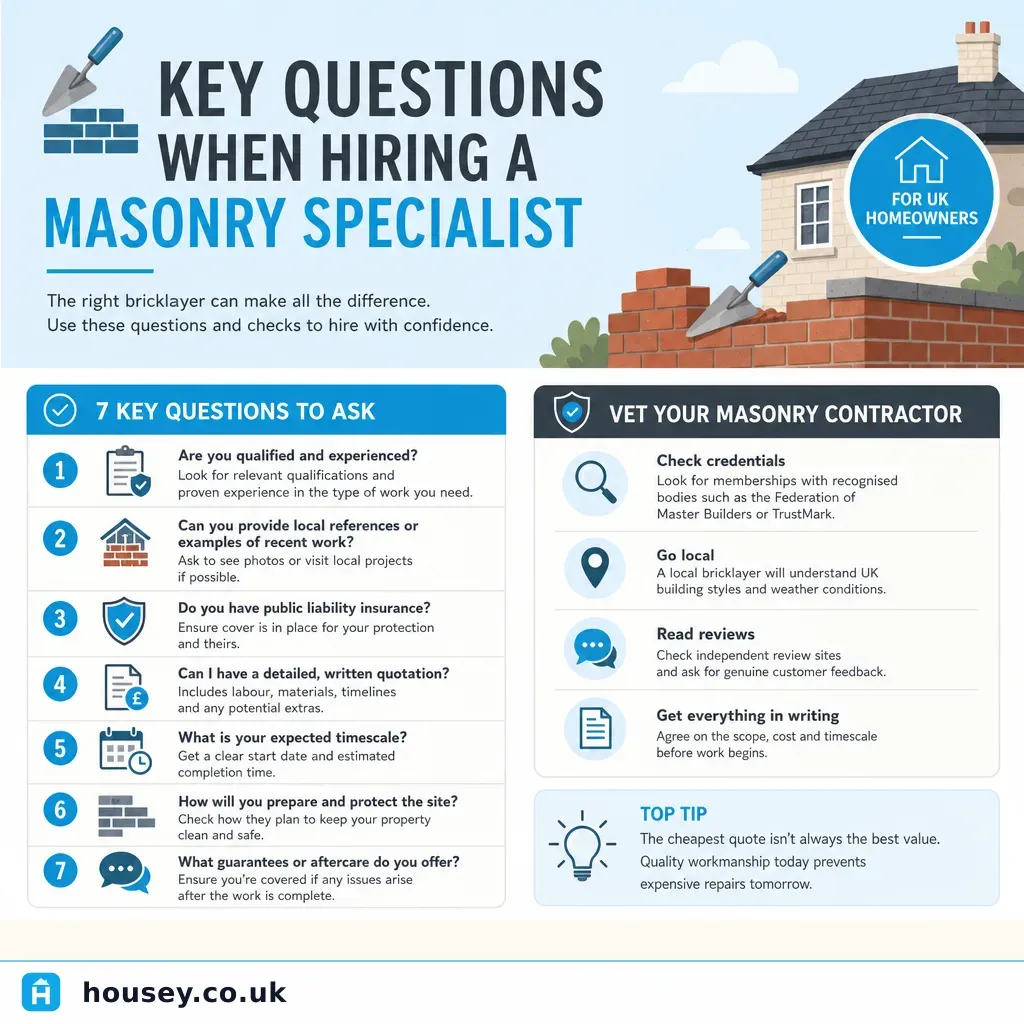
Key Questions When Hiring a Masonry Specialist
Masonry work — whether repointing a chimney, rebuilding a garden wall, or replacing cracked brickwork on a Victorian terrace — is often more technically involved than it first appears. Using the wrong materials or a contractor without the right experience can cause long-term moisture damage, structural problems, or costly rework. Knowing what to ask before you sign anything is the most effective way to protect your home and your budget.
Key points
- Public liability insurance of at least £1 million is a baseline requirement for masonry contractors; always ask to see a valid, current certificate before work begins.
- Masonry work on a listed building or within a conservation area may require listed building consent or conservation area consent — confirm the contractor understands local authority requirements before instructing them.
- A written, itemised quote should clearly separate labour, materials, scaffold hire, skip hire or waste removal, and VAT.
- TrustMark and the Federation of Master Builders (FMB) maintain registers of vetted tradespeople; membership is a useful signal, though not a substitute for checking references directly.
- Never pay the full contract value upfront; a staged payment schedule tied to agreed milestones reduces your financial exposure if problems arise.
What to ask about qualifications and experience
Start by establishing whether the contractor has relevant, demonstrable experience — not just a general construction background.
Essential questions to ask:
- How long have you been working specifically in masonry, and can you show examples of similar completed projects?
- Have you worked on this property type and era before — for example, Victorian soft brickwork, natural stone, or pre-1919 solid-wall construction?
- Do you have experience working on listed buildings or in conservation areas, where lime mortar and traditional repair methods are usually required?
- Are you or your company a member of any trade associations, such as the Federation of Master Builders, TrustMark, or CITB?
- Will all masonry work be carried out by your own employees, or will any element be subcontracted — and if so, to whom?
Specialist masonry, particularly lime work on older properties, requires different skills and materials from standard cement-based construction. If your home was built before 1919, ask specifically about lime mortar compatibility; hard cement mortars on soft Victorian brickwork can cause serious long-term spalling and moisture ingress.
What to ask about insurance and licensing
There is no single masonry contractor licence required in England and Wales, but insurance is non-negotiable.
- Public liability insurance: Covers damage to your property or injury to third parties during works. £1 million is a typical minimum for residential projects; larger or higher-risk jobs may warrant higher cover.
- Employers' liability insurance: Required by law if the contractor employs anyone other than themselves. Ask for the certificate number and insurer name so you can verify independently.
- Professional indemnity insurance: Less common for general masonry, but worth asking about if the contractor is providing structural assessments or design input alongside the physical works.
Ask to see current certificate copies rather than relying on verbal confirmation. A reputable contractor will produce these without hesitation.
What to ask about the quote and scope of work
A written, itemised quote protects both parties and makes it easier to query overcharges or dispute incomplete work.
Quote comparison table
Use this when comparing quotes from multiple masonry contractors:
Item | What to look for |
|---|---|
Labour | Itemised by day rate or as a fixed price for an agreed scope |
Materials | Specified by type, grade, and quantity (e.g. matching brick, lime mortar mix ratio) |
Scaffold or access equipment | Included in the quote, or charged separately? |
Skip hire and waste removal | Who arranges, who pays, and where does rubble go? |
VAT | Is the quoted price inclusive or exclusive of VAT? |
Contingency allowance | Is there provision for hidden defects found during works? |
Payment schedule | Tied to agreed milestones, not just calendar dates |
Retention | A percentage held back until snagging is complete is reasonable on larger jobs |
Ask each contractor to quote on exactly the same scope and materials specification — otherwise price comparisons are misleading.
What to ask about the materials
Masonry materials are not interchangeable, and using the wrong specification can cause significant long-term problems.
- Matching bricks: Will replacement bricks match the existing in colour, texture, and size? Can the contractor provide a sample before works start?
- Mortar mix: Is the mortar specification appropriate for the age and construction of the property? Hard Portland cement mortars on pre-1919 soft brickwork are a common cause of spalling and damp.
- Repointing style: Will the pointing profile match the original — flush, weatherstruck, or recessed? This affects both appearance and water runoff performance.
- Building Regulations compliance: Any structural masonry work should meet current Building Regulations (Part A — Structure). Ask how the contractor will demonstrate compliance, and whether building control sign-off is needed.
Red flags to watch for
These are signs a masonry contractor may not be right for the job:
- They cannot produce public liability insurance documentation on request.
- They give only a verbal quote and resist putting anything in writing.
- They ask for a large deposit — more than 10–25% upfront is unusual for residential masonry and increases your financial risk.
- They cannot specify the mortar mix they intend to use on a period property, or recommend a cement mortar without asking about the building's age.
- They are unwilling to provide references from comparable previous projects.
- They recommend significantly more work than the visible problem warrants, without explaining the underlying evidence.
- They make no mention of noise management, dust control, access arrangements, or site safety.
What to ask about timelines and site management
- What is the realistic start date and estimated duration, and what could cause delays?
- How will working hours be managed — for example, noise cutoff times in a residential street or shared terrace?
- Will scaffolding restrict access to the property or pavement, and for how long?
- What is the agreed process if hidden defects are discovered mid-works that change the scope or cost?
- How will the site be managed at the end of each working day regarding dust, debris, and material storage?
When to get professional help
Masonry can appear straightforward but carries the potential for structural and moisture problems if poorly specified or executed. Seek independent advice from a RICS-registered chartered surveyor or structural engineer before instructing any contractor if:
- There are visible cracks in external or internal masonry that may indicate structural movement rather than cosmetic settlement.
- The property is listed or in a conservation area, where inappropriate materials can cause legal and heritage problems.
- The scope of work involves altering or removing load-bearing walls, chimney breasts, or structural piers.
- You are uncertain whether planning permission or building control sign-off is required for the proposed works.
- A previous masonry repair appears to have failed or caused further deterioration.
A surveyor's independent view of what work is actually required can help you assess whether contractor recommendations are proportionate and correctly specified.
How Housey can help
Housey connects UK homeowners with vetted local tradespeople and building professionals. You can use the Housey platform to request quotes from masonry specialists and compare providers for projects including chimney repairs, repointing, structural brickwork, and period property restoration. Visit Housey.co.uk to get started.
Frequently asked questions
Do I need planning permission for masonry repairs?
Most like-for-like masonry repairs — repointing, brick replacement, chimney repairs — do not require planning permission under permitted development rules in England. If your property is listed, in a conservation area, or if works materially alter the external appearance, you may need listed building consent or conservation area consent. Always check with your local planning authority before starting work.
How many quotes should I get for masonry work?
At least three written, itemised quotes is standard practice for any masonry project costing more than a few hundred pounds. This helps identify pricing outliers and clarifies what each contractor is — and is not — including. Ensure each contractor quotes on the same scope and materials specification so comparisons are meaningful.
What is the difference between a bricklayer and a masonry specialist?
A bricklayer typically works on standard brick and block construction used in modern house-building. A masonry specialist may have additional expertise in natural stone, lime mortar, heritage repair, or decorative stonework. For properties built before 1919 or for listed buildings, seek contractors with demonstrable experience in traditional building methods — not just modern construction.
Should I use a sole trader or a masonry company?
Both can deliver high-quality work. Sole traders often have lower overheads and may offer more competitive pricing, but verify they hold appropriate insurance independently. A company structure may provide clearer recourse if problems arise. Always check credentials, insurance, and references rather than assuming company size alone equals quality.
What should a masonry contract include?
A written contract should cover the full scope of works, materials specification, a price breakdown, a staged payment schedule, start and estimated completion dates, the process if scope changes, how defects will be raised, and the contractor's complaints procedure. For any works exceeding £1,000, a written contract is strongly advisable.
Sources and further reading
- Find a Builder — Federation of Master Builders
- Find a TrustMark Registered Business — TrustMark
- Listed Buildings and Planning Permission — GOV.UK
- Practical Building Conservation — Technical Advice — Historic England
- Construction Health and Safety — Health and Safety Executive
Useful next reads
 Improvement & Build
Greenhouse Construction: Glass Versus Polycarbonate Materials
Glass transmits around 90% of available light and lasts indefinitely if unbroken, but insulates poorly and shatters into sharp fragments.
 Improvement & Build
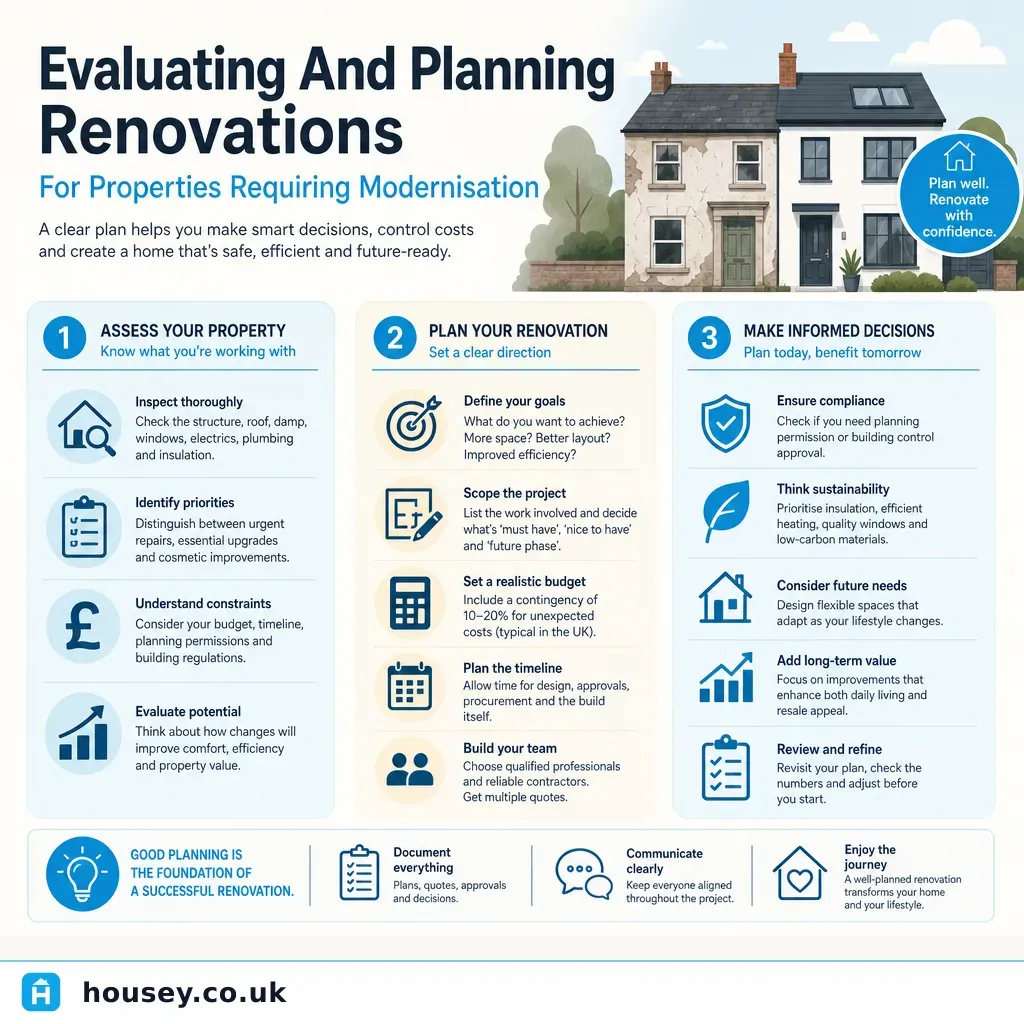
Evaluating And Planning Renovations For Properties Requiring Modernisation
Start by commissioning a condition survey — RICS Level 3 for pre-1919 properties — to identify structural defects, damp, and services issues before finalising a budget.
 Improvement & Build
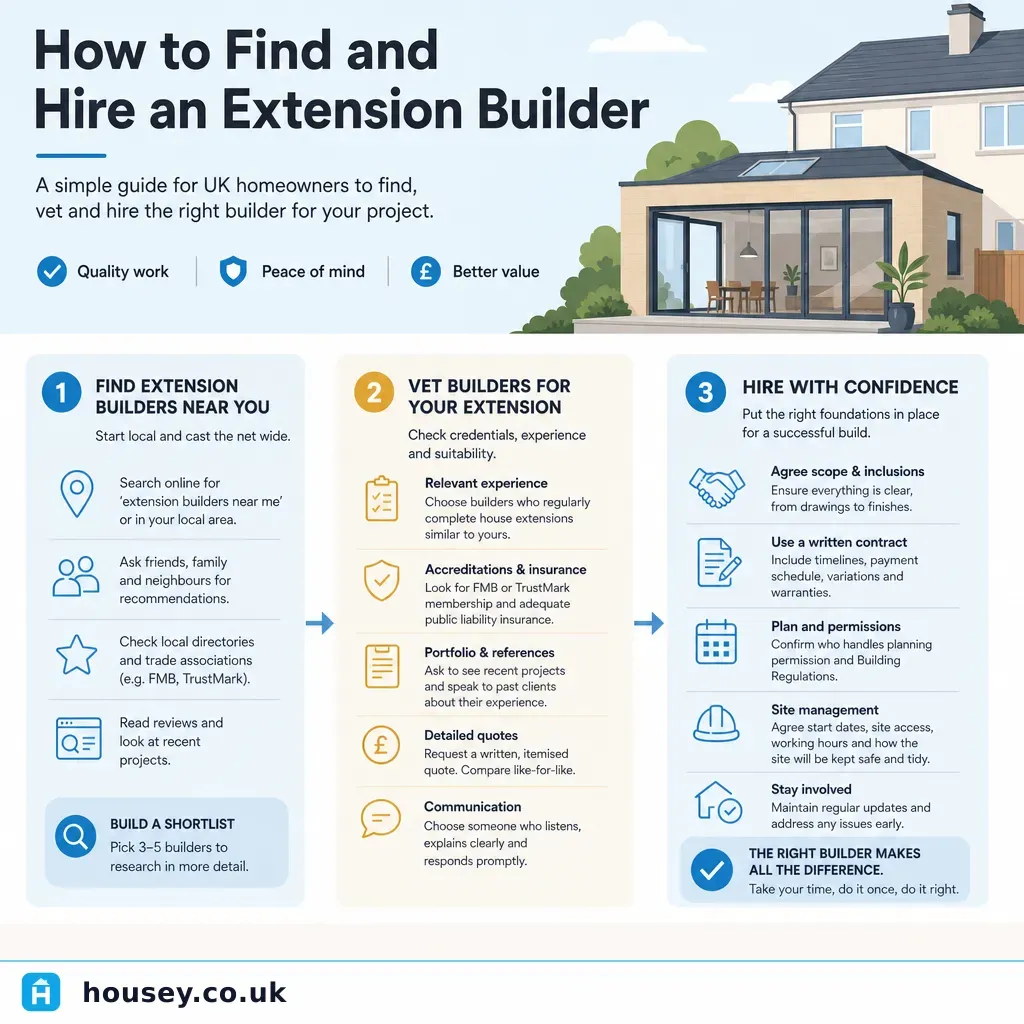
How to Find and Hire an Extension Builder
To hire a reliable extension builder, get at least three detailed written quotes from contractors with documented experience of similar projects.
 Improvement & Build
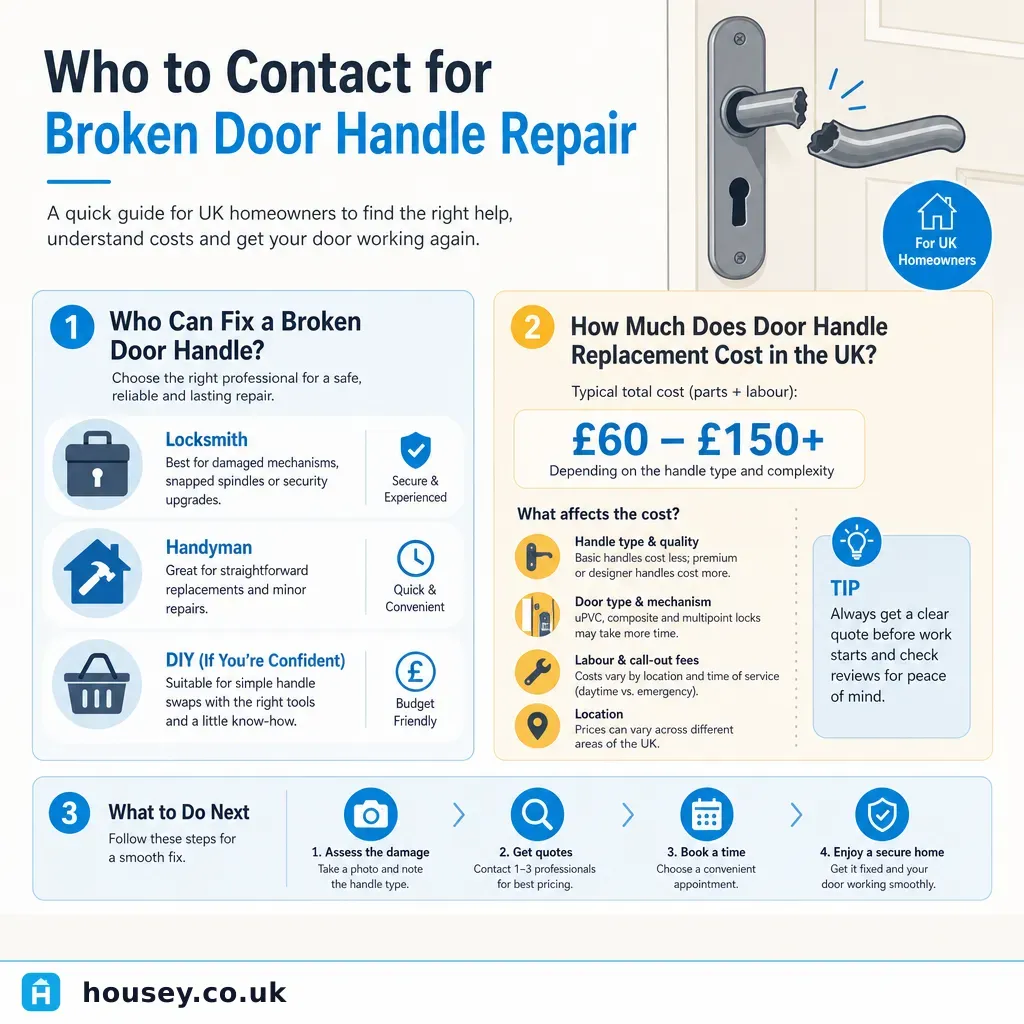
Who to Contact for Broken Door Handle Repair
For a broken door handle, a general handyperson can handle most internal timber door repairs, while a joiner or locksmith is better suited to external doors, particularly if the lock mechanism is affected.
 Improvement & Build
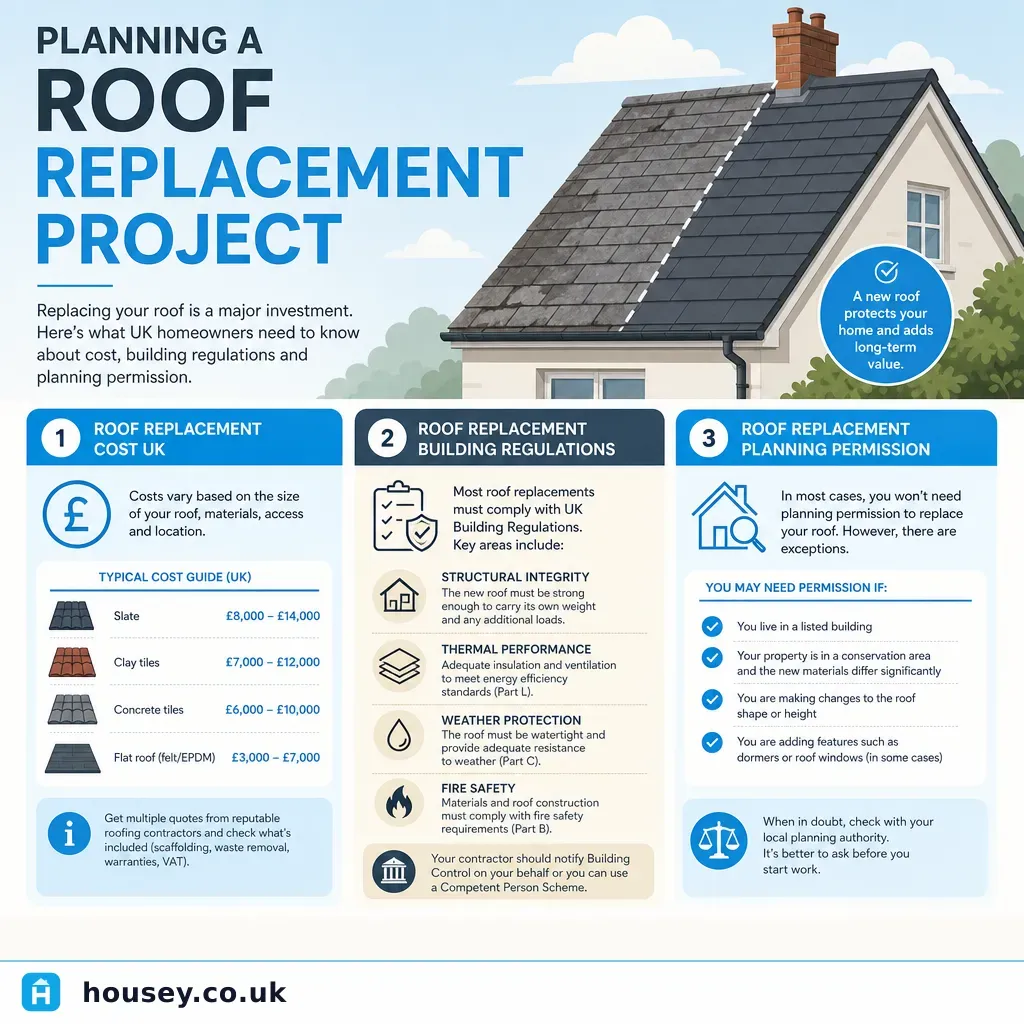
Planning a Roof Replacement Project
A roof replacement project involves stripping the existing covering, renewing the sarking felt and battens, and laying new tiles, slates, or a flat-roof membrane.