Greenhouse Construction: Glass Versus Polycarbonate Materials
By Housey · Last reviewed 11th of May 2026
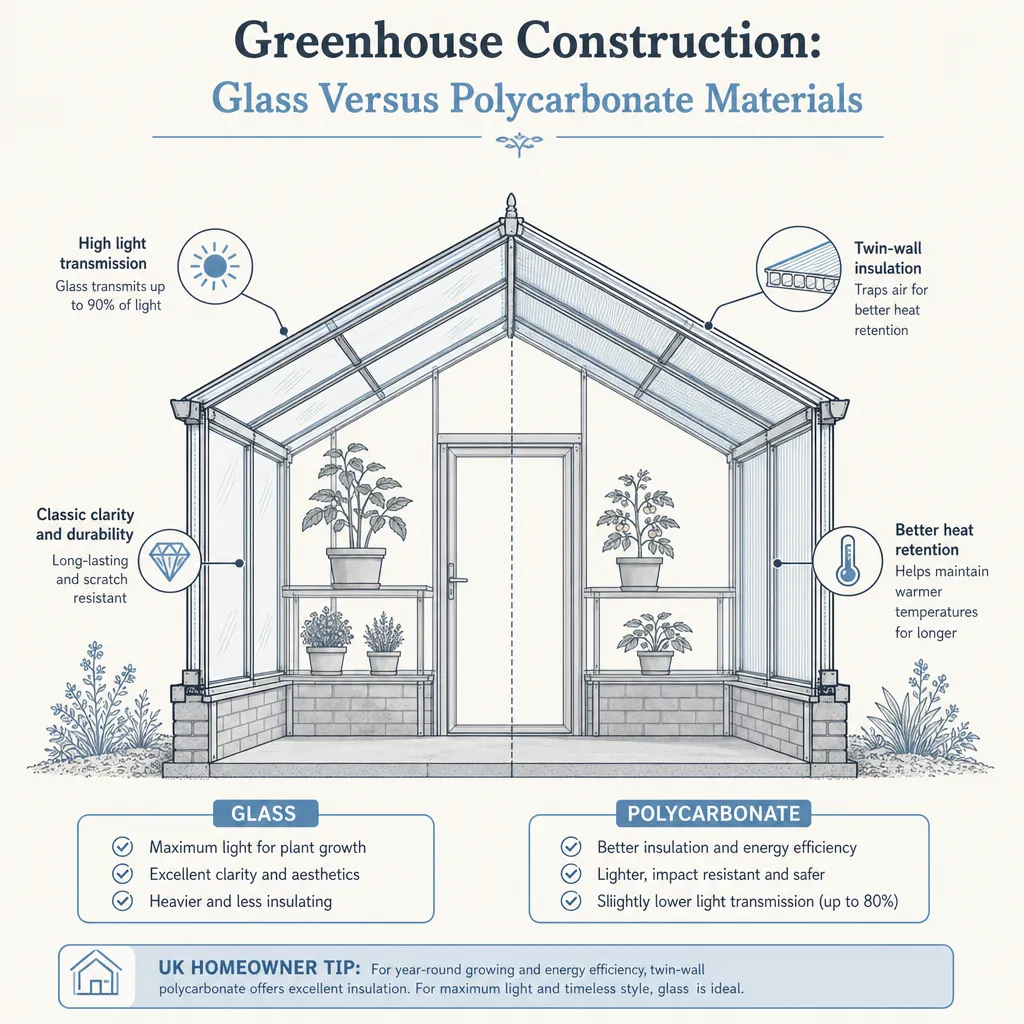
Greenhouse Construction: Glass Versus Polycarbonate Materials
Choosing between glass and polycarbonate is often the first significant decision when planning a greenhouse for a UK garden, and it shapes everything from growing performance to long-term maintenance. The question arises when comparing off-the-shelf greenhouse kits, budgeting for a custom build, or replacing damaged glazing panels on an existing structure. Both materials have genuine strengths, and the right choice depends on how you plan to use the space, the site's exposure, and how long you expect the structure to last.
Key points
- Horticultural glass (3–4 mm single pane) transmits around 90% of available light, compared with 70–83% for twin-wall polycarbonate panels of equivalent price range.
- 4 mm toughened safety glass is around 4–5 times stronger than standard horticultural glass and is the recommended minimum for roof panels and glazing near child play areas.
- Twin-wall polycarbonate (typically 6–10 mm) has a U-value of approximately 2.0–2.8 W/m²K, compared with around 5.6 W/m²K for 4 mm single-pane glass — making polycarbonate significantly more insulating.
- Polycarbonate panels are prone to UV degradation and discolouration; quality panels carry a 10-year UV warranty, while glass retains its clarity indefinitely.
- A greenhouse over 15 m² floor area in England may require planning permission if sited within 1 m of a boundary; those under this threshold are generally permitted development if detached and not forward of the principal elevation.
Glass versus polycarbonate: a full comparison
Feature | Horticultural glass | Toughened safety glass | Twin-wall polycarbonate |
|---|---|---|---|
Light transmission | ~90% | ~88–90% | ~70–83% (varies by thickness) |
Insulation (U-value) | ~5.6 W/m²K | ~5.6 W/m²K | ~2.0–2.8 W/m²K |
Impact resistance | Low — shatters into sharp shards | High — crumbles into blunt granules | Very high — flexible, rarely shatters |
Weight per m² | ~7–10 kg | ~10 kg | ~1.0–1.5 kg (6 mm) |
Expected lifespan | 30+ years (if unbroken) | 30+ years (if unbroken) | 10–15 years before yellowing |
UV resistance | Indefinite | Indefinite | Degrades without UV coating; check warranty |
Cleaning ease | Easy — smooth surface | Easy — smooth surface | Harder — channels collect debris and algae |
Condensation behaviour | Can drip suddenly in large drops | Can drip suddenly | Channelled to base by twin-wall chambers |
Indicative cost per m² | £5–£12 (horticultural) | £15–£30 | £8–£20 (twin-wall) |
Indicative UK costs, last reviewed 2026-05-11. Prices vary by supplier, quantity, panel thickness, and region.
Glass in detail
Standard horticultural glass
Standard 3 mm horticultural glass is the traditional choice and is what most older greenhouse kits used. It offers excellent light transmission and a clean, crisp appearance, but it is brittle. A falling tool, hailstone, or stray ball can shatter a pane, creating sharp fragments — a particular concern in gardens used by children or pets. Broken panes should be handled with thick gloves and disposed of carefully.
Toughened safety glass
For new builds and replacement glazing, 4 mm toughened glass is widely recommended by greenhouse suppliers and the Royal Horticultural Society. When it does break, it crumbles into small blunt granules rather than sharp shards, significantly reducing injury risk. It is heavier than polycarbonate and costs more per panel than standard horticultural glass, but it typically outlasts polycarbonate by decades and retains its light-transmission properties throughout.
Best for: gardeners who prioritise maximum light transmission, heritage or period-style greenhouse designs, ornamental growing, and situations where longevity is valued over upfront cost.
Polycarbonate in detail
Twin-wall polycarbonate is a co-extruded plastic panel with two outer layers and internal chambers that improve thermal insulation. It is the standard glazing material in many modern off-the-shelf greenhouse kits because it is lighter, easier to handle during installation, and far more impact-resistant than glass. The internal channels can accumulate moisture, algae, and dust over time, which gradually reduces light transmission and can make cleaning more involved.
Quality polycarbonate should include a UV-protective coating on the outer face. Cheaper panels without this coating can yellow, become brittle, and cloud significantly within 5–8 years. When buying, always check the manufacturer's UV warranty — 10 years is the minimum to look for on premium panels.
Best for: high-wind or hail-prone locations; families with young children; gardeners in frost-prone areas who want better overnight heat retention; budget-conscious builds where replacement of panels every 10–15 years is factored into the plan.
Which material should you choose?
- Choose toughened glass if maximum light transmission is a priority, you are growing light-demanding crops such as tomatoes or orchids, or you want a structure with a 30-year+ lifespan and minimal glazing replacement costs.
- Choose twin-wall polycarbonate if the site is exposed or prone to hail or accidental impact, you want better insulation for year-round or early-season growing, or you are building a first greenhouse on a limited budget.
- Consider a hybrid approach — glass side walls for maximum low-angle winter light with polycarbonate roof panels for impact resistance and insulation — if your frame supplier can accommodate mixed glazing thicknesses.
- Ask a glazing supplier or greenhouse specialist before replacing panels on an existing frame, as frame channels are often designed for a specific panel thickness tolerance.
- Avoid unlabelled or unbranded polycarbonate panels from unknown suppliers; UV warranty quality varies substantially between manufacturers.
Planning and building regulations for garden greenhouses
Most residential greenhouses in England are permitted development, meaning you do not need planning permission, provided:
- The greenhouse is single-storey with no platform, balcony, or raised veranda
- The total footprint does not exceed 50% of the curtilage (garden area) of the original dwelling
- It is not sited forward of the principal elevation of the house
- The floor area is under 15 m² if located within 1 m of the property boundary (structures over 15 m² must be at least 1 m from any boundary, and those over 30 m² require planning permission regardless of position)
Building Regulations generally do not apply to a freestanding greenhouse used solely for gardening. If the structure is to be used for commercial growing, connected to mains gas, or converted into habitable accommodation, contact your local building control office for guidance.
In conservation areas, outbuildings — including greenhouses — may require planning permission if they would be visible from a highway. Check with your local planning authority before proceeding.
Greenhouse construction checklist
Before building or buying your greenhouse:
When to get professional help
Most greenhouse builds are well within the scope of a competent DIYer, but professional help is worth considering if:
- The greenhouse is large (over 20 m²) or involves a lean-to construction against an existing wall, which may require a building regulations check
- The site has poor drainage, significant slope, or requires substantial groundworks for the base
- You are uncertain whether the project falls within permitted development — consult your local planning authority or a planning consultant
- You want a bespoke greenhouse integrated into a wider garden landscaping project, where coordination across trades is beneficial
How Housey can help
If you are planning a greenhouse as part of a broader garden project, Housey can connect you with experienced landscapers who can handle groundworks, base installation, and site preparation, as well as garden designers who can advise on siting, orientation, and integration with your planting and growing scheme.
Frequently asked questions
Is glass or polycarbonate better for growing tomatoes in the UK?
Glass — particularly 4 mm toughened glass — is generally considered better for growing tomatoes in the UK, as it allows higher light transmission and maximum solar heat gain during the growing season. Twin-wall polycarbonate retains overnight heat more effectively, which can benefit early spring or autumn growing. A well-ventilated glass greenhouse is the preferred choice for serious tomato and fruiting-crop growers.
How long does polycarbonate last on a greenhouse?
Quality twin-wall polycarbonate with a UV-protective coating should last 10–15 years before significant yellowing or reduced light transmission. Cheaper panels without UV protection can degrade noticeably within 5–8 years. Glass, if unbroken, retains its clarity and light transmission for 30 years or more, making it the longer-lasting option over the lifetime of a permanent structure.
Does a greenhouse need planning permission in the UK?
Most residential greenhouses in England are permitted development and do not need planning permission, provided they are single-storey, under 50% of the curtilage of the original dwelling, and not forward of the principal elevation. Stricter rules apply in conservation areas. Always check with your local planning authority if the greenhouse is large, close to boundaries, or in an area with restrictions.
Can I use standard horticultural glass on greenhouse roof panels?
Standard 3 mm horticultural glass on roof panels is a breakage risk — hail, falling debris, or accidental impact can shatter it into sharp fragments. Most suppliers now recommend 4 mm toughened safety glass for roof panels as a minimum. Check your greenhouse frame manufacturer's specifications for roof panel thickness tolerances before purchasing replacement or upgrade glazing.
What base does a greenhouse need?
Most greenhouses require a solid, level base — typically a concrete slab, block paving, or proprietary base frame supplied by the manufacturer. A proper base prevents the frame from shifting, helps with drainage, and reduces damp inside the structure. Ground anchor systems exist for lightweight kits on grass but offer less stability in high winds and may contribute to moisture problems at the base of the frame.
Sources and further reading
- Permitted development for outbuildings — Planning Portal
- Planning permission guidance — GOV.UK
- Greenhouses: choosing and buying — Royal Horticultural Society
Useful next reads
 Improvement & Build
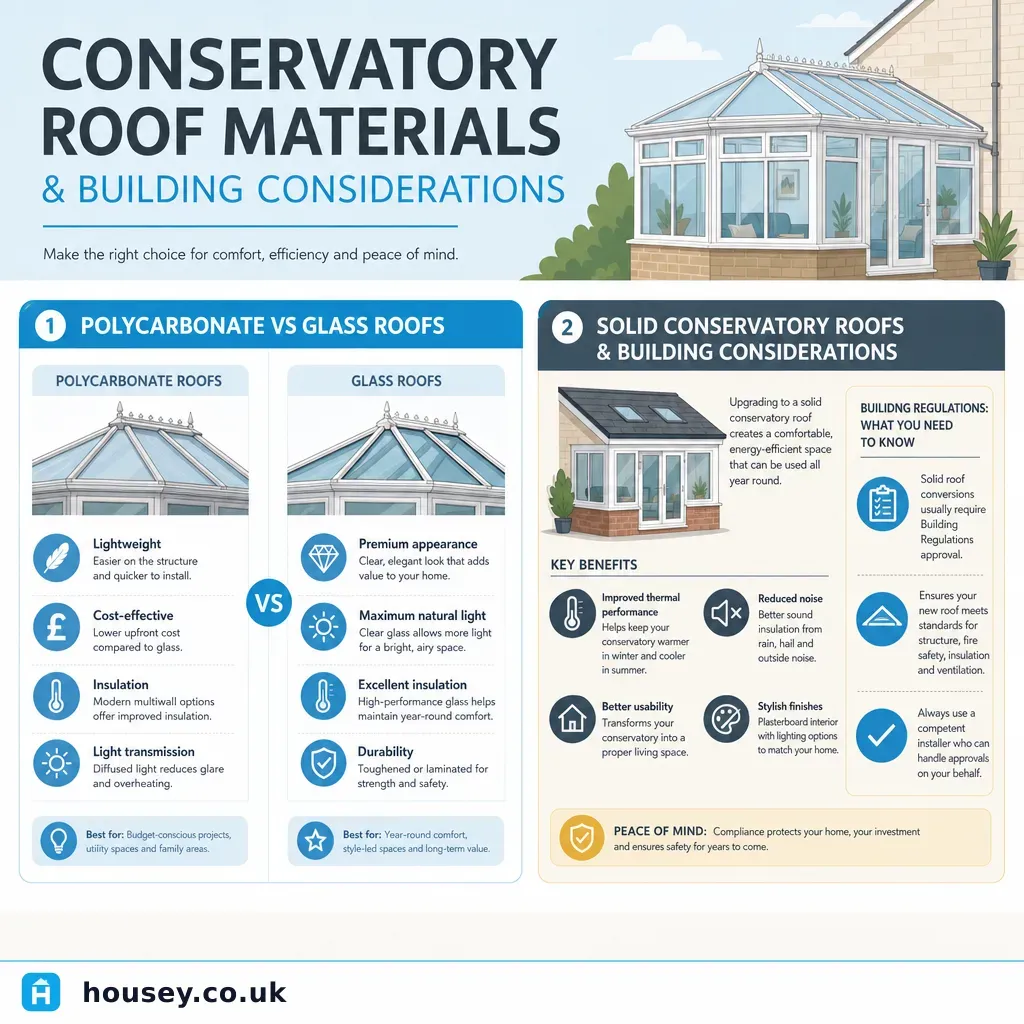
Conservatory Roof Materials and Building Considerations
The main conservatory roof materials are polycarbonate, glass, and solid insulated panels.
 Improvement & Build
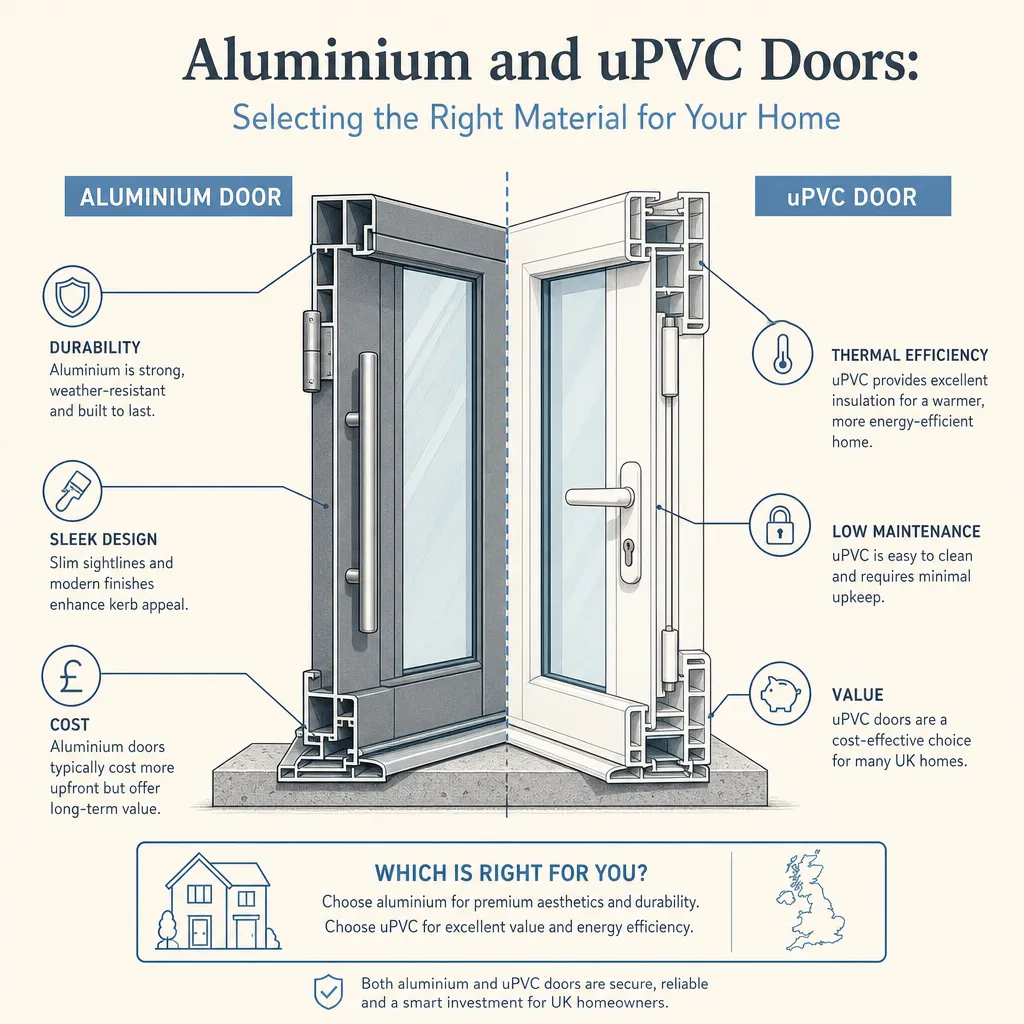
Aluminium and uPVC Doors: Selecting the Right Material for Your Home
uPVC doors are lower-cost and low-maintenance, making them a practical choice for most UK homes.
 Improvement & Build
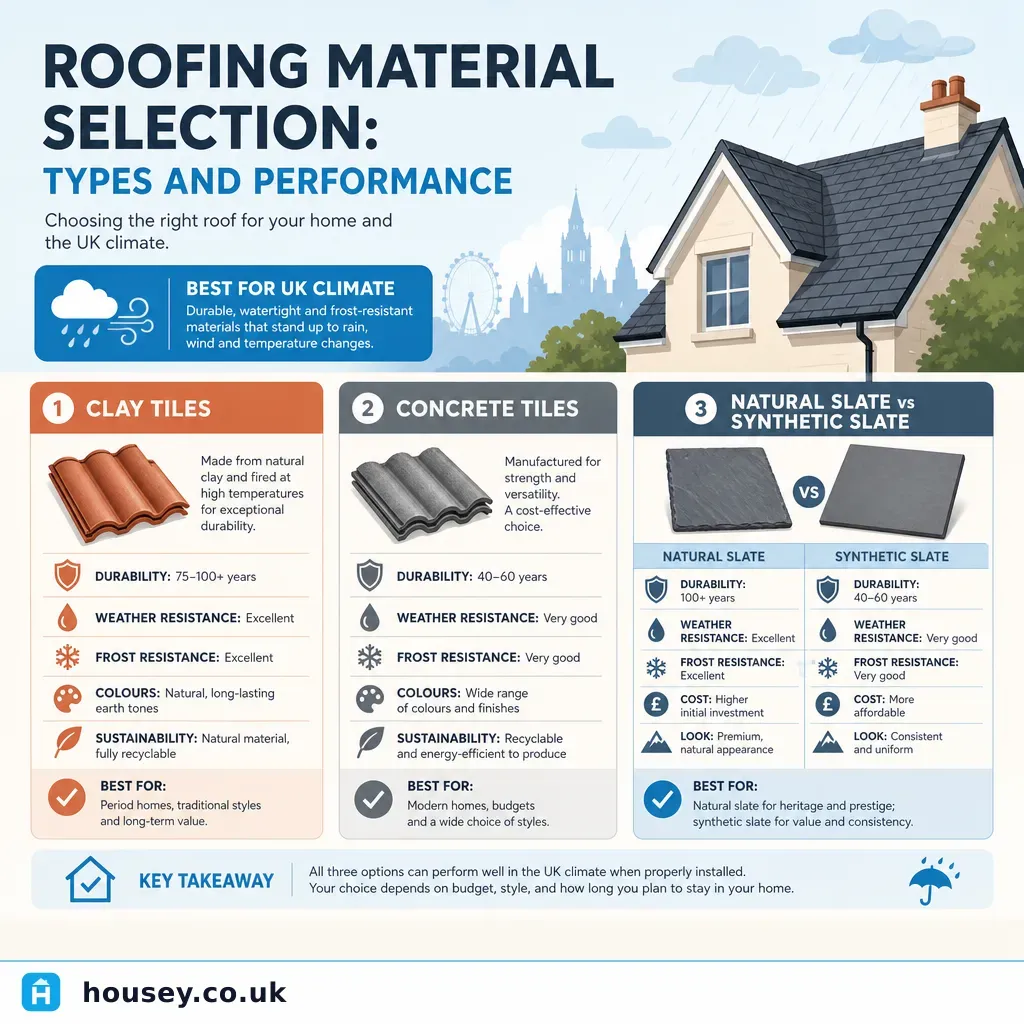
Roofing Material Selection: Types and Performance
The right roofing material depends on your roof pitch, property type, local planning requirements, and budget.
 Improvement & Build
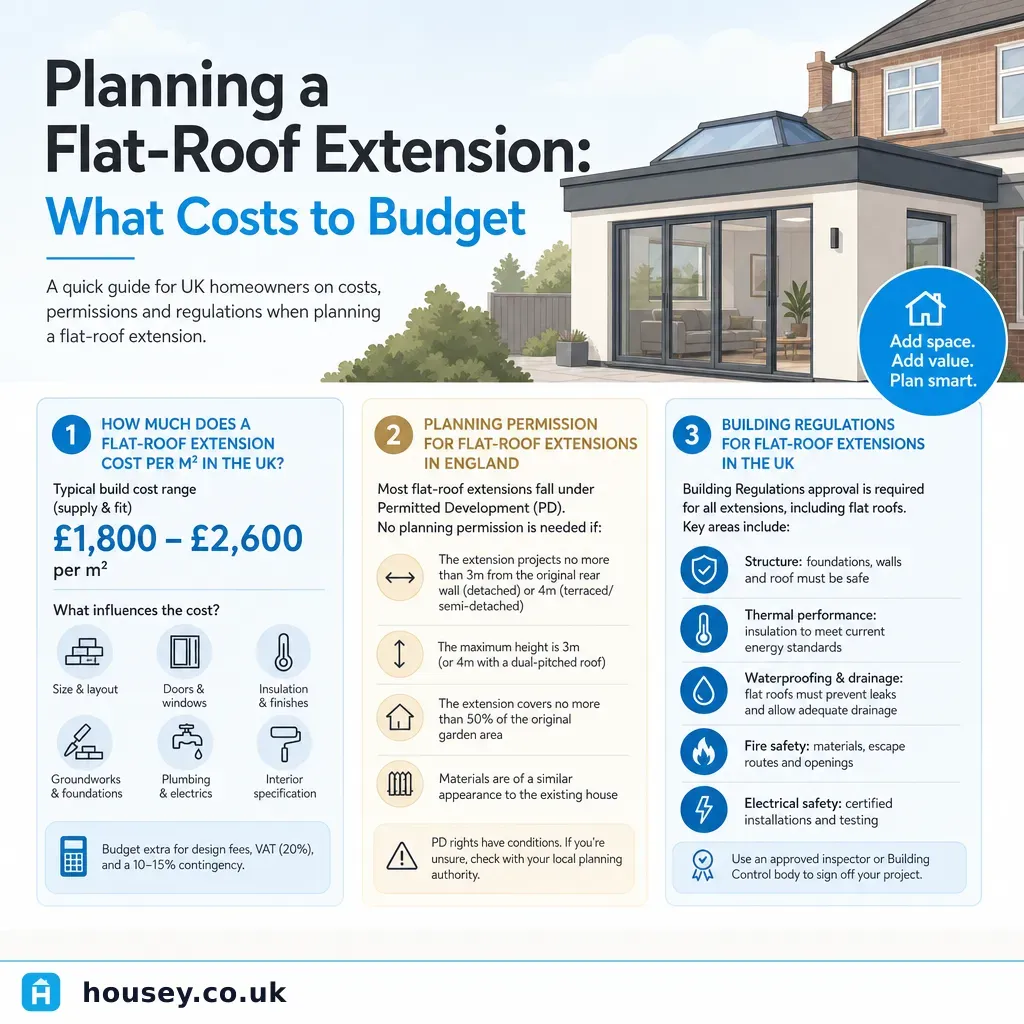
Planning a Flat-Roof Extension: What Costs to Budget
A flat-roof single-storey extension typically costs £1,500–£3,000 per m² in the UK, depending on size, specification, location, and roof membrane choice.
 Improvement & Build
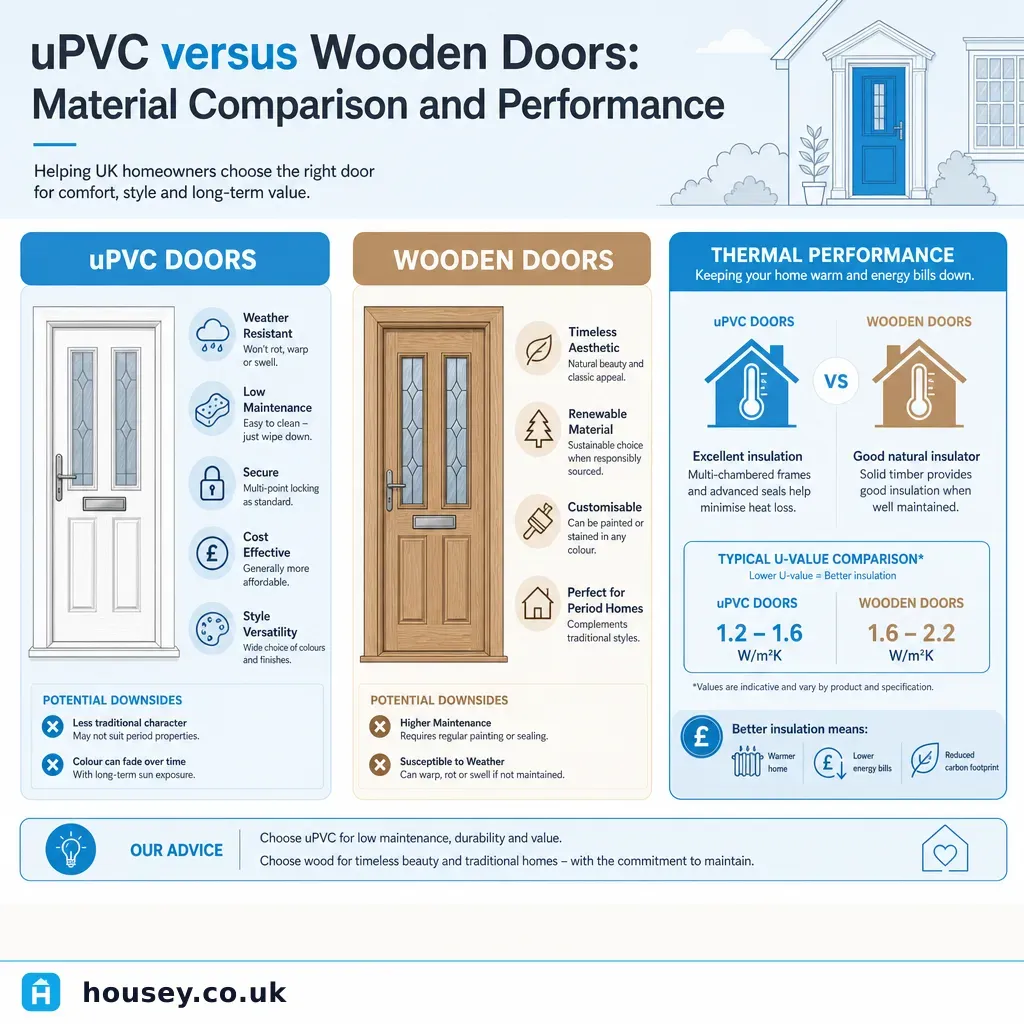
uPVC versus Wooden Doors: Material Comparison and Performance
uPVC doors are generally lower maintenance, better draught-sealed from the factory, and cheaper to install than timber doors.