Expenses for Clearing and Preparing Land
By Housey · Last reviewed 5th of May 2026

Expenses for Clearing and Preparing Land
Land clearance and site preparation sit at the start of almost every significant construction or landscaping project in the UK, yet the costs are frequently underestimated or poorly scoped until work is already underway. Whether you are clearing overgrown ground ahead of a self-build, removing existing structures before an extension, or preparing a plot for a new driveway or garden makeover, the variables — vegetation density, soil type, existing structures, access constraints, and the presence of protected trees or invasive species — can shift the final bill considerably. Defining the scope clearly from the outset helps you budget realistically, brief contractors accurately, and avoid unexpected extras.
Key points
- Tree removal typically costs £200–£400 for a small specimen and £800–£2,000 or more for a large or awkwardly positioned tree; stump grinding usually adds £60–£150 per stump on top.
- Trees covered by a Tree Preservation Order (TPO) or within a conservation area require written consent from the local planning authority before any work; proceeding without consent is a criminal offence under the Town and Country Planning Act 1990 and carries an unlimited fine.
- Japanese knotweed is classified as controlled waste under the Environmental Protection Act 1990 and must be treated or removed by a licensed specialist — standard skipping of knotweed-contaminated soil is illegal.
- Skip hire for site debris typically costs £200–£400 for a standard 6-yard skip; bulk soil and rubble is often removed more cost-effectively by grab lorry at £150–£300 per load.
- Groundworkers in most UK regions charge £200–£400 per day; site preparation for a typical house extension footprint may take two to four days depending on access, ground conditions, and the scope of any demolition.
What does land clearing involve?
Land clearing is not a single uniform task — it is a collection of distinct activities whose scope varies considerably depending on what is on the site and what the ground needs to be ready for. Common components include:
- Vegetation clearance: cutting back overgrowth, brambles, scrub, and undergrowth by hand, with powered tools, or using compact machinery.
- Tree felling and removal: felling, sectioning, chipping, and removing trees from site; grinding or excavating stumps.
- Demolition of outbuildings: removing sheds, garages, greenhouses, old walls, and redundant paving.
- Topsoil stripping: removing the upper organic layer ahead of construction or groundworks.
- Ground levelling and excavation: cut-and-fill operations to achieve a required formation level.
- Debris and spoil disposal: skip hire, grab lorry hire, or licensed waste transfer.
Not every project requires all of these elements. Defining scope clearly before requesting quotes is essential to obtaining comparable prices from different contractors.
Cost breakdown by task type
Task | Indicative UK cost | Notes |
|---|---|---|
Vegetation and scrub clearance | £150–£350 per day (labour) | Heavily overgrown sites may need compact machinery |
Small tree removal (up to 5m) | £200–£400 | Includes felling and removal from site |
Medium tree removal (5–10m) | £400–£800 | Crown spread and access affect price significantly |
Large tree removal (10m+) | £800–£2,000+ | Proximity to structures and access are key cost drivers |
Stump grinding | £60–£150 per stump | Depth of grind and stump diameter affect price |
Timber outbuilding demolition (up to 20m²) | £200–£600 | Asbestos screening required for pre-2000 buildings |
Brick outbuilding demolition (up to 20m²) | £400–£1,200 | Masonry disposal adds skip or grab costs |
Skip hire (6-yard) | £200–£400 | Prices vary by region; highway permit needed if on public road |
Grab lorry hire | £150–£300 per load | Efficient for bulk soil and rubble; no manual loading required |
Topsoil strip and remove | £3–£8 per m² | Depends on depth, volume, and site access |
Ground levelling and excavation | £5–£15 per m² | Harder ground and restricted access increase cost |
Indicative UK costs, last reviewed 2026-05-05. Actual quotes vary by region, site conditions, and contractor. Always obtain at least two or three written quotes before appointing a contractor.
Key cost drivers
Access is often the largest hidden variable. A site reachable by a mini-digger or grab lorry is significantly cheaper to clear than one where all material must be hand-carried through a standard domestic side gate. Restricted access increases labour time, limits equipment options, and can mean smaller-capacity loads at higher cost per trip.
Ground conditions matter for any excavation element. Clay-heavy or waterlogged soil is harder to break up and remove than free-draining sandy ground. Rock, concrete, or old footings encountered below the surface can require breaker equipment and add substantially to time and plant hire costs.
Contamination requires specialist assessment and disposal beyond standard clearance pricing. Sites with a history of fuel storage, heavily painted or treated structures, or former commercial use may have contaminated soil. If contamination is suspected, a Phase 1 or Phase 2 environmental survey should be obtained before clearance begins, as remediation costs vary significantly and should be treated as a separate budget line.
Asbestos in pre-2000 structures is a legal and safety consideration that affects demolition costs directly. Any building constructed before 2000 may contain asbestos cement sheets, insulation board, floor tiles, or roofing materials. Before demolishing any such structure, an asbestos survey by a qualified assessor is strongly advisable — many professional demolition contractors will require one before starting work. Removal of identified asbestos must be carried out by an HSE-licensed contractor. Do not attempt to handle or remove suspected asbestos materials yourself.
Japanese knotweed is a specific UK concern that can dramatically affect site clearance costs and timescales. If knotweed is identified on site, it cannot simply be cleared and skipped. Classified as controlled waste under the Environmental Protection Act 1990, it requires treatment by a licensed specialist — typically herbicide applied over two or more growing seasons — or specialist excavation with licensed off-site disposal. Its presence should also be disclosed to solicitors if the property is being sold or refinanced, as it can affect mortgage valuations.
Red flags to check before clearance begins
- TPO and conservation area trees: search your local planning authority's tree register or use the Planning Portal to confirm which trees are protected. Felling a TPO tree without consent is a criminal offence and carries an unlimited fine.
- Underground services: before any excavation, request a free utility search through Linesearch Before U Dig (LSBUD) or commission a service-detection survey. Striking a gas, electricity, water, or telecoms main is dangerous and can result in significant liability.
- Boundary clarity: confirm ownership boundaries before clearing vegetation near walls, fences, or hedges that may belong to a neighbour. HM Land Registry title plans are the primary reference.
- Ecological features: hedgerows, ponds, old building rooflines, and log piles can support protected species including bats, great crested newts, and nesting birds. If such features are present, a preliminary ecological appraisal may be needed before clearance; your local planning authority or Natural England can advise on requirements.
- Pre-2000 structures: treat all buildings constructed before 2000 as potentially containing asbestos until a survey confirms otherwise.
Which contractor do I need?
- Choose groundworkers for excavation, topsoil stripping, ground levelling, drainage groundworks, and site preparation ahead of construction. Groundworkers use diggers, dumpers, and compactors and are the right choice when the main task is reshaping or preparing the ground itself.
- Choose demolition contractors for knocking down structures — outbuildings, garden walls, old garages — particularly where asbestos screening, structural sequencing, or licensed waste management is required. For structures of any complexity, demolition contractors are better equipped than general landscapers.
- Choose landscapers for lighter vegetation clearance, garden stripping, and preparation for landscaping works rather than construction. A landscaper is appropriate where the scope is removing overgrowth, old planting beds, and garden debris rather than earthworks or structural demolition.
For larger or more complex sites, more than one contractor type may be needed. In that case, establish clearly which contractor is taking the principal contractor role and responsibility for coordinating site safety.
What to ask before accepting a quote
- Does the price include removal and licensed disposal of all waste from site?
- Is the contractor a registered waste carrier, verifiable on the Environment Agency public register?
- Will you carry out a utility services check before excavation begins?
- What happens if contaminated soil or asbestos is discovered — is remediation within scope, and at what additional cost?
- Are TPO trees identified and explicitly excluded from scope?
- Is VAT included in the quoted figure?
- What equipment and crew size is planned, and is that appropriate given the access constraints?
- Will you provide a waste transfer note for all waste removed?
When to get professional help
For most garden clearance projects, a reputable landscaper or groundworker is sufficient. Engage specialist help when:
- Asbestos is suspected in any structure to be demolished — do not disturb the material; arrange a survey by a qualified assessor before any demolition work begins.
- Japanese knotweed or other invasive species such as giant hogweed are identified on site — contact a specialist contractor and inform your solicitor.
- Ecological features such as ponds, hedgerows, mature trees, or old rooflines are present and may support protected species — obtain a preliminary ecological appraisal before clearance.
- Underground services are unconfirmed before excavation is due to begin.
- The site contains TPO trees or falls within a conservation area requiring planning authority consent before tree work.
- There is reason to believe the site may be contaminated — commission an environmental survey before any soil disturbance.
How Housey can help
Housey connects UK homeowners and developers with vetted groundworkers, demolition contractors, and landscapers who can assess your site and provide written, itemised quotes. Comparing multiple professionals before committing helps ensure fair pricing and clear terms for the work ahead.
Frequently asked questions
How much does it cost to clear a typical garden plot in the UK?
A standard residential garden clearance — removing overgrowth, old timber structures, and debris — typically costs £500–£2,000 for a moderately overgrown plot of around 100–200m². Sites with trees, brick structures, contamination, or restricted access cost considerably more. Always obtain at least two written quotes, as prices vary significantly by region, contractor, and site conditions.
Do I need permission to clear trees from my land?
You need consent from your local planning authority before removing any tree covered by a Tree Preservation Order (TPO) or any tree in a conservation area with a trunk diameter above 75mm at 1.5m height. Removing a protected tree without consent is a criminal offence under the Town and Country Planning Act 1990 and carries an unlimited fine. Check before any tree work begins.
What should I do if I find Japanese knotweed during clearance?
Stop clearance work and contact a specialist invasive species contractor. Japanese knotweed is classified as controlled waste under the Environmental Protection Act 1990 and cannot be disposed of through standard skip or landfill routes. A licensed specialist will advise on herbicide treatment over multiple seasons or specialist excavation. Disclose its presence to your solicitor if the property is being sold or mortgaged.
Do I need an asbestos survey before demolishing an outbuilding?
If the structure was built before 2000, an asbestos survey is strongly advisable and many demolition contractors will require one before starting work. The Health and Safety Executive sets out legal duties for managing asbestos in structures. Any identified asbestos must be removed by an HSE-licensed contractor. Do not disturb suspected asbestos materials yourself under any circumstances.
How is site clearance waste disposed of legally?
Any contractor removing waste from your site must hold a registered waste carrier licence, verifiable on the Environment Agency public register. Waste must go to a licensed facility. Fly-tipping of site waste is illegal, and as the property owner you could be held partly responsible. Always ask for a waste transfer note when waste is collected, and keep it for your records.
Sources and further reading
- Tree Preservation Orders and trees in conservation areas — GOV.UK
- Asbestos: the basics — Health and Safety Executive
- Register as a waste carrier — Environment Agency / GOV.UK
- Linesearch Before U Dig (LSBUD) — utility search service for safe excavation
- Planning Portal: planning permission — Planning Portal
- Protected species: how to get a licence — Natural England / GOV.UK
Useful next reads
 Improvement & Build
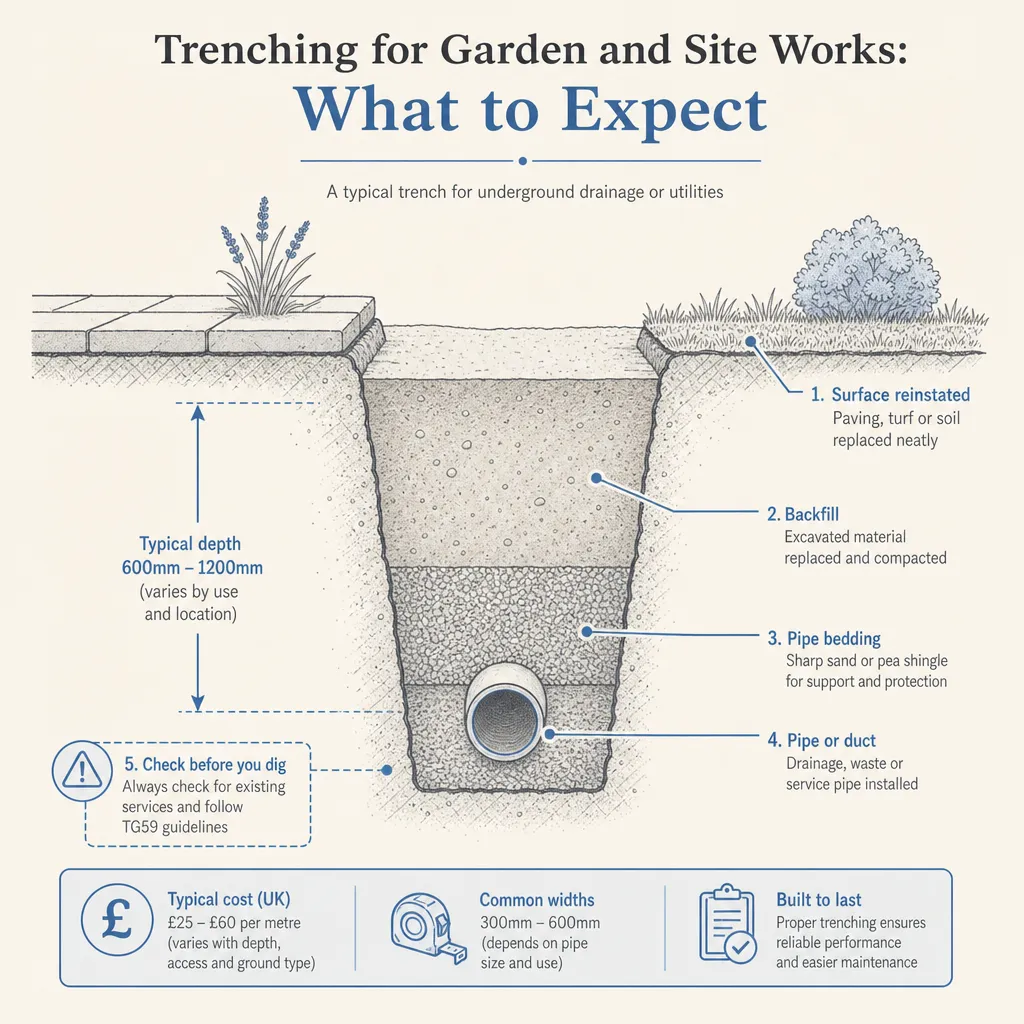
Trenching for Garden and Site Works: What to Expect
Trenching for garden and site works involves excavating channels to lay drainage pipes, electrical cables, water supply lines, or foundation drains.
 Improvement & Build
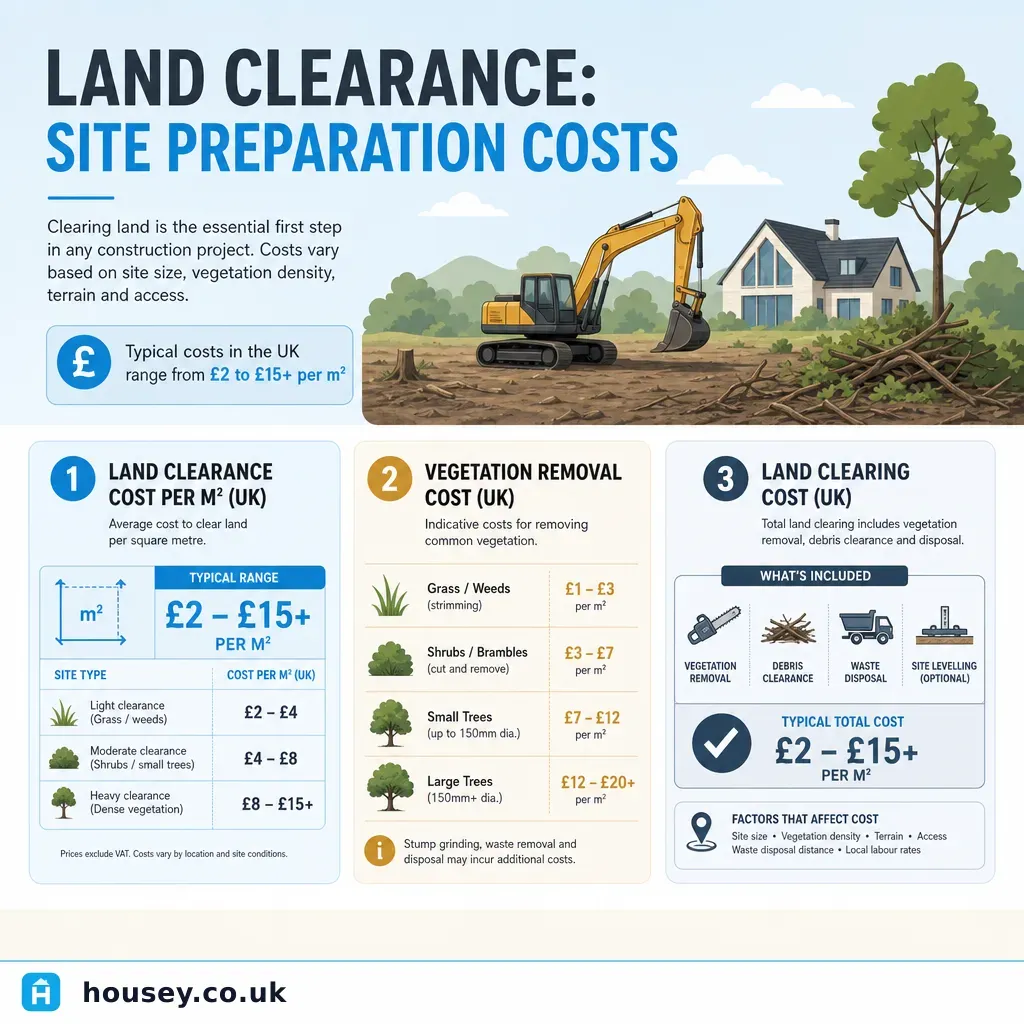
Land Clearance: Site Preparation Costs
Land clearance and site preparation costs in the UK vary widely depending on site size, vegetation density, access, and whether structures need demolishing.
 Improvement & Build
Seasonal Leaf and Garden Debris Removal Costs
Professional leaf clearance for a small to medium UK garden typically costs £60 to £150 for a single autumn visit, rising to £350 or more for large gardens with mature trees.
 Improvement & Build
Costs for Stripping and Replacing Roof Underlay and Tiles
Stripping and replacing roof underlay and tiles on a typical UK semi-detached house costs £5,000–£12,000, depending on roof size, tile type, and access.
 Improvement & Build
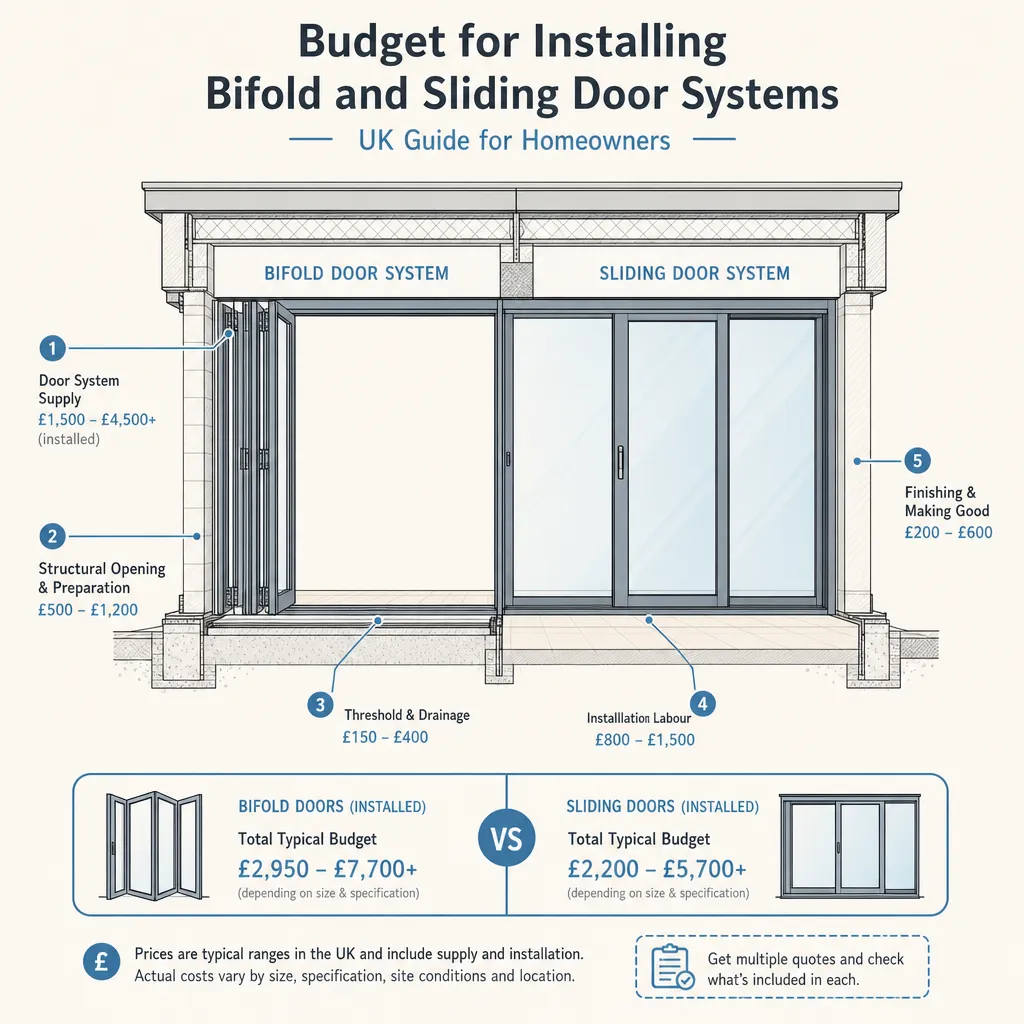
Budget for Installing Bifold and Sliding Door Systems
Aluminium bifold doors typically cost £4,000–£12,000 supplied and installed; uPVC bifolds run £2,500–£6,000.