Budget for Installing Bifold and Sliding Door Systems
By Housey · Last reviewed 6th of May 2026
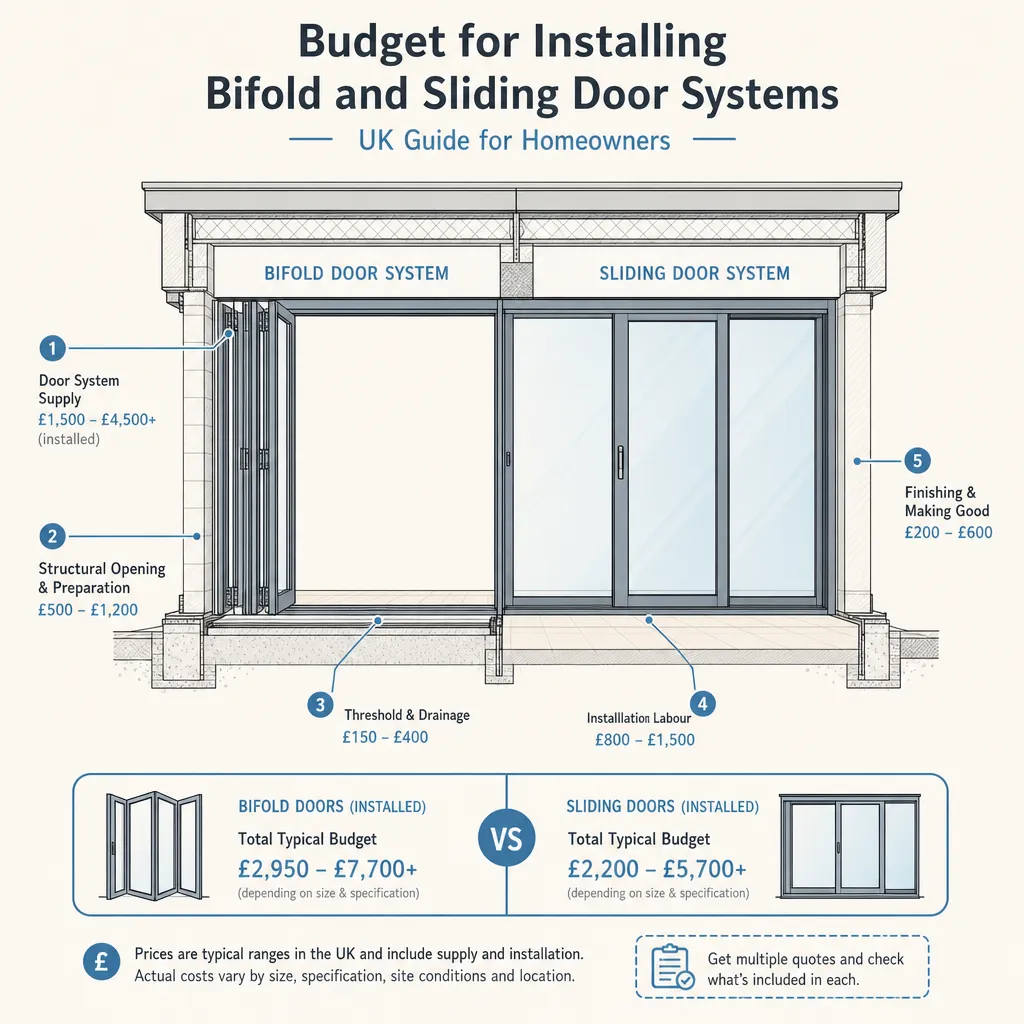
Budget for Installing Bifold and Sliding Door Systems
Installing bifold or sliding doors is one of the more significant joinery decisions in a UK home renovation, with costs ranging from under £2,000 for a basic uPVC sliding door to over £12,000 for a wide aluminium bifold system. Understanding what sits behind those figures is the most effective way to compare quotes fairly and avoid paying for specification you don't need.
Key points
- Aluminium bifold doors typically cost £4,000–£12,000 supplied and installed for a 3–6 panel system; uPVC bifolds run £2,500–£6,000 for comparable configurations.
- All replacement external doors are notifiable under Part L of the Building Regulations; glazing must achieve at least 1.6 W/m²K whole-window U-value.
- Installers must be registered with FENSA or CERTASS to self-certify the work; without registration, a local authority building control application is required, adding cost and time.
- Labour for a like-for-like replacement typically runs £400–£900; widening a masonry opening adds £800–£3,000+ for structural work.
- Sliding doors are generally cheaper than bifolds of the same material and width — a practical choice where budget or opening size is constrained.
Bifold vs sliding doors: cost and use cases
Bifold doors fold concertina-style to create a wide, unobstructed opening — ideal for connecting a kitchen-diner to a garden or terrace. Sliding doors glide on a track with only part of the opening ever fully clear. Bifolds cost more because of the complex folding mechanism and greater hardware per panel.
Door type | Typical configuration | Indicative supply + install | Best for | Main cost driver |
|---|---|---|---|---|
uPVC bifold | 3–4 panel | £2,500–£6,000 | Budget-conscious projects | Panel count, hardware |
Aluminium bifold | 3–6 panel | £4,000–£12,000+ | Contemporary extensions, large openings | Frame finish, track system |
uPVC sliding | 2–3 panel | £1,200–£3,500 | Patio door replacement | Panel count, glazing spec |
Aluminium sliding | 2–4 panel | £2,000–£7,000 | Slim sightlines, modern look | Frame finish, glass spec |
Timber bifold | 3–4 panel | £5,000–£15,000+ | Period and conservation area properties | Species, bespoke sizing |
Indicative UK costs, last reviewed 2026-05-06. Obtain at least three quotes from FENSA- or CERTASS-registered installers.
What drives the cost?
- Frame material: Aluminium costs more than uPVC but allows slimmer sightlines and larger glass panels. Timber carries the highest material cost and requires periodic maintenance.
- Glazing spec: Double glazing is standard; triple glazing adds roughly 15–25% to glass unit costs. Low-E coatings, argon fill, and warm-edge spacer bars improve U-value and price.
- Panel count and opening size: Every additional panel adds material, hardware, and labour time.
- Threshold type: Flush low-profile thresholds cost more than a standard raised sill and may require drainage provision beneath the frame.
- Structural work: Widening a masonry opening — new lintel, making good, temporary supports — typically adds £800–£3,000+ depending on wall construction.
Building regulations and installer certification
Replacement external doors in England and Wales are notifiable under Part L of the Building Regulations. A FENSA- or CERTASS-registered installer can self-certify the work and issue a compliance certificate you will need when selling the property. Without scheme registration, a local authority building control application is required — typically adding £200–£600 in fees. In conservation areas or for listed buildings, planning permission may be needed; always check with your local planning authority before ordering.
Decision tree: which system should you choose?
- Choose bifold doors if you want the widest unobstructed opening to a garden and have the budget for aluminium or timber.
- Choose sliding doors if budget is a priority or your opening is narrower than 2.4 m.
- Choose uPVC if low maintenance and a lower upfront cost matter more than slim sightlines.
- Choose aluminium if you want contemporary aesthetics or a wide multi-panel opening.
- Consult a structural engineer or experienced builder first if you plan to widen or create a new opening in a load-bearing wall.
- Check with your local planning authority before ordering if the property is listed or in a conservation area.
What to ask before accepting a quote
- Is the price for supply and installation, or supply only?
- Is the installer FENSA- or CERTASS-registered, and will a compliance certificate be issued?
- What glazing spec is included — U-value, gas fill, low-E coating?
- Is the threshold flush or raised, and is drainage provision included?
- Are structural works included or quoted separately?
- What warranty covers the frame, glazing unit, and hardware?
- Is VAT included in the quoted price?
When to get professional help
If you plan to widen or create a new opening in a load-bearing wall, get input from a structural engineer or experienced building contractor before work starts. Cracks above an existing opening, signs of previous movement, or a non-masonry construction are all reasons to seek structural advice first. For listed buildings or conservation area properties, consult a conservation architect before changing any external joinery.
How Housey can help
Housey connects you with window and door installers who can quote competitively for bifold and sliding door projects, whether you are replacing an existing patio door or opening up a new wall position.
Frequently asked questions
Do bifold doors add value to a house in the UK?
Well-installed aluminium bifold doors connecting a kitchen or dining room to a garden are widely regarded as a desirable feature. They contribute to saleability as part of a quality extension but are unlikely to add a fixed amount of value in isolation. The benefit depends on the overall property, the quality of the installation, and local buyer expectations.
Do I need planning permission for bifold doors?
Most bifold and sliding door replacements in England are permitted development and do not require planning permission. However, if your property is listed, in a conservation area, or is a flat in a converted building, permitted development rights may be restricted. Always check with your local planning authority before ordering, particularly if you are changing the size or style of the opening.
How long does bifold door installation take?
A straightforward replacement in an existing opening typically takes one to two days. If structural work is needed — such as widening the opening or replacing a lintel — allow an additional one to three days for masonry work and drying time. Supply lead times from manufacturers typically run four to twelve weeks.
Can bifold doors be fitted to an existing patio door opening?
Yes, provided the existing opening is wide enough and the lintel above is adequate for the new span. An installer should assess the lintel, threshold condition, and reveals before confirming a price. If the opening needs widening, masonry work and possible structural engineering input will be needed, adding to the overall cost.
What certification should I receive after installation?
If your installer is FENSA- or CERTASS-registered, they will issue a compliance certificate confirming the doors meet Part L of the Building Regulations. Keep this certificate — you will need it when selling the property. If the installer is not scheme-registered, a separate building control application is required, which carries an additional fee.
Sources and further reading
Useful next reads
 Improvement & Build
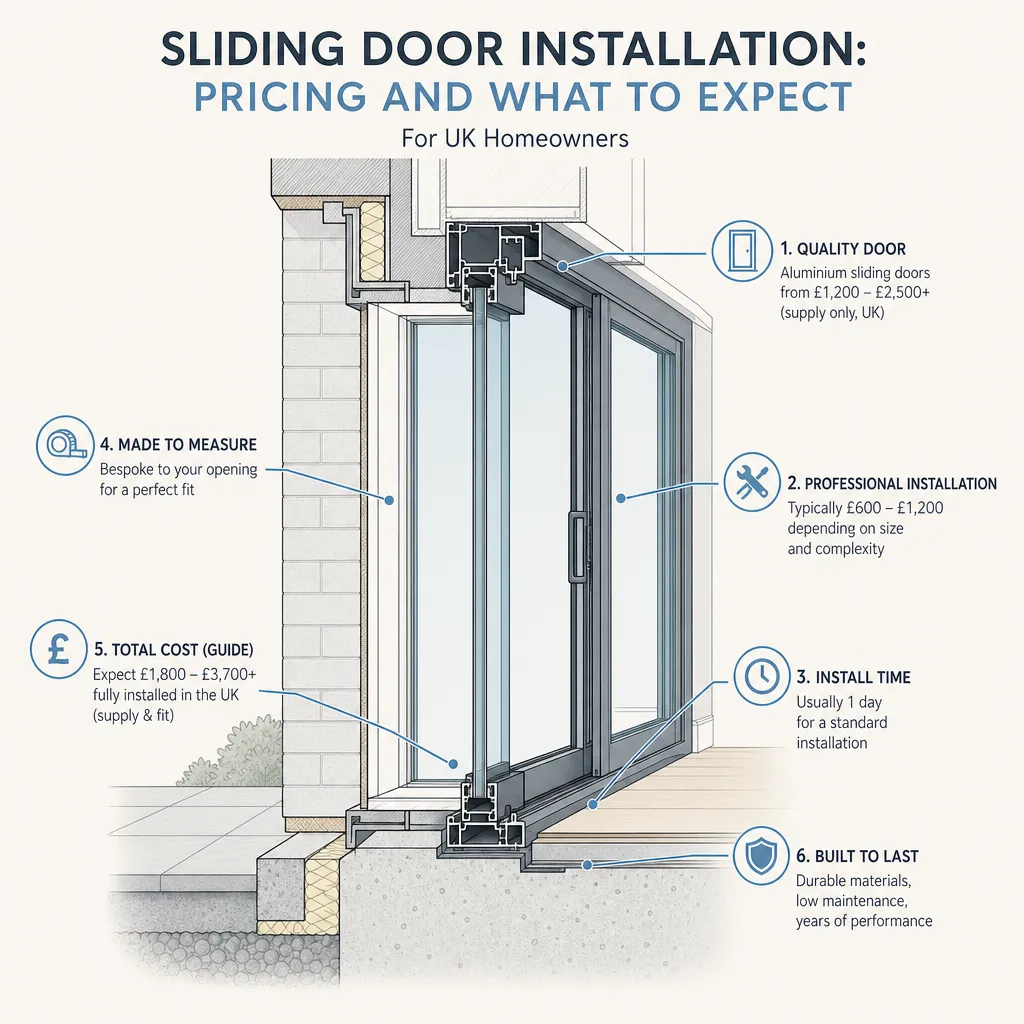
Sliding door installation: pricing and what to expect
A new sliding patio door in the UK typically costs £800–£3,000 fully installed, depending on size, material, and glazing specification.
 Improvement & Build
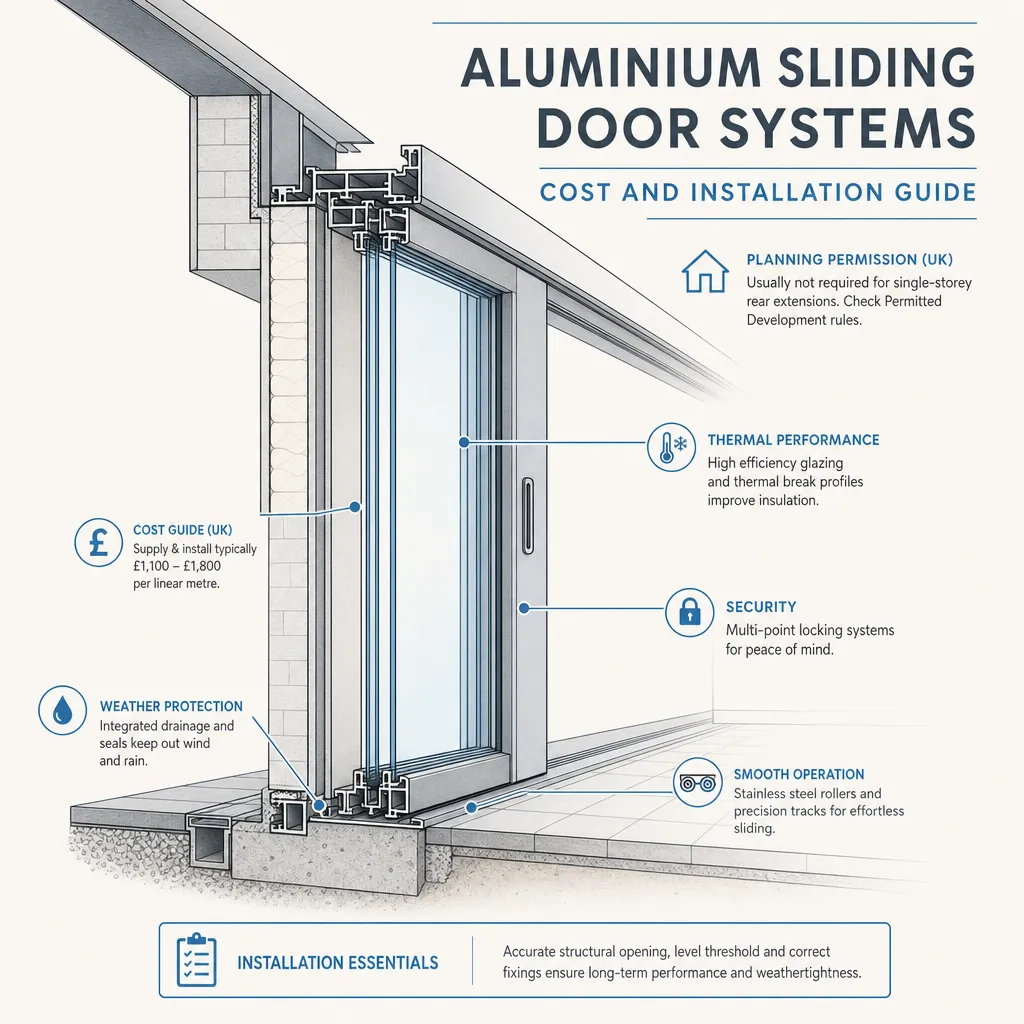
Aluminium Sliding Door Systems: Cost and Installation Guide
Aluminium sliding doors typically cost £2,500–£7,000 supply and fitted for a standard opening.
 Improvement & Build
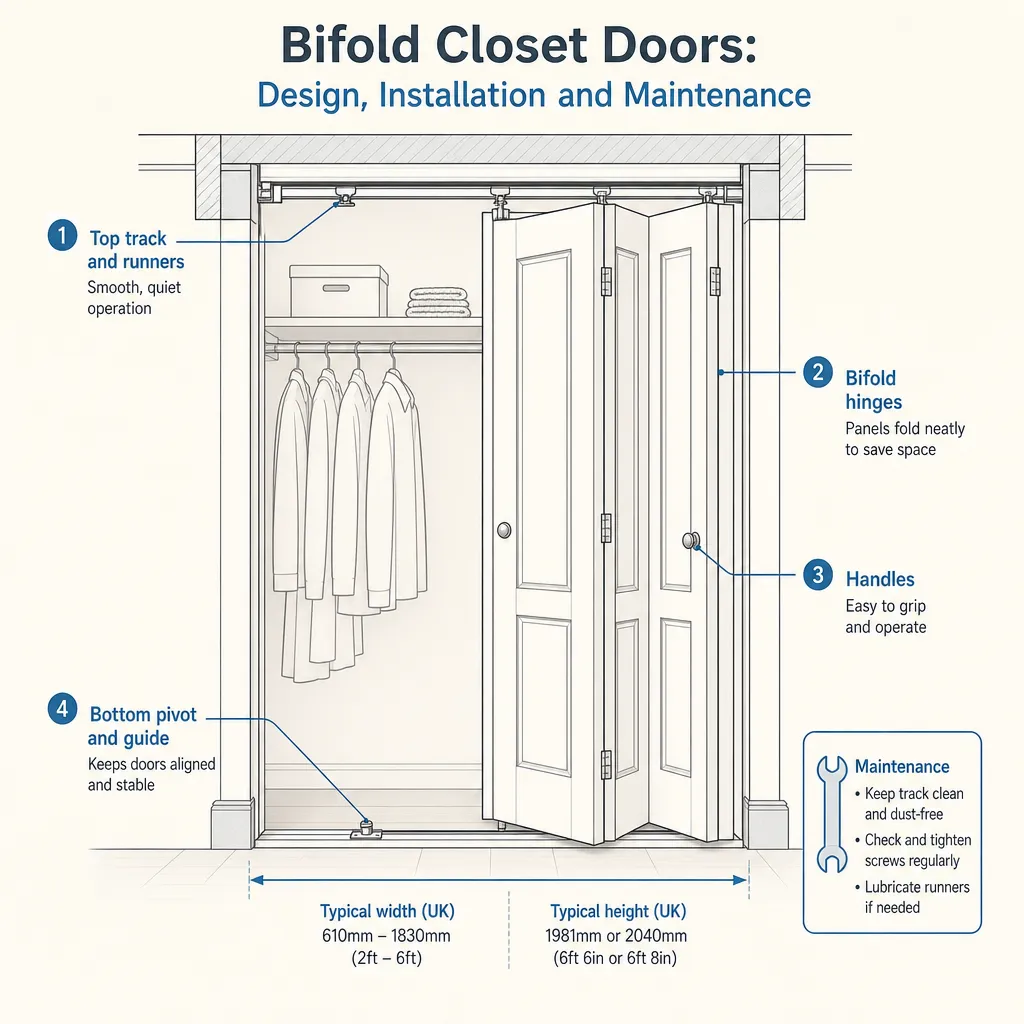
Bifold Closet Doors: Design, Installation and Maintenance
Bifold closet doors fold in on themselves along a top-mounted track, making them well suited to spaces where floor clearance in front of the wardrobe is limited.
 Improvement & Build
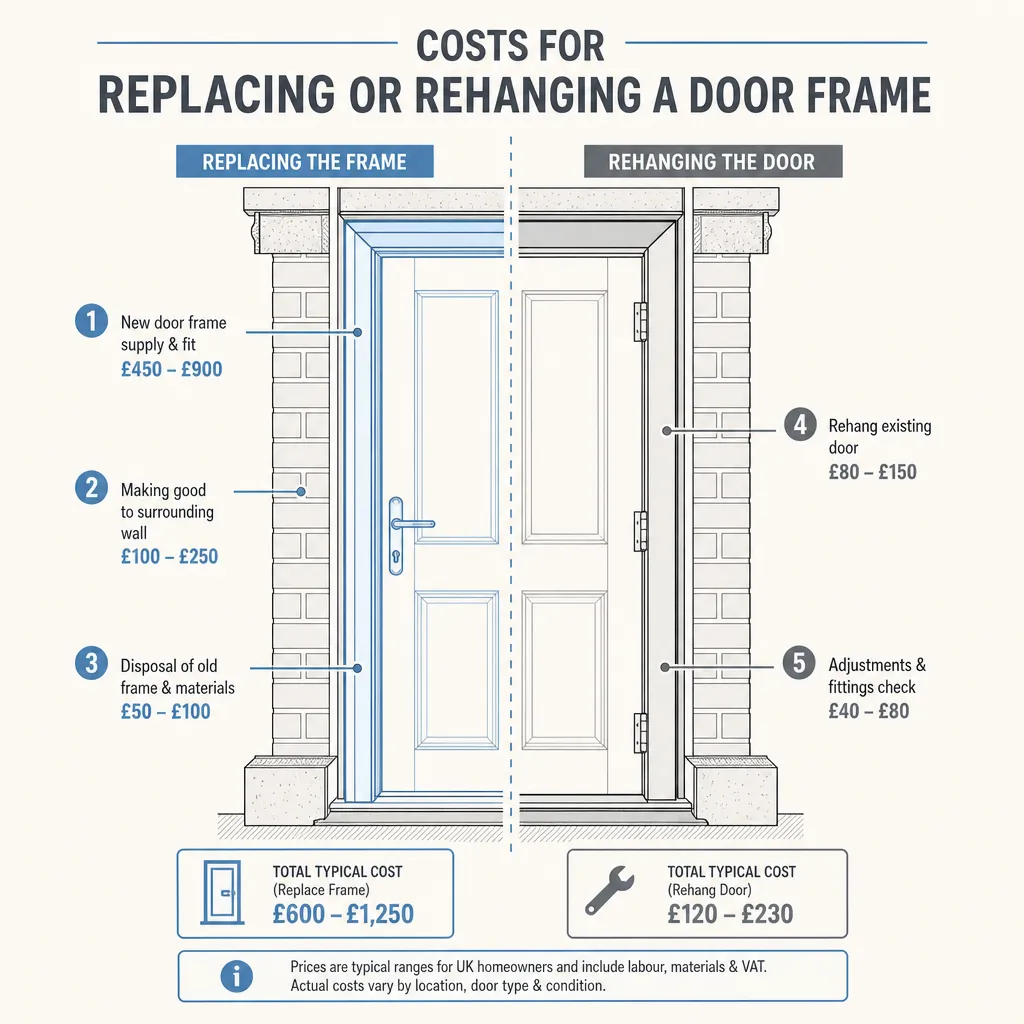
Costs for Replacing or Rehanging a Door Frame
Replacing a door frame in the UK typically costs £150–£600 for an internal door and £400–£1,200 for an external door, including labour and materials.
 Improvement & Build
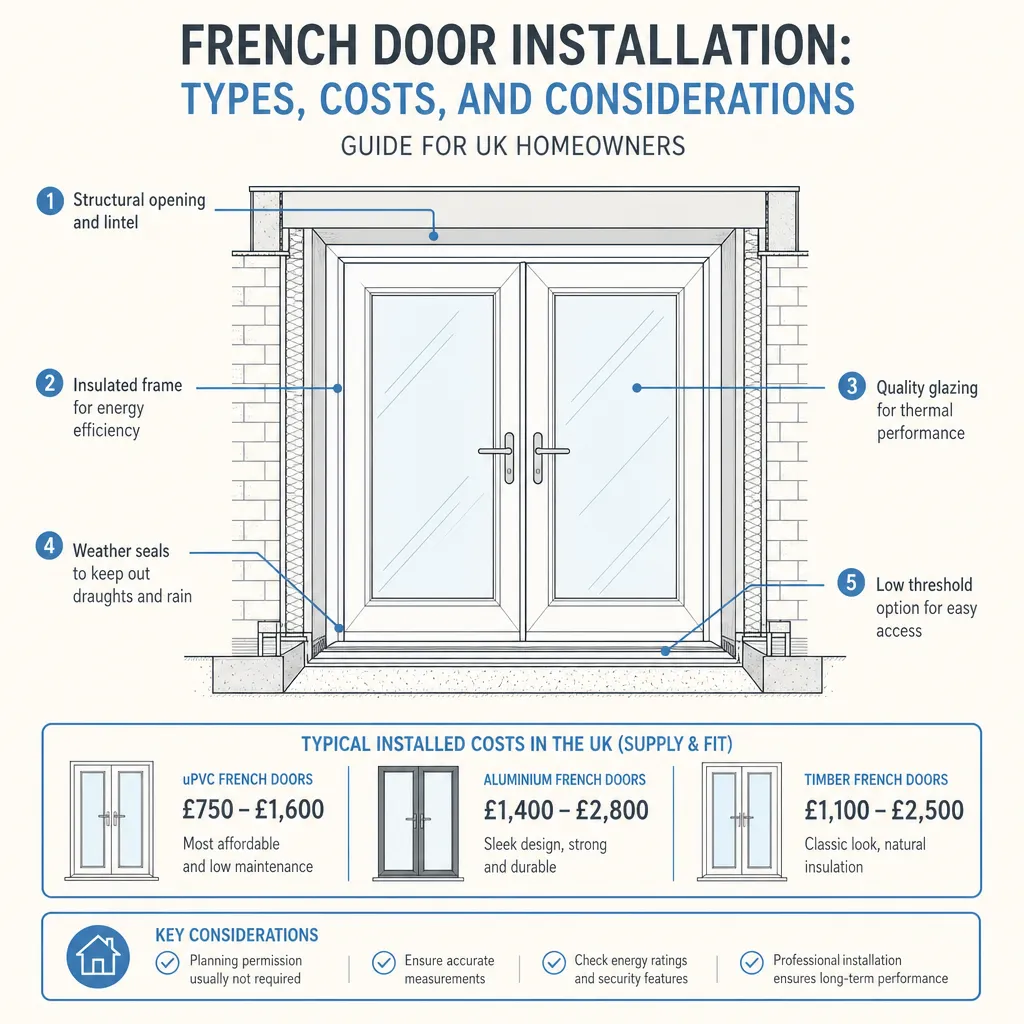
French Door Installation: Types, Costs, and Considerations
French doors in the UK cost roughly £1,500–£3,000 for uPVC and £2,500–£6,000 or more for aluminium or timber, installed.