Land Clearance: Site Preparation Costs
By Housey · Last reviewed 9th of May 2026
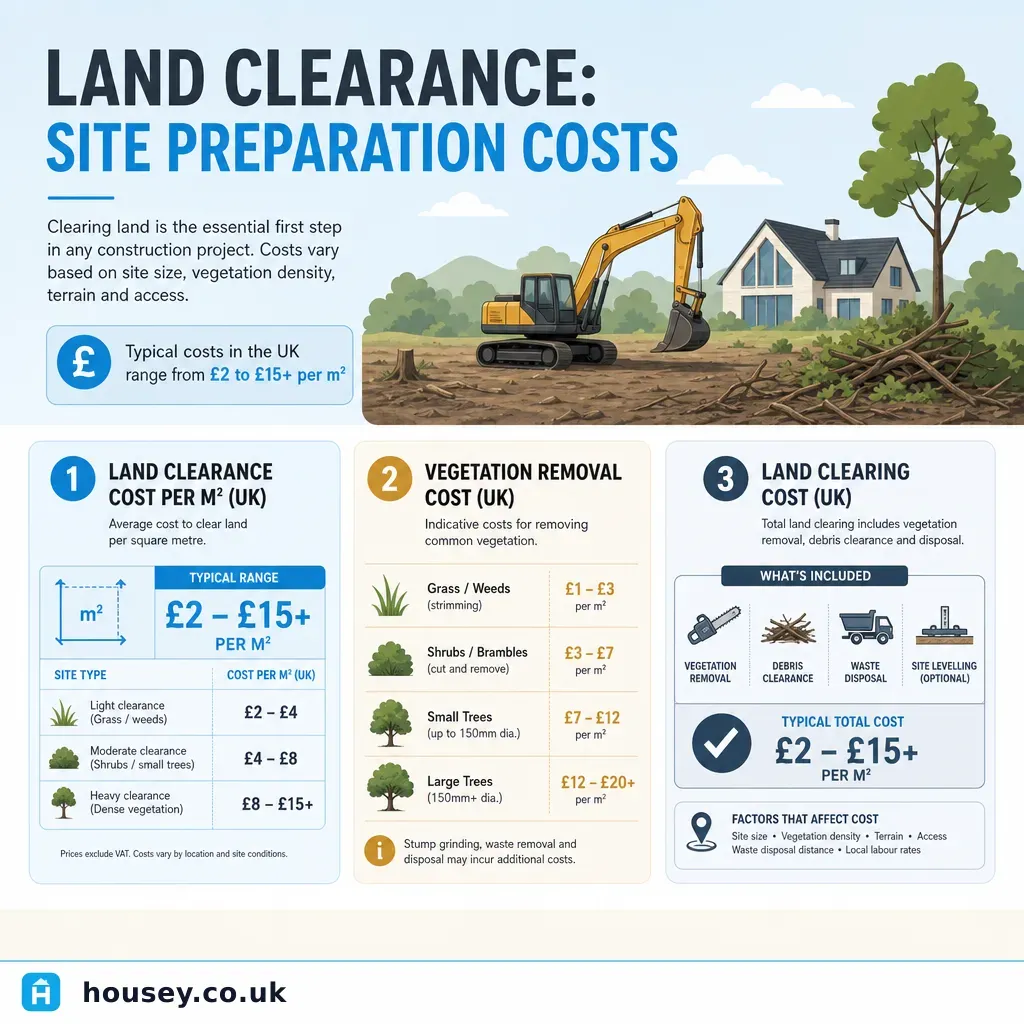
Land Clearance: Site Preparation Costs
Before any construction project can begin, the site must be prepared — and the cost of land clearance is often underestimated in early budgets. Whether you are developing a garden plot, preparing a rural site for a new dwelling, or clearing a brownfield location ahead of a conversion, the scope of clearance work can vary dramatically from one project to the next. Understanding what drives the price helps you compare quotes accurately and avoid surprises once work starts.
Key points
- Site clearance costs in the UK vary from around £500 for a small domestic garden plot to £50,000 or more for a large site with heavy vegetation, structures, or contamination.
- Tree Preservation Orders (TPOs) and Conservation Area restrictions may prevent felling certain trees — check with your local planning authority before any tree removal begins.
- Japanese knotweed, giant hogweed, and other Schedule 9 invasive species under the Wildlife and Countryside Act 1981 require specialist removal and legal disposal; standard clearance contractors cannot handle this waste.
- Hard waste from demolition (brick, concrete, hardcore) is priced and disposed of separately from green waste (vegetation, timber), and the disposal routes and costs differ.
- A pre-clearance preliminary ecological appraisal may be required if the site includes habitats that could support protected species such as bats, great crested newts, or nesting birds.
What affects the cost of site clearance?
No two sites are identical, and clearance quotes reflect this. The main cost drivers are:
Site size and access. Larger sites take longer and may require heavier machinery. Poor access — narrow lanes, no vehicle turning space, or ground soft enough to require tracked equipment — adds time and specialist plant costs.
Type and density of vegetation. Grass and scrub are quicker and cheaper to clear than dense woodland. Mature trees require specialist felling and often stump grinding, both priced separately from general clearance.
Presence of structures. Removing sheds, outbuildings, old walls, or hardstanding involves demolition rather than simple clearance. This usually requires a demolition contractor and generates hardcore waste that must be legally disposed of or crushed on site.
Contamination. Brownfield sites or former agricultural land may contain asbestos, fuel tanks, chemical residues, or contaminated soil. Specialist surveys and licensed haulage are required and can significantly increase costs.
Waste disposal. Green waste and inert hard waste are charged at different rates. Contaminated soil carries additional disposal surcharges and must be transferred to licensed facilities under the Environmental Protection Act 1990.
Invasive species. Presence of Japanese knotweed, Himalayan balsam, or other Schedule 9 species requires specialist treatment — often including an excavation and disposal management plan — and costs substantially more than standard clearance.
Indicative UK costs
Indicative UK costs, last reviewed 2026-05-09. Costs vary by region, site conditions, waste volumes, and contractor. Always obtain at least three itemised quotes.
Type of clearance | Indicative cost range | Notes |
|---|---|---|
Small garden plot — vegetation only | £500 – £3,000 | Up to ~200 m²; green waste removal included |
Medium residential plot — overgrown | £2,000 – £8,000 | Mixed vegetation, some self-seeded trees |
Large garden or field — scrub/woodland | £5,000 – £20,000 | May require tracked machinery; stump grinding priced extra |
Site strip (topsoil removal and level) | £1,500 – £6,000 | Per 0.1 ha; disposal of spoil is additional |
Demolition and clearance (outbuildings) | £3,000 – £15,000 | Depends on structure size and materials |
Invasive species removal (knotweed) | £2,500 – £10,000+ | Specialist contractor; management plan required |
Contaminated soil removal | £5,000 – £50,000+ | Highly site-specific; requires soil testing first |
VAT at the standard rate (20%) typically applies to clearance and demolition work. Always confirm VAT status when requesting quotes.
Worked example: preparing a self-build plot in rural England
A homeowner in the East Midlands purchases a 0.2 ha former paddock with planning permission to build a single dwelling. The land has not been managed for several years and contains dense scrub and self-seeded hawthorn along three boundaries, a derelict agricultural shed with asbestos cement roof panels, and one mature oak tree subject to a TPO.
Clearance scope and approximate costs:
- Scrub and general vegetation removal — a groundworks contractor quotes £4,800, including green waste disposal.
- Asbestos cement roof panel removal — a licensed asbestos contractor (HSE-licensed waste carrier required) quotes £1,800; the sheeting is non-friable and in fair condition, reducing risk and cost.
- Remaining shed demolition — included in the groundworker's scope at £2,200.
- TPO oak retained as required; a tree surgeon is engaged to crown-lift and make safe at £650.
- Topsoil strip of the buildable area — £3,100 for approximately 800 m².
Total indicative cost: approximately £12,550 before VAT, excluding any ecology survey or contamination testing.
This example illustrates how costs accumulate when a site contains mixed elements, and why a site walk with a groundworker before tendering is worth arranging early in the programme.
Which contractor do you need?
Situation | Contractor type |
|---|---|
Vegetation, scrub, and green waste removal | Groundworker or landscaping contractor |
Demolition of structures with mixed materials | Demolition contractor |
Asbestos-containing materials (any type) | HSE-licensed asbestos contractor |
Japanese knotweed or Schedule 9 invasive species | Specialist invasive species contractor (confirm Environment Agency compliance) |
Tree removal near buildings or protected trees | Arboricultural contractor — check Arboricultural Association membership |
Site strip and levelling for construction | Groundworker with plant hire |
Contaminated soil assessment and removal | Environmental consultant plus licensed waste contractor |
For sites with structures and mixed hazards, a demolition contractor with in-house asbestos survey capacity is often more cost-effective than procuring multiple separate specialists.
Pre-clearance checklist for homeowners
Before instructing a contractor, work through these checks:
When to get professional help
Most straightforward vegetation clearance on a private plot does not require a planning application, but several circumstances require professional input before any work begins:
- Protected trees: Carrying out works to a TPO tree without consent from the local planning authority is a criminal offence under the Town and Country Planning Act 1990.
- Asbestos: Any asbestos-containing material must be assessed by a competent person before demolition. Many types of asbestos work must be notified to the HSE, and certain materials require a contractor holding an HSE asbestos licence.
- Nesting birds: Clearing vegetation between March and August carries a significant risk of disturbing nesting birds, which are protected under the Wildlife and Countryside Act 1981. An ecologist should advise on survey requirements and safe working windows.
- Brownfield sites: Do not begin clearance on a former industrial or commercial site without at least a Phase I environmental desk study.
How Housey can help
Housey can help you request quotes from experienced groundworkers and demolition contractors across the UK. Describe your plot size, what needs to go, and any known complications — local contractors will respond with itemised quotes so you can compare costs and approach transparently.
Frequently asked questions
Do I need planning permission to clear land?
In most cases you do not need planning permission to clear vegetation from land you own, but important exceptions apply. Removing or carrying out works to a tree with a Tree Preservation Order requires consent from the local planning authority. Within a Conservation Area, you must give six weeks' notice before felling or significantly pruning any tree with a trunk over 75 mm diameter. Some permitted development rights may also be restricted if prior planning conditions are attached to the site.
How is clearance waste disposed of?
Green waste is typically taken to composting or wood recycling facilities. Inert waste such as clean concrete, brick, and hardcore may be crushed and reused on site or taken to a licensed waste transfer station. Contaminated materials, asbestos, and invasive species plant material — including Japanese knotweed — must go to licensed facilities. Your contractor should provide waste transfer notes as evidence of legal disposal under the Environmental Protection Act 1990.
Can I carry out land clearance myself?
Light vegetation clearance on your own land is generally within the homeowner's remit, but self-clearance is not appropriate where asbestos, contaminated ground, protected trees, protected species, or Schedule 9 invasive species are involved. CDM Regulations 2015 also impose duties on private individuals acting as project clients when instructing contractors — seek advice if you are coordinating multiple trades on site.
How long does site clearance take?
A small garden plot with straightforward vegetation might be cleared in a single day. A 0.2 ha plot with mixed vegetation, structures, and waste removal typically takes three to seven working days. Contaminated sites, invasive species management plans, and phased demolition can take several weeks or months. Lead-in time for specialist contractors — asbestos, ecology, knotweed — should be built into your programme from the outset.
Sources and further reading
- Tree Preservation Orders and Trees in Conservation Areas — GOV.UK
- Construction (Design and Management) Regulations 2015 — Health and Safety Executive
- Asbestos: The Licensed Contractor Requirement — Health and Safety Executive
- Wildlife and Countryside Act 1981 — legislation.gov.uk
- Invasive Non-Native Species: Japanese Knotweed — GOV.UK
- Environmental Protection Act 1990 — legislation.gov.uk
Useful next reads
 Improvement & Build
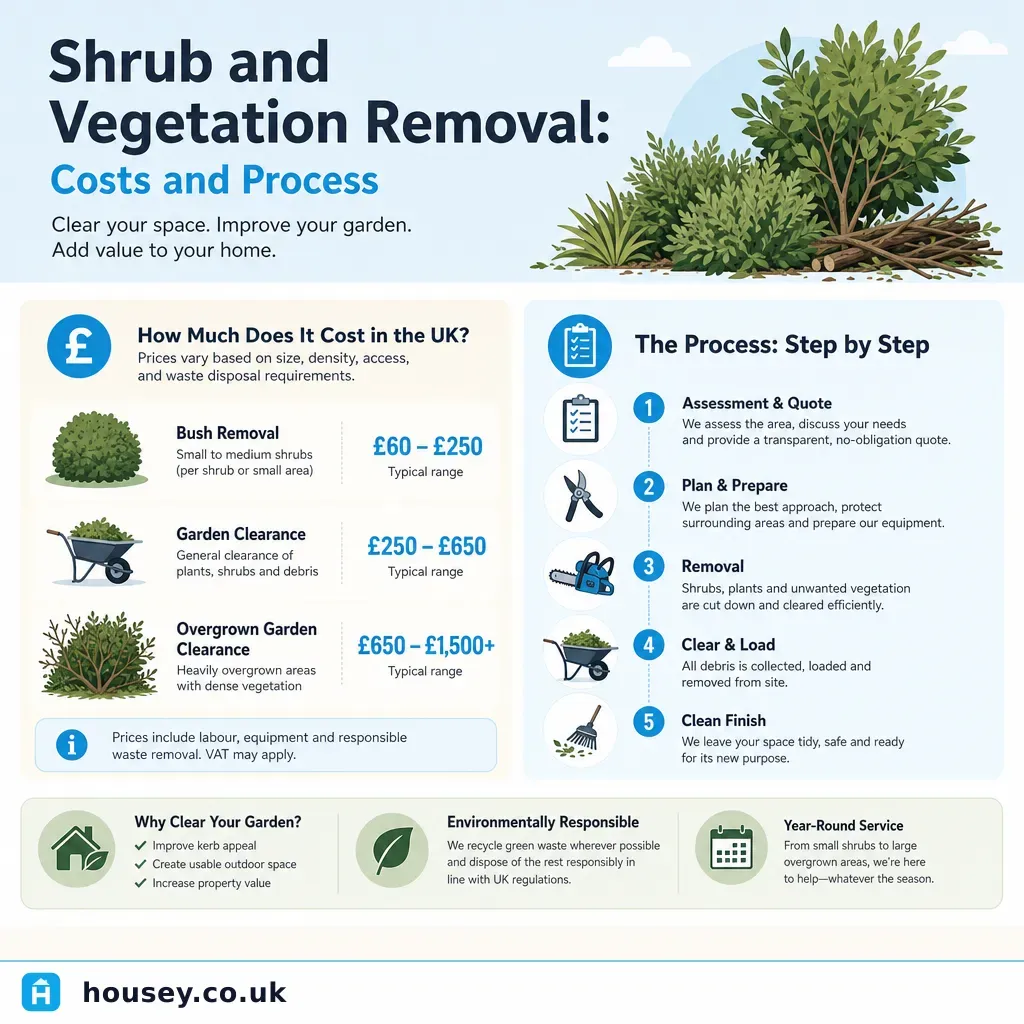
Shrub and Vegetation Removal: Costs and Process
Shrub and vegetation removal costs £50–£2,500 or more depending on area size, species involved, and whether stumps need grinding.
 Improvement & Build
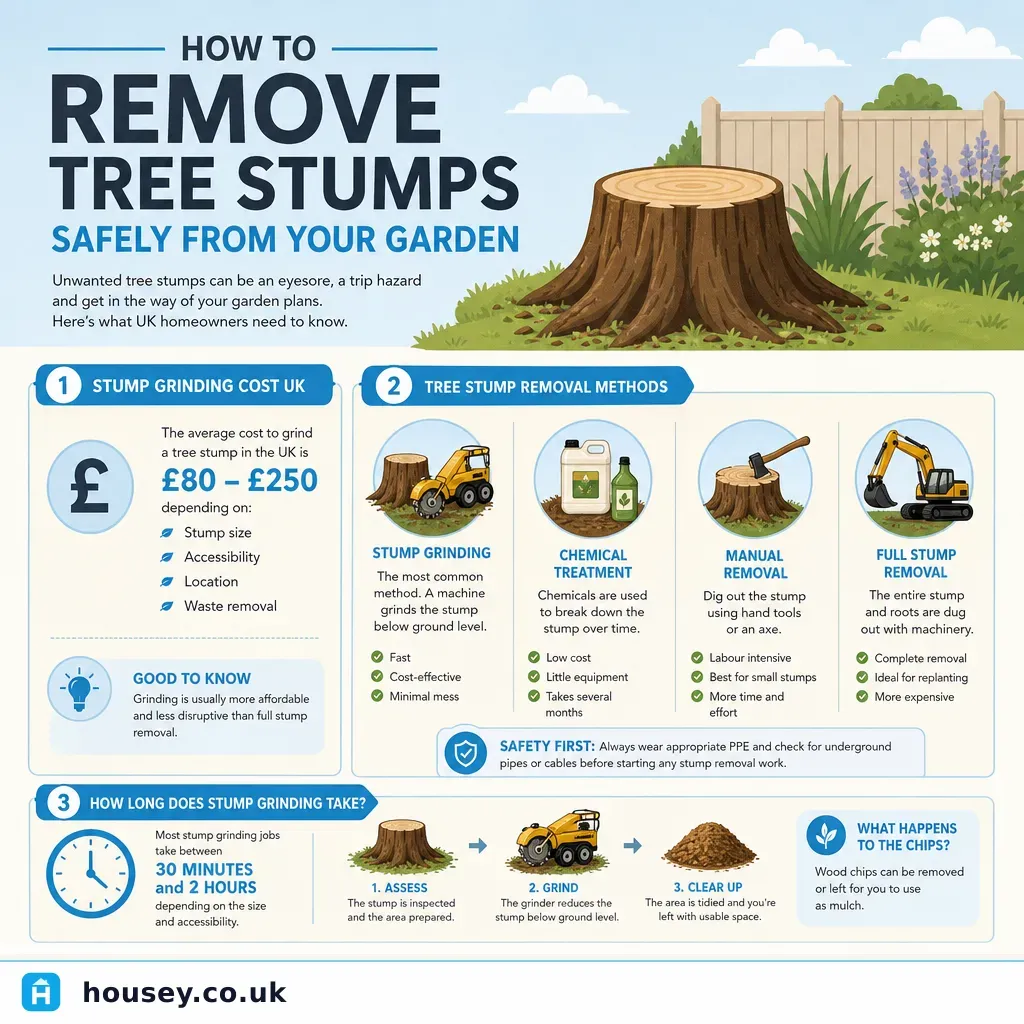
How to Remove Tree Stumps Safely from Your Garden
Tree stump removal in the UK typically involves stump grinding, chemical treatment, or manual excavation.
 Improvement & Build
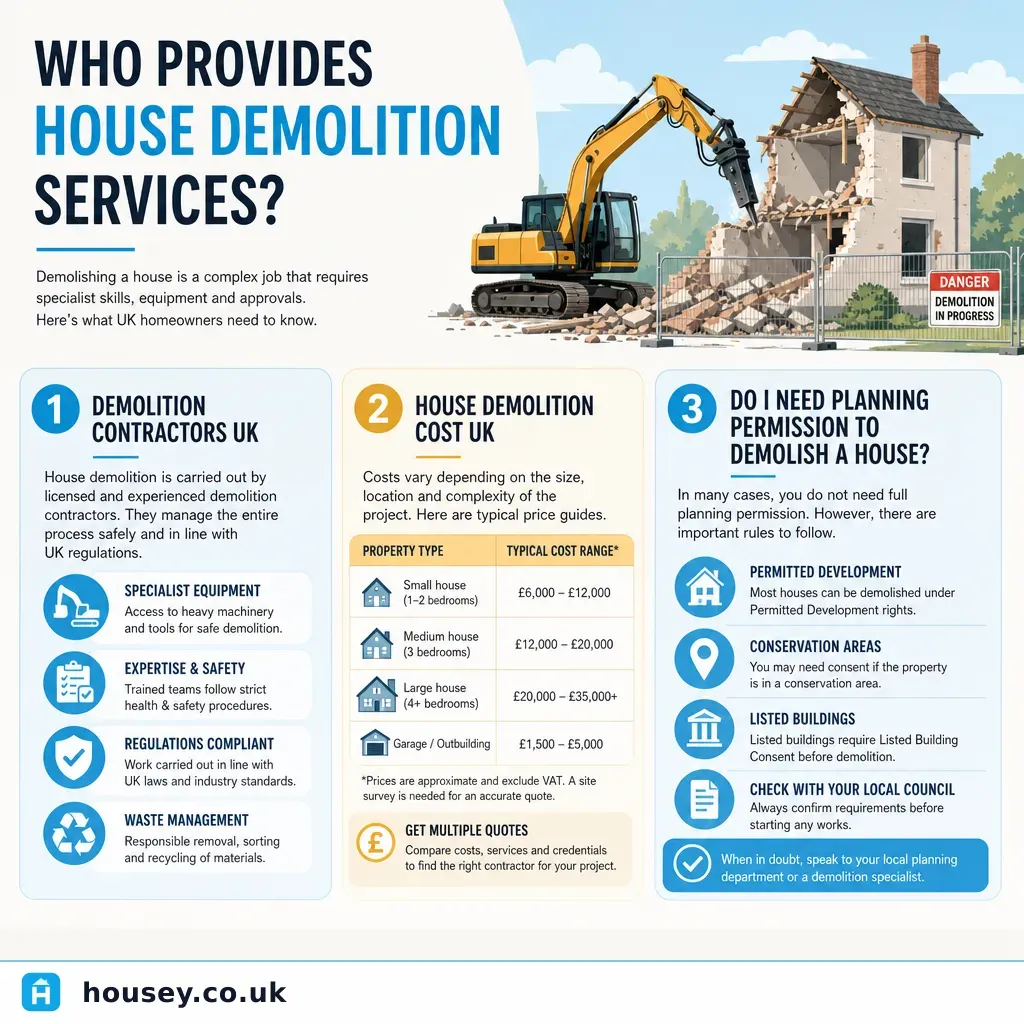
Who Provides House Demolition Services
House demolition in the UK is carried out by specialist demolition contractors, often members of the National Federation of Demolition Contractors (NFDC).
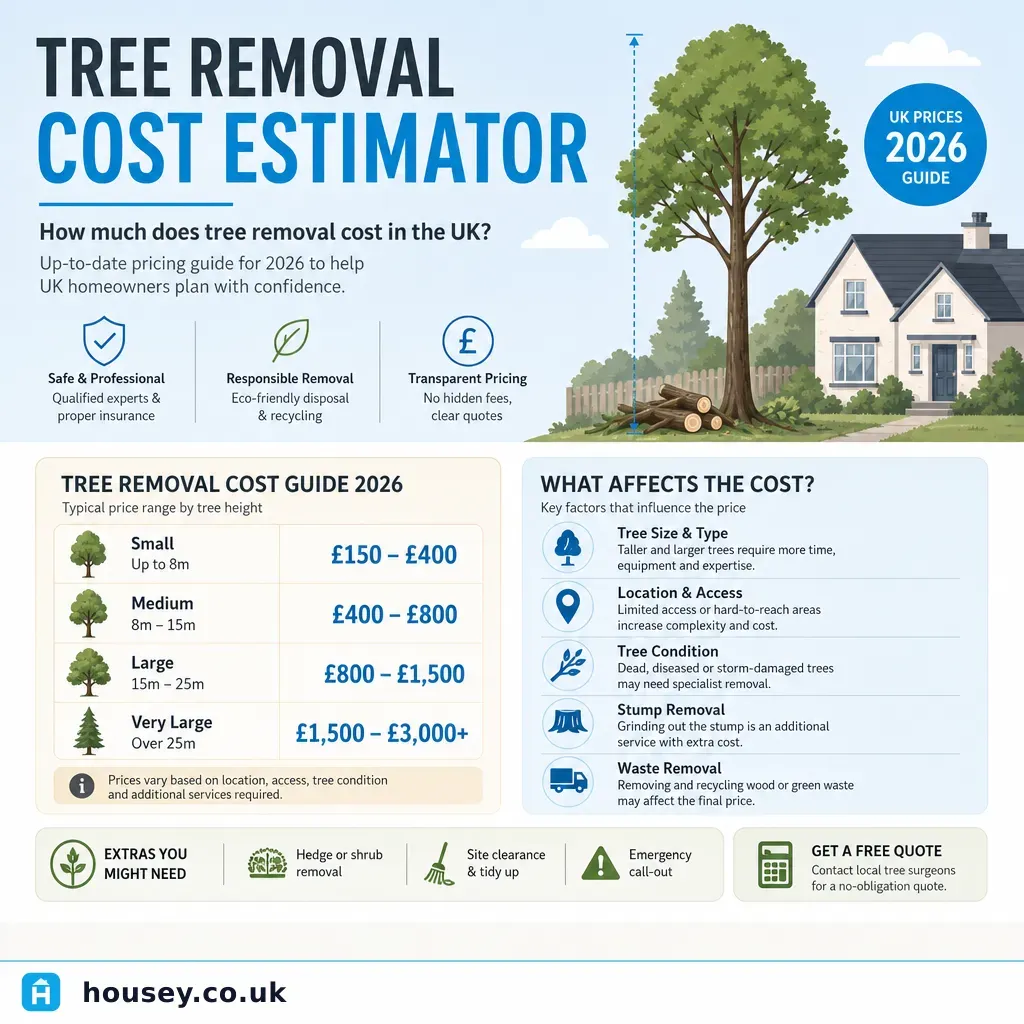 Improvement & Build
Tree Removal Cost Estimator
Tree removal in the UK costs roughly £150 to £5,000 or more, depending on the tree's height, species, access conditions, and whether stump removal is needed.
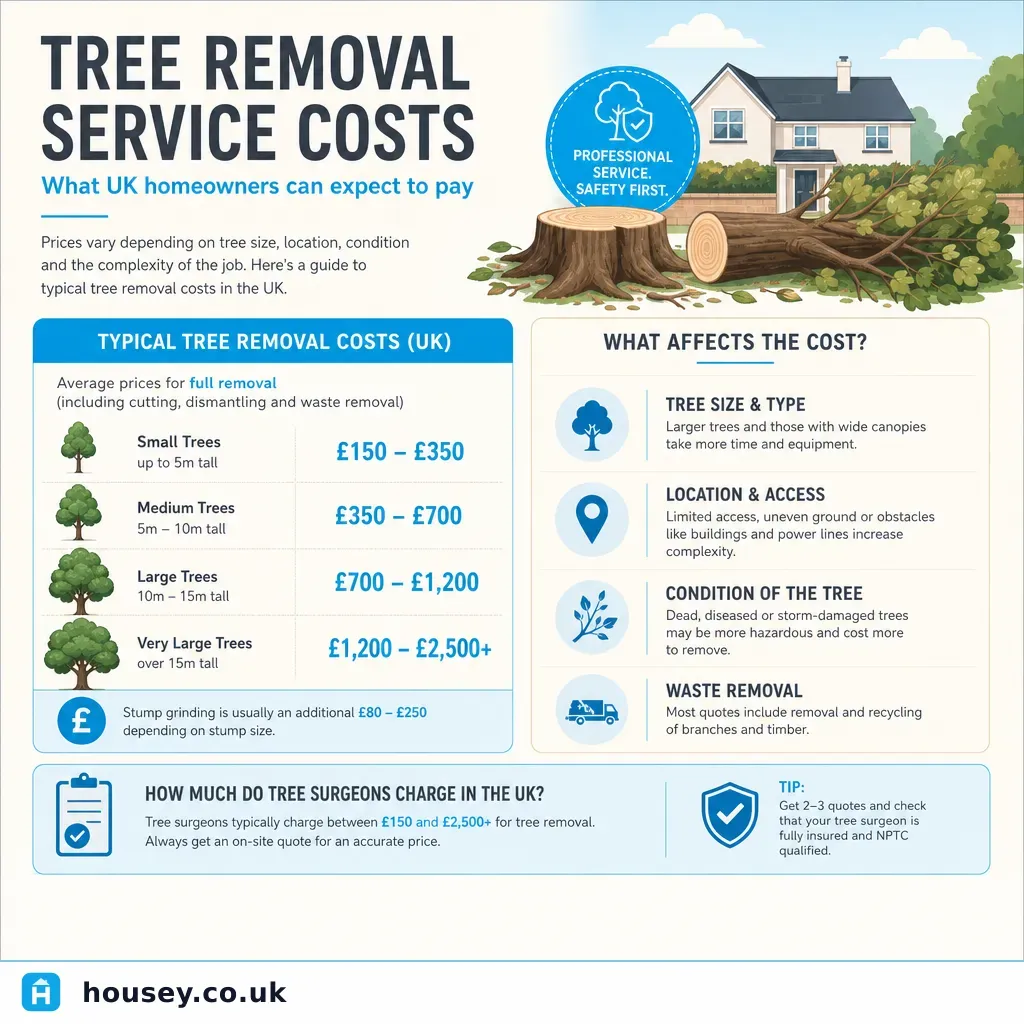 Improvement & Build
Tree Removal Service Costs
Professional tree removal costs in the UK depend on tree height, access, species, and the scope of work included.