Costs for Stripping and Replacing Roof Underlay and Tiles
By Housey · Last reviewed 6th of May 2026
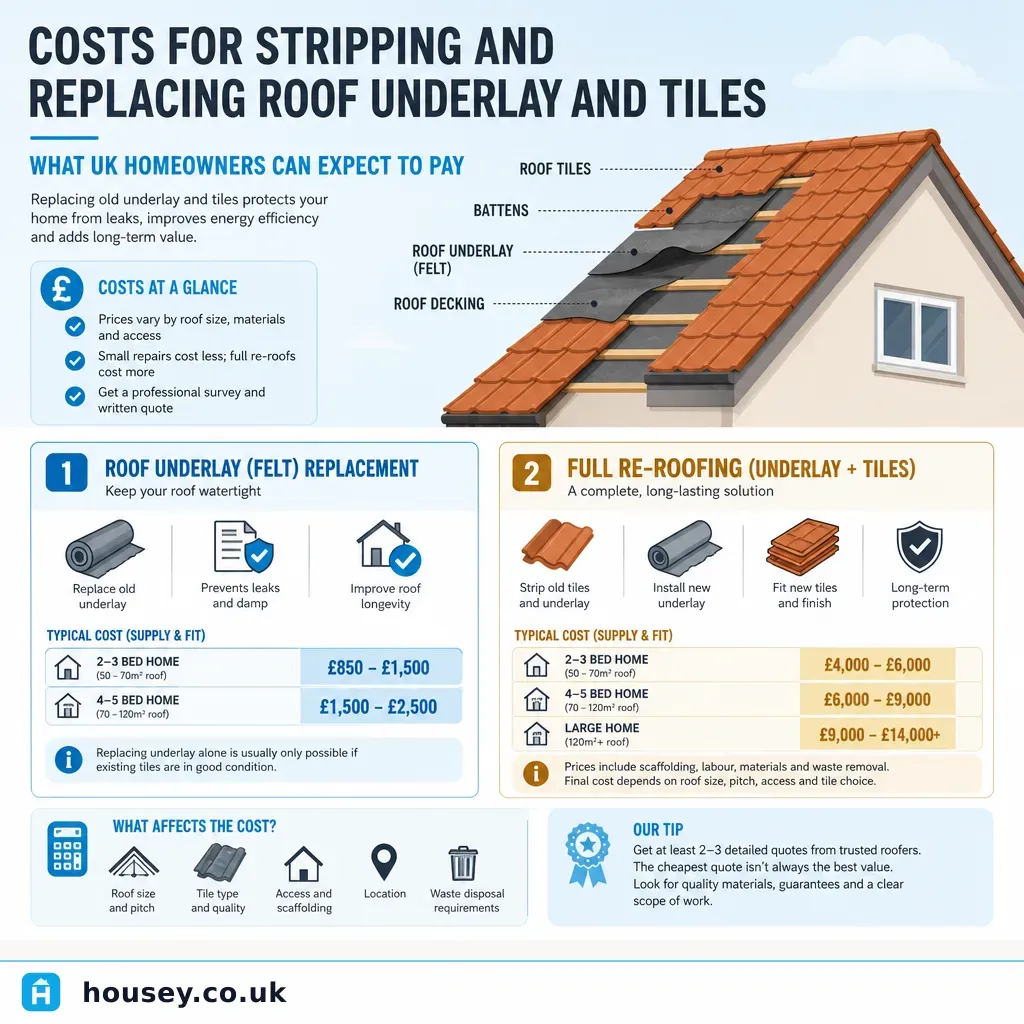
Costs for Stripping and Replacing Roof Underlay and Tiles
When a pitched roof reaches the point where individual tile repairs are no longer keeping pace with leaks — or where the original felt underlay has perished and is letting moisture into the roof void — a full strip and re-roof becomes the practical solution. Understanding the costs and variables involved helps homeowners plan realistically, scrutinise contractor quotes, and avoid unexpected charges once tiles come off.
Key points
- Strip and re-roof of a typical three-bedroom semi-detached house costs £5,000–£12,000 including scaffold, depending on roof size, tile choice, and region (Indicative UK costs, last reviewed 2026-05-06).
- Modern breathable roofing membranes complying with BS 5534 have replaced traditional bitumen felt as the standard specification for UK replacement roofing.
- Scaffolding is almost always required and typically adds £700–£1,500 to the cost of a standard semi-detached; more for detached properties or complex rooflines.
- Like-for-like tile or slate replacement on a standard residential property in England is usually permitted development — but listed buildings and conservation areas are subject to different rules.
- Roofers should carry public liability insurance of at least £1–2 million; request a copy of the certificate before any work begins.
What does a full strip and re-roof involve?
Stripping and re-roofing means removing every tile, slate, or other covering from the roof slopes, lifting the old felt underlay and battens, inspecting the timber structure — rafters, purlins, and any boarding — then fitting new underlay, battens, and roof covering from scratch.
The typical sequence is:
- Erect scaffold around the building perimeter
- Remove ridge, hip, and verge details
- Strip all main tiles or slates from the roof slopes
- Remove old underlay and battens
- Inspect rafters and purlins; replace damaged timbers
- Fit new breathable membrane underlay
- Fix pressure-impregnated battens at the gauge required for the chosen tile
- Re-tile or re-slate from eaves to ridge following BS 5534 fixing requirements
- Re-bed or dry-fix ridge, hip, and valley details
- Final inspection, scaffold removal, and debris clearance
The extent of structural timber repair is one of the main unknown costs — it can only be confirmed once the existing covering is stripped.
How much does it cost to strip and re-roof in the UK?
Indicative UK costs, last reviewed 2026-05-06. Natural slate, reclaimed clay, or complex rooflines increase costs substantially. Always request itemised quotes.
Property type | Approx. roof area | Concrete tiles | Natural slate |
|---|---|---|---|
Terraced house — one slope | 35–55 m² | £2,500–£5,000 | £4,500–£9,000 |
Semi-detached — front and rear | 60–90 m² | £5,000–£9,500 | £8,000–£16,000 |
Detached three-bedroom house | 80–130 m² | £7,000–£12,000 | £12,000–£20,000 |
Detached four-bedroom with hips | 120–200 m² | £10,000–£18,000 | £17,000–£30,000 |
Costs include scaffold, standard breathable membrane, and battens. Rafter repairs, chimney work, leadwork, flat roof sections, and VAT are typically priced separately.
Key cost drivers
Tile or slate choice: Concrete interlocking tiles are the most affordable covering. Natural Welsh or Spanish slate costs considerably more for material and skilled fixing. Reclaimed clay tiles are often needed on period properties and carry a sourcing premium.
Roof complexity: Multiple hips, valleys, dormers, or chimney stacks increase labour and material cost per square metre compared with a simple duo-pitch.
Scaffold duration: Adverse weather, large roofs, or restricted access extend scaffold hire. Confirm how many weeks are included in the quoted price.
Timber repairs: Discovered once stripping begins and usually charged as day-rate additional works. Pre-1960s properties are most likely to have undersized or partially decayed timbers.
Region: London and the South East typically carry a 15–30% premium on national roofing labour rates.
Partial re-roof vs full strip and re-roof
Situation | Partial re-roof | Full strip and re-roof |
|---|---|---|
Isolated tile damage after a storm | Usually most cost-effective | Not needed |
20–30% of tiles slipping or cracked | May defer full works by several years | Consider if underlay also shows signs of age |
Underlay confirmed perished via loft inspection | Cannot address without stripping | Required — no alternative |
Persistent leaks after two or more patches | Unlikely to resolve permanently | Usually the only lasting fix |
Pre-sale with visible roof wear | Targeted patch may satisfy buyer | Preferred if roof is over 30 years old |
Listed building or conservation area | Check local planning authority | Check local planning authority |
Signs you may need to replace roof underlay and tiles: homeowner checklist
Red flags: when a roof problem may be more serious
Not all roof deterioration is routine wear and tear. The following signs warrant professional assessment before any roofing work is instructed:
- Visible sagging or deflection in a roof slope from street level — may indicate rafter, purlin, or ridge board failure rather than a tile or underlay problem
- Cracks in internal walls or ceilings directly below the roof line — could indicate movement in the roof structure, wall plate, or supporting masonry
- A bowed or uneven ridge line — suggests structural timber distortion or overloading
- Water penetration reaching plasterwork below loft level — indicates widespread underlay failure across multiple slopes
- Chimney stack visibly leaning, cracked, or displaced — a structural and safety concern independent of the roof covering
- Suspected asbestos cement tiles or flashings — materials installed before 1980 may contain asbestos; do not disturb any suspect material and arrange a professional asbestos survey before stripping begins
If any of these apply, seek structural or specialist assessment before instructing a roofer.
Does roof replacement need planning permission?
In most cases, like-for-like replacement of tiles or slates on a standard residential property in England is permitted development and needs no planning application. However, permission or listed building consent may be required if:
- The property is a listed building (any grade)
- The property is in a conservation area and work is visible from a public highway
- You are changing roof material in a way that alters the building's character
- The local planning authority has removed permitted development rights via an Article 4 Direction
Always check with your local planning authority before starting work on a listed or conservation area property.
What to ask a roofer before accepting a quote
- What is explicitly included and excluded — scaffold, tile disposal, batten replacement, leadwork, mortar re-bedding?
- Are rafter or purlin repairs priced separately, and at what day rate?
- What underlay specification are you fitting, and does it comply with BS 5534?
- What tile or slate product are you using — can you provide a manufacturer's data sheet?
- Are you using a dry-fix or wet-bed mortar system for the ridge and hips?
- Do you carry public liability insurance, and can I see a current certificate?
- Is VAT included in the quoted figure?
- What workmanship warranty do you offer?
- Will you provide a written contract and a payment schedule tied to progress?
- How will you weatherproof the roof overnight if work extends over more than one day?
When to get professional help
A straightforward like-for-like re-roof is routine for an experienced contractor. Engage a professional before proceeding if:
- Structural movement is suspected: Sagging slopes, a bowed ridge, or deflection visible from the street need assessment by a chartered structural engineer or RICS Level 3-qualified building surveyor before roofing work begins. A structural survey provides a documented assessment that informs the scope of any remedial work.
- Pre-purchase or pre-sale: A surveyor's report gives an objective view of roof condition and helps buyers negotiate or sellers understand disclosure obligations.
- Listed buildings or conservation areas: Listed building consent may be required; speak to your local planning authority before appointing a roofer.
- Suspected asbestos: Do not disturb any suspect material. Commission a professional asbestos survey first.
- Insurance claims: After storm or subsidence damage, engage a loss assessor to document and agree the reinstatement scope before instructing any contractor.
How Housey can help
Housey makes it straightforward to compare quotes from insured local roofers who can assess whether your roof needs targeted repairs or a full strip and re-roof. Submit your details once and receive quotes from up to four vetted providers covering your area.
Frequently asked questions
How long does a full roof replacement take?
A standard semi-detached house with two main slopes typically takes a roofing crew three to five working days including scaffold erection and removal. A larger or more complex roof with hips, dormers, valleys, or multiple chimney stacks may take two to three weeks. Weather delays are common on UK roofing programmes, particularly in autumn and winter.
How long should a new roof last?
A correctly installed roof with concrete interlocking tiles should last 30–50 years. Natural slate can last 80–100 years or more with appropriate maintenance. Clay tiles typically last 40–60 years. The underlay and battens often need replacing before the tiles themselves, making periodic loft inspections worthwhile.
Can I stay in my home during a roof replacement?
Yes, in most cases. The main disruptions are noise and vibration during stripping, dust in the loft, and scaffold around the building. Roofers should weatherproof the roof each evening if work extends over more than one day, using temporary sheeting to protect the open roof space from overnight rain.
Do I need building regulations approval for a roof replacement?
Like-for-like tile or slate replacement on an existing building does not normally require building regulations approval in England. If the work involves structural changes to rafters, purlins, or wall plates, or significantly upgrades roof insulation, Building Regulations Parts A and L may apply. Check with your local building control body if in doubt.
What is BS 5534 and why does it matter?
BS 5534 is the British Standard for slating and tiling of pitched roofs and vertical cladding. It sets out fixing requirements by tile type, roof pitch, and wind exposure zone across the UK. A roofer working to BS 5534 provides a recognised quality benchmark and compliance may be required under building regulations or your insurer's policy terms.
Sources and further reading
- Building Regulations Approved Document A: Structure — GOV.UK
- Building Regulations Approved Document L: Conservation of fuel and power — GOV.UK
- Roofs: permitted development for householders — Planning Portal
- BS 5534: Slating and tiling for pitched roofs and vertical cladding — BSI Group
- Repairs to historic roofing — Historic England
Useful next reads
 Improvement & Build
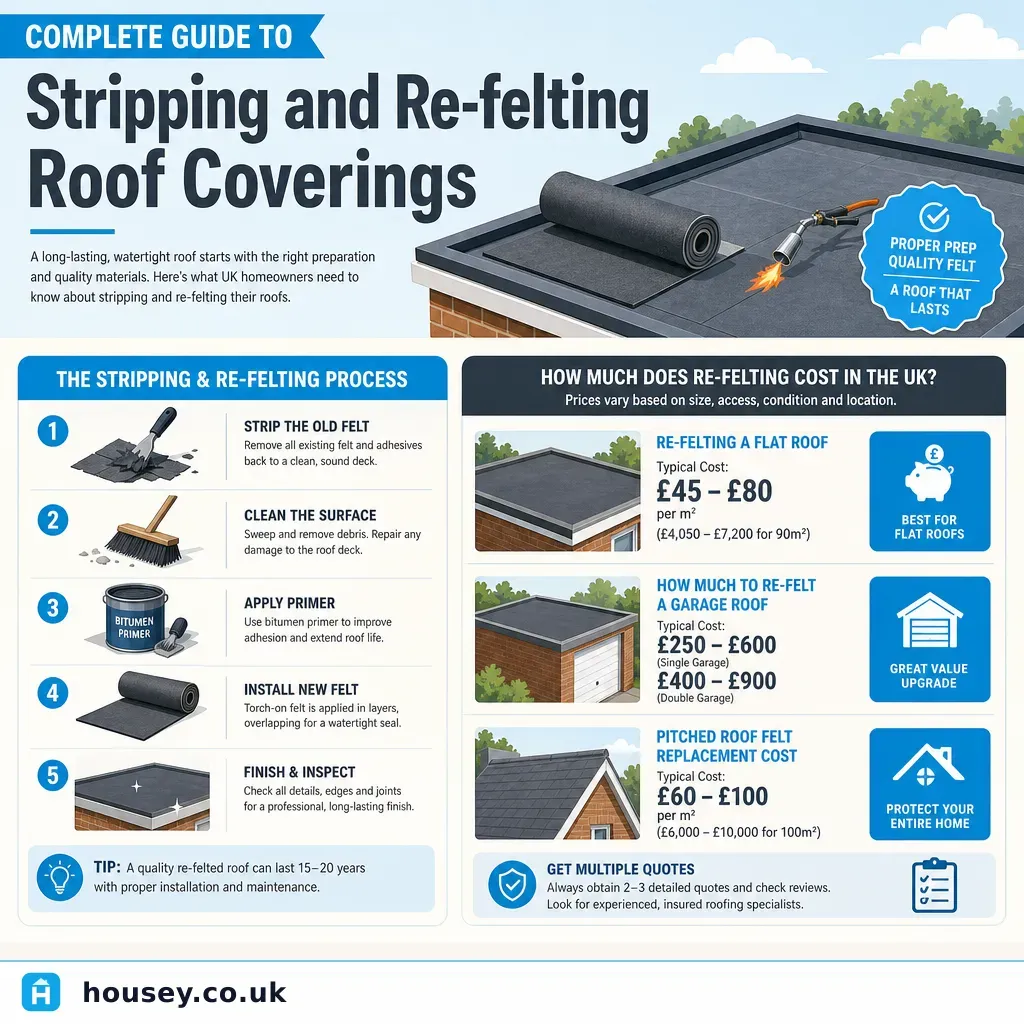
Complete Guide to Stripping and Re-felting Roof Coverings
Stripping and re-felting a roof involves removing the old covering, inspecting the deck and structural timbers, then applying a new membrane such as traditional felt, EPDM rubber, or GRP fibreglass.
 Improvement & Build
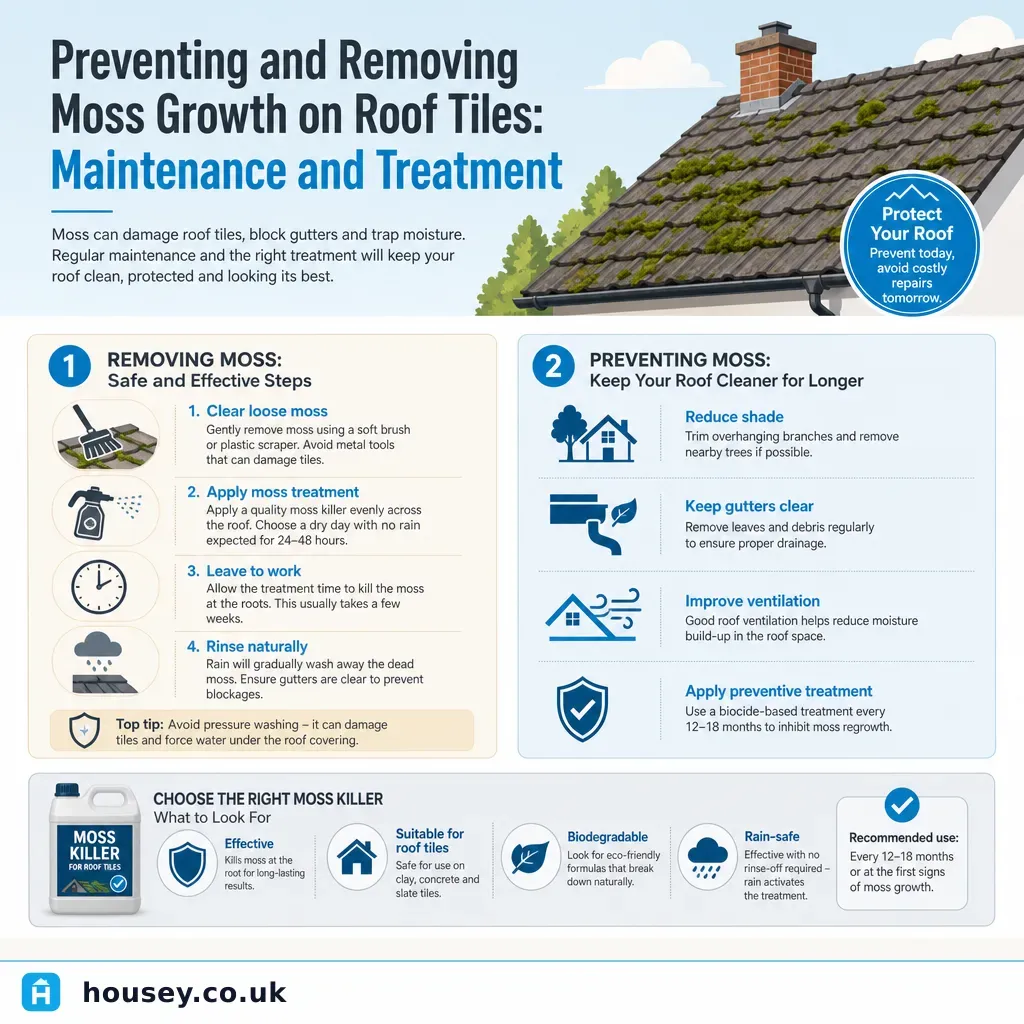
Preventing and Removing Moss Growth on Roof Tiles: Maintenance and Treatment
Moss on roof tiles is best treated with a proprietary biocide spray, left to die back over several weeks, then carefully cleared.
 Improvement & Build
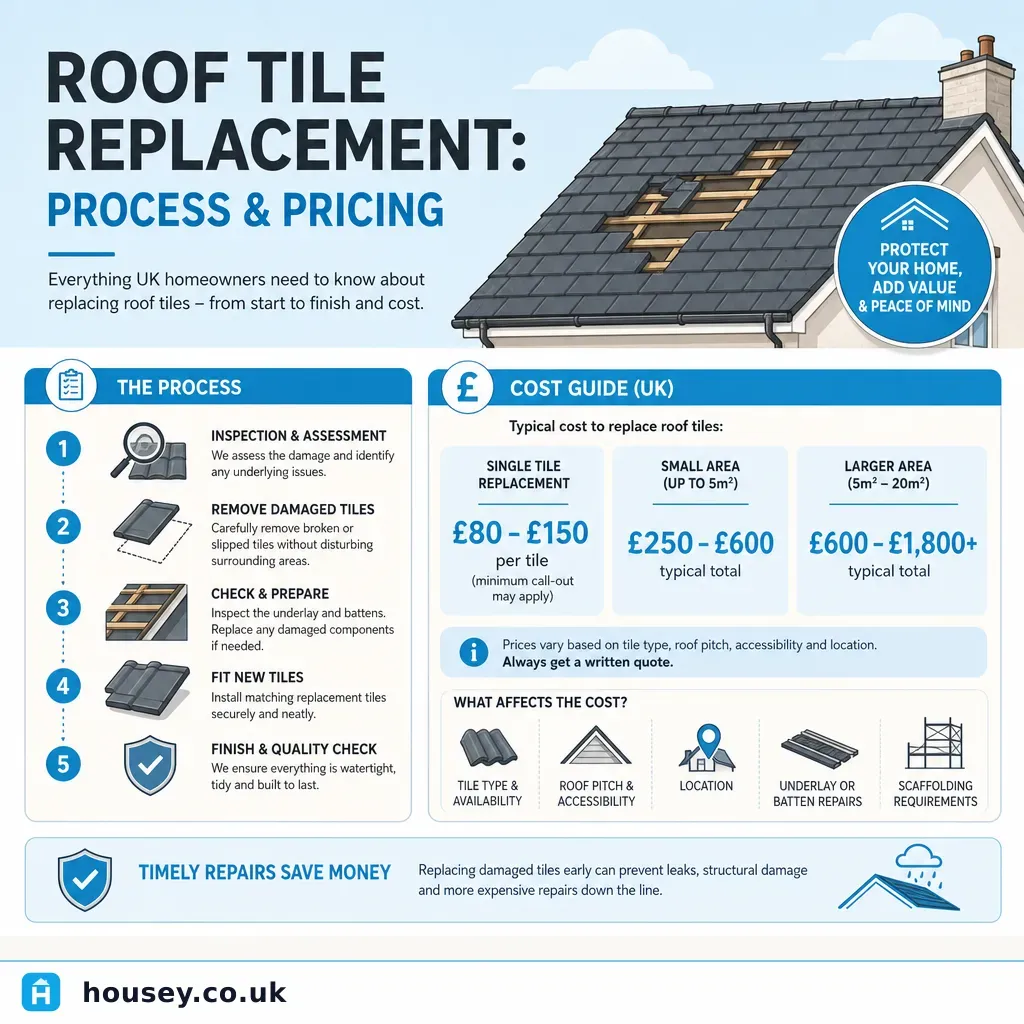
Roof Tile Replacement: Process and Pricing
Roof tile replacement in the UK ranges from a single cracked tile to a full re-tile.
 Improvement & Build
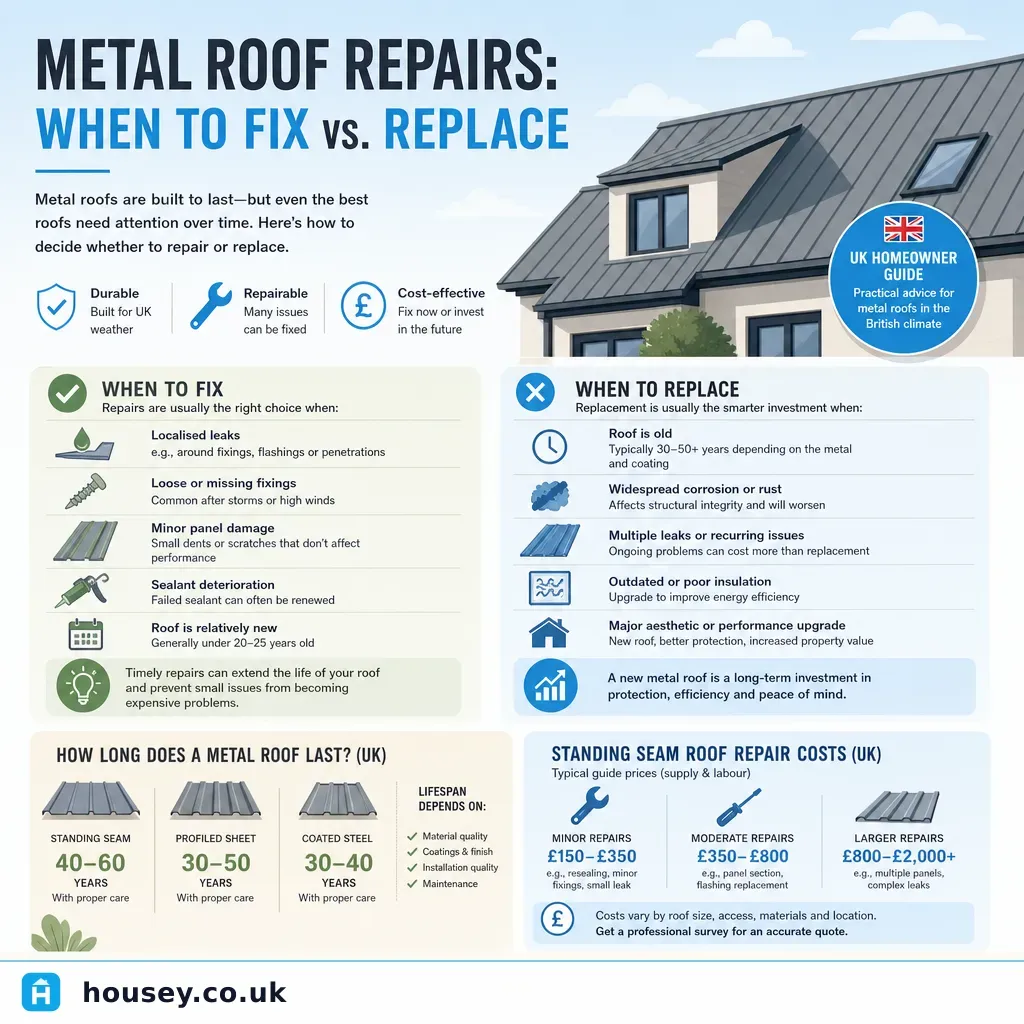
Metal Roof Repairs: When to Fix vs. Replace
For a metal roof, repair is usually right when damage is localised — a failed flashing, isolated corrosion, or one or two damaged panels.
 Improvement & Build
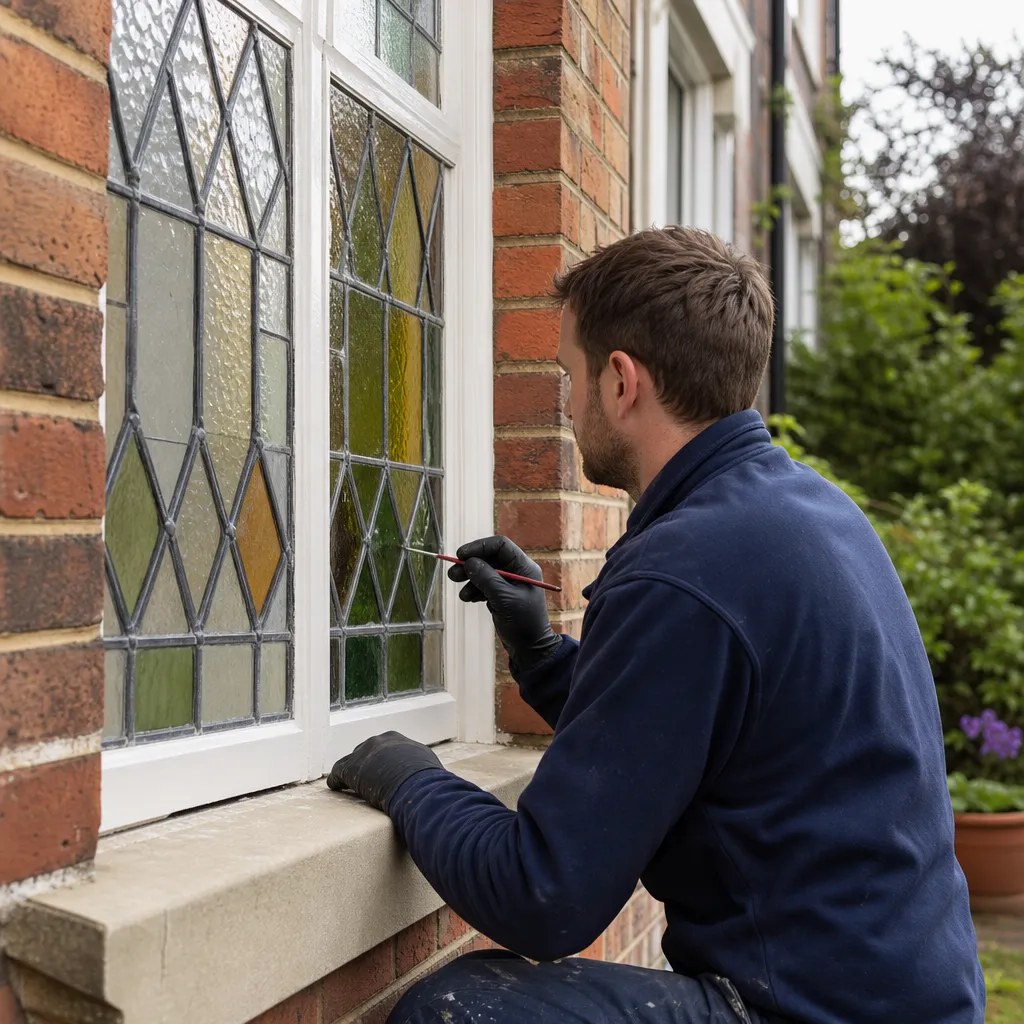
Sealing and Maintaining Historic Leaded Glass Windows: Preservation and Performance
Leaded glass windows are maintained using traditional linseed oil cement — not silicone or modern sealants, which prevent natural movement in the lead came.