Leasehold Explained: Ownership Rights and Long-Term Implications
By Housey · Last reviewed 18th of May 2026

Leasehold Explained: Ownership Rights and Long-Term Implications
Leasehold is the most common form of flat ownership in England and Wales, yet many buyers — and existing owners — do not fully understand what they own or what obligations come with it. The distinction between leasehold and freehold affects everything from annual service charges to whether you can alter your property, and the implications compound over time as the lease term shortens. If you are buying a leasehold property, or already own one, understanding the structure is essential before making any significant financial decision.
Key points
- A leaseholder owns the right to occupy a property for a fixed number of years set out in the lease; they do not own the land or the building itself.
- As of 2024, there were approximately 4.98 million leasehold dwellings in England, the large majority of which are flats (Ministry of Housing, Communities and Local Government).
- The Leasehold Reform (Ground Rent) Act 2022 abolished ground rent on new residential long leases in England and Wales from 30 June 2022; existing leases with ground rent provisions are unaffected.
- Service charges are payable to cover the maintenance, insurance, and management of a building; leaseholders have statutory rights to challenge unreasonable charges at the First-tier Tribunal (Property Chamber).
- The Leasehold and Freehold Reform Act 2024 introduced further changes to leasehold law, though many provisions require secondary legislation before they come fully into force.
Leasehold versus freehold: the core difference
Understanding the two main forms of property ownership in England and Wales is the starting point for any homeowner or buyer.
| Leasehold | Freehold |
|---|---|---|
What you own | A time-limited right to occupy the property | The property and the land in perpetuity |
Typical property types | Flats; historically many houses (declining) | Houses; some converted flats with share of freehold |
Ongoing charges | Ground rent (on older leases), service charges, buildings insurance via landlord | Generally none unless part of an estate with a management company |
Permission to alter | Usually requires freeholder's written consent | Generally not required unless planning or building regulations apply |
What happens at expiry | Property reverts to the freeholder unless extended | No expiry |
Mortgage lender requirements | Minimum unexpired term (typically 70–85 years at end of mortgage term) | No lease length concern |
Right to extend | Yes — statutory right after 2 years' ownership for qualifying flats | Does not apply |
A note on leasehold houses
Historically, many houses in England were sold on a leasehold basis, often with ground rents that doubled at intervals. The Leasehold Reform Act 1967 gave leasehold house owners the right to extend or enfranchise, and subsequent legislation restricted new leasehold house sales. The Leasehold and Freehold Reform Act 2024 tightened these restrictions further. Buyers of any leasehold house should review the lease terms carefully with a solicitor before exchanging contracts.
What the lease document contains
Your lease is a legally binding contract between you and the freeholder (also called the landlord). Key elements include:
- The unexpired term. The number of years remaining. This is the single most important figure for mortgage lending and resale purposes.
- Ground rent provisions. On pre-2022 leases, a ground rent may be payable. Check whether it is fixed, reviewed at intervals, or contains a doubling clause — escalating ground rents have made some properties unmortgageable.
- Service charge obligations. Your proportionate share of the costs of maintaining the building and common parts.
- Repair and maintenance obligations. What you are responsible for inside your demise (typically the flat's interior) versus the freeholder's obligations for the structure and exterior.
- Alterations clause. What works require the freeholder's consent, and whether a licence fee is payable for that consent.
- Subletting provisions. Whether you can let the property and on what conditions.
- Forfeiture clause. The mechanism by which the freeholder could, in theory, recover the property for serious breach — legal safeguards make actual residential forfeiture extremely rare in practice.
Leaseholder rights: what the law provides
Leaseholders in England and Wales have a range of statutory protections worth knowing:
- Right to extend the lease. After two years' ownership, qualifying flat owners can extend by 90 years at a peppercorn ground rent under the Leasehold Reform, Housing and Urban Development Act 1993.
- Right to collectively enfranchise. Where at least 50% of flats in a building participate, leaseholders may collectively purchase the freehold under the 1993 Act.
- Right to Manage (RTM). Leaseholders can take over the management of their building through a Right to Manage Company without purchasing the freehold, under the Commonhold and Leasehold Reform Act 2002.
- Right to challenge service charges. The First-tier Tribunal (Property Chamber) can determine whether service charges are reasonable.
- Right to information. You can request a summary of service charge accounts and inspect supporting receipts and documents.
Which option suits your situation?
- Buy the freehold collectively if at least 50% of leaseholders in the building want to participate and you are prepared to go through the statutory process or negotiate directly. This gives full control over building management and makes future lease extensions easier.
- Set up a Right to Manage company if the main concern is poor or expensive building management and collective enfranchisement is not feasible. RTM does not require purchasing the freehold.
- Extend your lease if the remaining lease term is the primary concern — for mortgage, sale, or investment purposes. Act before the lease falls below 80 years to avoid marriage value.
- Challenge service charges at the Tribunal if you believe charges are unreasonable or poorly evidenced. You can pursue this without purchasing the freehold.
- Take legal advice before exchanging contracts if the lease contains unusual clauses such as escalating ground rents, excessive alteration restrictions, or onerous forfeiture provisions.
- Consider commonhold if you are buying in a new development — it is an alternative form of flat ownership without an expiring term, though it remains rare in the UK market.
What to check before buying a leasehold property
Before exchanging contracts, your conveyancing solicitor should review the lease in detail. Ask specifically about:
- The unexpired term — and whether it meets your mortgage lender's minimum requirement.
- The ground rent amount, frequency, and any review mechanism. Doubling or escalating ground rents can make a property unmortgageable or difficult to sell.
- Annual service charges for the past three years and whether any major works have been carried out or are planned.
- Who manages the building and the quality of that management.
- Any outstanding disputes between the freeholder and leaseholders.
- Whether the property includes a share of freehold — this is distinct from outright leasehold and is generally more favourable for buyers.
Important limitations
This article provides general information about leasehold property ownership in England and Wales. The law and its application can vary depending on the specific terms of your lease, the structure of the freehold, the property type, and your individual circumstances. This is not legal or financial advice. A qualified solicitor experienced in residential leasehold conveyancing and, where valuations are relevant, a RICS-qualified surveyor should review your specific situation. Leasehold law is evolving: some provisions of the Leasehold and Freehold Reform Act 2024 are in force; others await secondary legislation. Always seek up-to-date legal advice before making decisions.
When this becomes urgent
- You are about to exchange contracts on a leasehold property and have not yet received a copy of the lease for review.
- Your lease has fewer than 80 years remaining — costs of extension and difficulties with mortgage lending both apply.
- You have received a large service charge demand for major works you were not previously informed about.
- You have received a notice from your freeholder about a breach of the lease.
- You are in dispute with your managing agent or freeholder and are unsure of your statutory rights.
What to ask a qualified professional
Questions for your conveyancing solicitor:
- Are there any unusual or onerous clauses in this lease that I should understand before proceeding?
- Does the ground rent provision affect the property's mortgageability or future saleability?
- Are there any planned major works that could result in a large service charge demand after completion?
- Does the unexpired term meet my lender's requirements, and should I budget for a lease extension?
Questions for a RICS-qualified surveyor (where a valuation is needed):
- Does the lease length affect the current market value of this property compared with similar freehold or share-of-freehold properties?
- What is the approximate cost to extend the lease, and should I factor that into my offer?
When to get professional help
Leasehold law is complex and the financial consequences of a poorly understood lease can be significant. Always instruct a solicitor experienced in residential leasehold conveyancing before buying a leasehold property, and before taking any formal action such as serving a statutory notice or challenging service charges at the Tribunal.
How Housey can help
Whether you need an independent view of the current market value of a leasehold property before making an offer, or want to understand what a lease extension might cost, Housey connects you with RICS-qualified professionals who provide lease extension valuations and valuation surveys for leasehold properties across the UK.
Frequently asked questions
What is the difference between leasehold and share of freehold?
Share of freehold typically means the leaseholders collectively own the building's freehold through a company, with each flat owner holding a share in that company alongside their individual lease. This gives collective control over building management and usually makes it easier and cheaper to extend individual leases informally. It is generally considered more favourable than outright leasehold, as leaseholders are effectively negotiating with a company they part-own rather than an external freeholder.
Can I be forced out of my leasehold property?
Forfeiture — the process by which a freeholder recovers a property for serious breach of the lease — is tightly regulated by the courts and extremely rare in practice for residential properties. A court order is required, and leaseholders have significant procedural protections at each stage. If you receive a Section 146 notice about a lease breach, seek legal advice immediately rather than ignoring the correspondence.
What happens when a leasehold expires?
If a lease expires without being extended or renewed, the leaseholder loses their right to occupy and the property reverts to the freeholder. In practice, most leases are extended well before expiry, and statute provides rights to extend or enfranchise while the lease is in force. Leaseholders in residential occupation also have additional protections under the Landlord and Tenant Act 1954 in certain circumstances, but these are complex — seek legal advice well in advance of any lease approaching expiry.
Does the Leasehold and Freehold Reform Act 2024 help me?
The Act includes pro-leaseholder reforms such as abolishing marriage value in lease extension premium calculations and improving the Right to Manage process. However, many provisions require secondary legislation to take effect, and the implementation timetable is subject to government decisions. A specialist solicitor can advise on which provisions are currently in force and how they apply to your specific lease and circumstances.
Sources and further reading
- Leasehold property — GOV.UK
- Leasehold Reform (Ground Rent) Act 2022 — legislation.gov.uk
- Leasehold and Freehold Reform Act 2024 — legislation.gov.uk
- Commonhold and Leasehold Reform Act 2002 — legislation.gov.uk
- Dwelling Stock Estimates: live tables — Ministry of Housing, Communities and Local Government
Useful next reads
 Buying & Moving
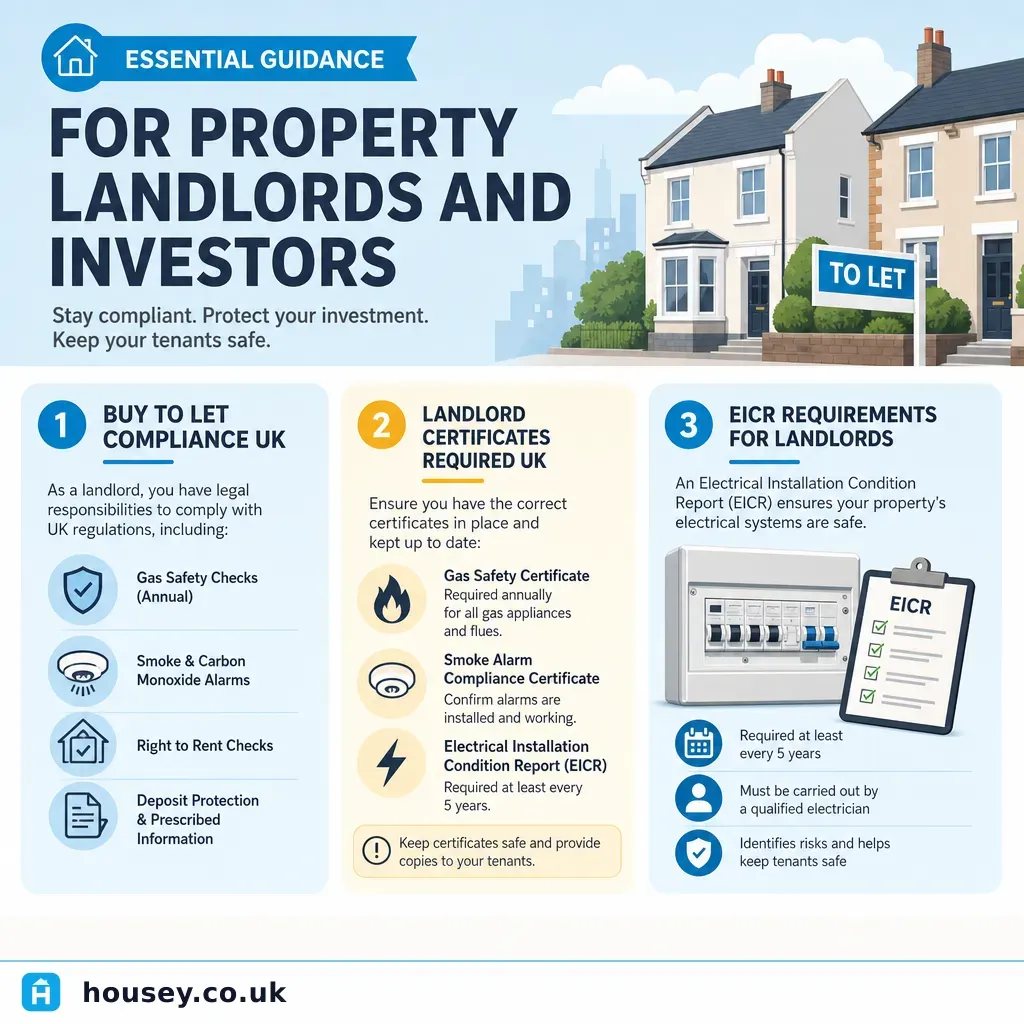
Essential Guidance for Property Landlords and Investors
UK landlords must hold valid gas safety records, electrical installation condition reports, and energy performance certificates before letting a property.
 Buying & Moving
What Property Covenants Are and How They Affect Your Home
A property covenant is a legally binding promise attached to land rather than to a specific owner, recorded in the title deeds and registered at HM Land Registry.
 Buying & Moving
Essential guidance for first-time property owners in the UK
As a new UK homeowner, your first responsibilities are buildings insurance from exchange, utility transfers, council tax registration, and gathering key documents including the title register and EPC.
 Buying & Moving
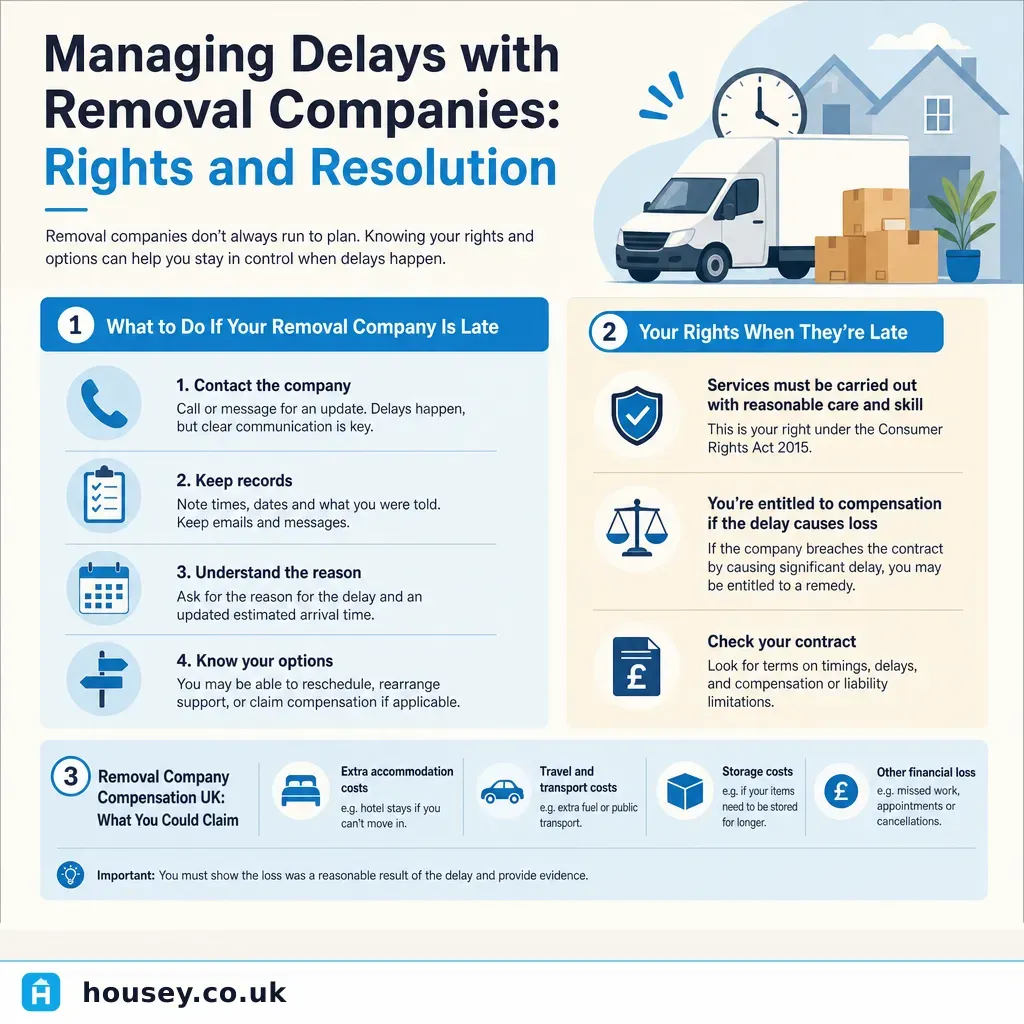
Managing Delays with Removal Companies: Rights and Resolution
If a removal company is late, your rights depend on your contract and whether the company is BAR-registered.
 Buying & Moving
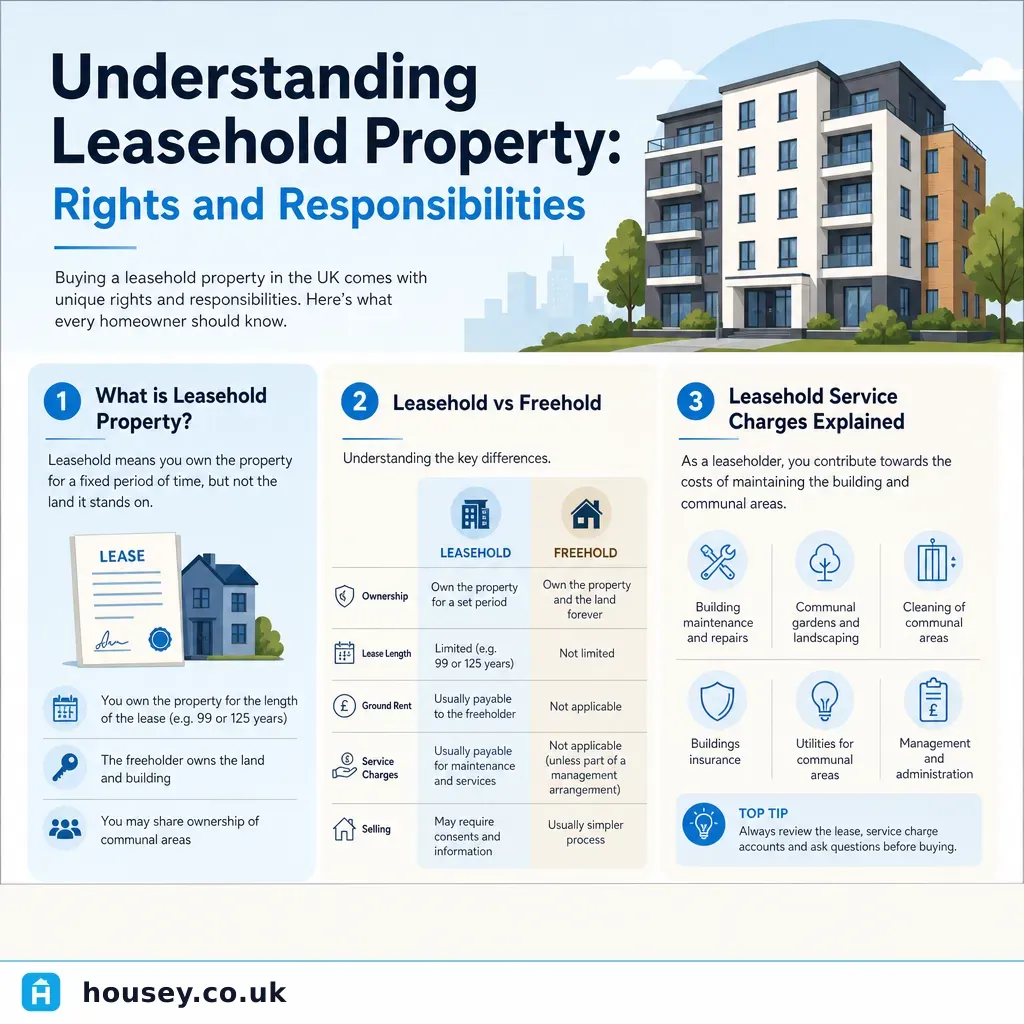
Understanding Leasehold Property: Rights and Responsibilities
Leasehold means you own a time-limited interest in a property while the freeholder owns the land and building.