Leasehold Flat Conveyancing: Why Legal Fees May Be Higher
By Housey · Last reviewed 25th of May 2026
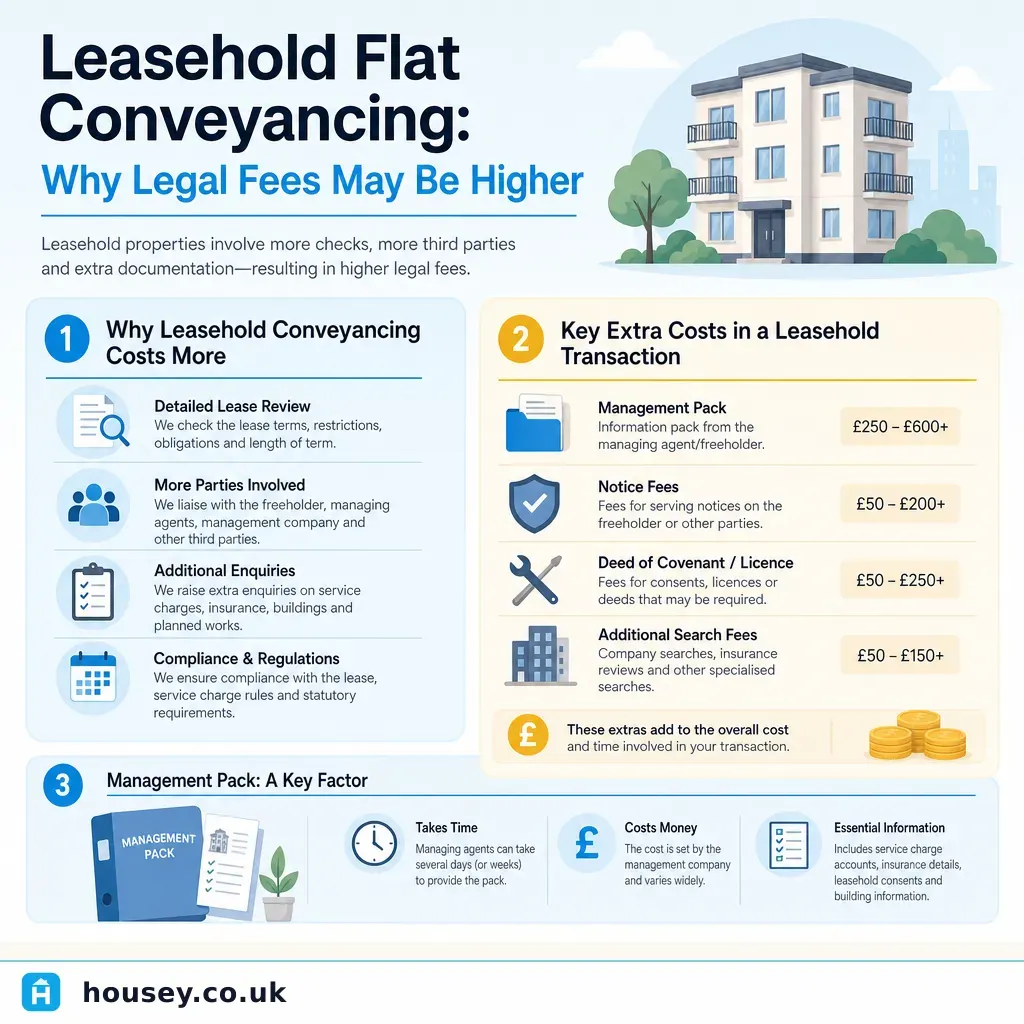
Leasehold Flat Conveyancing: Why Legal Fees May Be Higher
Buying a leasehold flat involves a level of legal complexity that is absent from most freehold house purchases. Solicitors must review the lease itself — sometimes running to over a hundred pages — alongside service charge accounts, management company documents, and freeholder communications, all while navigating third-party timescales that are outside anyone's direct control. For buyers moving from renting or from a previous freehold purchase, the additional cost and time can come as a surprise if they have not been forewarned.
Key points
- Solicitors must review the lease document in full — often 50 to 150 pages or more — on top of standard title checks, adding time that is absent from any freehold transaction.
- A management information pack (the LPE1 form) must be obtained from the freeholder or managing agent; it typically costs £200–£600 and can take two to six weeks to arrive (indicative UK costs, last reviewed 2026-05-25).
- Under the Leasehold Reform (Ground Rent) Act 2022, ground rent for new residential leases in England and Wales must be zero (a peppercorn); pre-2022 leases may still contain escalating ground rent clauses that affect mortgageability.
- Most mortgage lenders will not lend on leases with fewer than 70–85 years remaining (exact threshold varies by lender); a short lease may require a lease extension before or shortly after purchase.
- Notice of Transfer and Notice of Charge fees are payable to the freeholder or managing agent on completion — typically £50–£400 per notice (indicative UK costs, last reviewed 2026-05-25).
Freehold vs leasehold conveyancing: what adds to the work
Step | Freehold purchase | Leasehold flat purchase | Why it matters |
|---|---|---|---|
Title review | Standard Land Registry checks | Title review plus full lease document review | Lease terms bind you for the remaining lease term |
Property enquiries | Standard seller's enquiries (TA6) | TA6 plus leasehold enquiries (LPE1 form) | Covers service charges, ground rent, disputes, and buildings insurance |
Management information pack | Not required | Required from freeholder or managing agent | Adds £200–£600 cost and two to six weeks to the timeline |
Ground rent review | Not applicable | Required: check for escalation clauses | Escalating ground rent may make the property unmortgageable |
Lease term check | Not applicable | Required: flag if under approximately 83 years | Short leases reduce value and restrict mortgage options |
Building safety checks | Rarely relevant | EWS1 or developer declaration may be needed for buildings over 11m | Post-Grenfell requirements can delay or prevent mortgage |
Completion notices | None | Notice of Transfer and Notice of Charge to freeholder | Additional fees and administrative steps at completion |
The management information pack: what it contains and why it takes time
The LPE1 (Leasehold Property Enquiries) form is the standard document used to gather information from the freeholder or managing agent before exchange of contracts. It covers:
- Current and historic service charge accounts (typically the last three years).
- Ground rent history and future review provisions.
- Buildings insurance details, including whether the policy covers the whole block or the shell only.
- Any planned or ongoing major works, Section 20 consultation notices, or disputes.
- Whether there are service charge arrears on the property being purchased.
- Compliance with building safety obligations under the Building Safety Act 2022.
Freeholders and managing agents are not required to respond within a fixed statutory timescale, which is why delays of two to six weeks are common. Some managing agents charge additional fees for urgent responses. Solicitors must review every page of the LPE1 before advising you whether to exchange — this is one of the main reasons leasehold conveyancing takes longer and costs more than a comparable freehold purchase.
Ground rent: a key risk in pre-2022 leases
The Leasehold Reform (Ground Rent) Act 2022 banned ground rent above a peppercorn for new regulated leases granted on or after 30 June 2022 in England and Wales. However, many existing leases — particularly those granted in the 2000s and 2010s — contain escalating ground rent clauses, including clauses that double the ground rent every ten or twenty-five years.
Leases with doubling ground rent or ground rent linked to the Retail Price Index (RPI) at a high initial level may be:
- Difficult or impossible to mortgage with many mainstream lenders.
- Subject to forfeiture risk if ground rent goes unpaid (a legal reality, though rare in practice).
- Harder to sell in future, as buyers' solicitors will flag the same concerns.
Your conveyancer should identify any ground rent escalation clause and advise you clearly on the implications before exchange of contracts.
Lease length and the 80-year threshold
The remaining length of the lease is one of the most significant factors in leasehold conveyancing. Most mortgage lenders require a minimum remaining lease term — typically 70 to 85 years at the end of the mortgage term, not merely at the date of purchase. The precise threshold varies by lender and is worth confirming with your mortgage broker before you proceed.
Leases approaching 80 years are particularly significant. Under the Leasehold Reform, Housing and Urban Development Act 1993, leaseholders must have owned the property for at least two years before they can exercise the statutory right to a lease extension. If you buy a flat with a lease already approaching 80 years, the marriage value — the uplift in the property's value that a lease extension creates — becomes shareable with the freeholder once the lease falls below 80 years, making extension substantially more expensive.
Your solicitor should flag any lease with fewer than approximately 83 years remaining and advise you on whether to negotiate a lease extension as part of the purchase, or to budget for one in the years following completion.
Decision tree: should you be concerned about the lease?
- Is the remaining lease term under 83 years? Yes: seek specialist advice before proceeding; negotiating a lease extension as part of the transaction may be worth exploring.
- Does the ground rent escalate by doubling or by more than RPI? Yes: check with your conveyancer whether your mortgage lender will accept the lease on those terms.
- Does the LPE1 reveal unresolved major works notices or ongoing disputes? Yes: request further information and assess the potential liability before exchanging contracts.
- Is the building over 11m or five storeys? Yes: ask about EWS1 status or developer declarations and check your lender's current requirements.
- Are service charge accounts in arrears or difficult to reconcile? Yes: ask your solicitor to raise specific further enquiries before you exchange.
Important limitations
This article provides general information about leasehold flat conveyancing in England and Wales. Lease terms, management structures, and lender requirements vary considerably between properties and continue to evolve — particularly in relation to building safety. The Building Safety Act 2022 introduced significant new obligations and protections that are still being implemented, and lender requirements for EWS1 forms and related documentation are subject to change. Nothing in this article constitutes legal advice. You should instruct a qualified solicitor or licensed conveyancer to review the specific documents for any property you are considering purchasing.
When this becomes urgent
Seek specialist legal advice without delay if:
- The remaining lease term is below 83 years.
- The LPE1 discloses a Section 20 notice for major works, which could result in a significant service charge liability for the buyer.
- The ground rent clause doubles or escalates in a way your mortgage lender will not accept.
- The building is above 11m and no EWS1 form or developer declaration is available.
- There are unresolved disputes, tribunal proceedings, or freeholder insolvency issues disclosed in the management pack.
What to ask a qualified professional
Before instructing a conveyancer for a leasehold flat purchase, ask:
- What additional fees apply to a leasehold transaction, and are management pack costs included in your quote or charged as a disbursement?
- Will you review the full lease and provide a written summary of any unusual or concerning provisions?
- How will you assess whether the ground rent clause affects mortgageability or future saleability?
- What experience do you have with building safety documentation for flats in buildings over 11m?
- If the lease is under 83 years, can you advise on the cost and process for a statutory lease extension?
How Housey can help
Leasehold conveyancing requires solicitors familiar with the full range of leasehold documentation, lender requirements, and building safety obligations. Housey can connect you with regulated conveyancers experienced in flat purchases through our conveyancing service. If you are also considering lease extension valuations alongside your purchase, we can connect you with the appropriate specialists.
Frequently asked questions
Why does buying a leasehold flat cost more in legal fees than buying a freehold house?
Leasehold flat conveyancing involves reviewing the full lease document (often 50 to 150 or more pages), obtaining and analysing a management information pack from the freeholder or managing agent, and raising leasehold-specific enquiries. Solicitors also check ground rent terms, service charge history, building safety compliance, and process completion notices to the freeholder — steps that simply do not arise in a standard freehold purchase.
What is an LPE1 pack and why does it take so long to arrive?
The LPE1 (Leasehold Property Enquiries) form gathers information from the freeholder or managing agent about service charges, ground rent, buildings insurance, planned works, and disputes. There is no statutory deadline for the freeholder to respond, so delays of two to six weeks are common. The pack typically costs £200–£600, usually paid by the seller to the managing agent.
Should I be worried about a lease with 85 years remaining?
A lease with 85 years remaining is approaching the point at which lender requirements and extension costs become more significant. Most mortgage lenders want a minimum remaining term of 70 to 85 years at the end of the mortgage period. As the lease approaches 80 years, extending it becomes more expensive because marriage value becomes payable to the freeholder. Your solicitor should advise on the full implications before you exchange contracts.
Can I still buy a flat with a ground rent that doubles every 25 years?
Many mortgage lenders will not lend on leases with doubling ground rent clauses. Even as a cash buyer, such a clause may make the property harder to sell in future. Your solicitor should review ground rent provisions carefully and advise on the likely impact on mortgageability and future saleability before you commit to the purchase.
Sources and further reading
- Leasehold property — GOV.UK
- Leasehold Reform (Ground Rent) Act 2022 — legislation.gov.uk
- Building Safety Act 2022 — legislation.gov.uk
- Law Society: transaction forms (TA6, LPE1, TA10) — The Law Society
- Leasehold Advisory Service (LEASE) — Leasehold Advisory Service
Useful next reads
 Buying & Moving
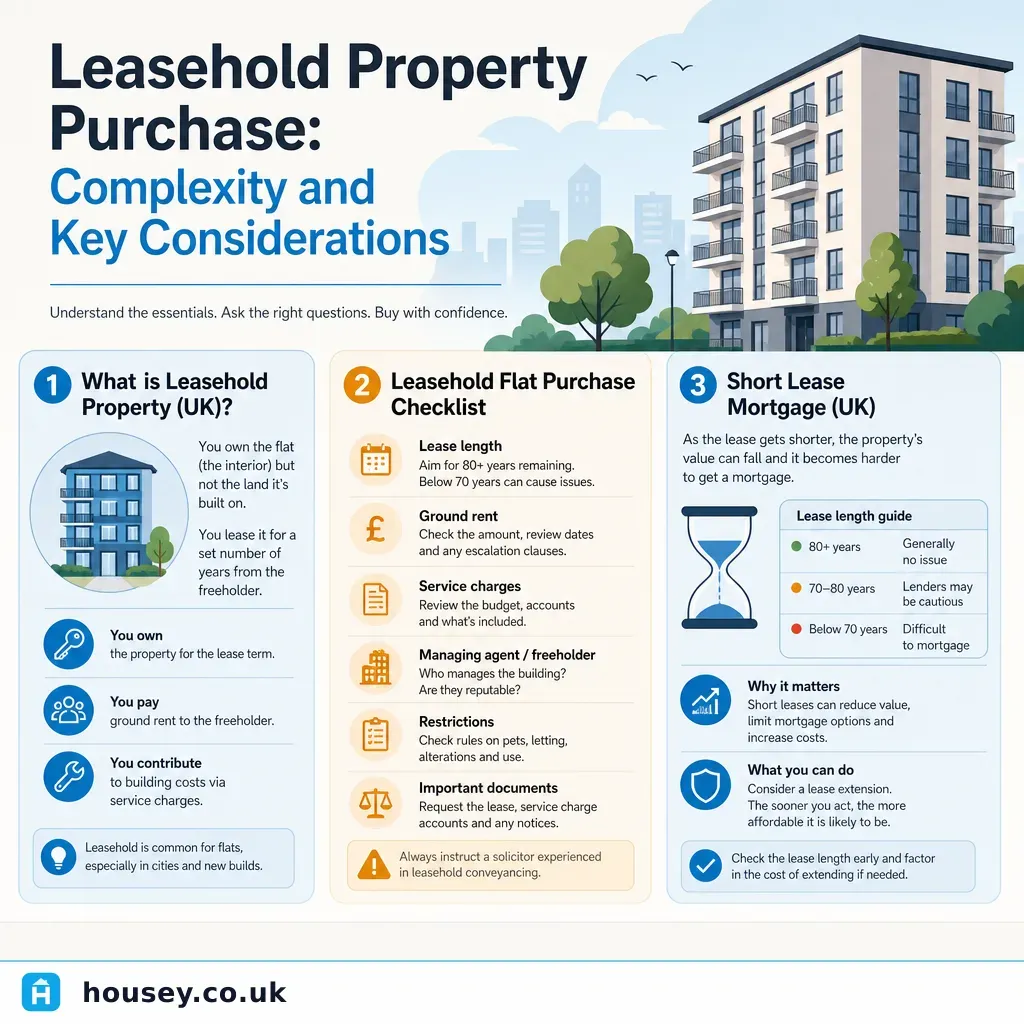
Leasehold Property Purchase: Complexity and Key Considerations
Buying a leasehold property means purchasing the right to occupy for a fixed term rather than owning the land outright.
 Buying & Moving
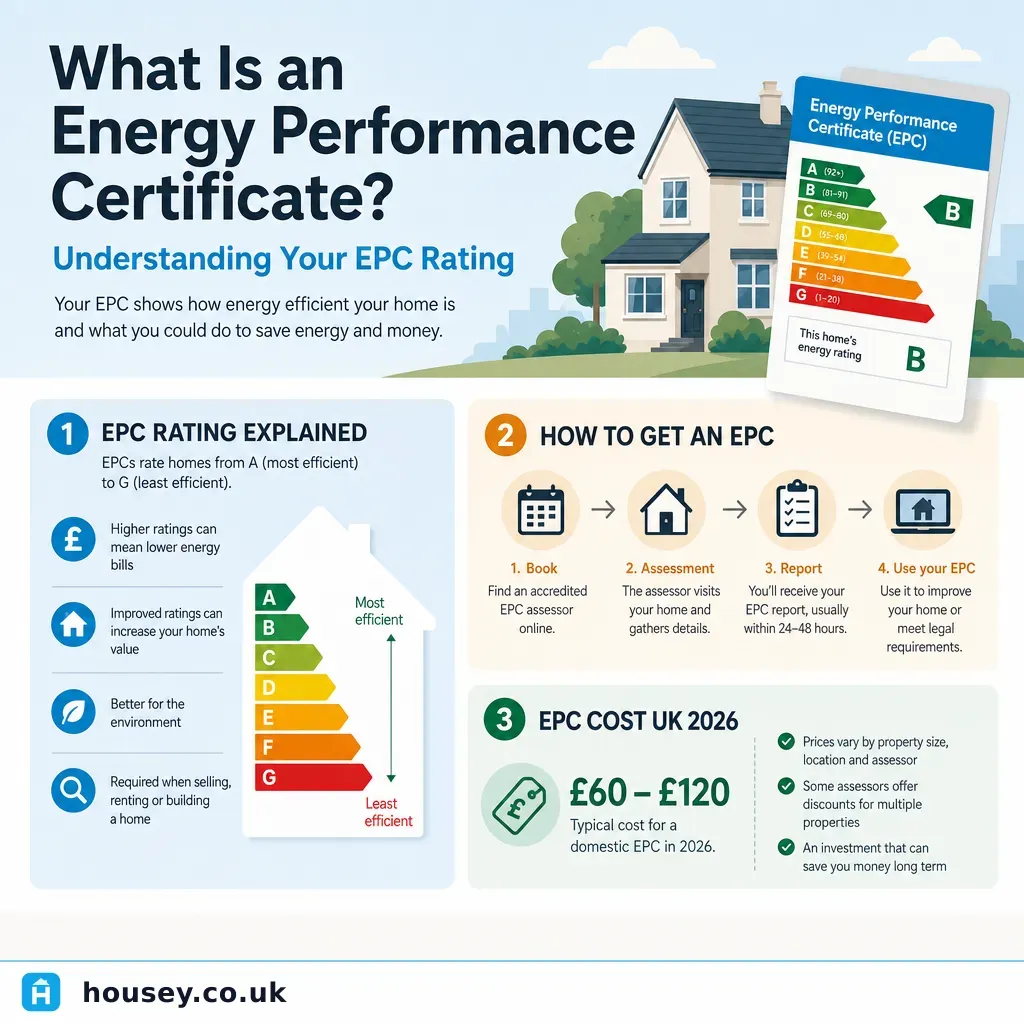
What Is an Energy Performance Certificate: Understanding Your EPC Rating
An Energy Performance Certificate (EPC) rates a property's energy efficiency from A (most efficient) to G (least efficient) using a 1–100 SAP score.
 Buying & Moving
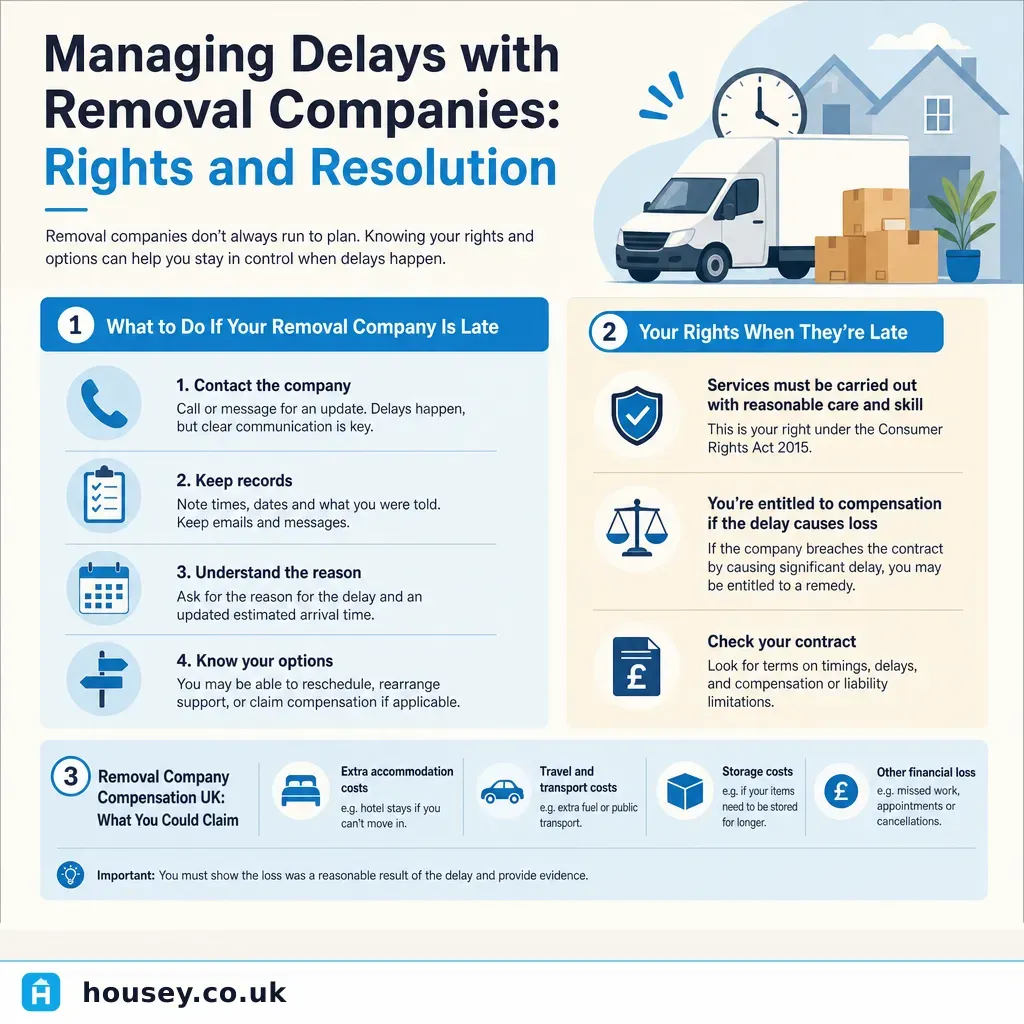
Managing Delays with Removal Companies: Rights and Resolution
If a removal company is late, your rights depend on your contract and whether the company is BAR-registered.
 Buying & Moving
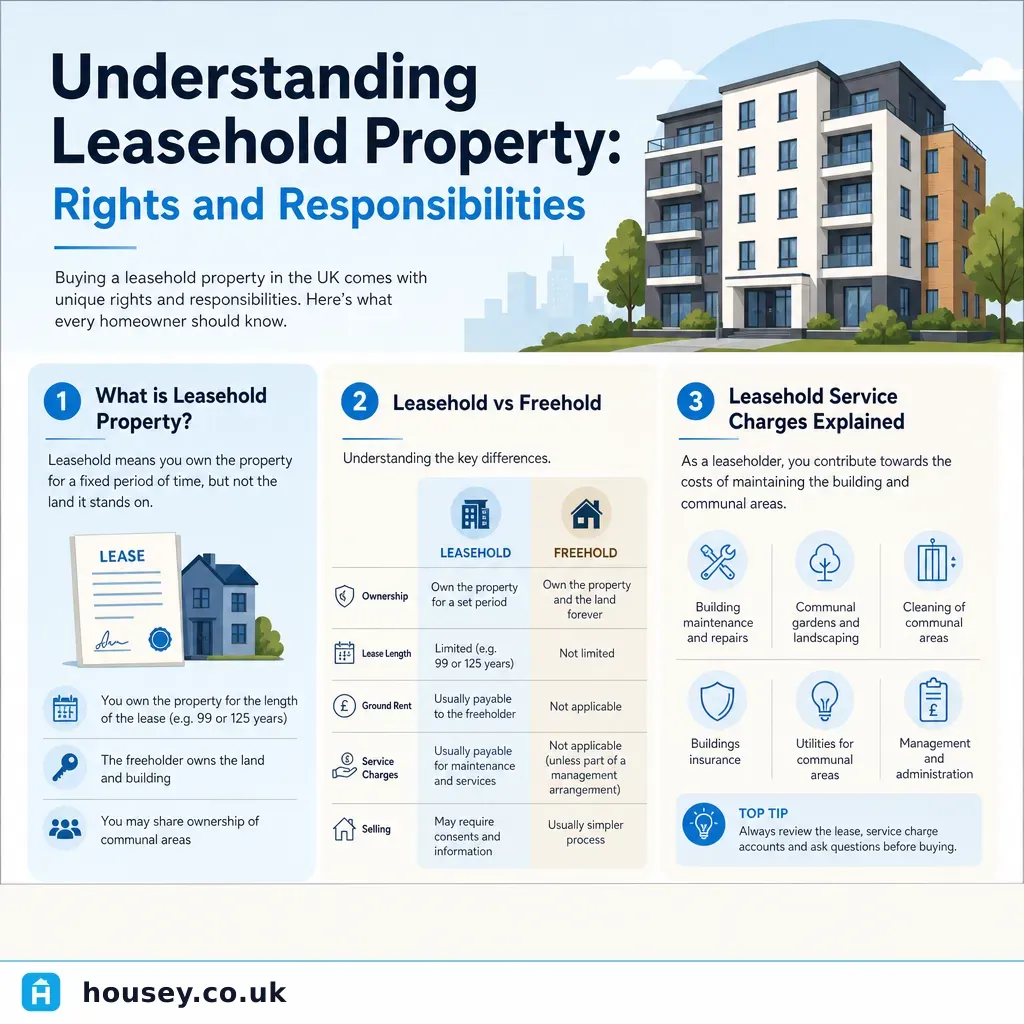
Understanding Leasehold Property: Rights and Responsibilities
Leasehold means you own a time-limited interest in a property while the freeholder owns the land and building.
 Buying & Moving
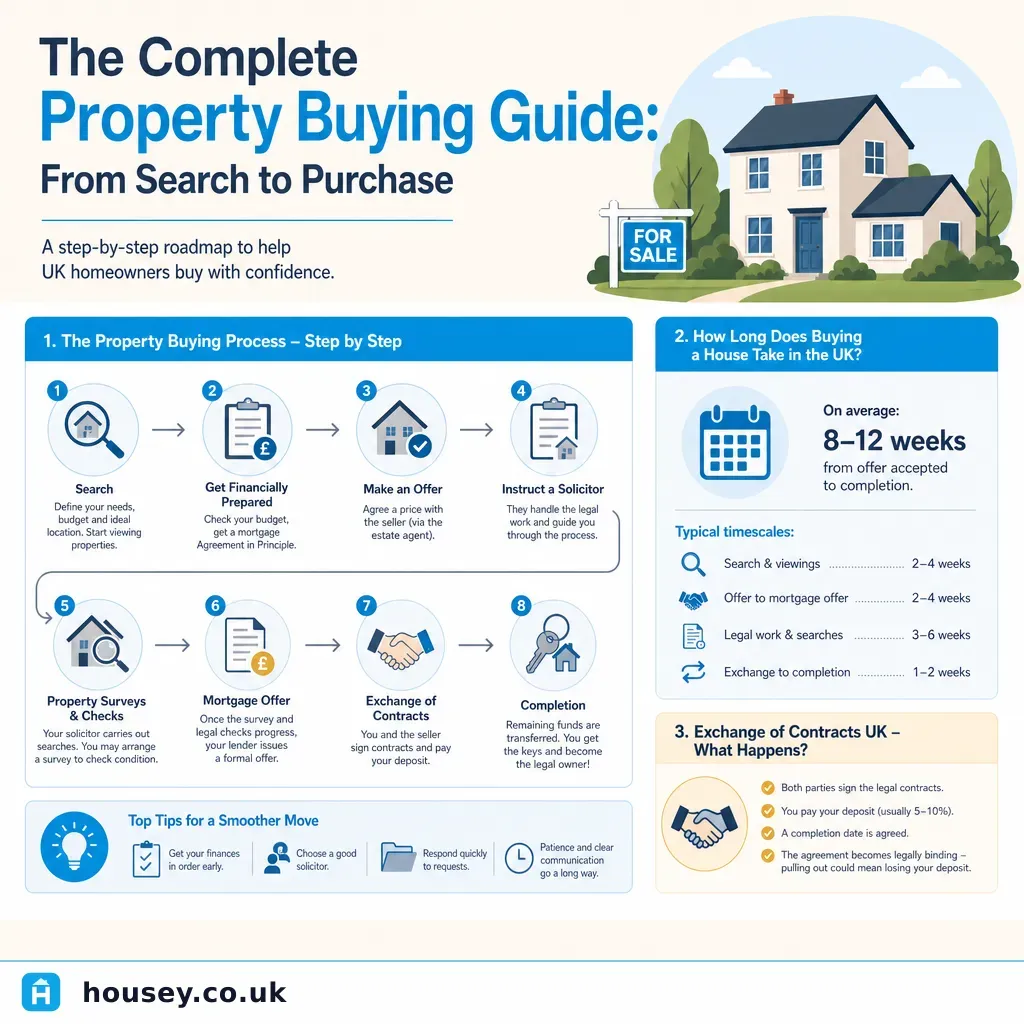
The Complete Property Buying Guide: From Search to Purchase
Buying a property in England and Wales typically takes 3–6 months from accepted offer to completion.