What Is an Energy Performance Certificate: Understanding Your EPC Rating
By Housey · Last reviewed 30th of May 2026
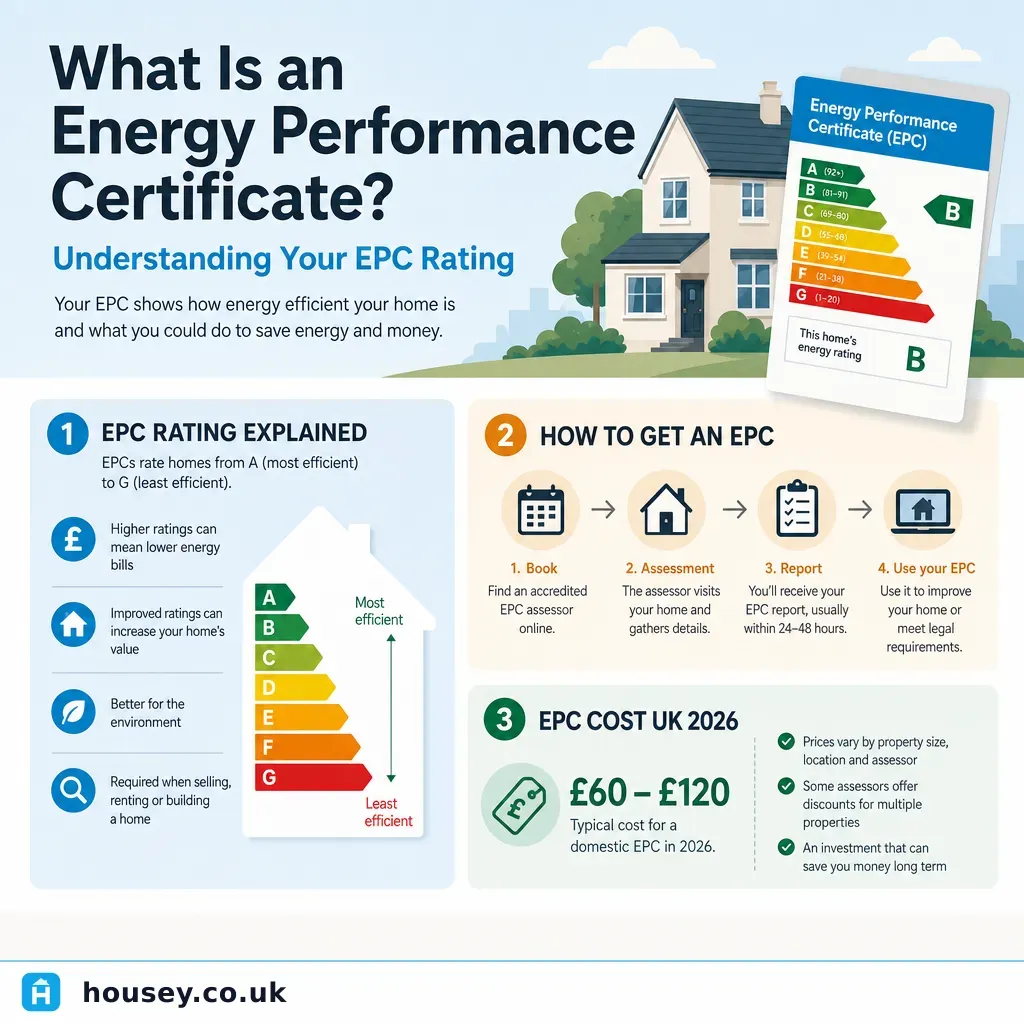
What Is an Energy Performance Certificate: Understanding Your EPC Rating
Buying, selling, or letting a property in England and Wales triggers a legal requirement that catches many homeowners off guard: the Energy Performance Certificate (EPC). Whether you are accepting an offer on a Victorian terrace, preparing a flat for the rental market, or comparing properties as a buyer, understanding what an EPC measures — and what its rating means for running costs and legal compliance — is increasingly important as minimum energy standards tighten.
Key points
- EPCs are rated on a scale of A (most efficient, score 92–100) to G (least efficient, score 1–20), calculated using the government-approved Standard Assessment Procedure (SAP).
- Under the Energy Performance of Buildings (England and Wales) Regulations 2012, an EPC must be obtained before a property is marketed for sale or let.
- Minimum Energy Efficiency Standards (MEES) require all privately rented homes in England and Wales to achieve at least an E rating; properties rated F or G cannot legally be let (subject to registered exemptions).
- An EPC is valid for 10 years from the date of issue and is lodged on a publicly searchable national register via GOV.UK.
- Only an accredited Domestic Energy Assessor (DEA), registered with an approved scheme such as Elmhurst Energy, Stroma, or ECMK, can issue a valid residential EPC.
What does an EPC show?
An Energy Performance Certificate is produced using the Standard Assessment Procedure (SAP 10.2), the government's methodology for rating residential energy performance. Each certificate provides three core outputs:
- Current rating — the property's present energy-efficiency score, based on its construction, heating system, controls, glazing, and lighting.
- Potential rating — the score the property could reach if all recommended improvements were implemented.
- Estimated running costs — standardised indicative annual costs for heating, hot water, and lighting, based on assumed occupancy rather than your actual bills.
The certificate also lists recommended improvement measures ranked by cost-effectiveness, such as loft insulation, cavity-wall fill, heating controls, or solar PV, each with an estimated impact on the rating and running costs.
EPC rating bands
Band | SAP score | Typical property type |
|---|---|---|
A | 92–100 | Passivhaus or zero-carbon new build |
B | 81–91 | Well-insulated modern home, recent new build |
C | 69–80 | Post-1990s estate house with good insulation |
D | 55–68 | Average UK stock; 1960s–1990s semi or terrace |
E | 39–54 | Older home with partial improvements |
F | 21–38 | Pre-war solid-wall home, minimal insulation |
G | 1–20 | Uninsulated property, inefficient heating |
According to the Department for Energy Security and Net Zero (DESNZ), the average EPC rating for homes in England is D, and around 60% of existing dwellings currently fall below a C.
When is an EPC legally required?
The requirement to hold a valid EPC is set out in the Energy Performance of Buildings (England and Wales) Regulations 2012 (SI 2012/3118).
Selling: An EPC must be commissioned before a property is put on the market. Estate agents are required to include the energy rating in property listings, and the certificate must be made available to prospective buyers free of charge.
Letting: Landlords must provide a copy of the EPC to tenants at or before the start of a tenancy. Under MEES, properties in England and Wales must hold at least an E rating to be legally let. Limited exemptions apply — for example, where all cost-effective improvements have been made and the property still cannot reach E, or where improvements would unacceptably alter a listed building's character. Exemptions must be registered on the PRS Exemptions Register.
Scotland and Northern Ireland: Different regulations apply. Scotland operates under the Energy Performance of Buildings (Scotland) Regulations 2008 and has its own minimum standards. Always check the rules relevant to your property's location.
Properties exempt from EPC requirements include certain listed buildings, places of worship, temporary buildings intended for use under two years, and stand-alone buildings with a total floor area below 50 m².
How is an EPC assessment carried out?
A qualified Domestic Energy Assessor (DEA) visits the property to collect data on:
- Construction type and floor area (cavity wall, solid wall, timber frame)
- Insulation levels (loft, walls, floors)
- Heating system type, fuel, and controls (thermostat, TRVs, programmer)
- Hot water system
- Glazing type (single, double, triple)
- Renewable energy installations (solar PV, solar thermal)
- Proportion of energy-efficient lighting
The DEA inputs this data into approved SAP software, and the resulting certificate is lodged with the national EPC register. A standard property typically takes 45–60 minutes to assess. The assessor must be registered with an accreditation scheme, and all EPCs are publicly visible on GOV.UK.
How much does an EPC cost?
Indicative UK costs, last reviewed 2026-05-30. Obtain quotes for your specific property.
Property size | Typical cost range |
|---|---|
1–2 bedroom flat or house | £60–£90 |
3 bedroom semi or terrace | £70–£100 |
4–5 bedroom detached | £90–£120+ |
Costs vary by region, assessor availability, and urgency. Some letting agents or conveyancers arrange EPCs as part of a wider package. Always verify the assessor's accreditation before booking.
How to improve your EPC rating
The certificate's recommended measures are property-specific, but common improvements include:
- Loft insulation (270 mm) — one of the most cost-effective fabric measures for pre-1976 homes with no existing insulation
- Cavity wall insulation — suitable for most post-1920s properties with unfilled cavities; grant funding may be available under ECO4 or the Great British Insulation Scheme (GBIS)
- Heating controls — adding a room thermostat, programmer, and thermostatic radiator valves (TRVs) improves the SAP score at relatively low cost
- Double or triple glazing — reduces heat loss through single-glazed windows; impact depends on window area
- Air source or ground source heat pump — major SAP improvement when replacing oil or electric storage heating; requires a suitability assessment and MCS-certified installer
- Solar photovoltaic (PV) panels — can add 10–20+ SAP points depending on array size and orientation; requires an MCS-certified installer
Before commissioning significant work, check eligibility for ECO4, GBIS, or local authority retrofit grants via the GOV.UK Simple Energy Advice portal.
What not to assume about your EPC
- A high EPC rating guarantees low bills. EPC scores are based on standardised occupancy assumptions, not your actual usage. A well-insulated home can still have high bills depending on heating habits and how often rooms are occupied.
- An old EPC is still reliable. If significant improvements have been made since the last certificate was issued, the rating may no longer reflect the property's actual performance. A new assessment will capture recent works.
- Any energy professional can issue an EPC. Assessors must be accredited by an approved scheme. An unaccredited certificate has no legal standing.
- MEES only applies to new tenancies. Since April 2020, MEES has applied to all existing domestic tenancies in England and Wales, not just those starting after that date.
Important limitations
This article provides general information about EPCs in England and Wales. Rules in Scotland and Northern Ireland differ. EPC assessments are standardised estimates; actual energy performance depends on occupancy, behaviour, and maintenance. The MEES cost-cap threshold and minimum rating requirements may change — verify current rules with a solicitor or compliance adviser before acting. Decisions about retrofit measures should be informed by a PAS 2035-accredited Retrofit Coordinator, not an EPC report alone.
When this becomes urgent
Stop relying on general guidance and seek professional advice immediately if:
- You are a landlord who has received a local authority compliance notice about an F- or G-rated rental property
- A buyer's mortgage lender has flagged an EPC below the threshold required for a specific loan product
- You are close to exchanging contracts and have just discovered the existing EPC has lapsed or was never lodged on the national register
What to ask a qualified professional
Before instructing a Domestic Energy Assessor or acting on recommended improvements, ask:
- Are you accredited with an approved scheme (Elmhurst Energy, Stroma, ECMK, or Quidos), and can I verify your registration number on the accreditation body's website?
- Will the EPC be lodged on the national register on the same day it is issued?
- My property is of unusual construction or is listed — does that affect what can be assessed or recommended?
- The EPC recommends solid-wall insulation or a heat pump — do I need a PAS 2035 Retrofit Coordinator assessment before proceeding?
- As a landlord, does my property qualify for a MEES exemption, and how do I register it on the PRS Exemptions Register?
When to get professional help
Consult a solicitor, energy-compliance specialist, or accredited assessor if:
- You are a landlord with an F- or G-rated property and are unsure whether an exemption applies
- You are buying a property with a very low EPC rating and need to understand the likely retrofit cost before exchange
- You are applying for a green mortgage product that requires a minimum EPC rating
- You are planning major works such as a heat pump, external wall insulation, or a new heating system that require building control sign-off or grant funding compliance
How Housey can help
Housey connects homeowners, landlords, and sellers with accredited Domestic Energy Assessors across the UK. Whether you need an EPC before listing your property, want to understand what improvements would lift your rating ahead of a sale, or need to meet MEES compliance as a landlord, you can request an EPC assessment through Housey and compare quotes from accredited local assessors.
Frequently asked questions
How long is an EPC valid for?
An EPC is valid for 10 years from the date of issue. You can check whether a valid certificate already exists for any property — free of charge — on the government's EPC register at GOV.UK. If significant energy improvements have been made since the last certificate, commissioning a new assessment will reflect the updated performance and may support mortgage or rental compliance purposes.
Can I sell my house without a good EPC rating?
Yes — there is no minimum EPC rating required to sell a residential property in England and Wales. You must have a valid EPC before marketing, but the rating does not prevent a sale. A low rating may affect buyer confidence, influence a valuer's assessment of running costs, or complicate green mortgage eligibility.
What is the penalty for not having a valid EPC as a landlord?
For residential rental properties, local authorities can issue a penalty charge notice of up to £5,000 for MEES breaches. Failing to provide an EPC when selling attracts a fixed penalty of £200 per property. Enforcement is carried out by local authority trading standards officers.
Do I need a new EPC after improving my home's insulation?
Not unless the existing certificate has expired or you need the updated rating for a specific purpose such as a mortgage application, tenancy compliance, or resale. A new assessment will capture any improvements and may significantly increase the rating if major works have been completed.
Sources and further reading
- Energy Performance of Buildings (England and Wales) Regulations 2012 — legislation.gov.uk
- Minimum Energy Efficiency Standards: landlord guidance — GOV.UK
- Find an energy certificate — GOV.UK
- Standard Assessment Procedure (SAP) — GOV.UK / BRE Group
- Great British Insulation Scheme — GOV.UK
- Energy Saving Trust: home insulation advice — Energy Saving Trust
Useful next reads
 Buying & Moving
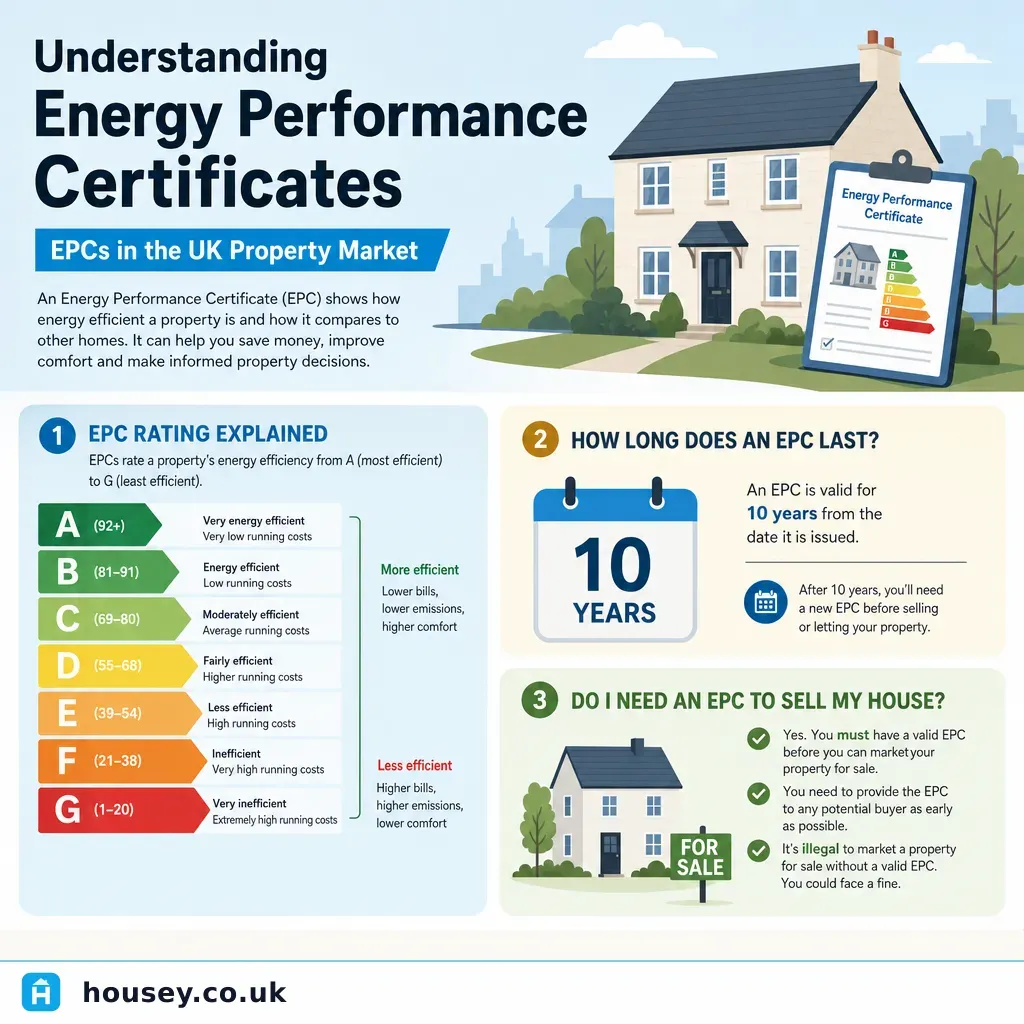
Understanding Energy Performance Certificates: EPCs in the UK Property Market
An Energy Performance Certificate (EPC) rates a property's energy efficiency on a scale from A (most efficient) to G (least efficient).
 Buying & Moving
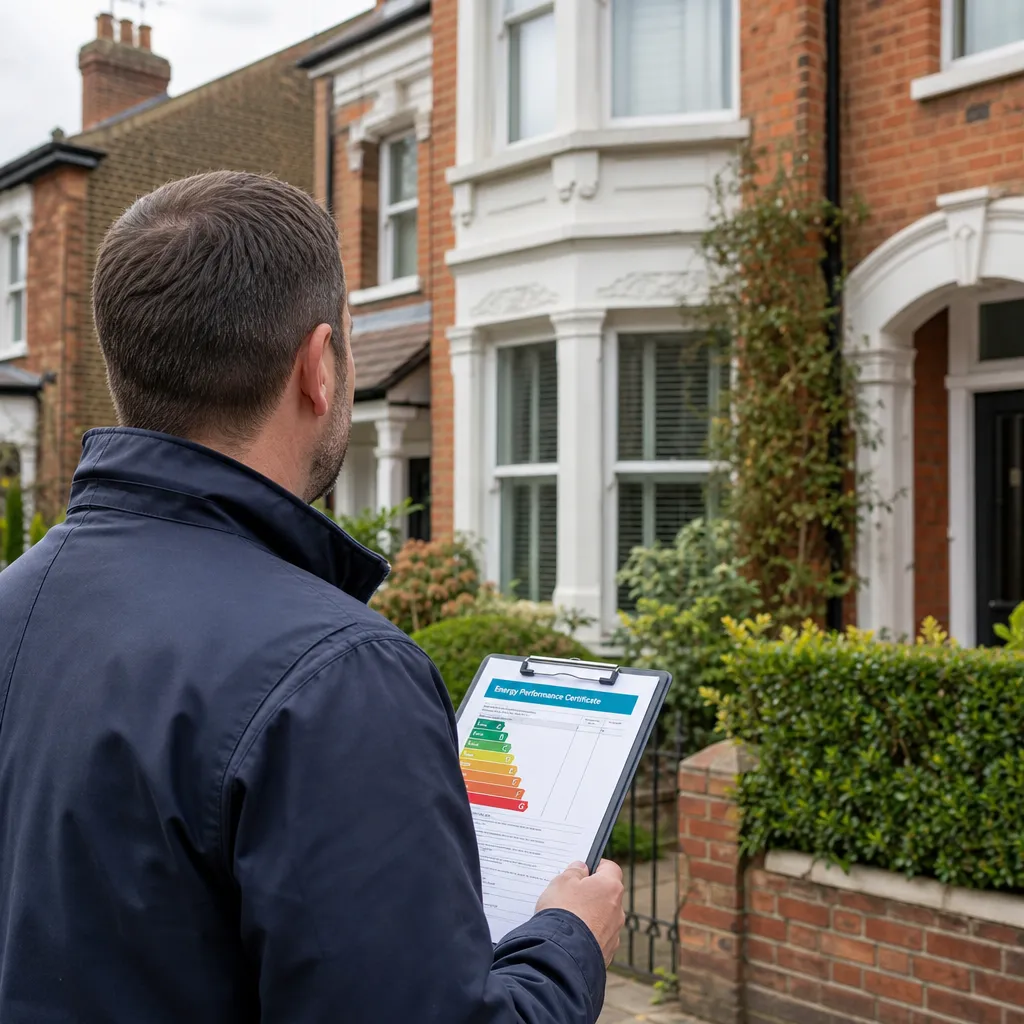
What Do EPC Ratings Tell You? Understanding Energy Performance Certificates When Buying Property
An Energy Performance Certificate (EPC) rates a property from A (most efficient) to G (least efficient) using a score out of 100, based on estimated energy costs, insulation, heating systems, and carbon emissions.
 Buying & Moving
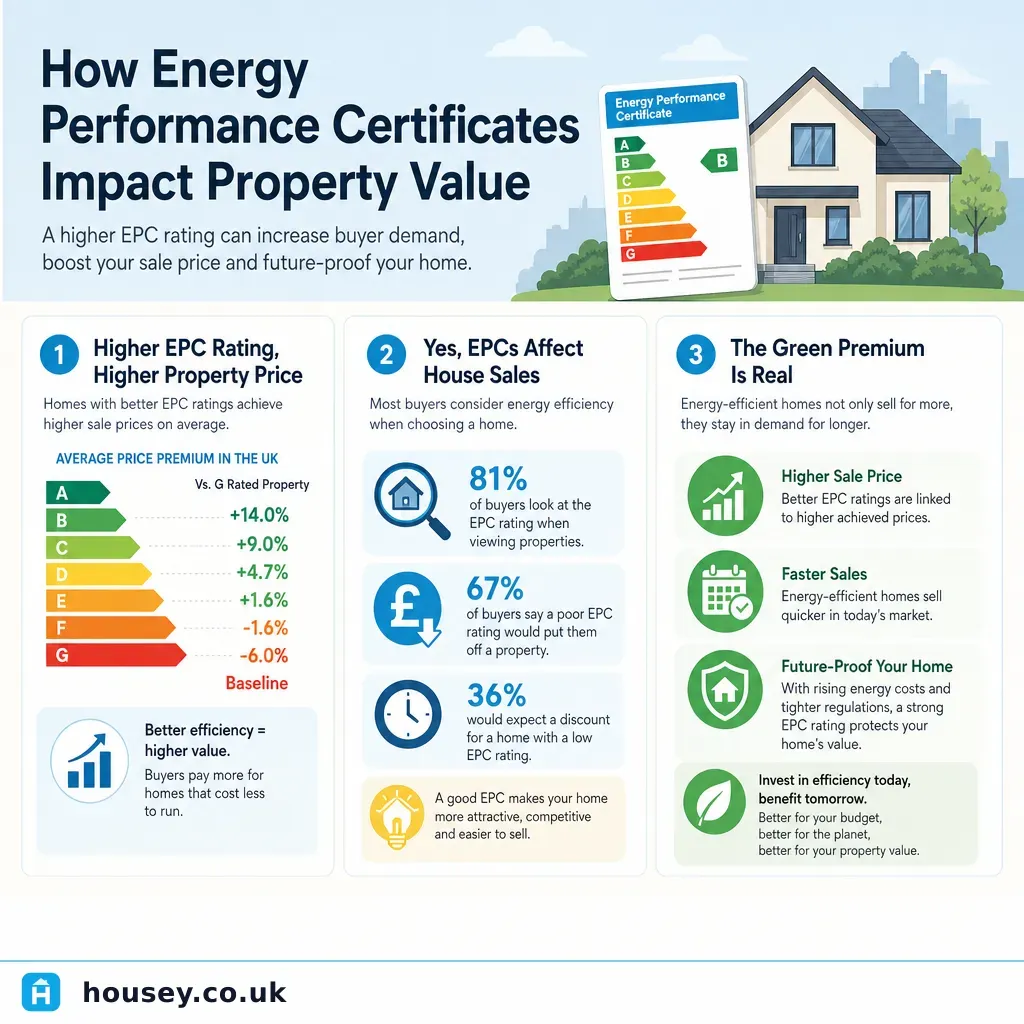
How Energy Performance Certificates Impact Property Value
A higher EPC rating can add measurable value to a UK property through a 'green premium' on open market sales, preferential green mortgage rates, and stronger buyer confidence.
 Buying & Moving
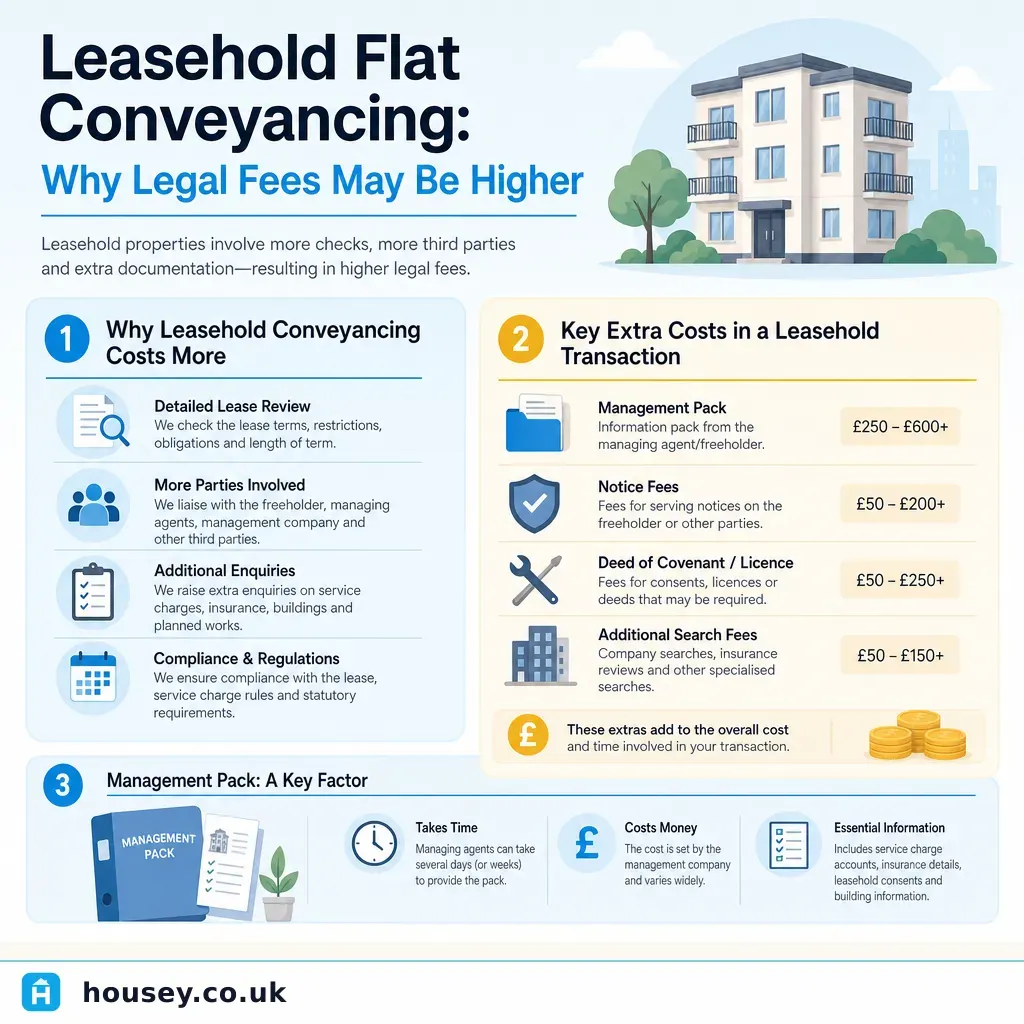
Leasehold Flat Conveyancing: Why Legal Fees May Be Higher
Leasehold flat conveyancing typically costs more than freehold because solicitors must review the lease, check service charge accounts, obtain a management information pack, and handle freeholder consents and notice fees.
 Buying & Moving
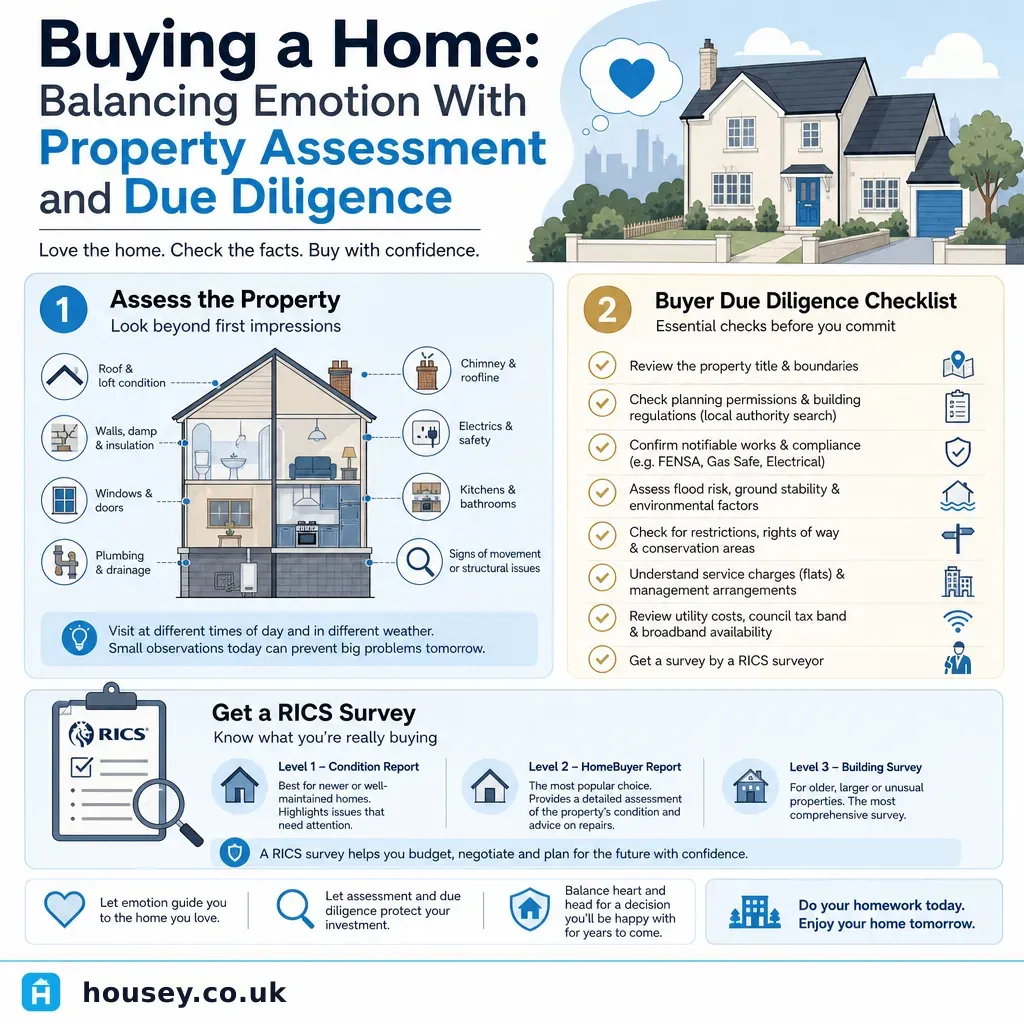
Buying a Home: Balancing Emotion With Property Assessment and Due Diligence
It's natural to feel strongly about a property, but buying decisions should be supported by a formal survey, proper searches, and independent legal advice.