LPG System Conversion and Installation Costs
By Housey · Last reviewed 7th of May 2026
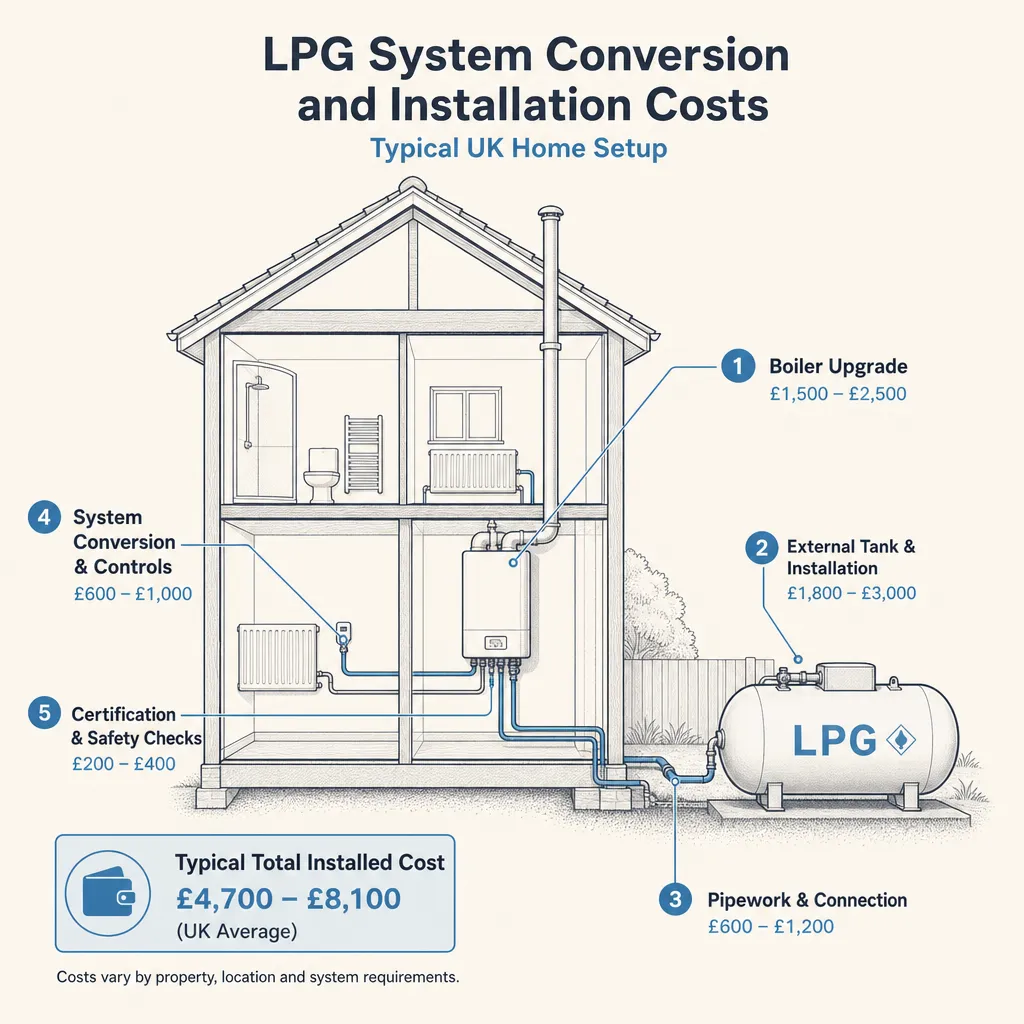
LPG System Conversion and Installation Costs
For the roughly 4 million UK households without access to the mains gas grid — predominantly in rural and semi-rural areas — liquefied petroleum gas (LPG) is one of the most practical ways to achieve gas-fired central heating and hot water. Homeowners switching from oil, solid fuel, or electric storage heaters, or those taking on a property with no existing central heating, need to understand the full scope of LPG conversion or new installation costs: boiler, tank, pipework, commissioning, and the ongoing fuel supply arrangements that affect whole-life cost.
Key points
- All LPG installation and conversion work must be carried out by a Gas Safe registered engineer — under the Gas Safety (Installation and Use) Regulations 1998, it is illegal for an unregistered person to work on gas fittings in the UK.
- A new LPG-compatible condensing boiler installation typically costs £2,500–£5,500 supply and fit (indicative UK costs, last reviewed 2026-05-07).
- LPG tanks may be purchased outright or rented from a fuel supplier — renting ties you to that supplier's pricing, while outright ownership allows you to shop the open market for fuel.
- LPG running costs are typically higher per kWh than mains natural gas; the Energy Saving Trust publishes current indicative fuel cost comparisons for off-grid properties.
- The Boiler Upgrade Scheme does not currently provide grants for new LPG boilers, though a £7,500 grant is available for switching to an air source heat pump.
What does an LPG conversion or installation involve?
A full LPG installation covers several components, whether converting from another fuel or creating a brand-new central heating system:
LPG-compatible boiler — Most modern condensing boilers can be configured for LPG with a conversion kit, adjusting jet sizes, gas valve settings, and burner pressure. The boiler must be correctly set up for LPG, which burns at different pressures and calorific values than natural gas. Correct sizing matters: an undersized boiler will struggle to heat the property; oversizing reduces efficiency and increases fuel costs.
On-site storage tank — Either an above-ground bulk tank (typically 500–2,700 litres for a domestic property) or an underground tank. The tank must be sited in accordance with the UKLPG Code of Practice 1 Part 1, observing minimum separation distances from buildings, boundaries, openings, and drains.
Supply pipework and regulator — External pipework runs from the tank to the meter point, with pressure regulation from bulk storage pressure to appliance operating pressure. Internal pipework distributes gas to the boiler and any other LPG appliances.
Commissioning and certification — The system must be commissioned and tested by a Gas Safe registered engineer, who issues an installation certificate. Where Building Regulations apply, the engineer can usually self-certify under a Competent Person Scheme.
How much does LPG conversion and installation cost?
Indicative UK costs, last reviewed 2026-05-07. Costs vary significantly by property size, existing infrastructure, tank choice, and location.
Component | Indicative cost range | Notes |
|---|---|---|
LPG condensing boiler (supply and fit) | £2,500–£5,500 | Varies by output (kW), brand, combi vs system config |
Above-ground bulk tank (purchased, 500–1,000 l) | £800–£2,500 | Outright purchase allows full supplier flexibility |
Underground bulk tank (installed) | £2,500–£5,500 | Excavation included; more discreet but higher upfront cost |
Tank rental | £0–£200/year | Supplier retains ownership; typically tied to their fuel pricing |
External pipework, regulator, fittings | £500–£1,500 | Depends on distance from tank to property |
Internal pipework (new system required) | £1,000–£3,500 | Varies with property size and layout |
First-fix radiators and cylinder (no existing circuit) | £2,500–£7,000+ | Full central heating from scratch in a larger property |
Oil tank decommissioning (converting from oil) | £300–£800 | Safe disposal of residual fuel and removal of tank |
Above-ground vs underground LPG tank
Option | Advantages | Disadvantages | Indicative installation cost |
|---|---|---|---|
Above-ground (purchased) | Lower upfront cost; full supplier flexibility | Visible in garden; min 1.5 m from buildings and boundaries per UKLPG CoP 1 Pt 1 | £800–£2,500 |
Above-ground (rented) | No tank purchase cost | Tied to supplier's fuel pricing; contract exit can be complex | £0–£200/year rental |
Underground | No visual impact; suits smaller or formal gardens | Higher installation cost; excavation required; harder to inspect for leaks | £2,500–£5,500 |
Minimum separation distances are set out in UKLPG Code of Practice 1 Part 1. Your Gas Safe registered installer should carry out a site assessment and confirm compliant siting before ordering equipment.
Worked example: rural cottage conversion from oil to LPG
A three-bedroom detached cottage in rural Shropshire, circa 1960, currently heated by an ageing oil boiler with an existing radiator circuit and a vented hot water cylinder. The owners want to switch to LPG to gain access to a modern condensing boiler and reduce dependence on volatile oil prices.
Scope of works:
- Decommission existing oil boiler; arrange safe removal of the oil tank (approximately 300 litres residual fuel)
- Supply and fit a 30 kW LPG condensing combi boiler
- Install a purchased above-ground 1,000-litre LPG tank to maintain supplier flexibility
- Run external LPG pipework from tank to property; fit regulator and fittings
- Commission and certify the installation under the Competent Person Scheme
Indicative cost breakdown (last reviewed 2026-05-07):
Item | Indicative cost |
|---|---|
Oil tank decommissioning and removal | £500 |
LPG condensing combi boiler (supply and fit) | £3,500 |
Above-ground tank purchase (1,000 l) | £1,500 |
External pipework, regulator, and fittings | £800 |
Gas Safe commissioning certificate | Included |
Indicative total | c. £6,300 |
This example is illustrative. Actual costs depend on the existing flue condition, radiator circuit assessment, site access, and prevailing labour rates locally.
LPG running costs and alternatives
LPG is generally more expensive per kWh than mains natural gas. As of early 2026, indicative bulk LPG rates are approximately 6–9 pence per kWh. For off-grid properties, the main alternatives are:
Fuel | Typical running cost (p/kWh) | Key consideration |
|---|---|---|
Mains natural gas | ~5–6p | Not available off the mains grid |
LPG (bulk delivery) | ~6–9p | On-site storage required; prices fluctuate with wholesale markets |
Heating oil (kerosene) | ~5–8p | On-site storage; significant price volatility |
Air source heat pump (electricity) | ~4–8p effective (CoP 2.5–3.5) | Higher upfront cost; £7,500 Boiler Upgrade Scheme grant available |
Direct electric heating | ~24–28p | Low install cost; high running cost for whole-house heating |
Figures are indicative only; check the Energy Saving Trust's off-grid fuel comparison tool for current data. An independent energy-efficiency consultant can model running costs against your property's actual heat demand before you commit to a fuel type.
What to ask before accepting an LPG installation quote
- Is the installer Gas Safe registered? Request their registration number and verify it at the Gas Safe Register website.
- Does the quote include commissioning, the Gas Safe installation certificate, and Building Regulations self-certification?
- Is the tank included in the price, or is a rental agreement proposed? If renting: what is the minimum contract term and what are the exit conditions?
- Has the existing flue been assessed for LPG compatibility? LPG products of combustion differ from oil and natural gas — the flue liner may require upgrading.
- What boiler output (kW) is proposed, and how was the heat loss calculation carried out?
- Does the quote include flushing and inhibitor treatment of the existing radiator circuit?
- What manufacturer warranty applies to the boiler, and what annual service is required to maintain it?
Important limitations
This article provides general cost and process guidance for UK homeowners. LPG systems involve pressurised flammable gas and must be designed, installed, commissioned, and serviced by a Gas Safe registered engineer. Nothing in this article constitutes gas safety advice or replaces a site assessment by a qualified professional. Costs shown are indicative and will vary by property, location, and specification. Refer to the Gas Safe Register, HSE guidance, and the UKLPG codes of practice for current regulatory requirements.
What to ask a qualified professional
- What boiler size and configuration do you recommend for my property, and what heat loss methodology did you use?
- Which LPG suppliers serve my postcode, and are there any constraints on tank siting given my garden layout and boundary distances?
- If I purchase my tank outright, which suppliers offer the most competitive bulk delivery rates in my area?
- How does LPG compare with an air source heat pump for my property's construction type and current insulation level?
- What does an annual boiler service cost, and is a service plan available?
When to get professional help
Always use a Gas Safe registered engineer for any LPG installation, conversion, or servicing. Contact a qualified professional immediately if:
- You smell gas or suspect a leak — ventilate the space, avoid operating electrical switches, and call the Gas Emergency Service on 0800 111 999.
- An existing LPG appliance shows signs of incomplete combustion: a yellow or orange flame, sooting around the appliance, or unusual smells.
- Your existing boiler or appliance has not been serviced within the past 12 months.
An independent energy-efficiency consultant can provide impartial advice on the best long-term heating solution for your off-grid property before you commit to an LPG installation.
How Housey can help
If you are weighing LPG against other off-grid heating options, Housey can connect you with independent energy-efficiency consultants who can assess your property's heat demand, compare fuel and running costs, and advise on Boiler Upgrade Scheme eligibility before you commit. Request and compare quotes from qualified consultants in your area through Housey.
Frequently asked questions
Does LPG boiler installation require Building Regulations approval in the UK?
Yes. Installing a new gas boiler or central heating system requires notification under Building Regulations Part J (Combustion appliances) and Part L (Conservation of fuel and power). In most cases, a Gas Safe registered installer can self-certify the work under a Competent Person Scheme, removing the need for a separate Building Control application. Your installer must provide a certificate of compliance on completion.
Can I switch LPG supplier if I rent my tank?
If you rent a tank from a supplier, it belongs to them and must be removed before a new supplier installs their own. This can involve a notice period and removal charges. Owning your tank outright gives you freedom to purchase LPG on the open market, which often results in lower fuel costs over time — particularly if you are a high-volume user or in an area with good supplier competition.
How much does LPG cost to run compared with mains gas?
LPG is typically more expensive per kWh than mains natural gas. Indicative bulk LPG rates are approximately 6–9 pence per kWh, compared with roughly 5–6 pence per kWh for natural gas under Ofgem's domestic price cap. Actual prices fluctuate with wholesale markets and differ by supplier, delivery volume, and contract. The Energy Saving Trust publishes regular fuel cost comparisons for off-grid households.
Is LPG a suitable long-term heating solution given the UK's net-zero targets?
LPG produces lower carbon emissions per kWh than oil but more than mains gas, and significantly more than a heat pump on the current electricity grid. The UK Government's long-term direction for off-grid homes is towards heat pumps and heat networks. LPG may be a practical interim solution, but if you are planning a significant boiler replacement, independent advice on heat pump viability before committing to LPG is worthwhile.
Are there grants available for LPG boiler installation in the UK?
As of 2026, the Boiler Upgrade Scheme does not provide grants for new LPG boilers. However, switching from LPG to an air source heat pump attracts a £7,500 grant under the Boiler Upgrade Scheme. The ECO4 scheme may support insulation and heating upgrades for eligible low-income households. Check GOV.UK for current eligibility criteria and available funding.
Sources and further reading
- Gas Safe Register — official register of gas engineers — Gas Safe Register
- UKLPG Code of Practice 1 Part 1 — Bulk LPG storage at fixed installations — UKLPG
- Boiler Upgrade Scheme — GOV.UK
- LPG heating — Energy Saving Trust guidance — Energy Saving Trust
- Gas safety in domestic properties — Health and Safety Executive
Useful next reads
 Energy & Retrofit
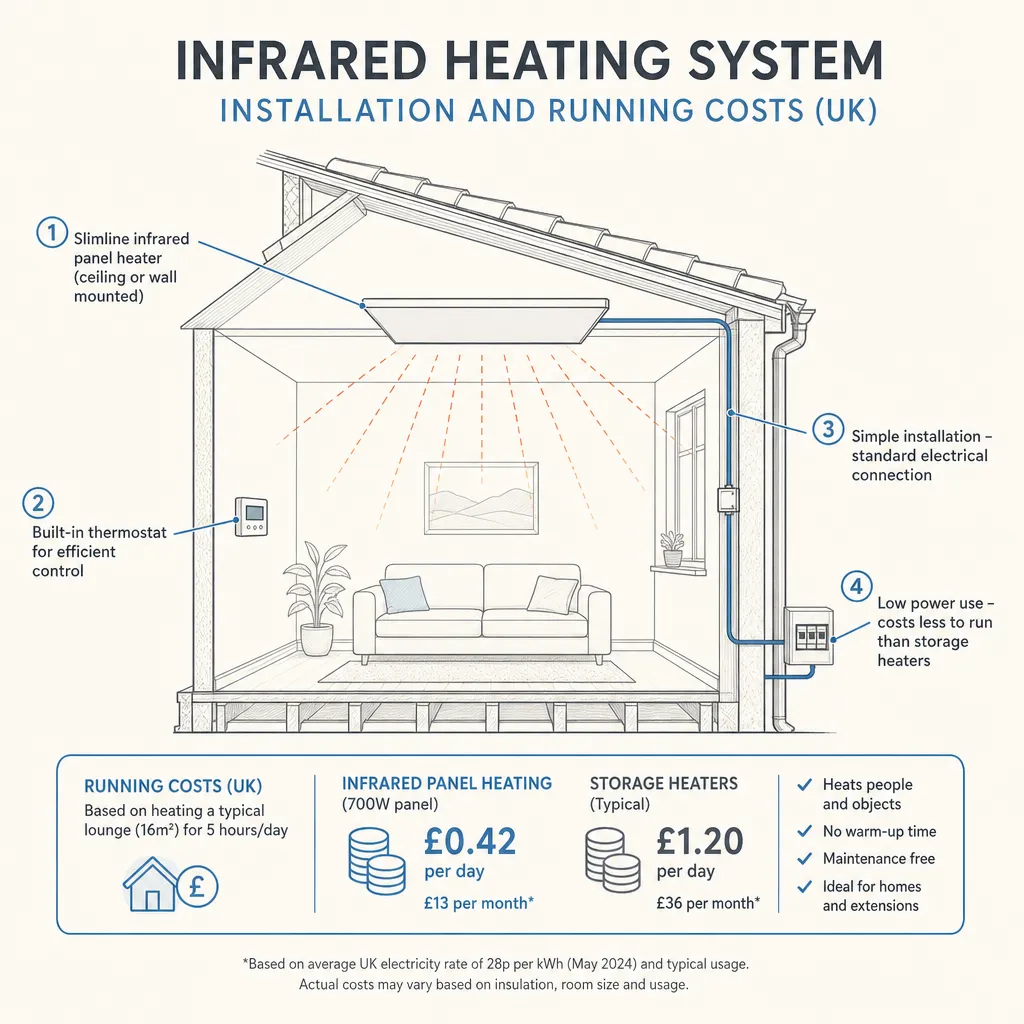
Infrared Heating System Installation and Running Costs
Infrared heating panels supply heat through radiant energy rather than warming air, making them efficient in well-insulated spaces.
 Energy & Retrofit
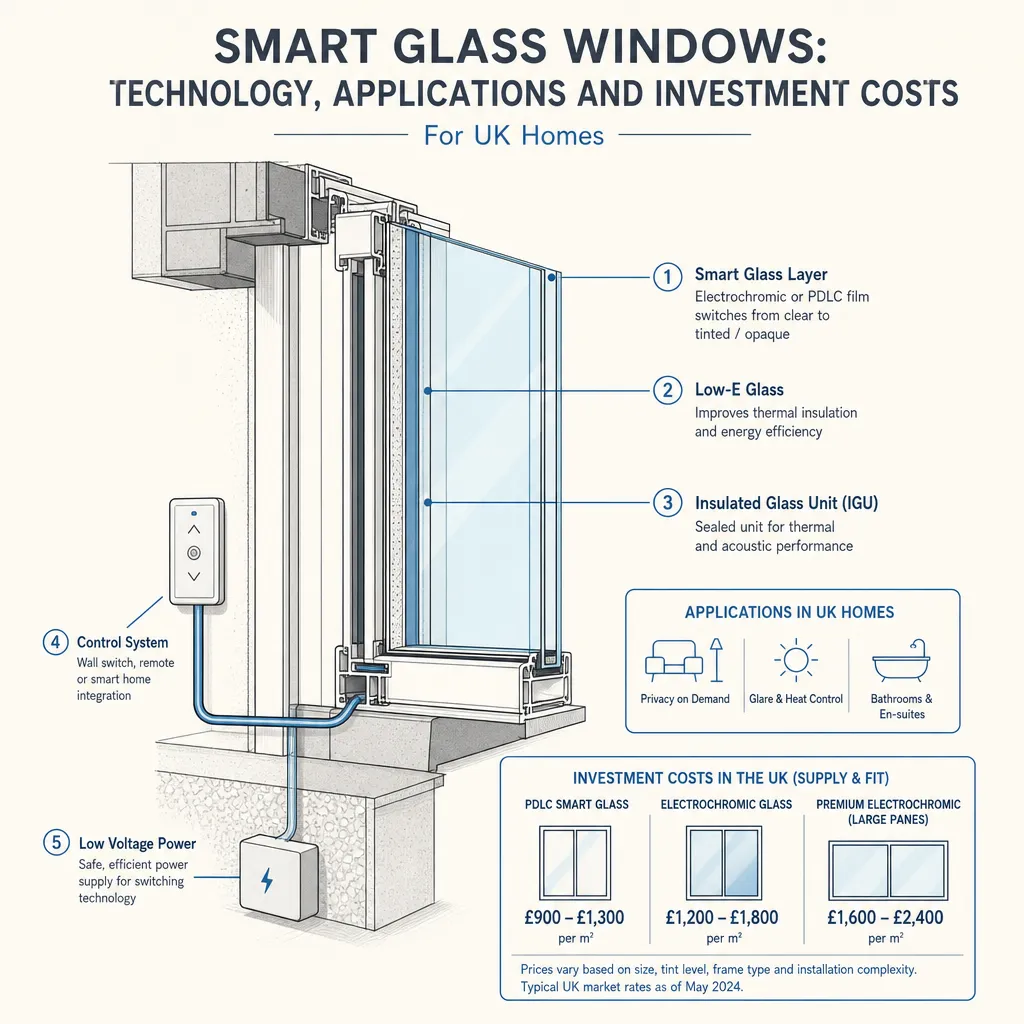
Smart Glass Windows: Technology, Applications and Investment Costs
Smart glass windows switch between transparent, tinted, or opaque states using electrical signals or heat.
 Energy & Retrofit
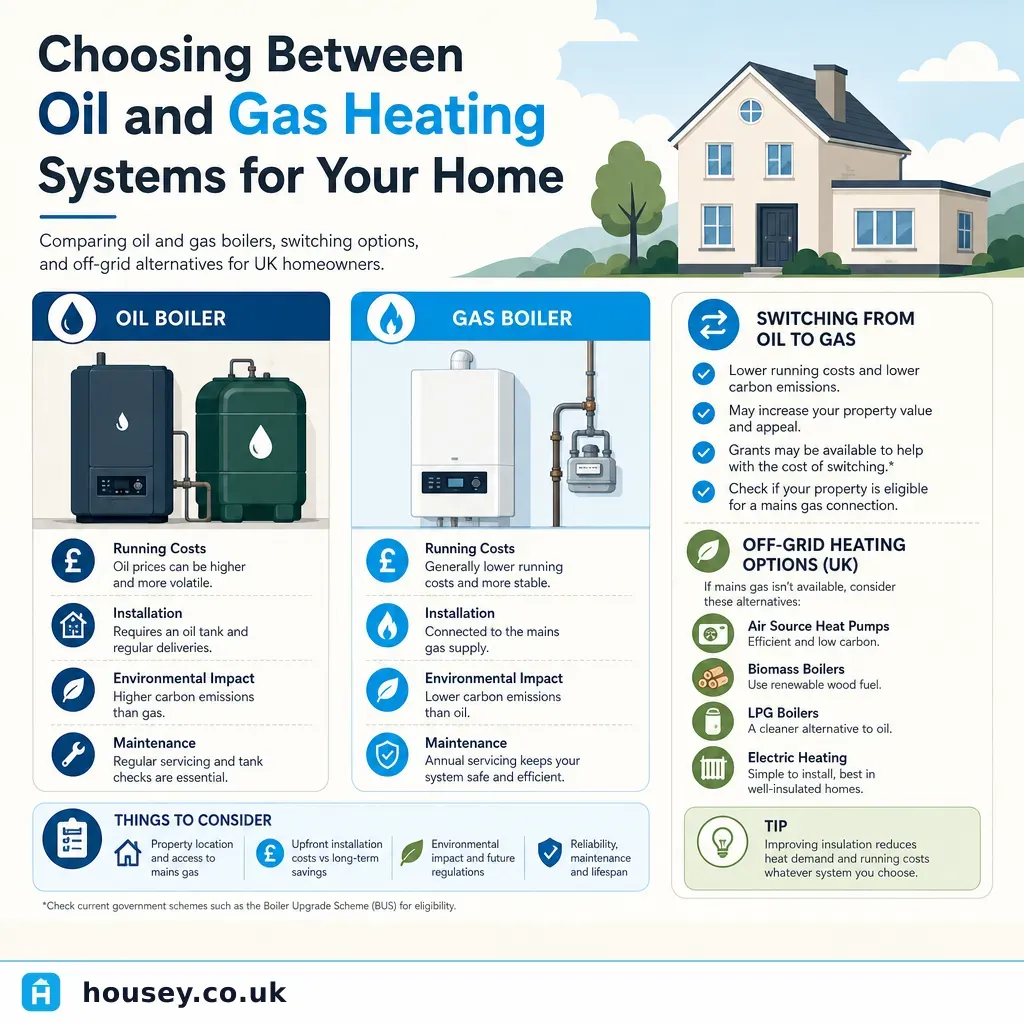
Choosing Between Oil and Gas Heating Systems for Your Home
Oil central heating suits rural UK properties without mains gas access, while gas remains the default for connected homes.
 Energy & Retrofit
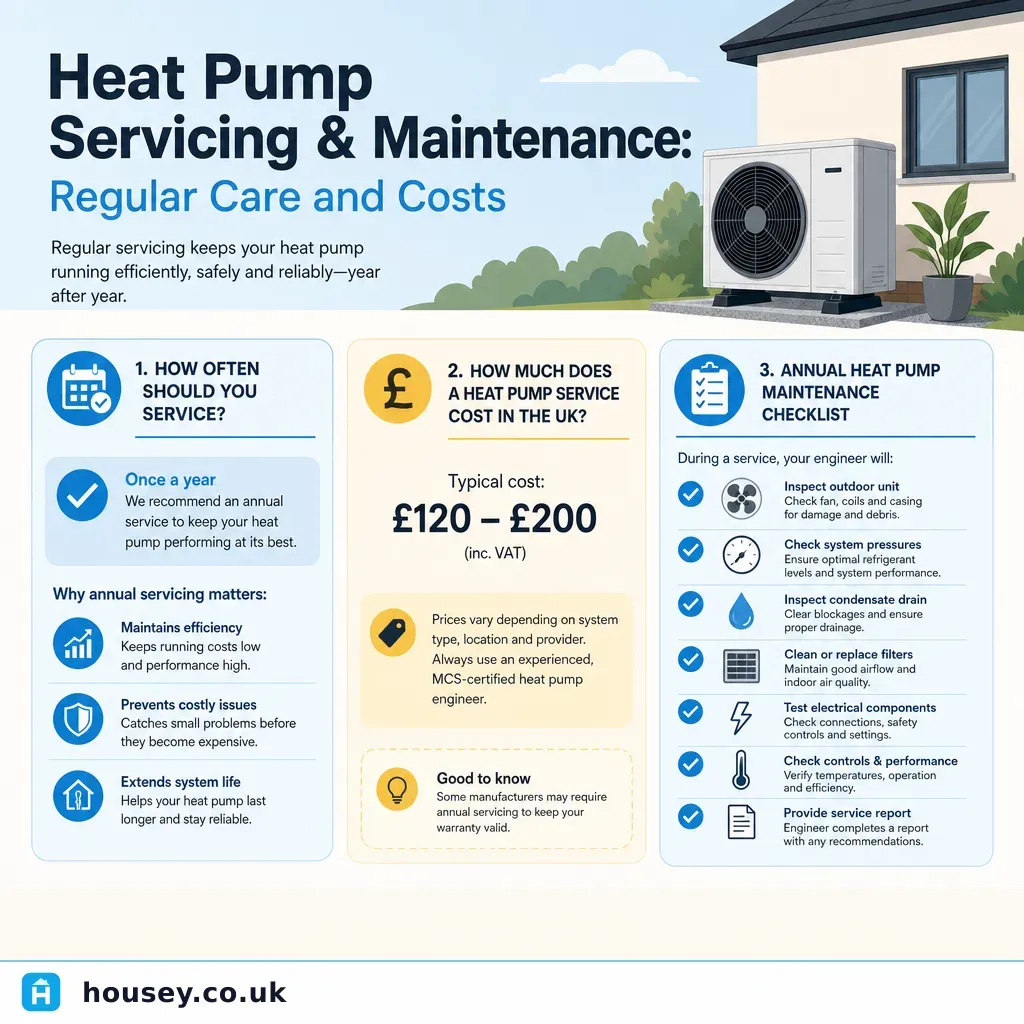
Heat Pump Servicing and Maintenance: Regular Care and Costs
Heat pumps should be serviced by a qualified engineer once a year; most manufacturers require this to keep the warranty valid.
 Energy & Retrofit
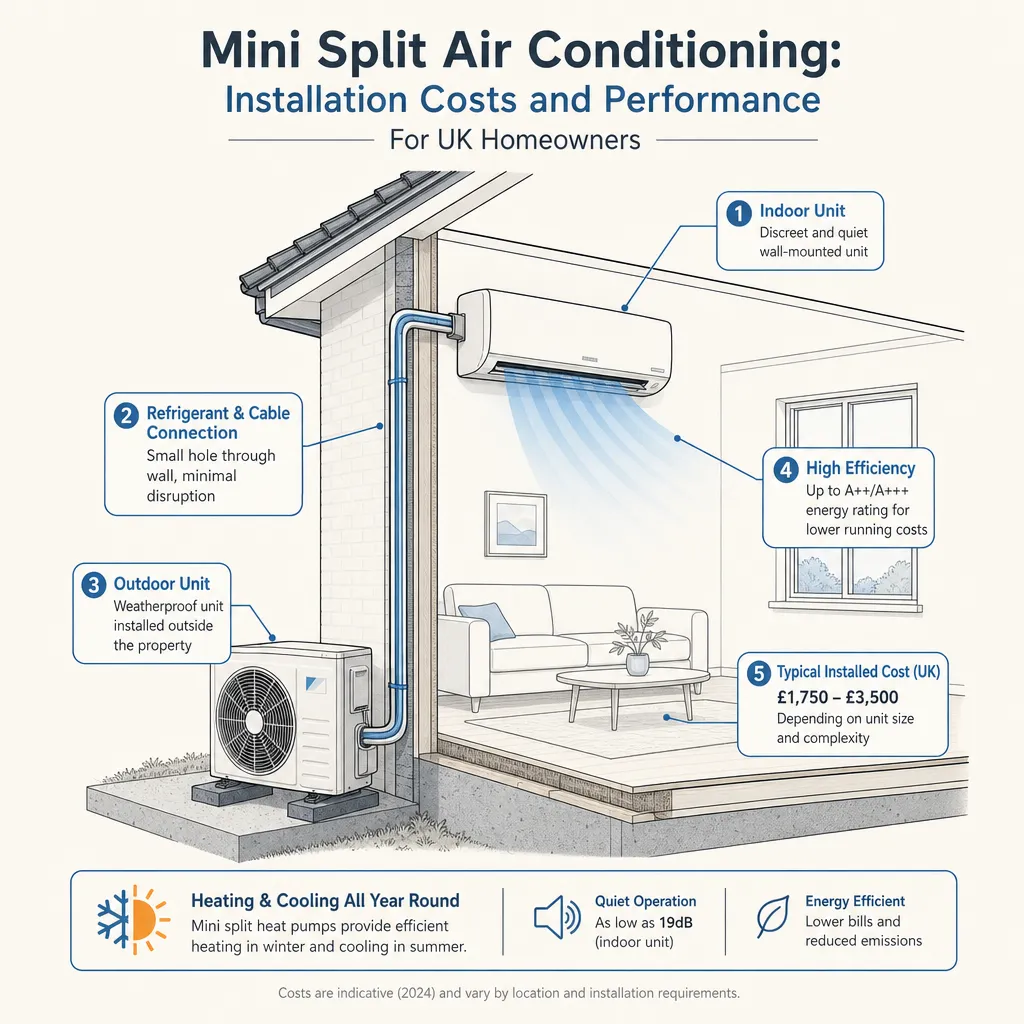
Mini Split Air Conditioning: Installation Costs and Performance
A mini-split (ductless) air conditioning unit costs roughly £1,500–£4,000 installed for a single room in the UK.