Mini Split Air Conditioning: Installation Costs and Performance
By Housey · Last reviewed 30th of May 2026
Mini Split Air Conditioning: Installation Costs and Performance
Mini-split (ductless) air conditioning has become increasingly popular in UK homes as summer temperatures have risen and energy efficiency has moved up the agenda. Unlike traditional ducted systems, a mini-split requires no ductwork, making it a practical retrofit option for Victorian terraces, 1930s semis, and modern flats alike. Before committing to a system, it is important to understand installation costs, what affects real-world performance, and the regulatory obligations that apply in the UK.
Key points
- Mini-split installation and refrigerant handling are governed by the UK F-Gas Regulation (retained and updated post-Brexit via SI 2022/1013); only F-Gas certified engineers may legally install or service these systems.
- A single-room (mono-split) system typically costs £1,500–£4,000 installed in the UK; multi-room (multi-split) systems covering two to four zones cost £3,500–£9,500+. Indicative UK costs, last reviewed 2026-05-30.
- Most modern mini-splits also operate in heating mode as an air-source heat pump, with a Seasonal Coefficient of Performance (SCOP) typically between 2.5 and 4.5 — meaning 2.5–4.5 units of heat per unit of electricity consumed.
- Outdoor unit installation on most houses falls within Class G permitted development rights under the Town and Country Planning (General Permitted Development) (England) Order 2015, but restrictions apply to flats, listed buildings, conservation areas, AONBs, and World Heritage Sites.
- Correct capacity sizing — based on a heat load calculation, not just room area — is critical: an oversized unit short-cycles and wastes energy, while an undersized unit cannot maintain the target temperature.
What is a mini-split system?
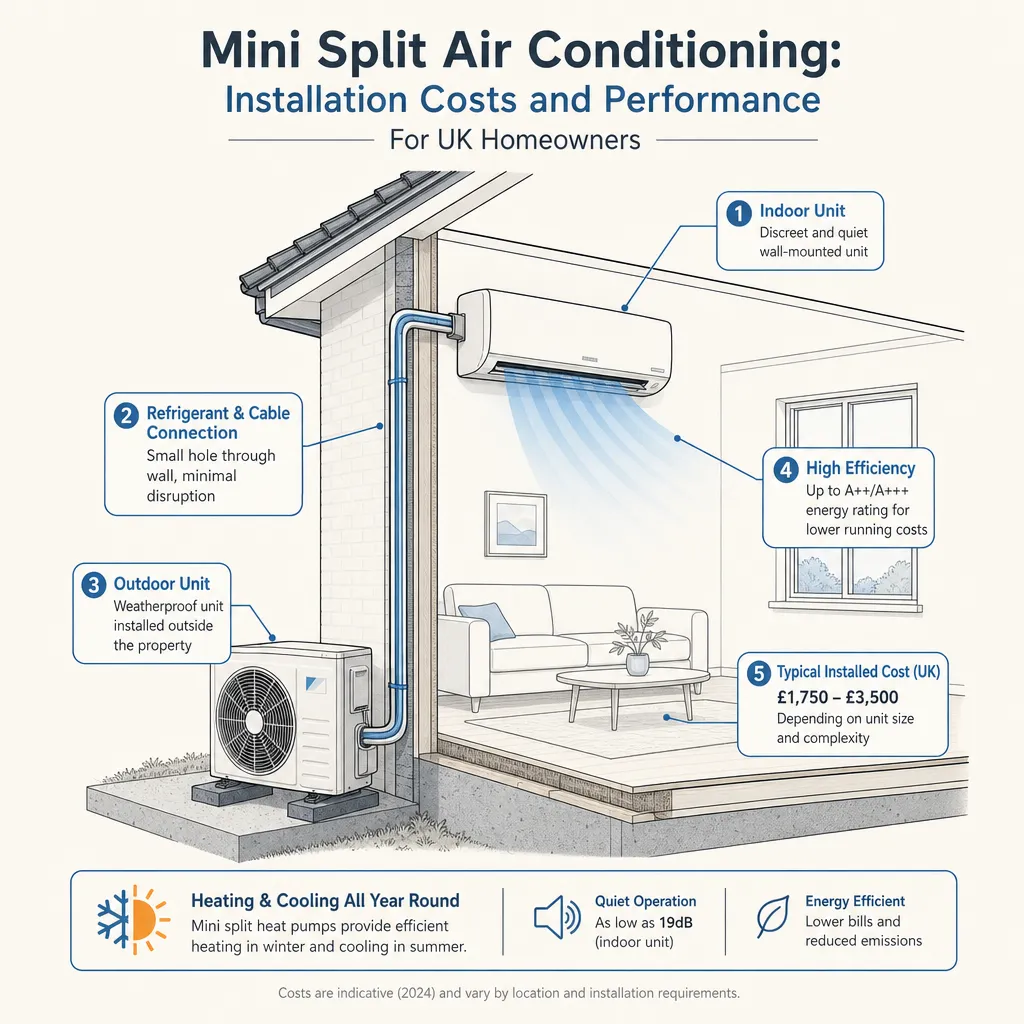
A mini-split consists of two main components connected by refrigerant pipework and electrical cabling:
- An indoor unit (air handler) — typically wall-mounted at high level inside the room, though floor-standing and ceiling cassette configurations also exist.
- An outdoor unit (condenser) — fixed to an external wall or placed on a ground bracket outside the building.
The pipework passes through a small hole (usually 65–85 mm diameter) in the external wall, so no ductwork is needed. This makes mini-splits well suited to retrofit installation in existing UK homes where cutting ductwork routes would be impractical.
Most modern mini-splits are reverse-cycle: they cool in summer and heat in winter by reversing the direction of the refrigerant cycle. This makes them a form of air-source heat pump for space conditioning, though they differ from the air-to-water heat pump systems typically used to replace a gas boiler and heat radiators or underfloor heating circuits.
How much does a mini-split cost to install in the UK?
Several variables affect the final installed price:
Cost factor | Effect on price |
|---|---|
Number of indoor units (mono vs multi-split) | Multi-split systems require more pipework and a larger outdoor unit; each additional zone adds significant cost |
Unit capacity (kW) | Higher-capacity units cost more to supply; over-specifying reduces seasonal efficiency |
Indoor unit type | Ceiling cassettes and concealed fan-coil units cost more to install than standard wall-mount heads |
Pipework run length and routing | Longer runs, multi-floor routes, or pipework concealed within walls add cost |
Electrical supply work | A dedicated circuit typically adds £150–£400 to the installed cost |
Brand and efficiency tier | Mid-range brands (Daikin, Mitsubishi Electric, Panasonic, LG, Samsung) carry higher upfront costs but tend to offer stronger reliability and warranty support |
Indicative installed costs for UK domestic installations, last reviewed 2026-05-30:
System type | Indicative installed cost |
|---|---|
Single-room (mono-split), 2.5–3.5 kW | £1,500–£3,000 |
Single-room (mono-split), 5–7 kW | £2,500–£4,500 |
Multi-split, 2 indoor units | £3,500–£6,000 |
Multi-split, 3–4 indoor units | £5,500–£9,500+ |
Always obtain at least three quotes from F-Gas certified installers. VAT at 20% applies to most installations; check whether any qualifying energy-saving provisions may affect the rate for your specific circumstances.
Performance: what determines real-world efficiency?
A mini-split's real-world performance depends on more than the manufacturer's rated specification:
- Sizing accuracy: A system sized by proper heat load calculation — accounting for room volume, insulation, glazing, orientation, occupancy, and local climate — will perform better and last longer than one estimated from room area alone.
- Building fabric: Draughty homes with poor insulation require the system to work harder to maintain temperature. Improving air tightness and insulation gives a better return on any cooling or heating investment.
- Solar gain: South- and west-facing rooms with large glazed areas gain heat rapidly in summer. An unsupported room may need a larger unit than its floor area alone suggests, or supplementary solar control measures.
- Installation quality: Poorly brazed refrigerant joints or an incorrect refrigerant charge reduce efficiency and shorten system life. Only F-Gas certified engineers should install or service these systems.
- Maintenance: Indoor unit air filters should be cleaned every 4–8 weeks during active use. Annual professional servicing — including refrigerant charge check and coil cleaning — is recommended by most manufacturers to maintain warranty validity.
Planning permission and building regulations
For most detached and semi-detached houses in England, fitting a mini-split outdoor unit on a non-highway-facing wall is likely to fall within Class G permitted development under Schedule 2, Part 14 of the Town and Country Planning (General Permitted Development) (England) Order 2015, provided the unit meets size and noise conditions.
Restrictions apply in these circumstances:
- Flats and maisonettes: Class G permitted development rights do not apply.
- Conservation areas, Areas of Outstanding Natural Beauty (AONBs), National Landscapes, and World Heritage Sites: additional restrictions apply to external works.
- Listed buildings: listed building consent may be required even for internal pipework routes; seek advice from your local planning authority or Historic England.
- Properties subject to an Article 4 Direction removing permitted development rights.
Planning rules vary in Wales, Scotland, and Northern Ireland — check with the relevant authority if outside England. If you are uncertain whether your installation falls within permitted development, apply for a Lawful Development Certificate from your local planning authority before work begins.
Building Regulations Part L (conservation of fuel and power) and Part F (ventilation) may also be relevant if significant changes to the building fabric are made as part of the installation.
Important limitations
This article provides general information about mini-split air conditioning systems in the UK. It does not constitute advice specific to any property, planning situation, or energy system. F-Gas regulations, permitted development rules, and building performance characteristics vary by property type and location. A qualified F-Gas certified engineer should assess your property and carry out a proper heat load calculation before any system is specified or installed. For planning-related questions, check with your local planning authority before proceeding.
What to ask a qualified professional
Before instructing an installer, ask these questions:
- Are you F-Gas certified, and can I see your current certificate number?
- Will you carry out a heat load calculation to size the system correctly, or are you estimating based on room area alone?
- Which brands do you supply and install, and what warranty is provided on both the unit and your installation work?
- What does the quote include — electrical work, pipework concealment, commissioning, F-Gas certification documentation, and removal of packaging?
- Is VAT included, and at what rate?
- What ongoing maintenance do you recommend, and do you offer a service contract?
- Does my property type and location require planning permission, and will you advise on this?
- What is your process if the system underperforms or develops a fault within the warranty period?
When to get professional help
F-Gas regulations make it a legal requirement to use a certified engineer for installation and any refrigerant work — this is not optional. Beyond the legal minimum, seek specific professional input if:
- You are unsure whether your property type, tenure, or location affects permitted development rights.
- You are considering mini-split heating as part of a wider retrofit — a heat pump survey will give a more complete picture of whether a mini-split or a full air-to-water system is the more appropriate choice.
- Your home has solid walls, poor insulation, or significant air leakage — energy-efficiency consultants can identify improvements that reduce the running cost of any heating or cooling system you install.
- You are in a high-humidity environment such as a basement flat or converted space, where ventilation and moisture management need assessing alongside cooling.
How Housey can help
Housey can connect you with qualified professionals for a heat pump survey to assess whether a mini-split is the right solution for your home, and with energy-efficiency consultants who can evaluate your building fabric before you specify a system.
Frequently asked questions
Do I need planning permission for a mini-split air conditioning unit in the UK?
For most houses (not flats) in England, fitting an outdoor unit on a non-highway-facing wall falls within Class G permitted development rights under the GPDO 2015, subject to size and noise conditions. Restrictions apply to flats, listed buildings, conservation areas, AONBs, and properties subject to Article 4 Directions. Always confirm with your local planning authority before proceeding; rules differ in Wales, Scotland, and Northern Ireland.
Can a mini-split replace my boiler?
A mini-split provides space heating and cooling for the rooms it serves but does not heat domestic hot water. It cannot directly replace a boiler that also supplies a central heating circuit and hot water cylinder. For whole-home heating, an air-to-water heat pump system — which heats the central heating circuit and a hot water cylinder — is the more appropriate solution.
How noisy are mini-split systems?
Modern mini-split indoor units typically operate at 19–35 dB(A) — quieter than a normal conversation. Outdoor units are usually 45–55 dB(A) at one metre. Noise is a consideration when positioning outdoor units near a neighbour's boundary; some local authorities include noise conditions as part of permitted development for air conditioning equipment.
What maintenance does a mini-split need?
Clean the indoor unit's air filters every 4–8 weeks during active use. Have the system professionally serviced annually to check refrigerant charge, electrical connections, and coil cleanliness. Any refrigerant top-up or handling must be carried out by an F-Gas certified engineer — this is a legal requirement under UK F-Gas regulations.
Sources and further reading
- F-Gas regulation guidance for users, producers and traders — GOV.UK
- Town and Country Planning (GPDO) 2015, Schedule 2, Part 14, Class G — legislation.gov.uk
- Heat pumps — Energy Saving Trust
- Advice for owners of listed buildings — Historic England
- CIBSE guidance on overheating and cooling load assessment — Chartered Institution of Building Services Engineers (CIBSE)
Useful next reads
 Energy & Retrofit
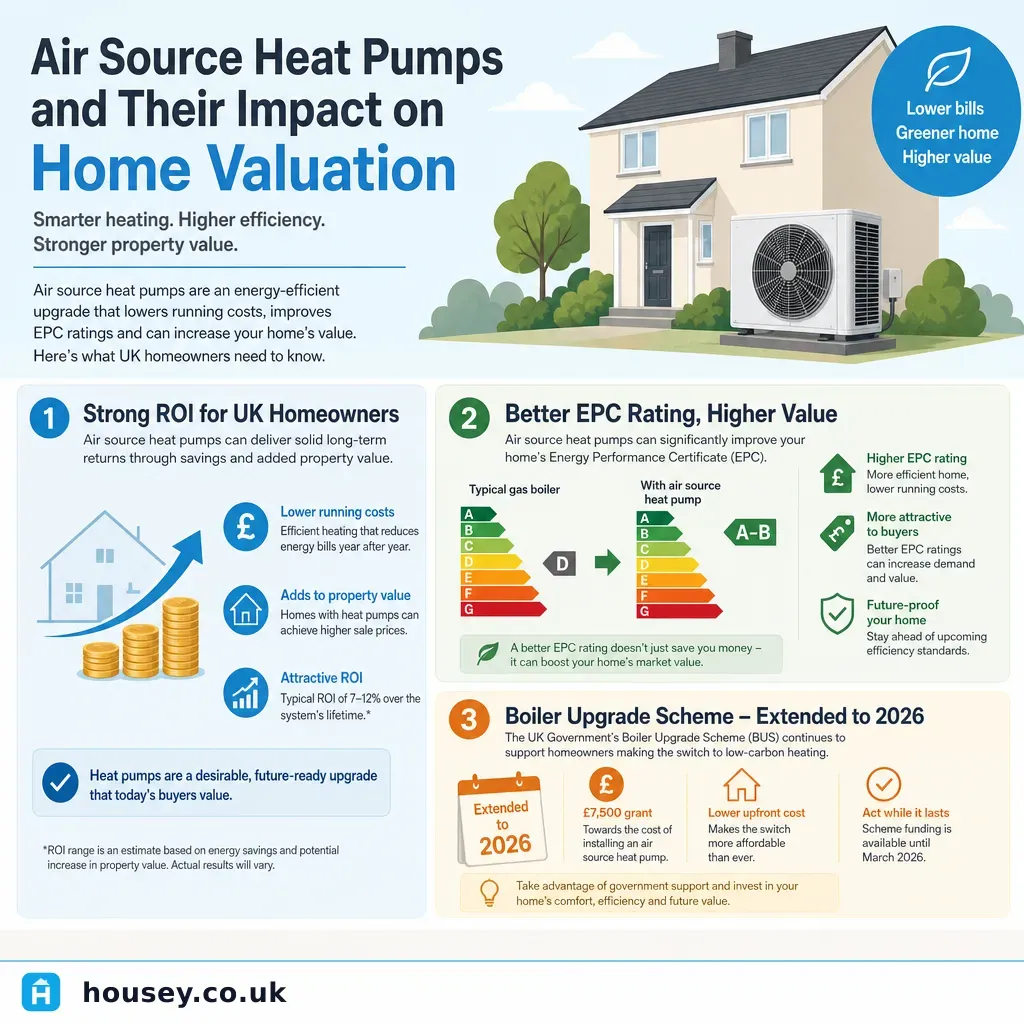
Air Source Heat Pumps and Their Impact on Home Valuation
An air source heat pump can improve your home's EPC rating, which may positively influence its market value — particularly as mortgage lenders and buyers increasingly factor in energy performance.
 Energy & Retrofit
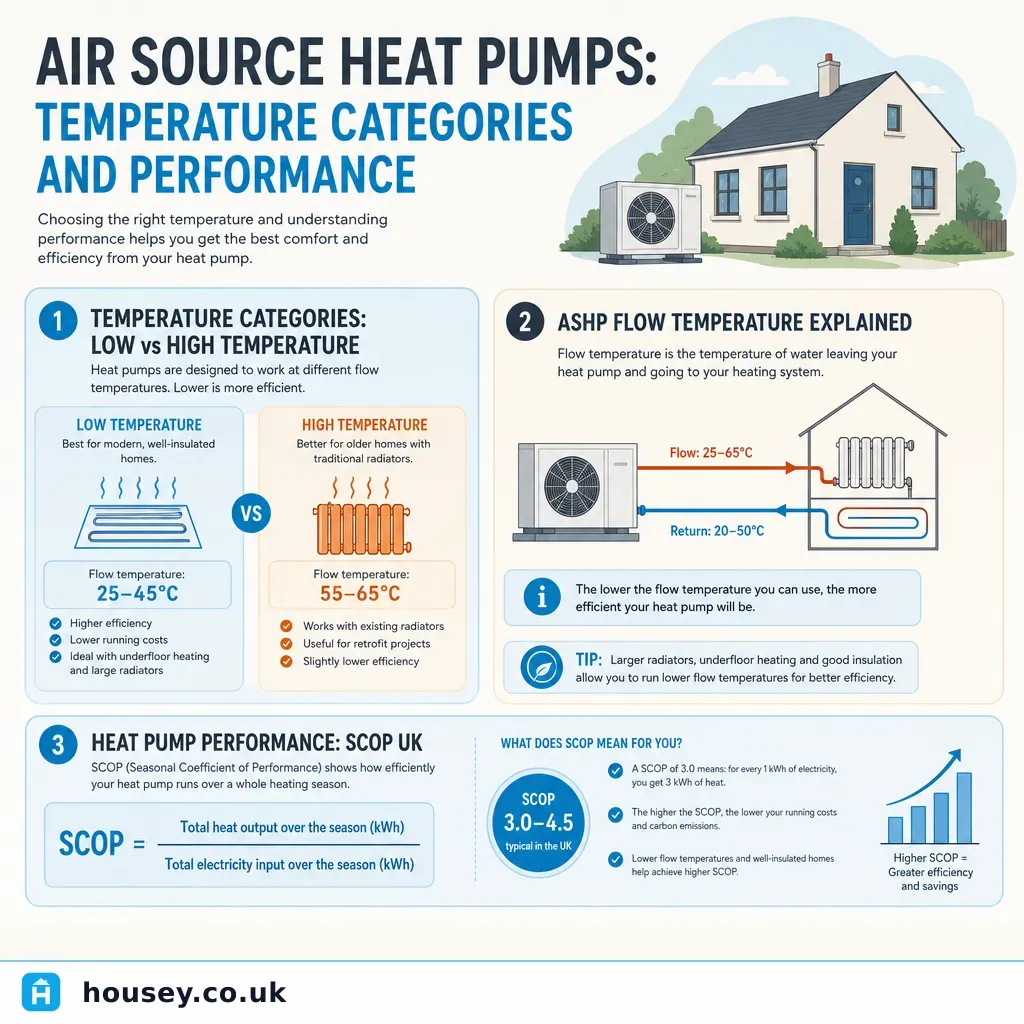
Air Source Heat Pumps: Temperature Categories and Performance
Air source heat pumps are typically classified as low temperature (flow temperatures of 35–55°C) or high temperature (up to 65–80°C).
 Energy & Retrofit
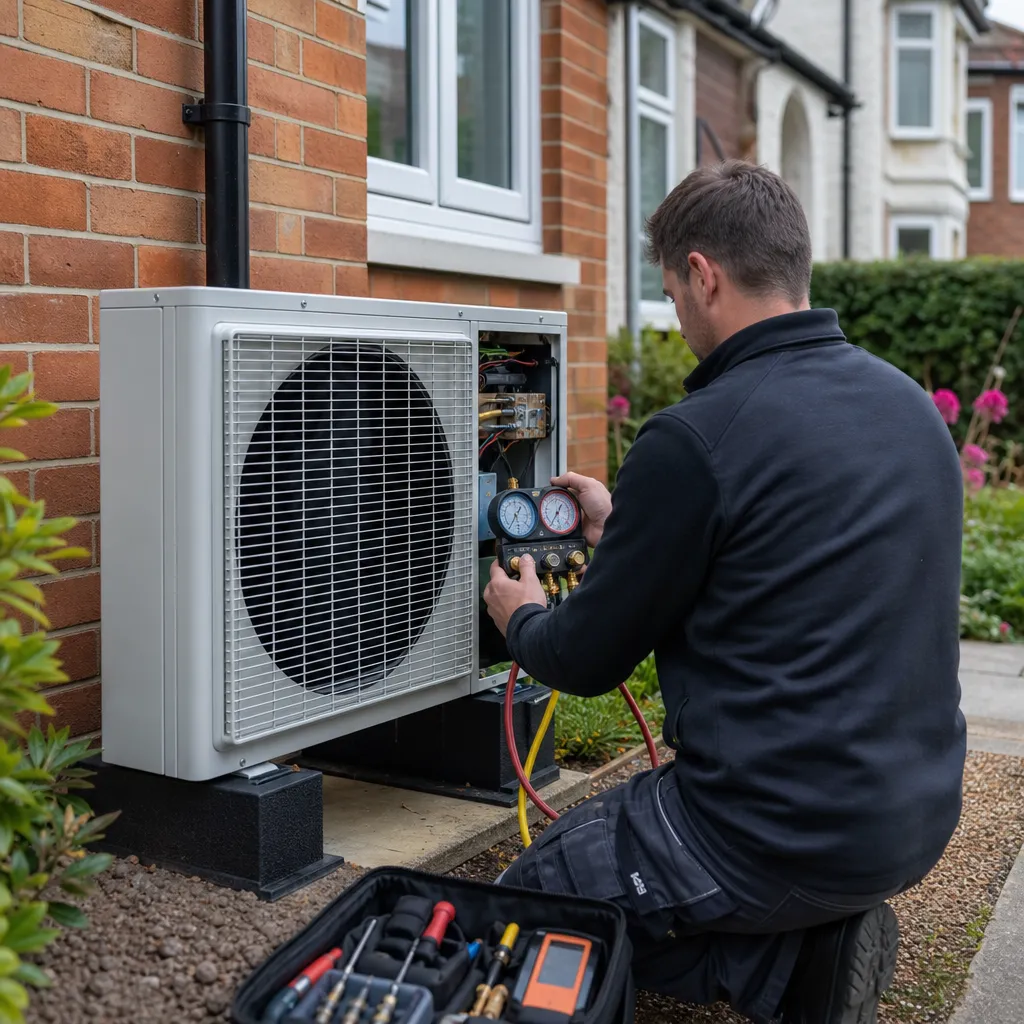
Diagnosing Heat Pump Performance Issues: Why Cooling Fails
Heat pump cooling failure is usually caused by refrigerant loss, a dirty air filter, a blocked outdoor unit, incorrect controller settings, or an undersized system.
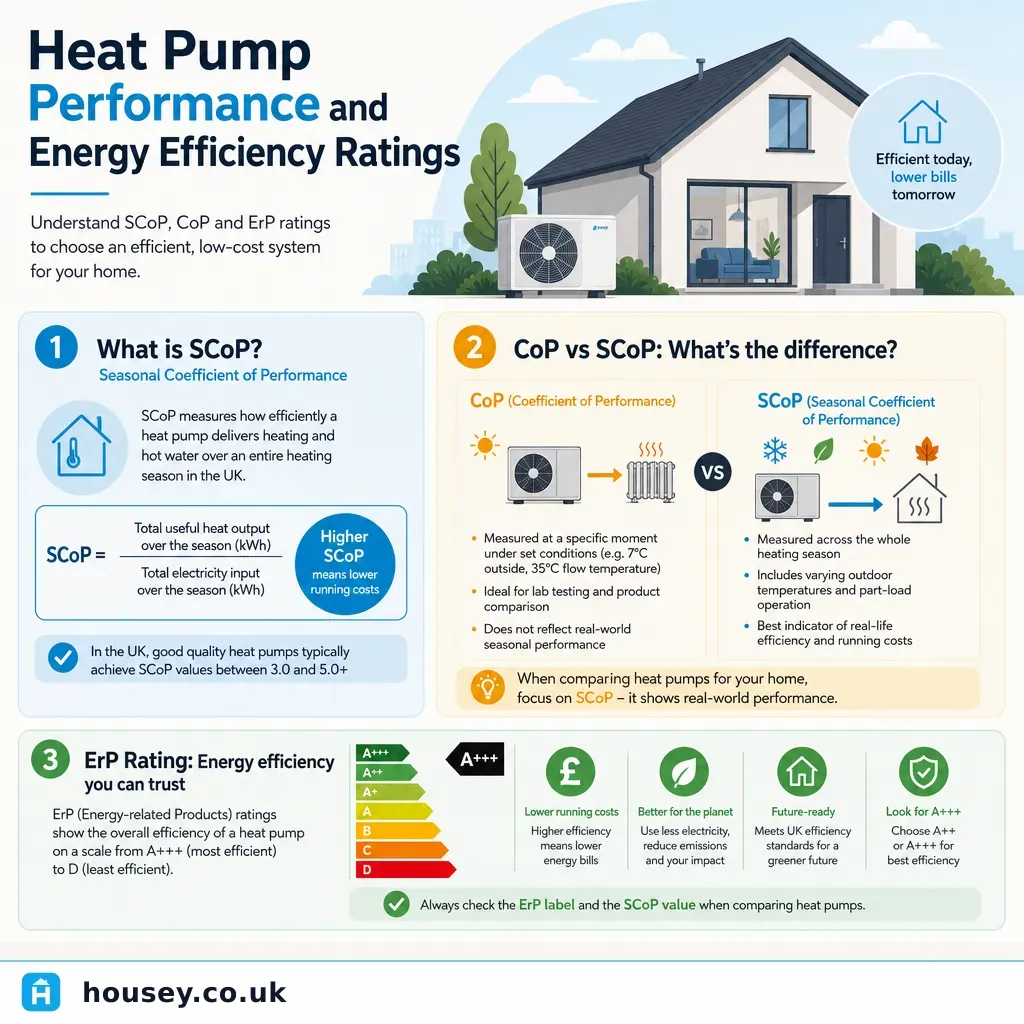 Energy & Retrofit
Heat Pump Performance and Energy Efficiency Ratings
Heat pump efficiency is measured by the Seasonal Coefficient of Performance (SCoP) — the annual ratio of heat delivered for every unit of electricity consumed.
 Energy & Retrofit
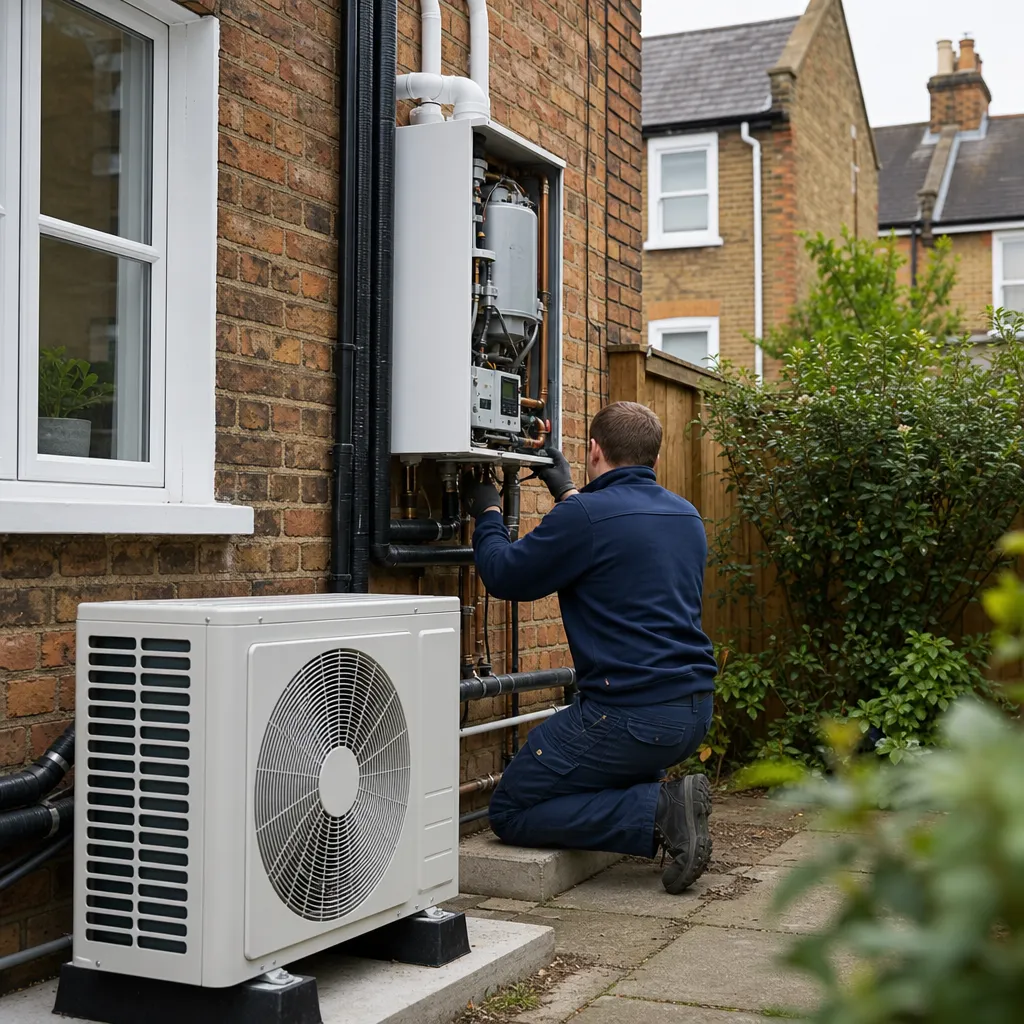
Heat Pump and Boiler Hybrid Systems: Optimising Efficiency in UK Homes
A hybrid heat pump system pairs an air source heat pump with a gas boiler, letting the heat pump handle most heating loads while the boiler activates during very cold weather.