Maintaining window tracks: cleaning and care tips
By Housey · Last reviewed 19th of May 2026
Maintaining window tracks: cleaning and care tips
Window tracks — the channels, frames, and runners along which sashes, sliding panes, and tilt-and-turn windows travel — are easy to overlook until a window will not close properly, begins to let in water, or develops a persistent draught. A small amount of annual maintenance keeps tracks clear, seals in good condition, and drainage functioning correctly. Left unattended, blocked weep holes and degraded seals can lead to water ingress, mould growth, and premature failure of glazed units. This guide applies to uPVC sliding and casement windows, aluminium sliding windows, and timber vertical sash windows.
Key points
- Most window manufacturers recommend cleaning tracks at least once a year; coastal, roadside, and post-renovation environments warrant cleaning every six months.
- WD-40 and 3-in-1 oil are commonly misused on window tracks — both are petroleum-based, degrade rubber and EPDM seals over time, and leave a residue that attracts grit. Use silicone spray or dry PTFE lubricant instead.
- uPVC and aluminium frames incorporate weep holes (small drainage slots in the bottom track); blocked weep holes cause water to back up inside the frame, leading to mould growth, seal failure, and potential internal water damage.
- Timber window tracks require different care: the track surface and frame rebates benefit from periodic re-painting or oiling to prevent swelling, sticking, and rot.
- If a sash or sliding pane remains noticeably stiff after cleaning and lubrication, the likely cause is frame distortion, a failed balance spring, or a broken sash cord — these need professional assessment, not more force.
How to clean window tracks
The core process is similar for most sliding or sash window types. Frequency and the exact lubricant used vary by material.
What you will need
- Dry soft brush or old paintbrush
- Vacuum cleaner with a narrow nozzle attachment
- Warm water with a small amount of mild washing-up liquid
- Soft cloth or microfibre cloth
- Cotton buds or a small brush for corners and crevices
- Cocktail stick or thin wire for clearing weep holes
- Silicone-based lubricant spray or dry PTFE spray
- For timber sash windows: beeswax or a candle
Step-by-step process
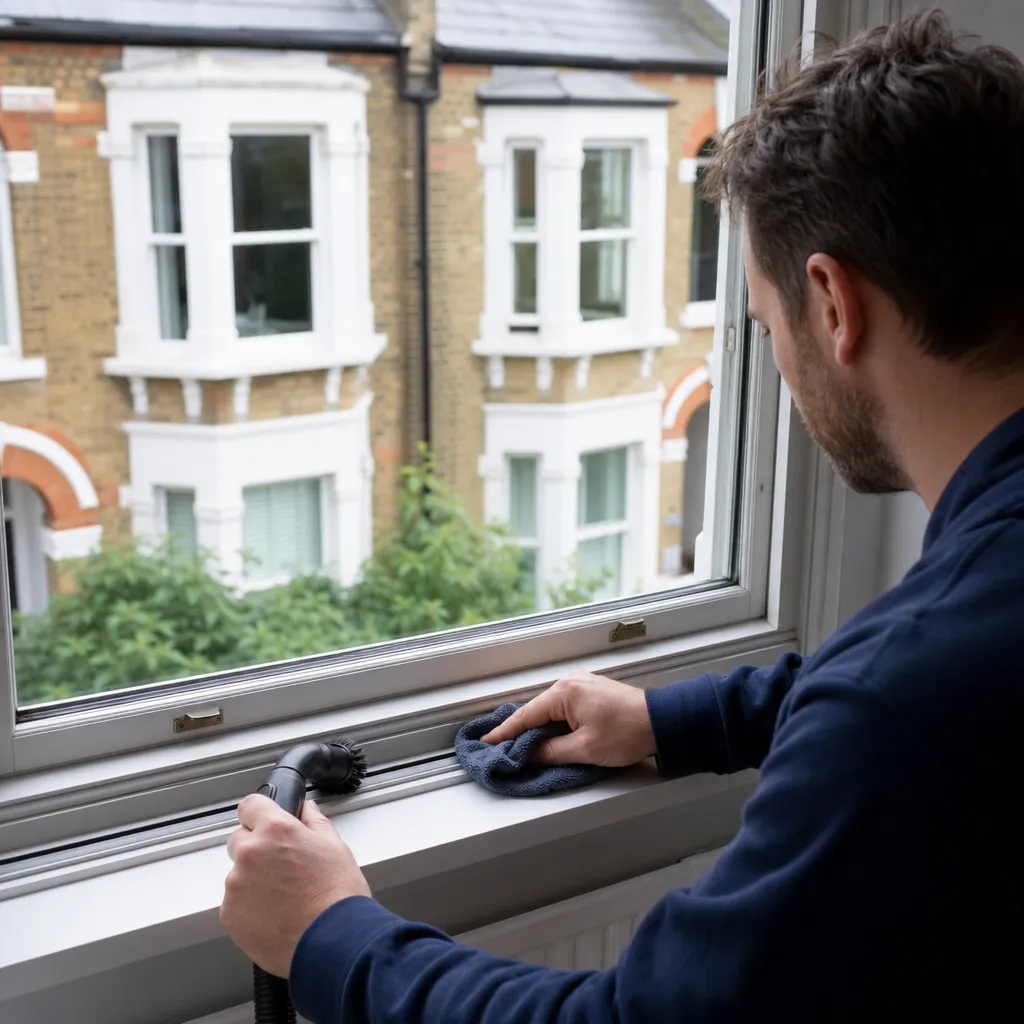
- Remove loose debris first. Use a dry brush or vacuum to lift dust, grit, leaves, and insect matter from the full length of the track. Doing this dry prevents debris from caking in when you apply water.
- Wipe down the track. Dampen a cloth with warm soapy water and wipe along the entire track. Use a toothbrush or cotton bud for built-up grime in corners and around hardware. Rinse with a clean damp cloth.
- Check and clear weep holes. Run a finger along the bottom track to locate the small drainage slots. If blocked, clear them gently with a cocktail stick, thin wire, or a short burst of compressed air. Do not use anything sharp enough to scratch or enlarge the opening.
- Dry thoroughly. Standing water in tracks encourages mould growth and can accelerate seal deterioration. Wipe dry with a cloth or allow to air dry before applying lubricant.
- Lubricate moving parts. Apply a thin coat of silicone spray or PTFE lubricant along the track surface and to pivot points, hinges, and friction stays. Wipe away any excess. For timber sash windows, rub beeswax or a candle along the timber track surface — a traditional and effective method that does not attract dust.
- Test the movement. Open and close the window fully several times to distribute the lubricant and confirm the action is smooth throughout the range of travel.
What to use — and what to avoid
Product | Suitable for window tracks? | Notes |
|---|---|---|
Silicone-based lubricant spray | Yes | Ideal for uPVC and aluminium; will not degrade rubber seals |
Dry PTFE spray | Yes | Low residue; good for narrow channels and pivot points |
White lithium grease | Yes (metal components only) | Use sparingly on metal hinges and stays; not on seals |
Beeswax or candle wax | Yes (timber sash tracks) | Traditional and clean; does not attract grit |
WD-40 | Not recommended | Petroleum-based; degrades rubber and EPDM seals over time |
3-in-1 oil | Not recommended | Leaves residue that attracts dust and can gum up uPVC tracks |
Petroleum jelly (Vaseline) | Avoid on seals | Degrades rubber gaskets and EPDM over time |
Homeowner maintenance checklist
Work through this checklist once a year — or after a period of building work, prolonged wet weather, or heavy coastal exposure.
Red flags that need professional attention
Most window track maintenance is routine upkeep any homeowner can manage. The following signs suggest the problem is beyond cleaning and lubrication, and a window specialist or surveyor should assess before further DIY attempts:
- Condensation between the glass panes — this is a failed sealed unit, not a track or ventilation issue. The glazed unit needs replacing, usually under installer warranty if relatively recent.
- A visible gap at any corner of the frame or sash — may indicate frame distortion, a broken sash cord (in timber vertical sashes), or a failed balance spring. Do not force the window.
- Water ingress inside the frame despite clear weep holes — the perimeter seal or the junction between the frame and the reveal may have failed. This requires inspection from outside as well as inside.
- Persistent black mould inside the frame or track — repeated surface cleaning will not address the root cause. Likely causes include blocked drainage, persistent cold bridging, or inadequate room ventilation. Address ventilation and drainage first.
- Cracked, hardened, or extensively compressed rubber seals — replacing window gaskets requires knowledge of the correct seal profile for the frame type. A window hardware specialist should assess and replace them.
- Stiffness that persists after lubrication — the frame may have shifted due to building settlement, lintel movement, or thermal expansion problems. Applying more force risks damaging the hardware or the frame.
When to get professional help
Contact your original window installer or a window hardware specialist if any red flag above applies, or if:
- The window no longer locks securely after cleaning and lubricating the mechanism.
- You notice any rocking or movement of the glazed unit within the frame, which may indicate failed packers.
- Trickle vents are broken, sealed closed, or missing — these are a ventilation requirement under Building Regulations Part F and should be operational.
- A timber sash window has broken or stretched sash cords, causing the sash to drop or resist movement — sash cord replacement is specialist work.
How Housey can help
Routine track cleaning is something most homeowners can manage themselves, but when seals need replacing, mechanisms are failing, or frames require professional realignment, a trusted installer makes all the difference. Our window and door installers can assess damaged seals, replace mechanisms, refit glazing units, and advise on whether older windows are worth maintaining or due for upgrade. Find a vetted specialist local to you on Housey.
Frequently asked questions
How often should I clean window tracks?
Most window manufacturers recommend cleaning tracks at least once a year. If you live near the coast, close to a busy road, or have recently had building or renovation work carried out, every six months is more appropriate. Timber windows generally require more frequent inspection than uPVC or aluminium frames.
Can I use WD-40 on my window tracks?
WD-40 is not recommended for window tracks, particularly on uPVC and aluminium frames. It is petroleum-based, can degrade rubber and EPDM seals over time, and leaves a residue that attracts further dirt and grit. Use a silicone-based spray or dry PTFE lubricant instead.
Why does water collect in my window tracks?
Modern window frames include weep holes — small drainage slots in the bottom track — designed to allow water to escape. If these become blocked with debris, leaves, or sealant, water backs up inside the frame. Clear them gently. If they are clear and water still pools, there may be an installation issue with the external sill slope or a failed perimeter seal.
How do I stop window tracks developing mould?
Keep tracks dry after cleaning, ensure weep holes are clear, and use silicone lubricant rather than oil-based products. If condensation or moisture in the track persists despite maintenance, the likely cause is poor room ventilation or cold bridging. Ensuring trickle vents are open and unobstructed usually helps more than repeated cleaning alone.
Sources and further reading
- Building Regulations Approved Document F: Ventilation — GOV.UK
- Energy Saving Trust: windows and glazing — Energy Saving Trust
- Glass and Glazing Federation: consumer advice — Glass and Glazing Federation
- Historic England: repairing and maintaining historic windows — Historic England
Useful next reads
 Improvement & Build
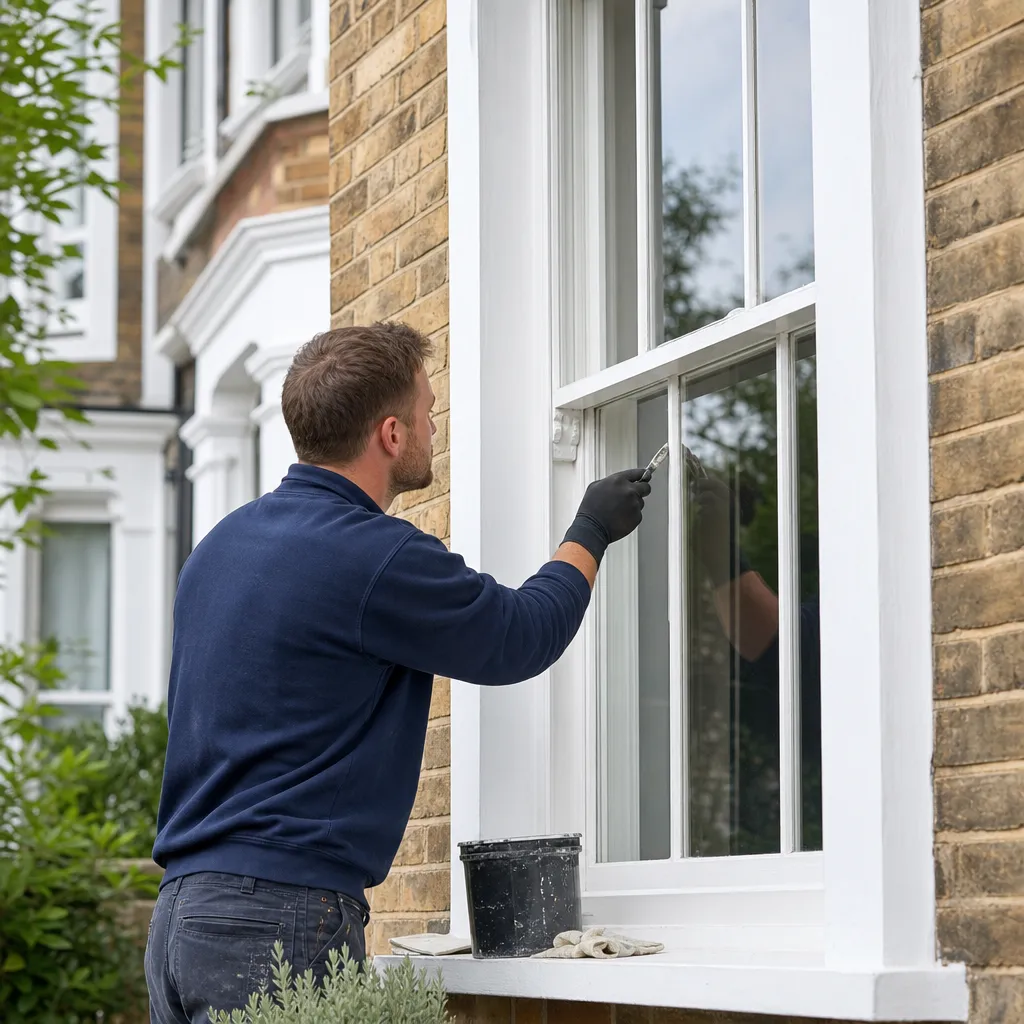
Essential Window Maintenance Tips for Homeowners
Most UK windows benefit from a thorough check twice a year — spring and autumn.
 Improvement & Build
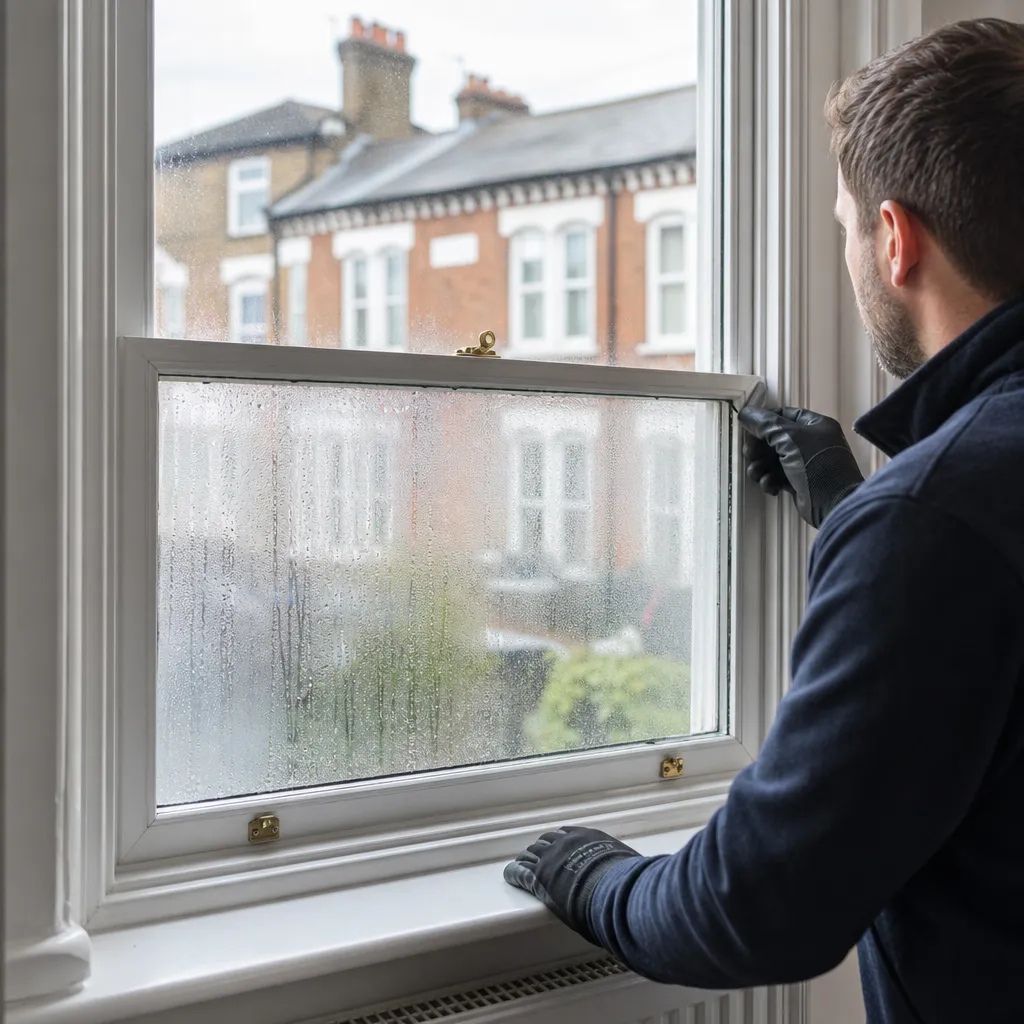
Repairing Failed Window Seals and Condensation Issues
Condensation between double-glazed panes means the hermetic seal on the insulated glass unit has failed.
 Improvement & Build
Roof Window Maintenance and Servicing Costs
Roof window servicing in the UK typically costs £80–£200 per window for a professional visit covering seals, flashings, and the opening mechanism.
 Improvement & Build
Sash Window Cord and Pulley Repair Guide
Repairing a broken sash window cord involves removing the staff bead, lifting out the lower sash, threading new wax-coated cord through the pulley, and tying it securely to the sash weight.
 Improvement & Build
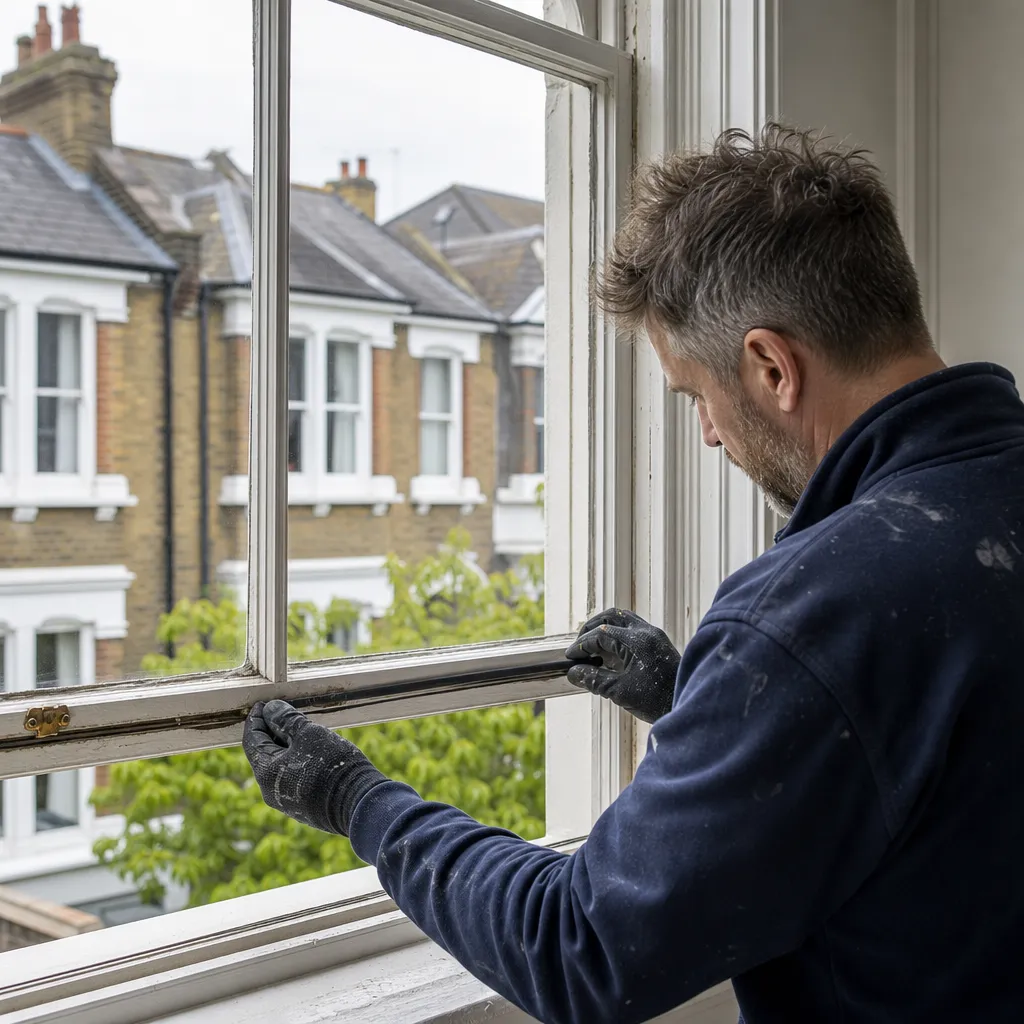
Restoring Window Seals: When Repair Is Possible and When Replacement Is Needed
Window seal failure takes two main forms: the hermetic seal of the insulated glass unit (IGU), which causes misting between panes and cannot be fixed without replacing the glass, and the perimeter draught seal, which can usually be replaced without disturbing the glazing.