Repairing Failed Window Seals and Condensation Issues
By Housey · Last reviewed 31st of May 2026
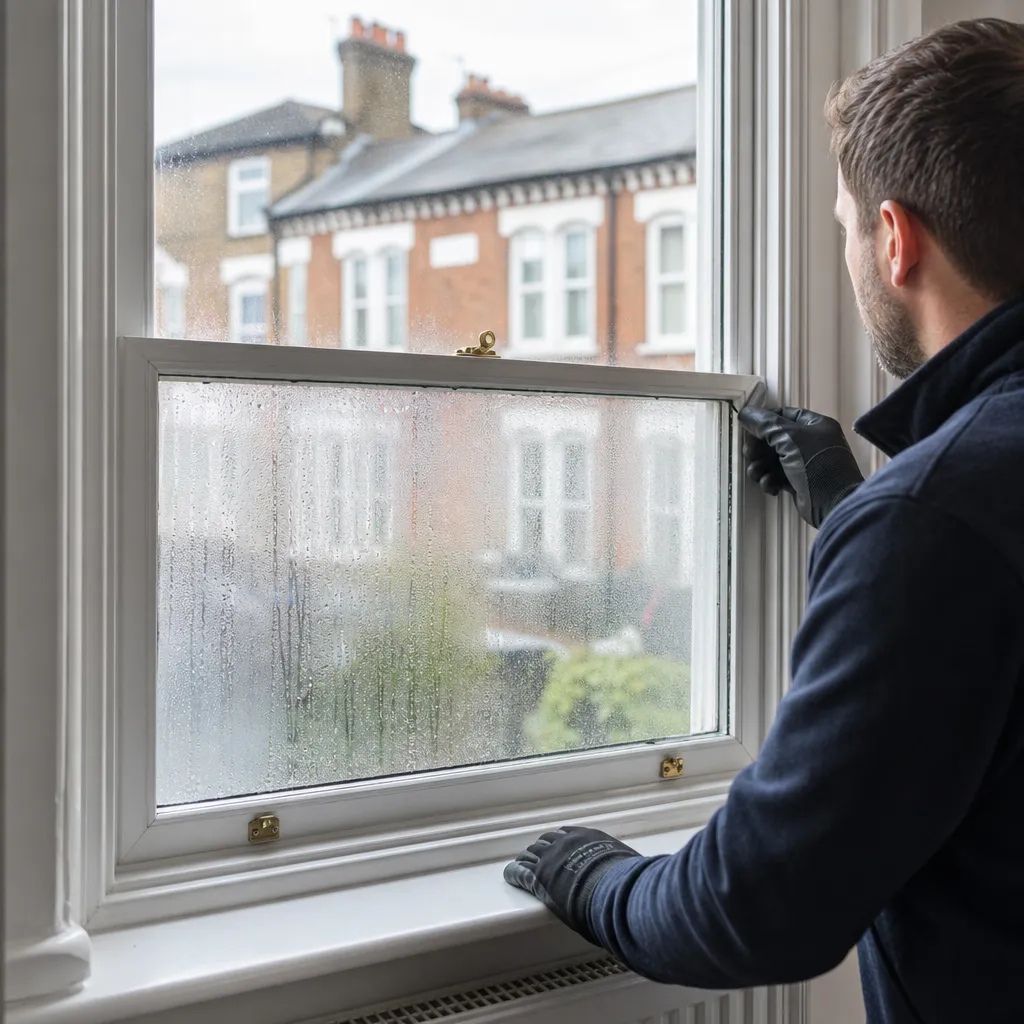
Repairing Failed Window Seals and Condensation Issues
Misty or wet-looking patches between double-glazed panes are one of the most visible signs of window seal failure, and they appear in UK homes of all ages — from post-war council stock to 1990s new-build estates. The problem often surfaces gradually, worsening after cold winters or when original factory sealants reach the end of their design life. Deciding whether to repair, replace the sealed unit, or replace the entire window frame is a practical and cost-sensitive question that depends on the window's age, frame condition, and the extent of failure.
Key points
- Condensation between double-glazed panes means the hermetic seal on the insulated glass unit (IGU) has failed, allowing warm moist air to enter and deposit moisture on the inner glass surfaces.
- Replacing the sealed glass unit without changing the frame is usually possible for windows installed after around 1990, and costs significantly less than full window replacement.
- Under the Fenestration Self-Assessment Scheme (FENSA) or a UKAS-accredited Competent Person Scheme, replacement glazing must comply with Building Regulations Part L (thermal performance) and Part K (safety glazing where applicable).
- Condensation on the interior surface of the glass — not between the panes — is typically a ventilation problem rather than a window fault; check extract ventilation in kitchens and bathrooms first.
- Windows older than 20–25 years with degraded frames, failed hardware, or widespread seal failures may make full replacement more cost-effective than unit-by-unit repair.
Understanding the difference: between-pane condensation vs surface condensation
This distinction matters because the cause — and the correct fix — is different:
Type | Where it appears | Likely cause | Typical fix |
|---|---|---|---|
Between-pane condensation | Inside the sealed unit, between the glass panes | Failed hermetic seal on the IGU | Replace the sealed glass unit |
Interior surface condensation | On the room-side face of the inner pane | Excess indoor humidity, insufficient ventilation | Improve ventilation; check extractor fans |
Exterior surface condensation | On the outside face of the outer pane | Cold glass meeting warm humid outdoor air | None required — indicates good thermal performance |
Frame condensation or wet reveals | On the window frame or surrounding plaster | Cold bridging, poor insulation, or air infiltration | Improve insulation, draught-proofing, or frame replacement |
Interior condensation is frequently misdiagnosed as window failure. Before calling a glazier, assess the ventilation in the room — particularly in bathrooms, kitchens, and recently insulated or draught-proofed homes where background ventilation may have been reduced.
Should you replace the unit or the whole window?
Choose unit replacement if:
- The frame is structurally sound, not warped, cracked, or showing signs of rot (for timber) or delamination (for uPVC).
- The hardware (hinges, handles, locking mechanisms) is functional and replacement parts are still available.
- Only one or a small number of units in the property have failed.
- The window was manufactured after roughly 1990 and the glazing bead is removable.
Consider full window replacement if:
- The frame itself is in poor condition or significantly beyond its design life.
- Multiple units across the property are failing simultaneously — this may indicate the sealant batch has aged across the whole installation.
- The window specification (U-value, security rating) no longer meets your needs or current Building Regulations requirements.
- The frame system is obsolete and replacement sealed units are not available to match.
Ask a window specialist if:
- You are unsure whether the frame can safely hold a new unit.
- The property is listed or in a conservation area — replacement must match the approved window specification.
- You have concerns about widespread moisture or structural issues around the window openings.
What unit replacement work involves
Replacing a failed sealed unit is typically a one-day job per window. A glazier removes the glazing beads, extracts the old unit, measures the opening precisely, orders a replacement IGU, and fits it on return. The new unit must be:
- Thermally compliant: replacement glazing for habitable rooms must meet Part L of the Building Regulations — currently a minimum centre-pane U-value of 1.2 W/m²K for like-for-like replacement in existing dwellings (check the current Approved Document L for up-to-date values).
- Safety-glazed where required: critical locations — doors, low-level glazing below 800 mm in certain positions — must use toughened or laminated glass per Approved Document K.
- Registered: the work must be notified to building control, usually by the installer through FENSA or an equivalent Competent Person Scheme.
A new replacement IGU typically carries a 10-year manufacturer's seal warranty. Ask for written confirmation of this before work begins.
Red flags: when the problem may be more serious
These symptoms alongside window condensation may indicate a wider problem worth a professional inspection:
- Damp staining on the surrounding wall or reveals — may indicate penetrating damp, poor external flashing, or failed cavity trays above the window rather than the window itself.
- Cracked or crumbling external render or brickwork around the frame — suggests water ingress routes beyond the sealed unit.
- Frames that have moved, twisted, or are no longer square — could indicate structural movement in the building.
- Widespread failure across multiple windows simultaneously on an older property — worth a specific defect survey or a RICS Home Survey to rule out systemic moisture or structural issues.
- New or worsening interior condensation after insulation or draught-proofing work — the home may need mechanical extract ventilation or background trickle ventilators fitted to the windows.
What to ask before accepting a glazier's quote
- Is unit-only replacement feasible for my specific frame, or is full replacement recommended — and why?
- What U-value will the new unit achieve, and does it comply with Approved Document L?
- Will the work be registered with FENSA or an equivalent Competent Person Scheme?
- Is the new IGU covered by a seal warranty, and for how long?
- Is safety glazing required in any of the locations being replaced?
- Is VAT included in the quoted price?
- What lead time applies to ordering the new unit — and who is responsible if the measurement is incorrect?
When to get professional help
Unit replacement is a straightforward job for a qualified glazier or registered window installer. However, call a professional — or consider a survey — in these situations:
- You cannot determine whether condensation is between-pane or a surface issue after improving ventilation.
- There are signs of damp, structural movement, or water ingress around or beneath the window opening.
- The property is listed or in a conservation area and you need to confirm what replacement specification is permitted.
- The failed windows are in a recently purchased property and you want to understand whether there are wider defect issues before commissioning repair work.
How Housey can help
Housey connects you with vetted window and door installers who can assess whether unit replacement or full frame replacement is the right call for your home. If you suspect the problem is more than a simple seal failure, you can also request a specific defect survey from a qualified professional to get an independent view before committing to repair or replacement costs.
Frequently asked questions
How long do double-glazed sealed units last?
Most factory-made insulated glass units (IGUs) are designed to last 20–25 years, though quality and installation conditions vary. Units in south-facing elevations or homes with high interior humidity may fail sooner. Regular maintenance — checking and renewing external sealant and drainage paths — can extend the life of the surrounding frame even when units eventually need replacing.
Can I repair a failed seal rather than replacing the unit?
There is no reliable way to permanently repair a failed hermetic seal. Some contractors offer defogging services — drilling small holes to insert desiccant and clear moisture — but this does not restore the seal and results vary considerably. Replacing the IGU is the standard and more durable solution recommended by the Glass and Glazing Federation.
Does replacing a sealed unit require building regulations notification?
Yes. Replacement of a sealed unit in an existing window normally requires notification under Building Regulations (Part L and Part K depending on location). In practice, most registered window installers handle this automatically through FENSA or another Competent Person Scheme. Always ask your installer to confirm the work will be notified before they begin.
Is condensation between panes covered by any warranty?
If the failed window was installed by a FENSA-registered company, the installation is typically covered by a warranty backed by the Glass and Glazing Federation deposit indemnity scheme. The IGU itself may carry a manufacturer's seal warranty, typically 5–10 years from installation. Check your original installation documents for the specific terms that apply.
Sources and further reading
- Approved Document L — Conservation of fuel and power — GOV.UK
- Approved Document K — Protection from falling, collision and impact — GOV.UK
- FENSA — Competent Person Scheme for window and door replacement — FENSA
- Glass and Glazing Federation — consumer guidance — Glass and Glazing Federation
- Energy Saving Trust — windows and glazing — Energy Saving Trust
Useful next reads
 Improvement & Build
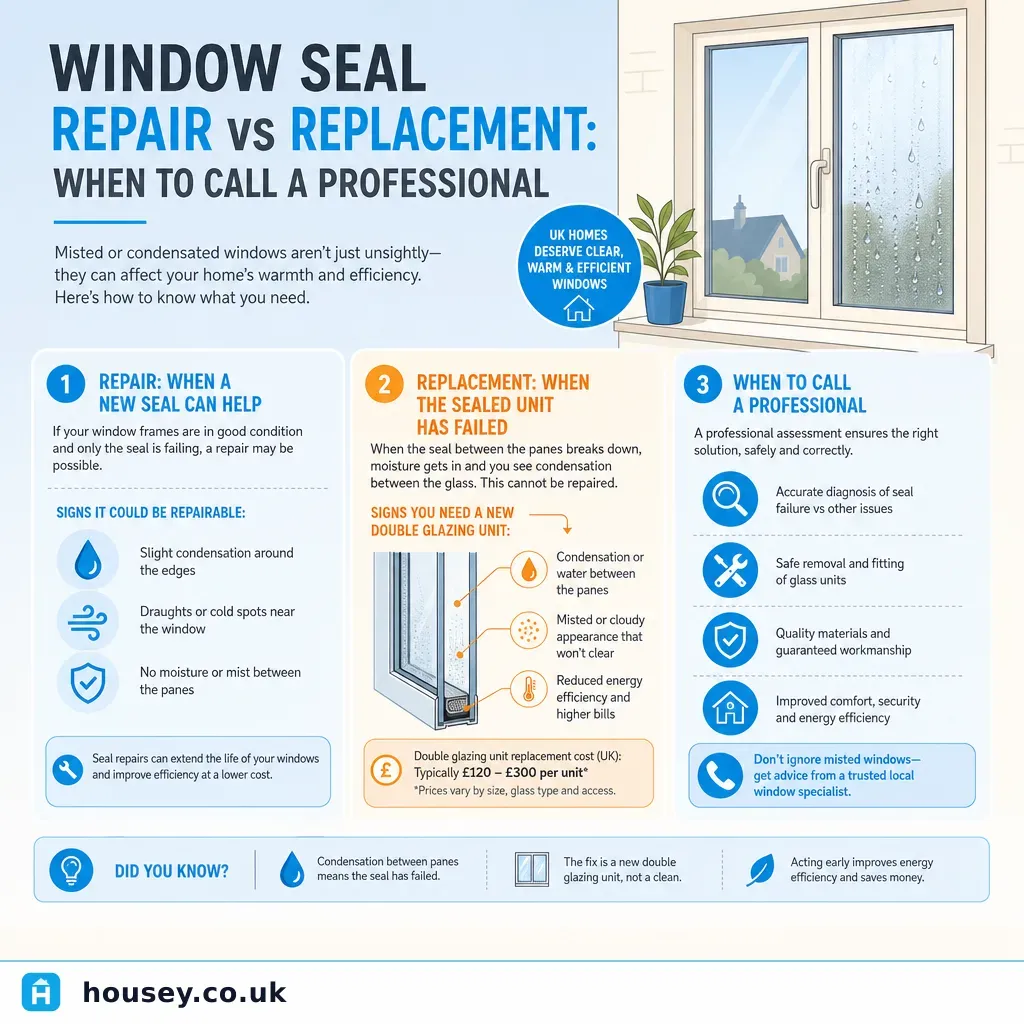
Window Seal Repair vs Replacement: When to Call a Professional
Failed window seals usually mean the double-glazed unit needs replacing — resealing a misted unit rarely works long-term.
 Improvement & Build
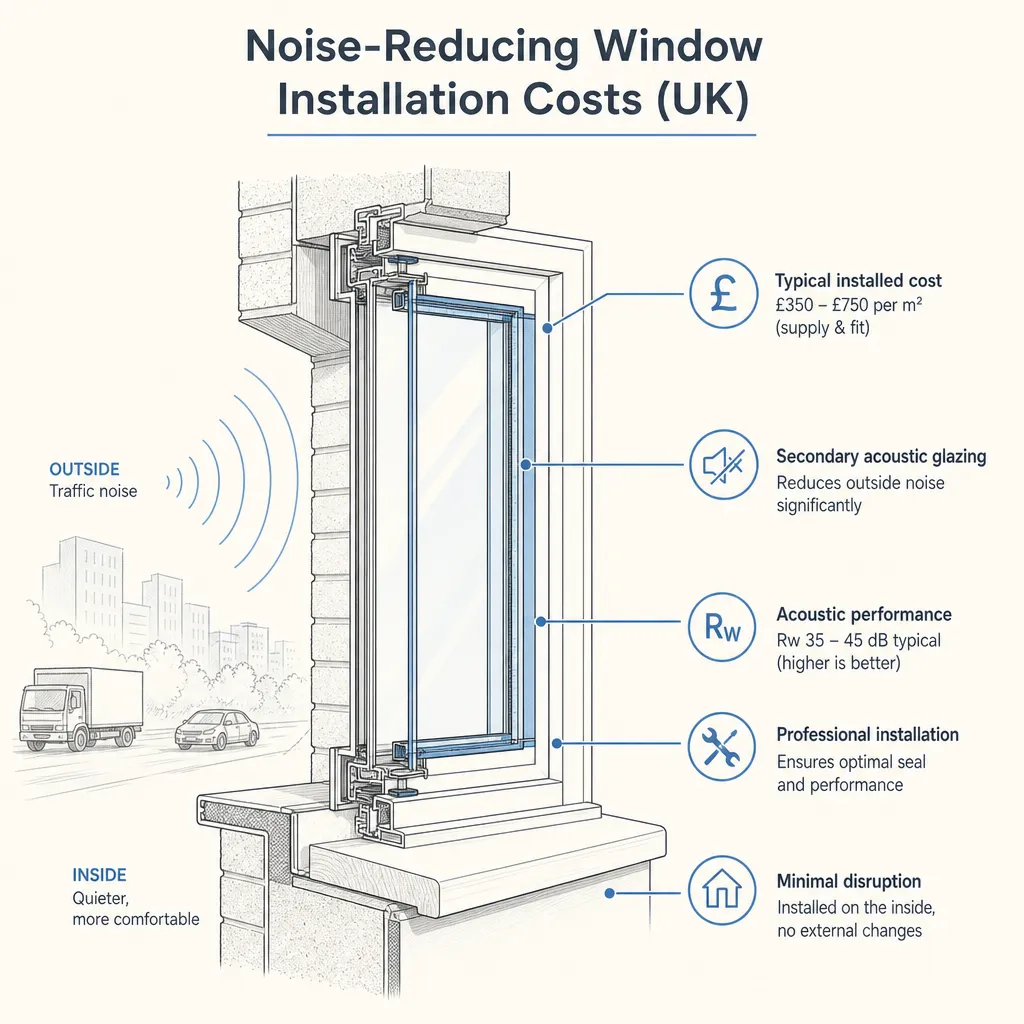
Noise-Reducing Window Installation Costs
Noise-reducing window installation in the UK typically costs £400–£1,500 per window depending on glazing specification, frame material, and property type.
 Improvement & Build
Window Replacement Planning: What to Discuss With Your Installer
Most window replacements in England fall under permitted development rights and do not require planning permission, but they must comply with Building Regulations Part L and Part K.
 Improvement & Build
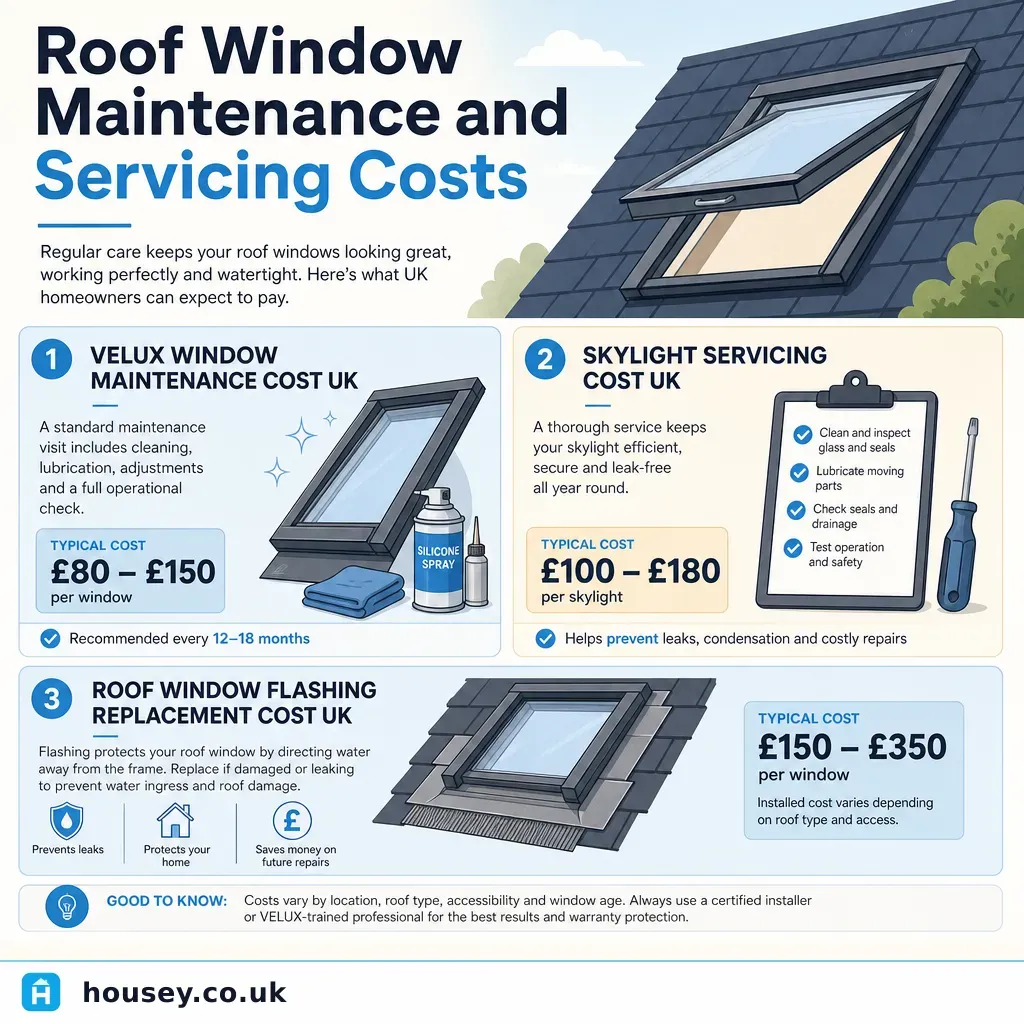
Roof Window Maintenance and Servicing Costs
Roof window servicing in the UK typically costs £80–£200 per window for a professional visit covering seals, flashings, and the opening mechanism.
 Improvement & Build
What To Do About Leaking Windows: Finding The Right Contractor
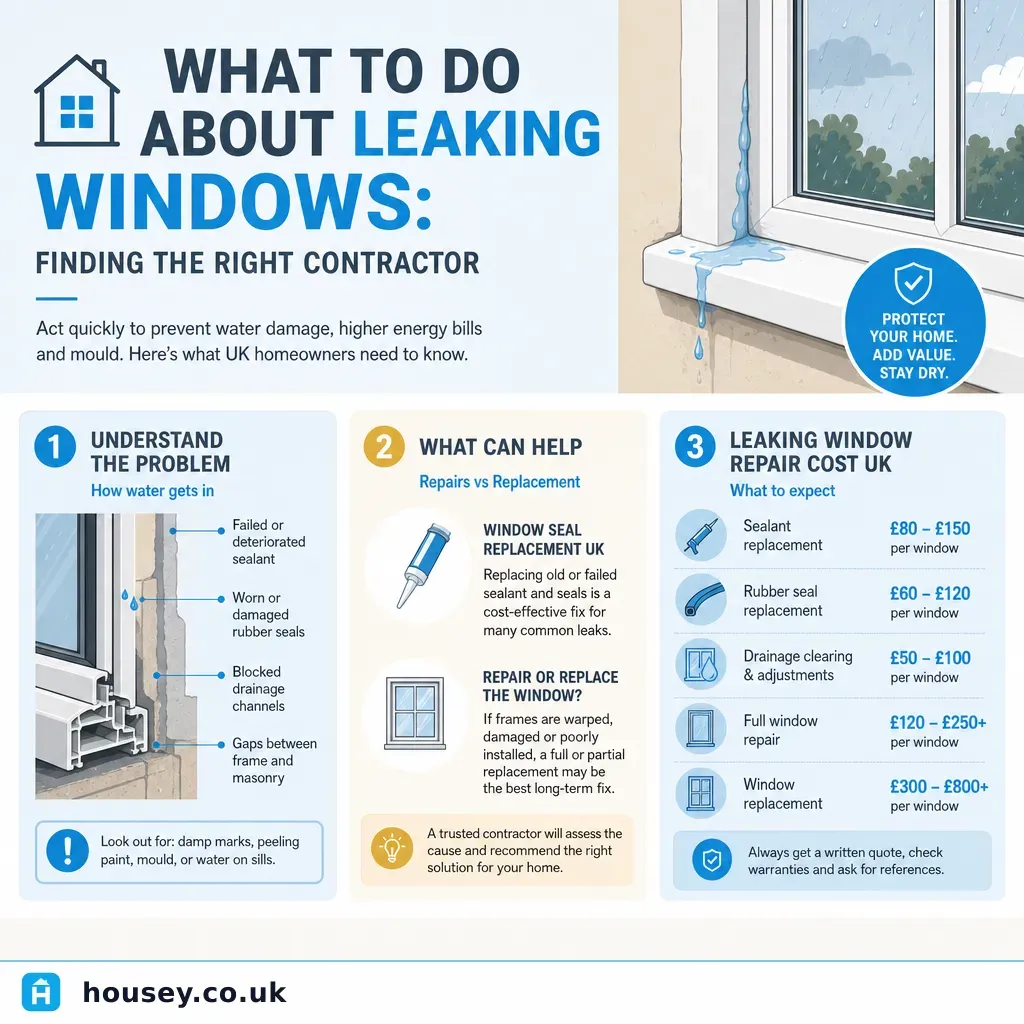
Leaking windows in UK homes are usually caused by failed seals, cracked frames, or damaged flashing.