Restoring Window Seals: When Repair Is Possible and When Replacement Is Needed
By Housey · Last reviewed 18th of May 2026
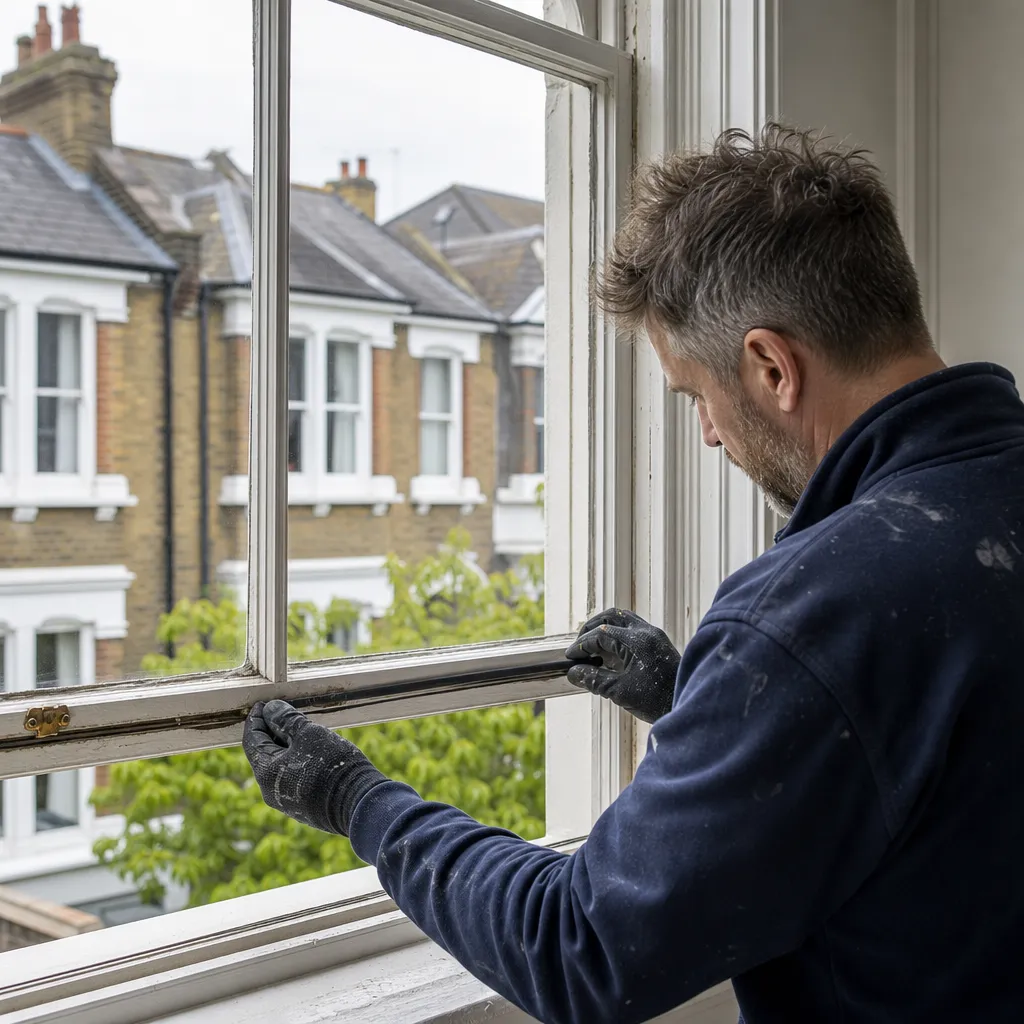
Restoring Window Seals: When Repair Is Possible and When Replacement Is Needed
Window seal problems are one of the most common maintenance issues in UK homes, particularly in properties fitted with double glazing during the 1990s and early 2000s. The symptoms — persistent misting between panes, draughts around frames, or visible deterioration of rubber gaskets — can signal anything from a quick and inexpensive fix to a full window replacement. Knowing which situation you face before calling a tradesperson saves time and avoids unnecessary expenditure.
Key points
- Condensation trapped between the two panes of a double-glazed unit indicates failure of the hermetic seal on the insulated glass unit (IGU) itself — this cannot be fixed by simply replacing the perimeter draught seal.
- Draught seals (compression seals, gaskets, and brush strips around the frame) are separate components from the glass unit seal and can often be replaced without touching the glazing.
- Replacement windows installed as a regulated replacement in England must meet the minimum requirements of Building Regulations Part L and Approved Document L — currently a whole-window U-value of 1.4 W/m²K or better.
- FENSA or CERTASS certification is required for full window replacements, self-certifying compliance with building regulations; without it, a local authority building control application is needed.
- IGU replacement (glass only, retaining the existing frame) is not notifiable under Building Regulations if the frame itself is retained, though energy performance should still be considered.
Understanding what has failed
Not all window seal problems are the same. Before deciding between repair and replacement, it helps to identify which component has failed.
The three main failure types:
- Insulated glass unit (IGU) seal failure — the hermetic seal between the two panes breaks down. Moisture enters the cavity, the desiccant inside the unit becomes saturated, and condensation forms inside the glass, visible as misting or smearing between the panes. The argon or krypton gas fill — which improves thermal performance — is also lost over time. This cannot be fixed by resealing from the outside.
- Draught seal or perimeter gasket failure — the rubber or foam seal between the glass unit and the frame, or between the frame and the wall, deteriorates. This causes draughts and can allow water ingress. These seals can typically be replaced without replacing the glass or the frame.
- Frame-to-wall seal failure — the silicone or mastic between the outer frame and the building structure fails, leading to water ingress around the window reveal. This is usually a straightforward repair using compatible silicone sealant.
Decision tree: repair or replace?
Use this to narrow down your options before getting a quote.
- Misting or condensation between the panes? — The IGU has failed. Options: replace the glass unit only (keeping the frame if it is structurally sound and energy-compliant) or replace the whole window.
- Draughts but no misting between the panes? — The draught seal or gasket has likely failed. A replacement seal strip is usually the right solution.
- Water coming in around the outside edge of the frame? — The perimeter mastic has failed. Raking out and resealing is usually sufficient.
- Frame is warped, cracked, or visibly deteriorated? — Full window replacement is likely necessary regardless of seal condition.
- Window is more than 20–25 years old with multiple issues? — The whole unit may be approaching end of useful life; replacement may be more cost-effective than repeated repairs.
- Listed building or conservation area? — Check with your local planning authority before replacing windows; sympathetic repair is often the required approach.
Replacing the glass unit only
If the frame is in good condition, replacing just the IGU is often a cost-effective middle option. A glazier or window company removes the existing glass unit from the frame and fits a new double- or triple-glazed unit. Look for a minimum energy rating of Band C under the British Fenestration Rating Council (BFRC) scheme, or confirm the U-value meets current Part L requirements.
This option is not notifiable under Building Regulations if the frame is retained. However, it does not give the performance benefits of a fully upgraded frame, and if the frame seal or frame itself is degraded, problems may recur sooner than expected.
Full window replacement: what to know
Full frame replacement is more disruptive and more expensive, but gives a clean start and brings the window up to current standards.
Factor | Detail |
|---|---|
Building Regulations | Replacement windows are notifiable under Part L in England. Use a FENSA or CERTASS-registered installer to self-certify, or apply to local authority building control. |
Conservation areas | Local planning authority consent may be required before replacing windows. Check before ordering. |
Listed buildings | Listed Building Consent is almost certainly required. Consult your local planning authority. |
Energy performance | New units should achieve at minimum a whole-window U-value of 1.4 W/m²K (England); triple glazing will achieve better. |
FENSA or CERTASS certificate | Your installer should provide a certificate on completion. Retain it — it will be needed at conveyancing. |
Red flags: when to act without delay
- Draughts are significant and the property is occupied through winter — heat loss and fuel costs increase substantially with failed seals.
- Water is tracking inside the frame or pooling on the internal sill — this can cause timber decay, plaster damage, and mould growth if left unresolved.
- Seal failure on a ground-floor window is contributing to cold bridging alongside a recently insulated wall.
- The existing window was fitted without building regulations certification and you are preparing to sell — a new FENSA or CERTASS-certified installation resolves the compliance gap cleanly.
When to get professional help
Replacing draught seals and brush strips on standard windows is within the scope of a competent DIYer. Contact a professional if:
- You need to remove the glass unit from the frame (specialist tools and safe glass-handling are required).
- The window is large, at height, or in a commercial-style opening.
- There is any sign of frame rot (timber), corrosion (steel frames), or structural movement around the window opening.
- You are in a conservation area or listed building and need to demonstrate regulatory compliance.
How Housey can help
Housey connects you with window and door installers who can assess your windows, provide like-for-like quotes for IGU replacement or full window installation, and issue the FENSA or CERTASS certification you need for compliance and future resale.
Frequently asked questions
Can misted double glazing be repaired without replacing the glass?
Some companies offer a defogging service that drills small holes in the outer pane, removes moisture, and inserts new desiccant. Results vary and this does not restore the original gas fill or thermal performance. Replacing the IGU entirely is generally more reliable and provides a longer-term solution than defogging.
How long do double-glazed window seals last?
Double-glazed units typically have a working life of 15–25 years, depending on installation quality, the level of solar and weather exposure, and the type of spacer bar used. Units with warm-edge spacer bars, which are standard in modern installations, generally perform better over time than older aluminium-spacer designs.
Do I need planning permission to replace windows?
For most residential properties, replacing windows in the same style is permitted development and does not require a separate planning application. In conservation areas, Article 4 directions may remove this right. Listed buildings require Listed Building Consent. Always check with your local planning authority before ordering replacement windows.
Will replacing my window seals improve my EPC rating?
Replacing failed IGUs with new, energy-efficient units improves the thermal performance of the windows. Whether this changes your EPC rating depends on the overall heat-loss profile of the property — window performance is one of several factors an assessor considers alongside insulation, heating system, and air permeability.
Sources and further reading
Useful next reads
 Improvement & Build
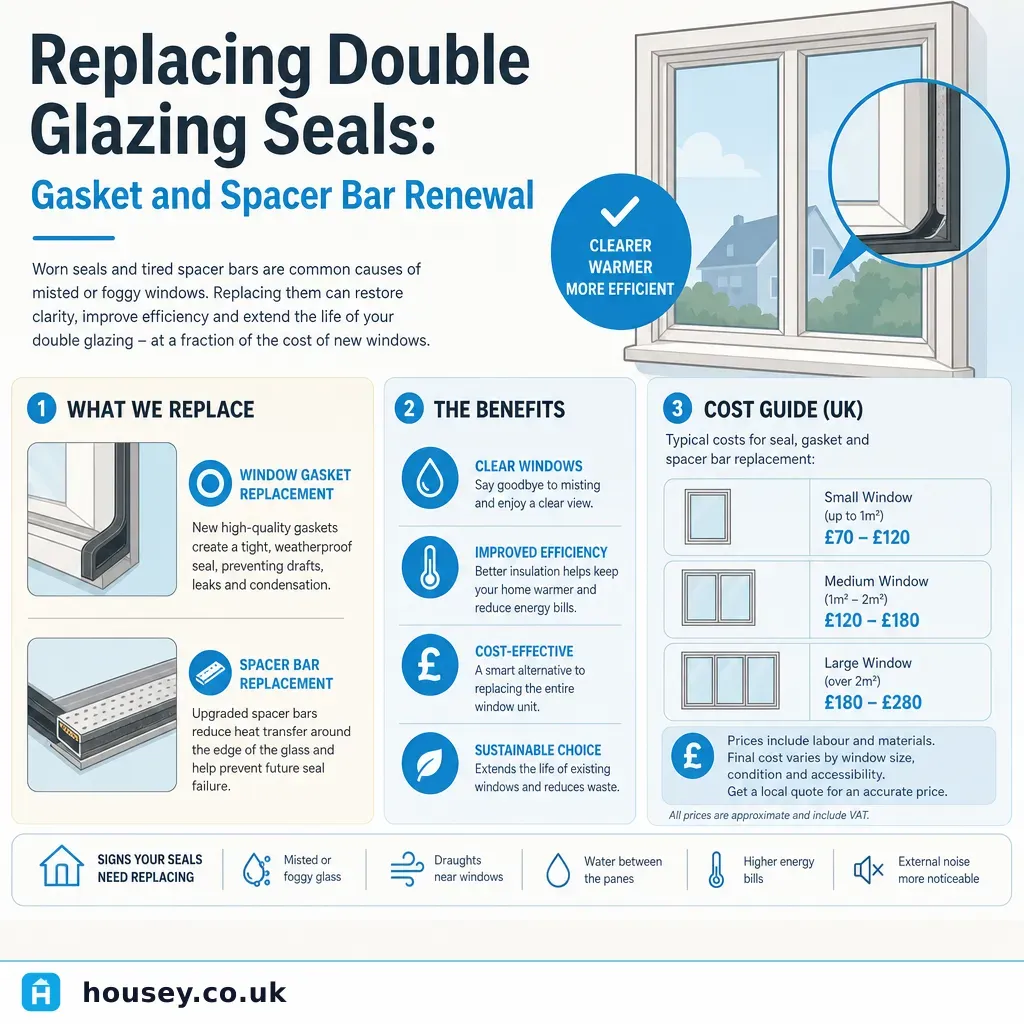
Replacing Double Glazing Seals: Gasket and Spacer Bar Renewal
Double glazing seals fail in two distinct ways: worn perimeter gaskets (which may be replaceable in situ) or failed internal spacer bar seals (which require the entire sealed unit to be replaced).
 Improvement & Build
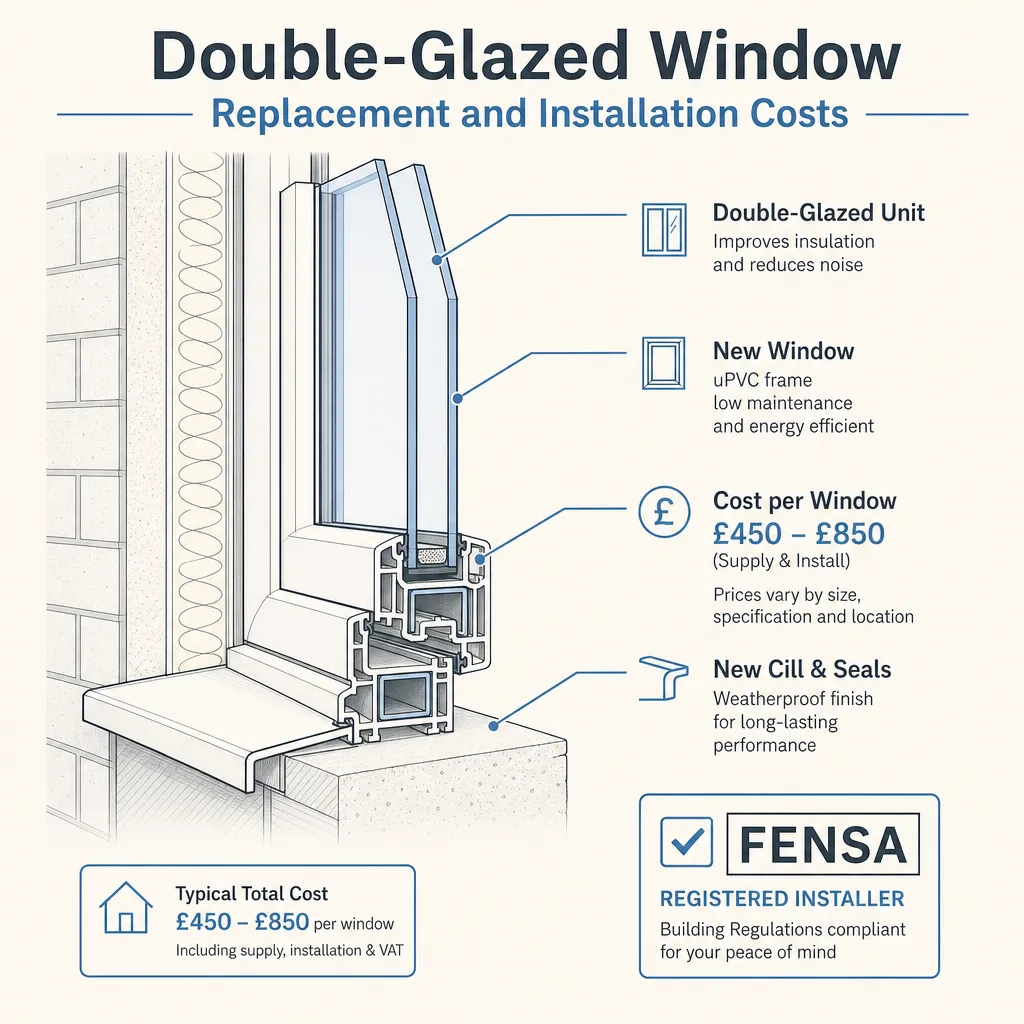
Double-Glazed Window Replacement and Installation Costs
Replacing double-glazed windows in a typical UK home costs roughly £300–£600 per uPVC casement window installed, rising to £500–£1,200 for timber and £400–£800 for aluminium.
 Improvement & Build
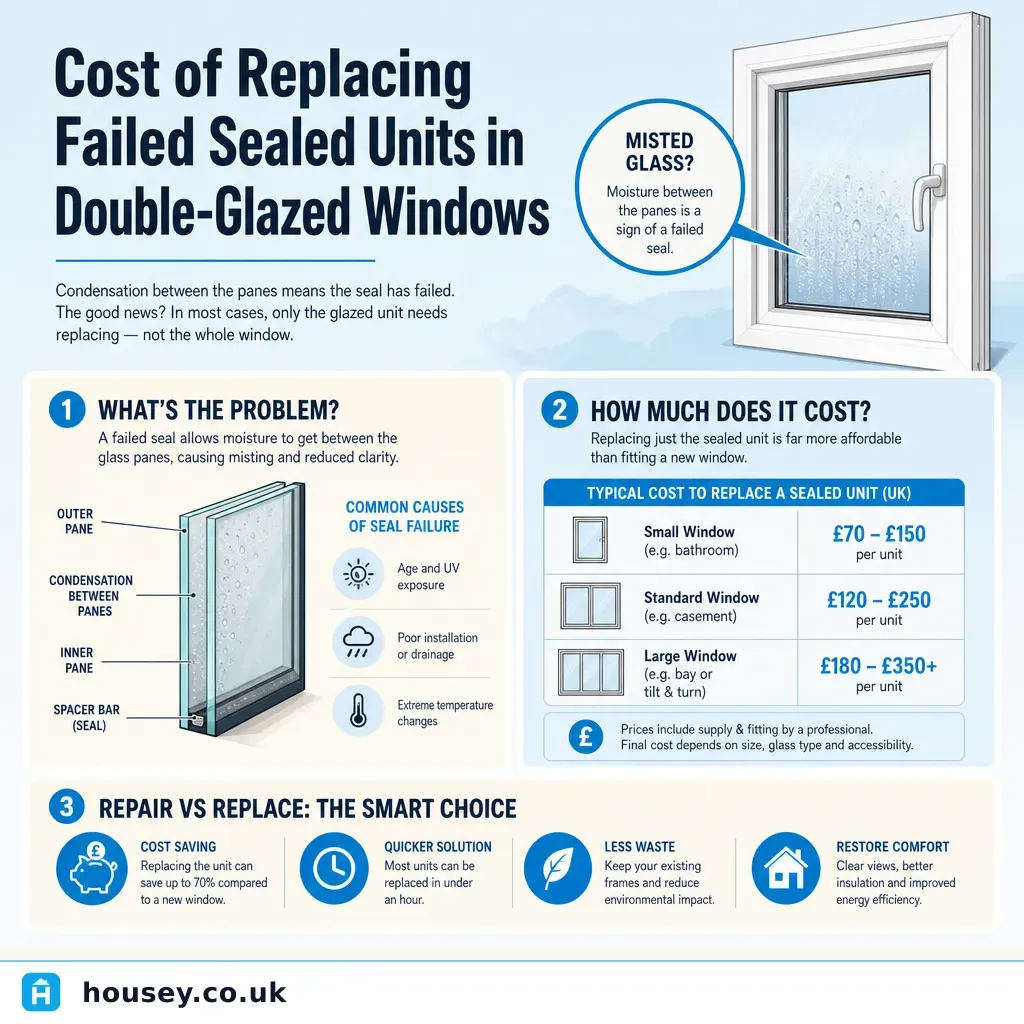
Cost of Replacing Failed Sealed Units in Double-Glazed Windows
Replacing a failed sealed unit in a double-glazed window typically costs £75–£200 per unit in the UK, depending on size, glass type, and access.
 Improvement & Build
Sealing and Maintaining Historic Leaded Glass Windows: Preservation and Performance
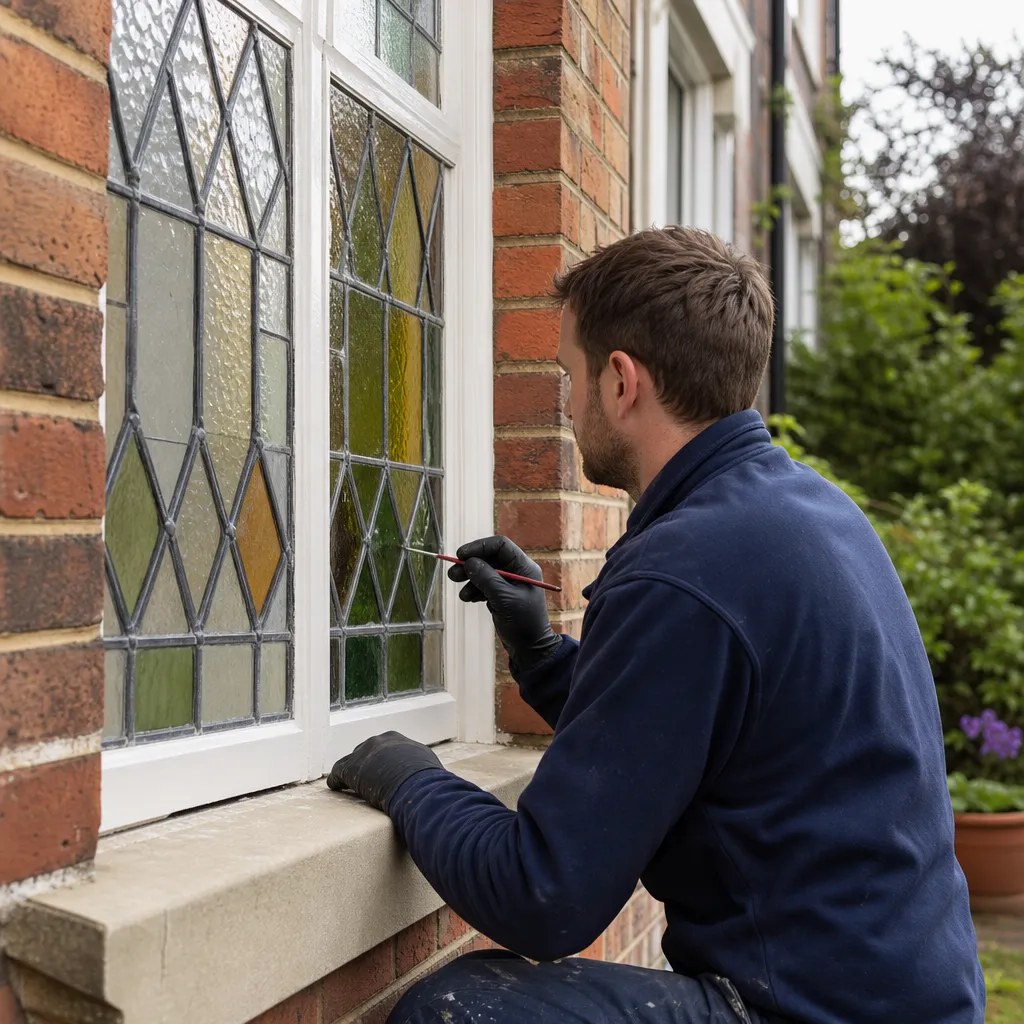
Leaded glass windows are maintained using traditional linseed oil cement — not silicone or modern sealants, which prevent natural movement in the lead came.
 Improvement & Build
Triple-Glazed Window Installation Costs
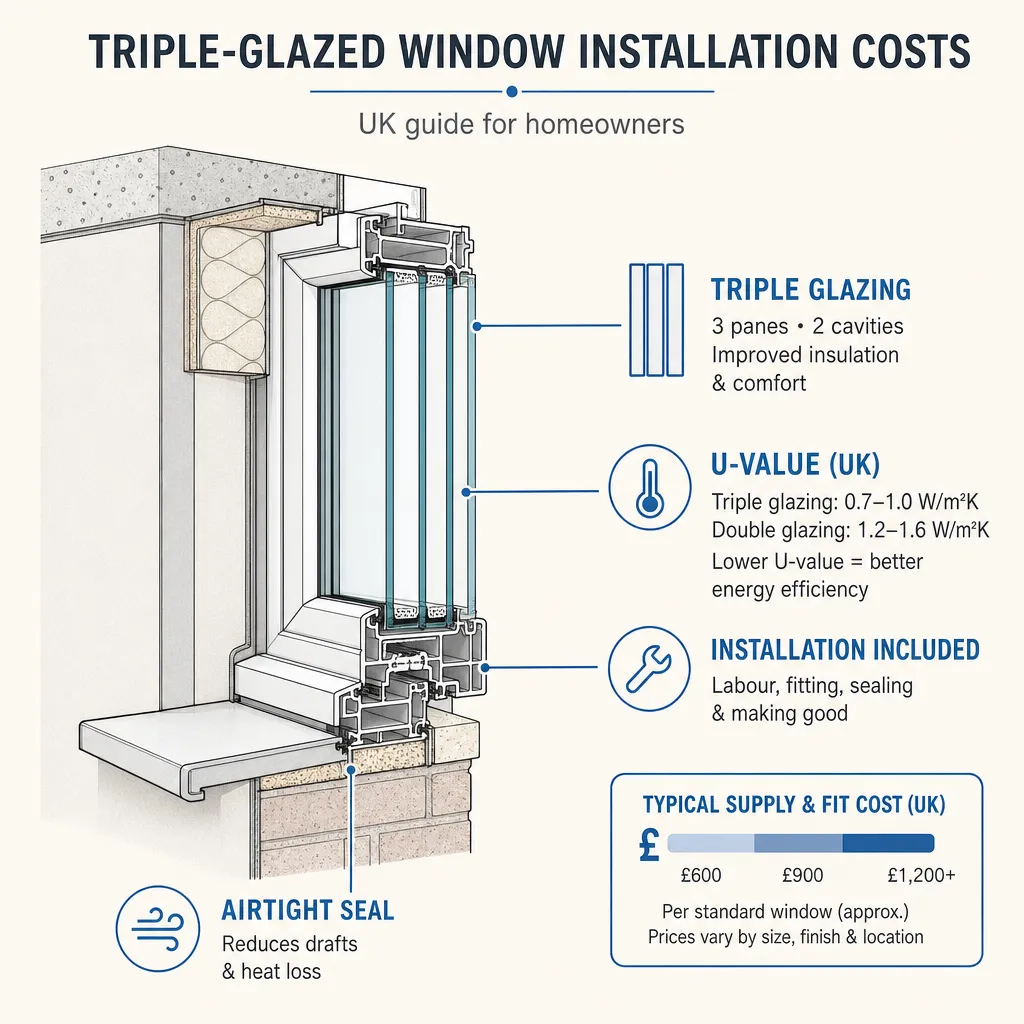
Triple-glazed window installation in the UK typically costs £800–£1,800 per window, depending on size, frame material, and glazing specification.