Sash Window Cord and Pulley Repair Guide
By Housey · Last reviewed 10th of May 2026
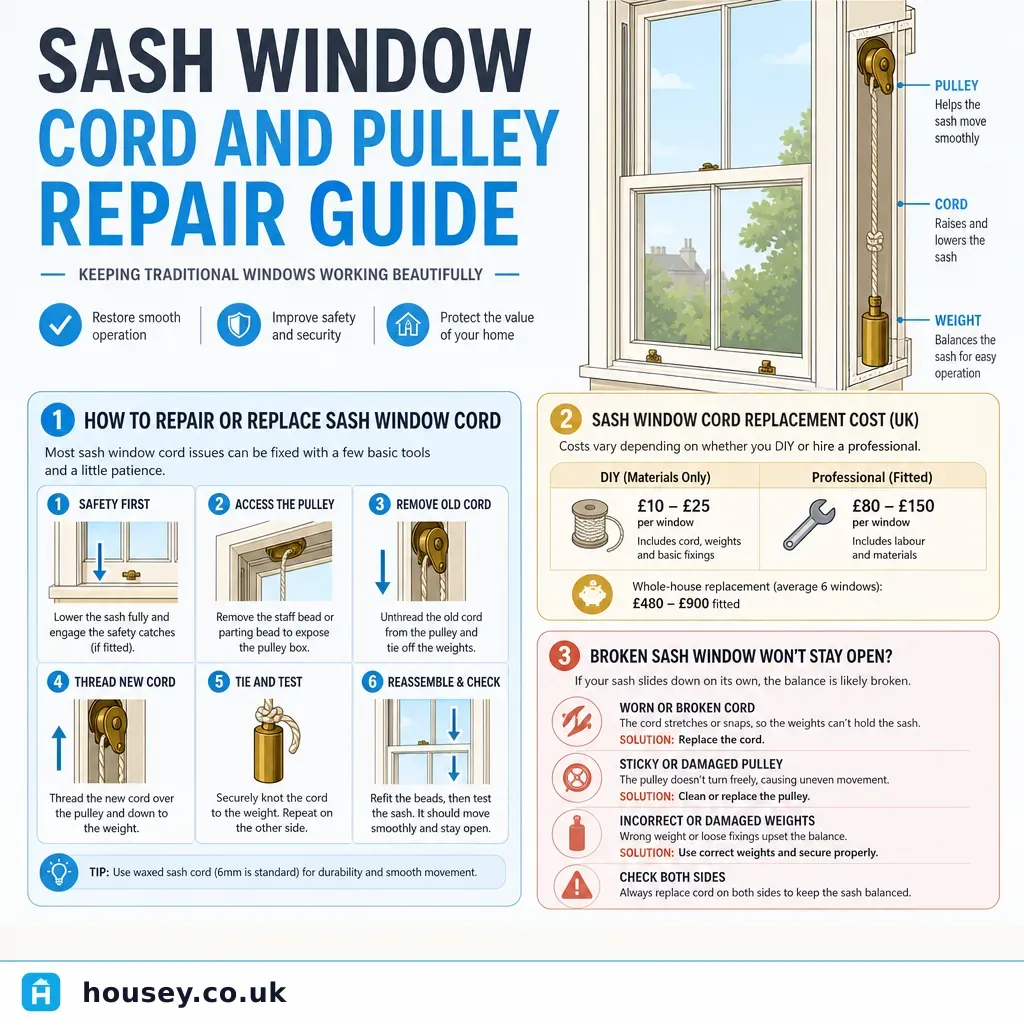
Sash Window Cord and Pulley Repair Guide
Sliding sash windows are a defining feature of Victorian, Edwardian, and Georgian terraced properties across the UK, and failing cords are among the most common maintenance issues owners of period homes encounter. A broken sash cord causes the window to drop, balance unevenly, or refuse to stay open — and if left unattended, puts progressive strain on the pulley wheels, the sash frame, and the weight pockets themselves. Understanding how the mechanism works, when a cord repair is sufficient, and when deeper joinery work is needed can prevent a minor maintenance task from becoming a costly window replacement.
Key points
- Traditional box-sash windows use cast-iron or lead sash weights in hollow frame cavities, connected to the sash by wax-coated cotton or polyester cord running over cast-iron or brass pulley wheels.
- Most period sash cords have a design life of 30–60 years; failure is usually gradual fraying at the pulley rather than sudden snapping.
- Replacing both cords on a lower sash in a single visit is standard practice — cords of the same age usually fail within a short period of each other.
- In a conservation area or listed building, like-for-like repair using matching materials is generally required; UPVC or aluminium replacement windows typically need Listed Building Consent or conservation area approval.
- Draught-proofing can be integrated with a cord replacement visit, typically adding £100–£300 per window; Indicative UK costs, last reviewed 2026-05-10.
How a box-sash window mechanism works
A traditional double-hung sash window has two independently moving sashes — upper and lower — that slide vertically within a box frame. Inside each vertical stile of the box frame is a hollow cavity called the weight pocket, containing a cast-iron sash weight. The weight connects to the sash via a cord that passes over a pulley wheel mounted at the top of each stile.
When the sash is raised, the weight descends into the pocket; when the sash is lowered, the weight rises. This counterbalance system holds the sash at any position with minimal effort when correctly sized and in good condition.
Common failure points:
- Cord fraying where it passes over the pulley wheel (most common)
- Cord fraying or snapping at the knot in the cord groove of the sash stile
- Pulley wheel jamming due to corrosion or worn bearings
- Sash weight falling free inside the pocket after a poorly tied knot fails
Which repair do you need?
- Choose cord replacement if the sash drops or will not stay open, the cord is visibly frayed or has parted, and the pulley wheel still turns freely when tested by hand.
- Choose pulley wheel replacement if the wheel is jammed, corroded, or the wheel sheave is cracked. Pulley replacement is usually carried out at the same time as cord replacement on the same stile.
- Choose a specialist joiner or window restorer if the sash frame is rotten, the box frame has significant gaps or decay, the joint between the sash rails is failing, or the glazing bars are damaged or missing.
- Check with your local planning authority if you are in a conservation area or the building is listed — replacement windows may require consent even if the existing window is beyond economic repair.
- Consider a structural survey if cords have been failing repeatedly in a short period and the frame appears out of square — building movement can distort sash boxes and accelerate wear.
What a cord and pulley repair involves
This section describes what a qualified joiner does during a cord repair — not a DIY instruction guide. The work involves removing glazed sashes and working in confined access, which carries risks for the uninitiated.
- Remove staff beads. The narrow timber strips on the inner face of the box frame are carefully prised away from both sides. These should release cleanly with a thin chisel if the painted joint has not been over-sealed.
- Tilt and lift out the lower sash. With staff beads removed, the lower sash is angled forward and lifted clear. The old cord is cut or unhooked from the cord groove in the sash stile.
- Access the weight pocket. A removable pocket piece — a small section of frame lining, usually held by a single screw or friction fit — is removed to reach the sash weight inside the cavity.
- Thread new cord. A weighted 'mouse' — a small lead weight on a thin string — is dropped over the pulley and into the pocket to guide the new cord. Waxed sash cord of the correct diameter (typically 8 mm) is threaded through.
- Tie the weight. The cord is knotted through the hole in the sash weight. The knot must be secure — a slipping knot is the most common cause of premature re-failure and requires the entire access sequence to be repeated.
- Refit the sash. The cord is cut to the correct length and fixed into the cord groove with clout nails. The sash is refitted, beads replaced, and operation tested through the full range of travel.
- Upper sash replacement follows a similar sequence but requires removal of the parting beads — the central timber dividers between the two sashes — before the lower sash can be removed, adding time and complexity to the job.
Red flags: when cord replacement is not enough
Seek a specialist assessment before proceeding with cord replacement if you notice:
- Rotten timber in the sill, frame stiles, or sash bottom rails — particularly at the lower corners of lower sashes, where water pools and rot is most common.
- Crumbling or missing putty around glazing bars or perimeter glass — this allows water into the sash body and accelerates timber decay.
- Gaps at the frame head exceeding approximately 10 mm between the sash and the box frame, suggesting the frame itself has racked or the building has moved.
- Repeated cord failure within a short period on the same window — this may indicate the pulley wheel is damaged, or the sash weight is incorrect for the glazing weight.
- Single-glazed glass that is cracked, loose, or bowed — glazed sashes can be re-puttied or re-glazed during a repair visit, but lead or decorative glazing in listed buildings requires a specialist.
- Sash binding or sticking despite correct cord tension — usually indicates the frame is out of square, which may relate to structural movement in the building rather than the window itself.
What to ask before hiring a sash window specialist
- Do you have specific experience repairing traditional box-sash windows, rather than primarily fitting replacement units?
- Will you replace both cords on a sash at the same visit even if only one has failed?
- Can you integrate draught-proofing strips into the same visit, and what system do you use?
- What timber and cord materials will you use — are they like-for-like to the originals?
- If the building is listed or in a conservation area, have you worked on comparable properties and are you familiar with the consent requirements?
- What is your call-out charge if rot or glazing issues are found during access that require additional work?
- Do you provide a written fixed quote, or is the final price subject to findings on the day?
- Is VAT included?
Conservation areas and listed buildings
In England, replacing original sash windows with modern alternatives — even like-for-like replicas in a different material — usually requires either Listed Building Consent (for listed buildings) or notification under the conservation area provisions of the Town and Country Planning Act 1990. Historic England's guidance consistently favours repair of original windows over replacement, and cord or pulley repair almost never requires any planning consent.
Building Regulations Part L may apply if windows are ultimately replaced rather than repaired — another practical and regulatory reason why repair is the preferred route. If you are uncertain about the consent position for your property, building control consultants for conservation area guidance can help clarify what is and is not permissible before you commission work.
When to get professional help
Cord replacement is specialist joinery work, not a standard DIY task, particularly once glazed sashes are involved. Always use a professional if:
- The window is above ground-floor level.
- The sash contains original or period glazing, including crown glass or leaded lights.
- The building is listed or located in a conservation area.
- There is any sign of rot in the frame, sill, or sash.
- You are not confident working with hand tools on fragile historic timber without risking damage to the sash or glass.
How Housey can help
Housey can connect you with experienced sash window repair and restoration specialists who understand the requirements of period box-sash windows. If your project involves listed building consent or planning queries, Housey's building control consultants for conservation area guidance can help you understand the approval process before work begins.
Frequently asked questions
How much does sash window cord replacement cost in the UK?
A specialist joiner typically charges £100–£250 per window for a lower-sash cord replacement, rising to £150–£350 or more for upper sash work, which is more involved. Costs vary by region and number of windows — multi-window visits are usually more cost-effective per window. Indicative UK costs, last reviewed 2026-05-10.
Can I use nylon rope instead of traditional sash cord?
Nylon rope is sometimes used but is not recommended for period windows. It stretches under load, causing the sash to drop gradually over time. Waxed cotton or polyester sash cord is the correct material for traditional box-sash windows, and like-for-like replacement is required in listed buildings where original materials must be matched.
My sash window won't stay open — does that mean the cord is broken?
Usually, but not always. A sash that drops when released typically has a broken or detached cord on one or both sides. However, a sash that falls slowly may have a weight that is too light for the glazing — for example, where original single glass has been replaced with heavier double glazing. A joiner can assess which is the cause during an inspection.
Should I repair or replace my original sash windows?
Repair is almost always more cost-effective and environmentally preferable for original sash windows in structurally sound condition. Full replacement costs £400–£1,200+ per window versus £100–£350 for cord and draught-proofing work. In listed buildings or conservation areas, replacement may require consent regardless of condition, making repair the default practical choice.
Sources and further reading
- Practical Building Conservation: Windows — Historic England, guidance on conservation and repair of traditional windows
- Listed buildings and conservation areas — Planning Portal, consent requirements for window alterations
- Building Regulations Approved Document L1B — GOV.UK, thermal requirements for existing dwellings
- Town and Country Planning Act 1990 — legislation.gov.uk, conservation area provisions
Useful next reads
 Improvement & Build
Guide to Replacing Timber Sash Windows with Authentic Restoration
Restoring a timber sash window typically costs £150–£400 per window; full replacement costs £800–£2,500.
 Improvement & Build
Leaded Window Repair and Restoration Costs
Leaded window repair in the UK typically costs £150–£600 for minor re-soldering or resealing, rising to £800–£2,500+ for full panel removal and restoration.
 Improvement & Build
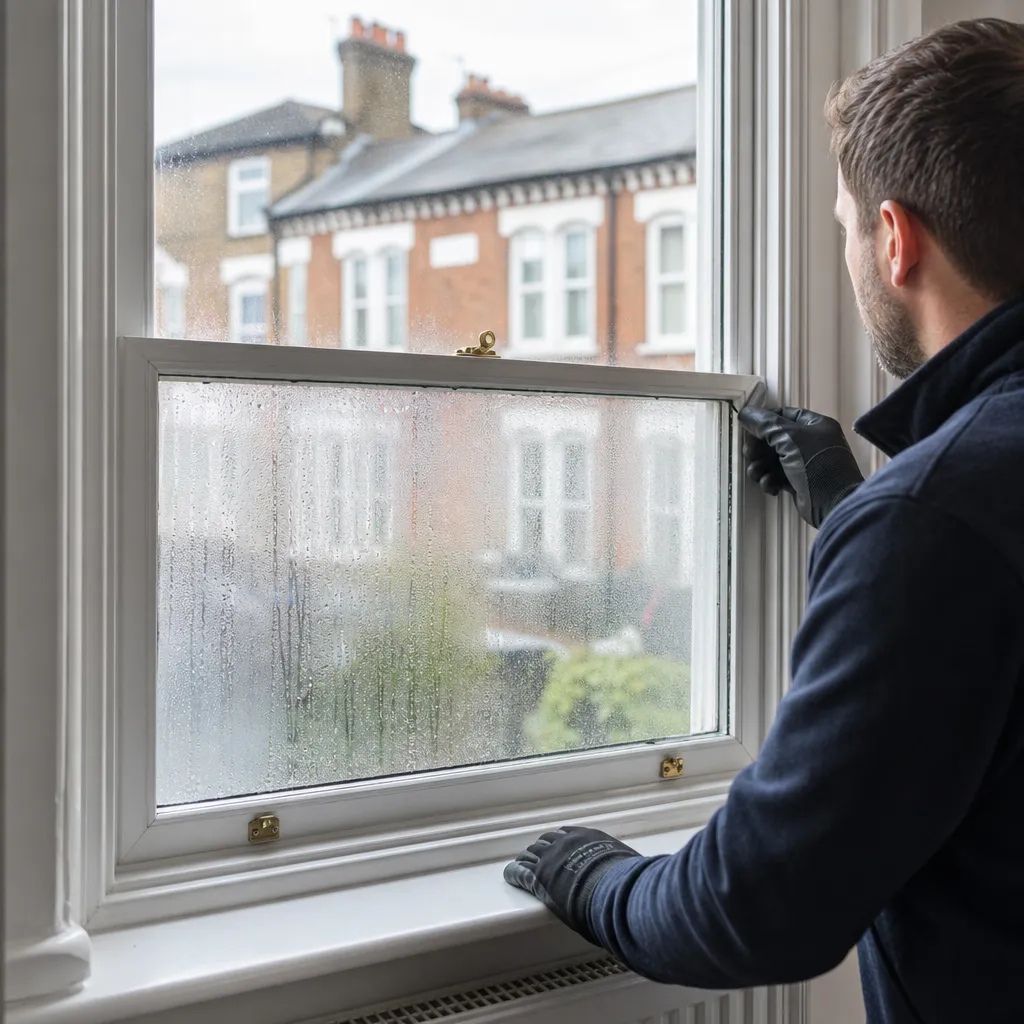
Repairing Failed Window Seals and Condensation Issues
Condensation between double-glazed panes means the hermetic seal on the insulated glass unit has failed.
 Improvement & Build
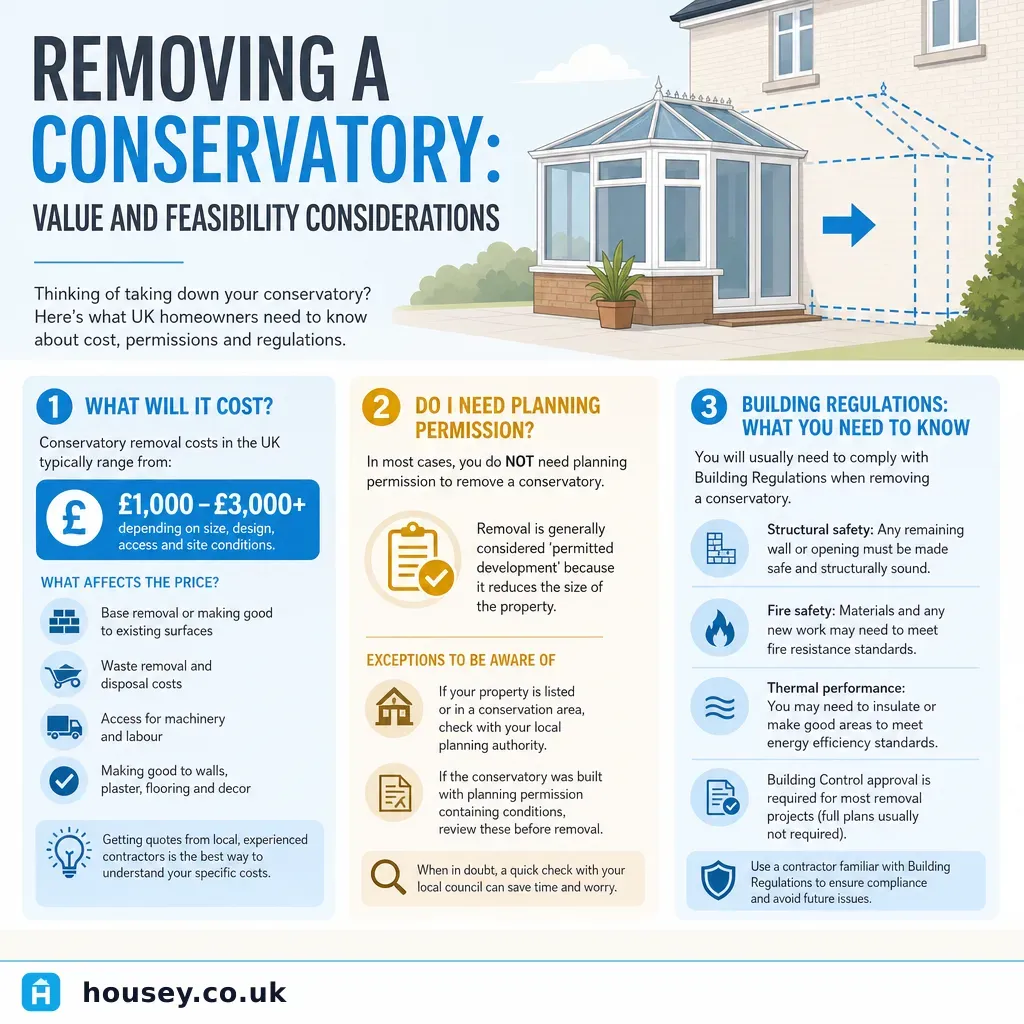
Removing a Conservatory: Value and Feasibility Considerations
Removing a conservatory in England usually does not need planning permission if the original structure was permitted development, but reinstating the original wall almost always requires a building regulations application covering structural, thermal, and moisture elements.
 Improvement & Build
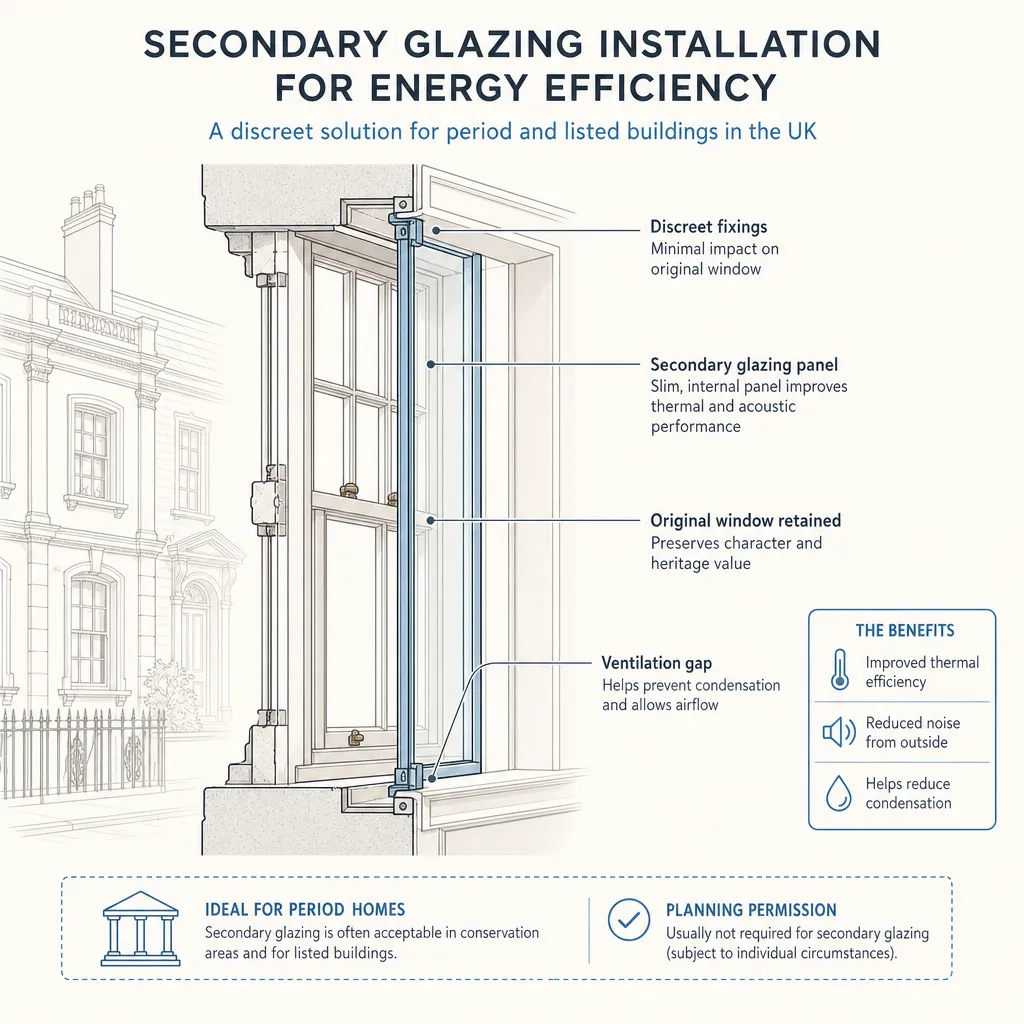
Secondary Glazing Installation for Energy Efficiency
Secondary glazing adds a separate inner pane to an existing window, improving thermal performance without replacing the original frame.