Managing Utilities When Buying a New Home: Electricity Connection Guide
By Housey · Last reviewed 25th of May 2026
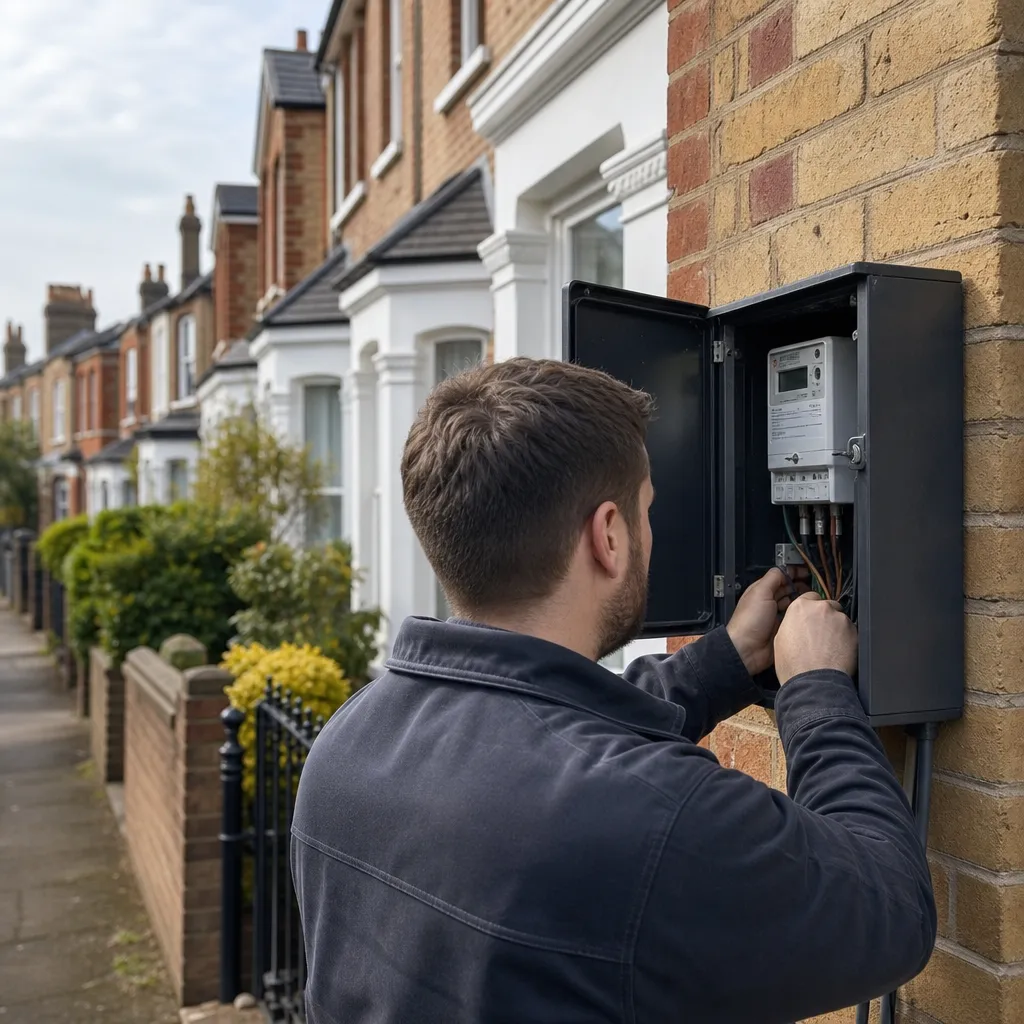
Managing Utilities When Buying a New Home: Electricity Connection Guide
When you complete on a property purchase, the electricity supply becomes your responsibility from that day — even if the removal lorry has not yet arrived. Many buyers concentrate on conveyancing and surveys and leave utility setup until the last moment, which can mean unexpected standing charges, disputed meter readings, or gaps in supply. Understanding how electricity handover works in England, Scotland, and Wales helps you stay on top of costs and avoid billing disputes from the outset.
Key points
- Take a meter reading on the exact day of completion and photograph it with a phone timestamp — this is your billing baseline and protects you in any dispute with the supplier.
- The previous owner's electricity supplier continues to supply you on a deemed contract (usually a higher tariff) until you switch or register your own account.
- You have the right to switch electricity supplier from your first day in the property under Ofgem's domestic switching rules.
- Smart meters may revert to basic non-smart mode if you switch supplier and the new supplier's system does not support the same protocol (SMETS1 vs SMETS2).
- Standing charges apply from completion day, not from when you first use electricity, so delaying account setup costs money.
Who supplies your electricity on completion day?
When you take ownership of a property, you inherit the existing energy supply on what is called a deemed contract. This is a default arrangement with the previous occupant's supplier, and it carries no fixed term — but it almost always costs more than a negotiated tariff. To find out who the current supplier is, ask the seller's solicitor, check any correspondence left at the property, or use the Energy Networks Association's Find My Supplier tool (linked in Sources below).
Ofgem rules mean no supplier can refuse to supply you or prevent you from switching. Your right to move to a different tariff or a different supplier begins immediately on completion.
What to do on completion day
The steps below apply whether you are buying a freehold house or taking on a leasehold flat. For flats, check with the managing agent whether a communal supply also exists — some purpose-built blocks meter individual units through a building-level account.
Completion-day electricity checklist:
- Take a dated reading for every meter (electricity, gas, water) the moment you have access to the property.
- Photograph each meter display — the phone timestamp proves the reading if a dispute arises later.
- Note the meter serial number printed on the faceplate.
- Locate the consumer unit (fuse board) and the main isolation switch.
- Check whether the property has a smart meter and what generation it is (SMETS1 or SMETS2 — look for a sticker or ask the existing supplier).
- Contact the existing supplier within 24–48 hours to register as the new occupant.
- Decide whether to stay temporarily on the deemed contract or arrange a switch straight away.
You are not obliged to stay with the existing supplier. Many buyers complete a switch within the first week of ownership.
Switching supplier in your new home
Switching is straightforward under Ofgem's domestic energy rules. As of mid-2026, most switches complete within five working days for SMETS2 smart meters, and within 21 days for SMETS1 or traditional meters.
Choosing a tariff:
- Use a regulated price comparison tool, such as those accredited by Ofgem or the Citizens Advice energy comparison service.
- Compare unit rates and standing charges — not just headline annual figures.
- Check whether the tariff is fixed-term or variable, and what the exit fee is if you want to switch again before the term ends.
- Confirm the new supplier can operate your smart meter in smart mode before signing up.
You are protected by the Energy Price Cap (set quarterly by Ofgem for standard variable tariffs), which limits the unit rate and standing charge a supplier can apply to a default tariff. The cap applies per unit rate and standing charge, not as an overall bill ceiling.
Smart meters and property moves
Smart meters installed before around 2019 are typically first-generation (SMETS1). These may lose smart functionality if you switch supplier, as the first generation used proprietary rather than centralised communication infrastructure. Second-generation meters (SMETS2) use the Data Communications Company (DCC) network and retain smart functionality across supplier switches.
If your new property has a SMETS1 meter running in basic mode, contact the supplier to request an upgrade or ask them to attempt re-enrolment on the DCC network. You are never obliged to accept a smart meter installation, but smart meters make future billing more straightforward and eliminate estimated readings.
Worked scenario: completing on a 1930s semi-detached
A buyer completes on a 1930s semi-detached in the East Midlands in late November. The property has Economy 7 storage heaters and a SMETS1 meter. On completion day the buyer photographs both meter registers (peak and off-peak) and notes the meter serial number. They contact the existing supplier the same afternoon — identified via the Energy Networks Association tool — to register as the new occupant.
They find the deemed contract rate exceeds the Ofgem price cap for their preferred tariff type, so they arrange a switch within the week using a regulated comparison site, requesting that the new supplier attempt SMETS1 re-enrolment on the DCC network. They also note the Economy 7 off-peak hours for their network area (commonly 00:30–07:30 local time, but hours vary by Distribution Network Operator) to ensure storage heaters charge efficiently overnight.
Acting on day one — rather than after unpacking — directly reduces their bill from the first month of ownership.
Common mistakes and what not to assume
- Do not assume the meter reading in your solicitor's completion pack is sufficient. Always take your own timestamped photograph on the day.
- Do not assume the seller sorted the account. Electricity accounts are not transferred automatically — you must register with the supplier separately.
- Do not assume your smart meter is working in smart mode. Test it with the new supplier; billing on estimates is common after a move if re-enrolment has not happened.
- Do not ignore standing charges. Delaying account setup means a backdated bill at the higher deemed contract rate.
- Do not assume the consumer unit is up to date. If the property has rewirable fuses rather than modern miniature circuit breakers, note this for a future Electrical Installation Condition Report (EICR).
When to get professional help
Most electricity setup tasks on completion day are administrative rather than technical. However, a qualified electrician should be involved if:
- The main fuse or meter cut-out appears damaged or carries a warning label.
- There is no power to the property and the cause is not a tripped circuit.
- You want to add circuits, install an EV charger, or modify the consumer unit — all of which are notifiable work under Building Regulations Part P, requiring a registered competent person.
- The property has an old rewirable fuse board; consider booking an EICR to understand the condition of the installation before relying on it.
Never attempt to work on the meter tails — the cables between the meter and consumer unit. These are the responsibility of your Distribution Network Operator and must not be touched by householders.
How Housey can help
Once your electricity is set up, there is usually a great deal more to organise before and on moving day. Housey connects you with professional house removals companies across the UK, so you can focus on administrative tasks rather than the logistics of the move itself.
Frequently asked questions
Who is responsible for electricity from completion day?
The buyer is responsible from the moment legal title transfers — which is the date of completion. Even if you do not move in immediately, standing charges accrue from that date. The supply continues automatically on a deemed contract with the previous occupant's supplier until you register and set up your own account.
Can I switch electricity supplier immediately after buying a house?
Yes. Ofgem rules give you the right to switch from day one. There is no minimum period you must stay with the existing or deemed-contract supplier. Using a regulated comparison service, most standard switches complete within five working days for SMETS2 smart meters.
What is a deemed contract in energy?
A deemed contract is an automatic supply arrangement that activates when you move into a property without having set up your own account. Deemed contract rates are usually higher than standard tariffs, so it pays to contact the existing supplier and arrange a switch quickly after completion.
Do I need to notify my previous supplier when I move out?
Yes. Contact the supplier at your previous address with a final meter reading on the day you move out. This closes the account and prevents ongoing charges. Failure to do so can result in a billing dispute, as the supplier may continue charging until they receive formal notice of your departure.
What if the electricity is off when I take possession of the property?
Contact the property's Distribution Network Operator (DNO) rather than a supplier — supply may have been formally disconnected. Find your DNO via the Energy Networks Association website. Reconnection is a DNO matter and may take several days; factor this in if buying a long-vacant property.
Sources and further reading
- Ofgem: switching energy supplier — Ofgem
- Energy Networks Association: Find My Supplier — Energy Networks Association
- Citizens Advice: moving house and energy — Citizens Advice
- GOV.UK: energy price cap guidance — GOV.UK
- Ofgem: smart meters and switching suppliers — Ofgem
Useful next reads
 Buying & Moving
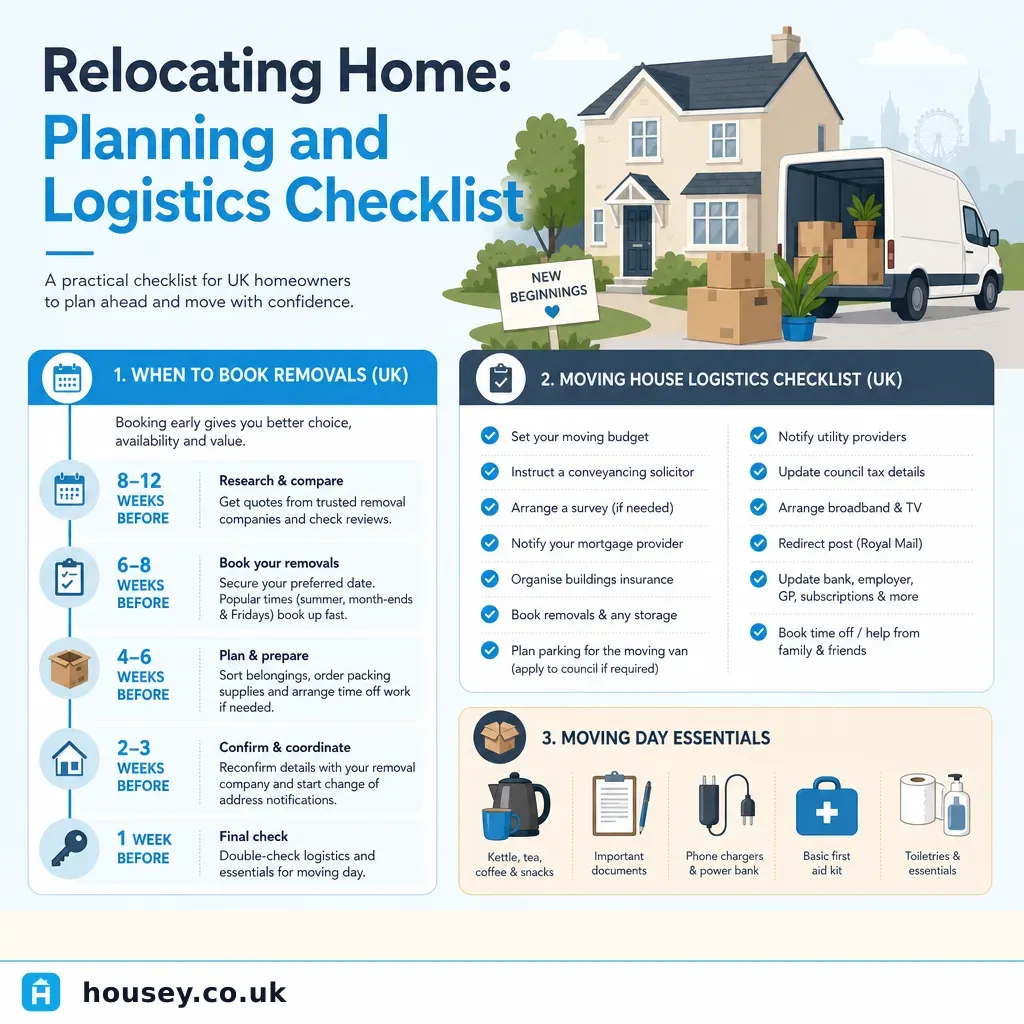
Relocating Home: Planning and Logistics Checklist
Successful home relocation in the UK typically requires 8–12 weeks of advance planning.
 Buying & Moving
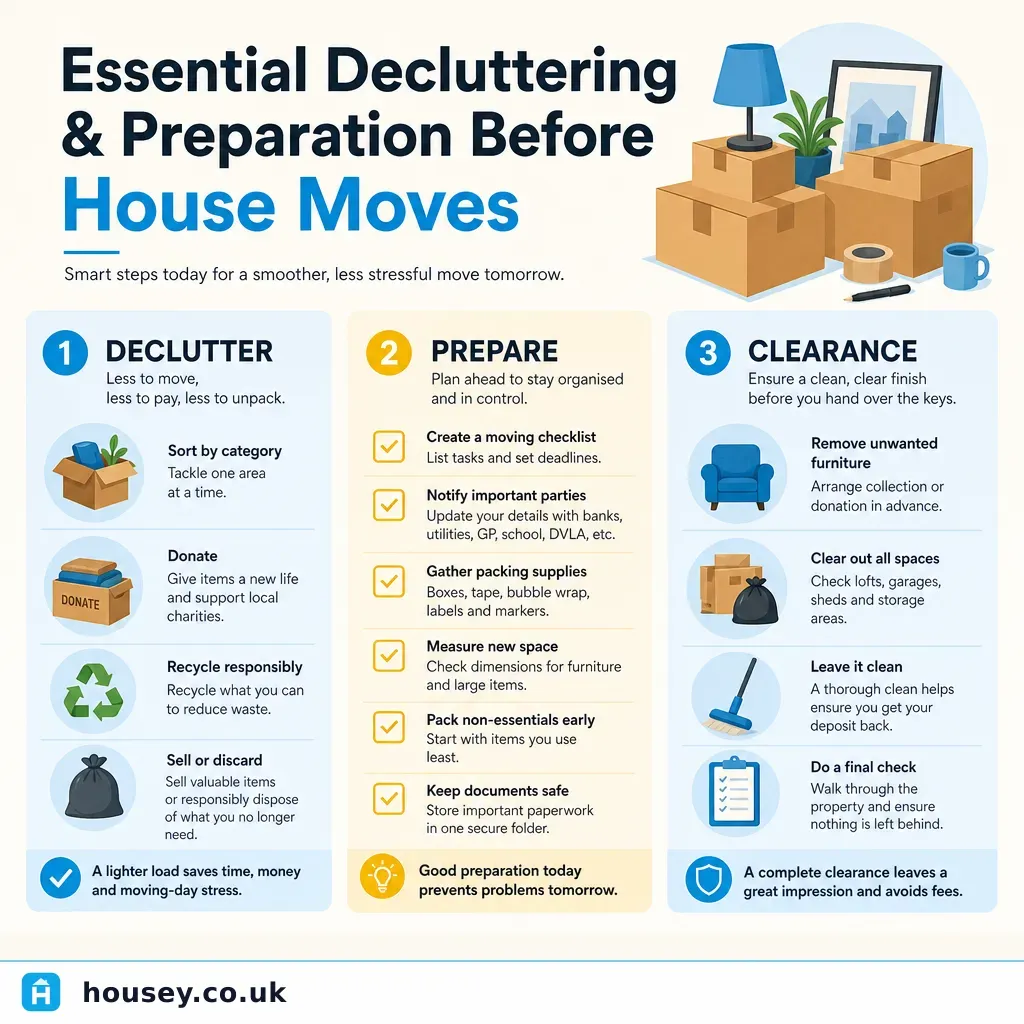
Essential decluttering and preparation before house moves
Decluttering before a house move reduces removal costs, improves property photographs, and simplifies unpacking.
 Buying & Moving
Planning Your Home Removal: What to Expect from Professional Services
A professional removal company loads, transports, and unloads your household belongings between properties.
 Buying & Moving
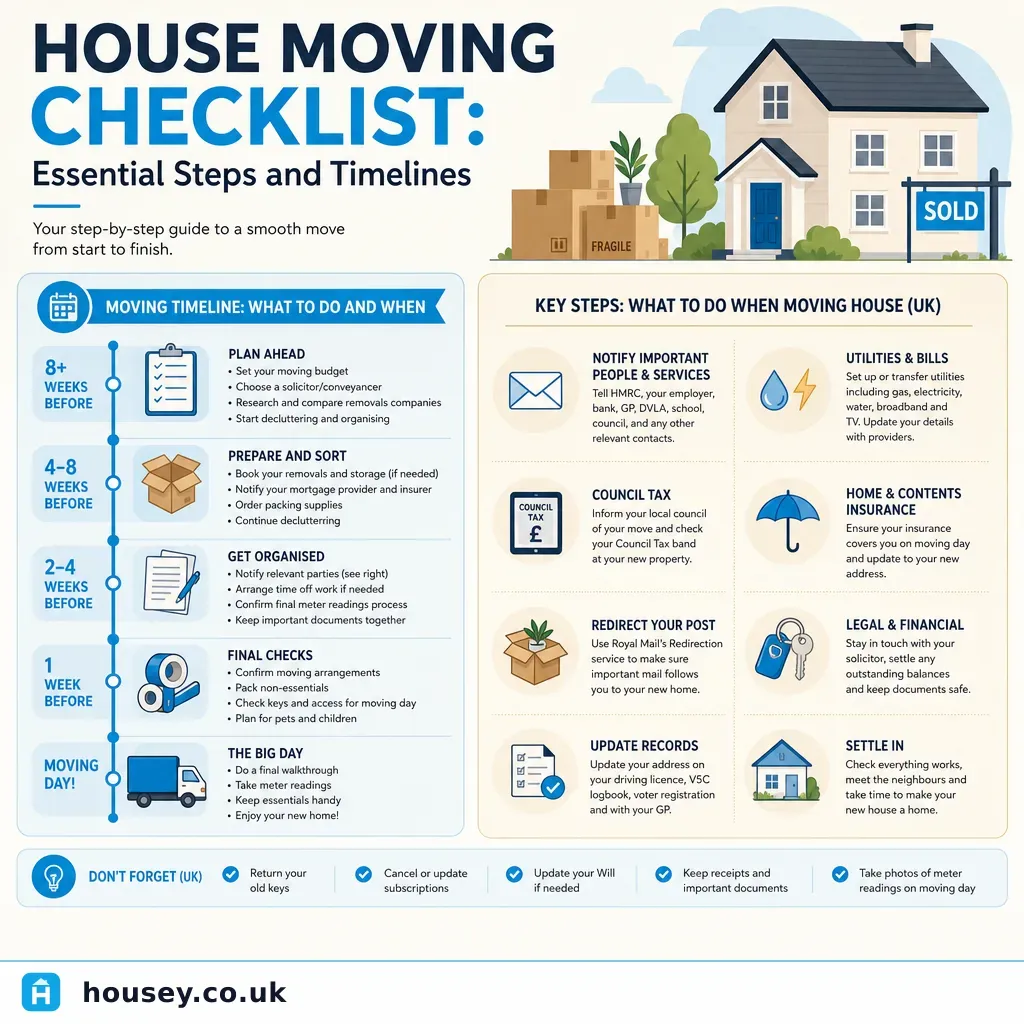
House Moving Checklist: Essential Steps and Timelines
A UK house move typically spans 8–12 weeks of preparation: book removals 4–6 weeks out, notify the DVLA, HMRC, and utilities as exchange approaches, take meter readings on moving day, and update Council Tax and the electoral register on arrival.
 Buying & Moving
How Removal Services Integrate Storage Solutions
Many UK removal companies offer integrated storage as part of their moving service, letting you store belongings in a secure facility — often a sealed container or warehouse unit — when completion dates do not align.