Negotiating the Best Price When Buying a Home
By Housey · Last reviewed 19th of May 2026
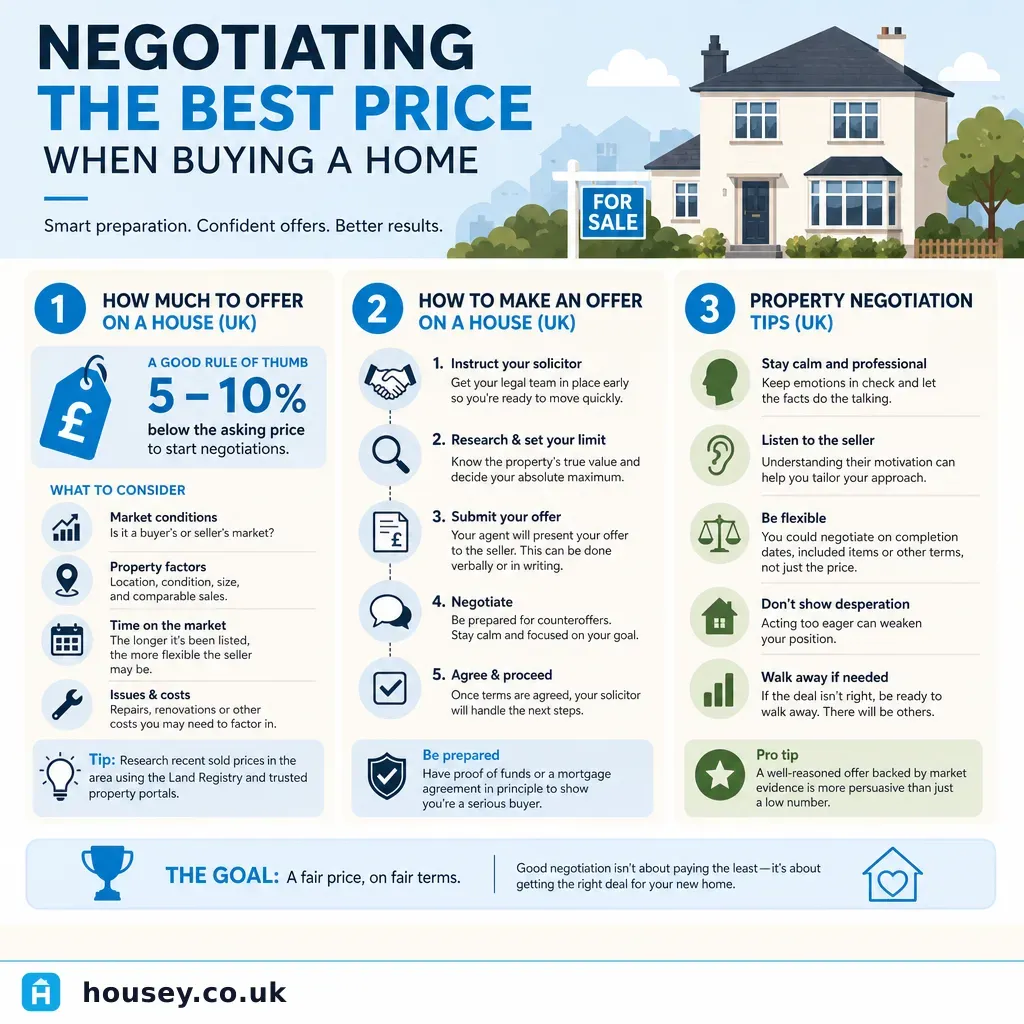
Negotiating the Best Price When Buying a Home
Negotiating a house price is one of the most financially significant conversations most buyers will have, yet it is often approached without a clear strategy or evidence base. Understanding how negotiation works in the UK property market — when it happens, which levers are genuinely available, and what behaviour is most likely to succeed — can make a material difference to the price you pay and the terms you agree.
Key points
- In England and Wales, an accepted offer is not legally binding until exchange of contracts — either party may withdraw without financial penalty up to that point.
- HM Land Registry publishes the actual sale prices of all residential properties in England and Wales; this is the most reliable benchmark for assessing whether an asking price reflects market evidence.
- A RICS Home Survey (Level 2 or Level 3) is one of the strongest legitimate tools for post-offer renegotiation — survey findings regularly result in price reductions of £1,000–£15,000 or more on properties with significant defects.
- Cash buyers and chain-free buyers typically hold a stronger negotiating position because they reduce the seller's risk of the deal collapsing before exchange.
- In sealed-bid situations (best and final offers), buyers must submit their genuine maximum figure — lowballing is rarely successful, and bids should be anchored to comparable sold prices.
Understanding when negotiation happens
Most buyers assume negotiation ends at the initial offer. In practice, there are two distinct negotiating moments in a typical purchase:
1. Initial offer — before survey, based on asking price, comparable sold prices from HM Land Registry, and your assessment of the seller's motivation and timeline.
2. Post-survey renegotiation — after a RICS survey identifies defects, the buyer has a legitimate evidential basis to request a reduction or ask the seller to address specific issues before completion.
Both require different approaches and carry different risks.
How to research a fair offer price
Tool | What it tells you | Where to find it |
|---|---|---|
HM Land Registry sold prices | Actual sale prices of comparable nearby properties | GOV.UK / Rightmove / Zoopla sold prices tab |
EPC register | Energy rating and estimated running costs — a poor EPC may justify a lower offer | GOV.UK EPC register |
Rightmove / Zoopla price history | Previous asking prices and any reductions for this specific property | The property listing itself |
Time on market | How long the property has been listed — longer listings often signal room to negotiate | Rightmove / Zoopla (days listed) |
Active comparable listings | What else is available in the same price range | Estate agent portals |
A property that has been listed for more than 8–12 weeks, has had a price reduction, or where the seller is already under pressure from their own onward purchase gives you more negotiating room. A property that attracted multiple viewings in its first weekend or where the agent mentions competing offers gives you less.
Making an initial offer: a practical approach
- Start below your maximum. Leave room to move up if the seller counters.
- State your position clearly in writing. "I am a first-time buyer, no chain, with a mortgage Agreement in Principle, looking to proceed quickly" can be more persuasive to a seller than a modestly higher offer from a buyer in a complicated chain.
- Back your offer with data. Citing HM Land Registry comparables is more effective than simply asserting the property is overpriced.
- Do not disclose your maximum. If asked directly, say your figure reflects what you believe the property is worth based on comparable sold prices.
- Ask about the seller's situation. Do they have a preferred completion timeline? Are they already in a chain? Is there a motivated reason to move quickly? This information helps you frame your offer.
- Submit the offer in writing to the estate agent (email is sufficient). This creates a record and is taken more seriously than a verbal offer alone.
Worked UK property scenario
Situation: Priya is buying a 1960s semi-detached in Leicester, asking price £245,000. HM Land Registry data shows four comparable semis in the same road selling for £228,000–£238,000 over the past twelve months. The property has been listed for eleven weeks and had one price reduction from £255,000.
Priya's approach:
- She offers £225,000, citing the Land Registry comparables and the time on market.
- The seller counters at £238,000.
- Priya agrees at £233,000 — a £12,000 saving on the asking price.
- A RICS Level 2 survey identifies historical roof repairs and a failing damp proof course near the rear extension.
- Priya commissions a specialist damp report (£200 call-out) estimating remediation at £3,500.
- She requests a further reduction of £3,000, sharing the relevant survey sections and the specialist quote with the estate agent. The seller agrees to £230,000.
Total saving from asking price: £15,000. Both negotiating moments were used — an evidence-based initial offer, followed by a post-survey renegotiation backed by a specialist report.
Renegotiating after a survey
Post-survey renegotiation is normal and widely accepted in the English and Welsh property market. Key principles:
- Use the survey as your evidence base. Share the relevant sections of the report — not necessarily the whole document — with the estate agent when making a revised offer.
- Obtain specialist quotes for significant defects. "£3,500 to remedy the damp proof course" is far more persuasive than "there is a damp problem."
- Be specific and proportionate. A targeted request reflecting the actual remediation cost is more effective than a general demand for a discount.
- Avoid raising minor cosmetic issues. Requesting reductions for routine maintenance items is more likely to irritate the seller than achieve a result.
- Be prepared to walk away. This is your strongest lever, and experienced sellers and agents know it.
What to ask before making an offer
- How long has the property been on the market?
- Has the asking price been reduced since listing?
- Has any previous sale fallen through, and if so, why?
- Is the seller in a chain, and how far along is their onward purchase?
- What is the seller's preferred timeline for completion?
- Are any fixtures, fittings, or white goods included in the sale?
- Has the property received any other offers?
Note: estate agents are legally required to pass on all offers to the seller, but they act for the seller, not the buyer. Information they share may be incomplete or selective; treat it accordingly.
What not to assume
- "The asking price is the market value." Asking prices are set by estate agents and vendors and reflect aspiration, not necessarily transaction evidence. Always use HM Land Registry sold prices as your benchmark.
- "A low offer will offend the seller." In a buyer's market, or where the property has been listed for some time, a lower offer is expected. A professionally framed offer backed by market data is rarely taken personally.
- "Gazumping cannot happen to me." In England and Wales, a seller may accept a higher offer from another buyer at any point before exchange. Consider requesting an exclusivity agreement in writing and instruct your conveyancer immediately after offer acceptance.
- "The estate agent is on my side." In most cases, the estate agent is instructed and paid by the seller. Their fee is typically a percentage of the sale price, so a higher price directly benefits them.
- "Negotiation ends at the initial offer." Post-survey renegotiation is a distinct and legitimate second stage that many buyers miss or feel reluctant to use.
When to get professional help
Most initial offer negotiations do not require professional assistance. Consider seeking independent advice if:
- You are bidding in a sealed-bid situation and want an independent opinion of market value — a valuation survey can help establish this before you commit your best and final figure
- Survey findings include structural movement, subsidence, or invasive species such as Japanese knotweed — specialist reports are needed before you can properly quantify the cost and negotiate a reduction
- The property is listed or in a conservation area with unresolved planning or listed building consent queries that materially affect its value
- The seller is an estate or a corporate entity — certain concessions may not be possible depending on their legal obligations and mandate
How Housey can help
Housey connects buyers with qualified professionals who support better purchasing decisions. A RICS Home Survey gives you the evidential foundation for post-offer renegotiation — often the most valuable piece of work you can commission during a purchase. A valuation survey provides an independent opinion of market value before your opening offer. Once terms are agreed, compare quotes for conveyancing from vetted solicitors and licensed conveyancers to keep the legal process moving efficiently.
Frequently asked questions
How much below asking price should I offer in the UK?
There is no universal rule. In a buyer's market, 5–10% below asking is often achievable on a realistically priced property. On an overpriced or long-listed property, more may be appropriate. In a competitive market with multiple interested buyers, an offer at or above asking price may be needed. Use HM Land Registry sold prices for comparable nearby properties as your benchmark — not the asking price.
Can I renegotiate after my offer has been accepted?
Yes. Renegotiation after a survey reveals defects is standard practice in England and Wales, where an accepted offer is not legally binding until exchange. That said, persistent or unreasonable renegotiation risks the seller accepting another offer or refusing to proceed. A focused, evidence-based request citing specific findings and remediation costs is far more likely to succeed than a general request for a discount.
What is gazumping and how can I protect against it?
Gazumping occurs when a seller accepts a higher offer from a different buyer after already accepting yours — this is legal in England and Wales until exchange of contracts. To reduce the risk: instruct a conveyancer the same day your offer is accepted, ask the agent for written confirmation, consider requesting an exclusivity agreement, and aim to exchange as quickly as possible. Home buyer protection insurance may cover some survey and legal costs if the purchase falls through before exchange.
Should I use a buying agent to negotiate?
Buying agents act exclusively for buyers and typically charge 1–2% of the purchase price or a fixed fee. They add most value in competitive markets, for off-market opportunities, or where buyers lack the time or confidence to research comparables and manage negotiations. For most standard purchases, a well-researched buyer who has commissioned a RICS survey and reviewed Land Registry data will negotiate effectively without one.
Sources and further reading
- HM Land Registry — Search for sold house prices — HM Government
- GOV.UK — Buying or selling your home — HM Government
- RICS — Home surveys — RICS
- Citizens Advice — Buying a home — Citizens Advice
- Which? — Negotiating house prices — Which?
Useful next reads
 Buying & Moving
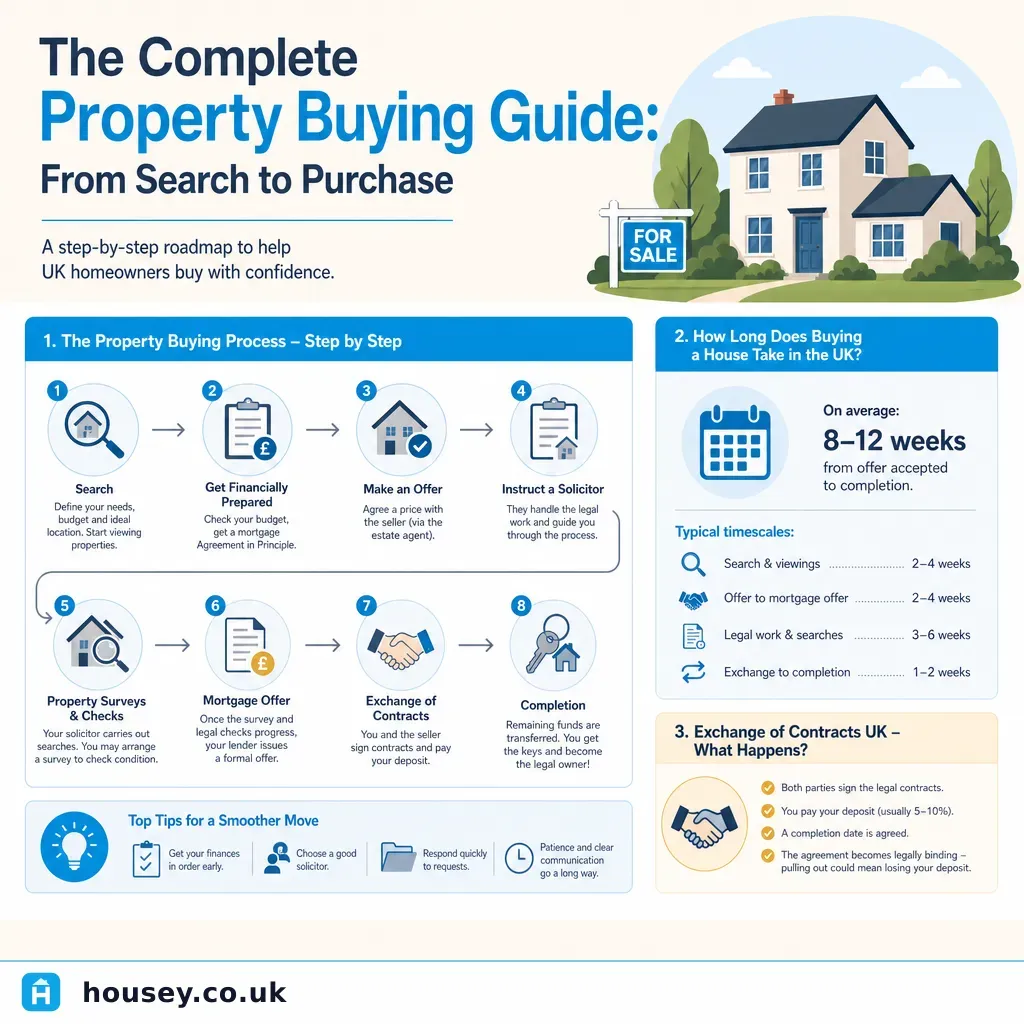
The Complete Property Buying Guide: From Search to Purchase
Buying a property in England and Wales typically takes 3–6 months from accepted offer to completion.
 Buying & Moving
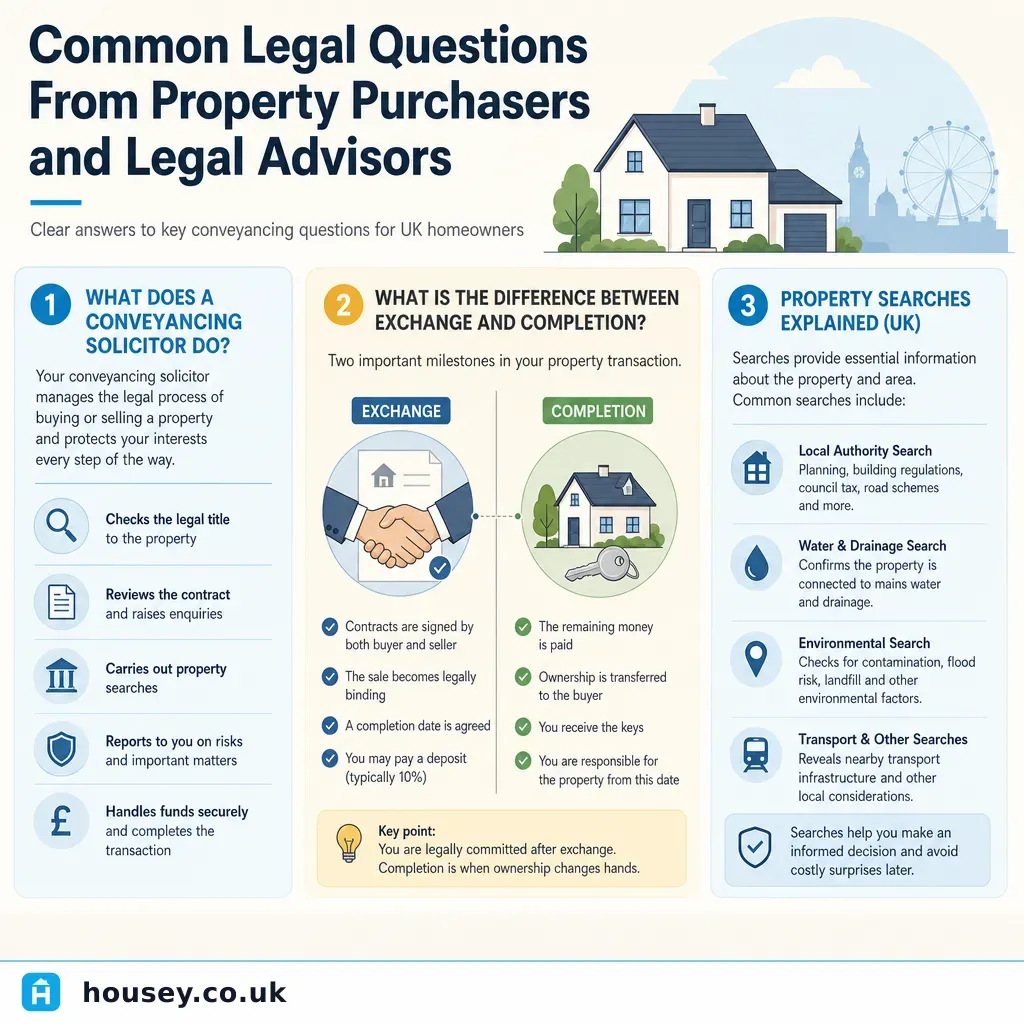
Common Legal Questions From Property Purchasers and Legal Advisors
Conveyancing in England and Wales typically takes 8–16 weeks.
 Buying & Moving
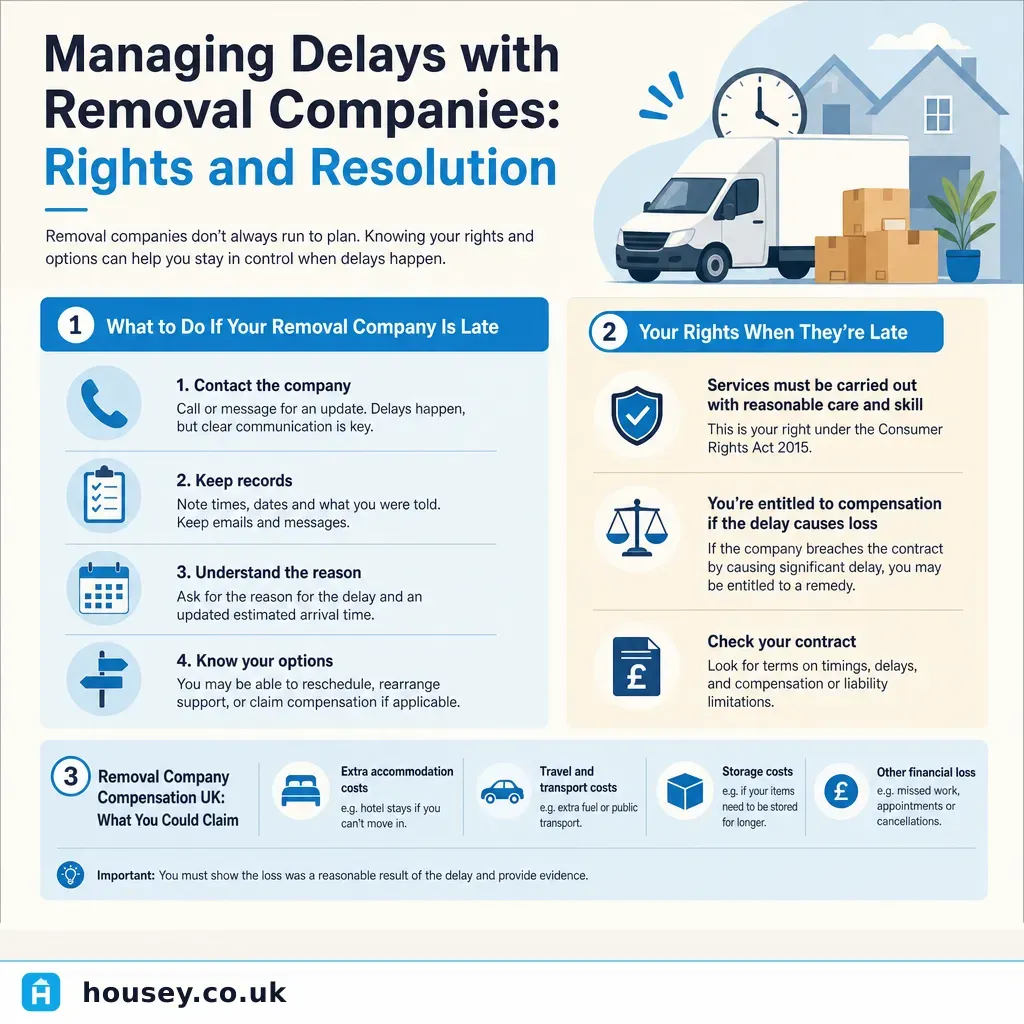
Managing Delays with Removal Companies: Rights and Resolution
If a removal company is late, your rights depend on your contract and whether the company is BAR-registered.
 Buying & Moving
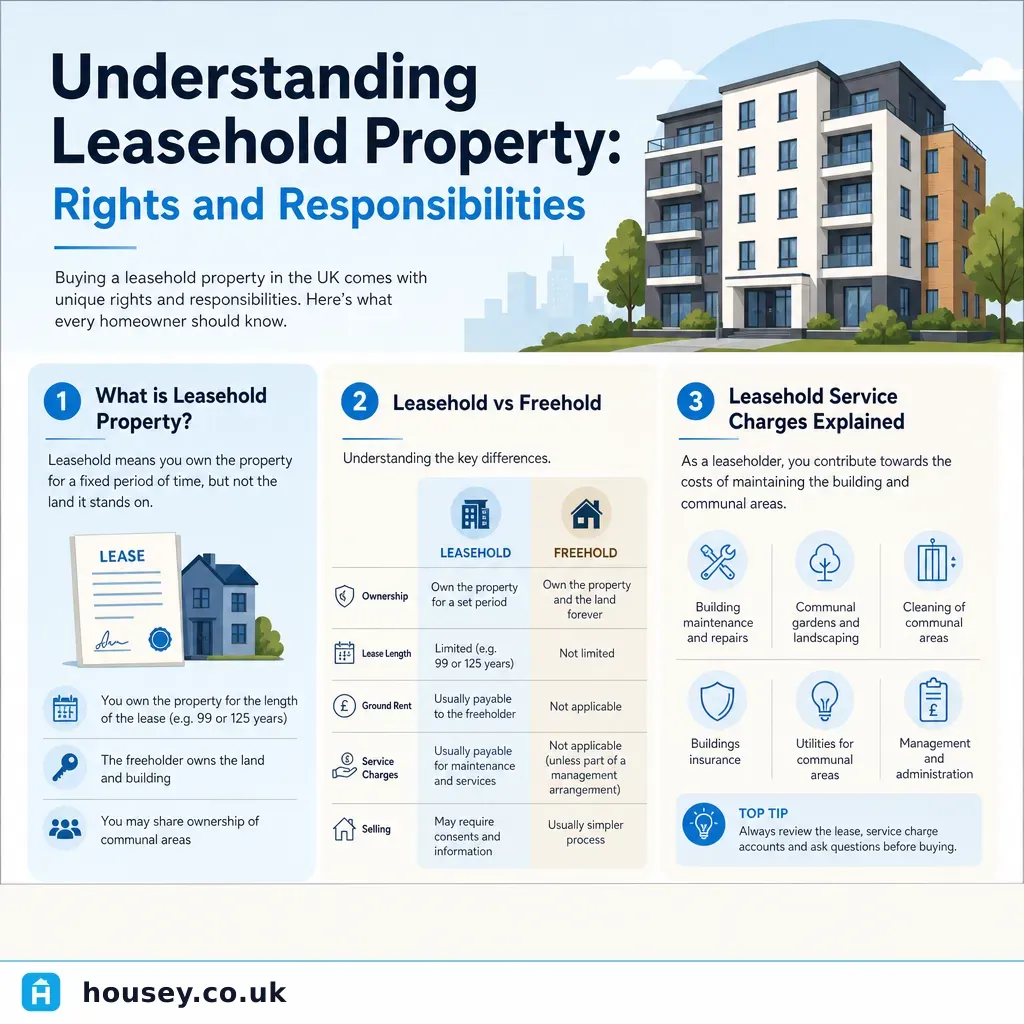
Understanding Leasehold Property: Rights and Responsibilities
Leasehold means you own a time-limited interest in a property while the freeholder owns the land and building.
 Buying & Moving
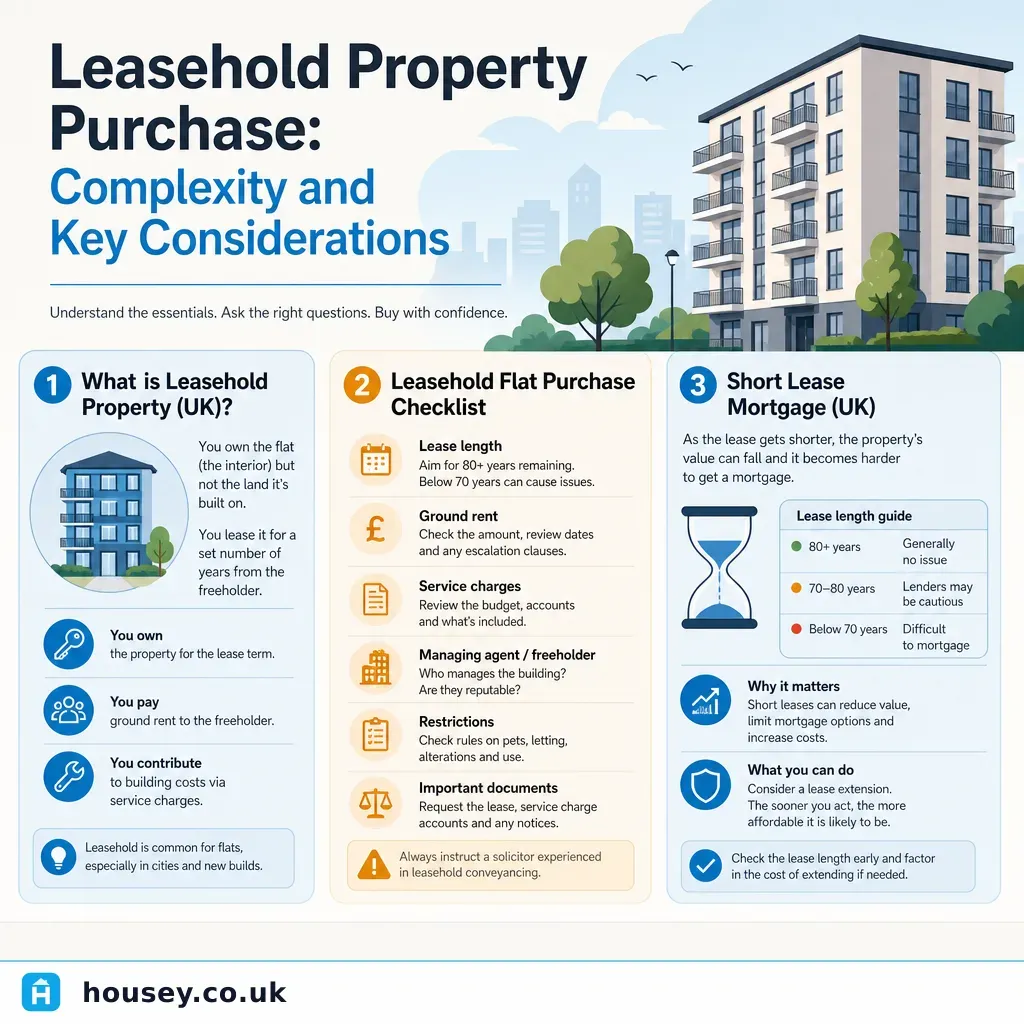
Leasehold Property Purchase: Complexity and Key Considerations
Buying a leasehold property means purchasing the right to occupy for a fixed term rather than owning the land outright.