New-Build Inspections and Snagging: What to Check Before Completion
By Housey · Last reviewed 30th of May 2026
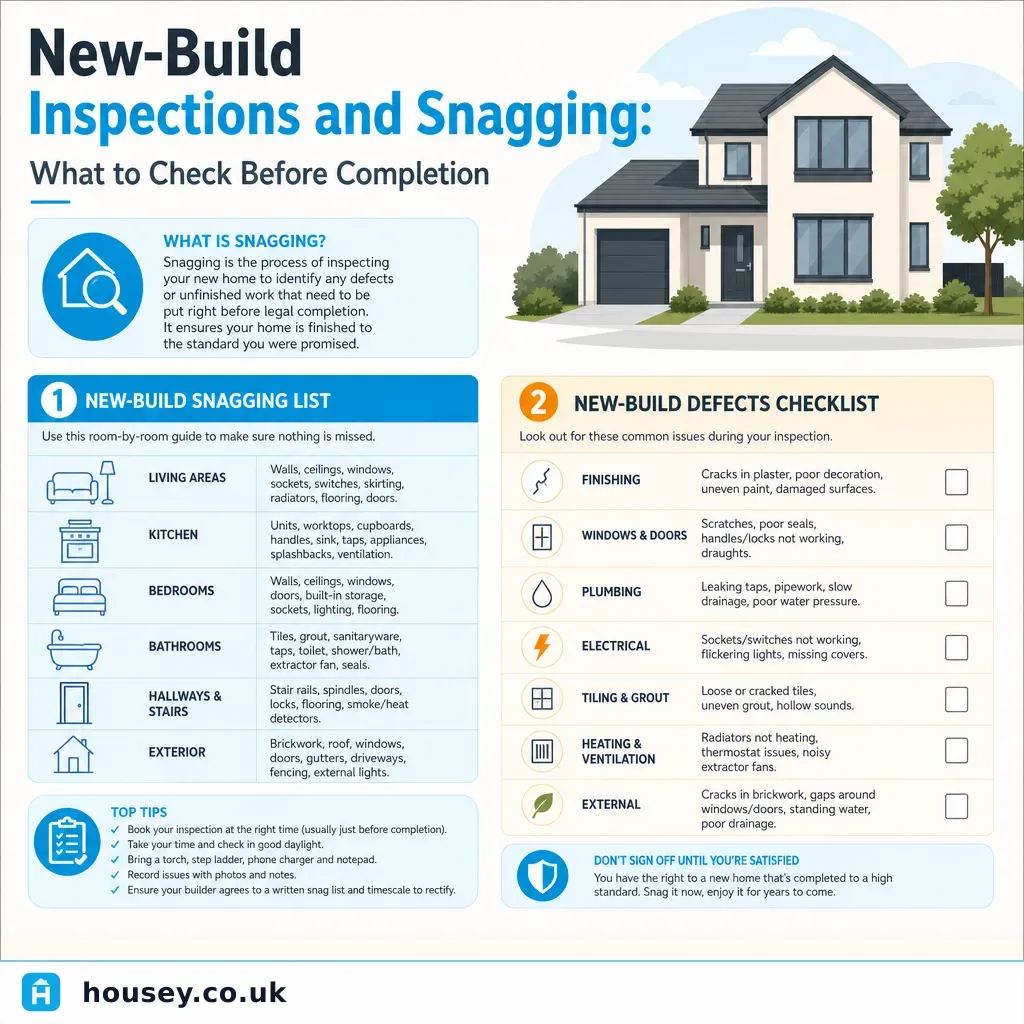
New-Build Inspections and Snagging: What to Check Before Completion
Buying a new-build home appears more straightforward than purchasing an older property, but new-build buyers face a distinct set of risks — defects invisible at show-home stage that emerge only at handover, and a developer's customer care process that can be slow to resolve them. Understanding what a professional snagging inspection covers, and what structural warranty protection you hold, is one of the most practical steps you can take before legal completion.
Key points
- Most new-build homes are covered by a 10-year structural warranty (commonly NHBC Buildmark, LABC Warranty, or Premier Guarantee) from the date of legal completion.
- Under most NHBC and equivalent schemes, buyers have two years from completion to report workmanship and finish defects to the developer for rectification.
- The Consumer Code for Home Builders (4th edition) requires registered builders to offer buyers a pre-completion inspection opportunity.
- A specialist snagging survey — not a RICS Level 2 home survey — is the appropriate inspection tool for a standard new-build purchase.
- Buyers are not required to use a developer's preferred solicitors or mortgage valuers; these are commercial recommendations, not legal obligations.
What a snagging inspection covers
A snagging survey is a systematic inspection carried out by a qualified snagging inspector or RICS professional, typically conducted shortly before or after legal completion. It examines:
- Cosmetic defects: scratched glass, scuffed paintwork, poorly fitted doors and windows, misaligned tiles, uneven flooring.
- Workmanship defects: gaps in skirting boards, incomplete grouting, poorly finished plasterwork, radiator brackets not fixed securely.
- Functional issues: windows and doors that do not open or lock correctly, extraction fans not operating, missing or incorrectly positioned sockets.
- Regulatory compliance: visible checks that works comply with Building Regulations — Part L (energy efficiency), Part F (ventilation), Part P (electrical, where visible), and fire door compliance under Part B.
- Structural concerns: visible cracking, settlement indicators, roof covering condition, drainage inspection covers present and correctly seated.
A snagging survey does not replace the NHBC or warranty structural inspection, and cannot access areas that are sealed or unsafe to enter.
When to get the inspection done
Timing | Pros | Cons |
|---|---|---|
Before legal completion | Can delay completion until defects are rectified; strongest negotiating position | Developer may resist access; some builders decline pre-completion appointments |
Shortly after completion (within the first year) | Guaranteed access; more defects visible once heating and appliances have been in use | Defects are post-purchase; leverage depends on developer responsiveness |
At the two-year point | Catches latent defects before the defect liability period expires | Cosmetic defects may have worsened; window for action is closing |
The Consumer Code for Home Builders (mandatory for NHBC-registered builders) gives buyers the right to a pre-completion inspection. Ask your solicitor to confirm the builder's registration and to include inspection access in the exchange conditions.
Common new-build defects: red flags to check yourself
These defects appear most frequently in UK new-build snagging reports — worth checking before the inspector visits:
- Roof tiles or ridge: any displaced, cracked, or missing tiles visible from ground level.
- External brickwork: cracked mortar joints within the first year can indicate settlement or water ingress risk.
- Window and door seals: condensation between double-glazed panes indicates failed seals, which fall under the installer's warranty.
- Loft insulation: check depth (typically 270mm mineral wool) and confirm coverage does not block eaves ventilation.
- Soil and vent pipe connections: any drain smell indoors suggests an incomplete or displaced connection.
- Consumer unit labelling: circuits must be clearly labelled; missing RCDs on lighting circuits is a regulatory issue under Part P.
- Meter box and service routes: cables not chased in or trunked in garages or utility areas require attention before plasterboarding is complete.
Snagging survey vs RICS survey: which do you need?
| Snagging survey | RICS Level 2 home survey |
|---|---|---|
Best for | New-build homes within the defect liability period | Conventional homes aged 10 years or more |
Focus | Workmanship, finish, compliance, functionality | Structural condition, dampness, major defects |
Output | Photographic defect log and remediation schedule | Written report with condition ratings (1, 2, 3) |
Typical cost (Indicative, 2026-05-30) | £300–£600 | £400–£900 depending on property size |
Who carries it out | Specialist snagging inspector or RICS surveyor | RICS-registered surveyor |
Warranty relationship | Defect log supports warranty claim | No direct link to structural warranty |
For most new-build purchases, a specialist snagging survey is more appropriate than a RICS Level 2 survey. For a new-build conversion of an older building, a RICS Home Survey professional can advise on the right inspection product for the specific construction type.
Homeowner checklist: before your snagging survey
When to get professional help
Seek specialist help beyond a standard snagging survey if:
- External brickwork cracking is wider than hairline (above 0.5mm) within the first year — this warrants an independent structural assessment; a specific defect survey can provide a targeted engineering opinion.
- Water stains appear on ceilings or walls within weeks of occupation, suggesting a leak or roofing defect.
- The developer disputes defects and you need to escalate to the NHBC resolution service or the New Homes Ombudsman.
- You are purchasing a new-build conversion of a listed or older building, where Building Regulations compliance may be more complex.
How Housey can help
Housey connects new-build buyers with qualified inspectors offering new-build snagging surveys and with RICS professionals for a RICS Home Survey where a conversion or mixed-age property warrants a broader inspection. Submit a request and receive quotes from accredited specialists local to your development.
Frequently asked questions
Can I do my own snagging list?
Yes — walking through the property with the developer's specification is worthwhile, and you should. However, a professional snagging inspector typically identifies significantly more defects than an untrained buyer, and a written photographic report carries far more weight with the developer and the NHBC when you formally request repairs.
What if my builder refuses to fix defects?
Report defects in writing to the developer's customer care team first. If unresolved, escalate to the NHBC or your relevant structural warranty provider's resolution service. The New Homes Ombudsman Service provides an additional independent route for buyers of registered homes. Keep all written correspondence throughout the process as evidence.
How long does the developer have to fix snagging defects?
Under most NHBC Buildmark and equivalent warranty schemes, you have two years from legal completion to report workmanship and finish defects to the developer. The structural warranty then covers major structural defects for years three to ten. Cosmetic and minor workmanship defects outside the first two years fall outside scope.
Is a snagging survey the same as a building control inspection?
No. Building control inspections are carried out on behalf of the local authority or an approved inspector to verify Building Regulations compliance at construction stages. A snagging survey is commissioned independently by the buyer as a post-completion quality check — the two are entirely separate processes with no formal connection.
Sources and further reading
- NHBC Buildmark warranty — what it covers — NHBC
- Consumer Code for Home Builders — 4th edition — Consumer Code for Home Builders
- New Homes Ombudsman Service — New Homes Ombudsman
- Building Regulations approval — GOV.UK — GOV.UK
- RICS Home Survey Standard — Royal Institution of Chartered Surveyors
Useful next reads
 Buying & Moving
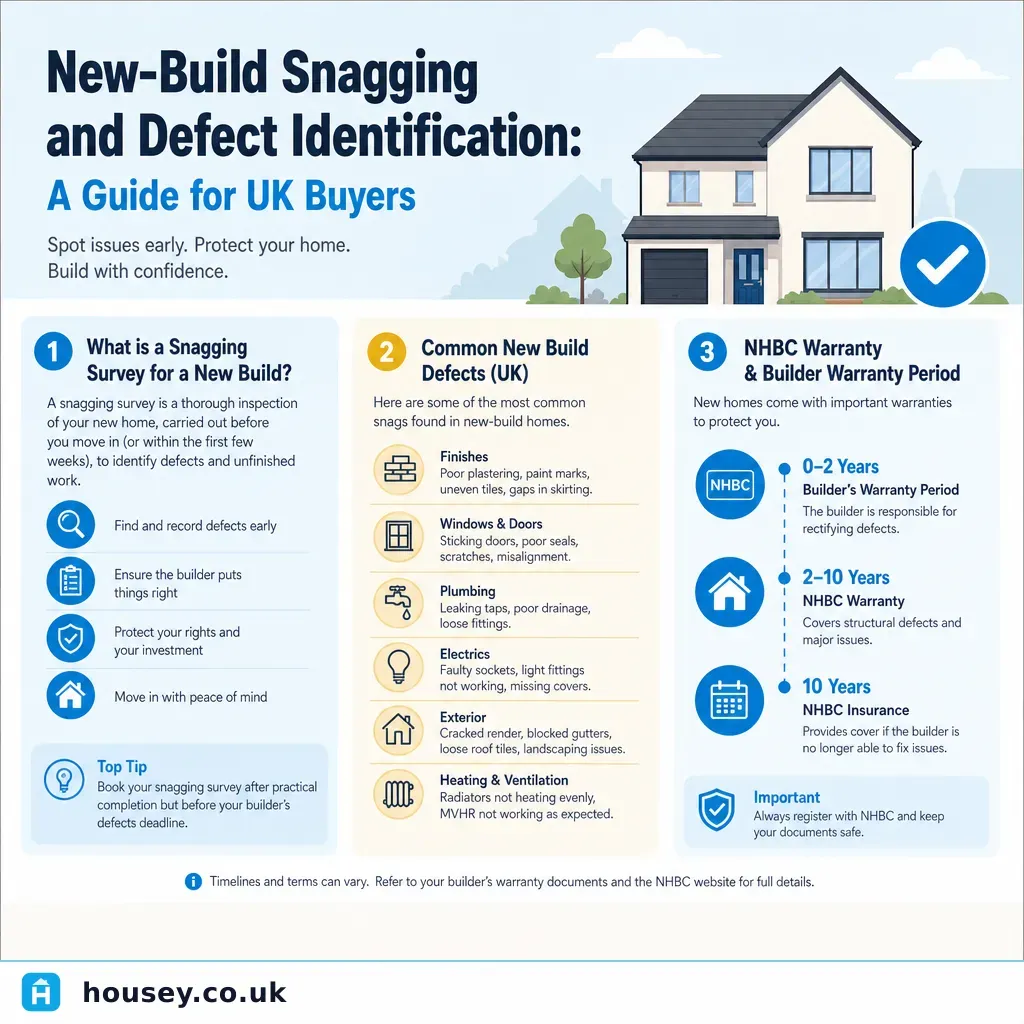
New-Build Snagging and Defect Identification: A Guide for UK Buyers
A new-build snagging survey is a detailed inspection carried out before or shortly after legal completion to identify defects in workmanship and finishes.
 Buying & Moving
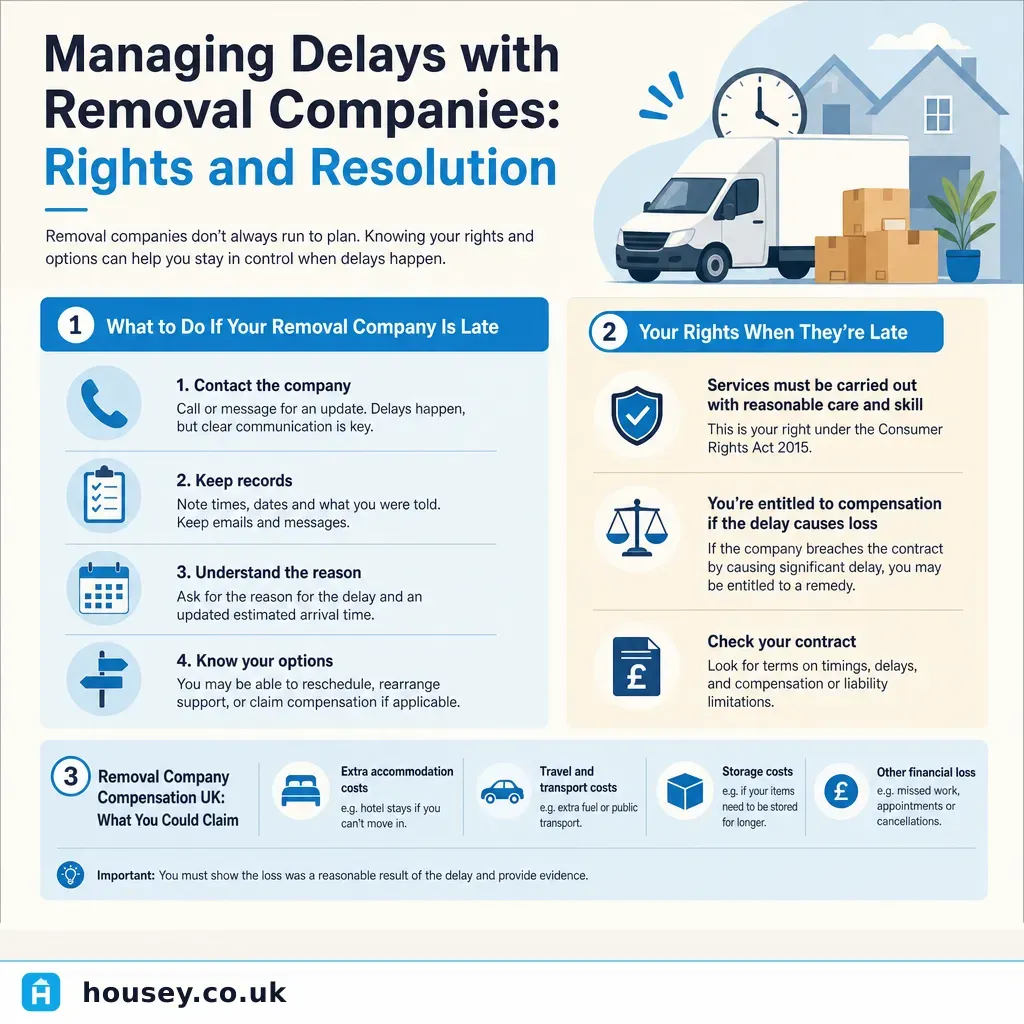
Managing Delays with Removal Companies: Rights and Resolution
If a removal company is late, your rights depend on your contract and whether the company is BAR-registered.
 Buying & Moving
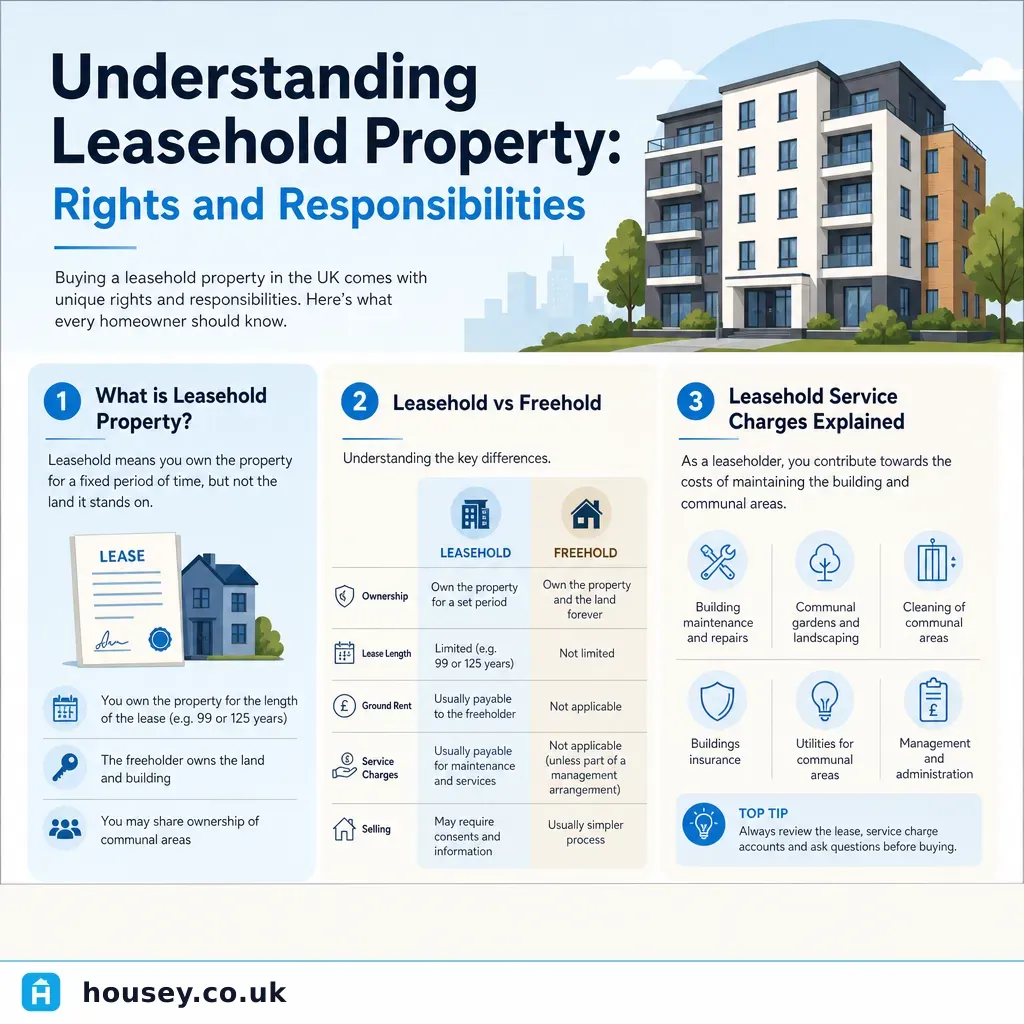
Understanding Leasehold Property: Rights and Responsibilities
Leasehold means you own a time-limited interest in a property while the freeholder owns the land and building.
 Buying & Moving
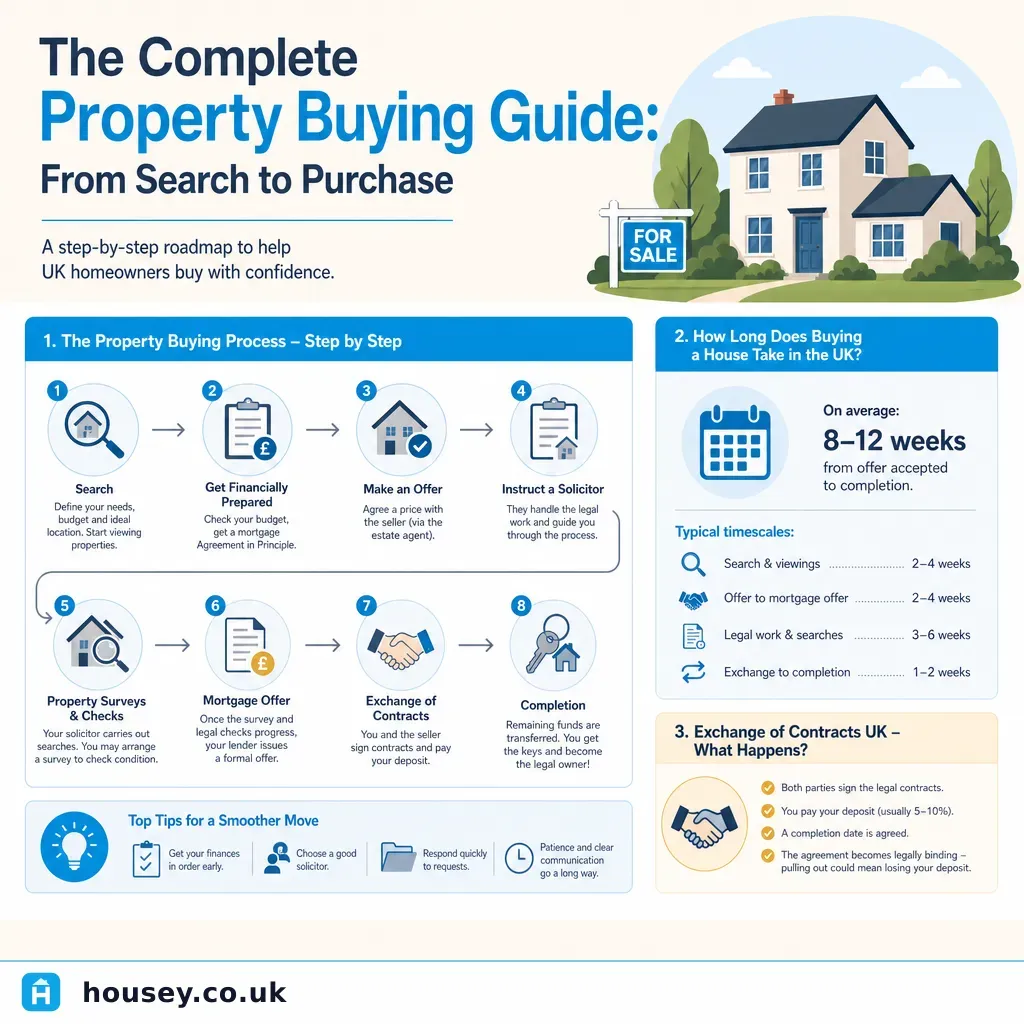
The Complete Property Buying Guide: From Search to Purchase
Buying a property in England and Wales typically takes 3–6 months from accepted offer to completion.
 Buying & Moving
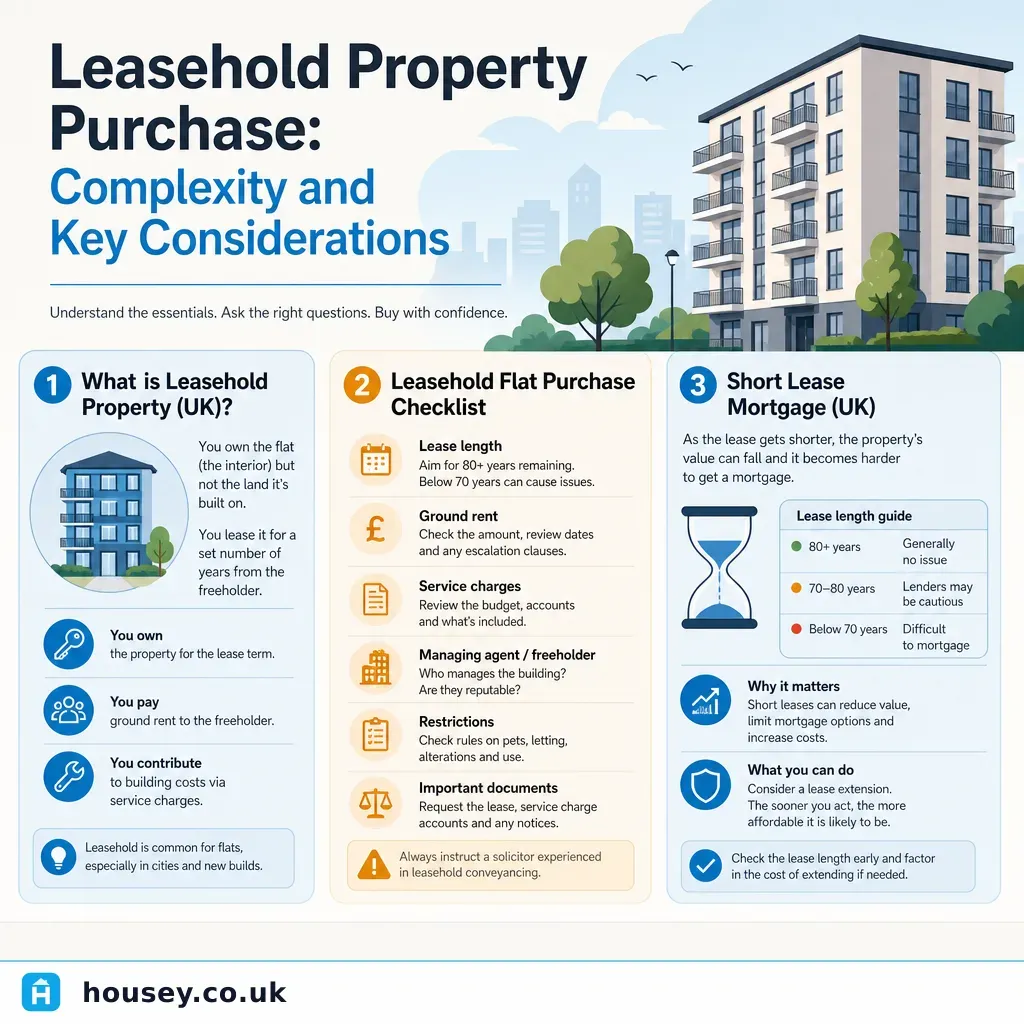
Leasehold Property Purchase: Complexity and Key Considerations
Buying a leasehold property means purchasing the right to occupy for a fixed term rather than owning the land outright.