New homes, lasting friendships: how development choices shape neighbourhoods
By Housey · Last reviewed 7th of May 2026
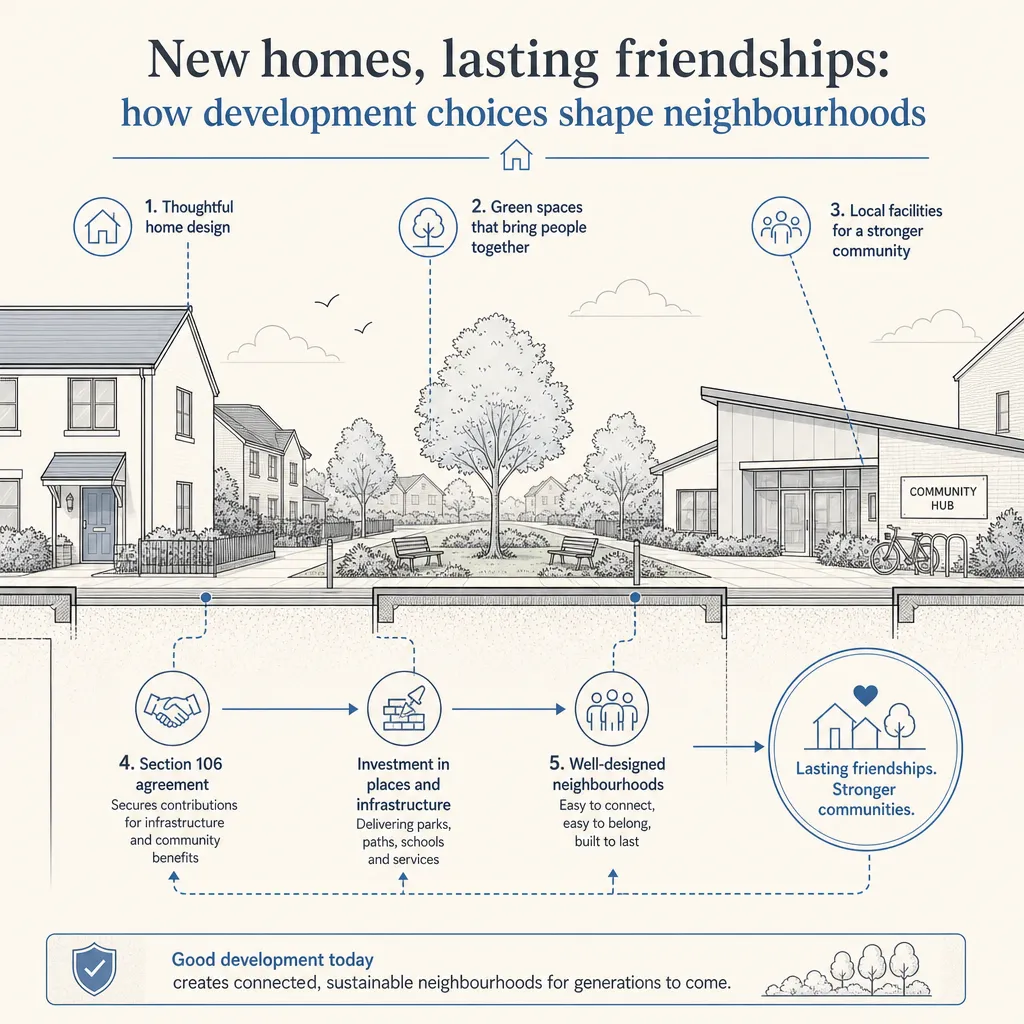
New homes, lasting friendships: how development choices shape neighbourhoods
New-build developments are reshaping towns and villages across England, with more than 200,000 net additional homes delivered annually in recent years. For buyers considering a new-build, the design and planning decisions made long before you viewed the show home will determine what kind of community you move into — and how long it takes to feel like home. Understanding how developers and planners shape neighbourhoods helps you ask sharper questions before you reserve.
Key points
- The National Design Guide (MHCLG, 2021) establishes ten characteristics of well-designed places — including movement, nature, built form, and identity — that planning authorities use when assessing new developments.
- Section 106 agreements under the Town and Country Planning Act 1990 require developers to contribute to schools, parks, and community facilities as a condition of planning permission.
- The Community Infrastructure Levy (CIL), introduced under the Planning Act 2008, allows councils to charge developers per square metre to fund area-wide infrastructure needs.
- The New Homes Quality Code (launched 2022) replaced the Consumer Code for New Homes and gives buyers a two-year defects period plus access to the New Homes Ombudsman.
- Neighbourhood Development Plans, enabled by the Localism Act 2011, allow communities to set design policies for new development — checking whether one exists for your area is worthwhile before buying.
How development design shapes community life
The physical layout of a new estate has a measurable influence on how residents interact. The government's Building for a Healthy Life assessment framework finds that permeable street networks, well-overlooked public spaces, and a mix of dwelling types encourage incidental encounters and a stronger sense of neighbourhood.
Cul-de-sacs and estates with no through-routes can limit social mixing and make walking to local amenities impractical. Shared surfaces and front gardens facing the street generally support more connected communities. When viewing a development, ask whether the layout was assessed against Building for Life 12 or a local design code, and whether a Design and Access Statement is available from the planning authority.
What Section 106 and CIL mean for your new home
When a developer gains planning permission for a large scheme, they typically enter a Section 106 legal agreement with the local planning authority. This can require:
- A percentage of affordable housing units on site.
- Financial contributions to local schools, GP surgeries, libraries, or parks.
- On-site public open space meeting a specified standard, often based on Fields in Trust guidance.
- Travel plan contributions such as cycle paths, bus shelters, or car club spaces.
As a buyer, you can ask what Section 106 obligations attach to the site and whether they have been discharged. Headline contribution figures that fund projects miles away are worth distinguishing from facilities that will genuinely serve your estate.
CIL is a separate tariff charged per square metre of development. At least 15% of CIL receipts (25% where a Neighbourhood Development Plan is in place) must be passed to the relevant parish or town council.
The Neighbourhood Development Plan: your community's voice before you arrive
Under the Localism Act 2011, parishes and neighbourhood forums can produce an NDP that forms part of the statutory development plan. NDPs can require locally characteristic materials, off-street parking, or minimum garden sizes. If the area has an adopted NDP, it will have influenced what was built and may shape future nearby development. Check via the local planning authority's website or the Planning Portal.
Comparing development types: what to look for
Development type | Infrastructure typically provided | Design guidance usually applied | Key things to check |
|---|---|---|---|
Large urban extension (500+ homes) | Schools, GP contribution, public parks, road improvements | Design code, masterplan, Building for Life | Section 106 discharge progress; phasing timeline |
Small infill site (10–50 homes) | Financial contributions; limited on-site amenity | Local validation checklist; design and access statement | Proximity to existing services; parking provision |
Regeneration / brownfield scheme | Varies; often mixed-use with community space | Area action plan; design review panel | Remediation conditions; ground investigation data |
Rural exception site | Primarily affordable housing; limited market housing | Local design guide; parish NDP if in place | Long-term management of shared space |
What to ask a developer about community and design
Before reserving a new-build, consider asking:
- Has the development been assessed against Building for Life 12 or a local design code?
- What does the Section 106 agreement require, and what has already been delivered?
- Who manages communal areas and estate roads — and what are the estimated annual management company charges?
- Is there a residents' management company, and is there a cap on charges?
- What is the phasing schedule, and how long will construction on the site continue?
- Is the area covered by a Neighbourhood Development Plan?
Long construction phases mean you could be living next to an active building site for several years. Ask for the developer's anticipated build-out timeline and whether there is any contractual commitment on phasing.
Red flags to watch for on new-build estates
- Management company fees with no cap or review clause. Charges for maintaining communal areas have risen sharply on some estates after handover. Check the estate management terms carefully before exchange.
- Unadopted roads and drains. If estate roads and sewers have not been adopted under a Section 38 agreement (roads) or Section 104 agreement (sewers), maintenance costs fall on residents indefinitely. Ask whether adoption is in progress.
- Promised facilities subject to phased S106 triggers. Schools, parks, or community buildings shown on a masterplan may not be built until a later phase — or at all if developer viability changes.
- No structural warranty in place. All new homes should carry a 10-year structural warranty. The NHBC Buildmark is most common; others include Premier Guarantee and LABC Structural Warranty. Confirm the warranty before exchange.
When to get professional help
Most new-build purchases follow a standard legal process, but specialist input is worth considering in these situations:
- If the Section 106 agreement is complex or outstanding obligations are unclear, a property solicitor with planning experience can advise.
- If you want an independent check of build quality before legal completion, a qualified snagging inspector will prepare a written defects report to present to the developer during the warranty period.
- If the estate management structure involves charges or residents' company obligations you do not fully understand, ask your solicitor to explain the long-term financial commitments before exchange.
How Housey can help
If you are buying a new-build property and want an independent check of build quality, Housey can connect you with qualified new-build snagging inspectors who will prepare a written defects report for you to present to your developer before or after legal completion.
Frequently asked questions
Do I need a survey on a new-build property?
A standard RICS survey is not typically undertaken on a new-build, but an independent snagging inspection is strongly advisable before legal completion. A snagging inspector identifies cosmetic and minor structural defects that the developer must rectify under the two-year defects cover within the NHBC Buildmark or equivalent structural warranty.
What is a Section 106 agreement and does it affect me as a buyer?
A Section 106 agreement is a legally binding planning obligation placed on a developer at the point of granting permission. It can require affordable housing, financial contributions, or on-site facilities. As a buyer it affects you indirectly — determining what infrastructure was funded — but can also affect your property if estate roads or spaces remain subject to ongoing conditions.
Who maintains communal areas on a new-build estate?
Until estate roads are adopted by the highway authority (Section 38) and sewers by the water company (Section 104), maintenance is usually the developer's or a residents' management company's responsibility. You will typically pay an annual service charge. Check whether there is a cap on charges before you exchange.
What is the New Homes Quality Code?
The New Homes Quality Code, launched in 2022, is a code of practice registered developers must follow. It covers sales practices, reservation and exchange, after-sales service, and the two-year defects period. It gives buyers access to the New Homes Ombudsman if complaints are not resolved by the developer.
Can a Neighbourhood Development Plan stop development near my new home?
An adopted NDP can influence future planning applications but cannot retrospectively undo permissions already granted. It can shape the design and scale of nearby future proposals. Check whether an NDP is in place and whether it covers land around your site before buying.
Sources and further reading
- National Design Guide (2021) — MHCLG / Department for Levelling Up
- Planning obligations (Section 106) — GOV.UK
- Community Infrastructure Levy guidance — GOV.UK
- Neighbourhood planning guidance — GOV.UK
- New Homes Quality Code — New Homes Quality Board
- Net supply of housing statistics — GOV.UK / DLUHC
Useful next reads
 Buying & Moving
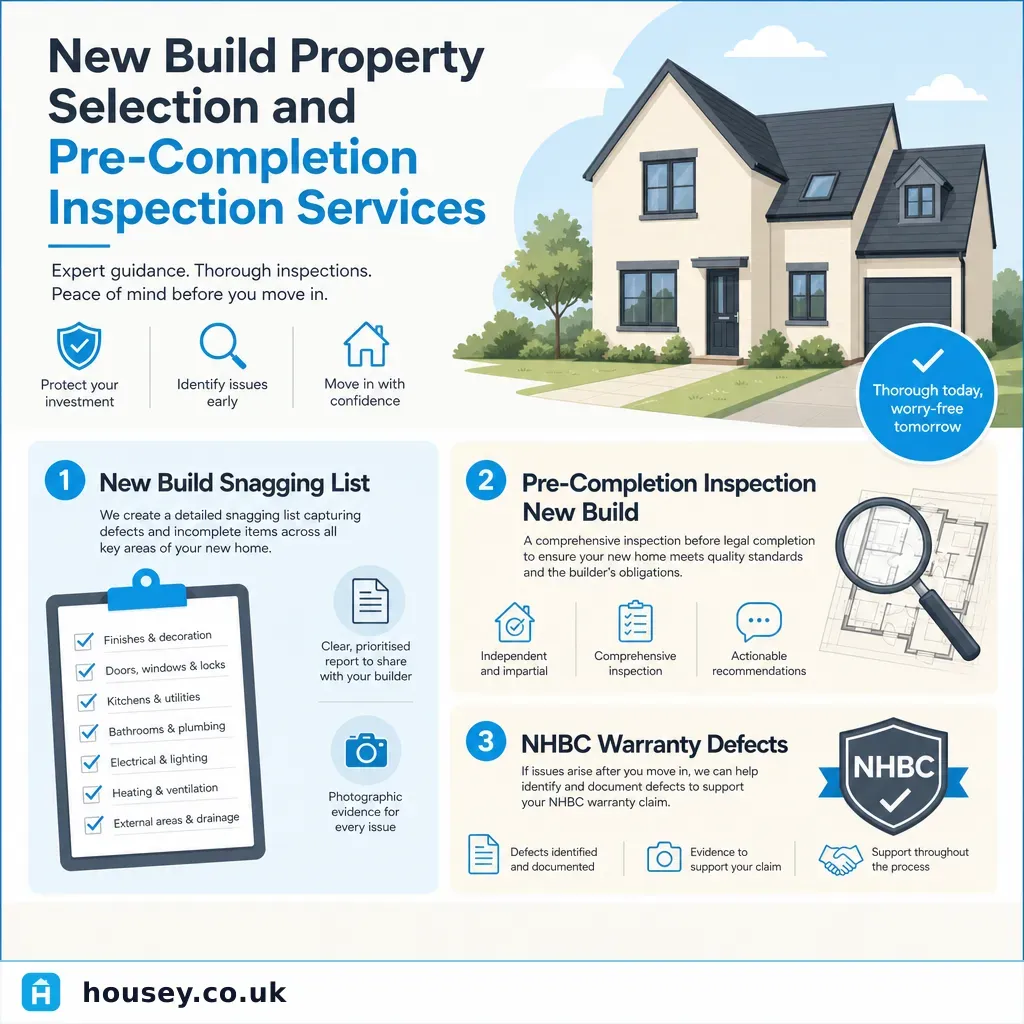
New Build Property Selection and Pre-Completion Inspection Services
A new-build snagging survey is a professional inspection carried out before or shortly after legal completion that identifies defects, unfinished work, and specification deviations.
 Buying & Moving
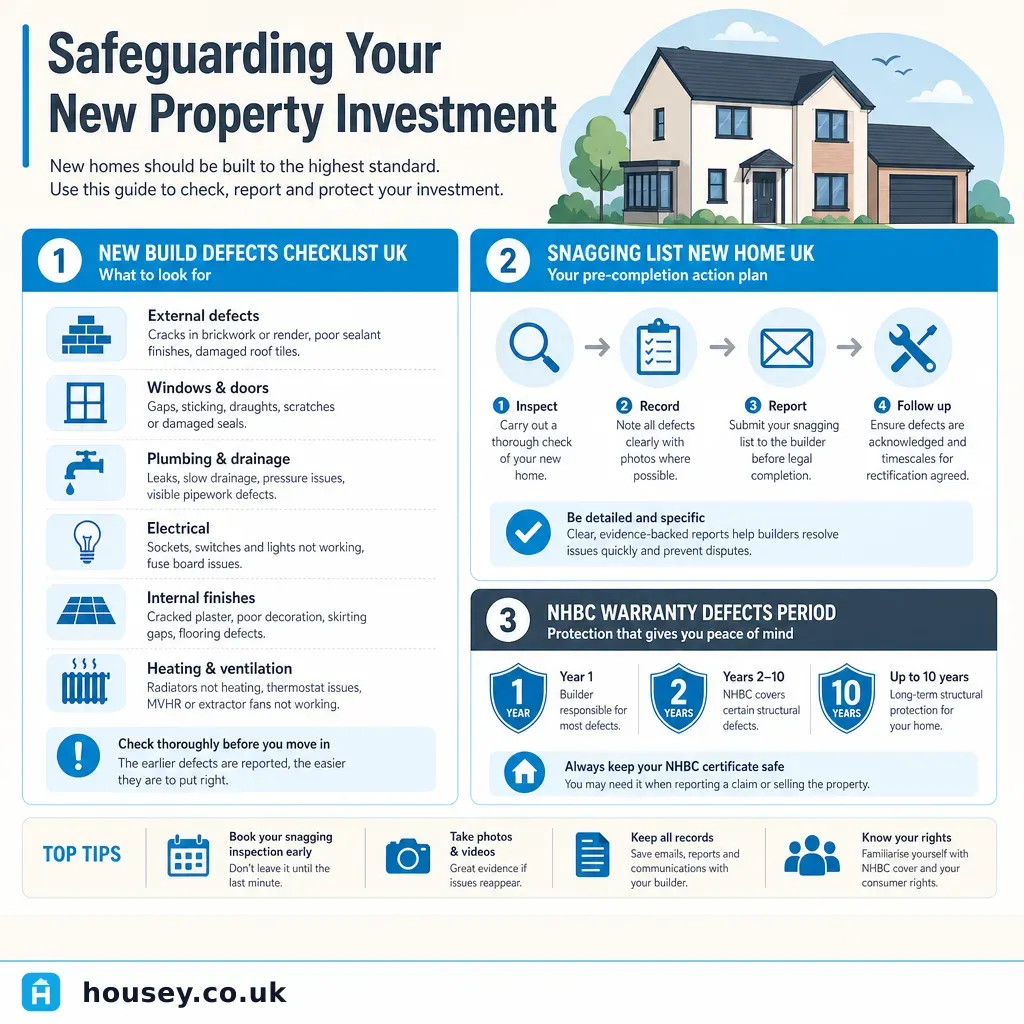
Safeguarding Your New Property Investment
A new-build snagging inspection identifies cosmetic and minor construction defects before or shortly after legal completion.
 Buying & Moving
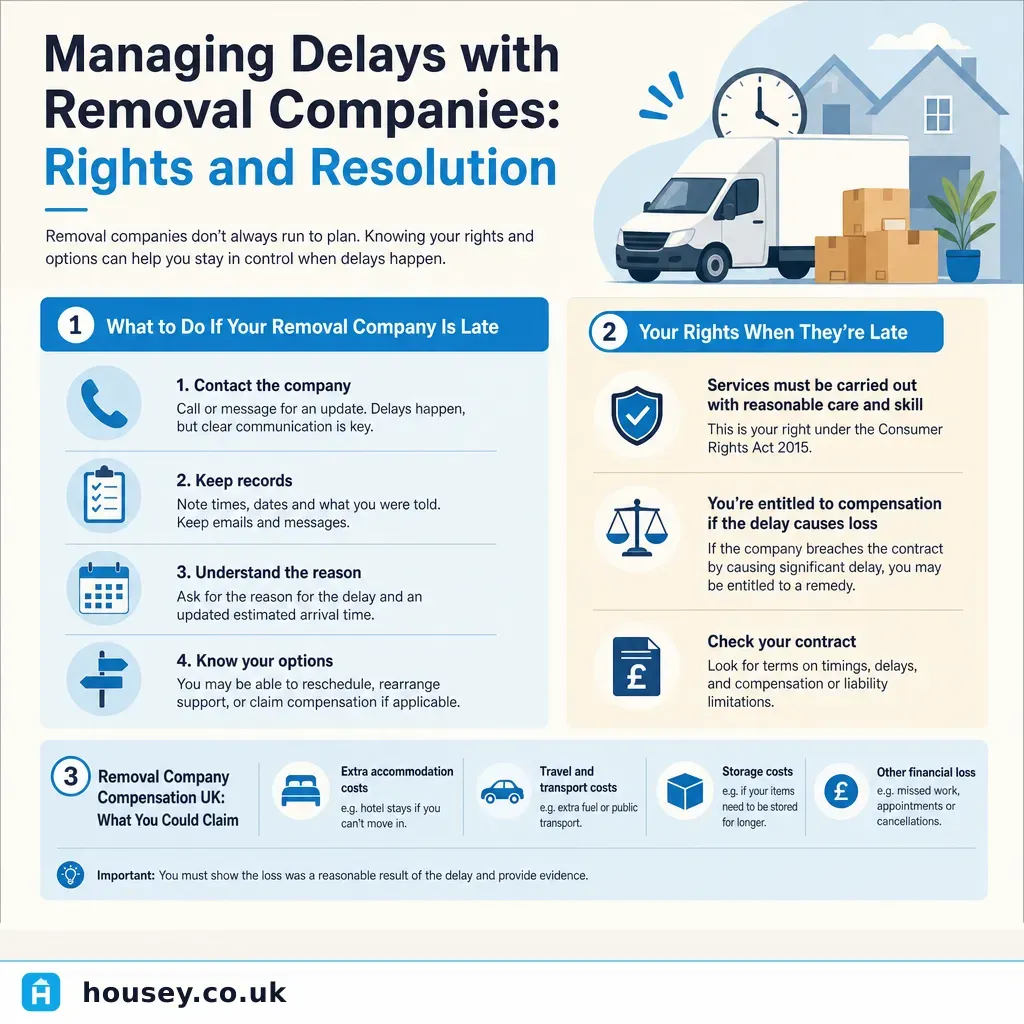
Managing Delays with Removal Companies: Rights and Resolution
If a removal company is late, your rights depend on your contract and whether the company is BAR-registered.
 Buying & Moving
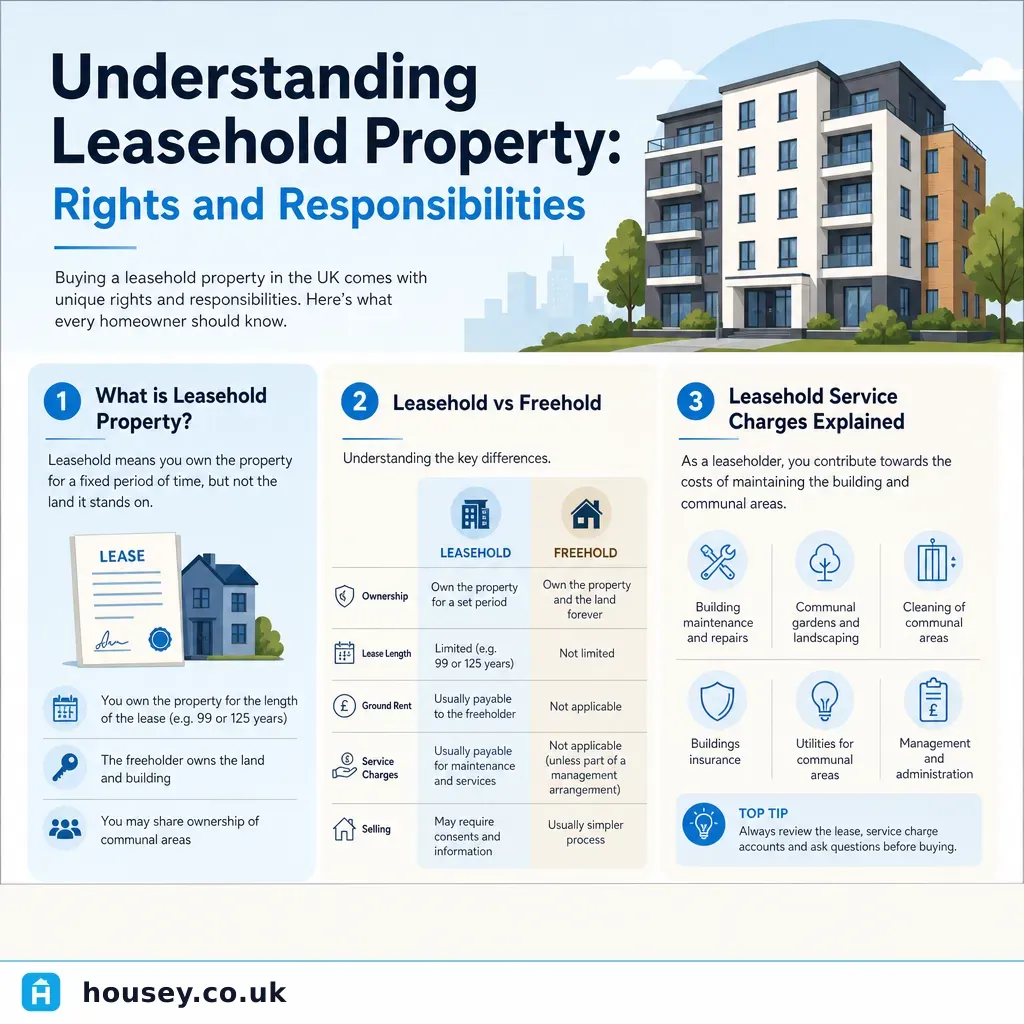
Understanding Leasehold Property: Rights and Responsibilities
Leasehold means you own a time-limited interest in a property while the freeholder owns the land and building.
 Buying & Moving
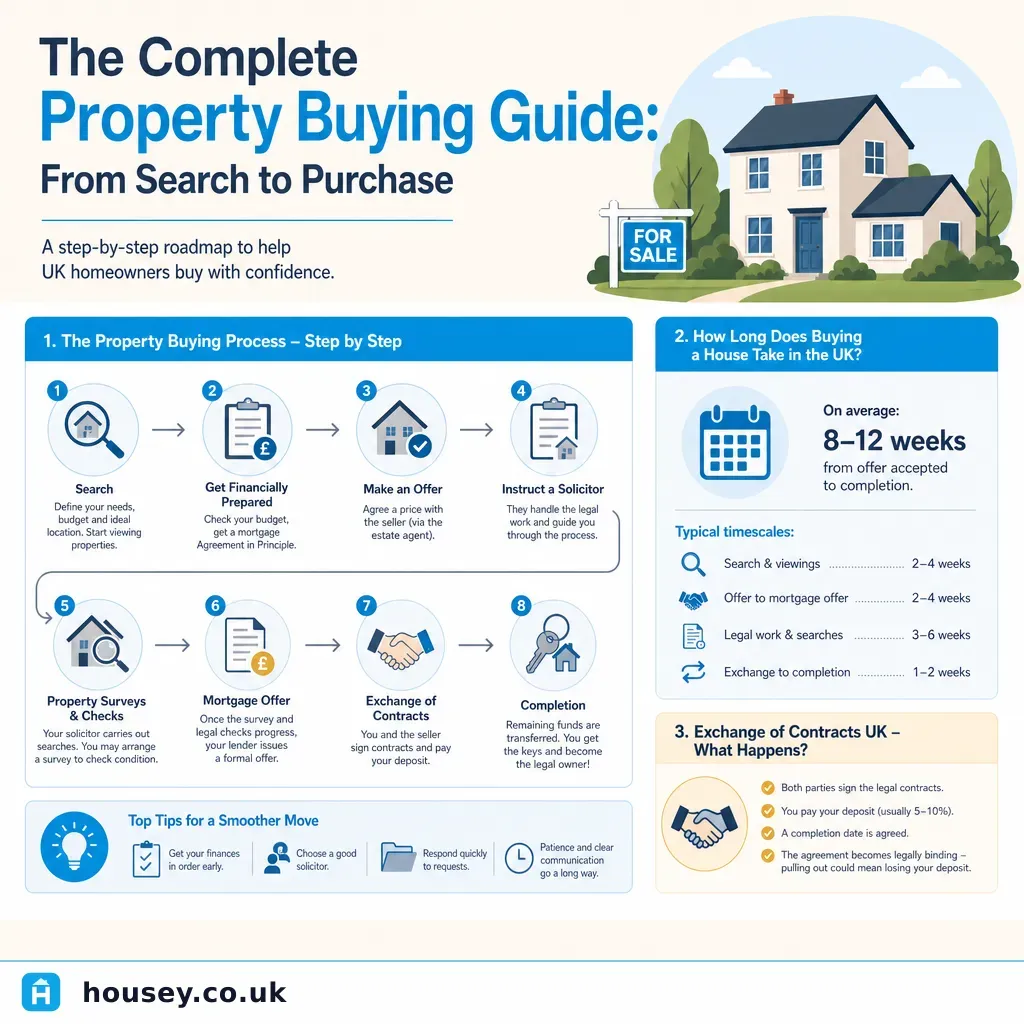
The Complete Property Buying Guide: From Search to Purchase
Buying a property in England and Wales typically takes 3–6 months from accepted offer to completion.