Obtaining and interpreting your property's floor plans and architectural drawings
By Housey · Last reviewed 30th of May 2026
Obtaining and interpreting your property's floor plans and architectural drawings
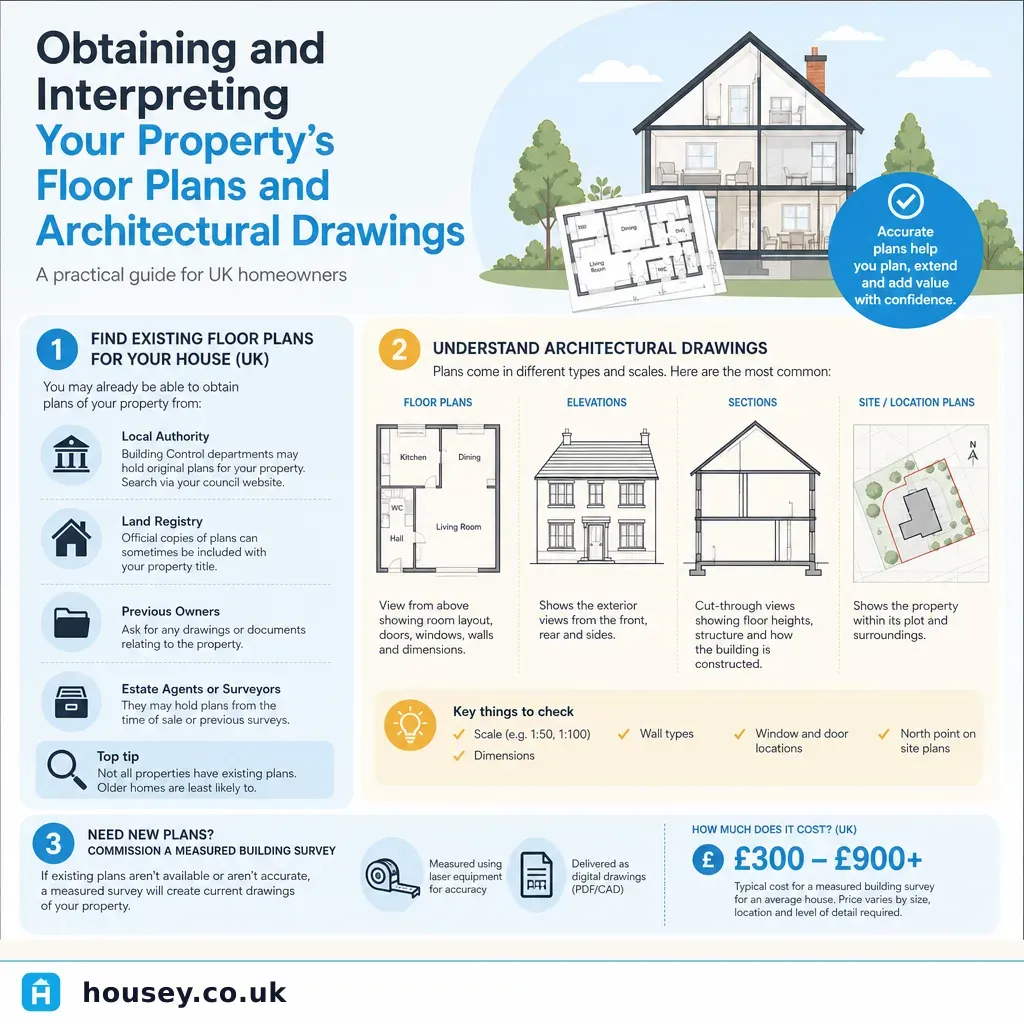
Floor plans and architectural drawings become essential at several points in a property's ownership — when planning alterations, submitting a planning application, dealing with a party wall or boundary dispute, or marketing the home for sale. Many owners discover that drawings either do not exist, have been lost, or relate to an earlier version of the building. Understanding where to look, what different drawing types show, and when to commission new drawings helps you avoid delays and make well-informed decisions before instructing professionals.
Key points
- Estate agents' floor plans are approximate marketing aids and carry no legal or technical weight; they are not suitable for planning applications or construction.
- The Planning Portal allows you to search historical planning applications for your address, which often contain approved drawings available to download free of charge.
- HM Land Registry title plans show registered boundaries but do not show internal layouts, room dimensions, or building levels.
- A measured building survey produces drawings accurate to within a few millimetres, suitable for planning, party wall notices, and construction; indicative UK costs run from £500 to £1,500 for a standard dwelling (last reviewed 2026-05-30; always obtain a written quote).
- Architectural drawings produced for planning permission are typically drawn at 1:100 scale; construction drawings are usually at 1:50 or 1:20 for details.
Where to find existing drawings
Before commissioning new drawings, check these sources in order.
1. The Planning Portal and local authority planning records
Search your local planning authority's public register using your address or a planning reference number. Approved drawings for extensions, loft conversions, or change-of-use applications are usually uploaded as PDFs and may date back 20 years or more. Access is free. The Planning Portal provides links to most local authority systems.
2. Your solicitor's conveyancing file
When you purchased the property, your solicitor should have gathered any available drawings as part of the title pack. Contact them and ask specifically for any plans, Building Regulations certificates, or drainage plans they hold.
3. The original developer or builder
For properties built in the past 30 to 40 years, the original developer or housebuilder may hold as-built drawings. NHBC (National House Building Council) may hold records for homes with an NHBC Buildmark warranty.
4. Building control at the local authority
Your local authority's building control department holds records of Building Regulations applications. These may include submitted drawings for extensions, structural alterations, or drainage works. Contact the department directly with your address.
5. HM Land Registry
The title plan (£3 to download) shows the external footprint and site boundary against an Ordnance Survey base map. Useful for boundary context but not internal layout or dimensions.
Types of property drawing and what they show
Drawing type | What it shows | Typical use | Who produces it |
|---|---|---|---|
Estate agent floor plan | Approximate room layout and indicative areas | Property marketing | Estate agent, property photographer |
OS / Land Registry title plan | Site boundary and building footprint | Legal title, boundary reference | HM Land Registry / Ordnance Survey |
Measured survey drawing | Accurate dimensions, room layout, levels, structural features | Planning, party wall, alterations | Measured building surveyor, architect |
Planning drawings (proposed) | Design intent, elevations, site plan, floor plans at 1:100 | Planning application | Architect, architectural technologist |
Building Regulations drawings | Construction detail, structural elements, drainage, insulation spec | Building Regulations submission | Architect, architectural technologist, structural engineer |
As-built drawings | The building as actually constructed (may differ from planning drawings) | Future alterations, maintenance reference | Architect or measured surveyor post-completion |
Which professional do you need?
Situation | Professional to instruct | Notes |
|---|---|---|
Need accurate floor plans for a planning application | Architect or architectural technologist | Drawings must show existing and proposed layouts, elevations, and site plan to the local authority's specification |
Need measured drawings of a property you have just bought | Measured building surveyor | Produces accurate dimensions and CAD drawings suitable for planning or construction |
Updating floor plans for a property listing | Property photographer offering floor plan service | Suitable for marketing only; not for regulatory submissions |
Need structural drawings for a beam or new opening | Structural engineer | Required in addition to architectural drawings for a Building Regulations submission |
Boundary or party wall dispute | RICS-accredited boundary or party wall surveyor | Produces evidence-quality drawings; may be required for Party Wall etc. Act 1996 notices |
How to read a floor plan
Estate agent plans and architectural drawings use different conventions, but a few rules apply across most types.
- Scale is noted in the title block (e.g., 1:100, 1:50). If you print a PDF at a non-standard size, rely on the scale bar rather than the stated scale ratio.
- North point indicates orientation. Check it carefully when assessing natural light for a proposed extension.
- Wall thickness is usually shown to scale; thicker walls typically indicate masonry or structural construction versus lightweight partitions.
- Hatching and fill patterns on technical drawings indicate different materials — a legend should appear in the drawing title block.
- Room areas on estate agent plans may use gross internal area or net measurements and are generally approximate.
- Dotted lines often indicate features above the cut line (beams, rooflights) or below floor level (drainage, foundations).
Commissioning a measured building survey
If you cannot find adequate drawings, a measured building survey is the most reliable way to produce accurate, current documentation of your property.
What to expect: A surveyor using a total station, laser scanner, or hand-held laser measuring tools captures dimensions to within a few millimetres. On-site time for a typical three-bedroom house is 2–4 hours. Deliverables usually include CAD drawings (DWG and PDF), floor plans at 1:50 or 1:100, and elevation drawings. Indicative UK costs: £500–£1,500 for a standard dwelling, more for larger or complex properties. Last reviewed 2026-05-30; always obtain a written quote specifying deliverables before instructing.
What to provide: Access to all rooms, the loft, and any outbuildings. Any existing drawings, even if approximate — they help the surveyor calibrate. A clear brief explaining what you need the drawings for (planning, party wall notice, construction) will affect the level of detail required.
When to get professional help
Seek professional input in these situations:
- Your planned alteration affects a structural wall, beam, or foundation — a structural engineer should review drawings before a Building Regulations submission.
- You are applying for planning permission in a conservation area or for a listed building — drawings must meet additional requirements and should be prepared by someone with relevant experience.
- You are serving or receiving a Party Wall etc. Act 1996 notice — technically accurate drawings of the shared wall and proposed works are required.
- Your floor plan query relates to a boundary dispute — engage an RICS-accredited boundary surveyor.
How Housey can help
Housey connects you with professionals who can produce accurate property drawings quickly. Request a measured building survey for technical-grade floor plans and elevations suitable for planning or construction, or find a property photography and floor plans service if you need marketing-quality plans for a sale listing.
Frequently asked questions
Can I use an estate agent's floor plan for a planning application?
No. Estate agent plans are marketing aids, not technical drawings. Planning applications require properly scaled drawings showing existing and proposed layouts, elevations, and a site plan, usually prepared by an architect or architectural technologist. Check your local planning authority's validation checklist for the specific drawing requirements before submitting.
How accurate are floor plans from the Planning Portal?
Drawings submitted with planning applications are technical documents intended to convey design intent, so they are generally more reliable than marketing plans. However, they show what was approved, not necessarily what was built. For renovation planning, an as-built or measured survey is likely to be more accurate and is the better starting point.
Do I need an architect to get measured drawings, or can a surveyor do it?
A measured building surveyor — who may or may not be an architect — can produce accurate drawings for most purposes including planning applications and party wall notices. If you also need architectural design work, an architect or architectural technologist can combine the measured survey with design. Confirm deliverables in writing before instructing.
How long does a measured building survey take?
On-site time for a standard three-bedroom house is typically 2–4 hours depending on complexity. Drawing production takes a few working days to a week. For larger or more complex properties, allow longer. Confirm timescales in writing before instructing, particularly if you have a planning application deadline or exchange date to meet.
Sources and further reading
- Planning Portal: find and comment on planning applications — Planning Portal
- Search for property information — HM Land Registry / GOV.UK
- RICS: measured surveys of land, buildings and utilities — RICS
- Building Regulations Approved Documents — GOV.UK
Useful next reads
 Buying & Moving
Managing Delays with Removal Companies: Rights and Resolution
If a removal company is late, your rights depend on your contract and whether the company is BAR-registered.
 Buying & Moving
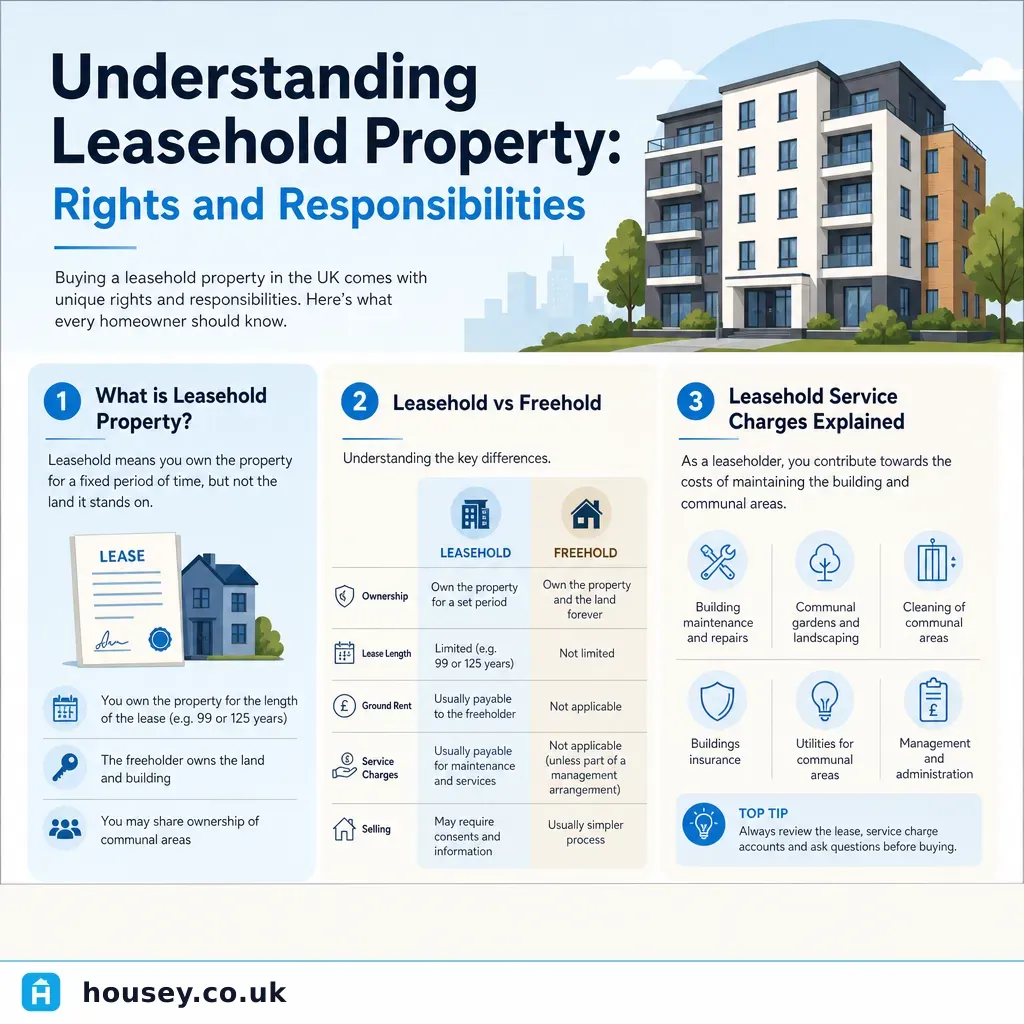
Understanding Leasehold Property: Rights and Responsibilities
Leasehold means you own a time-limited interest in a property while the freeholder owns the land and building.
 Buying & Moving
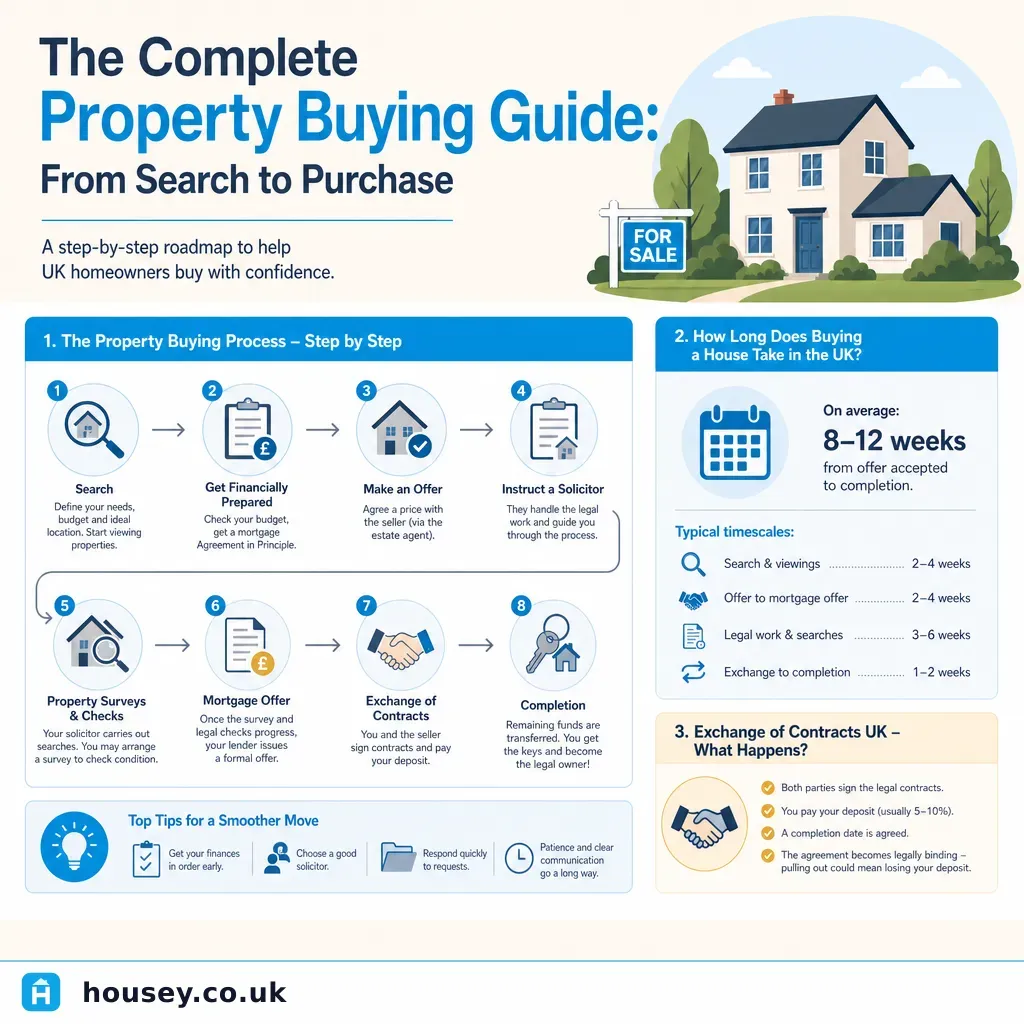
The Complete Property Buying Guide: From Search to Purchase
Buying a property in England and Wales typically takes 3–6 months from accepted offer to completion.
 Buying & Moving
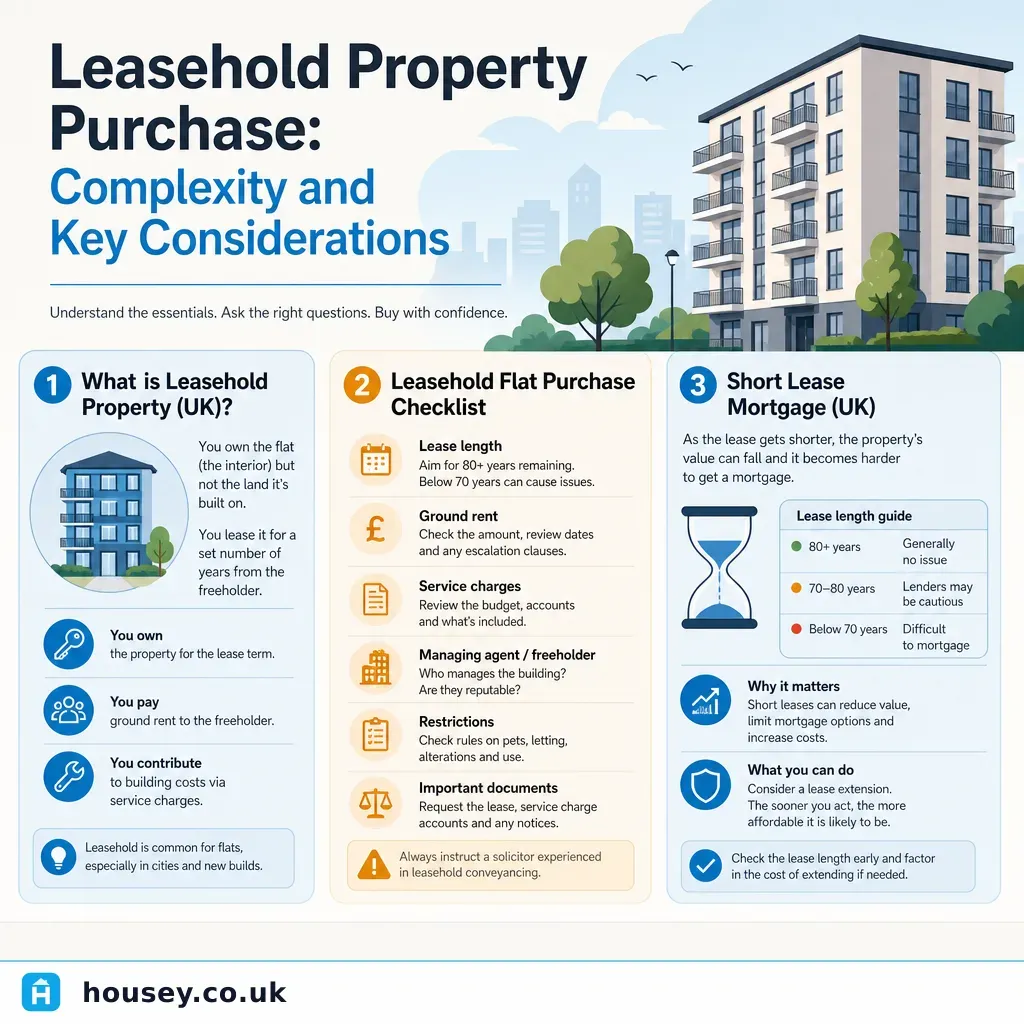
Leasehold Property Purchase: Complexity and Key Considerations
Buying a leasehold property means purchasing the right to occupy for a fixed term rather than owning the land outright.
 Buying & Moving
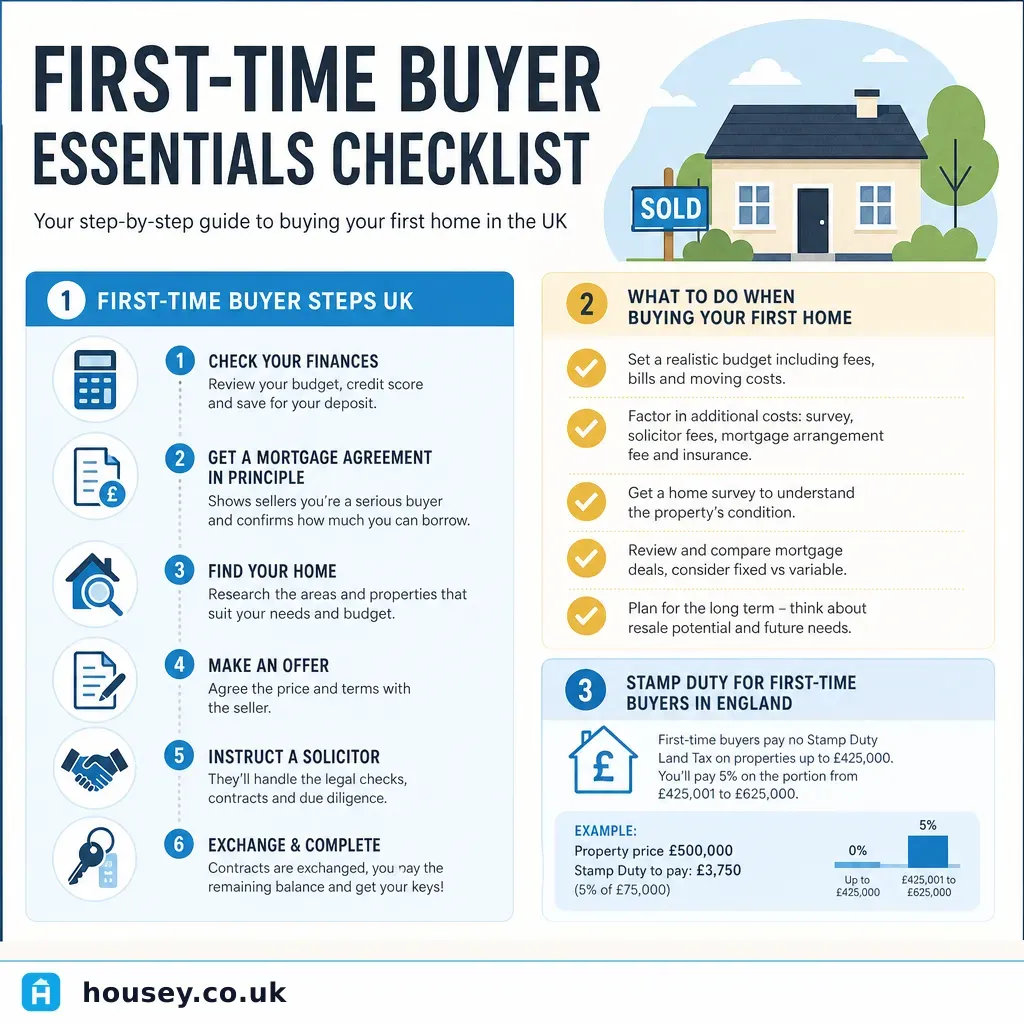
First-Time Buyer Essentials Checklist
Buying your first home involves obtaining a mortgage in principle, making an offer, instructing a solicitor, arranging a survey, and exchanging contracts before completion.