Power Seeding Your Lawn: Costs and Benefits for Garden Renovation
By Housey · Last reviewed 1st of June 2026

Power Seeding Your Lawn: Costs and Benefits for Garden Renovation
A patchy, thin, or weed-dominated lawn is one of the most common complaints from UK homeowners after a wet winter or a dry summer. Power seeding — also called slit seeding or mechanical overseeding — offers a faster and more reliable route to a thicker lawn than hand-broadcasting seed alone. For most homeowners the key question is whether the cost and preparation justify the result compared with other renovation methods.
Key points
- Power seeding uses a slit-seeding machine that cuts narrow furrows — typically 5–15 mm deep — into the soil surface and deposits seed directly into them, dramatically improving germination rates compared with surface broadcasting.
- The ideal timing for power seeding in the UK is late August to mid-October, when soil is warm enough for germination but cooler air and autumn rainfall reduce drought stress on new seedlings.
- Indicative professional costs for a typical residential garden (50–200 sq m) range from £200 to £600 depending on size, soil condition, and seed specification. (Indicative UK costs, last reviewed 2026-06-01.)
- New grass seed requires consistent moisture for 14–21 days after treatment; access to a hose and sprinkler covering the full treated area is essential to germination success.
- Power seeding is not suited to lawns with severe drainage failure, heavily compacted subsoil, or more than 50% bare soil, weeds, or dead grass — these usually need full renovation first.
What is power seeding, and how does it differ from other methods?
Power seeding (or slit seeding) uses a petrol- or electric-powered machine fitted with rotating vertical blades that cut thin furrows at regular intervals across the lawn surface. Seed is metered from a hopper into these slits as the machine passes, placing seed in direct contact with the soil rather than on top of thatch where it would be exposed to birds, drying, and run-off.
Method | How it works | Best for | Main limitation |
|---|---|---|---|
Broadcast seeding (hand or spreader) | Seed scattered over the surface | New lawns on prepared bare soil; small areas | Poor seed-to-soil contact; vulnerable to birds and wash-off |
Power seeding (slit seeding) | Machine cuts furrows; seed deposited into slits | Thinning established lawns; post-scarification renovation | Requires an existing lawn base; not effective on severely degraded bare soil alone |
Overseeding after scarification (by hand) | Lawn scarified first; seed broadcast over cleared surface | Mid-size renovation where machine hire is impractical | Less precise seed placement than a dedicated slit seeder |
Returfing | Existing lawn stripped; new turf laid | Severely degraded lawns; when instant results are required | Higher cost per sq m; soil disruption; turf needs an establishment period |
Hydroseeding | Seed mixed with water, mulch, and fertiliser; sprayed over surface | Large areas, slopes, commercial developments | Rarely used in UK residential gardens; specialist contractors required |
Power seeding is generally the most effective single-pass renovation method for a thinning but structurally sound lawn.
When should you power seed?
Timing significantly affects germination success.
- Late August to mid-October is the primary UK window. Soil temperatures remain above 8°C (the minimum for most cool-season grass species) while cooler air and autumn rainfall support establishment.
- March to mid-April is a viable secondary window if the primary season was missed. Germination is reliable, but new seedlings face drought risk if summer arrives early — irrigation access becomes more critical.
- Avoid mid-summer (June–August): high soil temperatures favour weed germination over grass, and cool-season species perform poorly in soil above 25°C.
- Avoid winter (November–February): soil temperatures are typically below the germination threshold across most of the UK, and waterlogged soil can rot ungerminated seed.
What preparation is required before power seeding?
Preparation is not optional — it determines whether the treatment succeeds. Skipping key steps significantly reduces germination rates.
Homeowner preparation checklist
Before a professional arrives, or before hiring a machine:
What does professional power seeding cost?
Indicative UK costs, last reviewed 2026-06-01. Prices vary by region, garden size, contractor, and seed specification.
Garden size | Indicative professional cost (labour + seed) | Notes |
|---|---|---|
Small (up to 50 sq m) | £150–£300 | Minimum call-out charges often apply |
Medium (50–150 sq m) | £250–£500 | Typically includes a standard amenity turf seed mix |
Large (150–300 sq m) | £400–£800 | Specialist seed mixes (drought-tolerant, shade-tolerant) add to cost |
Very large (300+ sq m) | Quote-based | Per-square-metre pricing is more common at this scale |
DIY machine hire (slit seeders are available from tool-hire companies) typically costs £80–£150 per day, plus seed at £5–£20 per kg depending on species and certification level.
What to ask before accepting a quote
- What seed species or mix is included, and is it certified?
- Does the price include scarification, aeration, or soil preparation, or is that quoted separately?
- What seeding rate (grams per square metre) will you apply?
- Will you apply a post-seeding topdressing or fertiliser?
- Is VAT included?
- Is a follow-up visit or germination guarantee offered if results are poor?
- What assumptions is the quote based on, and what could change the price?
What results should you expect?
Under reasonable autumn conditions — adequate moisture, soil above 8°C, well-prepared surface:
- Initial germination visible within 7–14 days, depending on species and soil temperature.
- Noticeable thickening of the lawn within 3–6 weeks.
- A fully established sward ready for normal mowing at 8–12 weeks.
Avoid mowing until new grass reaches 50–60 mm, and use a sharp mower blade for the first cut to avoid uprooting seedlings. Keep foot traffic off the treated area for at least four weeks.
When to get professional help
Power seeding is a relatively straightforward garden renovation task, but seek professional advice if:
- Your lawn has significant drainage failure — persistent ponding, waterlogged zones, or visible clay panning beneath the surface. Seeding alone will not resolve drainage.
- More than 50% of the surface is bare soil, weeds, moss, or dead grass. Full renovation or returfing may give a better long-term result.
- You are unsure whether the soil has been treated with a residual herbicide in the past 12 months.
- The lawn slopes more than approximately 1:4 gradient, where machine operation requires an experienced operator.
How Housey can help
A professional assessment of your lawn before committing to power seeding can save time and money. Housey connects homeowners with experienced professional landscapers who can advise on the right renovation method for your specific garden, and with garden designers if you want to use the opportunity to rethink your outdoor space more broadly.
Frequently asked questions
Is power seeding the same as overseeding?
Not exactly. Overseeding is the general practice of sowing grass seed into an existing lawn. Power seeding is a specific mechanical method that uses a slit-seeding machine to cut furrows and deposit seed into them. Both thicken a thin lawn, but power seeding typically achieves better germination rates because seed is placed directly into soil contact rather than broadcast onto the surface.
Can I power seed in spring instead of autumn?
Yes. March to mid-April is a viable UK window. Soil temperatures are rising and germination is reliable, but new seedlings may face drought stress if summer arrives early. Consistent watering for the first four to six weeks is essential. Autumn remains the preferred timing for most UK lawns, as cooler conditions suit cool-season grass species.
How long before I can walk on a power-seeded lawn?
Allow at least four weeks before regular foot traffic, and restrict all but essential access for the first two weeks. New seedlings are shallow-rooted and easily damaged or compacted by foot pressure before the grass has properly established itself in the soil.
Will power seeding get rid of weeds?
No. Power seeding thickens existing grass, which can help crowd out some weeds over time by reducing available light and space, but it does not kill or remove existing weeds. Address significant weed problems with a selective herbicide at least six weeks before power seeding, observing the product's recommended re-seeding waiting period.
Sources and further reading
- RHS: Lawn renovation and repair — Royal Horticultural Society
- RHS: Repairing thin and bare patches in lawns — Royal Horticultural Society
- Sports Turf Research Institute (STRI) — guidance on grass seed species and turf management
Useful next reads
 Improvement & Build
Professional Weed Control: Service Options and Cost Factors
Professional weed control in the UK typically involves herbicide treatment, manual removal, or a combination of both.
 Improvement & Build
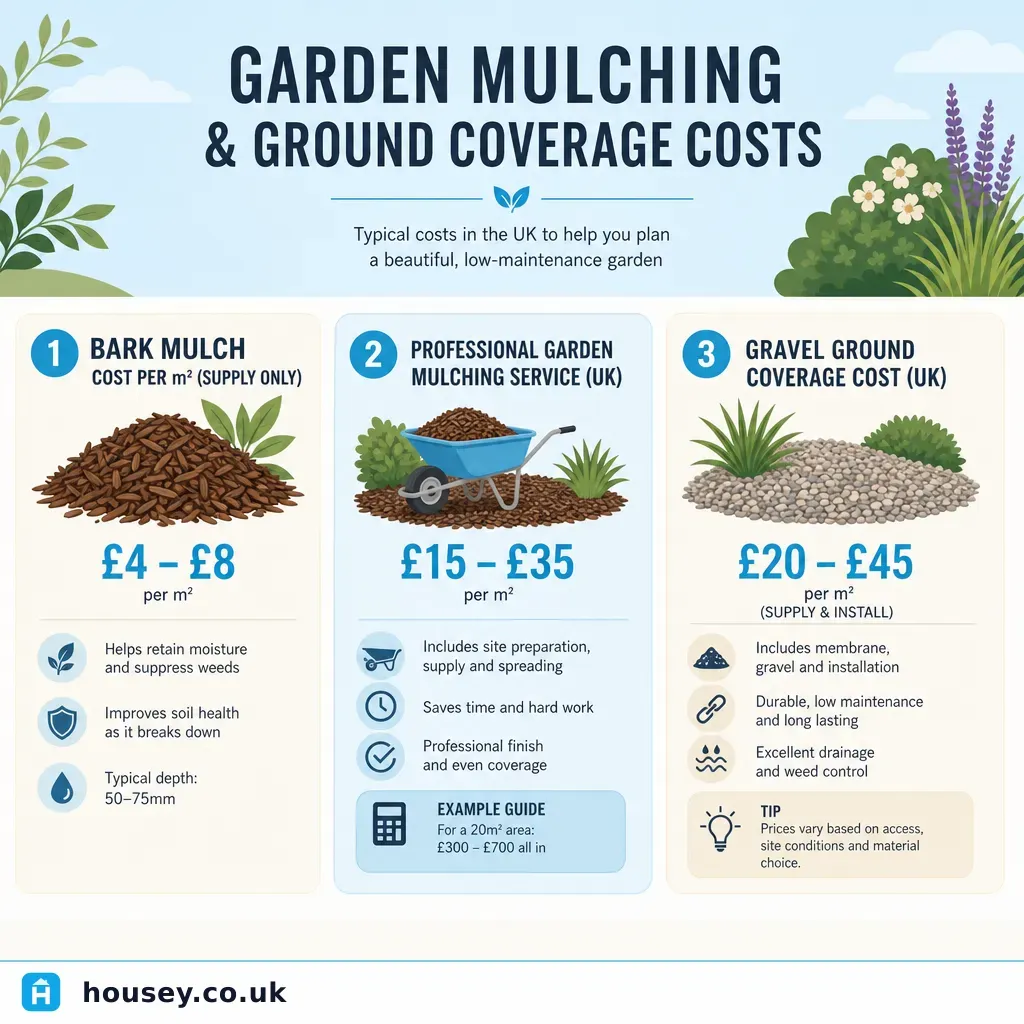
Garden Mulching and Ground Coverage Costs
Professional garden mulching typically costs £150–£600 for an average UK garden, depending on material type, area covered, and whether you hire a landscaper.
 Improvement & Build
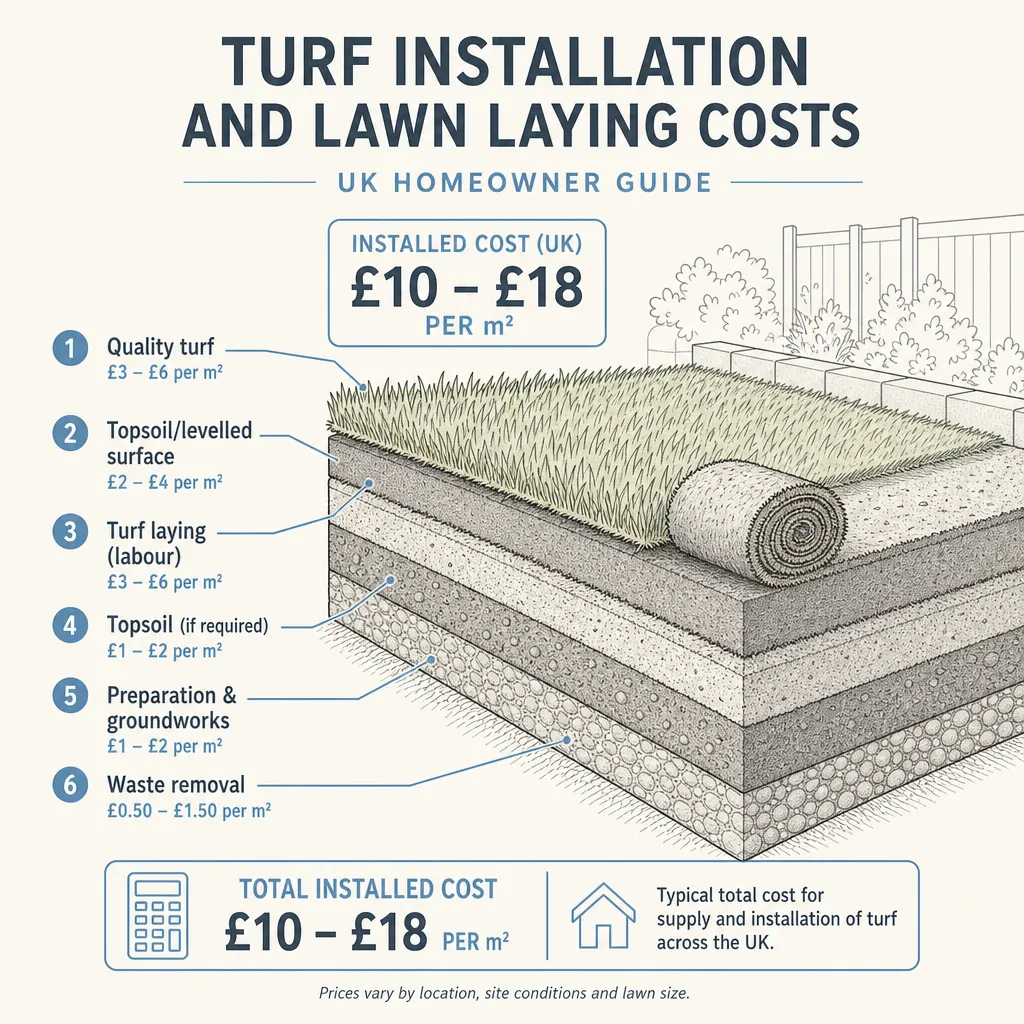
Turf Installation and Lawn Laying Costs
Professional turf laying in the UK typically costs £7–£17 per m² combined (supply and lay), though prices vary by area size, ground condition, and region.
 Improvement & Build
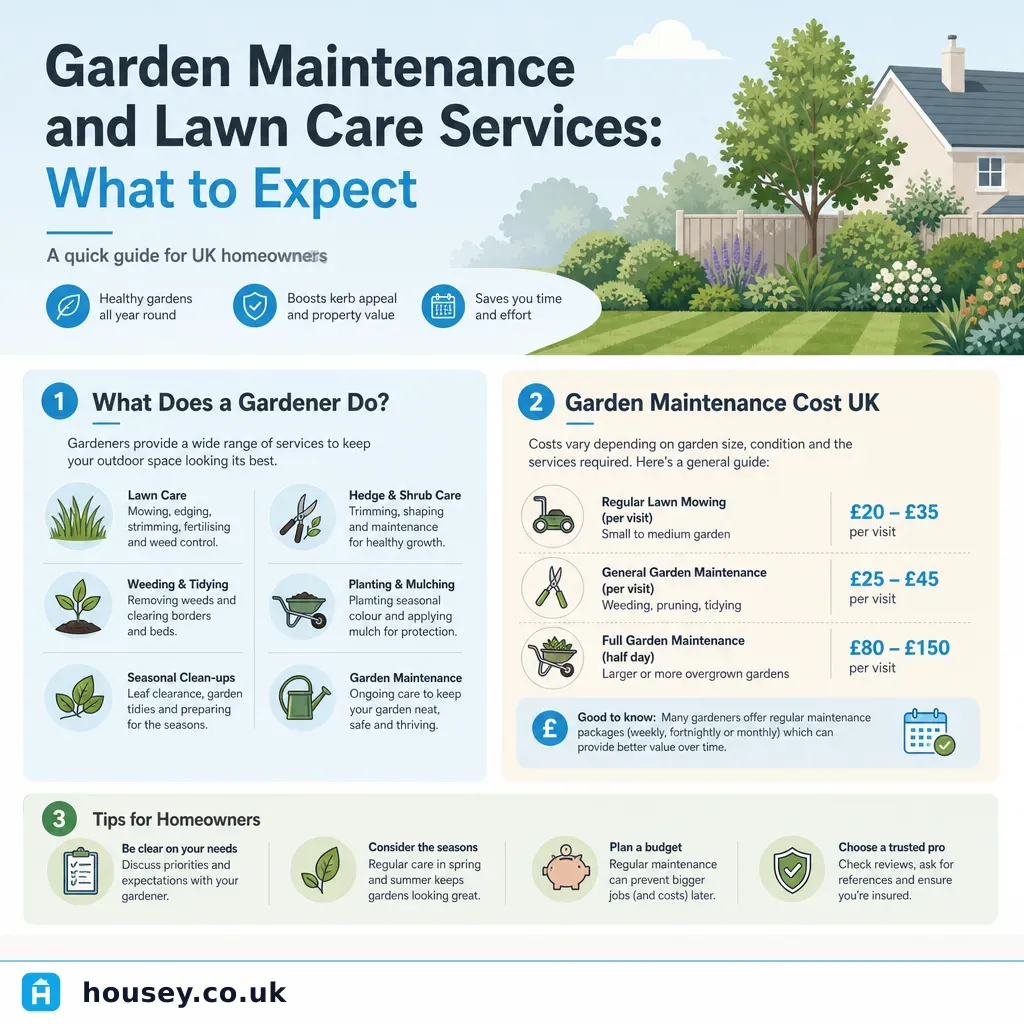
Garden Maintenance and Lawn Care Services: What to Expect
Professional garden maintenance services in the UK typically cover lawn mowing, weeding, pruning, and seasonal tasks such as scarification and hedge trimming.
 Improvement & Build
Seasonal Garden Maintenance: Spring Preparation and Planting
Spring garden maintenance in the UK runs from late February through May, with timing dictated by your location, last frost date, and soil temperature.