Seasonal Garden Maintenance: Spring Preparation and Planting
By Housey · Last reviewed 11th of May 2026
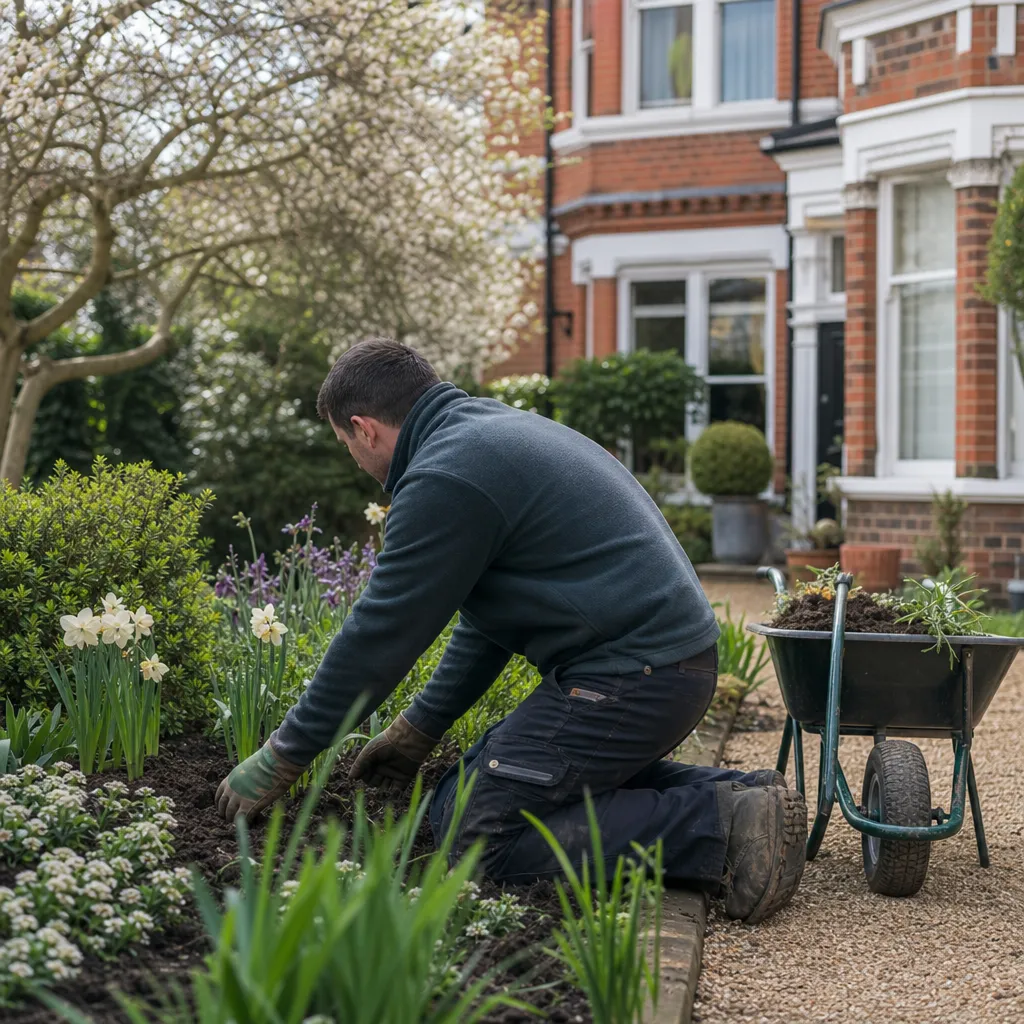
Seasonal Garden Maintenance: Spring Preparation and Planting
Spring is the most active and consequential season for UK garden management — decisions made between February and May set the trajectory for the whole growing year. Whether you are maintaining an established border, starting a new lawn, or working with a professional landscaper on a larger project, understanding the correct sequence of tasks and their timing is what separates a productive spring from one spent catching up.
Key points
- UK last frost dates vary significantly: southern England typically sees its last frost by mid-April, the Midlands by late April, and Scotland and upland areas often into May — check Met Office local frost data before planting tender species outdoors.
- Soil temperature must reach at least 7°C before most vegetable and annual seeds will germinate reliably; use a soil thermometer rather than calendar dates alone.
- The RHS recommends applying a high-nitrogen lawn fertiliser from March onwards once grass is actively growing, and advises against application to frozen or drought-stressed ground.
- Roses (hybrid tea and floribunda types) and late-flowering shrubs such as buddleia and hardy fuchsias should be pruned in late March to early April in England; early-flowering shrubs (forsythia, winter jasmine) should be pruned immediately after flowering, not in spring.
- Hardening off — acclimatising indoor-sown seedlings to outdoor conditions — typically takes 7–14 days and should not be skipped even when conditions appear mild.
Spring tasks month by month
Timing garden tasks to the right point in the season prevents common mistakes such as sowing seeds into cold soil, pruning early-flowering shrubs at the wrong moment, or putting tender plants out before frost risk has passed. The table below gives a general guide for England and Wales; adjust later by 2–4 weeks for Scotland, Northern Ireland, and exposed upland sites.
Task | Late Feb – March | April | May |
|---|---|---|---|
First lawn cut (high setting, 40–50mm) | When actively growing | Lower gradually | Regular schedule |
Apply spring lawn feed (high nitrogen) | From mid-March | ✓ | If needed |
Prune roses, buddleia, hardy fuchsia | Late March | ✓ | — |
Prune early-flowering shrubs (forsythia, currant) | After flowering only | After flowering only | — |
Sow hardy annuals and vegetables under cover | ✓ | ✓ | — |
Sow half-hardy annuals under cover | — | ✓ | — |
Harden off seedlings | — | From mid-April | ✓ |
Plant out tender bedding and vegetables | — | After last frost only | ✓ in most of England |
Divide herbaceous perennials | Early March | ✓ | — |
Apply mulch to borders | Once soil has warmed | ✓ | ✓ |
Soil preparation
Good soil preparation in early spring determines how well plants establish through the growing season.
Fork and aerate compacted areas. Winter rain compacts soil, particularly on clay-heavy plots. Fork over bare beds to a spade's depth (around 30cm) to improve drainage and aeration, but avoid working very wet soil, which damages soil structure.
Add organic matter. Incorporating well-rotted garden compost or manure improves moisture retention in sandy soils and drainage in clay. Apply a 5–7.5cm layer and work it in with a fork before sowing or planting.
Check pH for vegetable plots. Most vegetables prefer a soil pH of 6.5–7.0. A simple test kit will confirm whether lime is needed; apply it at least four weeks before sowing or planting.
Weed thoroughly. Remove perennial weeds — bindweed, couch grass, dandelions — by their roots before mulching or sowing. Leaving root fragments in disturbed soil encourages rapid regrowth throughout the season.
Lawn care in spring
First cut: Set the mower to a high cut (40–50mm) for the first cut of the season once grass is actively growing — typically late February in the south, March in the Midlands and north. Avoid cutting wet or frost-affected grass, which damages the sward.
Moss and scarification: If moss is present, apply a moss-killer in early spring, then scarify (rake out the dead moss) once it has blackened. Heavy scarification is most effective in spring or early autumn.
Aeration: Spiking or hollow-tining compacted lawns improves drainage and promotes root development. Spring and early autumn are both suitable times.
Overseeding: Bare patches can be overseeded from mid-April once soil temperature reaches 8–10°C. Rake the area, sow at the rate recommended on the product, and keep moist until the grass is established.
Feeding: Apply a spring/summer lawn fertiliser with a high-nitrogen ratio from March onwards. Avoid high-phosphorus or autumn/winter formulations, which encourage the wrong type of growth at this time of year.
Pruning: the critical spring decisions
Pruning at the wrong time is one of the most common spring gardening errors. The key distinction:
- Prune late-flowering shrubs — buddleia, hardy fuchsia, late-flowering clematis Group 3, lavender — in late March to early April. These flower on current-year growth; cutting back hard in spring promotes new growth and flowers later in the season.
- Do not prune early-flowering shrubs (forsythia, winter jasmine, flowering currant, magnolia, camellias) in spring. These flower on the previous year's wood; pruning before or during flowering removes the blooms. Prune immediately after flowering has finished.
- Roses (hybrid tea and floribunda types) are best pruned in late March in England, cutting back to an outward-facing bud at around 30–45cm from the ground.
- The Chelsea Chop — cutting back perennials such as echinacea, rudbeckia, and sedum by one-third to one-half — is done in late May to delay flowering and encourage bushier plants.
Sowing and planting
Under cover (greenhouse, cold frame, or bright windowsill): Hardy annuals such as sweet peas, cornflowers, and calendula can be sown under cover from late February. Tomatoes, courgettes, runner beans, and half-hardy bedding plants should be sown later — typically mid-March to April — to avoid producing large plants that cannot yet go outdoors.
Hardening off: Before planting out, seedlings grown under cover need gradual acclimatisation over 7–14 days. Start by placing them outside in a sheltered spot for a few hours daily, increasing exposure progressively. A cold frame is well suited to this process.
Direct outdoor sowing: Hardy vegetables such as carrots, parsnips, beetroot, and peas can be sown directly once soil reaches 7°C — typically from late March in the south and April further north. Sowing into cold soil leads to poor germination and is not recommended.
Spring garden preparation checklist
Use this checklist to sequence your spring tasks correctly:
When to get professional help
Some spring garden tasks are worth delegating to a professional landscaper or garden designer, particularly if:
- The garden has not been maintained for a season or more and needs significant clearance, soil improvement, or structural work
- You are planning new borders, lawns, or hard landscaping that require ground preparation and design input
- Trees need pruning or removal — always instruct a qualified arborist, particularly for trees subject to a Tree Preservation Order (TPO) or in a conservation area
- Large areas of compacted or waterlogged ground require drainage works rather than surface-level improvement
How Housey can help
Whether you need a one-off spring tidy-up or are planning a larger garden redesign, Housey connects you with trusted landscapers and garden designers in your area. A professional assessment in early spring ensures that any structural or design work is completed in time for the main growing season.
Frequently asked questions
When can I start planting vegetables outside in the UK?
Timing depends on your location and vegetable type. Hardy vegetables such as broad beans, peas, and brassicas can be planted out from late March in England once soil reaches at least 7°C. Tender vegetables — tomatoes, courgettes, and runner beans — should not go out until after the last frost: typically mid-May in southern England and late May to early June in Scotland and upland areas.
When should I feed my lawn in spring?
Apply a spring/summer lawn fertiliser with a high-nitrogen ratio from mid-March onwards, once grass is actively growing. Avoid applying to frozen, waterlogged, or drought-stressed ground. A second application may be made in May if growth is slow. Do not use autumn/winter formulations in spring, as they have a different NPK balance suited to different seasonal growth patterns.
How do I know when it is safe to plant out indoor seedlings?
Check the last frost date for your postcode — the Met Office and RHS provide regional guidance — confirm soil temperature is above 7°C, and complete a 7–14 day hardening-off process before final outdoor planting. Even after the average last frost date has passed, late frosts can occur; watch overnight forecasts and cover tender plants with fleece if frost is predicted.
Should I hire a garden designer for spring planting?
For routine maintenance — pruning, lawn care, sowing — most gardeners manage without professional input. A garden designer adds most value when planning structural changes, new planting schemes, hard landscaping, or when a garden has been neglected and needs a coherent restoration plan. Housey's garden designers offer design consultations from early spring to help you make the most of the growing season.
Sources and further reading
- Seasonal gardening advice — Royal Horticultural Society (RHS)
- Lawn care — Royal Horticultural Society (RHS)
- Pruning: how and when — Royal Horticultural Society (RHS)
- Sowing seeds — Royal Horticultural Society (RHS)
- UK climate maps and seasonal data — Met Office
Useful next reads
 Improvement & Build
Professional Weed Control: Service Options and Cost Factors
Professional weed control in the UK typically involves herbicide treatment, manual removal, or a combination of both.
 Improvement & Build
Power Seeding Your Lawn: Costs and Benefits for Garden Renovation
Power seeding uses a slit-seeding machine to cut shallow furrows into an existing lawn and deposit grass seed directly into the soil, giving far better germination rates than surface broadcasting.
 Improvement & Build
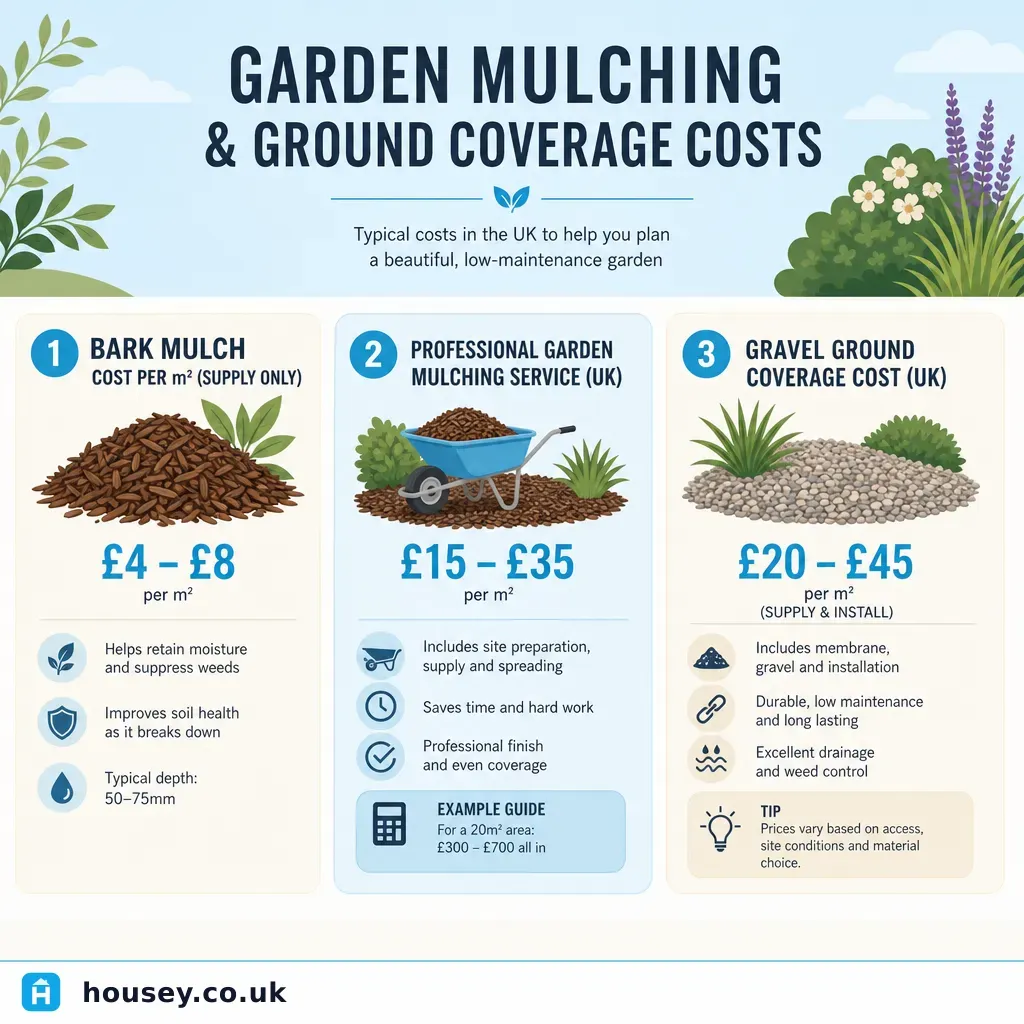
Garden Mulching and Ground Coverage Costs
Professional garden mulching typically costs £150–£600 for an average UK garden, depending on material type, area covered, and whether you hire a landscaper.
 Improvement & Build
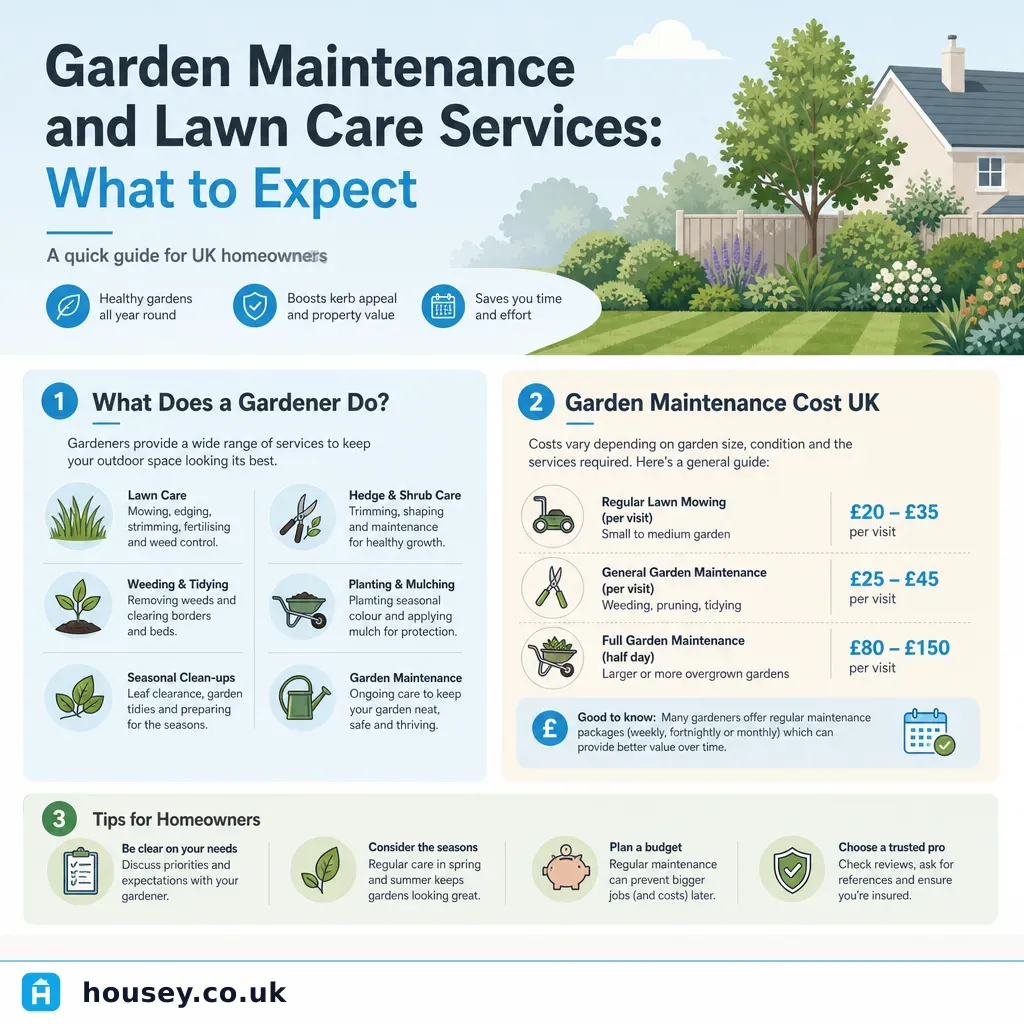
Garden Maintenance and Lawn Care Services: What to Expect
Professional garden maintenance services in the UK typically cover lawn mowing, weeding, pruning, and seasonal tasks such as scarification and hedge trimming.
 Improvement & Build
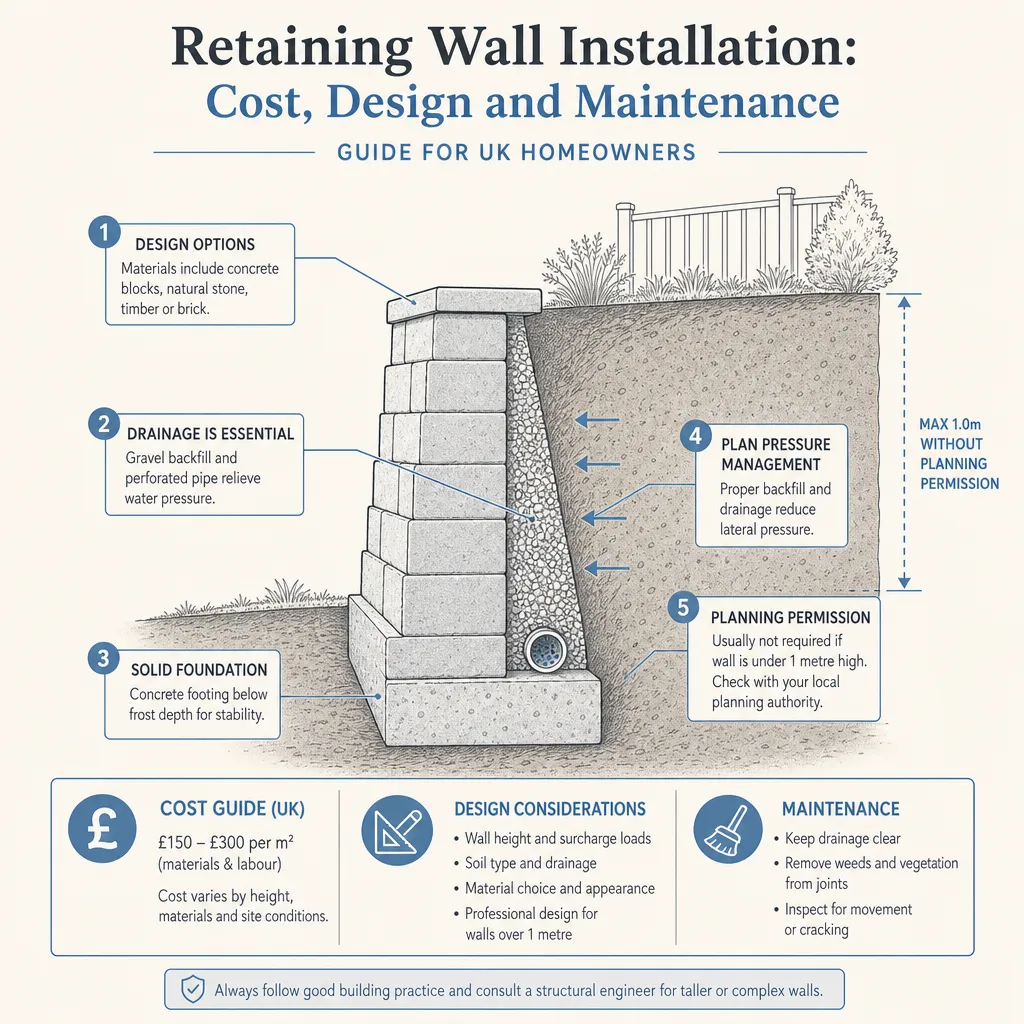
Retaining Wall Installation: Cost, Design and Maintenance
A retaining wall holds back soil on a sloped or banked site.