Garden Mulching and Ground Coverage Costs
By Housey · Last reviewed 7th of May 2026
Garden Mulching and Ground Coverage Costs
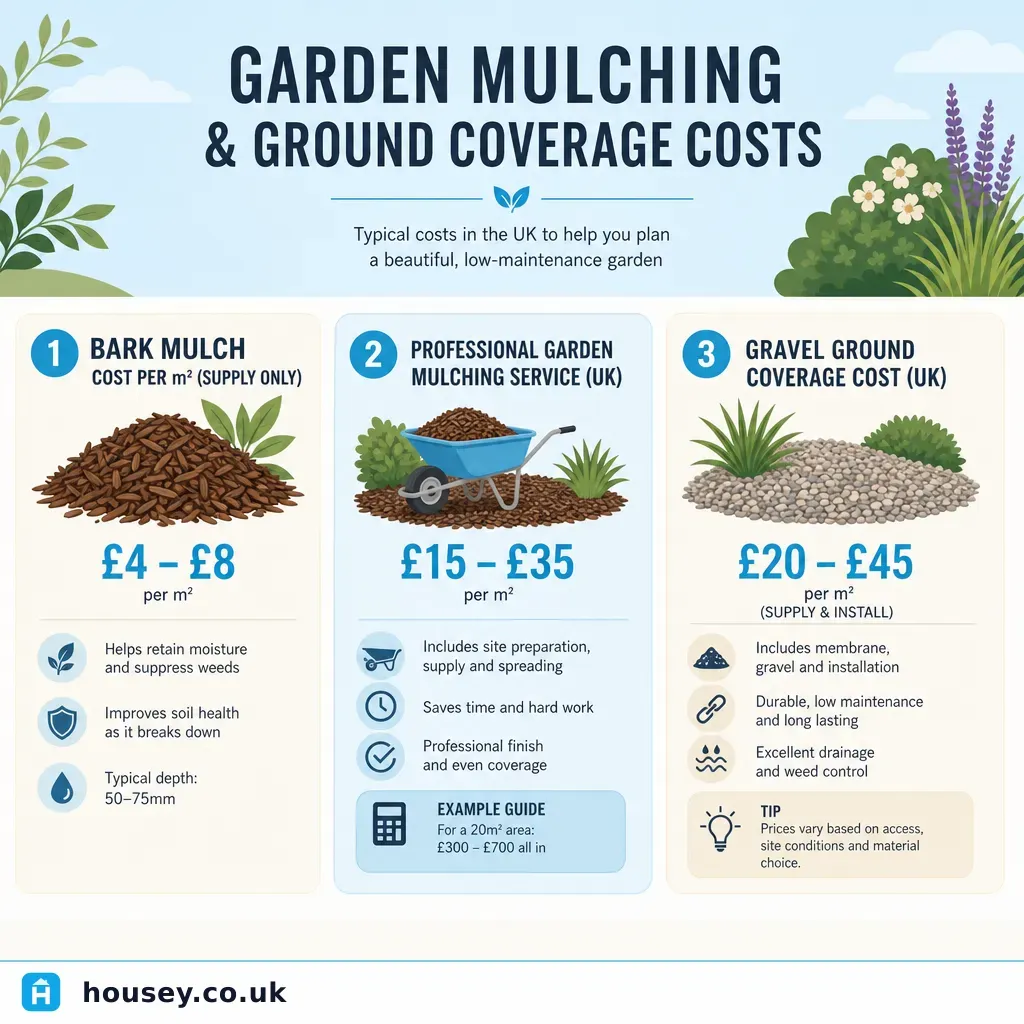
Mulching is one of the most cost-effective improvements a UK gardener can make — suppressing weeds, retaining soil moisture, and improving the appearance of borders and beds in a single operation. The question of cost most often arises when planning a new planting scheme, tackling a neglected garden after moving in, or preparing beds ahead of a property sale. Getting the budget right depends on which material you choose, the total area to be covered, and whether you use a professional landscaper or tackle the work yourself.
Key points
- Bark chip mulch costs approximately £2–£8 per square metre for materials alone; professional labour typically adds £150–£300 per day in most UK regions (indicative costs, last reviewed 2026-05-07).
- Gravel and slate chippings typically cost £4–£14 per square metre supplied and laid, depending on stone type, depth of coverage, and whether edging is included.
- A geotextile weed-suppressing membrane beneath mulch costs £0.50–£1.50 per square metre and significantly extends the effective life of any surface covering.
- Organic mulches — bark chip, wood chip, and garden compost — break down over 1–3 years and need periodic topping up; inorganic options such as gravel are largely permanent.
- Most landscapers price mulching by the square metre plus a minimum call-out charge of £50–£100, so small gardens often cost proportionally more per m² than larger projects.
What affects the cost of garden mulching?
The total cost of a mulching project depends on several variables. Understanding each one helps you compare quotes and avoid surprises.
Area covered: Most landscapers price by the square metre. Measure your beds and borders before requesting quotes to get like-for-like comparisons. Irregular or awkward shapes take longer to work around.
Material choice: Bark chip and recycled wood chip are among the cheapest organic options. Premium decorative bark, coloured slate chippings, and cobblestones sit at the higher end. The material also determines how often it needs replacing.
Depth of application: The RHS recommends a 75–100 mm layer of bark mulch for effective weed suppression and moisture retention. Thinner applications cost less upfront but require more frequent renewal.
Ground preparation: If beds contain established weeds — particularly tap-rooted or rhizomatous species such as bindweed or ground elder — clearing them before mulching adds significant labour time. Some landscapers include basic weeding in their quote; others price it separately.
Access and delivery logistics: Bulk bags of mulch or loose loads delivered to rear gardens via narrow side access may cost more, or require manual barrowing, increasing labour time. Confirm delivery access before booking.
Membrane installation: A geotextile weed membrane laid before mulching is common practice for paths and low-planting borders. This adds material and labour cost but reduces long-term maintenance needs considerably.
Types of ground coverage: materials compared
Material | Typical cost per m² (materials only) | Longevity | Best for | Considerations |
|---|---|---|---|---|
Bark chip (basic) | £2–£5 | 1–2 years before topping up | Shrub borders, woodland planting | Breaks down into compost; benefits soil health |
Decorative bark | £4–£8 | 2–3 years | Feature borders, front gardens | Better appearance than standard chip |
Recycled wood chip | £1–£3 | 1–2 years | Large areas, informal paths | Check source — may contain treated timber |
Gravel / shingle | £4–£10 | 10+ years | Paths, low-maintenance areas | Does not benefit soil; needs edging to contain |
Slate chippings | £6–£14 | 10+ years | Contemporary garden schemes | Higher cost; colour may fade slightly over time |
Rubber mulch | £8–£15 | 10+ years | Children's play areas | Not biodegradable; check local disposal options |
Garden compost | £1–£3 | 6–12 months | Vegetable beds, mixed borders | Best for soil improvement; least ornamental |
Indicative UK material costs, last reviewed 2026-05-07. Prices vary by region, supplier, and order volume.
Professional versus DIY mulching
For straightforward garden beds with good access, mulching is one of the more accessible DIY garden tasks. The decision depends mainly on scale, ground condition, and how the work fits into a wider project.
DIY is practical if: the area is accessible by vehicle or wheelbarrow, you can source and handle bulk bags of mulch (typically 25–70 litres per bag), ground preparation is minimal, and you are not combining mulching with planting, structural edging, or landscape design.
Hire a landscaper if: the total area exceeds 50 m², significant weed clearing is needed first, you want membrane laid correctly and pinned along edges, or mulching is part of a wider landscaping project that includes planting, hard landscaping, or drainage work.
A worked UK example: A 30 m² front border in a 1970s semi-detached in the East Midlands, cleared of weeds and covered with a weed membrane and 75 mm of decorative bark, would typically cost £200–£400 in total when hired out to a local landscaper — or approximately £80–£150 in materials if done by the homeowner (excluding time and disposal of weeds). The cost difference narrows quickly once access difficulties or significant weed clearance are factored in.
What a professional mulching quote should include
Use this checklist when comparing quotes from landscapers:
For larger projects, obtaining two or three quotes is advisable. Prices may vary significantly depending on whether the contractor sources materials at trade price from a local merchant or passes on retail bag prices.
When to get professional help
Most garden mulching is low-risk practical work, but a professional landscaper or garden designer adds genuine value in these situations:
- You are redesigning a garden and mulching forms part of a wider planting or hard-landscaping scheme — a garden designer can ensure materials and depths are appropriate for the planting plan.
- The area includes established trees — bark and gravel applied too close to tree trunks can trap moisture and cause collar rot. A knowledgeable landscaper will maintain a clear collar zone around the base of each trunk.
- You are dealing with a persistent weed burden including bindweed, ground elder, or Japanese knotweed — professional advice on preparation will save time and money, and some species require specialist treatment before any covering is laid.
- The work involves a significant change to front garden hard standing that might affect surface water drainage — check with your local planning authority before covering large areas of front garden with impermeable materials.
How Housey can help
If you would like to compare quotes from qualified landscapers or get professional input on a wider garden design that includes ground coverage, Housey can connect you with local providers. Request quotes from landscapers near you, or explore options with a local garden designer to make sure the materials and layout are right for your property.
Frequently asked questions
How much does it cost to mulch a typical UK garden border?
For a standard 20–30 m² border, expect to pay £150–£350 for professional supply and installation of bark or gravel mulch, including basic ground preparation. DIY material costs for the same area typically run £50–£120. Prices vary by region, material choice, and site access. Indicative UK costs, last reviewed 2026-05-07.
How deep should mulch be laid?
For effective weed suppression and moisture retention, 75–100 mm is the commonly recommended depth for bark chip mulch, as advised by the RHS. Gravel paths and decorative areas are typically laid at 50–75 mm. Thinner layers cost less upfront but need replacing sooner and provide weaker weed control.
Does organic mulch need replacing every year?
Not every year, but organic mulches such as bark chip and wood chip decompose over 1–3 years and need periodic topping up. Inorganic materials — gravel, slate chippings, and rubber mulch — do not break down and are largely permanent, though some migration and compaction occurs over time.
Is a weed membrane worth the extra cost?
For most borders and paths, yes. A geotextile weed-suppressing membrane significantly reduces future maintenance and extends the effective life of any surface covering. It is most worthwhile under gravel and bark on paths and low-planting areas. In densely planted beds, membrane can restrict plant spread and is less commonly used.
Does garden mulching require planning permission?
Standard garden mulching does not normally require planning permission. However, replacing a large area of front garden lawn with impermeable hard standing — such as extensive gravel — may engage permitted development rules about surface water drainage. Check with your local planning authority before significant changes to front garden surfaces.
Sources and further reading
- RHS: Mulching — Royal Horticultural Society
- Permitted Development Rights for Householders: Technical Guidance — Ministry of Housing, Communities & Local Government
- RHS: Weed Control in Gardens — Royal Horticultural Society
Useful next reads
 Improvement & Build
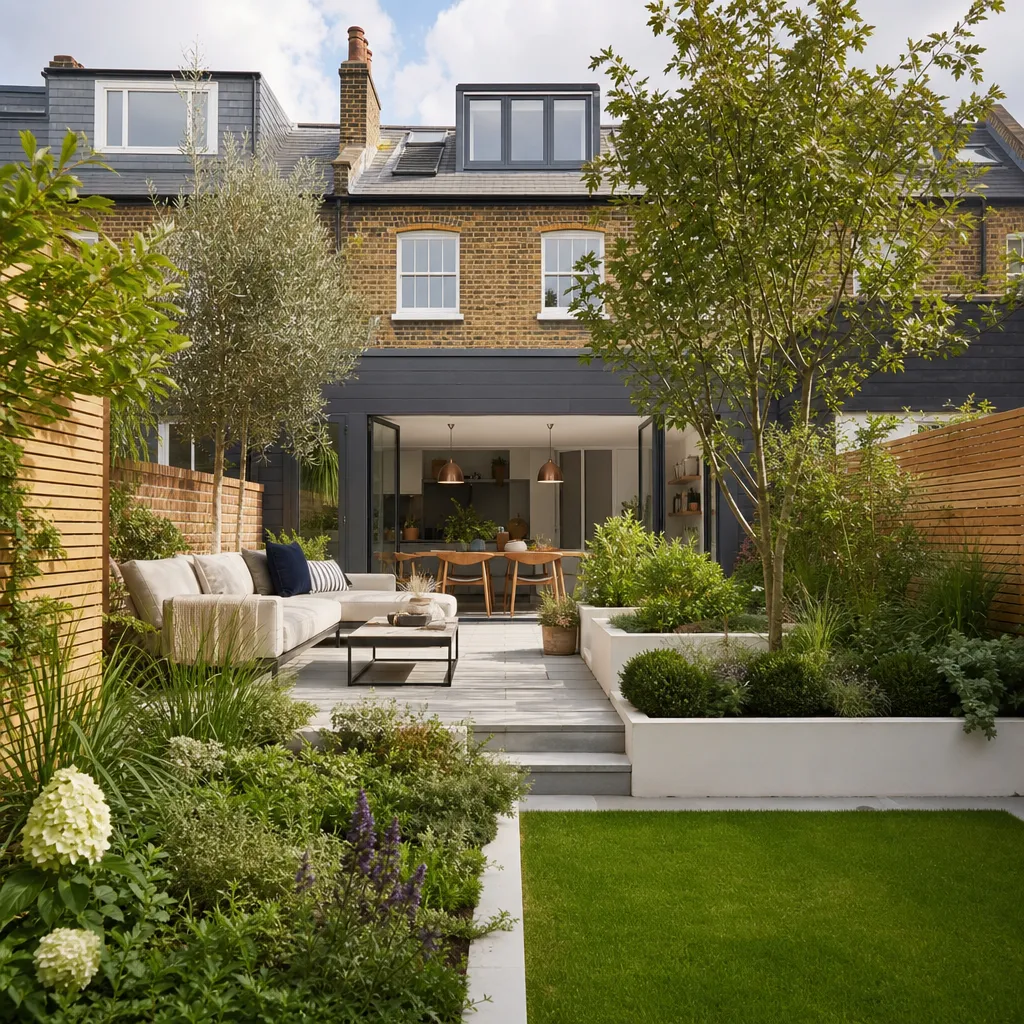
Seasonal Garden Transformations and Outdoor Design Ideas
A successful garden transformation in the UK works with the seasons rather than against them — establishing structure and hard landscaping in autumn or winter, planting in spring, and enjoying the results through summer.
 Improvement & Build
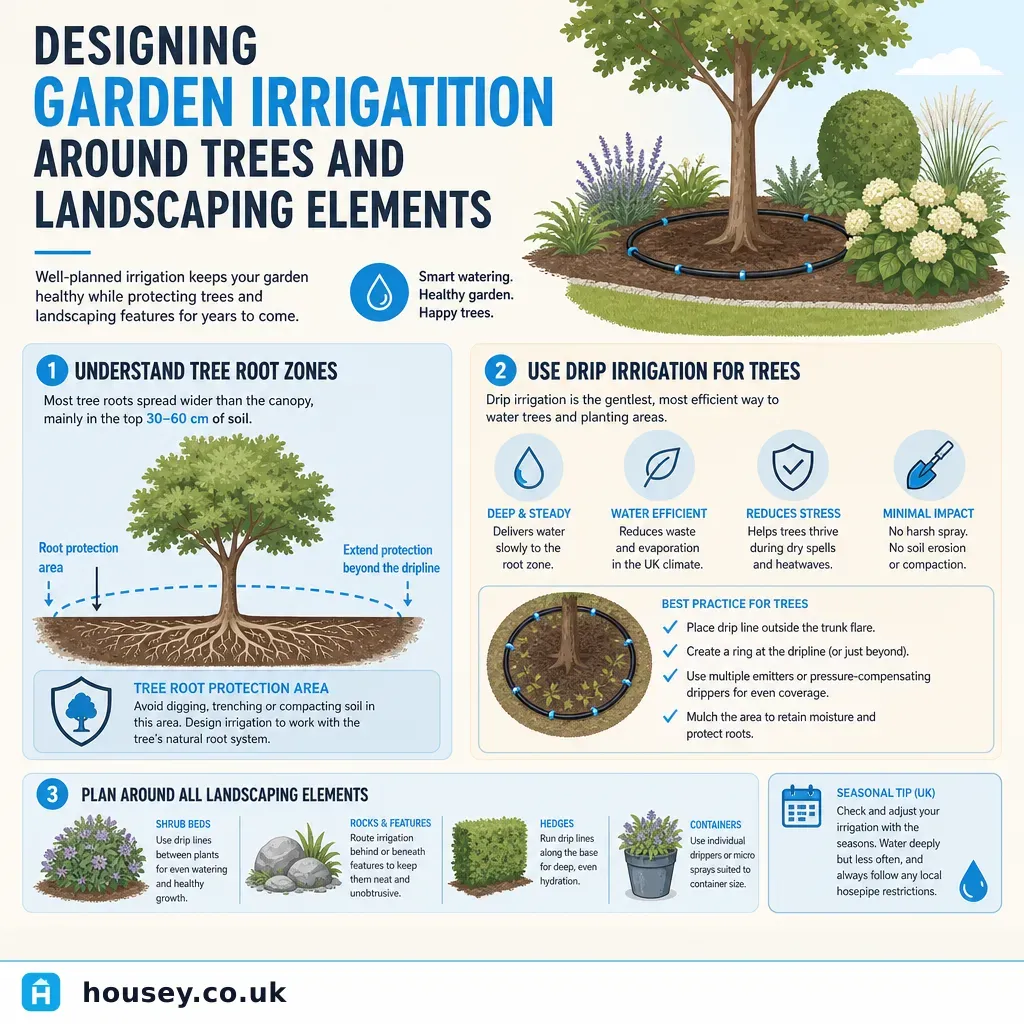
Designing Garden Irrigation Around Trees and Landscaping Elements
Design irrigation around trees by respecting the root protection area defined under BS 5837:2012, using drip or leaky pipe delivery rather than spray heads, and putting the tree zone on its own circuit.
 Improvement & Build
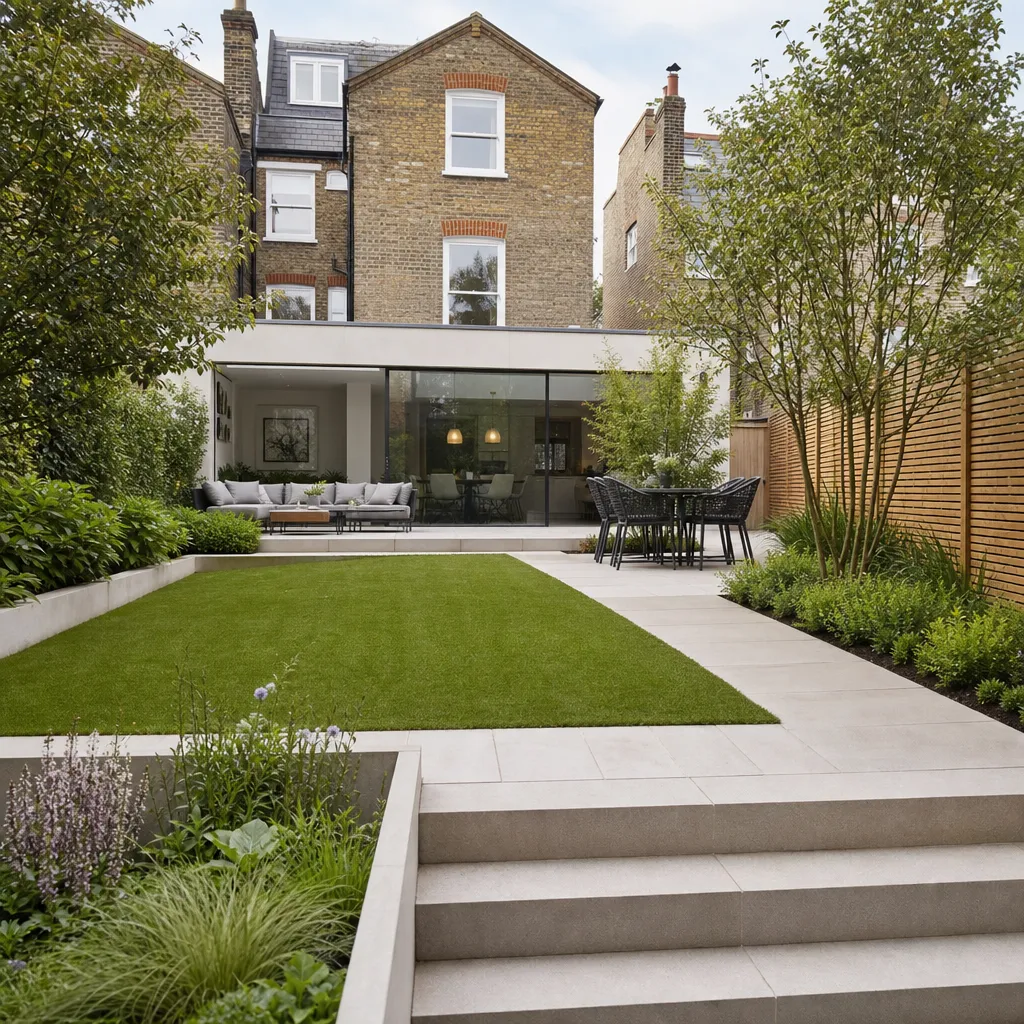
Garden Design Trends and Contemporary Landscaping Ideas
Contemporary UK garden design centres on low-maintenance naturalistic planting, multi-functional outdoor spaces, sustainable hard landscaping materials, and wildlife-friendly rewilded areas.
 Improvement & Build
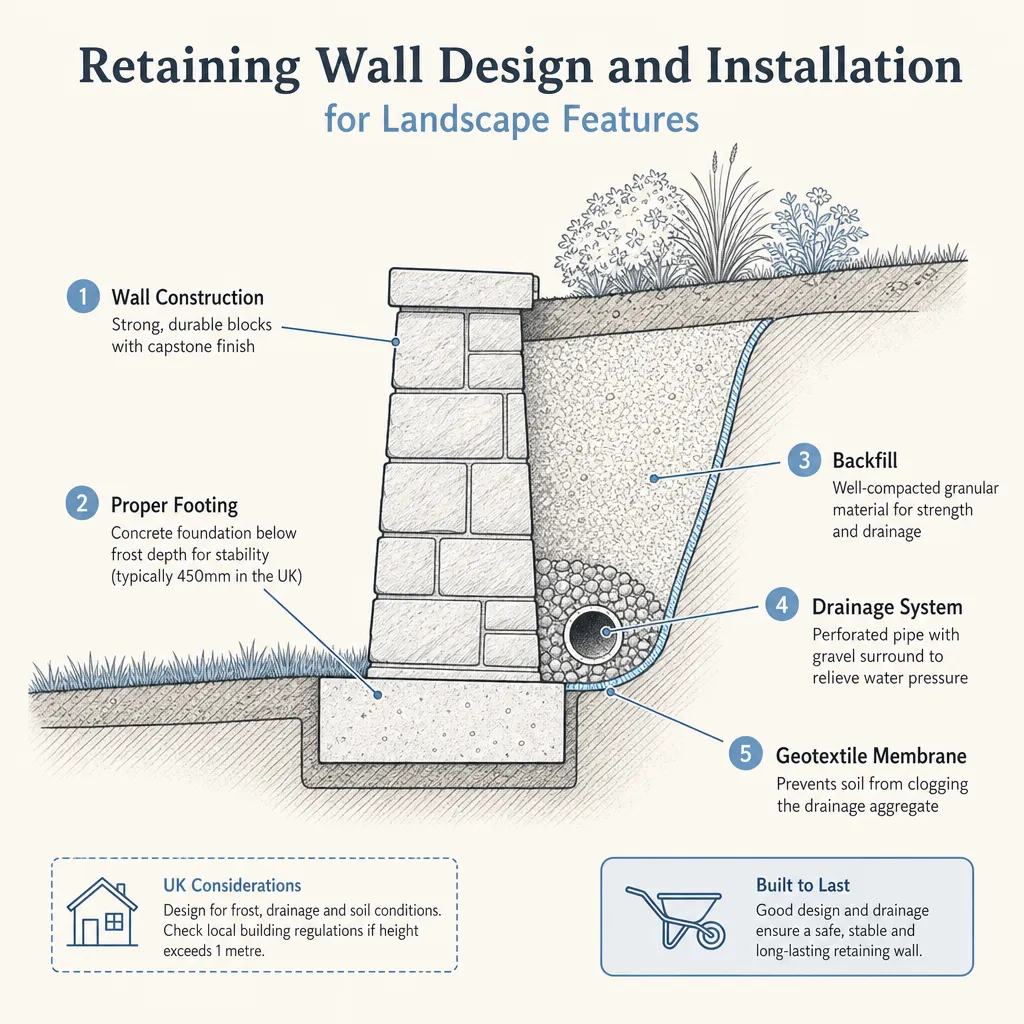
Retaining Wall Design and Installation for Landscape Features
A garden retaining wall holds back soil on a sloped plot using concrete blocks, stone, or timber.
 Improvement & Build
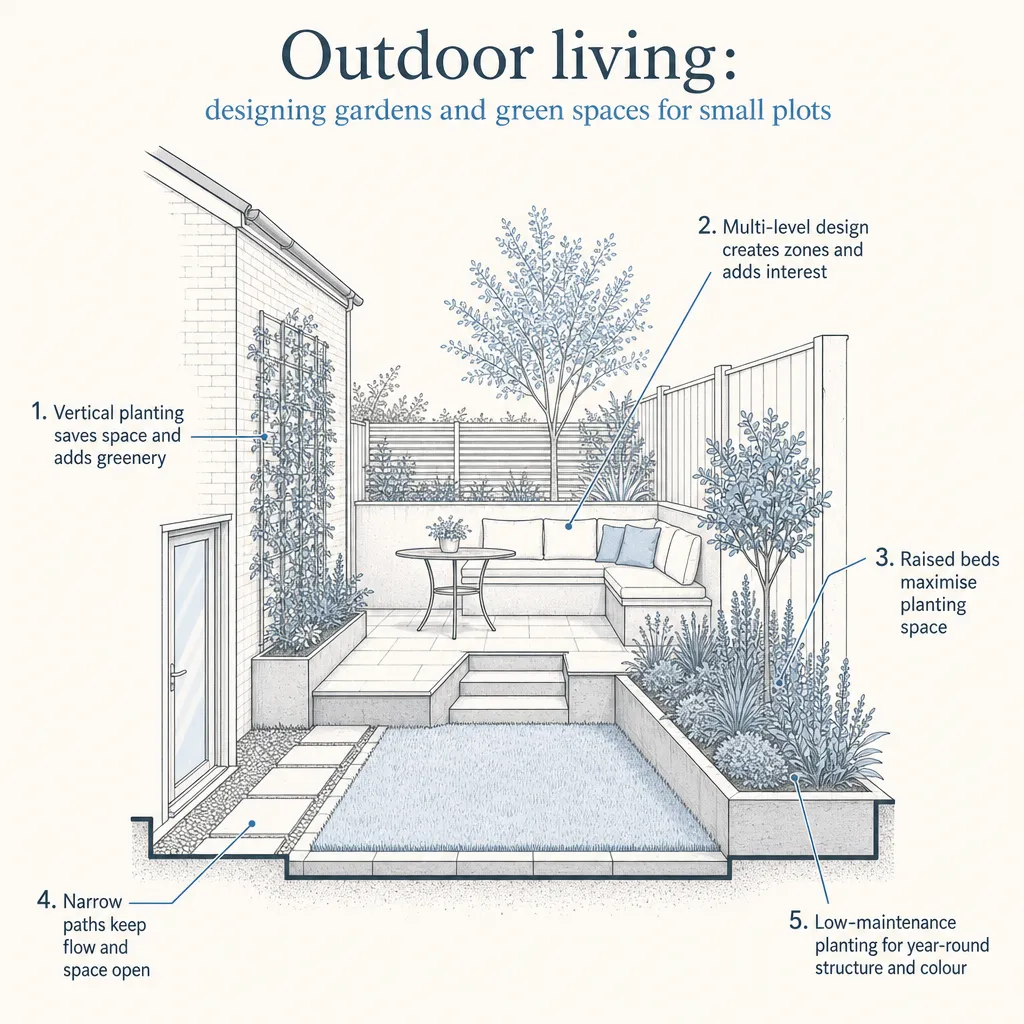
Outdoor living: designing gardens and green spaces for small plots
Small plots work best when divided into defined zones — seating, planting, and utility — before materials are chosen.