Professional Builders: Why Licensing and Qualifications Matter
By Housey · Last reviewed 30th of May 2026
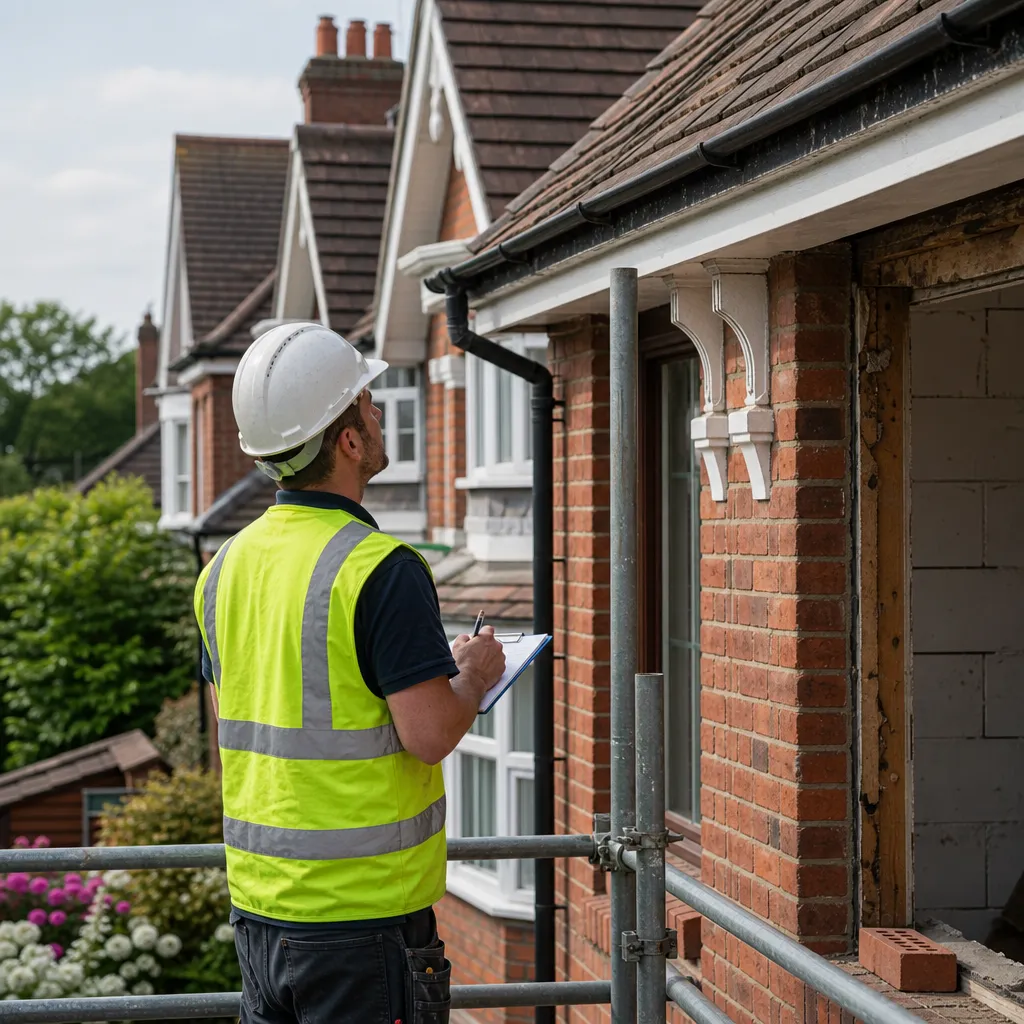
Professional Builders: Why Licensing and Qualifications Matter
In England and Wales, there is no single mandatory builder's licence — anyone can legally call themselves a builder and take on most construction work. This creates a real problem for homeowners commissioning extensions, loft conversions, or significant structural alterations: the burden of checking credentials falls entirely on you. Citizens Advice receives thousands of complaints about building works each year, and poor workmanship or incomplete contracts can lead to significant financial loss, protracted disputes, and expensive rectification work.
Key points
- There is no universal building licence in the UK; however, certain work types — including gas, notifiable electrical work, and replacement windows — are legally regulated and must be carried out by registered operatives.
- A Construction Skills Certification Scheme (CSCS) card confirms the holder has a relevant construction qualification and has passed the CITB Health, Safety and Environment (HS&E) test; it is widely required on commercial sites and used as a competence marker on residential projects.
- A Gas Safe registered engineer is a legal requirement for all gas work in the UK; it is a criminal offence to carry out gas work without registration.
- Electrical work in kitchens, bathrooms, and at consumer unit level is notifiable under Part P of the Building Regulations; NICEIC or NAPIT-registered electricians can self-certify this work without a separate building control application.
- Federation of Master Builders (FMB) membership requires vetting of financial standing, insurance documentation, client references, and workmanship quality — it is not a paid listing.
The safeguards that replace a builder's licence
In the absence of a general licensing system, four main mechanisms help protect homeowners commissioning building work:
1. Building control inspection. Most structural work requires building regulations approval. Local authority or approved inspector building control officers check compliance at key stages against the Approved Documents. This verifies the work — not the builder's qualifications.
2. Trade body membership. Organisations including the Federation of Master Builders (FMB) and the Chartered Institute of Building (CIOB) require members to demonstrate financial standing, hold adequate insurance, and provide verifiable references. Membership is voluntary but meaningful, and directories are publicly searchable.
3. Competent person schemes. Statutory self-certification schemes cover specific regulated work: Gas Safe Register (gas), NICEIC and NAPIT (electrical), FENSA and Certass (replacement windows and doors), and HETAS (solid fuel appliances). Registration means the contractor can certify that their work meets building regulations without a separate building control application.
4. Contracts and insurance. A professional builder should carry public liability insurance (at least £2 million is standard; £5 million or more is preferable for larger projects) and, if employing staff, employers' liability insurance is a legal requirement. A written contract protects both parties and forms the basis for any dispute resolution.
Which qualifications and registrations matter for your project?
Work type | Relevant qualification or registration | Why it matters | Legal requirement? |
|---|---|---|---|
General building and extensions | NVQ Level 2/3 in relevant trade; FMB or CIOB membership | Evidence of trade training and independently vetted competence | No — but strongly advisable |
Gas work (boilers, pipes, appliances) | Gas Safe Register | Only Gas Safe engineers may legally carry out gas work | Yes — criminal offence otherwise |
Electrical notifiable work | NICEIC or NAPIT registration (Part P competent person) | Self-certification without separate building control notification | Yes for notifiable work |
Roofing | NFRC (National Federation of Roofing Contractors) membership | Vetted competence, insurance, workmanship guarantees available | No |
Replacement windows and doors | FENSA or Certass registration | Self-certification under Building Regulations for replacement in existing openings | Yes for replacements |
Structural work | CIOB membership; structural engineer for design | Ensures design and build competence for load-bearing elements | Structural design by engineer required for building control |
Listed buildings and conservation areas | Specialist experience; Historic England guidance | Specialist skills essential; listed building consent required | Yes — listed building consent where applicable |
What to ask before appointing a builder
Use this checklist before signing any building contract:
- What trade qualifications do you hold, and can I see evidence such as an NVQ certificate or CSCS card?
- Are you registered with any trade body such as the FMB or CIOB?
- Do you hold current public liability insurance, and for what level of cover?
- Will you provide a written, itemised contract before work begins?
- Who will be carrying out the work — you directly or subcontractors? Are subcontractors equally qualified and insured?
- Will the work require building regulations approval, and who will manage the relationship with building control?
- Can you provide two or three references from similar recent projects, with a site visit if possible?
- Are you VAT-registered? (A marker of legitimate business operation for ongoing contractors.)
- What are the payment terms? A deposit of 10–25% is typical for most jobs; requests for the majority of funds upfront are a risk indicator.
Red flags when vetting a contractor
These warning signs do not automatically mean a builder is incompetent, but each warrants further investigation before proceeding:
- No written quote or contract — unwillingness to put things in writing is a significant risk indicator.
- Pressure to start immediately, without time to check credentials or take references.
- Requests for cash payment only, or for the majority of funds before work begins.
- Unable to name which building control body will inspect the work.
- No evidence of insurance, or insurance that has lapsed.
- No previous clients willing to act as references.
- Door-to-door soliciting, particularly following bad weather or local incidents.
When to get professional help
For straightforward work such as redecorating or fitting kitchen units, a reputable local tradesperson may be sufficient. A qualified professional — architect, architectural technologist, or project manager — is advisable whenever:
- The project involves structural alterations, an extension, or a loft conversion
- Building regulations drawings and formal specifications are required
- You have concerns about a contractor's credentials and want independent verification before signing
- The contract value exceeds £50,000 and you would benefit from an independent contract administrator to manage payments and respond to defects
How Housey can help
Housey lists vetted extension builders, design-and-build firms, and architectural technologists who manage projects from initial drawings through to building control sign-off. All providers are reviewed and rated by previous clients, making it straightforward to identify experienced professionals before committing to any contract.
Frequently asked questions
Do UK builders need to be licensed?
No — there is no universal builder's licence in England, Wales, or Scotland for general building work. However, specific work types are regulated: gas work requires Gas Safe registration, notifiable electrical work requires a Part P competent person or building control notification, and replacement windows require FENSA or Certass certification. Trade body membership such as FMB or CIOB is voluntary but provides meaningful vetting.
What insurance should a builder have?
At minimum, a professional builder should hold public liability insurance, typically for a minimum of £2 million cover (£5 million or more is common and preferable for larger projects). If the builder employs staff, employers' liability insurance is a legal requirement. Request a current certificate of insurance before work begins and confirm it covers the type and value of work being carried out.
What is a CSCS card and does my builder need one?
A Construction Skills Certification Scheme (CSCS) card confirms the holder has a relevant construction qualification and has passed the CITB Health, Safety and Environment (HS&E) test. It is standard on commercial sites and widely used as a competence marker on residential projects. While not legally mandatory for domestic work, a builder's willingness to hold one is a positive indicator of professional standards.
How do I check if a builder is FMB-registered?
You can search the Federation of Master Builders member directory at fmb.org.uk. FMB membership requires background checks, insurance verification, inspection of recent work, and client references. Members are also covered by the FMB Build Assurance scheme, which provides deposit protection and access to an independent dispute resolution service if problems arise.
Sources and further reading
- Gas Safe Register: check a registered engineer — Gas Safe Register
- NICEIC: find a registered contractor — NICEIC
- Federation of Master Builders: find a builder — Federation of Master Builders
- Building Regulations: Approved Documents — GOV.UK
- Rogue traders and building disputes — Citizens Advice
Useful next reads
 Improvement & Build
Stopping Unqualified Traders: Standards That Protect Homeowners
Protect yourself from unqualified traders by knowing which trades are legally regulated: gas engineers must be Gas Safe registered, electricians must work under Part P or notify building control, and window installers must be FENSA or Certass registered.
 Improvement & Build
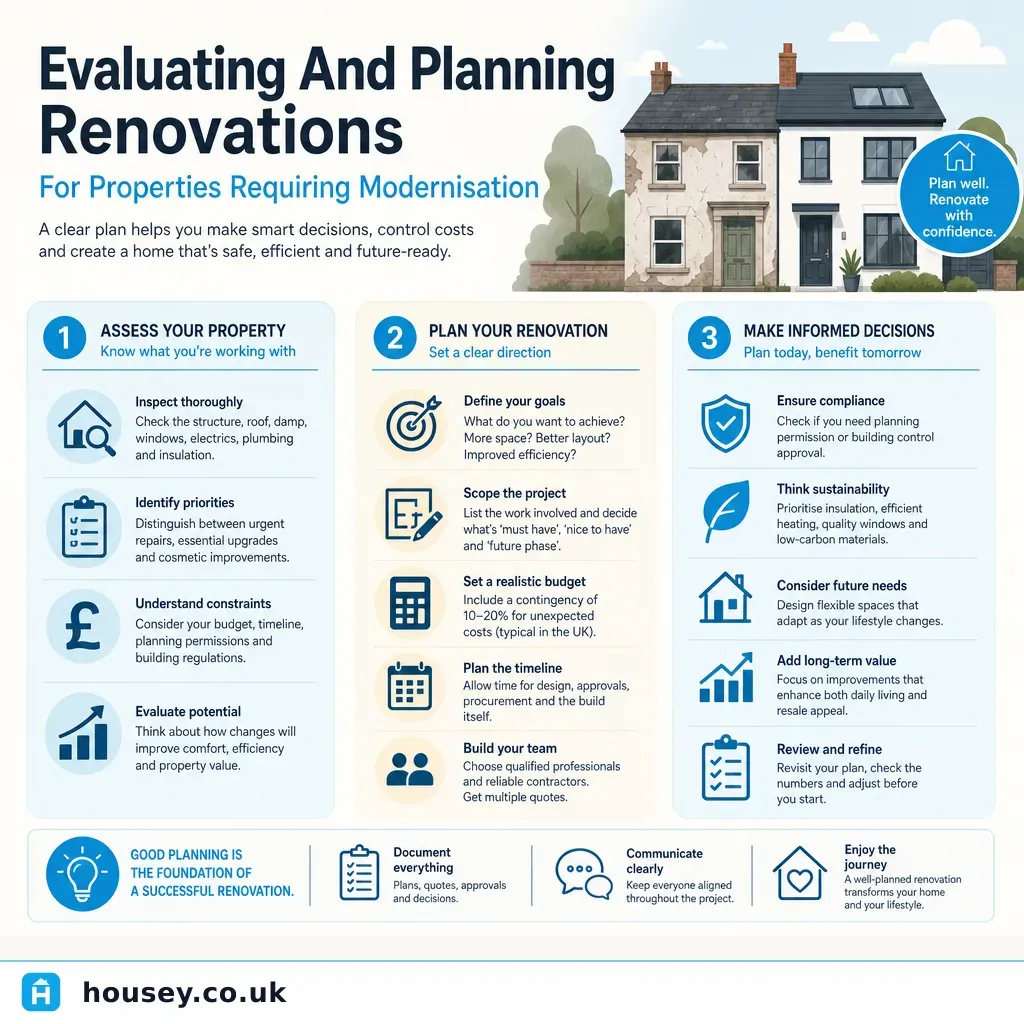
Evaluating And Planning Renovations For Properties Requiring Modernisation
Start by commissioning a condition survey — RICS Level 3 for pre-1919 properties — to identify structural defects, damp, and services issues before finalising a budget.
 Improvement & Build
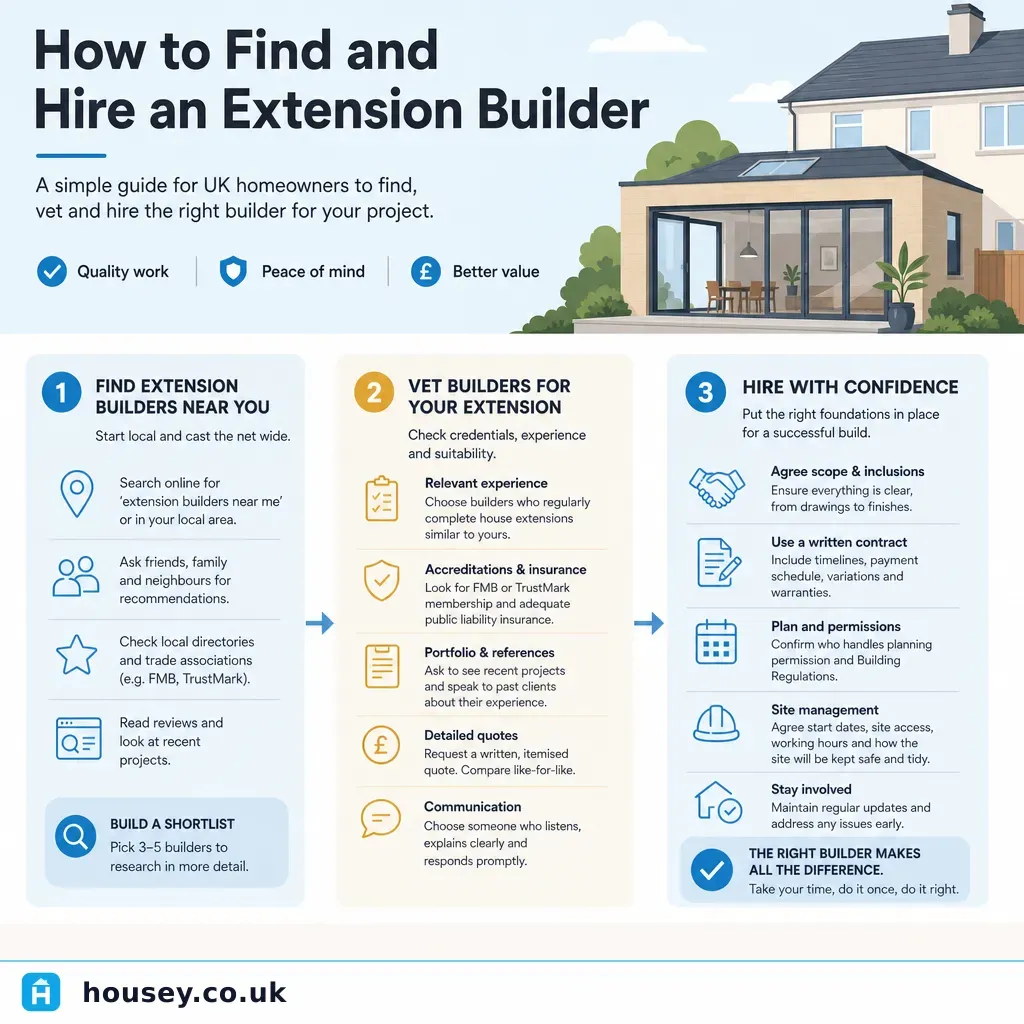
How to Find and Hire an Extension Builder
To hire a reliable extension builder, get at least three detailed written quotes from contractors with documented experience of similar projects.
 Improvement & Build
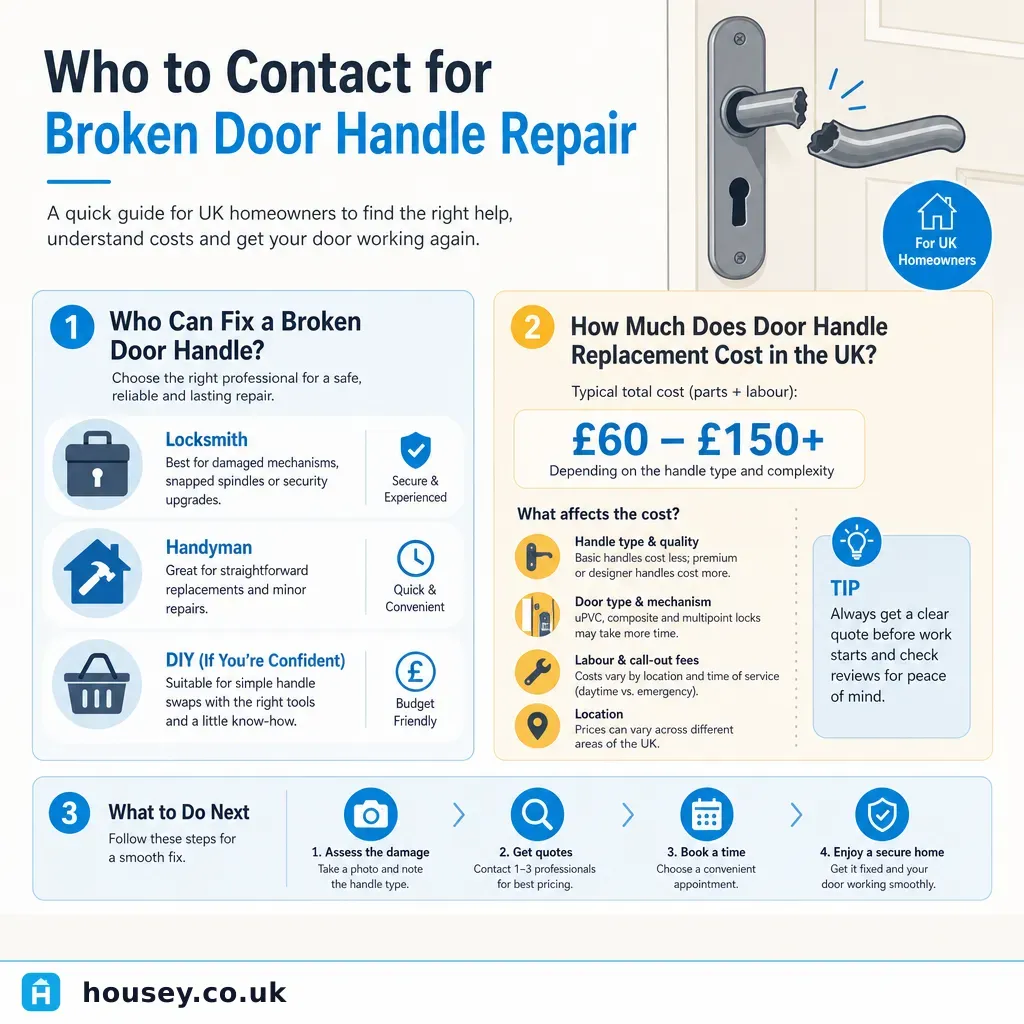
Who to Contact for Broken Door Handle Repair
For a broken door handle, a general handyperson can handle most internal timber door repairs, while a joiner or locksmith is better suited to external doors, particularly if the lock mechanism is affected.
 Improvement & Build
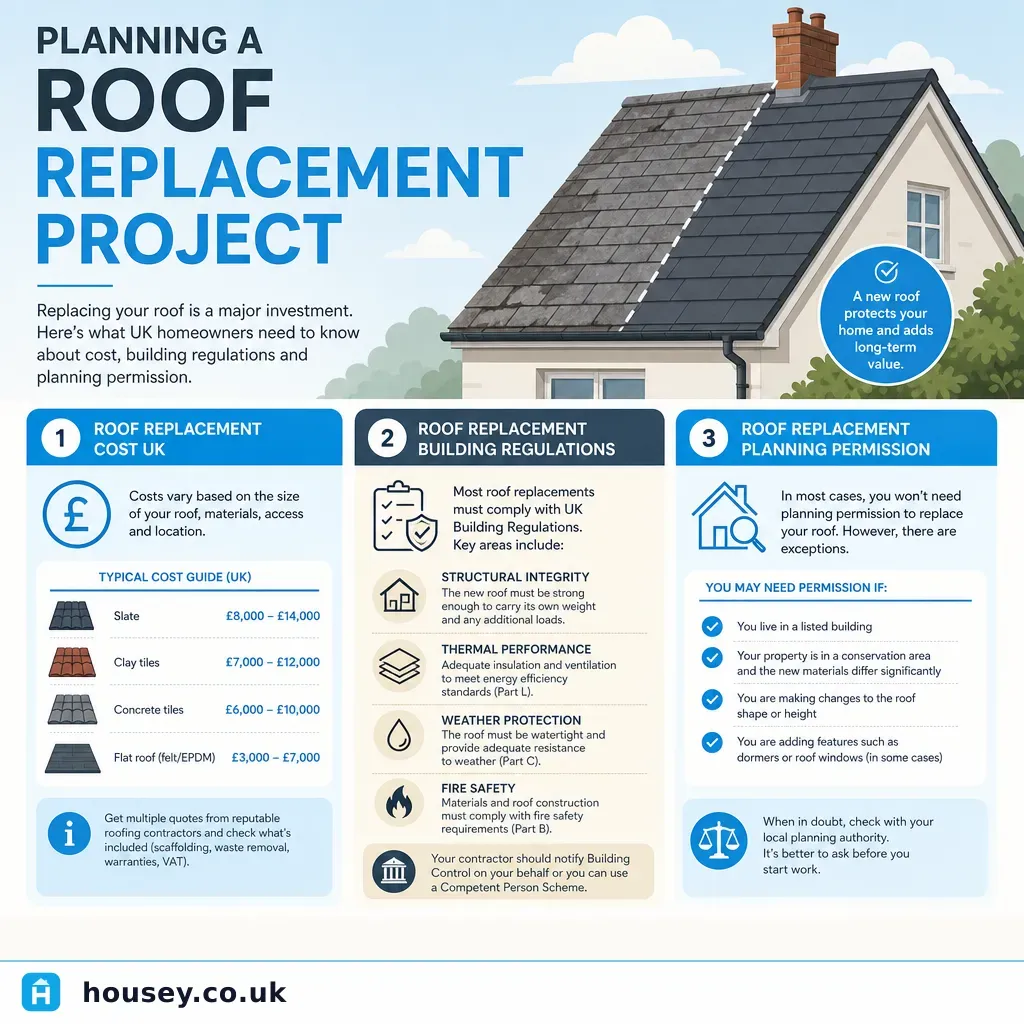
Planning a Roof Replacement Project
A roof replacement project involves stripping the existing covering, renewing the sarking felt and battens, and laying new tiles, slates, or a flat-roof membrane.