Stopping Unqualified Traders: Standards That Protect Homeowners
By Housey · Last reviewed 24th of May 2026
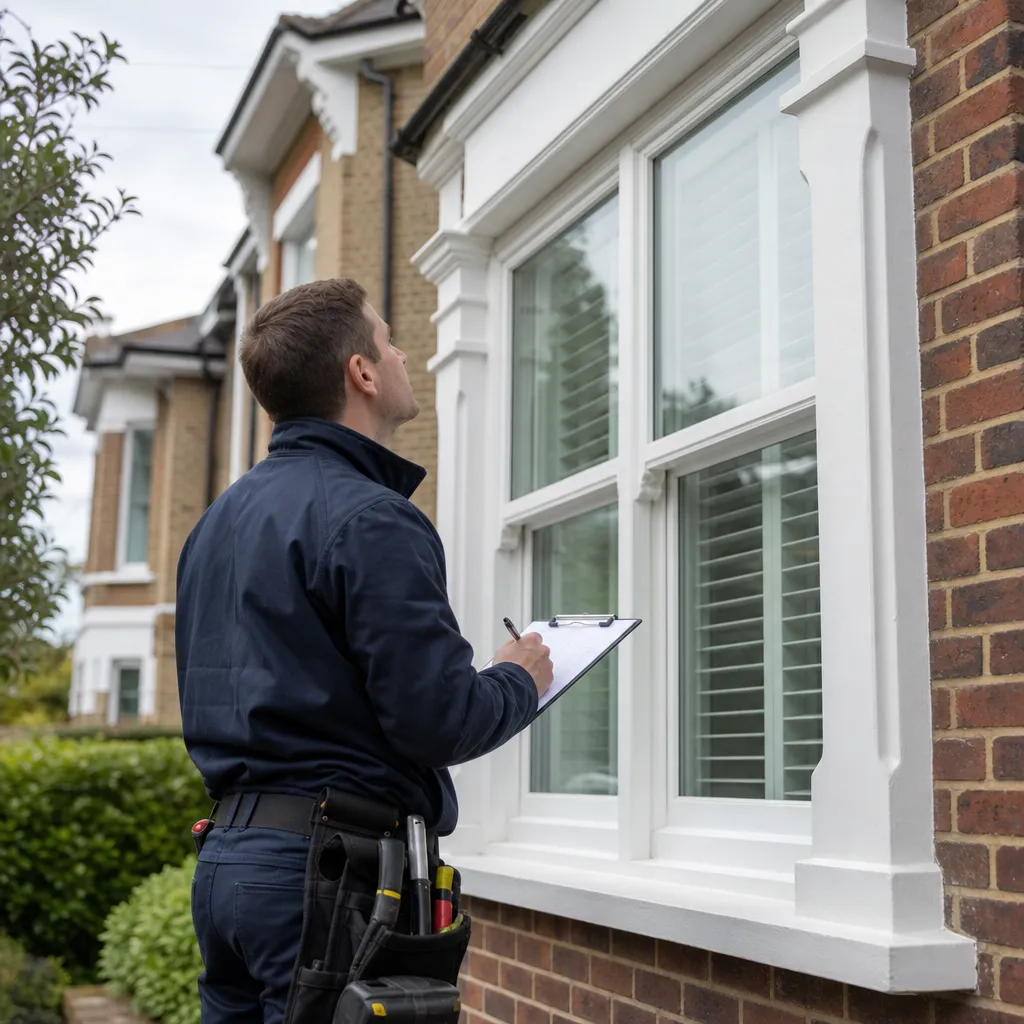
Stopping Unqualified Traders: Standards That Protect Homeowners
Unqualified traders represent one of the most persistent risks in UK home improvement — not just to homeowners' finances, but to the structural integrity and safety of their properties. Every year, Trading Standards and professional bodies receive thousands of complaints about substandard work carried out by tradespeople without the necessary qualifications, registrations, or insurance. Knowing which standards apply to which trades, and how to verify compliance before work starts, is practical knowledge that can prevent costly and dangerous mistakes.
Key points
- Part P of the Building Regulations (England) requires that most domestic electrical work be carried out either by a registered competent person or notified to local building control before work commences.
- Gas work on any gas fitting, appliance, or flue must be carried out by a Gas Safe Register-registered engineer — operating without registration is a criminal offence under the Gas Safety (Installation and Use) Regulations 1998.
- FENSA and Certass are the two main competent-person schemes for replacement windows and doors; installers who are not registered must notify local building control and obtain approval.
- The Consumer Protection from Unfair Trading Regulations 2008 makes it unlawful for a trader to falsely claim membership of a trade body or professional association.
- TrustMark, the government-endorsed quality scheme, requires member businesses to pass checks on trading history, insurance, and technical competence before being listed.
Why qualifications and scheme membership matter
For most home improvement work, there is no single mandatory builder's licence in the UK. An unqualified person can legally describe themselves as a builder and take on general construction work. However, several critical areas — notably gas, domestic electrical work, and fenestration — are legally regulated, and unqualified work in these areas can endanger lives and create serious legal problems for homeowners.
The absence of a universal licence means the burden of verification falls largely on the homeowner. Understanding where qualifications are legally required — and where voluntary accreditation serves as a meaningful quality signal — helps you ask the right questions and avoid expensive remediation down the line.
Which standards apply to which trade
Trade or work type | Is registration legally required? | Relevant scheme or regulation | What to check |
|---|---|---|---|
Gas work (boilers, fires, cookers, pipework) | Yes | Gas Safe Register; Gas Safety (Installation and Use) Regulations 1998 | Engineer's Gas Safe ID card; verify at gassaferegister.co.uk |
Domestic electrical work (most types) | Yes — competent person or BCO notification | Building Regulations Part P; NICEIC, NAPIT, ELECSA schemes | Scheme registration; Electrical Installation Certificate on completion |
Replacement windows and doors | Yes — self-cert or BCO approval | Building Regulations; FENSA or Certass scheme | FENSA or Certass registration number, or confirm BCO notification |
Oil-fired heating | Strongly recommended | OFTEC registration | OFTEC registered technician number |
Solid fuel and wood-burning stove installation | Strongly recommended | HETAS registration | HETAS registered installer number |
General building and extensions | No mandatory registration | Federation of Master Builders, TrustMark | Insurance certificate, references, FMB or TrustMark membership |
Drainage work | No mandatory registration | WaterMark, TrustMark | Insurance certificate, references |
Roofing | No mandatory registration | NFRC (National Federation of Roofing Contractors), TrustMark | NFRC membership, insurance certificate, references |
How to verify a trader's qualifications
Gas engineers: Every Gas Safe-registered engineer carries a photo ID card listing the appliance categories they are authorised to work on. Check the card in person and verify registration online at Gas Safe Register. Do not allow gas work to proceed without first confirming current registration — the risk of carbon monoxide poisoning and explosion makes this non-negotiable.
Electricians: NICEIC, NAPIT, and ELECSA are the main competent-person schemes for domestic electrical work under Part P. Members can self-certify notifiable work without a separate building control application. Ask to see scheme registration evidence, and ensure you receive a signed Electrical Installation Certificate on completion of any notifiable works.
Window and door installers: A FENSA-registered installer self-certifies replacement windows and doors against Building Regulations requirements and registers the work with the local authority on the homeowner's behalf. Check registration status at FENSA before installation begins.
General builders: The Federation of Master Builders (FMB) vets members for insurance, references, and trading standards compliance. TrustMark provides a government-endorsed quality check across over 70 trades. Both are meaningful filters, though neither replaces legally required scheme memberships.
What to assume — and what not to assume
Common assumption | The reality |
|---|---|
Trading for 10 years must mean they are qualified | Trading history does not confirm qualification. Always verify scheme membership independently. |
The cheapest quote just has leaner margins | Significantly undercut quotes can reflect missing insurance, unqualified labour, or plans to use inferior materials. |
A trader claiming Gas Safe registration is registered | False claims of Gas Safe registration are reported every year. Always verify at gassaferegister.co.uk before work starts. |
A receipt proves the work is compliant | A receipt records payment only. A relevant completion certificate confirms regulatory compliance. |
Building Regulations only apply to large projects | Part P applies to most new electrical circuits in a home, including work in a kitchen, bathroom, or outdoors. |
Decision tree: which check should I prioritise?
- Gas work? Verify Gas Safe registration before work starts. No exceptions.
- Electrical work? Confirm NICEIC, NAPIT, or ELECSA membership and that an Electrical Installation Certificate will be issued on completion.
- New windows or doors? Confirm FENSA or Certass registration, or arrange building control notification yourself before installation.
- Oil-fired boiler or heating system? Look for OFTEC registration.
- Wood-burning stove or solid fuel appliance? Look for HETAS registration.
- Extension, loft conversion, or structural building work? Check TrustMark or Federation of Master Builders membership; verify public liability insurance; obtain at least two references.
- Any trade? Ask for a company registration number (Companies House) or VAT number, plus a current public liability insurance certificate.
Your rights when standards are not met
The Consumer Rights Act 2015 requires that services be carried out with reasonable care and skill. If work falls below this standard, you have the right to ask the trader to remedy the defect at no additional charge, or in some cases to receive a price reduction.
For legally regulated work carried out without proper certification — particularly gas and electrical — contact the relevant scheme body. Gas Safe Register and NICEIC both have processes for investigating complaints against registered members, and can refer cases involving illegal or dangerous work to the Health and Safety Executive (HSE) for potential prosecution.
Report false claims of accreditation, aggressive sales tactics, or criminal behaviour to Trading Standards via Citizens Advice (0808 223 1133).
When to get professional help
Seek professional assessment or contact the relevant authority if:
- Gas or electrical work has been completed without a certificate — the installation may need independent inspection and potentially remediation
- A trader has falsely claimed Gas Safe, NICEIC, or FENSA membership — report to the relevant scheme and to Trading Standards immediately
- Building work affecting structure, party walls, or foundations has been carried out without building control sign-off — contact your local authority building control team
- A dispute about work quality or completion cannot be resolved with the trader — Citizens Advice can advise on Trading Standards referral or small claims proceedings
How Housey can help
Housey vets every provider on its platform for relevant accreditations and insurance before they appear in search results. Whether you need extension builders, roofers, drainage contractors, or an Electrical Installation Condition Report (EICR), you can request and compare quotes from verified professionals and keep full documentation of every exchange.
Frequently asked questions
Can an unregistered person legally carry out electrical work in England?
Most domestic electrical work — adding new circuits, replacing consumer units, and work in kitchens, bathrooms, or outdoors — must be notified to building control or carried out by a registered competent person under Part P. An unregistered person can carry out some minor like-for-like replacements without notification. The GOV.UK guidance on Part P sets out the full list of notifiable work types.
What is the difference between TrustMark and the Federation of Master Builders?
Both are quality assurance schemes, but they operate differently. TrustMark is a government-endorsed scheme covering a broad range of trades; businesses must pass a quality audit before listing. The Federation of Master Builders is a trade association focused on building contractors, with a vetting process and code of conduct. Neither replaces legally required registrations such as Gas Safe or NICEIC.
Does a Gas Safe certificate mean the installation is permanently compliant?
A Gas Safe certificate confirms that a qualified engineer inspected and approved the installation at the time of the visit. It does not guarantee permanent compliance — appliances and pipework can develop faults over time. Landlords are legally required to renew gas safety checks annually under the Gas Safety (Installation and Use) Regulations 1998.
What documents should I receive after electrical work is completed?
After any notifiable electrical work, you should receive a signed Electrical Installation Certificate (EIC) showing the installer's name and competent-person scheme membership. For smaller works, a Minor Electrical Installation Works Certificate is issued. Keep these documents securely — they will be requested when you sell the property or apply for a remortgage.
Who should I contact if I suspect a rogue gas engineer?
Report to the Gas Safe Register immediately by calling 0800 408 5500 or using their online reporting tool. Gas Safe investigates reports of illegal gas work and can refer cases to the Health and Safety Executive for prosecution. Also report to Trading Standards via Citizens Advice on 0808 223 1133.
Sources and further reading
- Gas Safety (Installation and Use) Regulations 1998 — legislation.gov.uk
- Building Regulations Approved Document P: electrical safety in dwellings — GOV.UK
- Gas Safe Register: verify a registered engineer — Gas Safe Register
- FENSA: check a window and door installer — FENSA
- TrustMark: find a vetted tradesperson — TrustMark
- Citizens Advice: reporting a rogue trader — Citizens Advice
- Consumer Rights Act 2015 — legislation.gov.uk
Useful next reads
 Improvement & Build
Professional Builders: Why Licensing and Qualifications Matter
There is no universal builder's licence in the UK, but certain types of work are legally regulated — gas work requires Gas Safe registration, notifiable electrical work needs a Part P competent person, and window replacements require FENSA or Certass certification.
 Improvement & Build
Identifying Problem Areas: Rogue Traders and How to Protect Your Home
Rogue traders target homeowners with unsolicited visits, pressurised quotes, and substandard or incomplete work.
 Improvement & Build
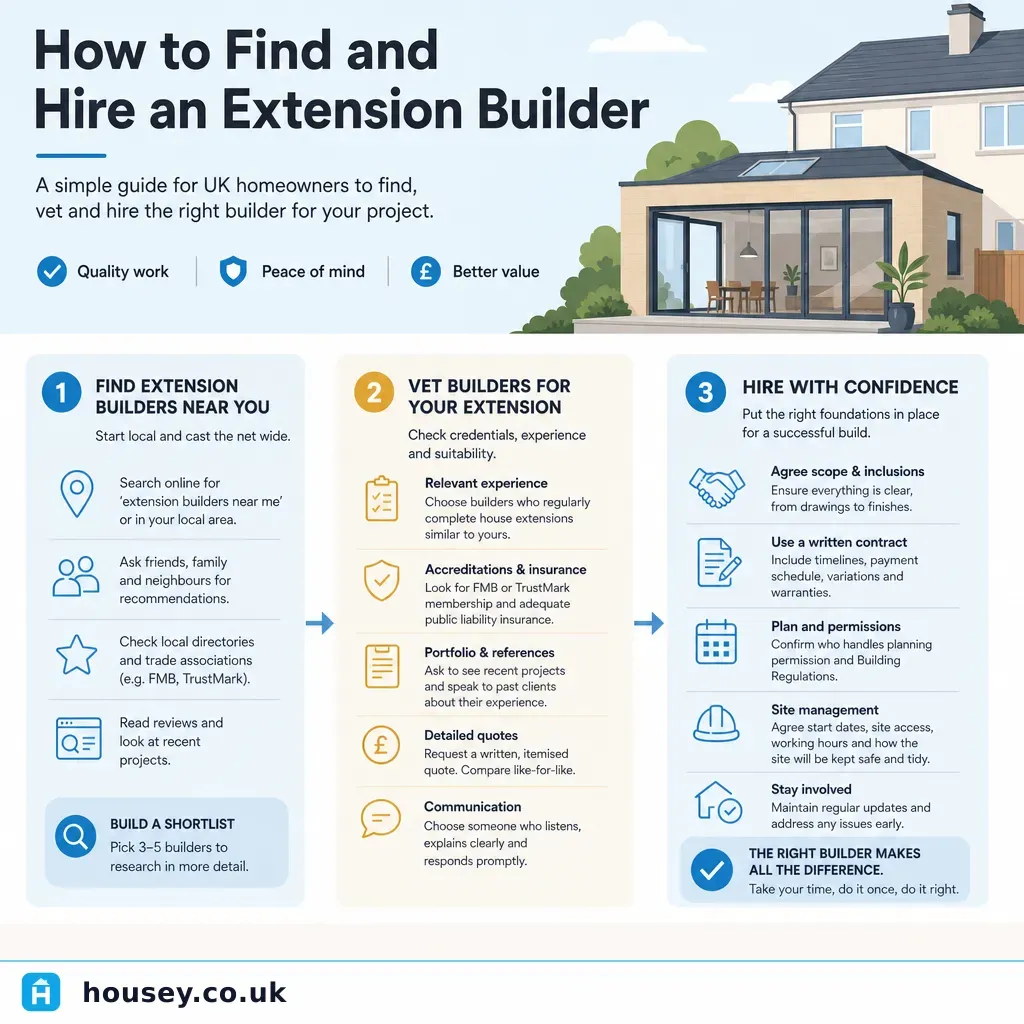
How to Find and Hire an Extension Builder
To hire a reliable extension builder, get at least three detailed written quotes from contractors with documented experience of similar projects.
 Improvement & Build
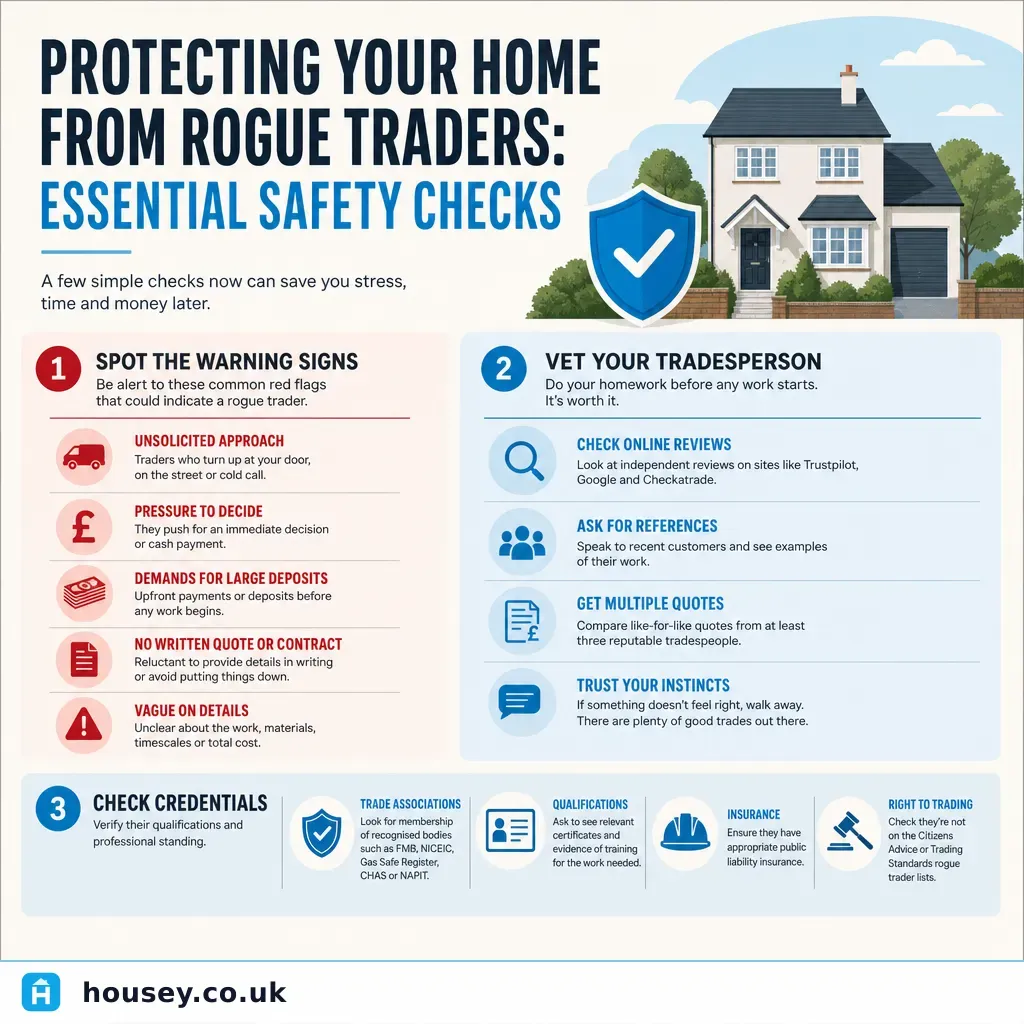
Protecting Your Home from Rogue Traders: Essential Safety Checks
Protect your home from rogue traders by verifying credentials before work starts: check for a trading address and company number, ask for references from recent local jobs, confirm any required scheme membership (Gas Safe, NICEIC, FENSA), and never pay cash in full upfront.
 Improvement & Build
Understanding Service Guarantees: Protection for Your Home Improvement Project
Home improvement guarantees fall into three main forms: workmanship guarantees issued by the contractor, insurance-backed guarantees (IBGs) underwritten by a third party and valid even if the contractor closes, and manufacturer warranties on installed products.