Property Market Trends: Understanding Demand and Land Value Dynamics
By Housey · Last reviewed 24th of May 2026

Property Market Trends: Understanding Demand and Land Value Dynamics
The UK property market regularly generates headlines — rising prices, regional disparities, shifting buyer behaviour — but the underlying mechanics are less often explained clearly. Whether you are considering a purchase, planning to sell, or evaluating land for development, understanding what drives demand and how land values are formed helps you ask better questions and avoid costly assumptions. Property and land are not uniform assets, and national statistics rarely capture the conditions that matter at street or postcode level.
Key points
- HM Land Registry publishes the UK House Price Index (UK HPI) monthly, tracking residential property transactions registered in England and Wales — the most authoritative source of completed sale data available to the public.
- Land values are distinct from house prices: land value is the residual amount remaining after deducting construction costs, professional fees, and required developer profit from the expected end sale value of a development.
- The Bank of England base rate influences mortgage affordability directly; changes typically affect buyer demand within 3–6 months as fixed-rate deals expire and new borrowers enter the market.
- The National Planning Policy Framework (NPPF) restricts land supply in England through policies including green belt protection, directly affecting development land values where planning consent is difficult to obtain.
- Local planning authority decisions — including housing land supply assessments, community infrastructure levy (CIL) rates, and section 106 obligations — have significant influence on land values at a site-specific level.
What drives UK property demand?
Property demand in the UK is shaped by a combination of macroeconomic, demographic, and policy factors. These interact in ways that vary significantly by region, property type, and tenure.
Demand driver | How it works | Key indicator to watch |
|---|---|---|
Mortgage affordability | Lower interest rates reduce monthly payments, bringing more buyers into the market | Bank of England base rate; lender standard variable rates |
Employment and income | Higher employment and wage growth support purchase activity | ONS labour market statistics |
Housing supply | Where new build supply is constrained, demand pressure sustains or raises prices | MHCLG housebuilding statistics; LPA housing delivery test data |
Population and household formation | Growing population and falling average household size increases the number of homes required | ONS household projections |
Government policy | Stamp duty reliefs, mortgage guarantee schemes, and changes to Right to Buy affect specific demand segments | GOV.UK policy announcements; HMRC SDLT statistics |
Consumer sentiment | Expectations about future prices and economic stability affect transaction volumes | RICS Residential Market Survey; Nationwide and Halifax house price indices |
How land values are calculated
Land value is not a fixed or publicly reported figure in the way that residential sale prices are. It is generally assessed as a residual: the expected end sale value of a development minus the cost of construction, professional fees, finance, and the developer's required profit margin.
This means land value is highly sensitive to:
- Planning status: a plot with full planning permission for residential development is worth significantly more than equivalent land without consent.
- Development density: permission for more units on a plot increases total development value and therefore the residual land value.
- Local property values: because land value is derived from end sale prices, locations with higher house prices support higher land values.
- Infrastructure and servicing costs: plots requiring significant roads, utilities, or ground remediation carry lower net land values.
- Viability constraints: affordable housing requirements, CIL charges, and section 106 agreements reduce developer profit and therefore the price a developer can pay for land.
HM Land Registry does not separately publish residual land values. The Valuation Office Agency (VOA) maintains rating and valuation data, but residual land values for development sites are typically assessed by chartered surveyors with RICS-recognised development appraisal expertise.
What not to assume about UK property market trends
Do not assume national averages apply locally. The UK House Price Index is a national average. Conditions in central London, rural Northumberland, and coastal Cornwall differ substantially. Always check local transaction data via the HM Land Registry price paid data tool before drawing site-specific conclusions.
Do not assume asking prices reflect the market. Asking prices are a vendor aspiration, not a transaction. Completed sale prices as recorded by HM Land Registry are the most reliable guide to what buyers are actually paying.
Do not assume rising prices signal an optimal time to sell. Transaction volumes often fall in periods of rapid price growth as buyers hesitate; a market with steady prices and high transaction volumes may produce faster sales.
Do not assume land with planning permission is straightforwardly valuable. Planning conditions, affordable housing obligations, viability assessments, and infrastructure requirements can substantially reduce the financial benefit of a consent.
Do not assume forecasts are reliable. House price forecasts from banks, estate agents, and research organisations have a mixed track record over 12–24 month horizons. Use them as indicative context, not investment certainty.
Regional variation in UK property markets
The UK does not have a single property market. Scotland, Wales, Northern Ireland, and England operate under different legal frameworks, planning systems, and tax regimes:
- Scotland: property transactions use a different conveyancing system (missives); Land and Buildings Transaction Tax (LBTT) replaced Stamp Duty Land Tax in 2015.
- Wales: Land Transaction Tax (LTT) applies; some planning policies differ from the NPPF.
- Northern Ireland: Land Registry of Northern Ireland holds transaction records; the market is structurally different from Great Britain.
- England: wide regional variation between the South East, Midlands, and the North; local planning authority policies create further site-specific variation within regions.
Important limitations
This article provides general information about property market dynamics and land value principles. It is not financial advice, valuation advice, or investment guidance. Property values, demand conditions, and land values change frequently and vary significantly by location, property type, and individual circumstances. A qualified professional should assess any specific property or situation before financial or development decisions are made.
When this becomes urgent
Seek professional advice promptly if you are:
- Relying on a property value estimate to make a financial decision, including a remortgage, equity release, purchase offer, or development appraisal.
- Considering purchasing land and assessing its development potential.
- In a dispute where property value is material — probate, divorce, compulsory purchase, or capital gains tax.
- Receiving an offer on a property you own and uncertain whether it reflects current market conditions.
What to ask a qualified professional
Before instructing a valuer or property market specialist:
- Are you RICS-accredited, and which valuation standard will you apply (RICS Red Book Global Standards)?
- What comparable evidence will you use, and over what time period and geography?
- Is this a market value assessment or an insurance or reinstatement valuation — and what is the practical difference for my situation?
- If assessing development land: what planning assumptions and density scenarios underpin the valuation?
- What will your report include, and will it be suitable for the purpose I need — mortgage, sale, tax, or litigation?
When to get professional help
Market trend data from HM Land Registry, ONS, and RICS provides useful context but does not replace a formal valuation. If you need a reliable figure for a specific property or piece of land — for any financial, legal, or planning purpose — instruct a RICS-accredited chartered surveyor or registered valuer.
How Housey can help
Housey can connect you with qualified professionals who provide valuation surveys on residential property, helping you understand what a property is worth in the current market before you buy, sell, or make decisions about development or improvement.
Frequently asked questions
What is the difference between a house price and a land value?
A house price is the total amount paid for a property, covering both the building and the land it stands on. Land value is the underlying worth of the plot itself, typically assessed as the residual amount a developer or buyer would pay after deducting construction costs and required profit from the expected sale value. In high-demand locations, land can represent the majority of a property's total value.
How does the Bank of England base rate affect property demand?
The base rate influences the cost at which lenders borrow, which feeds through to mortgage rates offered to buyers. When it rises, repayments on variable and new fixed-rate deals increase, reducing affordability and typically dampening demand. When it falls, more buyers can afford to borrow, supporting activity. The effect usually takes several months to feed through as existing fixed-rate deals expire.
Where can I find reliable UK house price data?
The HM Land Registry UK House Price Index is the most comprehensive source of completed transaction data in England and Wales. The ONS also publishes residential property price statistics. For local-level data, the HM Land Registry price paid data tool allows postcode-level searches of registered property transactions.
Can I find out the land value of a specific plot?
Residual development land values for individual plots are not publicly reported and require a professional assessment by a chartered surveyor with development appraisal expertise. The VOA holds rating data, but this does not provide a development land value. For sites with or without planning permission, a RICS-accredited valuer should be instructed to provide a formal opinion.
Sources and further reading
- UK House Price Index — HM Land Registry and ONS
- Price paid data — HM Land Registry
- Monetary Policy Committee and interest rates — Bank of England
- National Planning Policy Framework — MHCLG
- RICS valuation — global standards (Red Book) — RICS
- Stamp Duty Land Tax statistics — HMRC
Useful next reads
 Buying & Moving
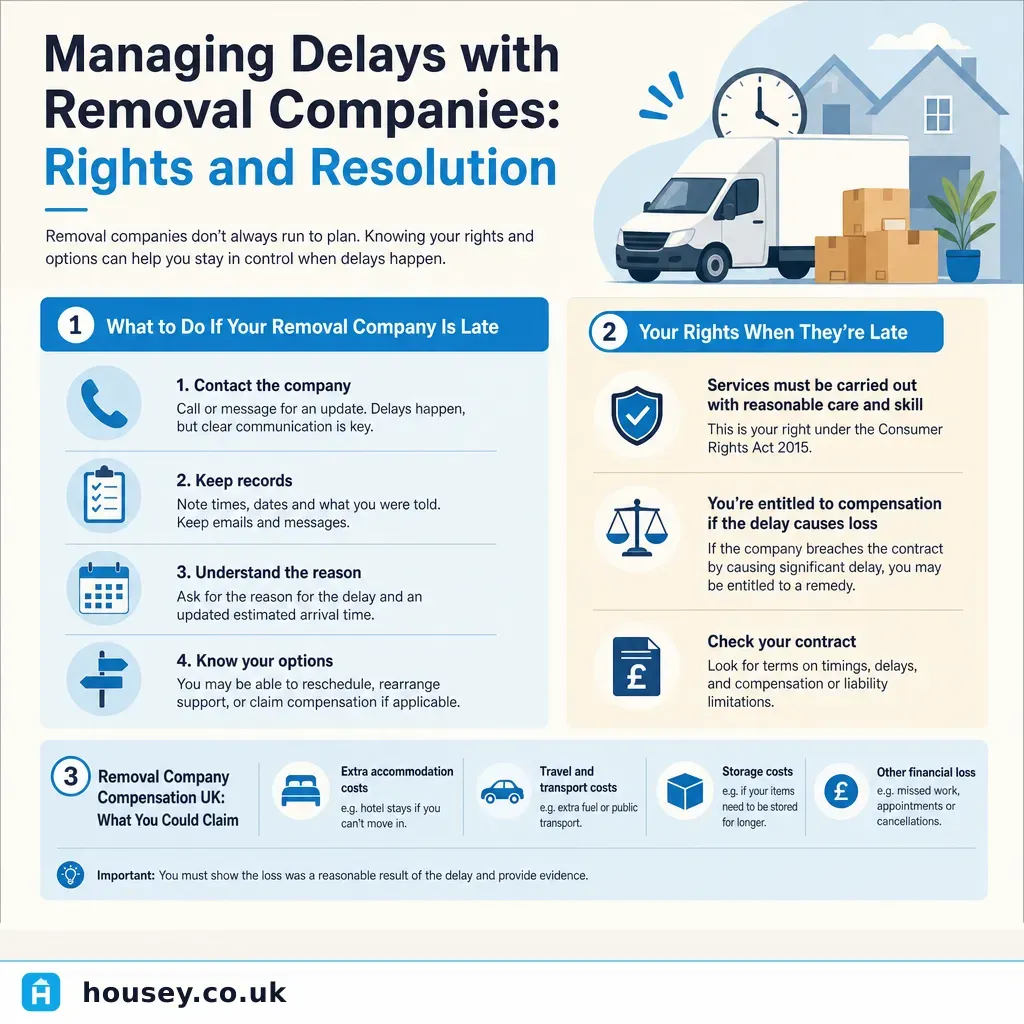
Managing Delays with Removal Companies: Rights and Resolution
If a removal company is late, your rights depend on your contract and whether the company is BAR-registered.
 Buying & Moving
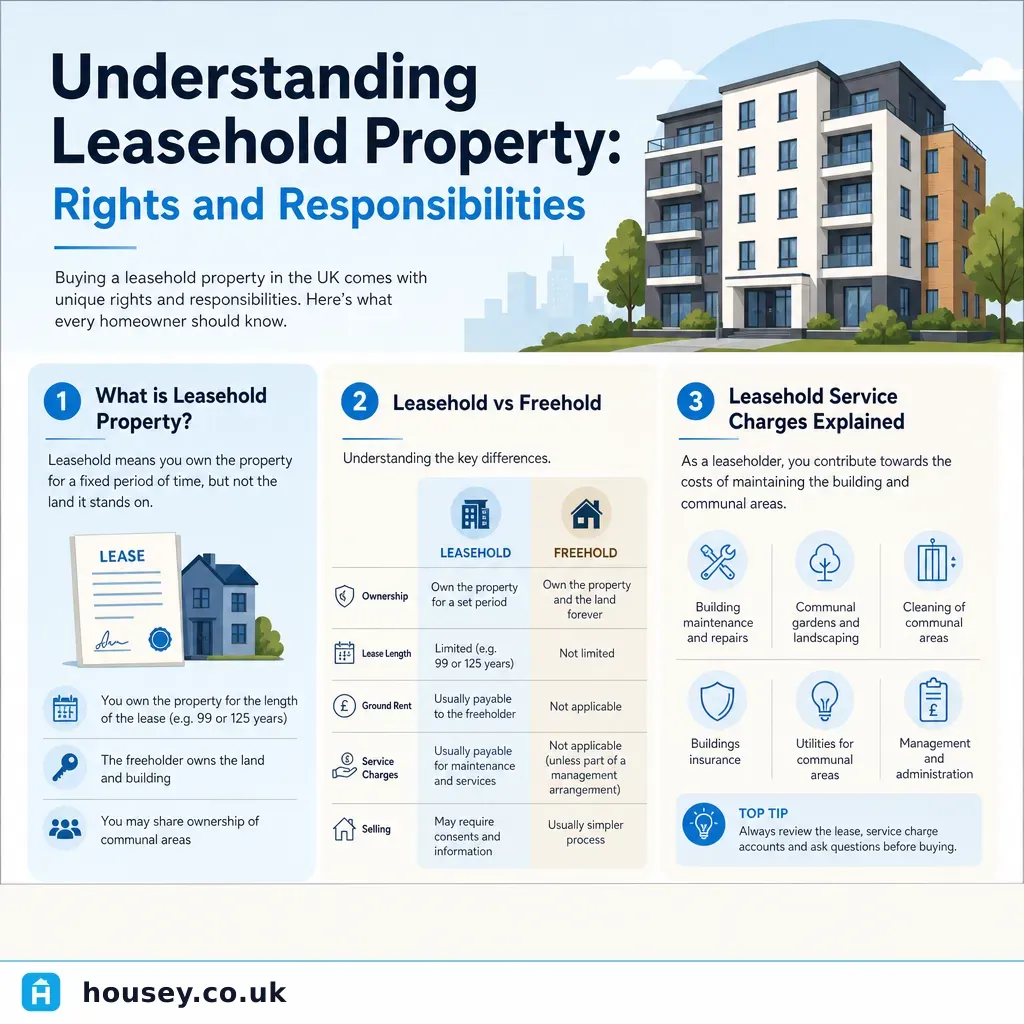
Understanding Leasehold Property: Rights and Responsibilities
Leasehold means you own a time-limited interest in a property while the freeholder owns the land and building.
 Buying & Moving
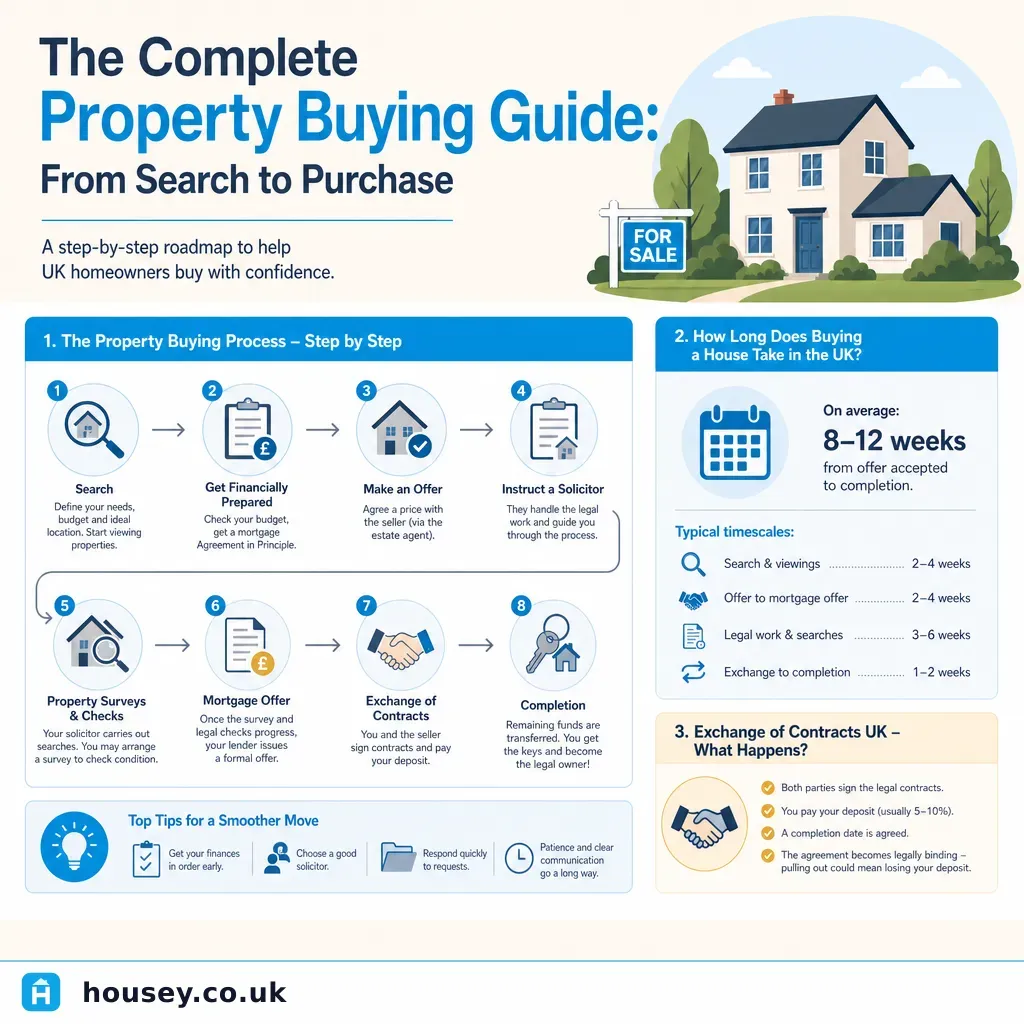
The Complete Property Buying Guide: From Search to Purchase
Buying a property in England and Wales typically takes 3–6 months from accepted offer to completion.
 Buying & Moving
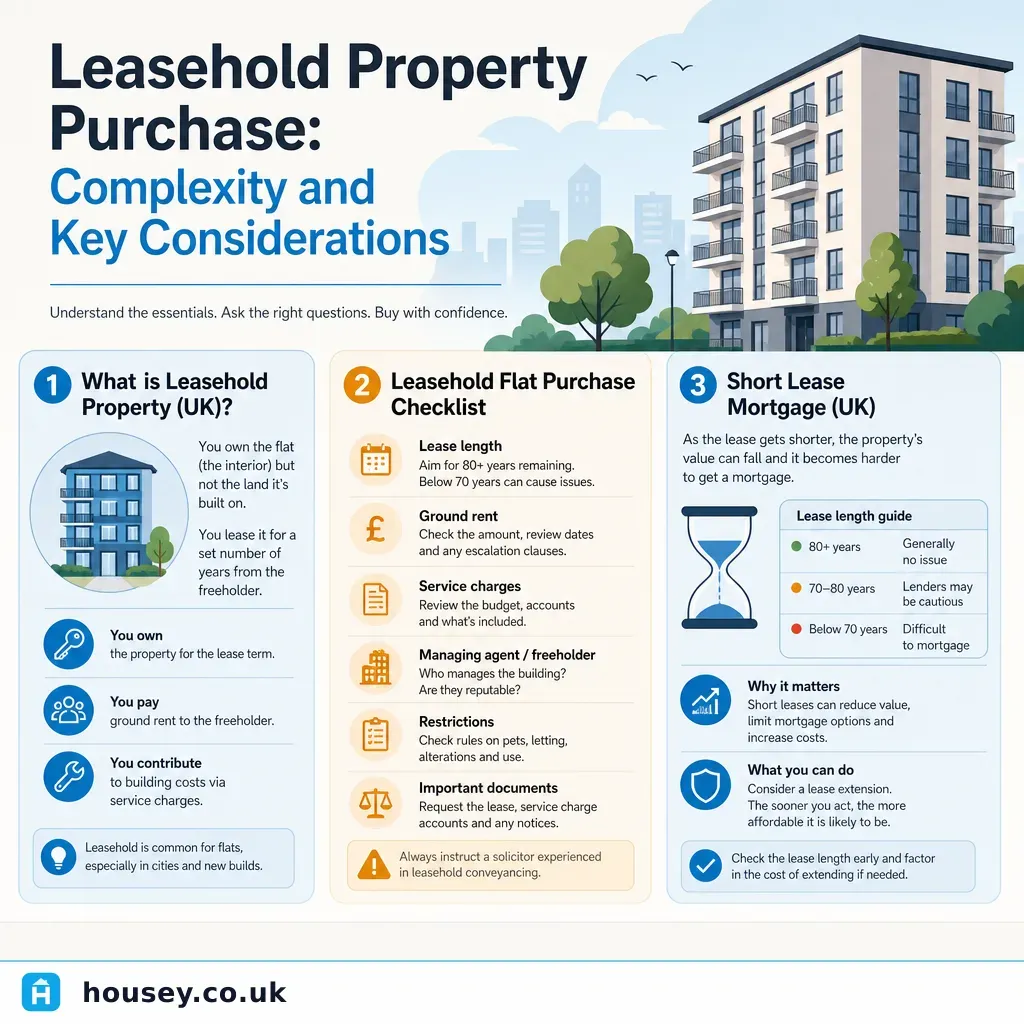
Leasehold Property Purchase: Complexity and Key Considerations
Buying a leasehold property means purchasing the right to occupy for a fixed term rather than owning the land outright.
 Buying & Moving
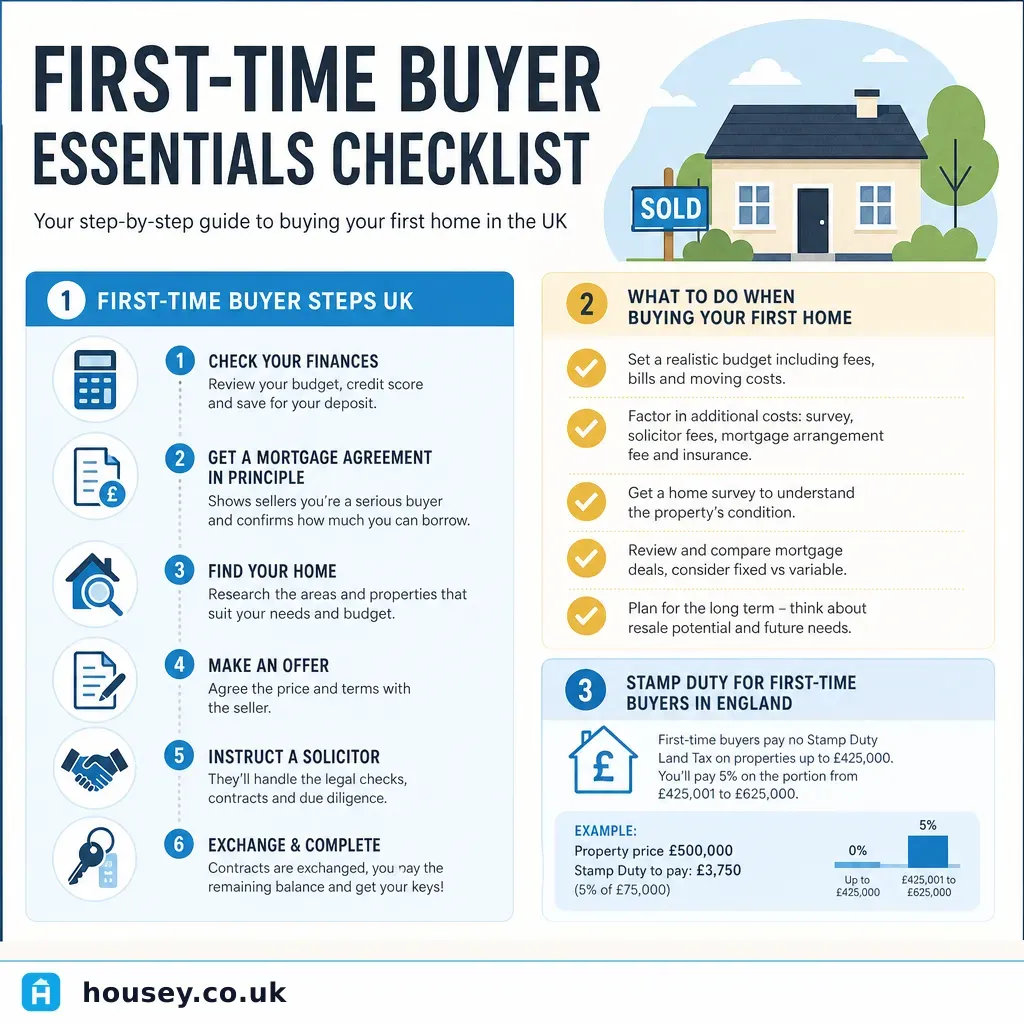
First-Time Buyer Essentials Checklist
Buying your first home involves obtaining a mortgage in principle, making an offer, instructing a solicitor, arranging a survey, and exchanging contracts before completion.