Property Services in the North West: Finding the Right Specialist
By Housey · Last reviewed 19th of May 2026

Property Services in the North West: Finding the Right Specialist
The North West of England is one of the UK's most varied property markets, spanning the dense Victorian terraces of Greater Manchester and Merseyside, the Georgian streets of Chester and Liverpool's Georgian Quarter, the rural stone farmhouses of Lancashire and Cumbria, and the tightly controlled landscapes of the Lake District and Forest of Bowland. Each sub-region brings distinct housing stock, planning environments, and professional requirements, and matching the right specialist to your specific property type is essential for avoiding costly oversights.
Key points
- Greater Manchester and Merseyside contain large concentrations of late-Victorian and Edwardian brick terraces where a RICS Level 3 Building Survey is often preferable to a Level 2 for buyers of pre-1919 stock.
- Liverpool has extensive conservation area designations and a high concentration of Grade I and II* listed buildings; permitted development rights are frequently restricted in the city centre and many inner suburbs.
- The Lake District National Park Authority is the planning authority for properties within the park boundary — not the local district or county council — and its policies are more restrictive than standard householder permitted development rules.
- PAS 2035 compliance is required for all publicly funded retrofit works; a TrustMark-registered retrofit coordinator must oversee any project funded through ECO4 or the Warm Homes Plan.
- FENSA or CERTASS registration allows replacement window and door installers to self-certify compliance with Building Regulations Part L; always request the completion certificate at handover.
Understanding North West housing stock
The North West's housing stock is unusually varied in age, construction, and tenure. Knowing your property type helps determine the appropriate professional and the risks that warrant close attention.
Late-Victorian and Edwardian terraces (Greater Manchester, Merseyside, Blackburn, Preston, Bolton) Pre-1919 solid brick construction is widespread. Cavity wall insulation is not applicable, and any solid-wall insulation requires a moisture risk assessment under PAS 2035 before works proceed. Original features — sash windows, chimney stacks, decorative terracotta — may be protected in conservation areas. Party walls are common; extensions and structural alterations often trigger the Party Wall etc. Act 1996.
Georgian and early Victorian townhouses (Liverpool, Chester, Lancaster) Many of these properties are Grade I or Grade II listed. Any alteration — including some internal works — may require listed building consent from the local planning authority. Solid masonry construction means internal wall insulation is often the only viable retrofit option, requiring careful hygrothermal assessment to manage moisture risk under PAS 2035.
Rural stone farmhouses and cottages (Lancashire, Cumbria) Vernacular stone construction requires sympathetic repair materials. Modern cement mortars can cause harm to lime-mortared masonry. Off-gas-grid properties are common in rural Cumbria and Lancashire and are eligible for the Boiler Upgrade Scheme (BUS) for heat pump installations.
Lake District and Forest of Bowland properties Development within the Lake District National Park is governed by the National Park Authority's Local Plan, not a district or county council. Permitted development rights are more restricted, and vernacular materials are frequently specified in planning conditions. The Forest of Bowland Area of Outstanding Natural Beauty (AONB) has additional landscape policies affecting extensions and outbuildings.
New build and regeneration schemes (MediaCityUK, Liverpool Waterfront, Manchester city centre) NHBC Buildmark or similar 10-year warranties usually apply. Leasehold arrangements are common in city-centre flats in Manchester and Liverpool; checking service charge history, lease length, and ground rent terms before purchase is essential.
Which professional do you need?
Your situation | Professional to appoint | Relevant accreditation |
|---|---|---|
Buying a pre-1919 terrace or stone cottage | RICS-accredited surveyor (Level 3 Building Survey) | RICS |
Planning an extension or loft conversion | Architect or architectural technologist | RIBA or CIAT |
Listed building alteration or repair | Architect with conservation experience | RIBA; consult local conservation officer |
Suspected structural movement | Chartered structural engineer | IStructE or ICE |
Planning application in Lake District or AONB | Planning consultant with National Park experience | RTPI member |
Energy retrofit (solid-wall insulation, heat pump, solar) | Retrofit coordinator plus MCS or TrustMark installer | PAS 2035 / TrustMark |
Leasehold flat purchase | Solicitor specialising in leasehold conveyancing | SRA-regulated firm |
New-build snagging | RICS surveyor or NHBC-registered inspector | RICS or NHBC |
Finding and checking credentials in the North West
Before instructing any professional, verify their standing through official channels:
- Surveyors: RICS Find a Surveyor at ricsfirms.com — confirms current RICS membership and regulated firm status
- Architects: ARB statutory register at arb.org.uk (registration is legally required to use the title architect); RIBA Find an Architect at architecture.com for additional quality markers including conservation specialism
- Structural engineers: IStructE or ICE member directories
- Planning consultants: RTPI Find a Planner at rtpi.org.uk
- Retrofit coordinators and installers: TrustMark scheme member search at trustmark.org.uk and MCS certified installer database at mcscertified.com
- Conservation practitioners: Historic England's guidance on finding conservation-accredited professionals
Always request proof of professional indemnity insurance before instructing. Confirm the policy limit is proportionate to your project value, particularly for listed building or structural work.
What to ask before appointing a property professional in the North West
- Do you have specific experience with pre-1919 terraces, listed buildings, Lake District National Park properties, or leasehold city-centre flats in this region?
- Are you currently registered with the relevant professional body, and can you provide your membership or registration number?
- How familiar are you with the local planning authority's current policies, conservation area designations, and any article 4 directions applying to this postcode?
- Are your fees inclusive of VAT, and what disbursements might be added to the quoted figure?
- Who will personally carry out the work — you or a junior colleague?
- What documents will you need from me before starting, and what deliverable will I receive at the end?
- What could change the price or timeline after instruction?
Regional planning considerations
Liverpool: The city has one of the highest concentrations of listed buildings of any UK city outside London, and extensive conservation areas covering the city centre, Georgian Quarter, and many Victorian inner suburbs. The Liverpool Local Plan sets out current development policies; the conservation team at Liverpool City Council is a key contact for listed building and conservation area queries before any application is submitted.
Greater Manchester: The Places for Everyone joint development plan, adopted in 2024 for nine Greater Manchester districts, sets strategic planning policy. Each borough maintains its own local plan. Article 4 directions in parts of Manchester, Salford, and Stockport restrict certain permitted development rights in specific areas; always check before assuming works qualify as permitted development.
Lake District National Park: The LDNPA is the planning authority within the park boundary — not Cumbria's county or district councils. Applications are assessed against LDNPA policies prioritising landscape character, vernacular materials, and limited development impact. Consult the LDNPA planning pages before beginning any external works on a property within the park.
Chester: The city centre and many surrounding areas are designated conservation areas, and Chester contains a high density of listed buildings, including the historic Rows. Even minor external alterations may require listed building consent or conservation area consent; contact Cheshire West and Chester Council's conservation team for guidance before starting any works.
Red flags to watch for
- No ARB registration for someone calling themselves an architect — use of the title is legally protected under the Architects Act 1997; always verify at arb.org.uk before instructing
- Damp remediation quotes without independent diagnostic survey — particularly common in older North West terraces; obtain a separate diagnostic assessment from a PCA-accredited surveyor before any treatment is agreed
- Retrofit quotes without a PAS 2035 assessment — for works funded through ECO4 or the Warm Homes Plan, an accredited retrofit coordinator is a formal requirement; absent this, grant funding may be invalidated
- Planning guarantees without local plan reference — a consultant who promises approval without referencing local plan policies or National Park authority requirements should be questioned
- Leasehold purchase without specialist conveyancing advice — Manchester and Liverpool city-centre flats carry specific risks around service charges, ground rent, and lease length; a conveyancer without relevant leasehold experience may miss key issues
When to get professional help
Seek qualified professional advice — rather than relying on online guides alone — when:
- You are buying or altering a listed building, or a property in a conservation area in Liverpool, Chester, Lancaster, or elsewhere in the region
- Your project is within the Lake District National Park or the Forest of Bowland AONB
- You are planning solid-wall insulation without a moisture risk assessment carried out under PAS 2035
- You are purchasing a leasehold flat in a city-centre development and have questions about service charges, lease length, or ground rent
- You have received a single contractor quote for structural defect repairs and need an independent engineer's assessment before committing to works
How Housey can help
Housey helps North West homeowners find reviewed, qualified property professionals — whether you need a surveyor for a pre-purchase inspection, an architect for a listed-building alteration, or a retrofit coordinator for an ECO4-funded improvement. Submit a job request to receive quotes from professionals serving your area.
Frequently asked questions
Do I need planning permission for an extension in the Lake District?
Possibly, even for works that would normally be permitted development elsewhere in England. The Lake District National Park Authority has more restrictive planning policies, and standard householder permitted development rights may be limited or removed within the park boundary. Always contact the LDNPA planning department before starting any external alteration or extension — do not assume standard rules apply.
What survey should I get when buying a Victorian terrace in Manchester or Liverpool?
A RICS Level 3 Building Survey is generally advisable for pre-1919 properties, particularly those showing signs of damp, structural movement, or past alteration. A RICS Level 2 Home Survey may be appropriate for well-maintained post-1920 properties in reasonable condition, but discuss the specific property with your surveyor before deciding which level of inspection is appropriate.
Are there grants available for home improvements in the North West?
Yes. ECO4, the Great British Insulation Scheme, and the Boiler Upgrade Scheme are available to eligible homeowners across the North West. The region includes areas of significant fuel poverty, particularly in parts of Greater Manchester and Merseyside, and local authorities often provide flexible eligibility referral routes. Contact your local council or energy supplier for current criteria.
How do I find an architect for a listed building project in Chester or Liverpool?
Use the ARB register at arb.org.uk to confirm legal registration, then use the RIBA Find an Architect tool at architecture.com to identify members with a conservation or heritage specialism. Ask specifically about the architect's experience working with the relevant local planning authority's conservation team and request examples of comparable recent projects in the area.
Sources and further reading
- RICS Find a Surveyor — Royal Institution of Chartered Surveyors
- ARB Register of Architects — Architects Registration Board
- Lake District National Park — planning — Lake District National Park Authority
- TrustMark — find a scheme member — TrustMark
- Historic England — listed buildings search — Historic England
- Liverpool Local Plan — Liverpool City Council
Useful next reads
 Improvement & Build
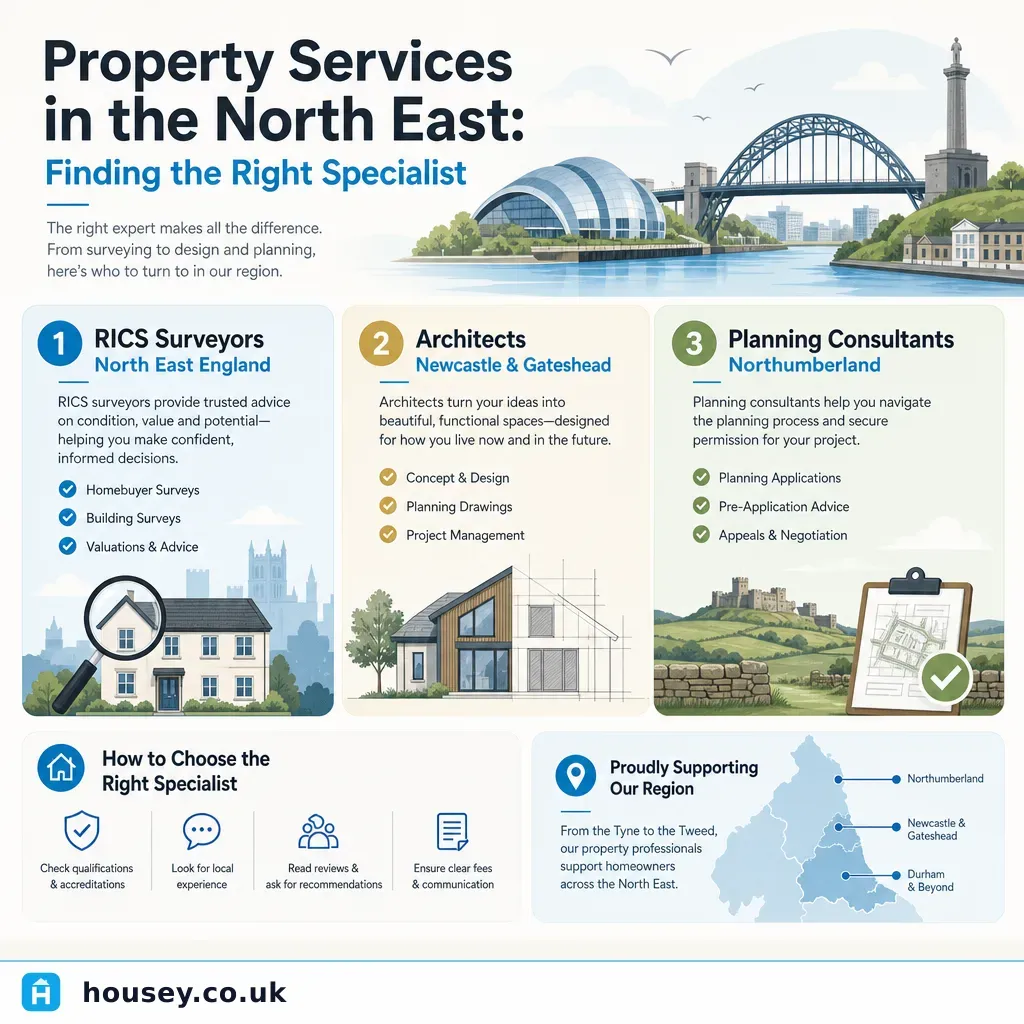
Property Services in the North East: Finding the Right Specialist
The North East has a diverse range of property services, from RICS surveyors suited to the region's Victorian and Edwardian terraces to planning consultants familiar with Northumberland National Park and Durham conservation areas.
 Improvement & Build
Top Property Services in the South West: Market Leaders and Specialists
The South West has a high density of listed buildings, traditional construction types such as cob, thatch, and Bath stone, and large areas of AONB and National Park coverage.
 Improvement & Build
Top Property Services in Wales: Market Leaders and Specialists
Wales operates under its own planning policy framework (Planning Policy Wales and Future Wales: The National Plan 2040), its own building regulations, and has Cadw as its listed building authority rather than Historic England.
 Improvement & Build
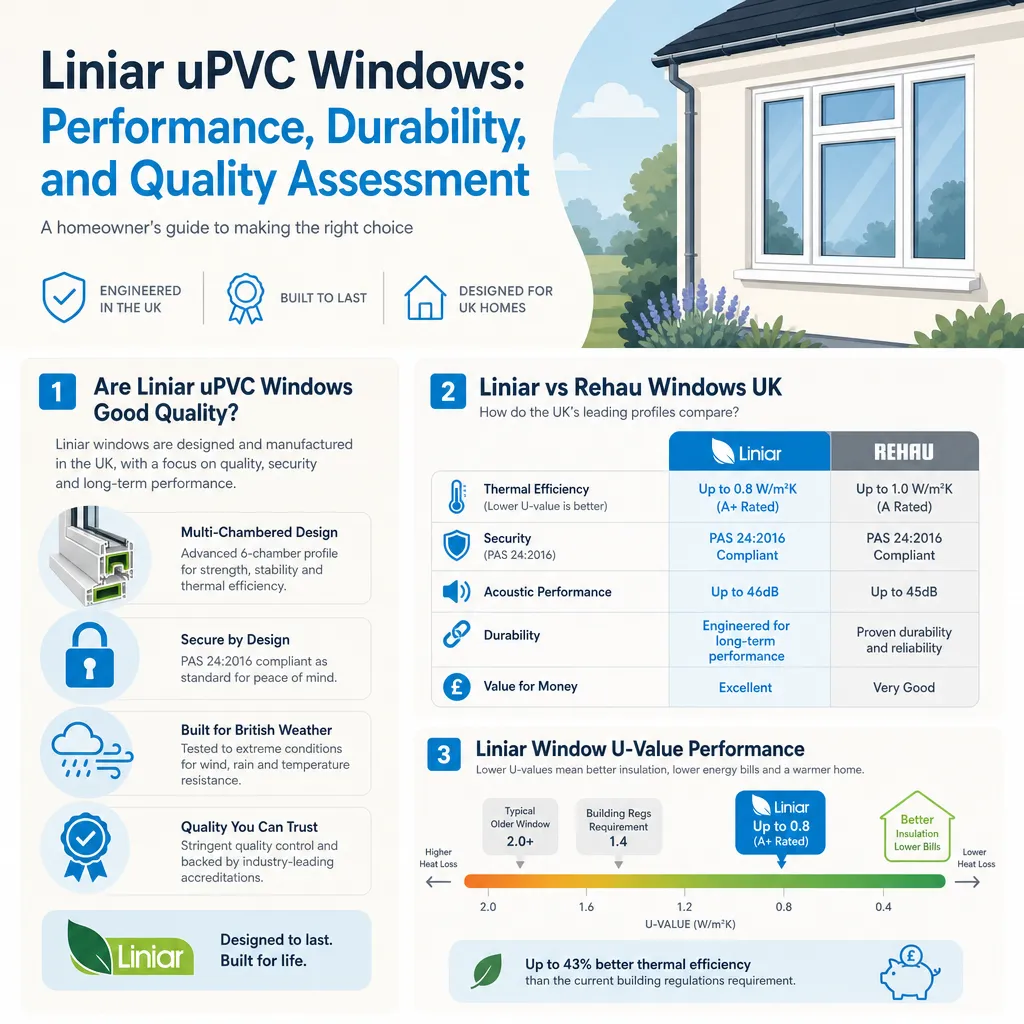
Liniar uPVC Windows: Performance, Durability, and Quality Assessment
Liniar uPVC window profiles are manufactured in the UK using multi-chambered, foamed frames.
 Improvement & Build
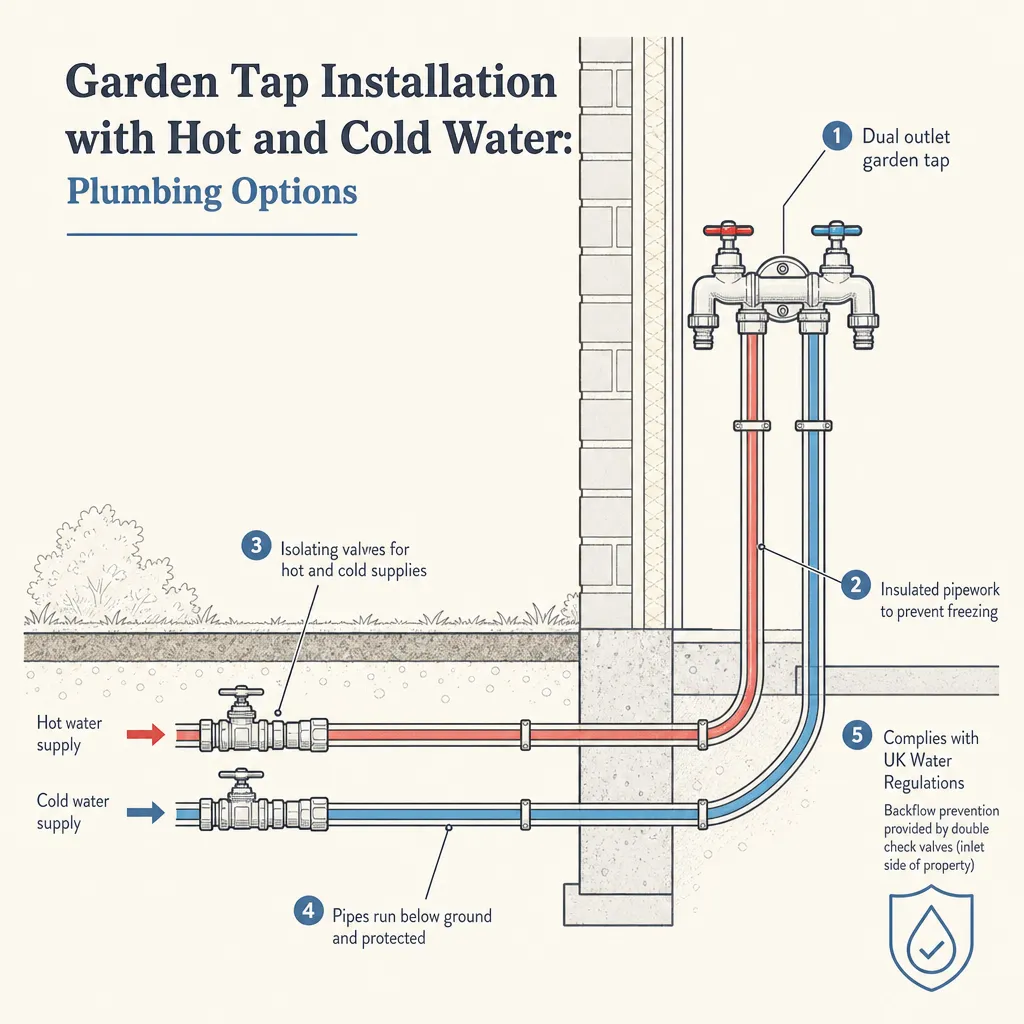
Garden Tap Installation with Hot and Cold Water: Plumbing Options
Adding a cold garden tap is a common DIY project, but routing hot water outdoors requires a plumber to connect to your domestic hot water system and comply with the Water Supply (Water Fittings) Regulations 1999.