Top Property Services in the South West: Market Leaders and Specialists
By Housey · Last reviewed 19th of May 2026

Top Property Services in the South West: Market Leaders and Specialists
The South West of England — covering Cornwall, Devon, Somerset, Dorset, Wiltshire, Gloucestershire, and Bristol — contains one of the most architecturally varied housing stocks in the UK. Homeowners planning improvements, extensions, or renovations encounter a distinctive mix of listed buildings, traditional building materials, and layered planning designations that make choosing the right professional as much about local knowledge as general trade skills.
Key points
- Listed building consent is required for any works affecting the character of a listed structure — and the South West has a very high density of listed buildings, particularly in Bath (a UNESCO World Heritage Site), Cotswolds market towns, and historic Devon and Dorset town centres.
- Cob, thatch, and rubble-stone construction require trades using lime-based mortars and breathable materials; cement repairs can trap moisture and cause long-term structural damage in traditional buildings.
- Two National Parks — Dartmoor and Exmoor — have their own planning authorities with more restricted permitted development rights than standard council areas.
- Cornwall has a significant legacy of tin and copper mine workings; ground investigations are often advisable before foundation work in historic mining areas.
- Coastal properties across the region may face flood-risk assessments and local policies on cliff erosion — check with your Local Planning Authority before beginning any design work.
Understanding the South West property landscape
The South West's housing stock is older than the English average, and a substantial proportion sits within conservation areas, AONBs (Areas of Outstanding Natural Beauty), or National Park boundaries. Bath and North East Somerset alone contains thousands of listed buildings, and the city centre is a UNESCO World Heritage Site — even minor external alterations attract heritage scrutiny.
In rural Devon and Cornwall, cob construction — a monolithic mix of subsoil, straw, and water — is common in buildings dating from the medieval period to the nineteenth century. Cob must breathe, must be kept dry at the base, and must never be repaired with cement or covered with impermeable render. A contractor proposing cement-based pointing or hard plaster on a cob wall is applying an inappropriate repair system that can cause moisture entrapment and long-term structural damage.
Thatch roofing is similarly concentrated in this region, with regional variations in materials — long straw, combed wheat reed, and water reed — that affect cost, lifespan, and insurance. A specialist thatching contractor should be able to explain these differences and their implications for a specific property.
The coastal strip from north Cornwall through south Devon and along the Jurassic Coast in Dorset adds further complexity. Some properties sit within flood zones or are subject to cliff erosion policies, and Article 4 Directions in several coastal councils remove permitted development rights that would otherwise apply automatically.
Which trades and specialists are in highest demand in the South West?
Trade or specialist | Where demand is highest | What to look for |
|---|---|---|
Conservation architect (RIBA or AABC accredited) | Bath, Cotswolds, historic town centres, National Parks | Experience with listed building consent applications and heritage statements |
Lime and traditional render specialist | Rural Devon, Cornwall, Somerset, Dorset | Training in hot lime or hydraulic lime systems; no cement in the specification |
Thatching contractor | Rural Devon, Somerset, Wiltshire, Dorset | Knowledge of regional material traditions and fire-risk netting requirements |
RICS Level 3 surveyor | Pre-1919 and traditional-build properties across the region | Demonstrable experience with cob, stone, and historic construction types |
Structural engineer | Coastal and hillside properties, older farmhouses | Awareness of mining legacy in Cornwall and the Forest of Dean |
Planning consultant | AONBs, National Parks, conservation area applications | Knowledge of relevant LPA policies and National Park design guides |
Retrofit and energy specialist | Bristol, Exeter, rural solid-wall stock | PAS 2035 retrofit assessment experience and breathable insulation knowledge |
Ground investigation engineer | Cornwall, West Devon mining areas, cliff-top plots | Understanding of mine shaft and void risk assessment |
Planning and conservation constraints in the South West
Homeowners planning extensions, outbuildings, or alterations to windows and external materials should check whether their property is within a conservation area, listed at Grade I, II*, or II, within an AONB, or within a National Park boundary. Each designation affects what can proceed under permitted development and what requires a full planning application.
For listed buildings, even internal alterations — repositioning walls, replacing internal doors, adding insulation behind a historic wall finish — may require listed building consent. Historic England's guidance on traditional building repair provides a useful technical reference, but a conservation officer or accredited architect should be consulted before applications are submitted. Most local planning authorities offer a pre-application advice service (usually at a modest fee) that can prevent costly refusals.
AONBs in the region include the Cornish AONB, the Dorset AONB, the Cotswolds AONB, and the Tamar Valley AONB. Planning policies in these areas emphasise landscape character and typically apply stricter scrutiny to extensions, external materials, and the siting of outbuildings than standard residential policies.
Which professional should you choose?
- Choose a conservation architect (RIBA or AABC accredited) if your property is listed, in a World Heritage Site, or in a conservation area and you are planning structural or significant external changes.
- Choose a structural engineer if you are removing a load-bearing wall, dealing with cracking or suspected movement, or building on a coastal or steeply sloped site.
- Choose a RICS Level 3 surveyor when buying a pre-1919 property, a cob or thatch property, or any building with visible defects or unusual construction.
- Choose a lime specialist for pointing, rendering, or plastering on any pre-1919 solid-wall building — avoid contractors who default to cement-based products.
- Choose a planning consultant if you face a complex AONB or National Park application, have received a pre-application refusal, or are considering an appeal.
- Ask your local authority conservation officer if you are unsure whether listed building consent is required — most councils offer this as a free preliminary service.
- Choose a ground investigation engineer before significant foundation work in known mining areas of Cornwall, West Devon, or the Forest of Dean.
Red flags when hiring tradespeople in the South West
Watch for these warning signs when appointing contractors for work on South West properties:
- A builder who proposes cement mortar, pointing, or render on a stone, cob, or historic brick building without discussing lime alternatives — this is a common and potentially costly mistake in the region's traditional stock.
- A contractor who suggests insulating a solid wall from the inside without addressing interstitial condensation risk or specifying breathable insulation materials.
- A planning agent who does not recommend pre-application advice before submitting an application in a National Park or conservation area — engagement with the authority before submission generally improves outcomes.
- A roofer offering a thatch quote who cannot specify the material, netting requirement, ridge type, or insurance implications.
- Any contractor proposing uPVC windows or standard masonry in a listed building — if listed building consent is not obtained, the homeowner (not the contractor) may be liable for enforcement action.
When to get professional help
Seek a qualified specialist before committing to any project if:
- Your property is listed, in a conservation area, or within a National Park boundary
- You have identified cracking, damp, or bulging in a cob, stone, or timber-framed wall
- You are planning work on or near the coast and are unsure about flood-zone or erosion designations
- Your property is in a Cornish or West Devon area with a known mining legacy and you are planning groundworks
- Your thatch is approaching end of life and you want to clarify the consent position before instructing a contractor
How Housey can help
Housey connects South West homeowners with vetted local professionals, from conservation architects and RICS surveyors to structural engineers and traditional-build specialists. Whether you are renovating a Devon farmhouse, extending a Cotswolds stone cottage, or planning a loft conversion in Bristol, Housey helps you reach professionals who understand the South West's specific heritage, planning, and material challenges.
Frequently asked questions
Do I need a specialist architect to extend a listed building in the South West?
Listed building consent is required for any works affecting the character of a listed building, internally or externally. Using an architect with Conservation Accreditation (RIBA or AABC) or demonstrable heritage experience significantly improves the likelihood of consent being granted and reduces enforcement risk. Your local authority conservation officer can advise on likely requirements at no charge at most councils.
Are cob and thatch properties harder to survey in the South West?
Standard RICS surveyors can assess cob and thatch properties, but the best outcomes come from those with demonstrable traditional-construction experience. A RICS Level 3 Building Survey is generally more appropriate than Level 2 for these property types, given the greater likelihood of complex defects, moisture ingress, and non-standard repair requirements in pre-1919 vernacular construction.
What planning constraints apply to extensions in Dartmoor or Exmoor?
National Park planning authorities apply stricter design and siting policies than standard Local Planning Authorities. Permitted development rights are more restricted, and extensions are assessed against National Park design guidance. Always check with Dartmoor National Park Authority or Exmoor National Park Authority directly before committing to any design work or instructing a designer.
Sources and further reading
- National Heritage List for England — Historic England
- Planning Portal: Planning Permission Guidance — Planning Portal
- GOV.UK: Areas of Outstanding Natural Beauty — GOV.UK
- RICS: Find a Regulated Firm — RICS
- Dartmoor National Park: Planning Guidance — Dartmoor National Park Authority
Useful next reads
 Improvement & Build
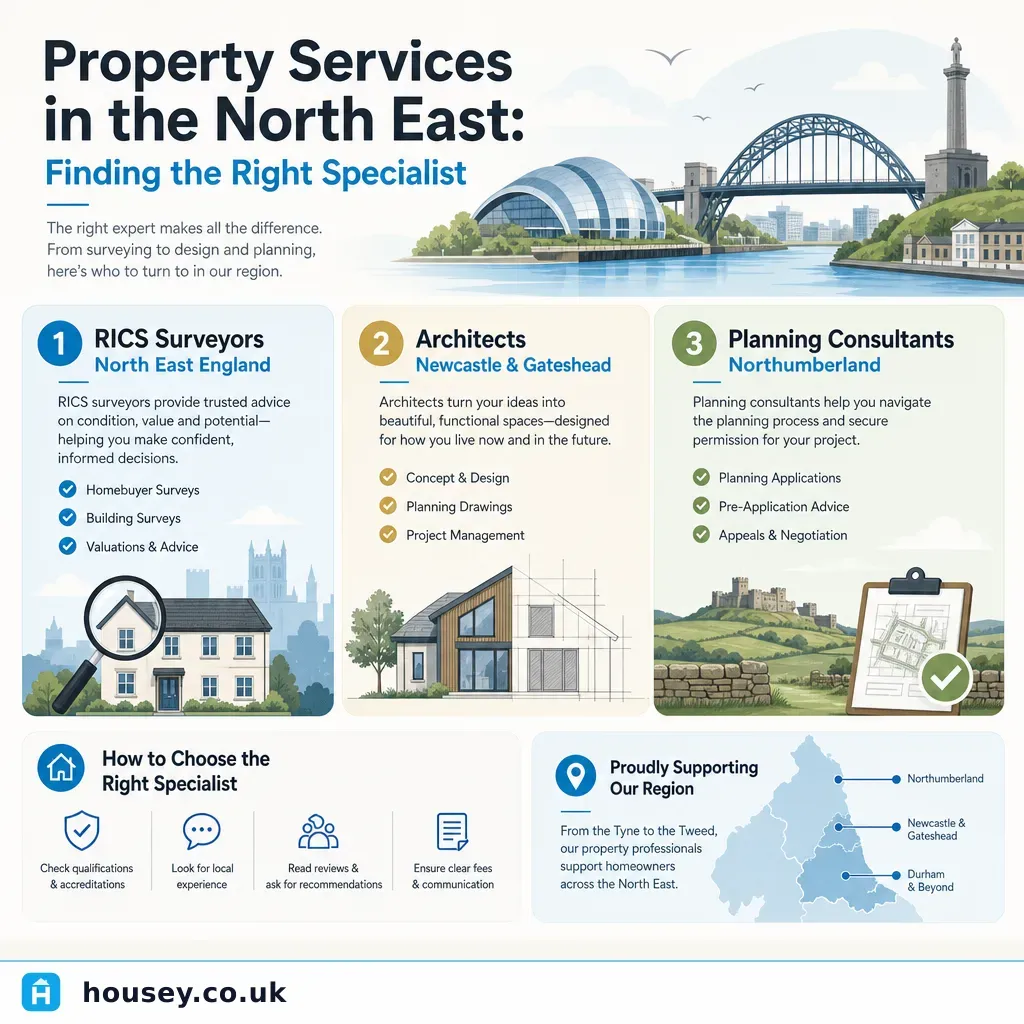
Property Services in the North East: Finding the Right Specialist
The North East has a diverse range of property services, from RICS surveyors suited to the region's Victorian and Edwardian terraces to planning consultants familiar with Northumberland National Park and Durham conservation areas.
 Improvement & Build
Property Services in the North West: Finding the Right Specialist
The North West spans some of England's most varied housing stock, from Liverpool's listed Georgian townhouses to Lake District stone farmhouses and Manchester's Victorian terraces.
 Improvement & Build
Top Property Services in Wales: Market Leaders and Specialists
Wales operates under its own planning policy framework (Planning Policy Wales and Future Wales: The National Plan 2040), its own building regulations, and has Cadw as its listed building authority rather than Historic England.
 Improvement & Build
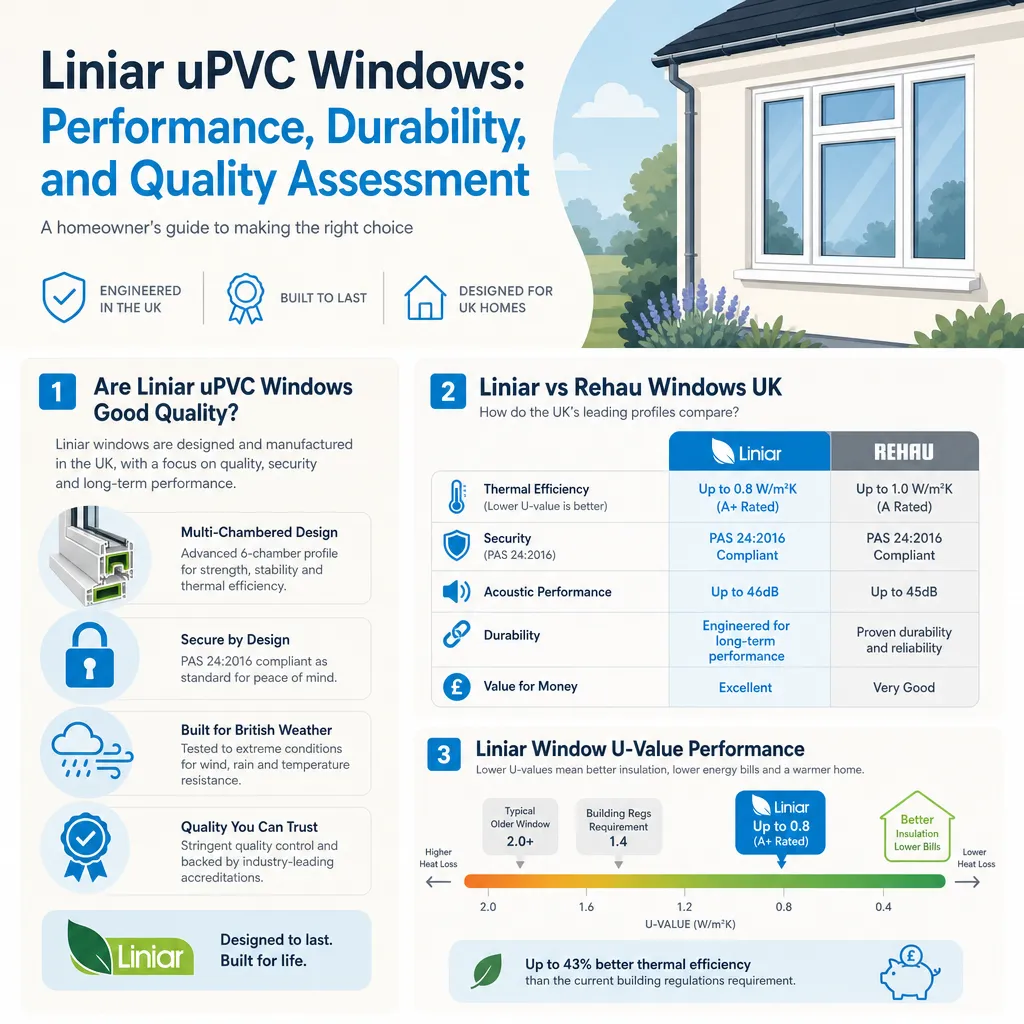
Liniar uPVC Windows: Performance, Durability, and Quality Assessment
Liniar uPVC window profiles are manufactured in the UK using multi-chambered, foamed frames.
 Improvement & Build
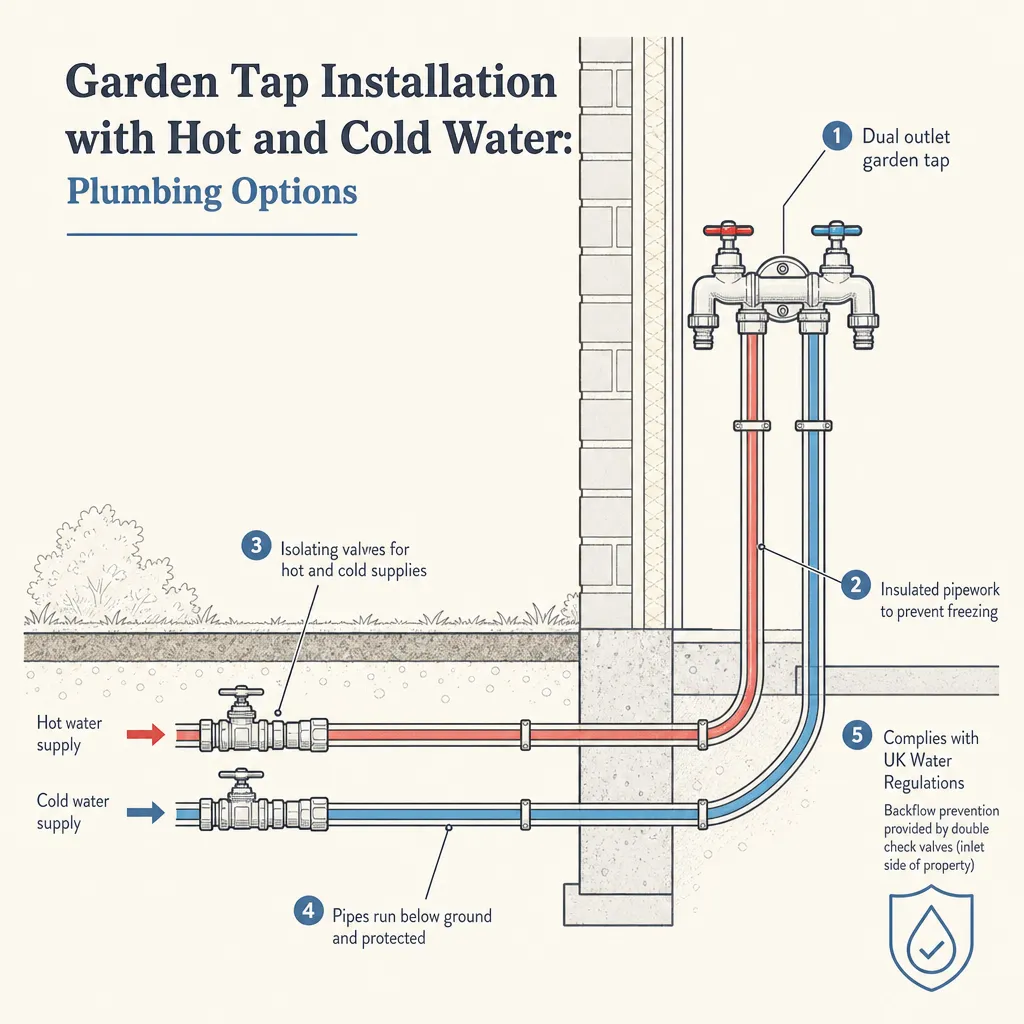
Garden Tap Installation with Hot and Cold Water: Plumbing Options
Adding a cold garden tap is a common DIY project, but routing hot water outdoors requires a plumber to connect to your domestic hot water system and comply with the Water Supply (Water Fittings) Regulations 1999.