Property Title Deed Division and Separation Costs
By Housey · Last reviewed 6th of May 2026
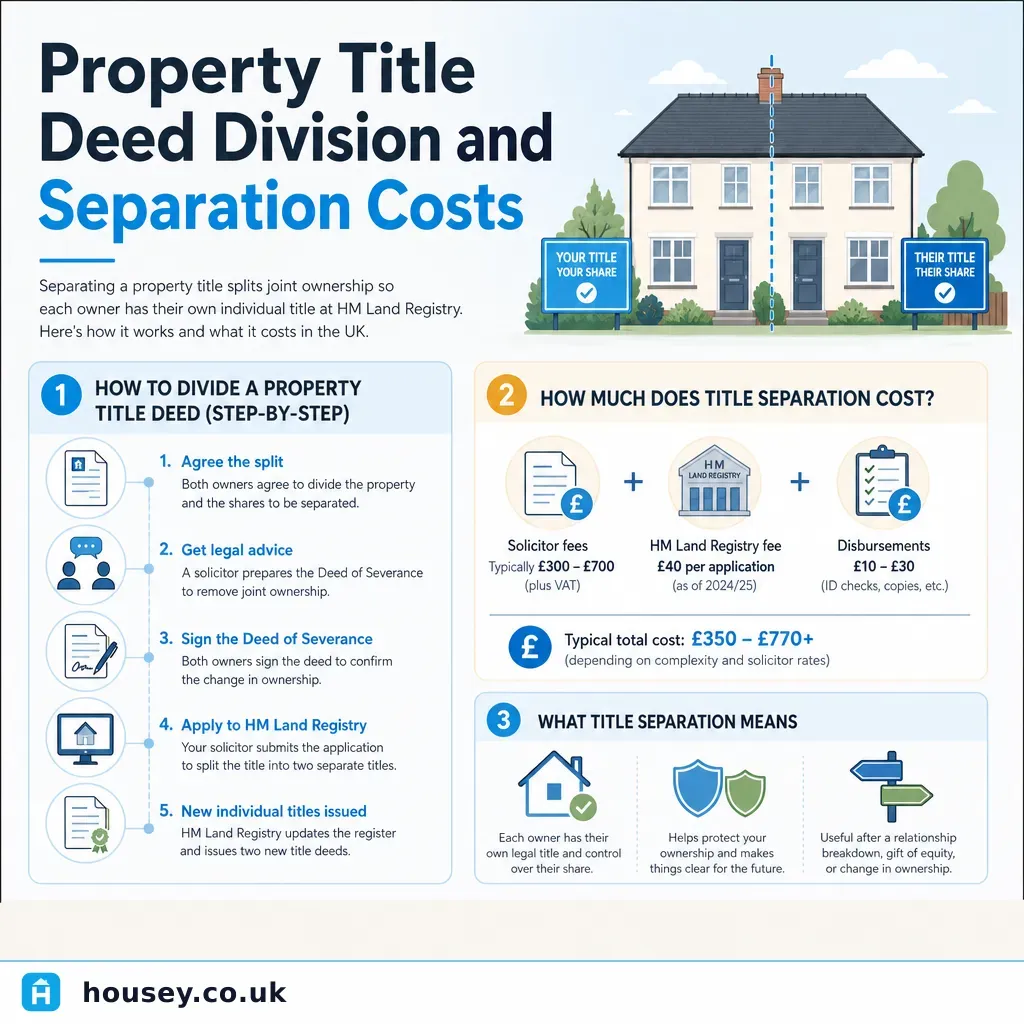
Property Title Deed Division and Separation Costs
Dividing or separating a property title deed arises in a range of practical situations — selling off part of a garden, converting a house into self-contained flats, splitting inherited land between family members, or separating a commercial unit from an adjoining residence. Because a title deed defines legal ownership at HM Land Registry, any division involves a formal conveyancing process and carries real implications for existing mortgages, planning consent, and the validity of future transactions.
Key points
- HM Land Registry registration fees for a new title are calculated on a sliding scale based on the declared property value; fees typically range from £40 to £910 for standard residential titles — check the current schedule on GOV.UK, as fees are subject to change.
- Every new title created by a split requires an updated title plan drawn to a standard acceptable to HM Land Registry, usually prepared by a solicitor or a chartered surveyor with Land Registry experience.
- If a mortgage or legal charge is registered against the existing title, written consent from the lender is required before any division of the title can proceed.
- Solicitor or licensed conveyancer fees for a straightforward title split typically range from £800 to £2,500 per new title; complex cases involving multiple parties, restrictive covenants, or new rights of way can significantly exceed this.
- If the split creates a new residential dwelling — for example, converting a house into two self-contained flats — Building Regulations approval and, in many cases, planning permission are also required as separate processes.
What does separating a title deed involve?
Separating a title means deregistering part of an existing registered title at HM Land Registry and creating one or more new, independent titles in their place. In England and Wales, this process operates under the Land Registration Act 2002 framework.
The core steps are:
- Instructing a solicitor or licensed conveyancer — they will check the existing title register for mortgages, covenants, and rights before advising whether a clean split is achievable.
- Preparing a new title plan — Land Registry requires a plan that clearly delineates the boundaries of each new title, usually based on Ordnance Survey base mapping.
- Dealing with encumbrances — existing covenants, easements, or rights (such as rights of access or drainage) may need to be noted on each new title, modified, or re-granted by deed.
- Obtaining mortgage lender consent — if a charge exists, the lender must formally agree to the split and confirm which new title or titles the charge will apply to.
- Lodging the application with HM Land Registry — once paperwork is in order, applications are submitted via the Land Registry portal or by post, with the appropriate registration fee.
- Receiving new title numbers — Land Registry issues new title numbers for each divided parcel once the application has been processed and approved.
Timescales vary. A straightforward split with no complicating factors can complete in four to eight weeks. Cases involving lender consent negotiations, missing historical deeds, or complex boundary issues can take several months.
How much does it cost to split a title deed?
Total costs depend on several variables: the number of new titles being created, the declared property value, the complexity of existing rights and covenants, and whether additional professional input — such as a boundary surveyor — is required.
Indicative UK costs, last reviewed 2026-05-06.
Cost element | Typical range | Notes |
|---|---|---|
Solicitor or conveyancer fees | £800 – £2,500 per new title | Increases with complexity; multi-party splits cost more |
HM Land Registry registration fee | £40 – £910 per new title | Scale 1 fee based on declared value — see current schedule on GOV.UK |
New title plan (if charged separately) | £150 – £500+ | May be included in solicitor fee; some firms instruct chartered surveyors |
Mortgage lender consent fee | £0 – £300+ | Some lenders charge an administration fee; check your mortgage terms |
Searches (if creating new titles for sale) | £100 – £250 | Local authority, drainage, and environmental searches |
VAT | 20% on professional fees | Applies to solicitor and surveyor charges |
For a simple split creating two new titles on an unencumbered property, total costs often fall between £1,500 and £4,000. Complex cases — particularly where boundary disputes, multiple covenants, or new rights of way are involved — can cost considerably more.
When do you need to split a title deed?
Common situations include:
- Selling part of a garden or land — the plot being sold must have its own title to be transferred to the buyer.
- Converting a house into flats — each flat typically requires an independent leasehold title (usually a long lease granted from the freehold), requiring a separate conveyancing transaction.
- Splitting inherited property — where an estate includes a single title covering multiple usable parts to be divided between beneficiaries.
- Separating a business premises from an adjoining residence — for mortgage, insurance, or sale purposes.
- Releasing land for development — developers often require a clean, separate title before exchange of contracts.
Worked example: splitting a 1930s semi-detached house into two flats
A homeowner in the East Midlands owns a 1930s semi-detached property on a single freehold title. She plans to convert the ground floor and first floor into two self-contained flats and sell the ground-floor flat. Her lender holds a residential mortgage over the whole property.
Her solicitor advises that:
- Planning permission and a Building Regulations application will be required for the conversion.
- The lender must consent to a leasehold split before new titles can be registered.
- Two new long leasehold titles will be created from the existing freehold; she retains the freehold title in her name.
- A management deed will govern shared obligations for the structure, roof, and shared access.
- Total professional and registration costs are estimated at £3,200 to £4,800 plus VAT, depending on lender response times and complexity.
The lender's consent process takes six weeks; the full Land Registry registration takes a further eight weeks after consent is received.
What can complicate a title split?
- Restrictive covenants — historical covenants may prohibit the creation of new dwellings or restrict the use of the land; a solicitor should review the title register before proceeding.
- Missing or unregistered documents — land that has never been registered with HM Land Registry will require first registration before a split can take place, adding cost and time.
- Ransom strips — a third party may own a narrow strip of land giving access to the site, potentially blocking a clean division.
- Boundary disputes — if a neighbouring owner contests the line of a boundary, Land Registry may require a boundary agreement or statutory declaration before registering the new title.
- Leasehold complications — if the property is already leasehold, the freeholder's consent is almost certainly required before any sub-division can proceed.
Important limitations
This article provides general information about the title deed division process in England and Wales. Property law is complex and highly fact-specific: the steps, costs, and timescales described here are indicative and will not apply uniformly to every situation. The Scottish property law system (managed by Registers of Scotland) and the Northern Ireland land registration system operate differently. Always instruct a qualified solicitor or licensed conveyancer before taking any steps to alter a registered title. Nothing in this article constitutes legal advice.
What to ask a qualified professional
Before instructing a solicitor or licensed conveyancer, ask:
- Have you reviewed the existing title register, title plan, and all noted encumbrances?
- Are there any covenants, easements, or third-party rights that could affect the proposed split?
- Will my mortgage lender's consent be required, and what is the typical process and timescale with my lender?
- What are all costs, including disbursements and VAT, before I commit?
- Does the proposed split trigger any planning or Building Regulations requirements?
- How will shared rights — such as drainage, access, or structural maintenance — be documented across the new titles?
- What could cause the application to be rejected or delayed by HM Land Registry?
When to get professional help
Splitting a title deed is not a DIY process. Instruct a solicitor or licensed conveyancer from the outset if:
- You are selling or transferring any part of a property to a third party.
- A mortgage or charge is registered against the title.
- The property is in a conservation area or is a listed building.
- The split involves creating new leasehold titles.
- There is any uncertainty about boundaries or the extent of existing rights.
Red flags that mean seek legal advice before taking any action:
- A neighbour disputes the boundary line.
- The title register shows historic covenants whose wording is unclear or potentially restrictive.
- The property was previously unregistered and lacks a clear title plan.
- You are unsure whether planning permission or change-of-use consent is required for the proposed use of the split land.
How Housey can help
If you need to split or separate a property title deed, Housey can connect you with experienced conveyancing solicitors who handle Land Registry title divisions. Compare quotes and credentials before instructing.
Frequently asked questions
Do I need a solicitor to split a title deed?
In practice, yes. While there is no statutory rule requiring a solicitor, HM Land Registry requires precise legal documentation, correctly drawn title plans, and accurate application forms. Errors can cause delays, rejections, or future title defects. A qualified solicitor or licensed conveyancer will also identify covenants, encumbrances, and planning issues that a lay applicant would almost certainly miss.
How long does a title deed split take in the UK?
Timescales vary considerably. A straightforward split on an unencumbered property with no boundary complications can take four to eight weeks once documents are ready. Cases involving mortgage lender consent, multiple parties, or complex covenants typically take three to six months. Current Land Registry processing times also affect the overall timeline; check the HM Land Registry website for current estimates.
Can I split a title deed if the property has a mortgage?
Only with your lender's written consent. The lender holds a legal charge over the whole title; splitting it without consent would likely breach your mortgage terms. Most lenders will agree in principle once they understand the purpose, but may charge an administration fee and will require their own solicitors to approve the arrangement before completion.
Does splitting a title deed trigger Stamp Duty Land Tax?
Stamp Duty Land Tax (SDLT) is not triggered by a title split alone — it arises on the transfer of an interest in land for consideration. If you are selling a plot or flat to a buyer, SDLT rules apply to that transaction in the usual way. Seek specific tax advice from your solicitor, as rules can be complex and vary with property type, value, and the buyer's circumstances.
What is a title plan and do I need a new one when dividing a title?
A title plan is the HM Land Registry map showing the extent of your registered title, based on Ordnance Survey data. When you divide a title, each new title must have its own plan clearly showing its boundaries. Your solicitor will usually prepare or commission this in accordance with Land Registry requirements set out in Practice Guide 40.
Sources and further reading
- HM Land Registry registration fees — GOV.UK
- Land Registration Act 2002 — legislation.gov.uk
- HM Land Registry practice guides — GOV.UK
- Find a licensed conveyancer — GOV.UK
- Conveyancing guidance for property transactions — The Law Society
Useful next reads
 Buying & Moving
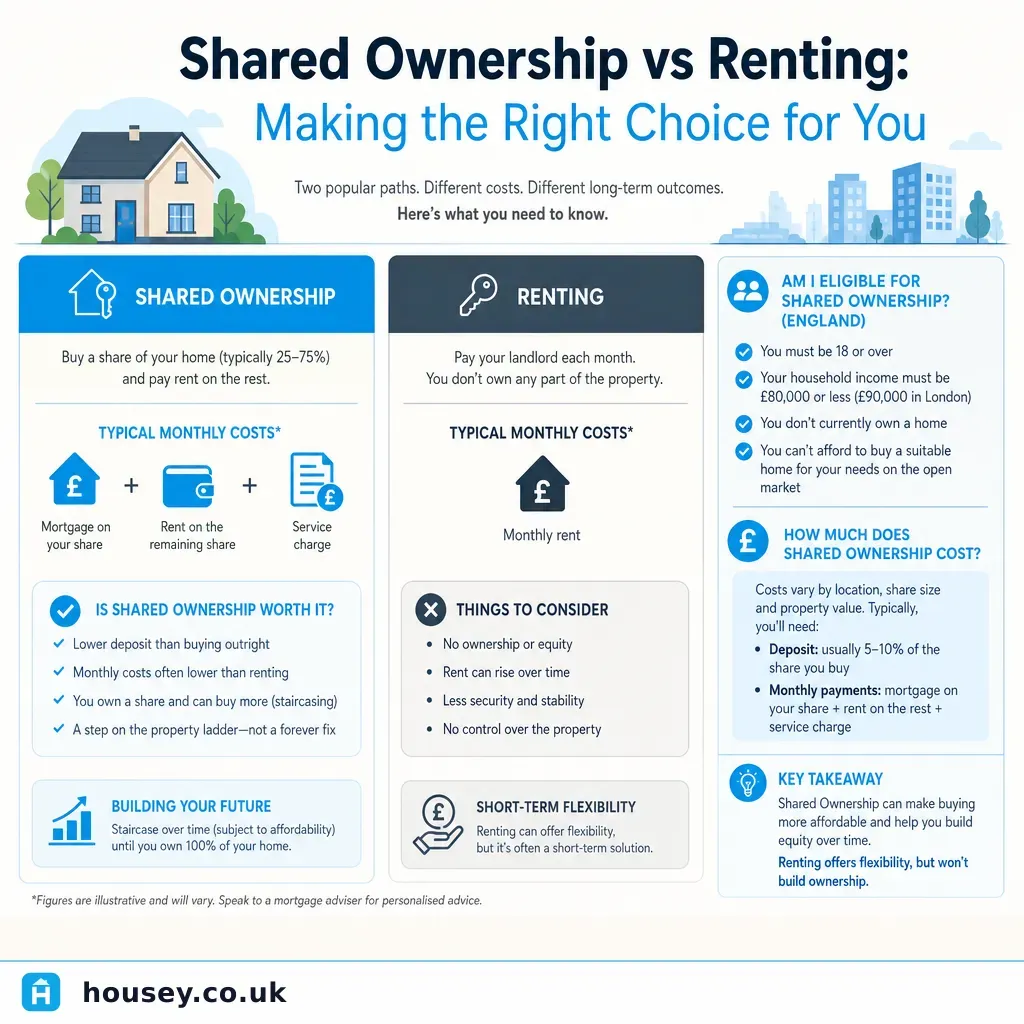
Shared Ownership vs Renting: Making the Right Choice for You
Shared ownership lets you buy a share of a property — typically 10% to 75% — and pay subsidised rent on the rest, building equity over time.
 Buying & Moving
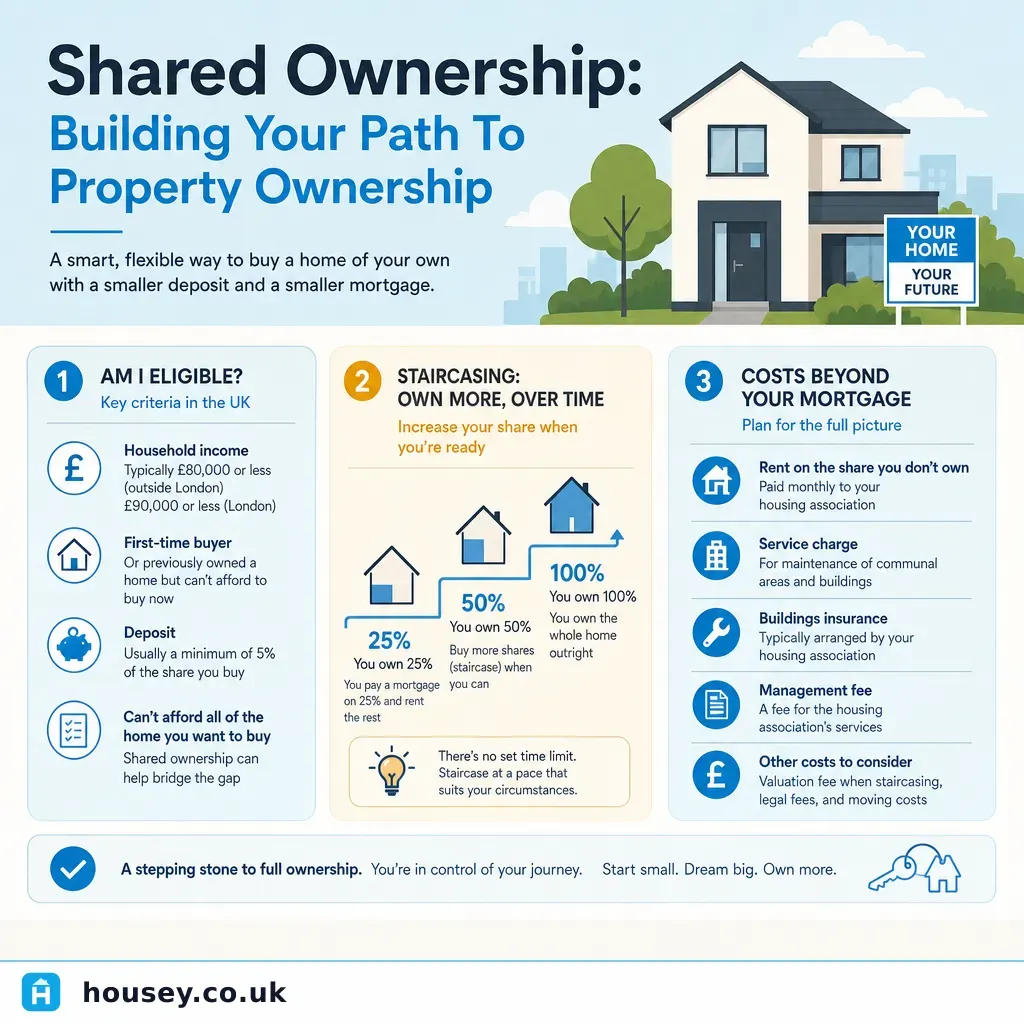
Shared Ownership: Building Your Path To Property Ownership
Shared ownership lets you buy a share of a home — typically 10% to 75% — from a housing association and pay subsidised rent on the remainder.
 Buying & Moving
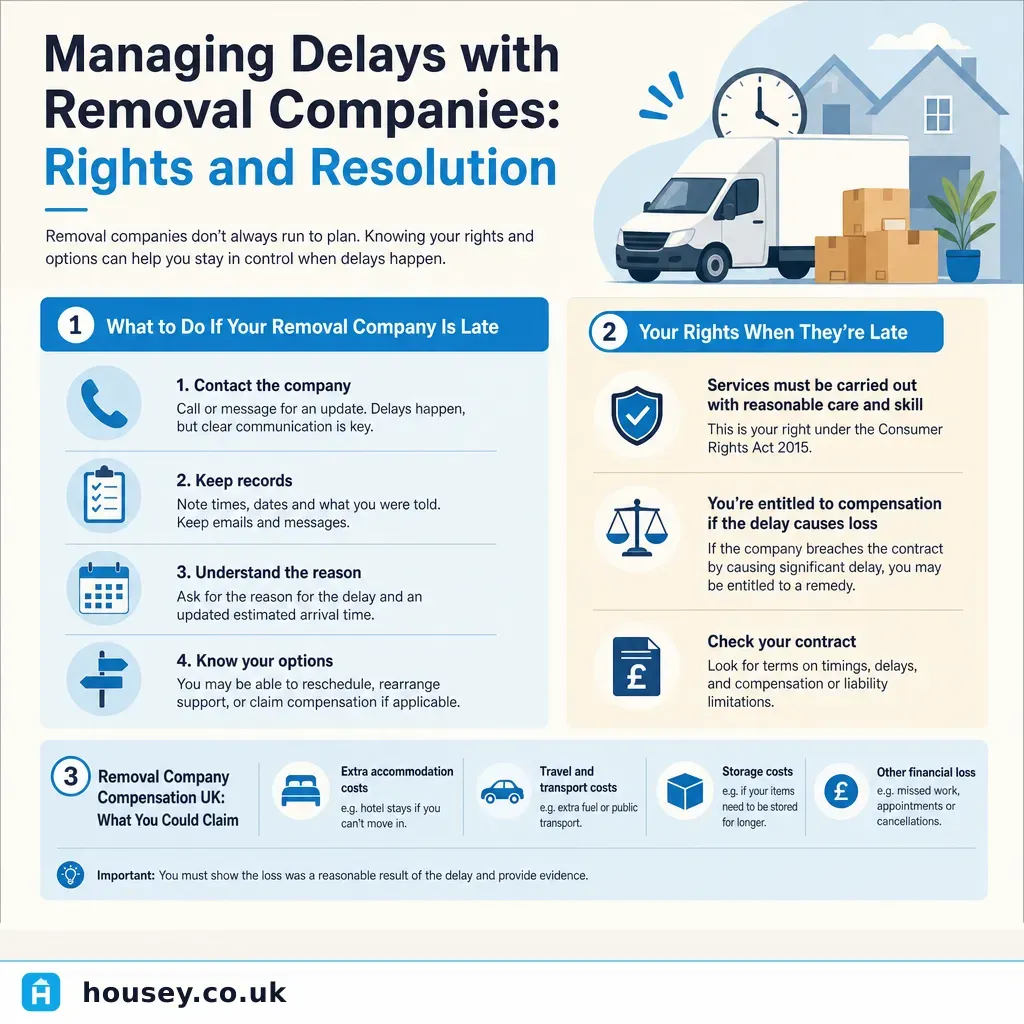
Managing Delays with Removal Companies: Rights and Resolution
If a removal company is late, your rights depend on your contract and whether the company is BAR-registered.
 Buying & Moving
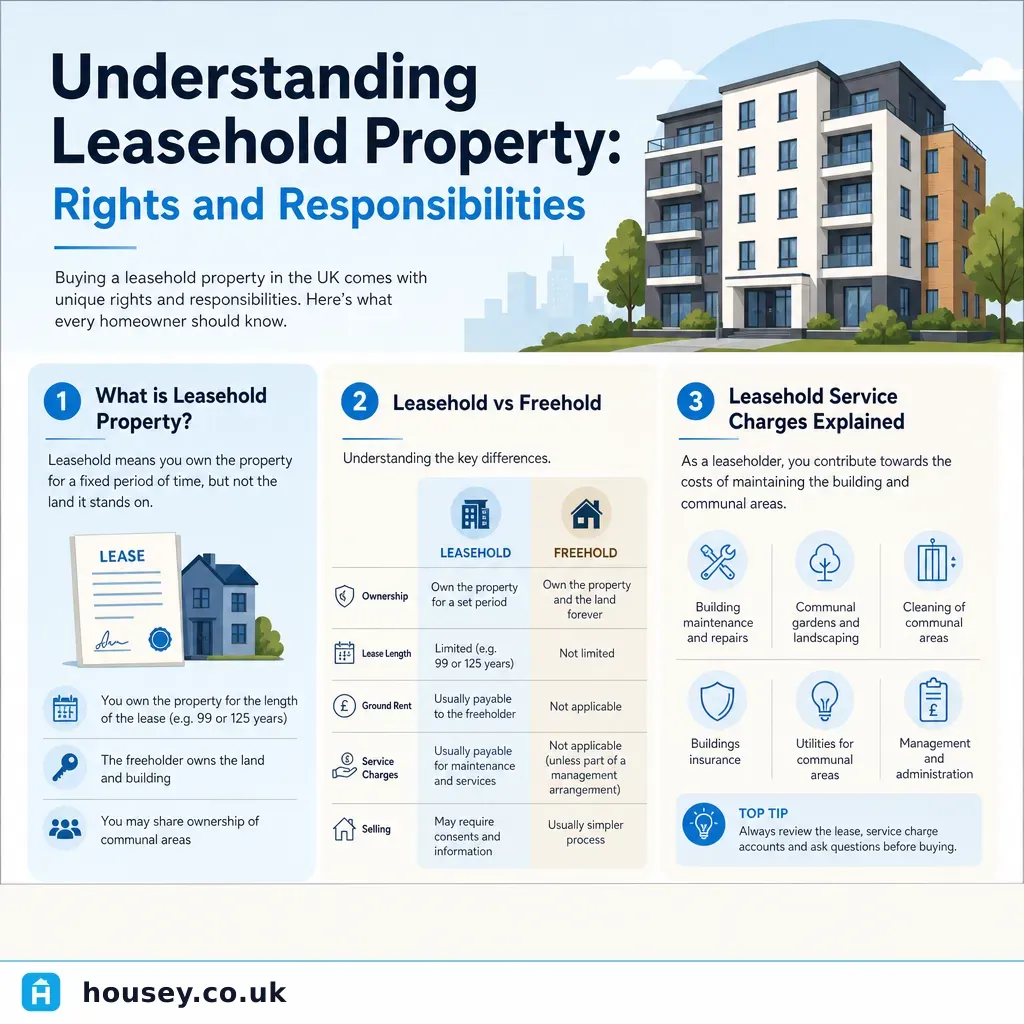
Understanding Leasehold Property: Rights and Responsibilities
Leasehold means you own a time-limited interest in a property while the freeholder owns the land and building.
 Buying & Moving
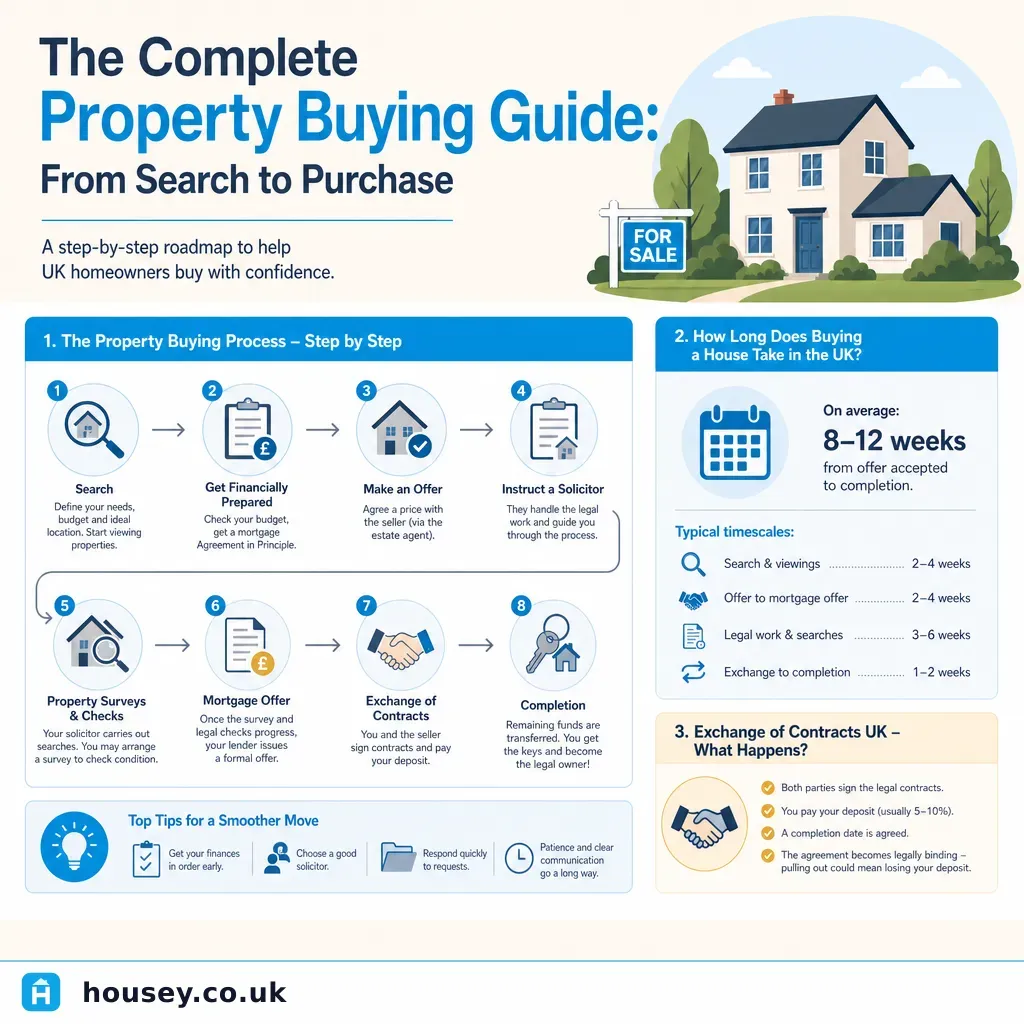
The Complete Property Buying Guide: From Search to Purchase
Buying a property in England and Wales typically takes 3–6 months from accepted offer to completion.