Shared Ownership: Building Your Path To Property Ownership
By Housey · Last reviewed 30th of May 2026
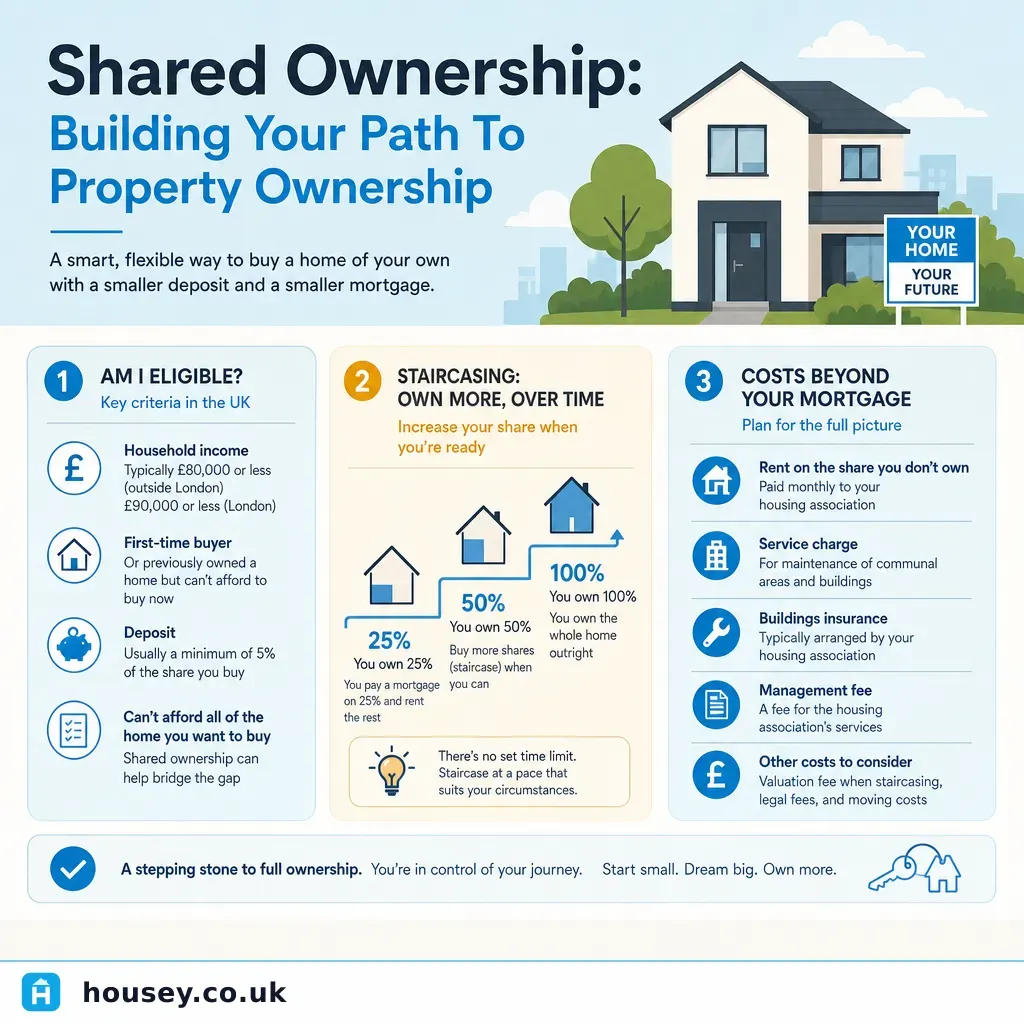
Shared Ownership: Building Your Path To Property Ownership
Shared ownership is one of the UK government's main affordable homeownership schemes, available through Homes England and the Greater London Authority. For buyers priced out of the open market — particularly first-time buyers and those who have previously owned but can no longer afford to buy — it offers a genuine route onto the property ladder with a smaller deposit and lower initial mortgage payments. However, the scheme's leasehold structure, ongoing rent obligations, and legal complexity mean that going in without proper advice can lead to unexpected costs and complications.
Key points
- Household income must be below £80,000 per year (£90,000 in Greater London) to be eligible under the current Homes England Affordable Homes Programme.
- Since the 2021 model reforms, buyers can purchase an initial share as low as 10% (previously 25% minimum) and staircase in 1% increments per year for the first 15 years.
- The Leasehold Reform (Ground Rent) Act 2022 caps ground rent at zero for new residential leases in England — a significant consumer protection that applies to new shared ownership purchases.
- Service charges and rent on the unsold share are ongoing costs in addition to the mortgage; combined monthly housing costs can sometimes approach or exceed the equivalent of a full purchase mortgage.
- Shared ownership conveyancing differs materially from a standard purchase and requires a solicitor with specific experience in the scheme — the lease structure and housing association requirements add complexity throughout.
How shared ownership works
Under the scheme, you buy a percentage share of a property — typically between 10% and 75% — from a housing association (also called a registered provider). You pay a subsidised rent on the share you do not own, and a mortgage on the share you do. The property is always leasehold, and you are a leaseholder of the housing association.
You can increase your share over time through staircasing — buying additional increments at the current market value. In most cases, you can eventually reach 100% ownership, at which point it may be possible to acquire the freehold where available, though terms vary by property and housing association.
Who is eligible?
Shared ownership is available in England through Homes England and in London through the Greater London Authority. The main eligibility criteria are:
- Your household income is below £80,000 per year (£90,000 in Greater London)
- You are a first-time buyer, or you previously owned a home but cannot now afford to buy on the open market
- You are not already a shared owner
- The property will be your only home
Individual housing associations may apply additional local connection requirements or prioritise key workers, armed forces personnel, or people with disabilities. Check the eligibility criteria for each specific development.
Staircasing: buying more of your home over time
Staircasing is the process of purchasing additional shares in your home. Under the 2021 Affordable Homes Programme model:
- You can staircase in 1% increments each year for the first 15 years — smaller tranches than older models, which often required a minimum 10% purchase
- Each transaction requires a RICS valuation at the time of purchase to determine the current market value of the share being acquired
- Costs include a valuation fee, legal fees, and potentially additional Stamp Duty Land Tax (SDLT) — take specialist advice on your SDLT position before staircasing
Older shared ownership leases (pre-2021) may have different staircasing terms. Check your specific lease with a solicitor before assuming the new model rules apply.
Is shared ownership right for you?
- Choose shared ownership if you cannot currently afford to buy on the open market, your income is within the threshold, and you are comfortable with leasehold ownership and ongoing rent obligations.
- Consider alternatives if you are close to affording a full purchase — combined mortgage, rent, and service charge costs can sometimes exceed a standard mortgage on a comparable property.
- Seek independent legal advice if you are unsure about the lease terms, staircasing clauses, or your rights as a leaseholder before committing.
- Ask a RICS-registered valuer before each staircasing transaction to confirm the valuation reflects current market conditions.
- Check with a regulated mortgage adviser whether lenders offer competitive shared ownership mortgage products in your situation — not all lenders participate in the scheme.
The full cost of shared ownership
Understanding the total monthly cost before you commit is critical. Beyond the mortgage on your share:
Cost | What it covers | Typical range |
|---|---|---|
Rent on unsold share | Subsidised rent to the housing association | Around 2.75% of unsold share value per year |
Service charge | Communal maintenance, building insurance | £100–£400+ per month |
Ground rent | Lease obligation to freeholder | £0 for new leases from 2022; check older leases |
Staircasing costs | Valuation and legal fees per transaction | £1,000–£2,500 per staircase (indicative, last reviewed 2026-05-30) |
SDLT | Payable on initial purchase and final tranche | Seek tax advice; first-time buyer relief may apply |
Indicative UK costs, last reviewed 2026-05-30. Figures vary by housing association, location, and property.
Shared ownership conveyancing: key differences from a standard purchase
Shared ownership conveyancing requires a solicitor experienced specifically in the scheme. Key differences include:
- The lease must be reviewed in full — shared ownership leases are typically 99–125 years and contain specific obligations on repairs, alterations, subletting, and assignment
- The housing association must approve the sale and any future assignment
- Mortgage lenders require confirmation that the lease meets their minimum requirements (typically 70 years unexpired at the end of the mortgage term)
- The housing association usually retains a right of first refusal if you wish to sell your share before reaching 100%
Using a conveyancer without shared ownership experience can introduce delays, errors in lease review, or complications with your mortgage offer.
Buyer's checklist for shared ownership purchases
Important limitations
Shared ownership is a regulated scheme but its legal, financial, and tax implications are specific to each buyer's circumstances, the housing association's lease terms, and the property. This article provides general information only and should not be relied upon as legal, financial, or tax advice. Always seek independent legal advice from a solicitor experienced in shared ownership conveyancing, and independent financial advice from a regulated mortgage adviser, before proceeding.
What to ask a qualified professional
Before instructing a solicitor or mortgage adviser for a shared ownership purchase:
- Have you acted for shared ownership purchasers with this housing association before?
- Will you review the full lease and flag any non-standard or restrictive clauses?
- What is your total fee, and does it include the housing association's legal fee (which buyers typically pay)?
- What SDLT relief may be available on the initial purchase and on each staircasing tranche?
- Are there any restrictions in this lease on subletting, alterations, or assignment?
- What are the housing association's resale requirements if I wish to sell before reaching 100%?
When to get professional help
Instruct a solicitor experienced in shared ownership conveyancing as early as possible in your purchase process — ideally before making a formal offer. If you are uncertain whether shared ownership is financially viable compared with other options in your circumstances, speak to an independent, regulated mortgage adviser before committing.
If you already own a shared ownership property and are considering staircasing, commission a RICS valuation first and take fresh legal advice on the costs and SDLT implications.
How Housey can help
Housey can connect you with professionals for conveyancing experienced in shared ownership leases, valuation surveys ahead of staircasing transactions, and RICS Home Surveys to inform your purchase decision. Compare quotes from vetted local professionals before you commit.
Frequently asked questions
Can I buy shared ownership if I already own a home?
Shared ownership is primarily for first-time buyers and those who cannot currently afford to buy on the open market. Existing homeowners who have sold their property may be eligible if they cannot afford to re-enter the market, but you must not own another property at the time of purchase. Check eligibility rules with the specific housing association.
What happens if I want to sell my shared ownership property?
If you own less than 100%, the housing association typically holds a right of first refusal — they may find a buyer for your share within a set period (often eight weeks) before you can market it openly. If you have staircased to 100%, you can usually sell as with any other leasehold property, subject to the lease terms.
Is shared ownership the same as Help to Buy?
No. Help to Buy (Equity Loan) was a separate scheme that closed to new applications in October 2022 in England. Shared ownership is a distinct scheme with a different structure, different eligibility criteria, and different long-term implications. Do not assume advice relevant to Help to Buy applies to shared ownership.
Do I need a survey if buying a shared ownership property?
Yes. Even though you are purchasing a leasehold share, you are responsible for internal repairs and maintenance. A RICS Level 2 Home Survey is the minimum recommended for modern, conventional properties; older or non-standard buildings may warrant a RICS Level 3 Building Survey before you exchange.
Sources and further reading
- GOV.UK — shared ownership homes — HM Government
- Homes England — affordable homeownership — Homes England
- Leasehold Reform (Ground Rent) Act 2022 — legislation.gov.uk
- Citizens Advice — shared ownership — Citizens Advice
- RICS — residential valuation standards — Royal Institution of Chartered Surveyors
Useful next reads
 Buying & Moving
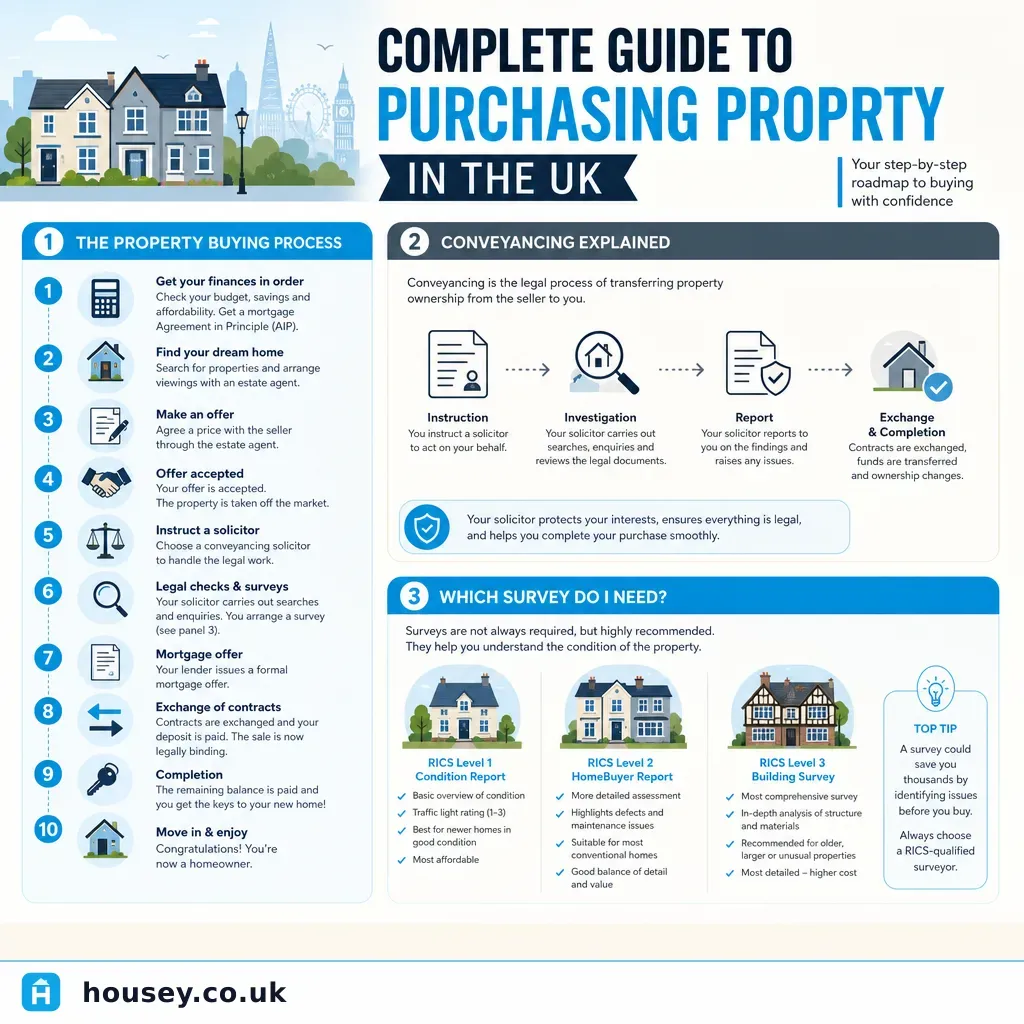
Complete Guide to Purchasing Property in the UK
Buying property in England and Wales typically takes 12 to 16 weeks from offer acceptance to completion.
 Buying & Moving
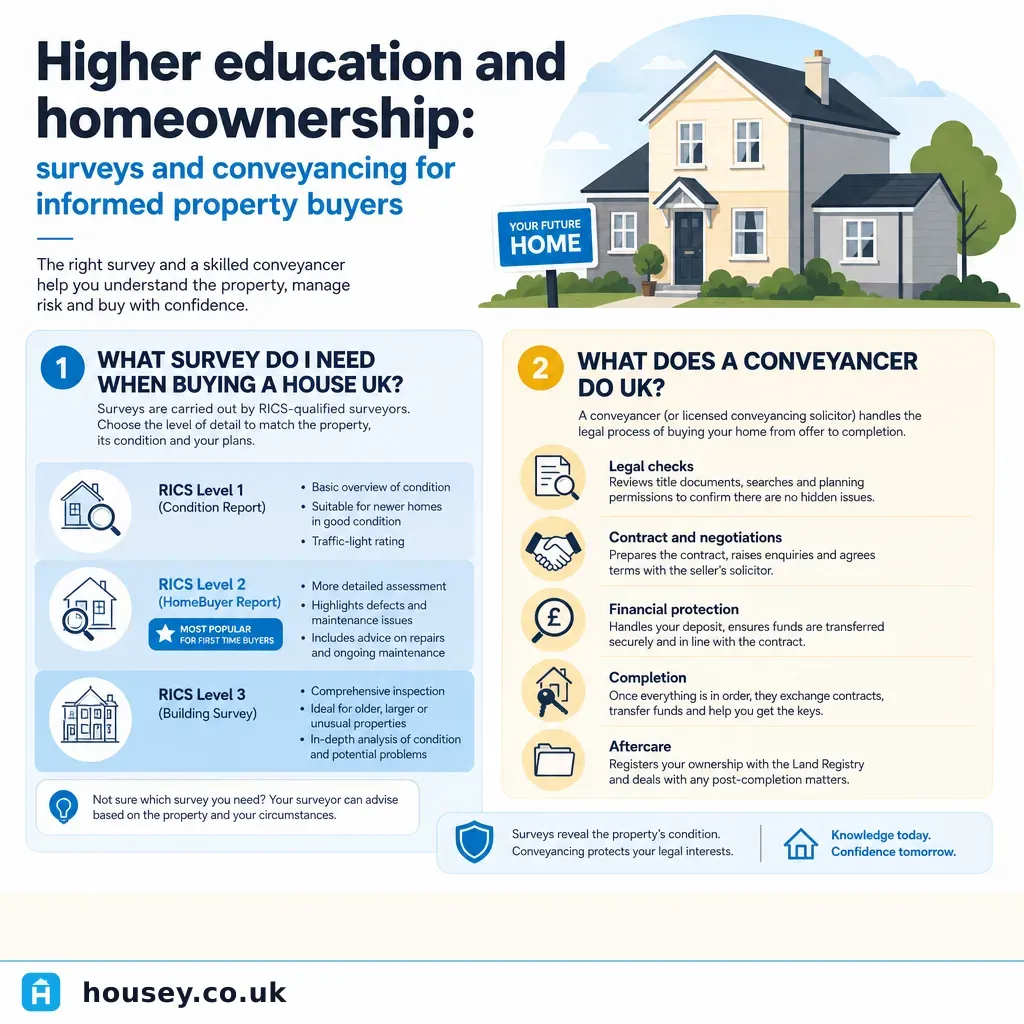
Higher education and homeownership: surveys and conveyancing for informed property buyers
Informed property buyers in the UK typically commission a RICS Level 2 or Level 3 survey before exchange, alongside instructing a conveyancer to carry out legal searches and review title.
 Buying & Moving
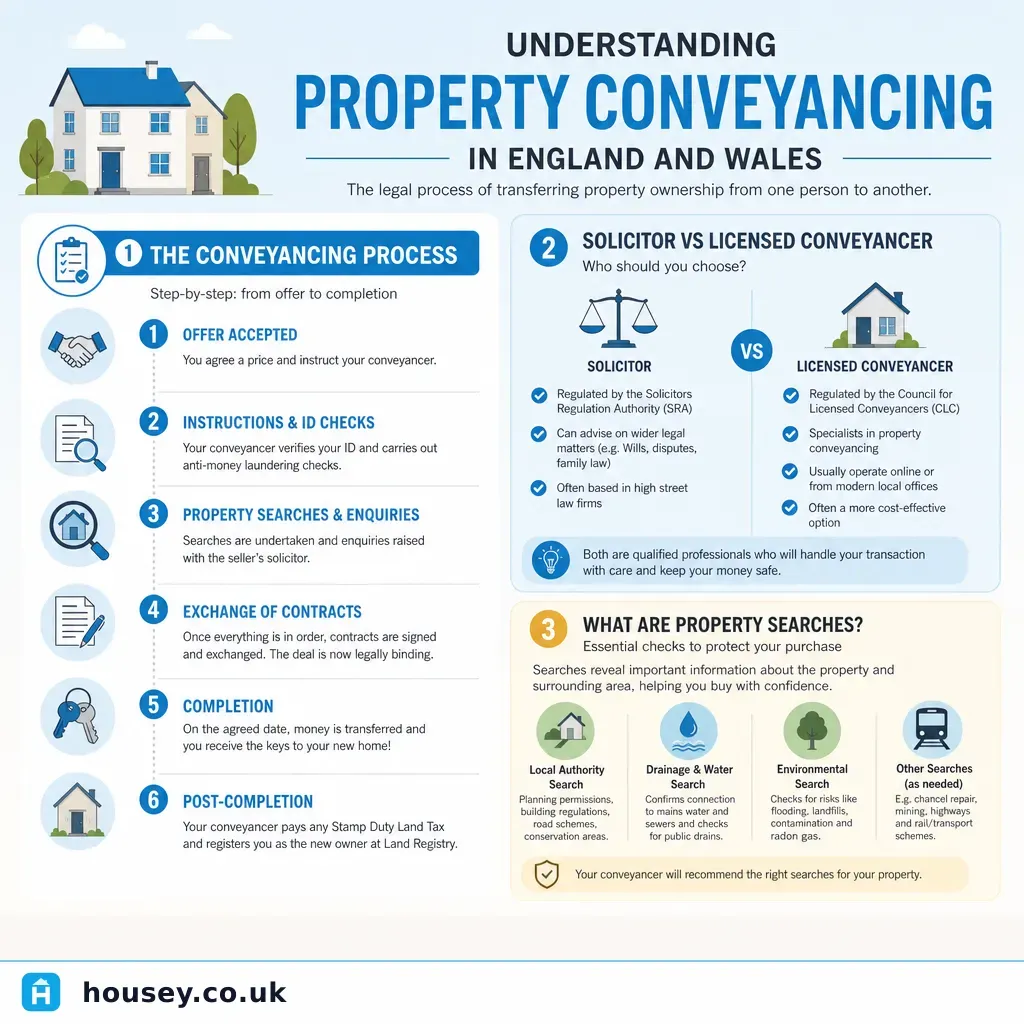
Understanding Property Conveyancing in England and Wales
Conveyancing is the legal process of transferring property ownership in England and Wales.
 Buying & Moving
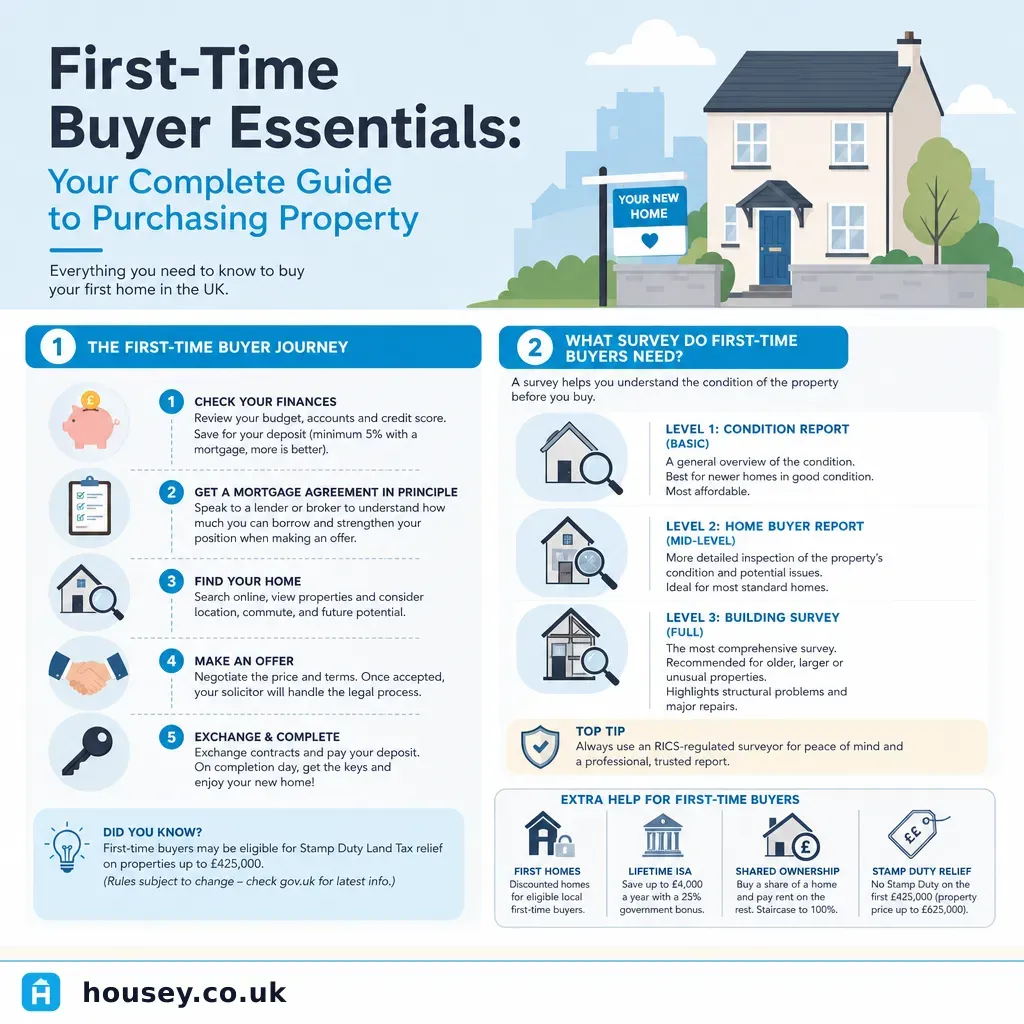
First-Time Buyer Essentials: Your Complete Guide to Purchasing Property
Buying your first UK home involves six key stages: securing a mortgage Agreement in Principle, making an offer, instructing a solicitor, commissioning an independent RICS survey, exchanging contracts (the legally binding point), and completing.
 Buying & Moving
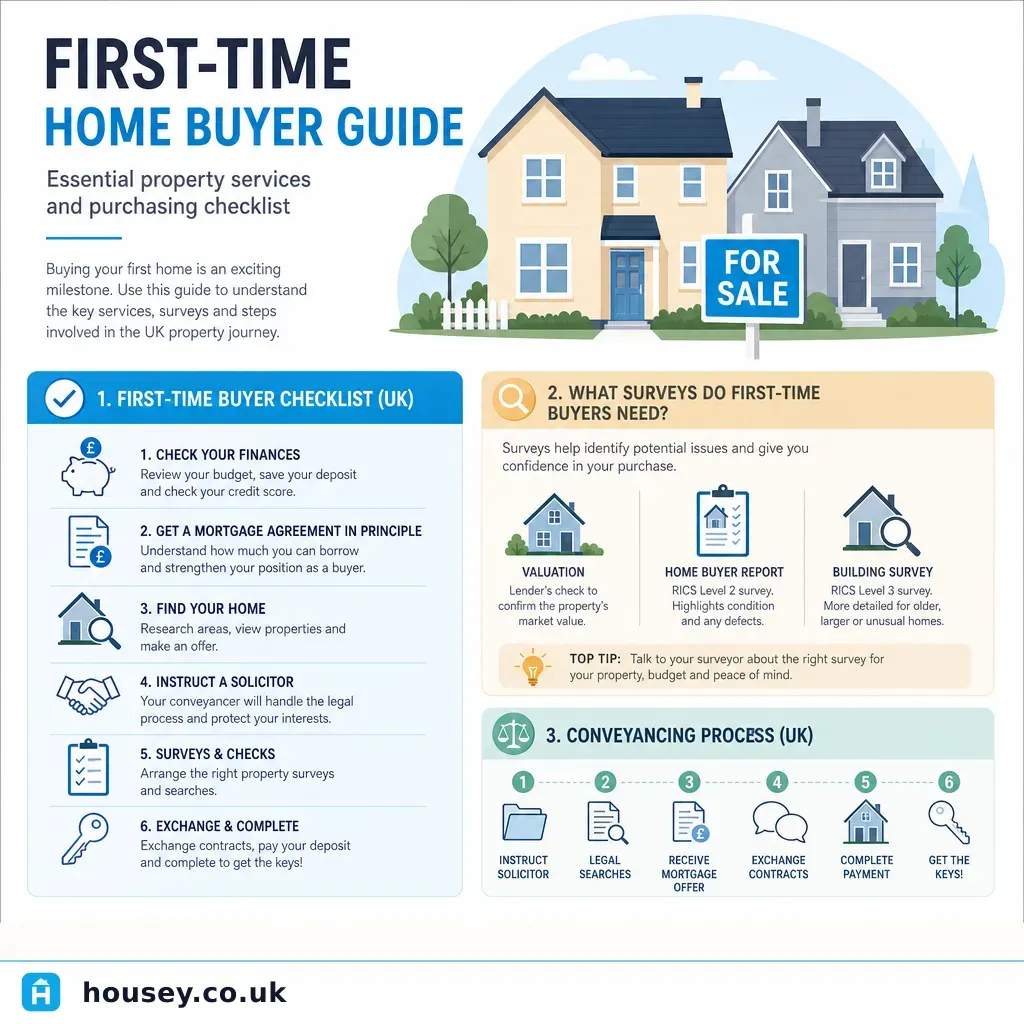
First-time home buyer guide: essential property services and purchasing checklist
Buying your first home in the UK typically takes 12–16 weeks from offer acceptance to completion.