Renovating Listed and Period Properties: Heritage Considerations and Best Practices
By Housey · Last reviewed 8th of May 2026
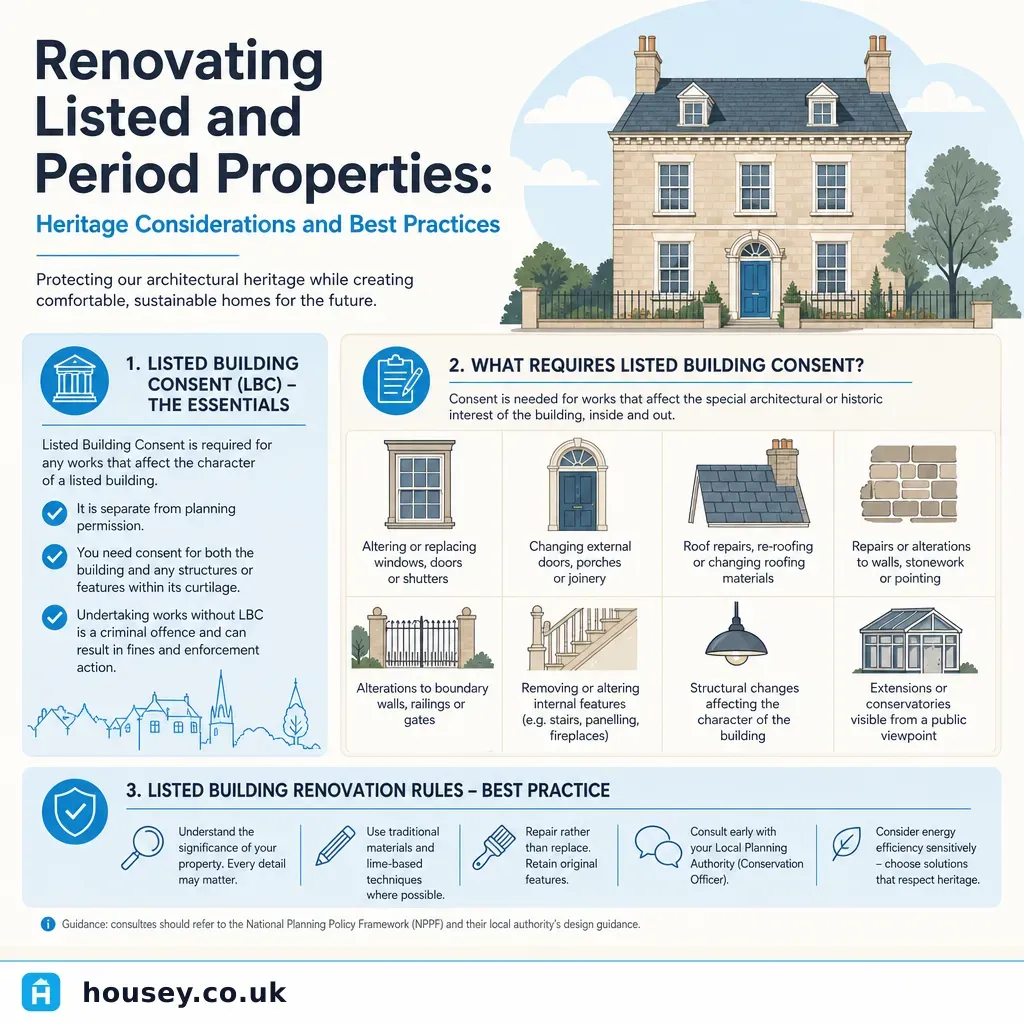
Renovating Listed and Period Properties: Heritage Considerations and Best Practices
Owning a listed or period property in the UK means navigating a distinct regulatory framework before almost any building work begins. Whether you're dealing with a Grade II listed cottage, a Victorian terrace in a conservation area, or an Edwardian semi with original sash windows, the rules exist to protect what makes these buildings significant — and understanding them before commissioning designs can save considerable time, cost, and legal risk.
Key points
- Listed Building Consent (LBC) is required for any works affecting the character of a listed building — internally or externally — and is entirely separate from planning permission.
- Carrying out unauthorised works to a listed building is a criminal offence under the Planning (Listed Buildings and Conservation Areas) Act 1990, with no time limit on enforcement.
- Around 92% of listed buildings in England are Grade II; 6% are Grade II* and only 2% are Grade I (exceptional interest), with each grade carrying proportionately stricter scrutiny.
- Conservation area designation can restrict works to all properties within its boundary through Article 4 Directions, not just listed buildings.
- Pre-application advice from your Local Planning Authority (LPA) is usually available and helps clarify consent requirements before design fees are committed.
Listed vs period property: what the terms mean
The term period property is informal and applies to homes built before roughly the 1940s — Georgian, Victorian, Edwardian, or inter-war — but it carries no automatic legal restriction. A listed building is a legal designation under the Planning (Listed Buildings and Conservation Areas) Act 1990. In England, Historic England maintains the National Heritage List for England (NHLE); in Scotland, Historic Environment Scotland operates a Category A, B, and C system; in Wales, Cadw administers Grade I, II*, and II listings.
The listing covers the entire building, not just the façade, and typically includes any structure within the curtilage pre-dating July 1948 — outbuildings, boundary walls, and gates. This means working on an interior, replacing windows, or fitting a new kitchen can all require Listed Building Consent depending on how significant those elements are to the building's character. If you are unsure whether a property is listed, search the National Heritage List for England at Historic England's website, or the equivalent register in your devolved nation.
Listed Building Consent vs planning permission
These are two entirely separate consents, both of which may apply to a single project.
Consent type | What it covers | When needed |
|---|---|---|
Listed Building Consent (LBC) | Works affecting the character of a listed building, internally or externally | Alterations, extensions, demolition of listed or curtilage structures |
Planning permission | Change of use, extensions, external alterations | Development beyond permitted development rights |
Conservation area consent | Demolition of unlisted buildings in a conservation area | Demolition work in designated conservation areas |
Building regulations approval | Structural safety, fire, thermal and energy performance | Most structural and services work |
You may need all four consents for a significant listed building renovation. Applying for LBC and planning permission simultaneously is common and can reduce overall timescales.
What typically requires Listed Building Consent
Consent is required for any alteration that affects the character of the listed building. In practice, this covers a wide range of works:
External changes: replacing windows or doors (even like-for-like where original materials are involved), altering the roof covering, adding rooflights, painting masonry for the first time, installing external insulation.
Internal changes: removing or altering original fireplaces, staircases, historic panelling, decorative plasterwork, structural walls, or original floor finishes.
Services and energy measures: solid-wall insulation, replacing sash windows with double-glazed units, solar panels, heat pumps, mechanical ventilation, underfloor heating.
Extensions and curtilage structures: any addition to the listed building or alteration to pre-1948 curtilage structures.
Minor like-for-like repairs — patching lime plaster, repointing with matching mortar — generally do not require LBC. However, there is no formal de minimis threshold in the legislation. When in doubt, contact your LPA's conservation officer before starting.
Energy retrofit and heritage: navigating the tension
Modern insulation systems and heat pumps are designed for airtight, thermally uniform buildings — not for solid masonry walls, breathing lime renders, or single-glazed joinery. Installing impermeable insulation in a solid-wall property can trap moisture, cause interstitial condensation, and permanently damage historic fabric.
Historic England's guidance on energy efficiency emphasises a whole-building assessment before any retrofit measures are specified. PAS 2035, the publicly available specification for domestic retrofit, applies to all tenures but must be interpreted carefully for heritage contexts.
For listed buildings specifically:
- Internal wall insulation may require LBC and must be assessed for moisture impact before installation.
- Secondary glazing is usually preferable to replacement double-glazing — it preserves original joinery and is reversible.
- Lime mortars and breathable wall finishes should be maintained throughout — cement-based products accelerate decay in traditional masonry.
A heritage and conservation consultant with experience in traditional construction should be involved from the outset, not after specifications have been drawn up.
Do you need consent? A decision tree
- Is the property listed? LBC is likely required for any alteration affecting character. Contact your LPA's conservation officer before proceeding.
- Is the property in a conservation area? Check whether an Article 4 Direction applies — permitted development rights may be removed for windows, extensions, or external cladding changes.
- Are you carrying out like-for-like repairs only, using the same materials and methods? LBC is probably not required, but confirm with the LPA before starting.
- Are you making structural changes, adding an extension, or fitting energy measures? LBC and/or planning permission is likely required — engage a heritage consultant or conservation-accredited architect.
- Unsure? Apply for a Certificate of Lawfulness (Proposed Use or Development) to obtain a formal written decision from the LPA.
Red flags and warning signs
Stop work and seek specialist advice if you encounter:
- Stepped cracking through brickwork, bowing walls, or a sagging roof structure — these may indicate active structural movement requiring an engineer's assessment before any renovation proceeds.
- Properties built before 2000 may contain asbestos; pre-1965 buildings may have lead paint. Both require specialist assessment and licensed removal if disturbed.
- Damp that has been treated with injected chemical DPC or cement render — these approaches can harm historic fabric and may have worsened the underlying problem rather than solved it.
- Alterations of unknown origin with no consent records — this creates a legal liability on sale requiring a retrospective application or Certificate of Lawfulness.
- If purchasing a listed property, commission a measured building survey to document the existing state accurately before any renovation planning begins.
Important limitations
This article provides general information about heritage renovation requirements in England, Wales, and Scotland. Rules vary considerably by local authority, listing grade, building history, and the nature of proposed works. Nothing here constitutes planning, legal, or structural advice. Always consult your Local Planning Authority and, for significant works, a qualified heritage consultant, conservation-accredited architect, or planning consultant before proceeding.
When this becomes urgent
Seek immediate professional guidance — and do not proceed further with any works — if:
- Works on a listed building have already started without checking consent requirements. Enforcement action can be triggered at any stage, and the LPA may require you to stop and restore the property.
- You have received a planning enforcement notice or any contact from the LPA's conservation team.
- A structural survey reveals active movement, severe water ingress, or deteriorating historic fabric that could worsen during renovation.
- You are purchasing a listed property and unauthorised alterations have emerged during a survey or solicitor's searches.
What to ask a qualified professional
Before instructing a heritage consultant or conservation-accredited architect for a listed or period property project, consider asking:
- Do you have specific experience with buildings of this listing grade and construction type?
- Will you handle the Listed Building Consent application, or is that a separate appointment?
- Can you advise on which works are likely to be acceptable in principle before detailed design begins?
- How do you approach energy retrofit for listed buildings — are you familiar with Historic England's guidance and PAS 2035?
- What documentation (heritage statements, measured drawings, structural reports) will the consent applications require?
- Do you have experience working with this particular LPA's conservation team?
When to get professional help
Engage a heritage consultant or conservation-accredited professional at the earliest stage — ideally before purchasing a listed property if significant works are anticipated. A building control consultant can advise on how building regulations compliance interacts with conservation requirements, which is particularly important for energy retrofit and structural works. Seek advice before starting, not after.
How Housey can help
If you are planning works on a listed or period property, Housey can connect you with qualified heritage and conservation consultants who understand the Listed Building Consent process and local authority requirements. For formal documentation of the existing structure, measured building surveys establish an accurate baseline record before works begin. Where compliance submissions are needed alongside consent applications, building control consultants can guide the process.
Frequently asked questions
Do I always need Listed Building Consent for internal changes?
Listed Building Consent applies to works affecting a listed building's character — and internal changes are not exempt. Removing original fireplaces, panelling, or lime plaster can all require consent. The legal test is whether character is affected, not whether the work is internal or external. Confirm with your LPA's conservation officer before starting any alteration, however minor it may seem.
Can I install double glazing in a listed building?
Replacement double-glazed units are typically refused for listed buildings as they remove original joinery and affect character. Secondary glazing — a discreet inner frame inside the existing window — is usually the preferred solution. It improves thermal performance, preserves original fabric, is reversible, and often does not require Listed Building Consent. Check with your LPA's conservation officer for your specific property.
What happens if I carry out works without Listed Building Consent?
Unauthorised works to a listed building are a criminal offence under the Planning (Listed Buildings and Conservation Areas) Act 1990, with no limitation period. Enforcement can be triggered at any time. Penalties include an unlimited fine or up to two years' imprisonment, plus a possible requirement to restore the property at your own cost. This liability transfers to subsequent owners on sale.
Does conservation area designation affect unlisted houses?
Yes. Conservation area designation restricts works to all properties within the boundary, not just listed ones. Article 4 Directions can remove permitted development rights for window replacements, extensions, and external cladding changes. Demolition of unlisted buildings in a conservation area also requires consent. Check whether an Article 4 Direction applies by contacting your local planning authority or searching the planning portal.
Is a heritage consultant the same as a conservation architect?
Not necessarily. Heritage consultants, typically qualified through the Institute of Historic Building Conservation (IHBC), specialise in consent applications, heritage statements, and significance assessments. Conservation architects hold RIBA conservation accreditation and manage design and contract administration. Complex projects may need both. Either professional should advise at the outset on who to appoint for your specific building and project.
Sources and further reading
- Planning (Listed Buildings and Conservation Areas) Act 1990 — legislation.gov.uk
- National Heritage List for England — Historic England
- Energy Efficiency and Historic Buildings: Application of Part L — Historic England
- Listed buildings — GOV.UK guidance — GOV.UK
- PAS 2035: Retrofitting dwellings for improved energy efficiency — BSI Group
Useful next reads
 Planning & Pre-Build
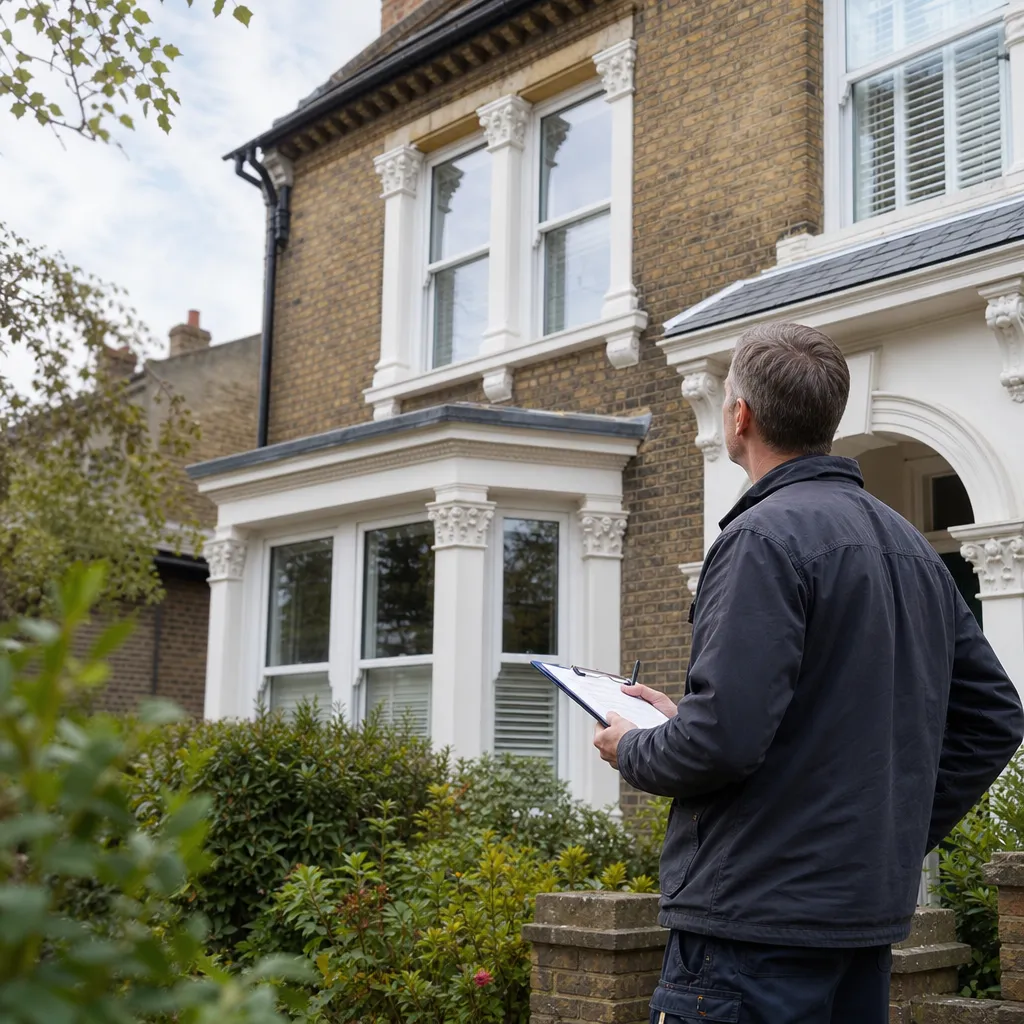
Heritage Property: Preserving Historic Homes and Conservation Standards
Listed buildings in the UK require Listed Building Consent for most works — internal and external — that affect their special architectural or historic interest.
 Planning & Pre-Build
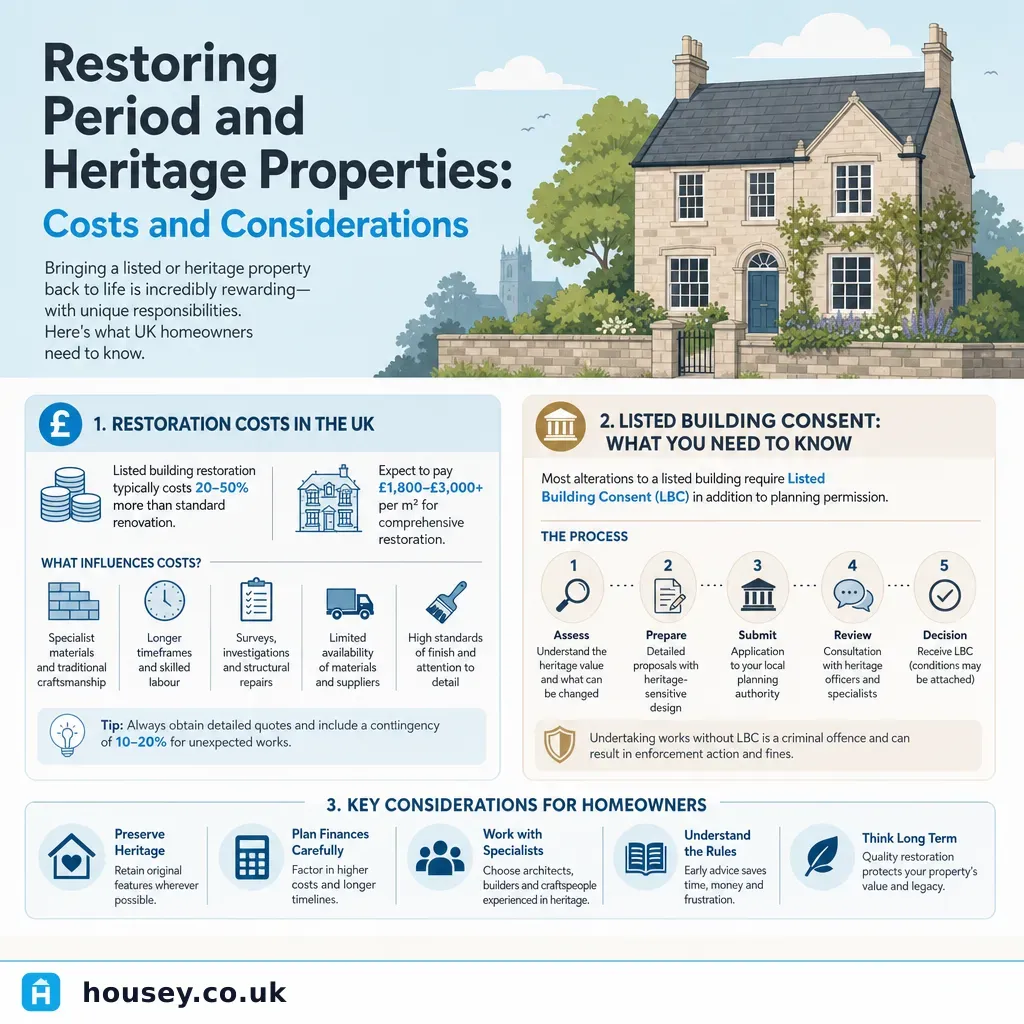
Restoring Period and Heritage Properties: Costs and Considerations
Restoring a period or heritage property requires listed building consent for most alterations, use of traditional materials such as lime mortar, and specialist contractors.
 Planning & Pre-Build
Victorian Architecture: Design Principles and Heritage Characteristics
Victorian architecture spans 1837 to 1901 and includes several distinct sub-styles — Gothic Revival, Italianate, Queen Anne Revival, and Arts and Crafts among them.
 Planning & Pre-Build
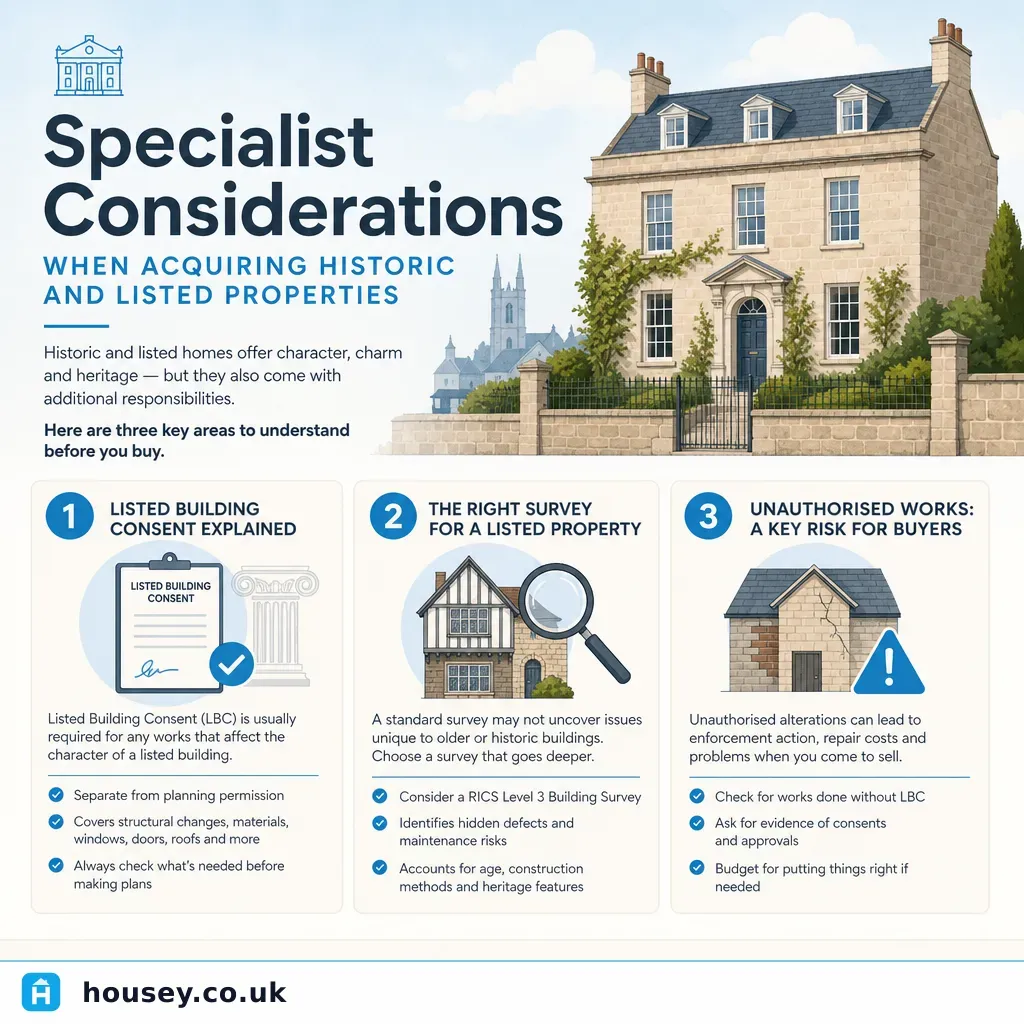
Specialist Considerations When Acquiring Historic and Listed Properties
Buying a listed property in the UK means inheriting the regulatory history — including any unauthorised alterations made by previous owners.
 Planning & Pre-Build
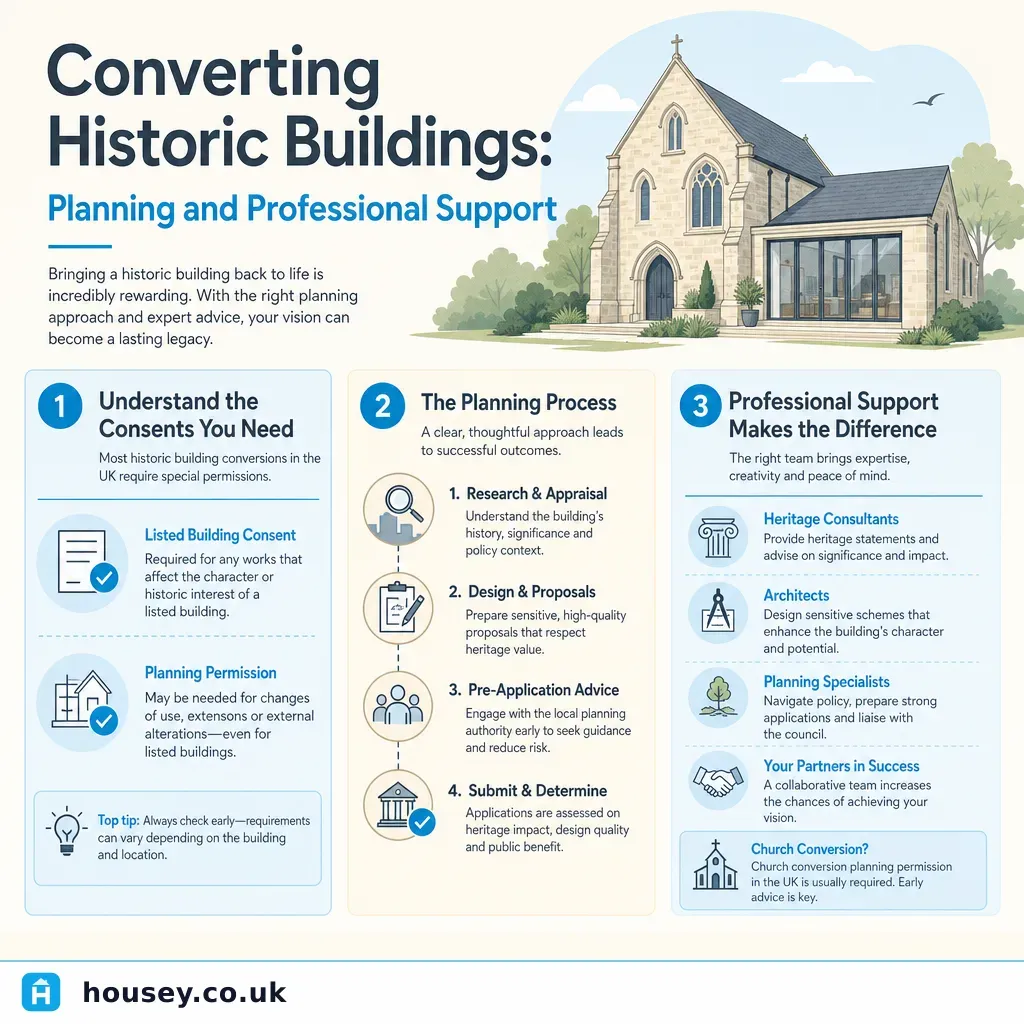
Converting Historic Buildings: Planning and Professional Support
Converting a historic or listed building in the UK requires Listed Building Consent in addition to planning permission, both granted by the local planning authority.