Restoring Period and Heritage Properties: Costs and Considerations
By Housey · Last reviewed 30th of May 2026
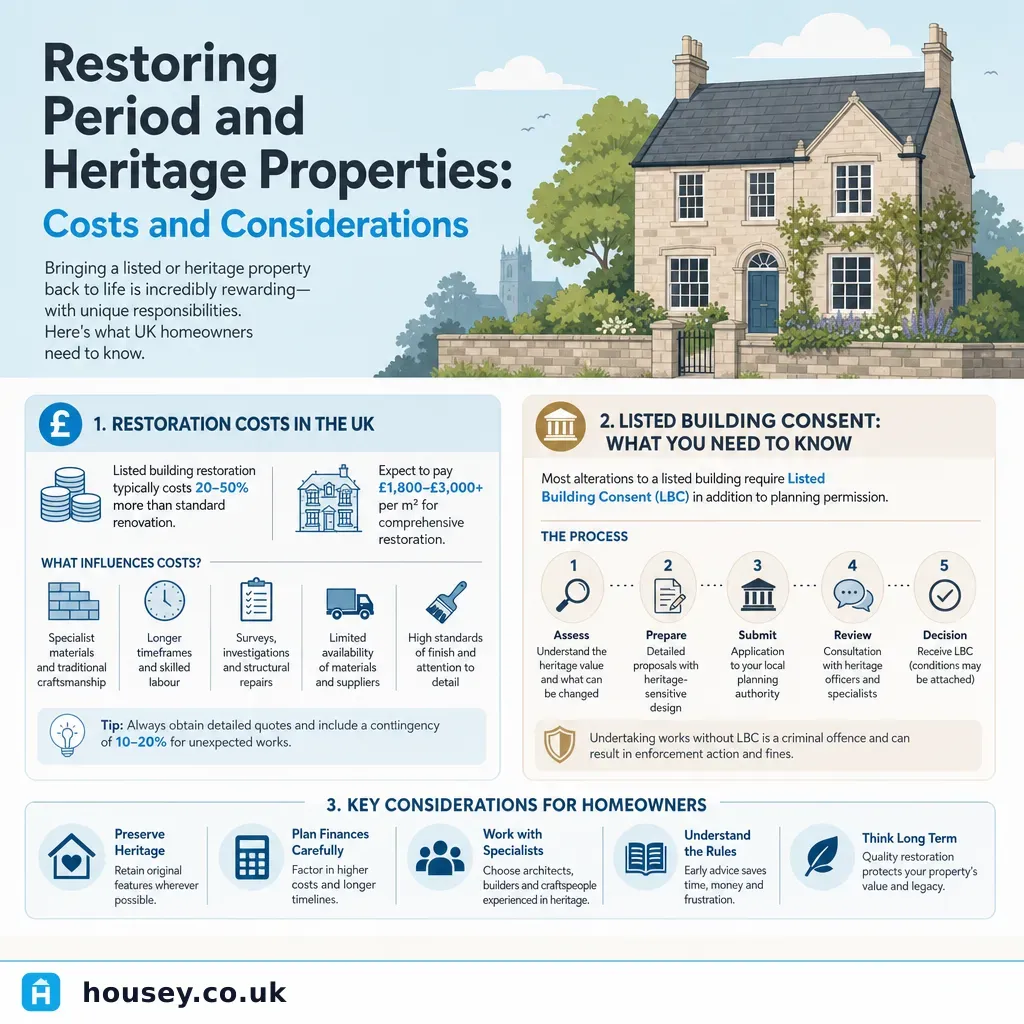
Restoring Period and Heritage Properties: Costs and Considerations
Period and heritage properties — Victorian terraces, Georgian townhouses, Edwardian semis, Arts and Crafts cottages, and listed buildings of all grades — make up a significant proportion of the UK's housing stock and present a distinct set of challenges for owners planning repair, restoration, or improvement. Whether you are dealing with failing lime render on a 19th-century terrace or structural movement in a Grade II listed farmhouse, the rules, materials, and professionals involved in heritage restoration differ meaningfully from those governing standard modern renovation. Getting the approach wrong risks not only poor outcomes but enforcement action and irreversible damage to historic fabric.
Key points
- Listed Building Consent (LBC) is required for any works that affect the character of a listed building — including internal alterations, repairs using non-original materials, and most structural interventions. Undertaking works without consent is a criminal offence under the Planning (Listed Buildings and Conservation Areas) Act 1990.
- Conservation area designation restricts permitted development rights on most properties within the area, not only listed buildings; demolition of structures and some external changes may require conservation area consent.
- Traditional lime-based mortars, renders, and plasters must generally be used on pre-1920s masonry — modern cement can trap moisture in the building fabric, accelerating decay and causing significant structural and aesthetic damage.
- Historic England recommends a minimum intervention approach: repair rather than replace, retain original material wherever possible, and use reversible techniques and materials throughout.
- A conservation architect holding RIBA Conservation Accreditation or a heritage consultant registered with the AABC or IHBC should be engaged before any significant works — and before submitting any planning or LBC application.
What counts as a listed building or heritage property?
In England, listed buildings are categorised as:
- Grade I: Of exceptional interest — approximately 2% of all listed buildings.
- Grade II*: Particularly important and of more than special interest — approximately 5.5%.
- Grade II: Of special interest — approximately 92% of all listed buildings. Most restoration work in the UK involves Grade II properties.
Scotland, Wales, and Northern Ireland each operate their own listing systems — Historic Environment Scotland, Cadw, and the Historic Environment Division of the Department for Communities respectively — with broadly similar but not identical consent processes.
A property does not need to be nationally listed to be subject to heritage-related planning controls. Properties in conservation areas, locally listed buildings, and buildings in Article 4 Direction areas may all face restrictions on changes to external appearance. Check the Historic England National Heritage List for England to confirm listing status, and consult your local planning authority (LPA) for conservation area boundaries.
What works require Listed Building Consent?
Type of work | Usually requires LBC? | Notes |
|---|---|---|
Like-for-like repair (same material, same method) | No | Must genuinely be like-for-like in material, profile, and method |
Repointing with a different mortar type | Yes | Changing from lime to cement or vice versa affects character |
Replacing windows with different design or material | Yes | Even single-for-single replacement if profiles or glazing differ |
Replacing roof covering with matching material | Depends | Check with LPA; often permitted if truly like-for-like and not visible |
Internal structural alterations | Yes | LBC applies to the interior as well as the exterior |
Removing internal partitions | Yes | If original or historic fabric is affected |
Installing insulation to walls or roof | Often yes | Can affect historic fabric; specialist assessment is essential |
Adding solar panels | Usually yes | Especially where visible from a highway or public place |
Injection damp-proofing | Usually yes | Involves drilling into historic fabric; alternatives should be explored first |
This table is illustrative. The requirement for consent depends on the specific property, its listing, and the LPA. Confirm requirements with your LPA or heritage consultant before assuming any works are exempt.
How much does heritage restoration cost?
Costs vary considerably based on building size, condition, the extent of works, specialist materials required, and the availability of qualified heritage contractors. Indicative UK costs, last reviewed 2026-05-30:
- Structural repairs (crack stitching, chimney breast rebuilding, underpinning): £5,000–£50,000+ depending on scope and access. A structural engineer experienced in traditional construction should specify the works.
- Lime render and repointing: £40–£100+ per m² depending on scaffold requirements, lime specification, and the extent of the affected area.
- Roof repairs using reclaimed or matching tiles or slates: £5,000–£30,000+ for a full re-covering, depending on the roof size and material sourcing.
- Sash window restoration: £600–£2,000+ per window depending on condition; like-for-like replacement with traditional joinery typically costs more.
- Heritage Impact Assessment: £1,500–£5,000+ depending on complexity and LPA requirements.
- Heritage consultant or conservation architect fees: typically 8–15% of project cost, or hourly rates of £80–£200+.
Always obtain at least three quotes from specialist heritage contractors. Using non-specialist contractors on heritage works frequently results in costly remediation and potential enforcement action.
Documents to prepare before starting work
Gathering the following before engaging professionals saves time and helps your consultant understand the full picture:
- Title register and title plan, available from HM Land Registry.
- Confirmation of listing grade and any scheduling — from the Historic England National Heritage List for England, or the equivalent register for Scotland, Wales, or Northern Ireland.
- Any previous planning decisions, Listed Building Consents, or building regulations completion certificates for the property.
- Historic photographs, drawings, or survey reports if available — local archives, the Historic England Archive, and local studies libraries often hold useful records.
- Dated photographs of existing defects: damp patterns, cracks, decayed joinery, and structural concerns.
- Your local planning authority's Design and Conservation Supplementary Planning Document (SPD) — many LPAs publish heritage-specific guidance online.
Choosing the right professionals
Professional | When you need them | Relevant qualification |
|---|---|---|
Heritage or conservation consultant | Consent strategy, Heritage Impact Assessments, LPA engagement | AABC or IHBC membership |
Conservation architect | Design and specification for significant works, LBC applications | RIBA Conservation Accreditation |
Structural engineer | Structural repairs, movement assessment, foundation works | MIStructE or MICE with traditional construction experience |
Specialist heritage contractor | Lime work, joinery, leadwork, traditional masonry, historic roofing | SPAB-trained, Historic England-approved, or Guild of Master Craftsmen accredited |
Important limitations
This article provides general information about heritage and period property restoration in England. Rules vary significantly between listing grades, local planning authorities, and devolved nations — Scotland, Wales, and Northern Ireland operate distinct consent regimes with their own legislation, guidance, and statutory bodies. Nothing in this article constitutes planning, legal, or structural advice. Undertaking works on a listed building without appropriate Listed Building Consent is a criminal offence under the Planning (Listed Buildings and Conservation Areas) Act 1990. Always confirm requirements with your local planning authority and a suitably qualified professional before starting any work.
What to ask a qualified professional
Before instructing a heritage consultant or conservation architect, ask:
- Are you registered with the AABC or IHBC, or do you hold RIBA Conservation Accreditation?
- Have you worked on properties of a comparable listing grade, age, and construction type?
- Will you manage the Listed Building Consent application, and what is your track record with this specific LPA?
- What is your approach to minimum intervention and the use of reversible techniques and materials?
- Who will carry out the physical works — will you write the specification and inspect on site during the project?
- How will you manage building regulations compliance alongside the listed building requirements?
- What happens if additional defects are discovered once works commence?
When to get professional help
Heritage restoration benefits from professional involvement at the earliest possible stage — certainly before submitting any planning application and ideally before exchanging contracts on a property that will require significant works.
Contact a heritage or conservation professional immediately if:
- You discover structural movement — stepped cracks, leaning walls, or sagging floors — in a listed or historic building.
- A contractor suggests using cement render, expanding foam, or chemical injection damp-proofing on a pre-1920s building; these approaches can cause irreversible damage to historic fabric.
- You receive a Planning Contravention Notice or enforcement notice from your LPA.
- You are unsure whether planned works require consent — the cost of asking is always lower than the cost of enforcement action or mandatory reinstatement.
- You plan to install insulation, underfloor heating, or renewable energy systems — all require careful specialist assessment in traditional buildings to avoid moisture and condensation problems.
How Housey can help
Housey can connect you with heritage and conservation consultants who understand listed building consent, local planning authority requirements, and traditional construction methods across England and Wales. Where structural concerns arise, Housey can also connect you with structural engineers experienced in traditional construction. For projects requiring formal compliance documentation alongside heritage approvals, specialists in building regulations drawings can work alongside your heritage team from the outset.
Frequently asked questions
Can I do any work on a listed building without consent?
Genuine like-for-like repair — repointing with matching lime mortar, or repairing a window using identical timber profiles — may not require Listed Building Consent in many cases. However, the definition of like-for-like is interpreted strictly, and any material or method change is likely to trigger the requirement. Always confirm with your LPA or a heritage consultant; the consequences of unauthorised works can include prosecution and mandatory reinstatement at your cost.
Does my building have to be listed to have planning restrictions?
No. Conservation area designation, Article 4 Directions, and locally listed building registers can all impose restrictions on properties that are not nationally listed. Conservation area controls typically restrict permitted development rights for external changes including windows, doors, roofing materials, and extensions. Contact your local planning authority's conservation officer or check their online planning portal for guidance specific to your address.
Are there grants available for heritage restoration in the UK?
Historic England administers grant programmes including the Historic England Repair Grant for higher-grade listed buildings and at-risk structures. Some local authorities offer conservation area grants. Availability, eligibility criteria, and amounts vary significantly — visit the Historic England website or contact your local conservation officer for current schemes in your area. Housey does not administer grant funding.
What is a Heritage Impact Assessment, and do I need one?
A Heritage Impact Assessment evaluates how proposed works would affect the significance of a listed building or conservation area. Many local planning authorities require one as part of a Listed Building Consent application for significant alterations or extensions. Your heritage consultant or conservation architect can advise whether one is needed for your specific project and can prepare it on your behalf.
Sources and further reading
- Planning (Listed Buildings and Conservation Areas) Act 1990 — legislation.gov.uk
- Historic England: Listing and designation — Historic England
- National Heritage List for England — Historic England
- GOV.UK: Listed buildings — GOV.UK
- Historic England: Practical Building Conservation — Historic England
- Society for the Protection of Ancient Buildings — SPAB
Useful next reads
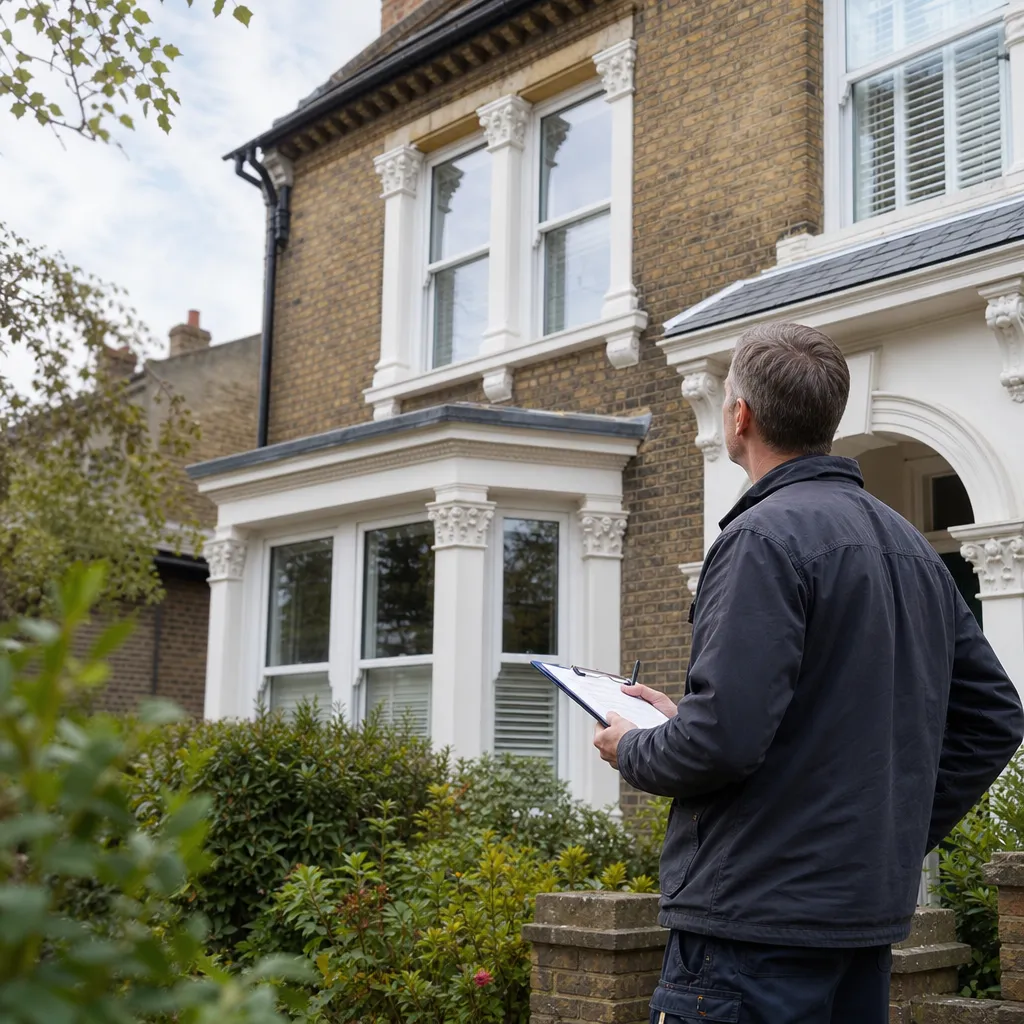 Planning & Pre-Build
Heritage Property: Preserving Historic Homes and Conservation Standards
Listed buildings in the UK require Listed Building Consent for most works — internal and external — that affect their special architectural or historic interest.
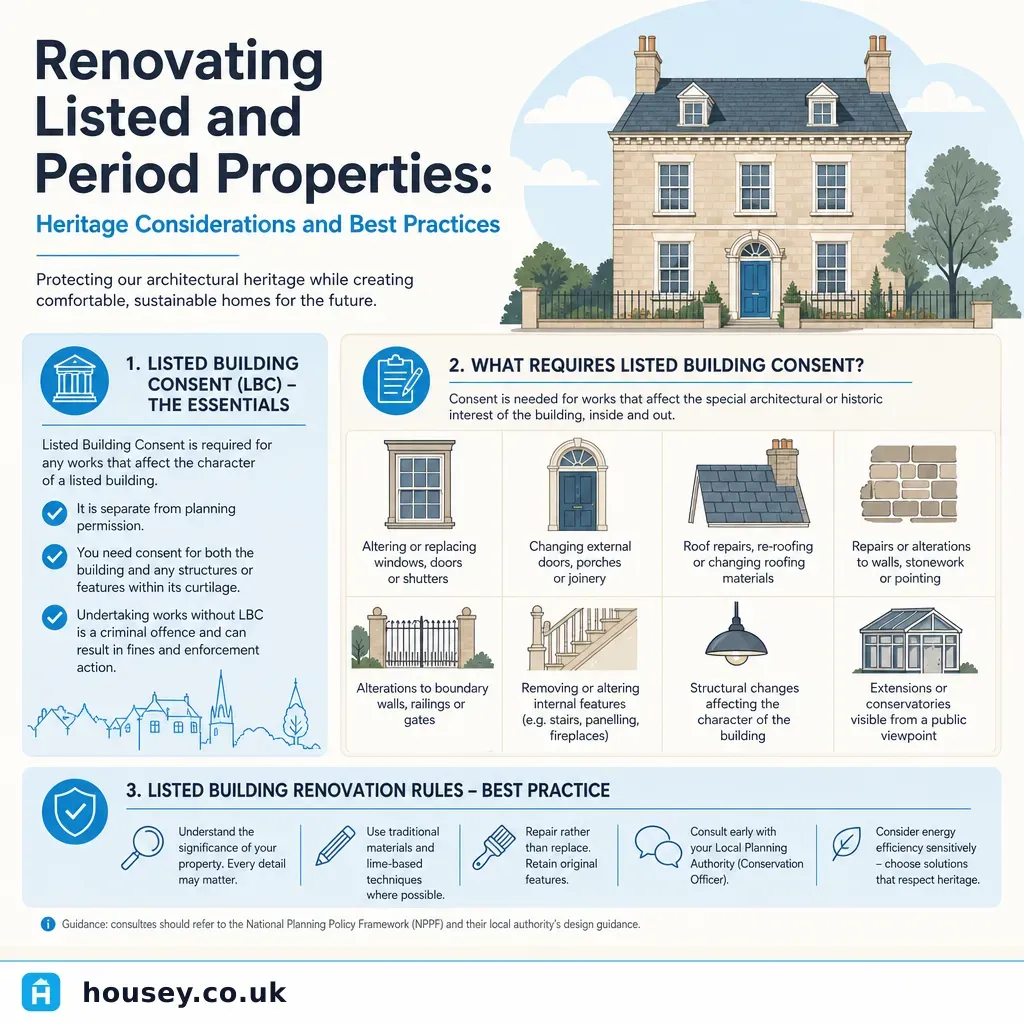 Planning & Pre-Build
Renovating Listed and Period Properties: Heritage Considerations and Best Practices
Renovating a listed or period property in the UK requires Listed Building Consent for most alterations — internally and externally — separate from planning permission.
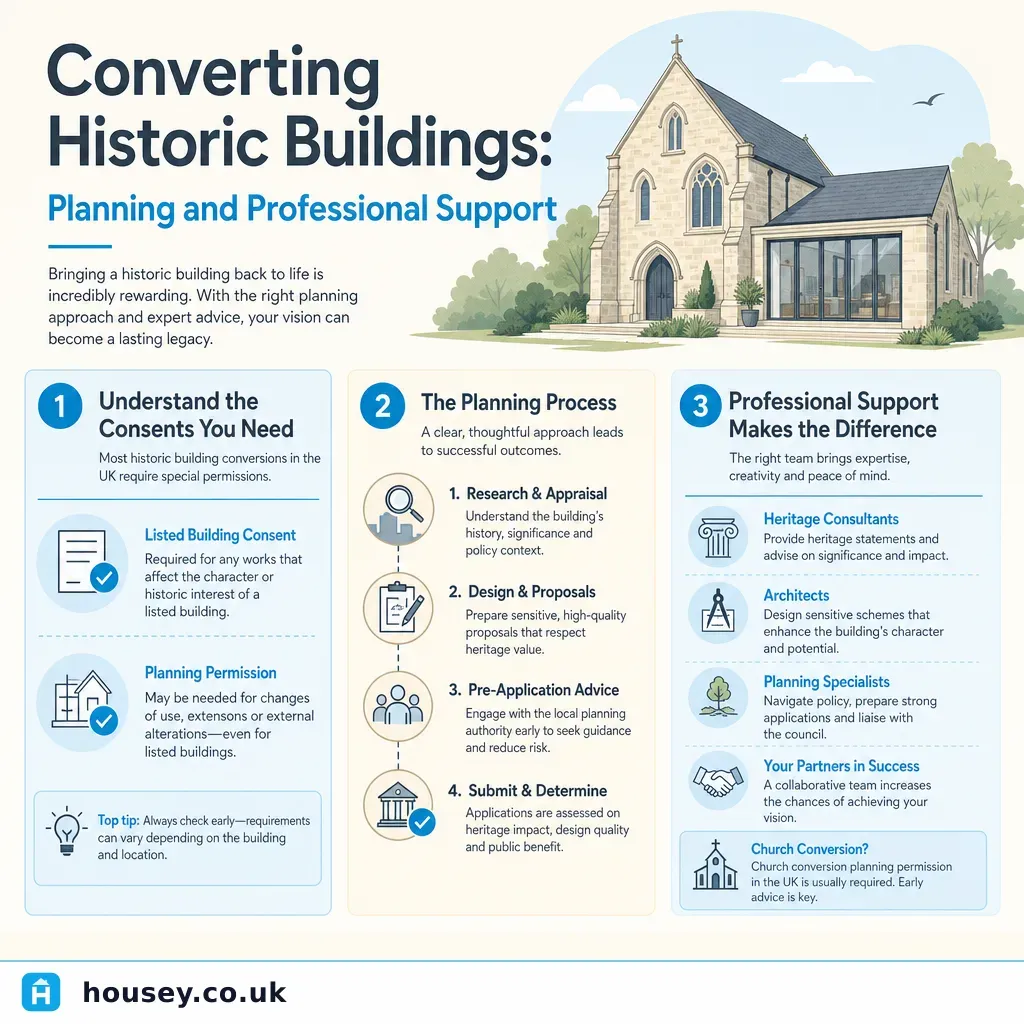 Planning & Pre-Build
Converting Historic Buildings: Planning and Professional Support
Converting a historic or listed building in the UK requires Listed Building Consent in addition to planning permission, both granted by the local planning authority.
 Planning & Pre-Build
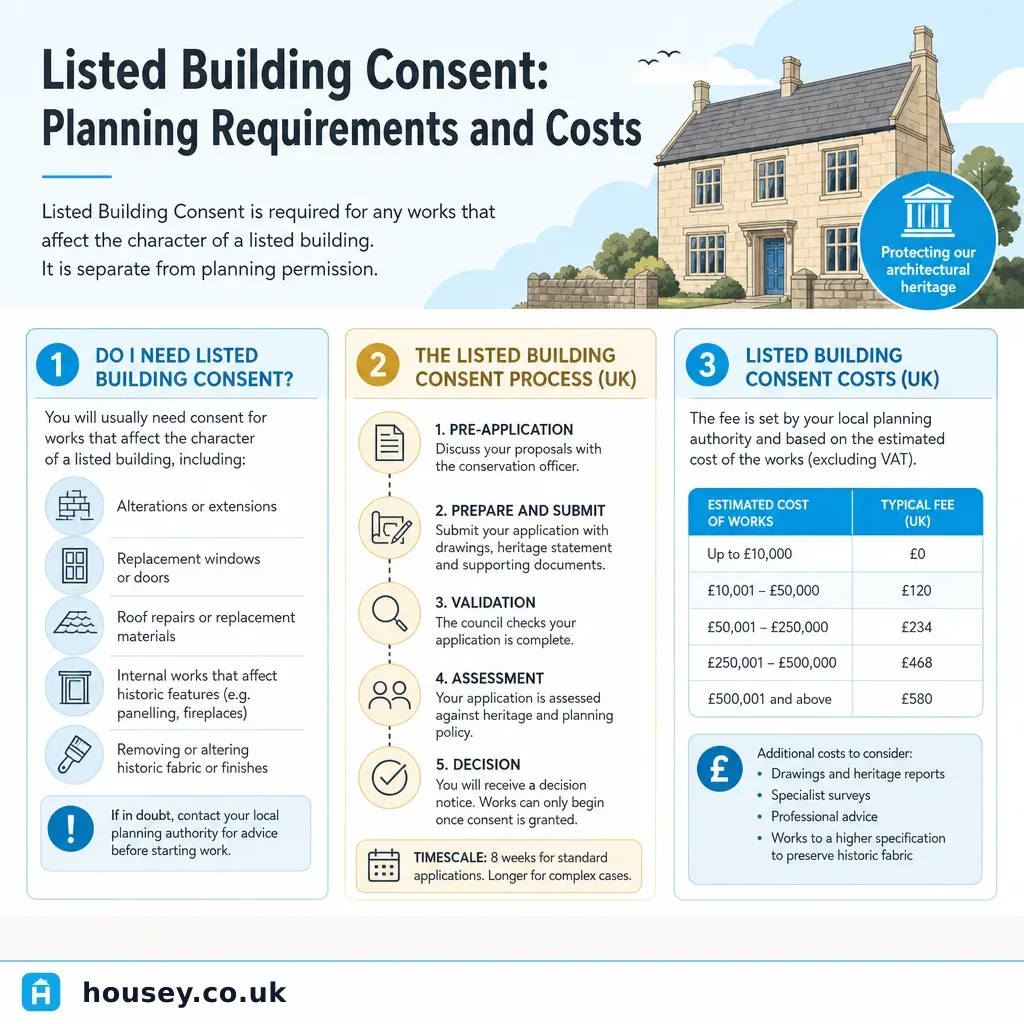
Listed Building Consent: Planning Requirements and Costs
Listed Building Consent is required for any works that affect the character of a listed building as a building of special architectural or historic interest — including internal alterations.
 Planning & Pre-Build
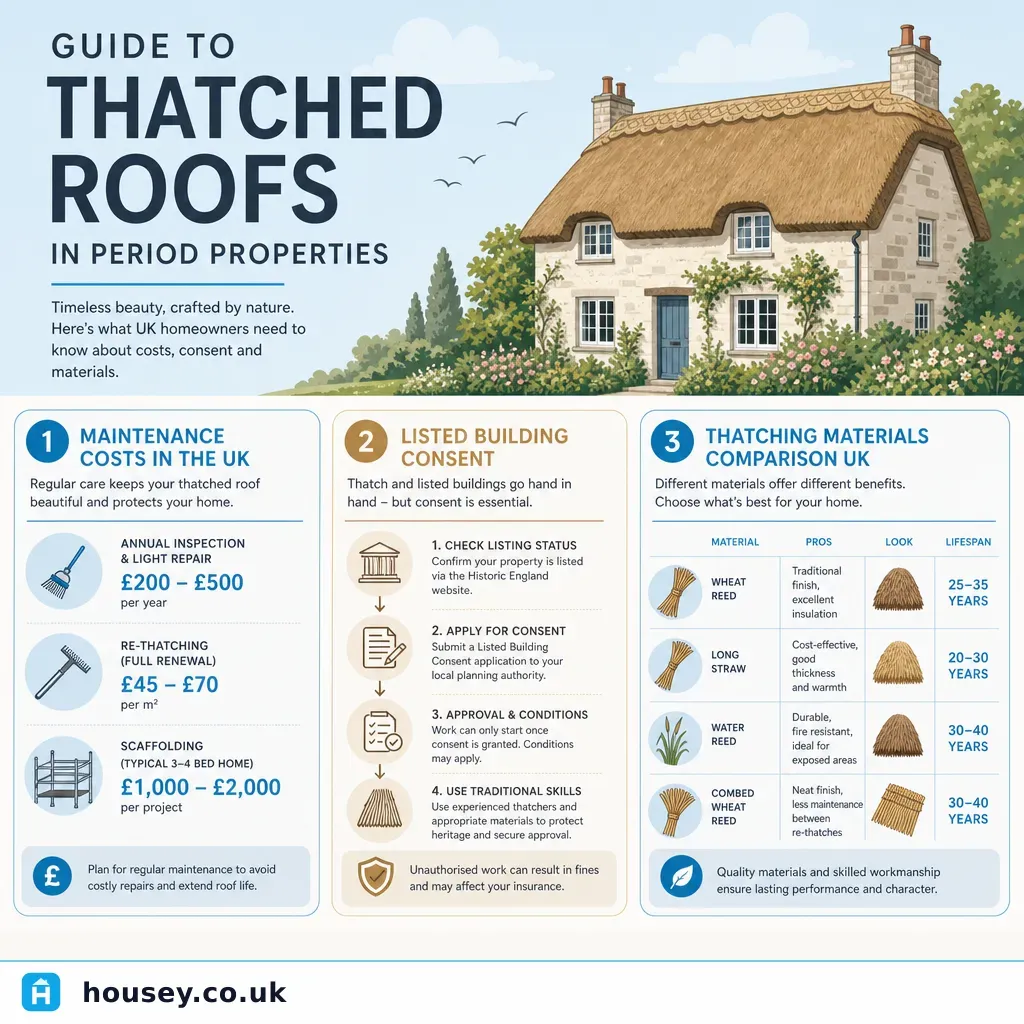
Guide to thatched roofs in period properties
Thatched roofs on listed period properties usually require Listed Building Consent before any significant work, including like-for-like rethatch.