Repairing a Broken uPVC Door Lock: Replacement and Solutions
By Housey · Last reviewed 11th of May 2026
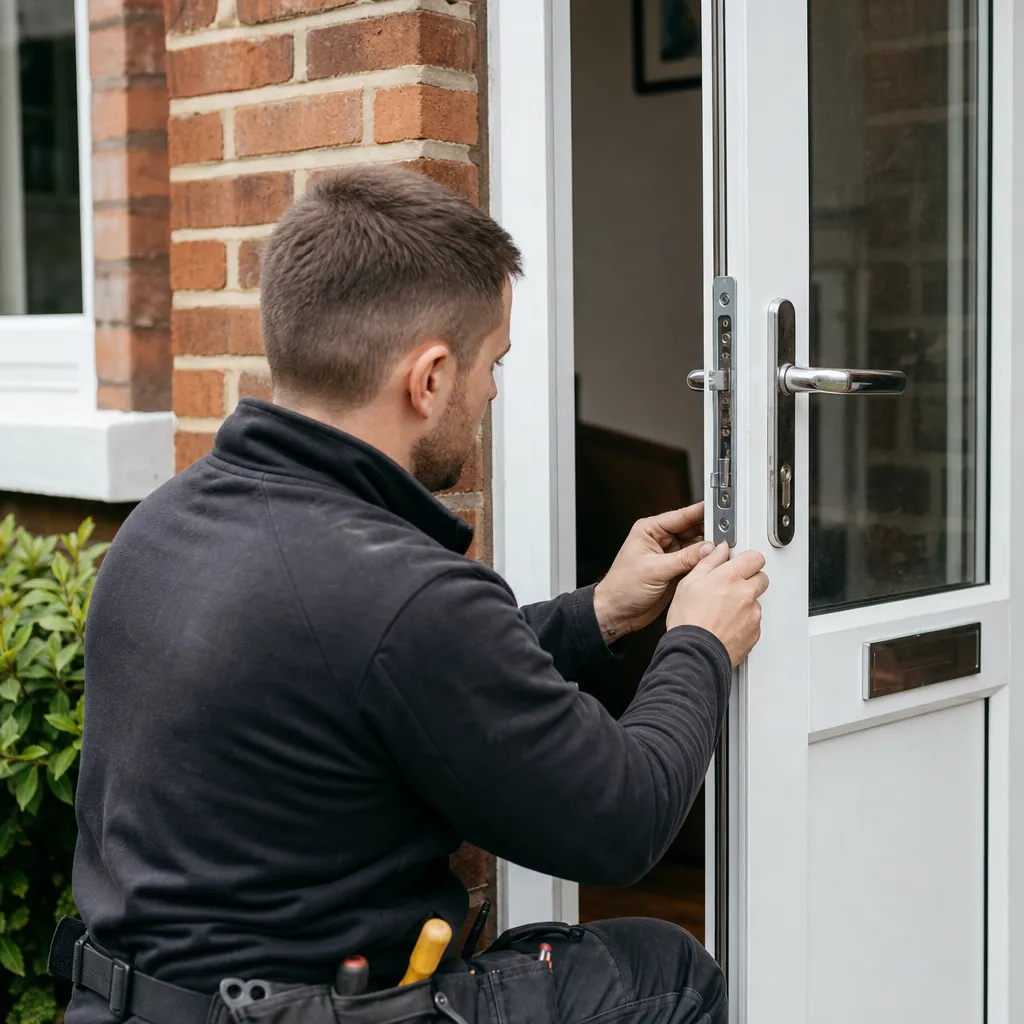
Repairing a Broken uPVC Door Lock: Replacement and Solutions
When a uPVC door lock fails, it can leave a home insecure or prevent entry entirely — a situation that calls for a measured response rather than a rushed fix. Broken locks on uPVC doors are among the most common home security problems in the UK, affecting properties from 1990s estate houses to modern leasehold flats. Understanding the difference between a failed cylinder and a faulty multipoint mechanism will determine whether you can source a part and resolve the issue yourself or need a professional.
Key points
- Most uPVC external doors use a multipoint locking mechanism — a single handle operates multiple hooks, deadbolts, and rollers simultaneously rather than a single bolt.
- The euro cylinder (the barrel the key enters) is the most commonly replaced component; it is measured in millimetres from the centre retaining screw to each end, written as internal/external (e.g. 35/45 mm).
- Multipoint lock gearboxes are identified by case height, backset, and brand — measuring accurately before ordering a replacement prevents a wasted journey and a mismatched part.
- A broken internal spindle, cam, or handle linkage can prevent the mechanism from operating even when the cylinder and gearbox are undamaged.
- Cylinders conforming to TS007 3-star or Sold Secure Diamond standards offer meaningful anti-snap and anti-pick resistance — a replacement is a practical opportunity to upgrade security at little extra cost.
How uPVC door locks work
A standard uPVC door lock system has two main components working together.
The euro cylinder sits in the lock body and accepts the key. Turning the key rotates a central cam that engages or disengages the locking mechanism. Cylinders are sized by total length — for example, 35/45 mm means a 35 mm internal half and a 45 mm external half — and the correct size must be measured precisely, not estimated.
The multipoint mechanism (gearbox) is the long metal strip running down the edge of the door. It contains a series of hooks, deadbolts, and rollers that engage with keeps set into the door frame when the handle is lifted and the key turned. The gearbox is driven by a square spindle passing through the handle.
When the door will not lock, the fault is usually in one of these components — or in the handle linkage connecting them.
Diagnosing the fault before ordering parts
Symptom | Most likely cause | First step |
|---|---|---|
Key turns but door does not lock | Worn or broken gearbox cam | Inspect gearbox through the lock face plate |
Key will not turn at all | Seized or snapped cylinder | Try dry PTFE lubricant; consider anti-snap replacement |
Handle lifts but hooks do not engage | Broken spindle or handle linkage | Remove handle and inspect spindle condition |
Door locks from inside but not outside | Cylinder fault on external half | Measure and replace cylinder |
Mechanism jammed after working fine | Misaligned keeps or distorted frame | Check keep alignment before ordering parts |
Lock feels loose and rattling | Worn gearbox rollers or handle backplate | Inspect gearbox; tighten backplate screws |
Replacing a uPVC door cylinder
Replacing the euro cylinder is the most straightforward repair most homeowners can tackle.
- Measure the existing cylinder — open the door and measure from the centre of the retaining screw to each end. A typical front door cylinder might be 35/45 mm or 40/40 mm. Write both figures down.
- Check for anti-snap features — if the current cylinder lacks a sacrificial snap point or a TS007 3-star marking, use the replacement as an opportunity to upgrade.
- Remove the old cylinder — undo the single retaining screw in the lock face, insert the key and turn it slightly to retract the cam, then slide the cylinder out.
- Insert the new cylinder — reverse the process, ensuring the cam is correctly positioned before tightening the retaining screw.
- Test on the open door — lock and unlock several times before closing the door to confirm smooth operation.
Indicative UK costs for a TS007 3-star euro cylinder: £15–£50 depending on size and brand, last reviewed 2026-05-11. Fitting by a locksmith typically adds £60–£120 call-out and labour.
Replacing a multipoint locking mechanism
A full gearbox or mechanism replacement requires more preparation. Before ordering, you will need to identify:
- Case height — the height of the gearbox body, typically 16 mm, 28 mm, or 35 mm
- Backset — distance from the door face to the centre of the spindle hole, commonly 35 mm or 45 mm
- Brand or manufacturer if visible on the mechanism (common brands include Mila, ERA, Yale, Winkhaus, Avocet, and Fuhr)
- Shooting bolt positions if the door has additional top and bottom locking points
Misidentifying the mechanism is the most common mistake homeowners make. If the brand is unclear, photograph the existing gearbox in place and contact the door manufacturer or a window and door specialist who can cross-reference the specification.
Homeowner checklist before ordering a replacement mechanism
When to get professional help
Most cylinder swaps are within reach of a capable DIYer, but certain situations warrant a locksmith, window installer, or door specialist:
- The door cannot be secured at all and the property is occupied — a locksmith can usually attend the same day in most UK areas
- The frame or keeps are visibly distorted, suggesting the door has dropped or the building has settled
- The door is a composite or steel-reinforced type with a manufacturer-specific lock not available through normal trade suppliers
- You cannot identify the mechanism brand or case height and standard measurements do not match any available replacements
- The cylinder appears to have been drilled or attacked — the mechanism should be inspected for damage before any replacement is fitted
How Housey can help
If you need a verified professional to diagnose and repair your uPVC door lock, Housey connects you with local window and door installers who can source manufacturer-matched parts, fit anti-snap cylinders, and adjust keeps or hinges as part of the same visit.
Frequently asked questions
Can I replace a uPVC door lock myself?
Replacing the euro cylinder is a practical DIY job for most people if the door is accessible and the cylinder size can be measured accurately. A full multipoint mechanism replacement is more involved — removing the old mechanism, aligning the new one, and testing all locking points — and is usually better handled by a locksmith or window installer if you are not confident.
How do I know what size euro cylinder I need?
Open the door and measure from the centre of the retaining screw to each end of the cylinder in millimetres. The format is internal/external — for example, 35/45 mm. Always measure rather than estimating: a cylinder even 5 mm too long can expose vulnerable metal and compromise anti-snap performance.
Is it worth upgrading to an anti-snap cylinder when replacing?
Yes — if the existing cylinder is not TS007 3-star rated or lacks a sacrificial snap point, replacing like-for-like misses an easy security upgrade. Anti-snap cylinders meeting TS007 3-star or Sold Secure Diamond standards are widely available and cost only slightly more than standard cylinders.
How much does it cost to replace a uPVC door lock mechanism in the UK?
Indicative UK costs, last reviewed 2026-05-11: a replacement multipoint mechanism typically costs £40–£150 for the part, depending on brand and specification. Fitting by a locksmith or window installer commonly adds £80–£180 including call-out. Specialist or discontinued mechanisms may cost more if supply is limited.
My door won't shut properly — is that a lock fault?
Not always. If the door has dropped or the frame has moved, the keeps in the frame may no longer align with the hooks in the mechanism. Before replacing any lock components, check whether the hooks visibly miss the keeps when the door is closed. Hinge adjustment or keep realignment may resolve the problem without any lock replacement.
Sources and further reading
- Master Locksmiths Association — Find a Locksmith — Master Locksmiths Association
- FENSA — Registered Window and Door Installers — FENSA
- Sold Secure — Product Security Standards — Sold Secure
- Secured by Design — Police-Preferred Security Specifications — Secured by Design
Useful next reads
 Improvement & Build
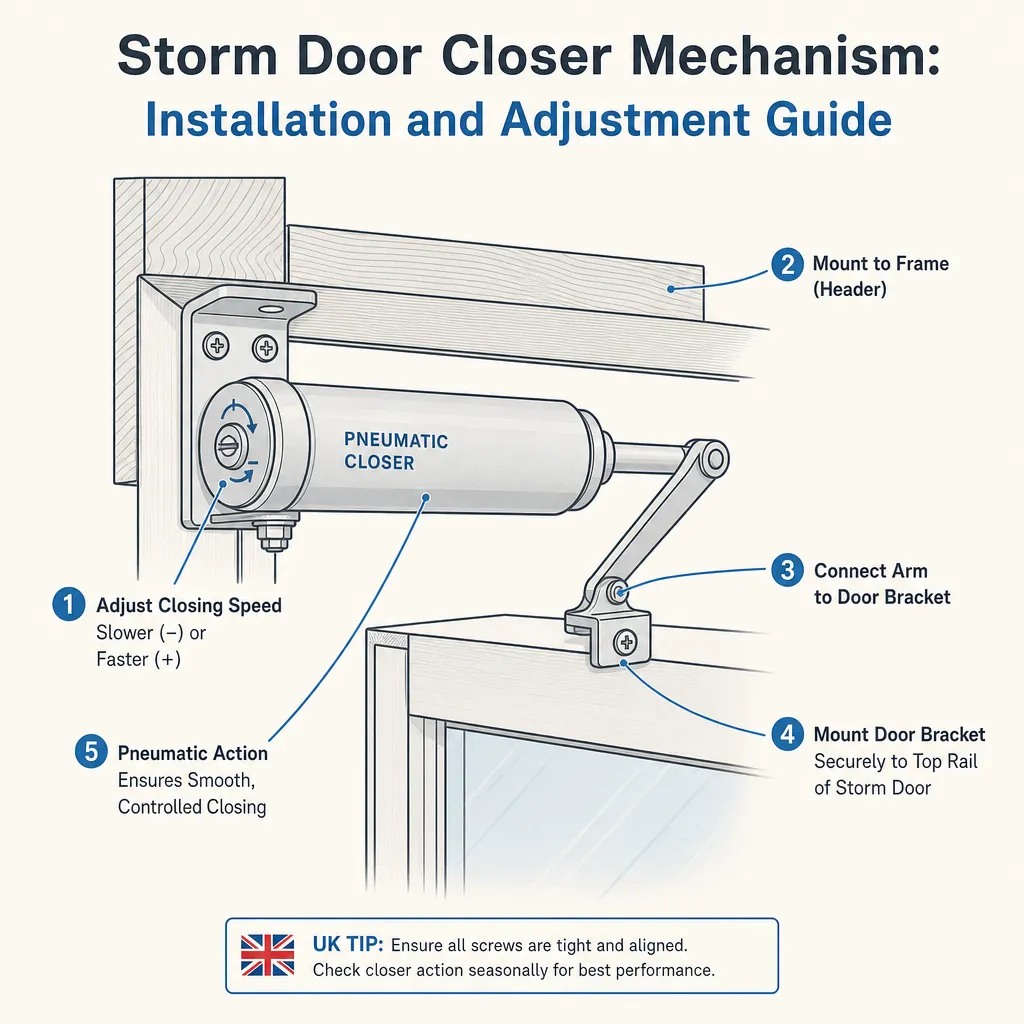
Storm Door Closer Mechanism: Installation and Adjustment Guide
Storm door closers are adjusted via a small screw at the end of the cylinder — clockwise slows the door, anticlockwise speeds it up.
 Improvement & Build
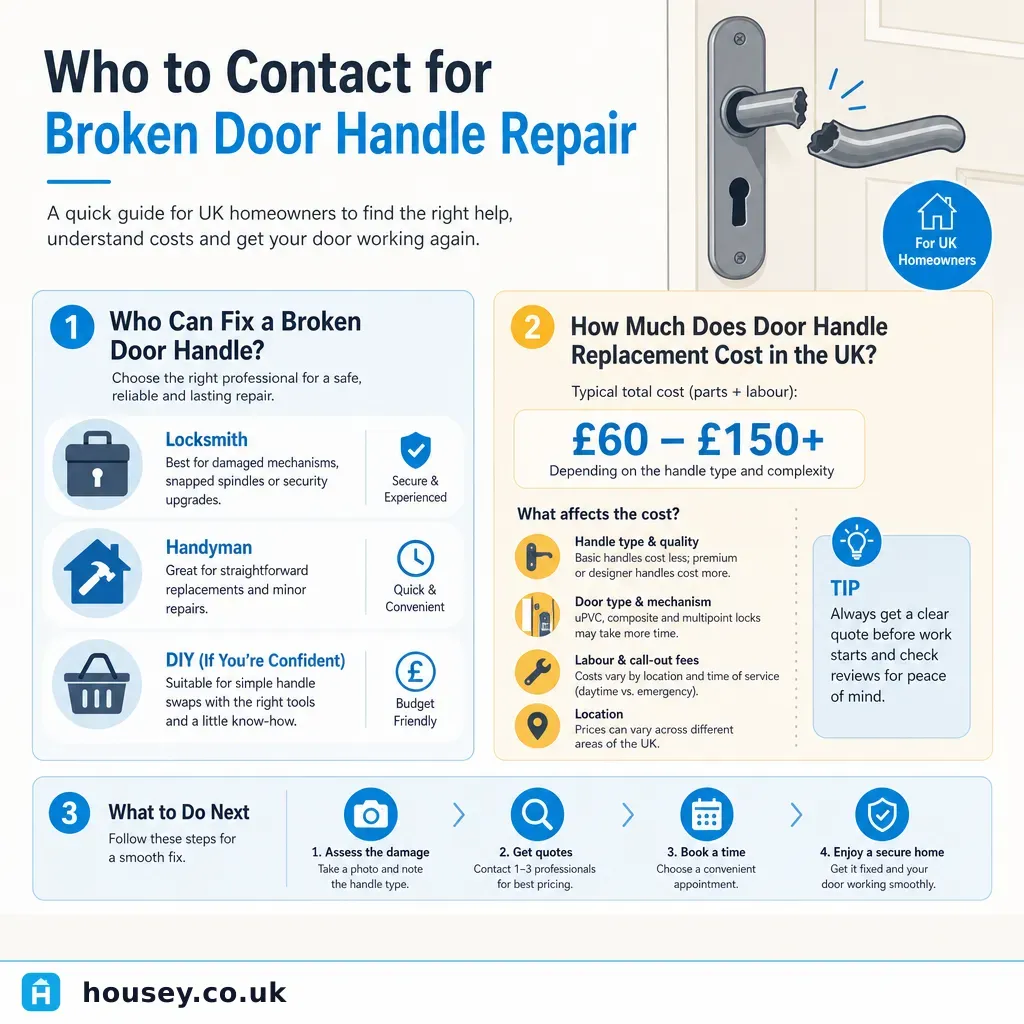
Who to Contact for Broken Door Handle Repair
For a broken door handle, a general handyperson can handle most internal timber door repairs, while a joiner or locksmith is better suited to external doors, particularly if the lock mechanism is affected.
 Improvement & Build
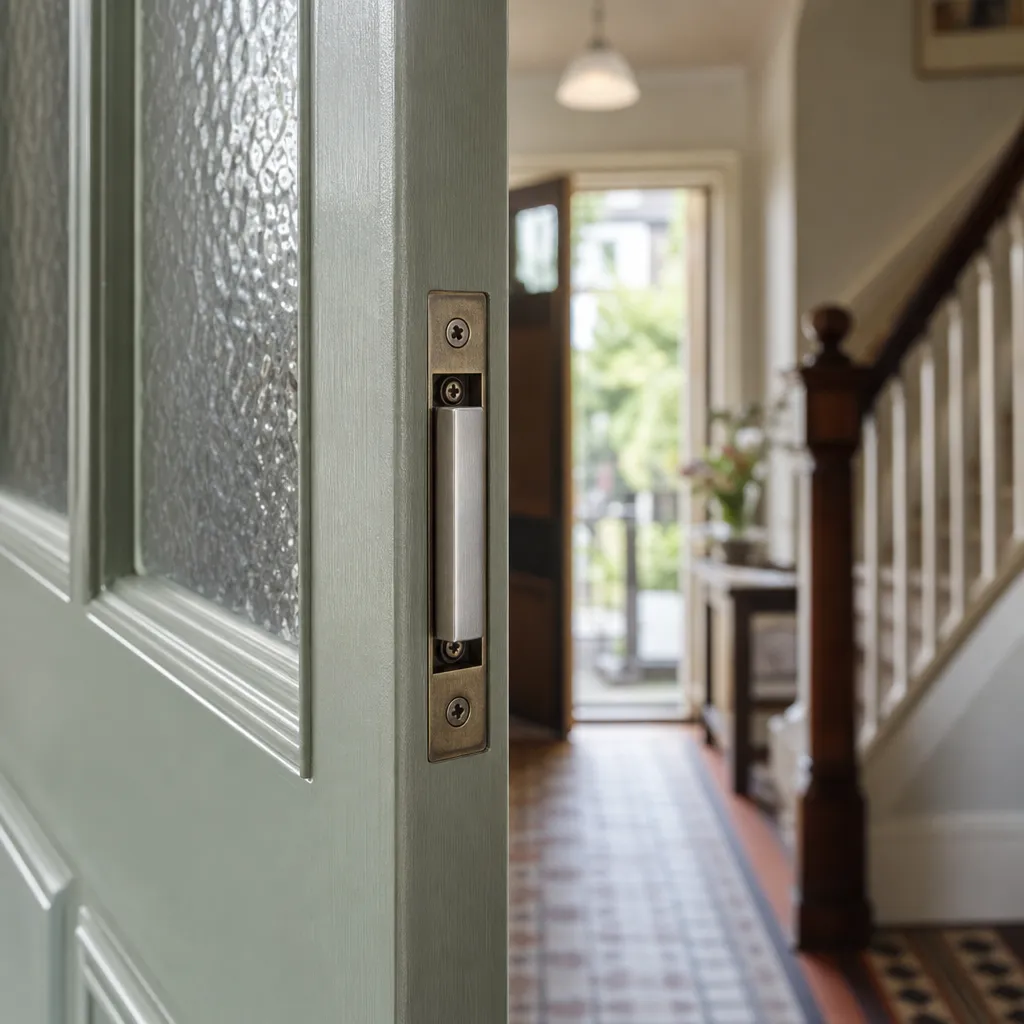
Retractable Door Latches: Function and Purpose Explained
A retractable door latch uses a spring-loaded bolt that is pushed inward by the angled face of the striker plate as the door closes, then springs forward into the keep to hold the door shut.
 Improvement & Build
Outdoor lighting problems: solutions for common issues in gardens and driveways
Outdoor lighting problems in UK gardens commonly stem from water ingress, incorrect IP ratings, faulty transformers, poor earth connections, or corroded contacts.
 Improvement & Build
uPVC Door Won't Lock: Diagnosis and Repair Options
A uPVC door that won't lock most often has a misaligned frame, a seized gearbox, or a failing Euro cylinder.