uPVC Door Won't Lock: Diagnosis and Repair Options
By Housey · Last reviewed 12th of May 2026
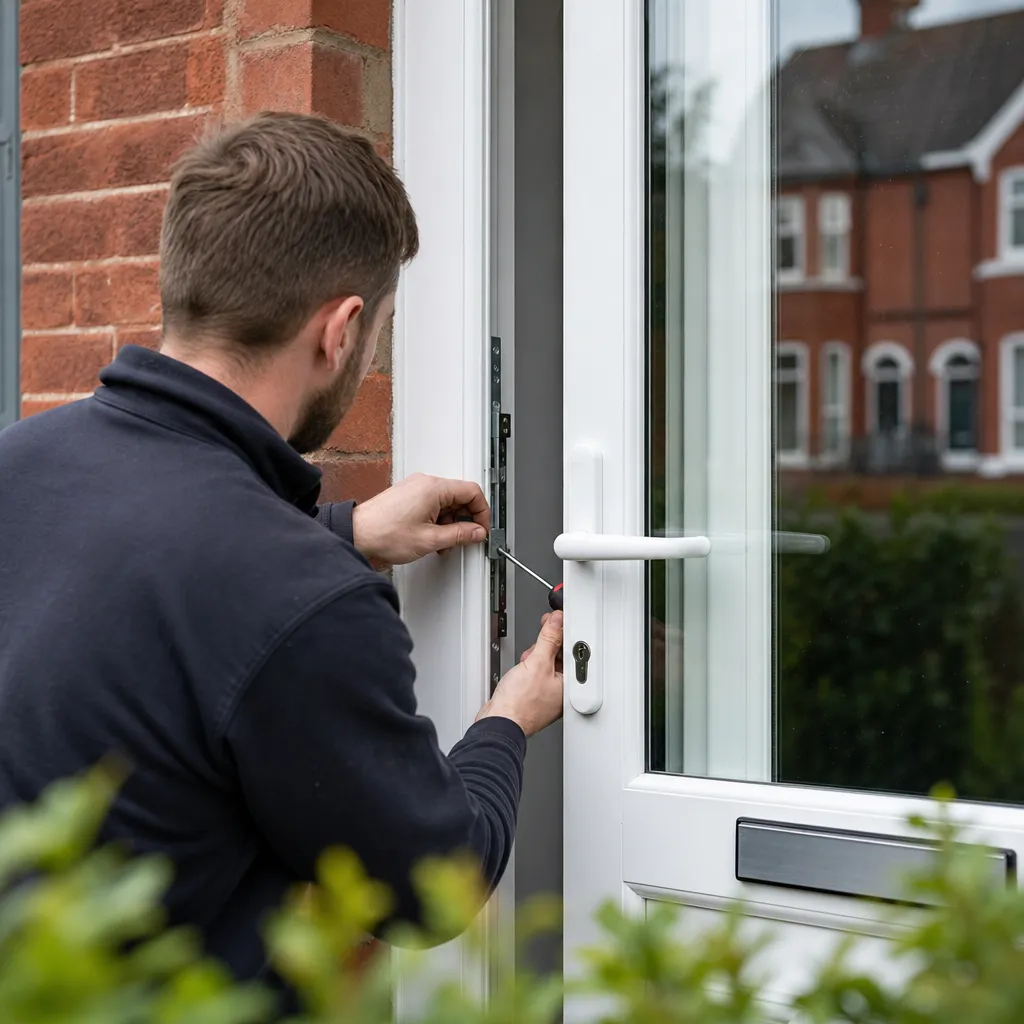
uPVC Door Won't Lock: Diagnosis and Repair Options
When a uPVC door refuses to lock properly, the problem is rarely the door itself and more often a component within its locking system. Whether the handle lifts but the key won't turn, the mechanism engages only partially, or the door won't close flush enough to lock at all, the fault usually falls into one of a handful of categories — each with a distinct repair path. Getting the diagnosis right before calling a tradesperson saves time and avoids replacing parts that don't need replacing.
Key points
- Most uPVC doors use a multipoint locking system: the handle must be lifted to engage all lock points before the key turns to deadlock them.
- Misalignment — the door or frame shifting over time — is the most common cause of partial locking or a mechanism that feels stiff.
- A failed gearbox (the central cassette inside the door edge) can be replaced independently without removing the door or frame.
- Euro cylinder barrels have a finite service life; a worn or damaged barrel is a separate fault from a failed gearbox and must be measured precisely before replacing.
- Under Building Regulations Part Q, doorsets on accessible elevations in new dwellings must meet PAS 24:2022; the same standard is strongly advisable when replacing hardware in existing homes.
What happens inside a uPVC door when it locks
A standard uPVC external door contains a multipoint locking mechanism — a long vertical strip inside the door edge that, when the handle is lifted, throws multiple lock points (hooks, rollers, and deadbolts) into keeps on the frame simultaneously. The Euro cylinder then deadlocks those points in place when the key is turned.
Locking failure typically occurs at one of three stages:
- The handle lifts but feels stiff or refuses to travel fully upward — the gearbox may be seizing.
- The handle lifts but one or more lock points don't reach their keeps — alignment is usually the cause.
- The handle lifts and all points appear to engage, but the key won't turn or won't turn fully — the cylinder is the likely culprit.
Identifying which stage is failing directs you to the correct component to inspect.
How to diagnose the fault
Decision tree: which component is causing the problem?
- Choose handle-set inspection if the handle won't lift at all or moves without resistance — the spindle or its fixings may be loose or broken; this is a handle-set replacement.
- Choose gearbox investigation if the handle lifts but the mechanism feels very stiff or grinds — try a uPVC-compatible silicone lubricant first; if stiffness persists after lubrication, the gearbox needs replacing.
- Choose alignment check if the handle lifts smoothly but one or more lock points visibly miss or scrape their keeps — inspect the hinges for wear and check the gap between door slab and frame at the lock edge.
- Choose cylinder inspection if the handle lifts, all points appear to engage, but the key won't turn or turns only partway — try a spare key first; if the problem persists, the cylinder is worn or incorrectly sized.
- Check for obstruction or swelling if the door won't close fully before locking — look for debris in the keeps, a draught seal catching on the frame, or seasonal dimensional change.
Fixing misalignment
Over time, uPVC frames can settle, and continuous hinge wear causes the door slab to drop on the latch side. A shift of just 2–3 mm is enough to prevent lock points from entering their keeps cleanly.
What to check:
- Open the door and inspect each hinge for loosened screws or visible play in the knuckle.
- Look at the gap between door slab and frame at the lock edge — it should be even from top to bottom.
- Examine the keeps on the frame for scuff marks or a bright worn area around the keep entry, which indicate a lock point is hitting metal rather than sliding in cleanly.
Fixes:
- Adjustable hinges, found on most modern uPVC doors, allow lateral, vertical, and depth correction using an Allen key. Small adjustments here often resolve partial-locking problems without any parts replacement.
- Adjustable keeps with slotted fixing holes can be repositioned slightly to match where the lock points are actually landing.
- Where hinges are worn beyond adjustment, hinge replacement is required — a job best left to a door installer or locksmith.
Replacing a failed gearbox
The gearbox is the central cassette inside the door edge that translates handle movement into throwing and retracting all lock points. Gearboxes are wear parts typically lasting 10–20 years, depending on use and maintenance.
Signs of gearbox failure:
- A handle that lifts partway then sticks or drops back.
- Lock points that extend but won't retract, leaving the door locked with no way to open it from either side.
- Grinding or clicking sounds during handle operation.
Gearboxes are brand-specific and size-specific. Common UK brands include Winkhaus, Maco, Yale, ERA, and Avocet. The critical dimensions are the backset (distance from the door edge to the centre of the cylinder hole) and the centres (distance between the fixing screw holes). Both must match the existing mechanism exactly when ordering a replacement.
A like-for-like gearbox replacement does not require removing the door or frame and is a routine repair carried out by locksmiths and uPVC door specialists.
Replacing the Euro cylinder
The Euro cylinder is the keyed barrel that deadlocks the mechanism. Key points for UK homeowners:
- Measure before ordering. Dimensions are expressed as total length and split — for example, 35/45 mm means 35 mm on the outside face and 45 mm on the inside. A cylinder that protrudes too far beyond the door furniture is vulnerable to cylinder snapping, a forced-entry technique in which the exposed stub is levered off to access the lock mechanism.
- Specify an anti-snap cylinder meeting TS007:2014 (3-star) or PAS 24:2022. These incorporate a sacrificial break point set before the security pins, rendering the snapping technique ineffective.
- The Secured by Design scheme, used by police forces and referenced in many planning conditions and insurer requirements, sets minimum cylinder security standards worth checking against your current hardware.
Cylinder replacement is a DIY task for confident homeowners who can take accurate measurements. If there is any doubt about sizing or security specification, ask a locksmith to measure and fit the correct part.
When to get professional help
Red flags that mean call a professional
- The door is locked shut and cannot be opened from inside or outside — this requires an emergency locksmith callout.
- Lock points are jammed in the extended position and the mechanism will not retract after a key break or handle failure.
- The frame is visibly warped, cracked at the corners, or separating from the surrounding masonry — alignment adjustments will not resolve a structural frame problem.
- The door has been subjected to a forced-entry attempt — frame, keeps, hinges, and cylinder should all be assessed before trusting the lock again.
- The property is tenanted — landlords have obligations under the Landlord and Tenant Act 1985 to keep external security in repair, and written repair records may be required if a dispute arises.
- The existing lock hardware predates current security standards and does not meet PAS 24:2022 — proactive upgrading is more cost-effective than reacting after an insurance claim is declined.
What to ask a professional before instructing them
- Which specific component is failing — gearbox, cylinder, hinge, or keep?
- Can you supply the replacement part with a PAS 24 or TS007 3-star rating where applicable?
- Will the repair require removing the door from its frame?
- Is the existing frame in good condition, or will the repair mask a deeper alignment problem?
- Will you provide a written quote before starting work?
- Are you a member of the Master Locksmiths Association or a recognised trade body?
How Housey can help
If adjustment and lubrication haven't resolved the issue — or if you're dealing with a jammed mechanism, a door that won't close, or lock hardware that no longer meets current security standards — a qualified installer can diagnose and fix the problem correctly. Use Housey to find local window and door installers who carry out gearbox replacements, hinge adjustments, and cylinder upgrades to PAS 24:2022.
Frequently asked questions
Why does my uPVC door lock in summer but not in winter?
uPVC expands slightly in heat and contracts in cold. A door that locks only just in one season may fail when the material changes dimension. This is usually a sign that alignment adjustment is overdue rather than a component failure — have the hinges and keeps checked before temperatures drop again.
Can I replace a uPVC door gearbox myself?
It is technically possible if you can identify the correct replacement part and take accurate measurements. However, an incorrectly fitted gearbox can leave the door insecure. Most homeowners find it more cost-effective to ask a locksmith or uPVC door specialist to carry out the work correctly.
My uPVC door key turns but the door doesn't feel secure — what's wrong?
The handle may not have been lifted fully before turning the key, meaning only the central deadbolt has engaged rather than all the multipoint lock points. Always lift the handle firmly until it stops, then turn the key. If the lock points still feel insecure after correct operation, ask a specialist to inspect the gearbox.
How long does a uPVC door gearbox last?
Most gearboxes are rated for 10–15 years of normal domestic use. Heavy use, a misaligned door placing extra strain on the mechanism, or lack of lubrication can all shorten the lifespan. Annual lubrication with a silicone-based product is the standard preventive maintenance recommendation.
Does home insurance cover uPVC lock repairs?
Most buildings and contents policies exclude gradual wear and tear of locks. Emergency locksmith callouts following a break-in or accidental lockout may be covered under home emergency or legal expenses add-ons. Check your policy schedule and contact your insurer before instructing a locksmith if a claim may apply.
Sources and further reading
- Building Regulations Approved Document Q: Security — GOV.UK
- PAS 24:2022 enhanced security performance requirements for doorsets — BSI
- Secured by Design door security guidance — Police CPI / Secured by Design
- Master Locksmiths Association — find a locksmith — Master Locksmiths Association
- Landlord and Tenant Act 1985 — repairing obligations — legislation.gov.uk
Useful next reads
 Improvement & Build
Fixing Leaking Back Doors and Water Ingress
Most leaking back doors in UK homes fail at one of three points: the threshold or door sill joint, the frame-to-masonry mastic seal, or the door weatherstrip.
 Improvement & Build
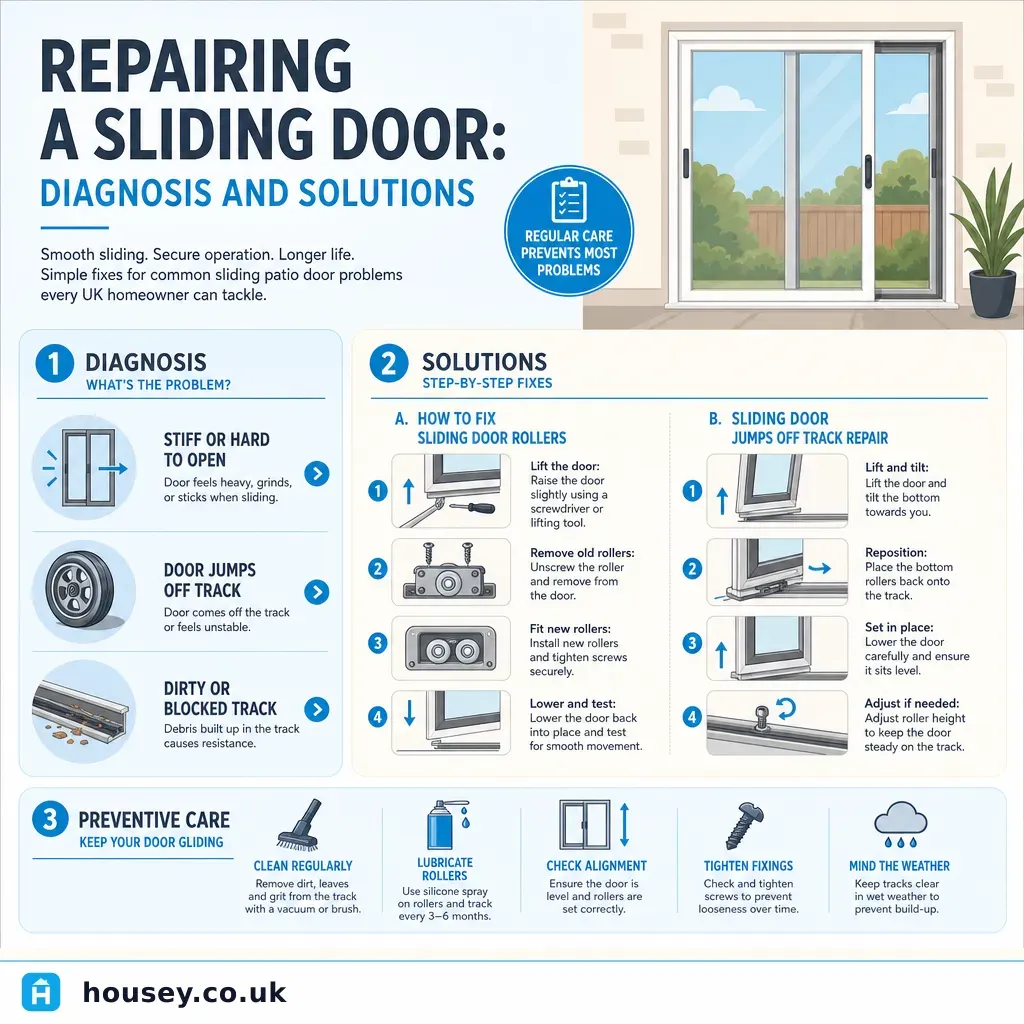
Repairing a Sliding Door: Diagnosis and Solutions
Most sliding door problems — stiffness, jumping off track, or draughts — are caused by dirty tracks, worn rollers, or misaligned guides.
 Improvement & Build
Repairing a Broken uPVC Door Lock: Replacement and Solutions
A broken uPVC door lock usually needs a new cylinder, a replacement multipoint mechanism, or both.
 Improvement & Build
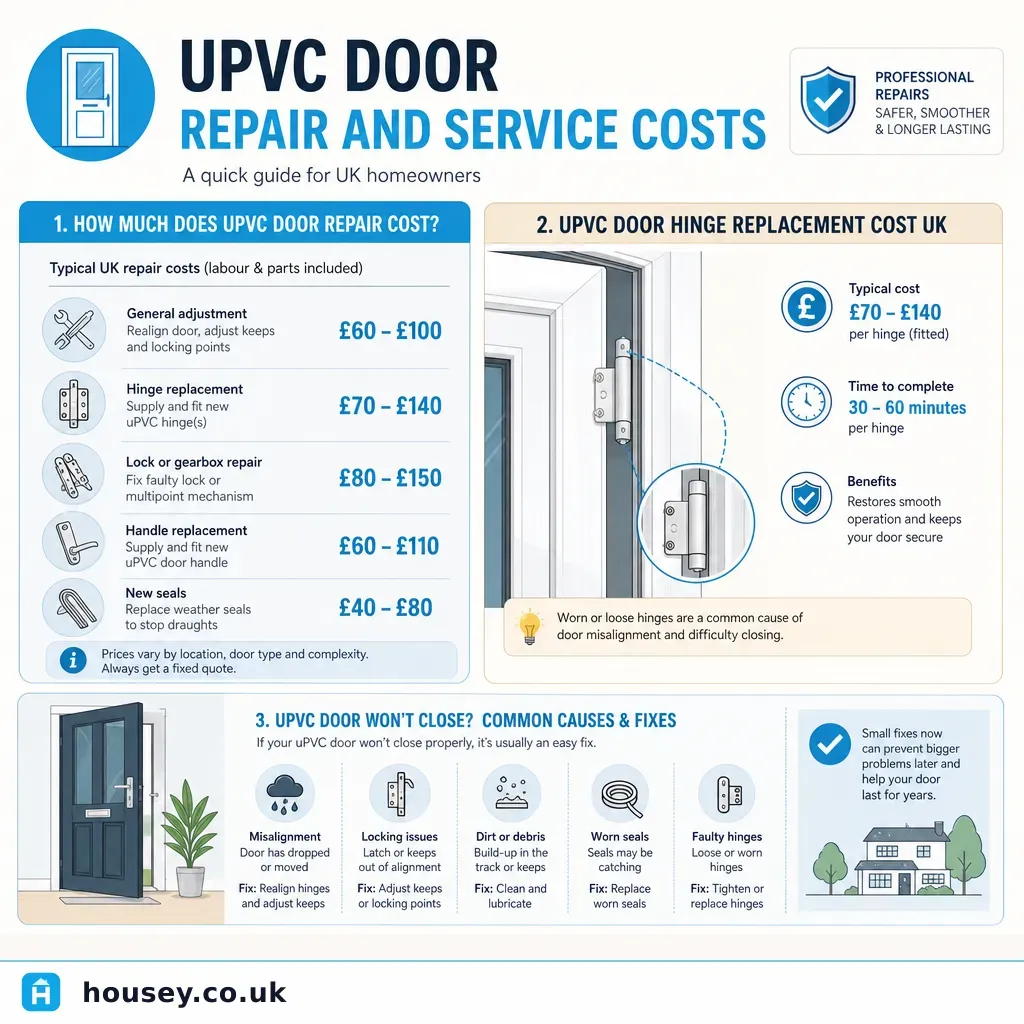
UPVC Door Repair and Service Costs
UPVC door repairs in the UK typically cost £50–£300 depending on the fault.
 Improvement & Build
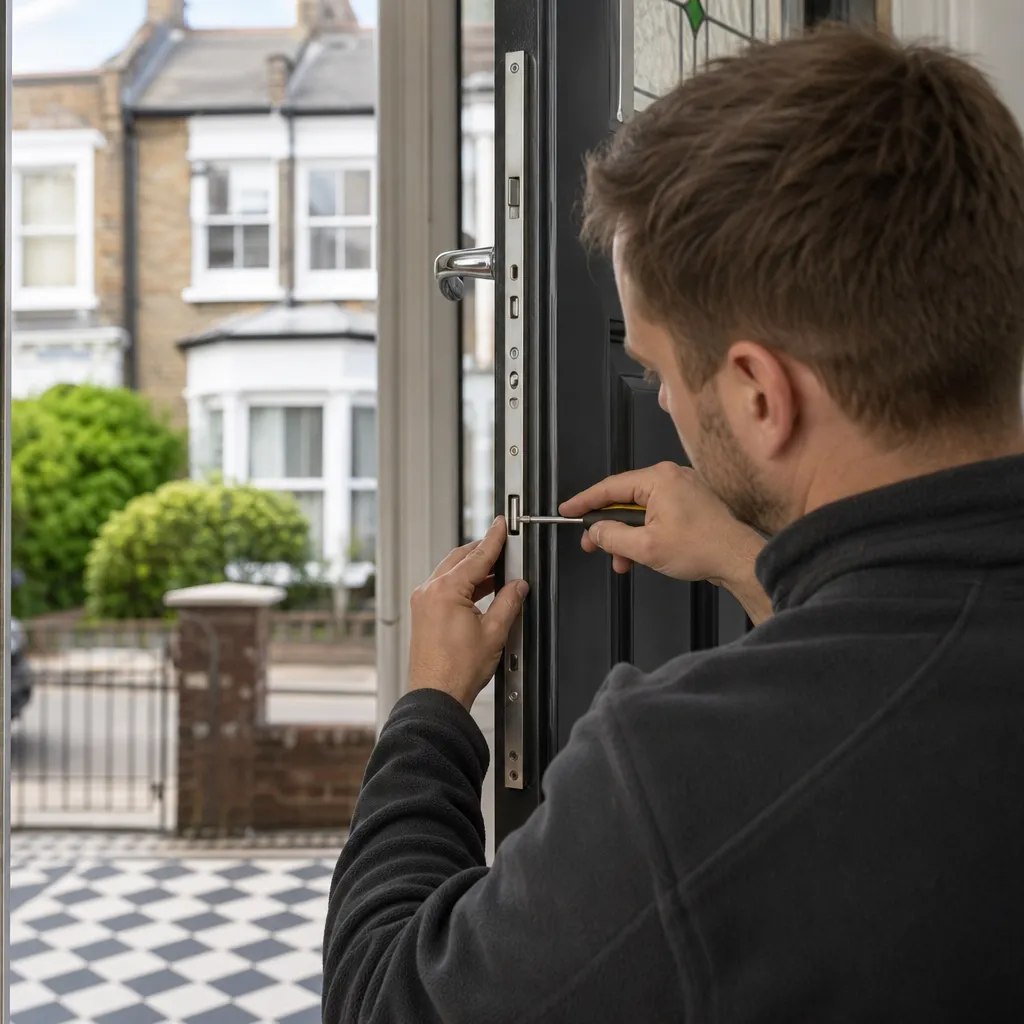
Adjusting Multipoint Door Locks: Alignment and Operation
Most multipoint lock problems — stiff handles, hooks that will not engage, rattling doors — result from minor door sag causing locking points to miss their keeps.