What To Do About Leaking Windows: Finding The Right Contractor
By Housey · Last reviewed 31st of May 2026
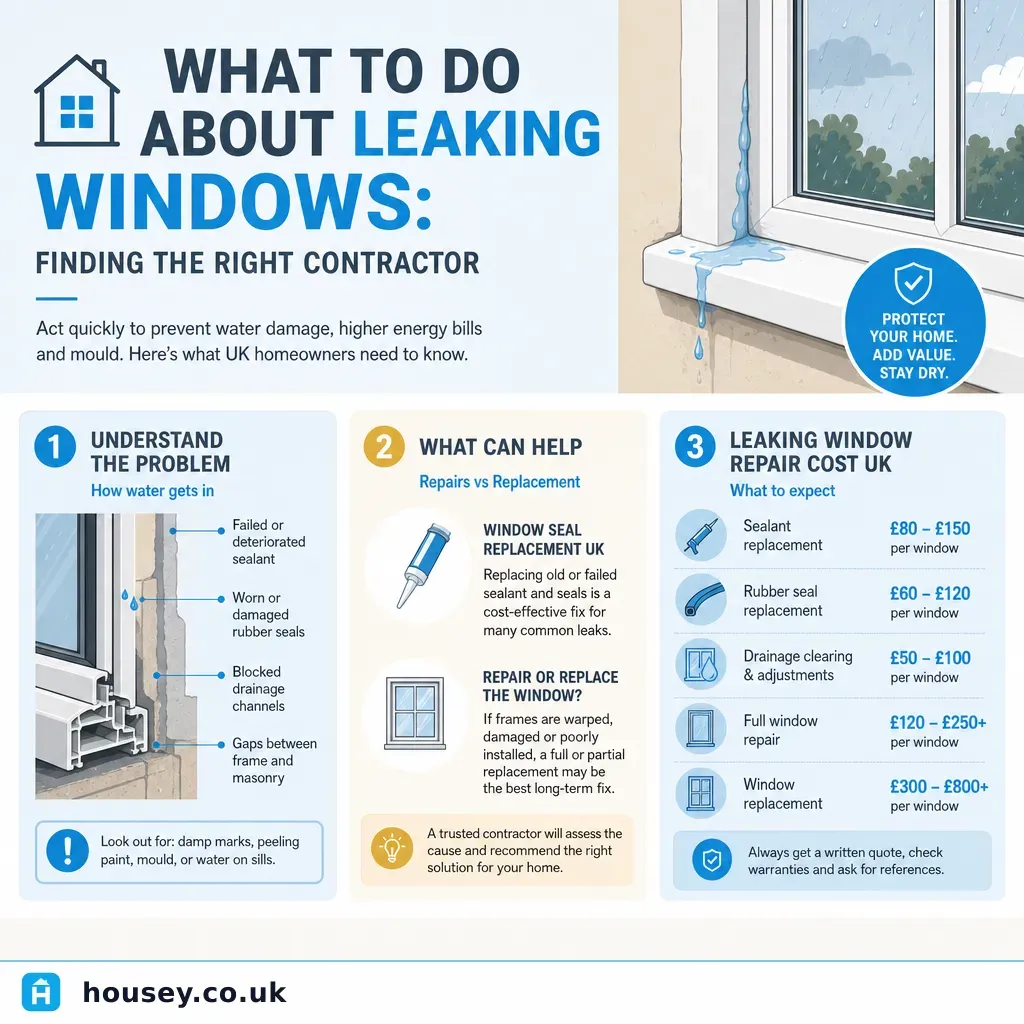
What To Do About Leaking Windows: Finding The Right Contractor
Water appearing on a windowsill or around a frame is one of those problems that often starts small and worsens quickly. UK homes — from Victorian terraces to modern new-builds — are exposed to persistent wind-driven rain, which pushes water through even small gaps in seals, frames, or flashings. Acting promptly matters: sustained water ingress can lead to internal dampness, mould growth, and in worst cases, timber rot in frames or surrounding structures.
Key points
- FENSA (Fenestration Self-Assessment Scheme) registration means a window installer is approved to self-certify that replacement window work complies with Building Regulations Part L (energy efficiency) and Part F (ventilation), removing the need for a separate building control application.
- Failed mastic or silicone seal around the frame perimeter is the most common cause of water ingress and can often be repaired without full replacement at significantly lower cost.
- Condensation appearing between the panes of a double-glazed unit indicates seal failure within the unit itself — a glazier can often replace just the sealed unit rather than the entire window.
- Leaks originating above the window — at the cill, lintel, or roof junction — may be a masonry or flashing issue rather than the window itself; always identify the true source before ordering replacements.
- Building Regulations approval is required for full window replacement unless the installer is FENSA- or Certass-registered and self-certifies the work.
What causes windows to leak?
Understanding the source of the leak determines whether you need a window specialist, a roofer, or a bricklayer — and misdiagnosing it is expensive.
Cause | Where water appears | Likely fix | Specialist needed |
|---|---|---|---|
Failed perimeter seal (mastic or silicone) | Around the frame edge, on the internal sill | Re-seal with exterior-grade sealant | Window installer or general builder |
Blown double-glazed sealed unit | Condensation between the panes | Replace the sealed unit | Glazier or FENSA-registered installer |
Cracked or warped frame | Water tracking along the frame | Frame repair or full replacement | Window installer |
Failed flashing above the window | Water runs down wall above the frame | Repair or replace flashing | Roofer or general builder |
Cracked or porous render or masonry | Water ingress through the wall around the frame | Repoint, re-render, or apply water repellent | Builder or specialist damp contractor |
Defective cill or weatherbar | Water pools on external cill and enters | Repair or replace cill, reseal weatherbar | Window installer |
Repair or replacement: how to decide
Not every leaking window needs replacing. Use this decision guide before requesting quotes:
- Choose repair if the frame is structurally sound, the leak is at the perimeter seal only, the sealed unit is intact, and the window is less than 15 to 20 years old.
- Choose sealed-unit replacement if condensation appears between the panes but the frame is solid and undamaged.
- Choose full window replacement if the frame is rotten, warped beyond sealing, cracked throughout, or more than 25 to 30 years old with multiple failures.
- Investigate the building fabric first if water appears above or to the side of the window, or if adjacent walls also show dampness — the window itself may not be the source.
- Ask a surveyor if you see sustained internal dampness, staining at multiple points, or mould on surrounding walls, which may indicate a wider moisture issue.
Which type of contractor should you hire?
Situation | Right professional | Accreditation to look for |
|---|---|---|
Full window or door replacement | Window and door installer | FENSA or Certass registered |
Blown sealed unit only | Glazier | Glass and Glazing Federation (GGF) member or FENSA-registered installer |
Flashing or roof-level leak | Roofer | NFRC membership recommended |
Frame rot or masonry cracking | General builder or specialist joiner | Check references and portfolio |
Unexplained widespread damp | Damp specialist or RICS surveyor | CSSW (Certificated Surveyor in Structural Waterproofing) or RICS-qualified |
When you receive quotes, confirm whether the installation will be self-certified under FENSA or Certass, or whether a separate building control application is required. FENSA-registered installers issue a completion certificate — keep it for your records and pass a copy to your home insurer.
Red flags: when a leaking window is more serious
Most window leaks are straightforward, but these signs suggest you should act more urgently or broaden your investigation:
- Water ingress has been ongoing for months or years — timber frames and surrounding joinery may be rotting internally even if they look sound on the surface.
- Black mould on nearby plasterwork or window reveals, indicating sustained moisture over time.
- Soft or springy timber around the frame when pressed, which is a sign of advanced rot that simple resealing will not resolve.
- Water appearing at multiple windows simultaneously, which may point to failing external render, a masonry issue, or defective cavity trays rather than the windows themselves.
- A recently installed window that is already leaking — the installer may owe a remedy under warranty, or the installation may not have met Building Regulations.
What to ask before accepting a quote
Before instructing any contractor, ask:
- Will the work be self-certified under FENSA or Certass, and will I receive a certificate on completion?
- What exactly is included — removal and disposal of old frames, making good the surrounding plasterwork, and all fixings and sealants?
- What profile and glazing specification are you proposing, and what U-value will the replacement achieve?
- Is VAT included in the quoted price?
- What guarantee is offered on the frame, sealed unit, and workmanship, and who backs it — manufacturer or installer?
- What could change the final price if unexpected problems are found, such as frame rot or damaged lintels?
- How long will the work take, and how will openings be protected overnight or across multiple days?
When to get professional help
For most leaking windows, a FENSA-registered installer or a glazier is the right first call. Seek broader professional advice if:
- You cannot determine the source of the leak after inspection from inside and outside.
- You suspect rot has spread into wall plates, lintels, or surrounding joinery beyond the window frame itself.
- The property is listed or in a conservation area — permitted development rights and material requirements may restrict the replacement glazing type and profile.
- Multiple windows or large areas of external wall are affected — a RICS surveyor can identify whether the problem lies with the windows, the external envelope, or another building fabric issue.
How Housey can help
Housey connects you with vetted window and door installers who can diagnose the source of your leak and quote for repair or replacement. Compare quotes from local, accredited contractors — FENSA-registered where full replacement is needed — without committing upfront.
Frequently asked questions
Does replacing windows require planning permission?
In most cases, no. Replacing like-for-like windows in a standard residential property is usually permitted development. However, if the property is listed, in a conservation area, or subject to an Article 4 Direction, you may need planning consent. Always check with your local planning authority before ordering replacement windows.
What is FENSA registration and why does it matter?
FENSA (Fenestration Self-Assessment Scheme) allows approved window installers to self-certify that replacement glazing complies with Building Regulations without a separate building control application. Installers issue a certificate on completion — keep this for your records and pass a copy to your home insurer when you come to sell.
Can I re-seal a leaking window myself?
Removing old mastic and applying fresh exterior-grade sealant to a window perimeter is within reach of a competent DIYer. However, have a professional assess the cause first — wrong sealant or poor technique can worsen water ingress, and if the leak is structural or frame-related, DIY resealing will not resolve the underlying problem.
How much does window repair or replacement cost in the UK?
Indicative UK costs, last reviewed 2026-05-31: resealing a single window may cost £50–£150; replacing a blown sealed unit typically costs £75–£200 per unit; full uPVC double-glazed casement replacement often ranges from £300–£800 per window including fitting. Always obtain at least two or three quotes — costs vary significantly by region and specification.
Sources and further reading
- What is FENSA? — FENSA (Fenestration Self-Assessment Scheme)
- Approved Document L: Conservation of Fuel and Power — GOV.UK
- When is planning permission required? — GOV.UK
- Damp in your home — Citizens Advice
Useful next reads
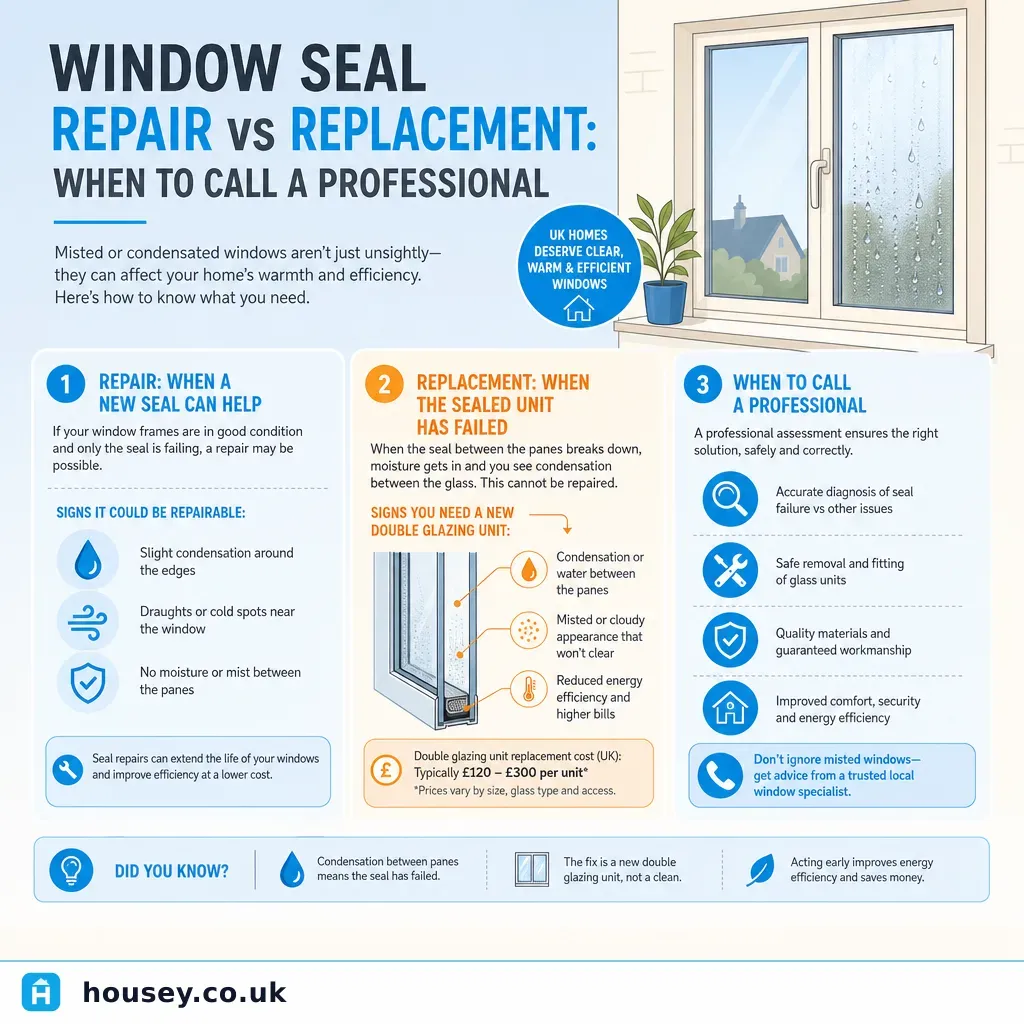 Improvement & Build
Window Seal Repair vs Replacement: When to Call a Professional
Failed window seals usually mean the double-glazed unit needs replacing — resealing a misted unit rarely works long-term.
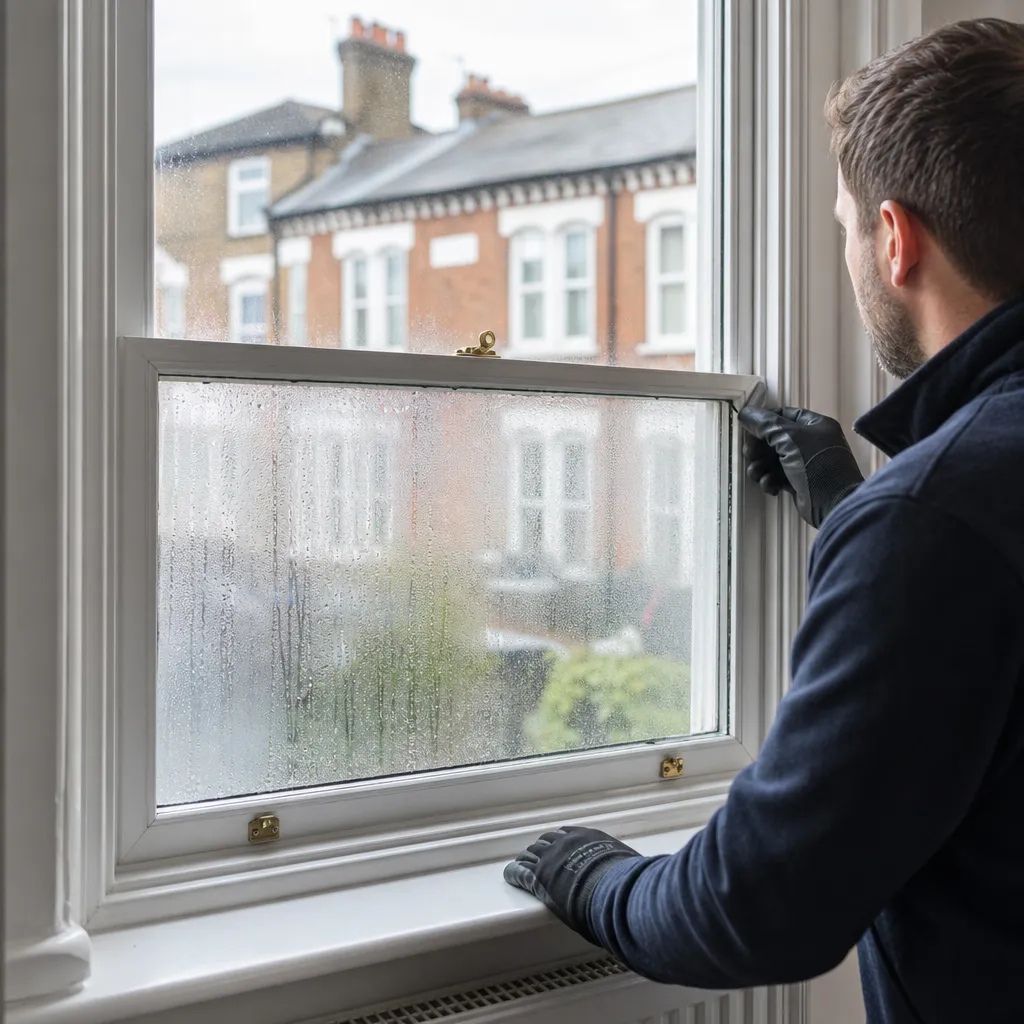 Improvement & Build
Repairing Failed Window Seals and Condensation Issues
Condensation between double-glazed panes means the hermetic seal on the insulated glass unit has failed.
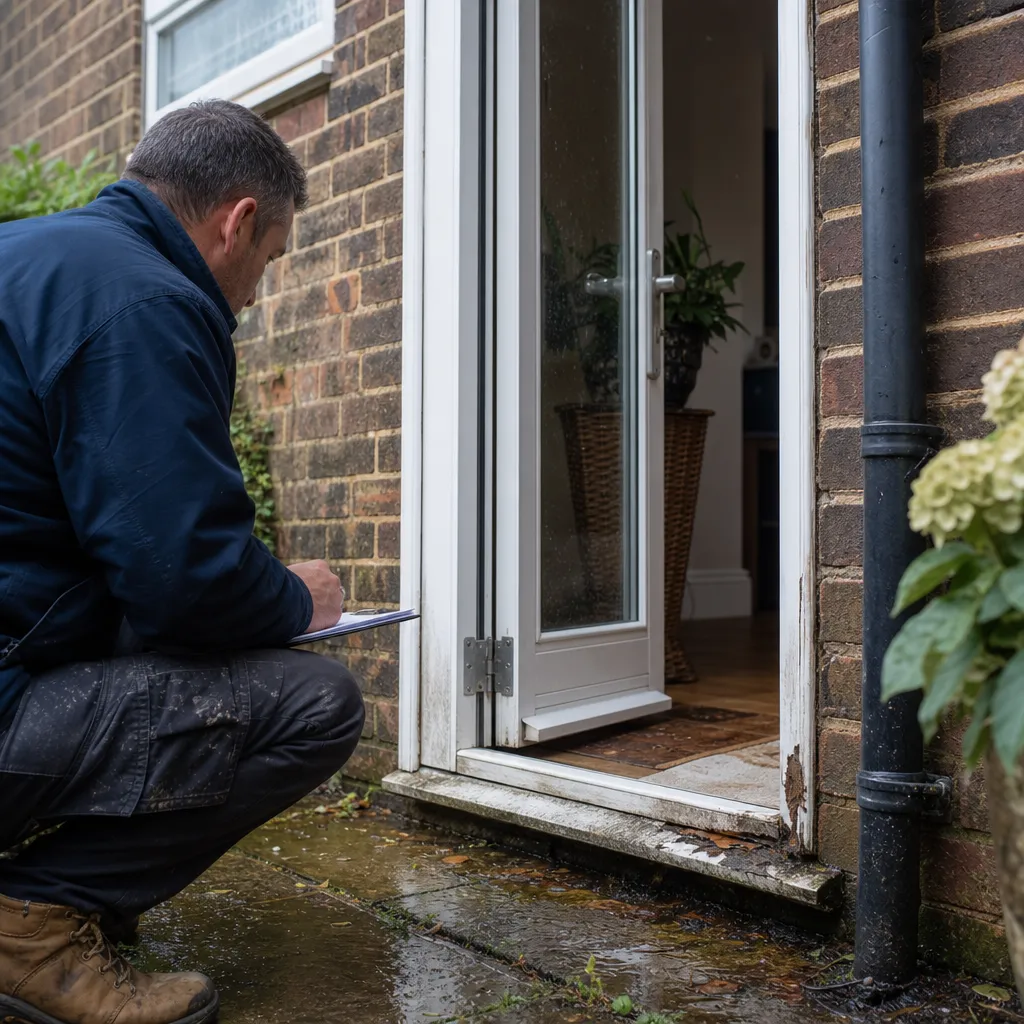 Improvement & Build
Fixing Leaking Back Doors and Water Ingress
Most leaking back doors in UK homes fail at one of three points: the threshold or door sill joint, the frame-to-masonry mastic seal, or the door weatherstrip.
 Improvement & Build
Leaded Window Repair and Restoration Costs
Leaded window repair in the UK typically costs £150–£600 for minor re-soldering or resealing, rising to £800–£2,500+ for full panel removal and restoration.
 Improvement & Build
Repairing Broken Windows: Finding a Window Specialist
Repairing a broken window depends on the type of damage: a failed double-glazing unit (misted glass) needs the sealed unit replaced, cracked or broken glass needs a glazier, and frame damage may require a specialist joiner.