Window Seal Repair vs Replacement: When to Call a Professional
By Housey · Last reviewed 1st of June 2026
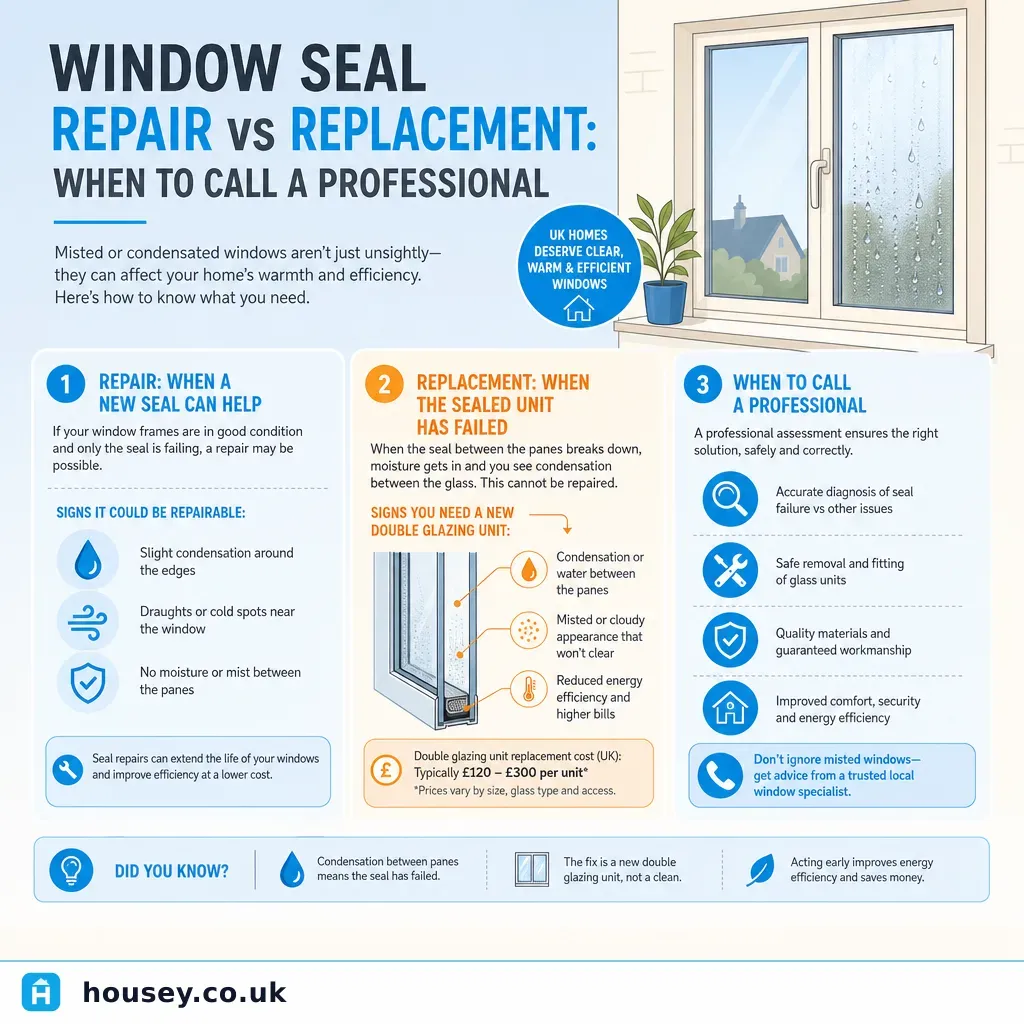
Window Seal Repair vs Replacement: When to Call a Professional
Condensation trapped between glass panes, or draughts creeping through frames, are among the most common window complaints UK homeowners encounter — whether in a 1990s new-build with ageing original glazing or a 1970s semi-detached where double glazing was retrofitted decades ago. The decision between repairing a seal and replacing the unit (or the whole window) depends on what has actually failed and how old the installation is.
Key points
- A failed double-glazed unit showing misting between panes cannot be permanently fixed by resealing — the inert gas fill has already escaped and the insulated glass unit (IGU) must be replaced.
- Replacing just the double-glazed unit is often possible without changing the frame, provided the frame is structurally sound, square, and not rotten.
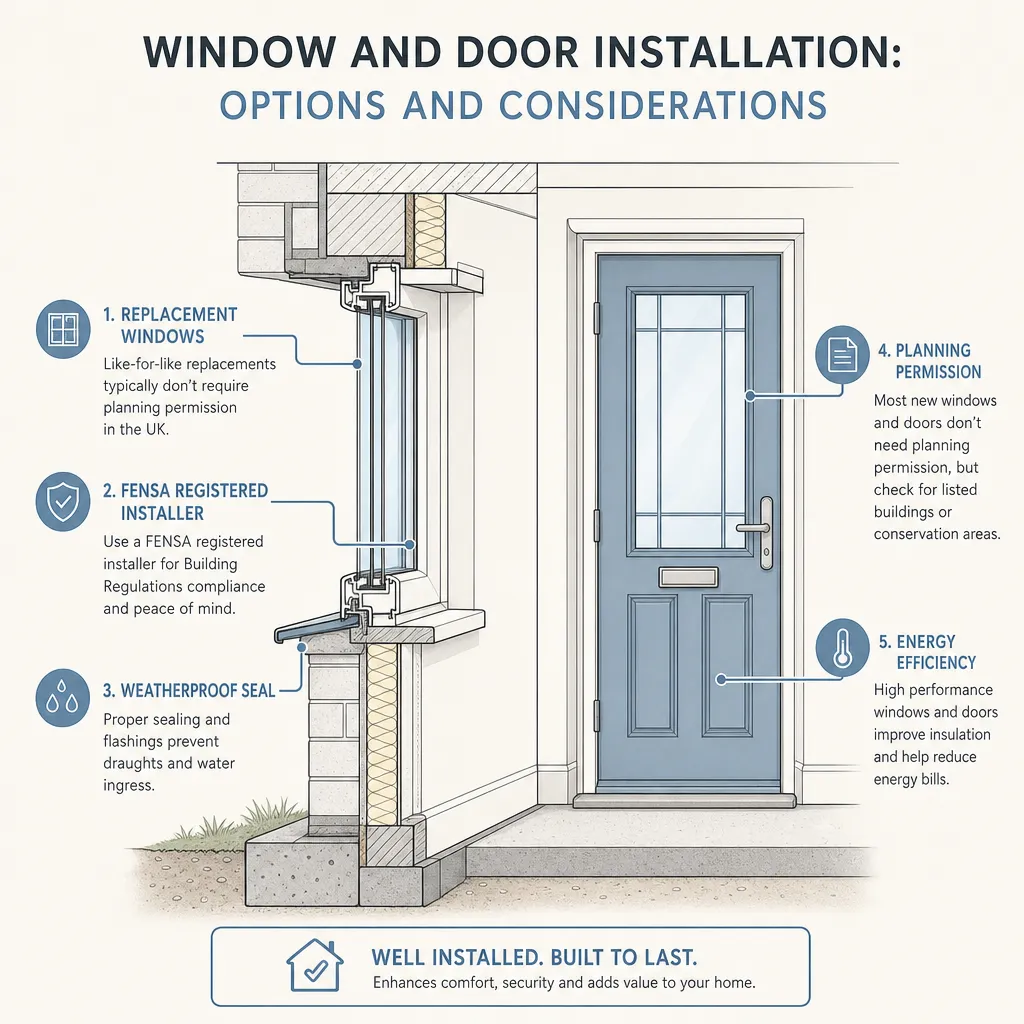
- FENSA-registered or CERTASS-registered installers can self-certify full window replacement under Building Regulations Part L, so no separate building control application is required.
- Most sealed double-glazed units carry a 5–10 year manufacturer's guarantee; blown units on newer installations may still be covered under warranty.
- Frame condition is the critical variable — IGU replacement costs significantly less than a full window replacement if the frame is intact and undamaged.
What causes window seal failure?
Double-glazed units are factory-sealed with a desiccant spacer bar and filled with argon or krypton gas. Over time — typically 15–25 years — the sealant perimeter degrades, allowing moist air to enter the cavity. Once moisture infiltrates, condensation forms on the inner glass surfaces and cannot be removed by cleaning from the outside.
Common causes of premature seal failure include:
- Poor original installation (inadequate sealant depth or drainage)
- UV degradation of the primary sealant, particularly on south-facing elevations
- Physical damage to the edge seal from impact, abrasive cleaning, or pressure washing close to the frame
- Timber frame movement causing the unit to flex seasonally
Condensation on the room-side surface of the glass is a separate issue — this is surface condensation caused by warm moist air meeting a cold pane, and improved ventilation rather than unit replacement is usually the remedy.
Repair or replace: comparison by situation
Situation | Recommended action | Typical professional | Why |
|---|---|---|---|
Misting between panes, frame intact | Replace sealed unit (IGU) only | Glazier or double glazing installer | Resealing does not restore gas fill or clarity |
Misting between panes, frame damaged or rotten | Full window replacement | FENSA-registered window installer | New unit in a failing frame will re-fail |
Draught with no misting, perimeter gasket cracked or loose | Replace perimeter gasket or reseal | Glazier or window company | Often a straightforward gasket job |
Draught with no misting, frame warped or shrunk | Frame adjustment or full replacement | Window installer | Frame geometry needs correcting first |
Cracked or impact-damaged glass | Replace sealed unit | Glazier | Safety risk from broken glass |
Condensation on room-side glass only (not between panes) | Improve ventilation; check draught seals | DIY or general contractor | Surface condensation, not seal failure |
Repair or replace: which option is right for you?
- Choose IGU (unit) replacement if the frame is less than about 20 years old, undamaged, and square; the glass is misted or cracked; and no draughts are coming from the frame itself.
- Choose full window replacement if the frame is rotten, warped, or beyond reasonable repair; the window is more than 25–30 years old; or you want to upgrade U-values significantly to improve your EPC rating or meet Building Regulations Part L on a wider refurbishment.
- Choose gasket or silicone reseal if there is no misting between panes, the unit is intact, but the external perimeter sealant has cracked or detached from the frame.
- Ask a professional to assess if you are unsure whether misting is between panes or on the surface; if frames feel unstable when pushed; or if the property is listed or in a conservation area where replacement specification may be restricted by planning conditions.
What does repair actually involve?
For a failed IGU, there is no reliable permanent DIY repair. Products marketed as "demisting kits" involve drilling small holes in the glass, injecting a desiccant agent, and plugging the holes. This may temporarily reduce visible misting but does not restore the argon gas fill or original thermal performance. Professional installers do not generally recommend this approach.
A professional IGU replacement involves removing the glazing beads, sliding out the failed unit, and fitting a new factory-sealed unit to the correct size and specification — typically argon-filled, low-emissivity (low-E) coated glass — before refitting the beads with fresh sealant. For a standard casement window, the work typically takes under an hour per unit.
Perimeter and frame seal repairs — where silicone or rubber around the frame edge has cracked or pulled away — are distinct from IGU failure. These are accessible, use inexpensive materials, and can be resealed by a competent glazier or window company. However, frame resealing will not fix a blown unit.
Costs to expect
Indicative UK costs, last reviewed 2026-06-01.
- IGU replacement (per unit): £70–£200 depending on glass size, specification (standard float, low-E, obscure, Georgian bars), and access difficulty.
- Perimeter silicone reseal: £30–£80 per window as a standalone job; often bundled when other work is carried out at the same time.
- Full window replacement (per window): £350–£900+ depending on frame material (uPVC, timber, aluminium), size, specification, and style.
Quotes vary significantly by region, installer, and scale of work. Obtain at least two written quotes before committing.
Red flags: when simple repair is not enough
- Visible rot, soft spots, or fungal growth on timber frames
- Frames that flex noticeably when pressed, or are visibly out of square
- A window that no longer closes fully or locks securely — an immediate security concern
- Water ingress at the frame-to-wall junction, which may indicate a failed cavity closer or lintel issue and needs separate professional assessment
- A listed building or conservation area property where replacement specification must be confirmed with the local planning authority before ordering any units
Building Regulations and certification
Replacing a sealed unit within an existing frame does not normally require a Building Regulations notification in England and Wales, as it does not alter the overall window assembly.
Full window replacement is notifiable under Building Regulations Part L (conservation of fuel and power). Work carried out by a FENSA-registered or CERTASS-registered installer is self-certified — no separate building control application is needed. The installer issues a FENSA certificate, which is recorded on the national register and should be passed to your conveyancer when you sell the property. If the installer is not registered under a competent persons scheme, you must notify your local building control department before work begins.
Always confirm certification arrangements in writing before accepting a quote.
When to get professional help
Most seal failures are not emergencies, but some related conditions warrant prompt attention:
- Broken or cracked glass poses a safety risk and should be boarded or replaced quickly
- A window that cannot be secured creates a security vulnerability and may affect your buildings insurance cover
- Active water ingress at the frame or lintel junction should be investigated promptly to prevent structural damage to the surrounding masonry or timber
For routine seal failure, book an assessment from a glazier or window installation company who can confirm whether unit replacement or a full window change is the correct remedy.
How Housey can help
Housey connects you with vetted window and door installers who can assess your glazing, confirm whether IGU replacement or a full window change is needed, and provide FENSA certification where required. Submit your details to compare quotes from local installers.
Frequently asked questions
Can I fix misted double glazing myself?
DIY demisting kits exist but are a temporary workaround. They involve drilling the glass and injecting a desiccant agent, which does not restore thermal performance or the original gas fill. Professional replacement of the sealed unit is the recognised remedy and is usually not significantly more expensive than a kit applied across multiple windows.
Will a failed window seal affect my EPC rating?
A small number of failed units is unlikely to change your EPC band materially. Widespread failure across the property will affect the assessed U-value of glazing. If you are preparing to sell or let, replacing failed units before an EPC assessment is worth considering, as A-rated double glazing can meaningfully improve the score.
Do I need planning permission to replace window seals or units?
Replacing a sealed unit within an existing frame does not normally require planning permission. Full window replacement in a conservation area or listed building may require consent — check with your local planning authority before ordering any units or instructing an installer.
What is FENSA and do I need a certificate?
FENSA is a Government-authorised competent persons scheme covering window and door installation. A FENSA certificate confirms the work meets Building Regulations and is registered nationally. You will need this certificate when selling your home — without it, a retrospective building control certificate may be required before exchange of contracts.
Sources and further reading
- FENSA — Competent Persons Scheme for windows and doors — FENSA
- Building Regulations Approved Documents index — GOV.UK
- Competent person schemes — GOV.UK
- Permitted development for householders — Planning Portal
Useful next reads
 Improvement & Build
Repairing Failed Window Seals and Condensation Issues
Condensation between double-glazed panes means the hermetic seal on the insulated glass unit has failed.
 Improvement & Build
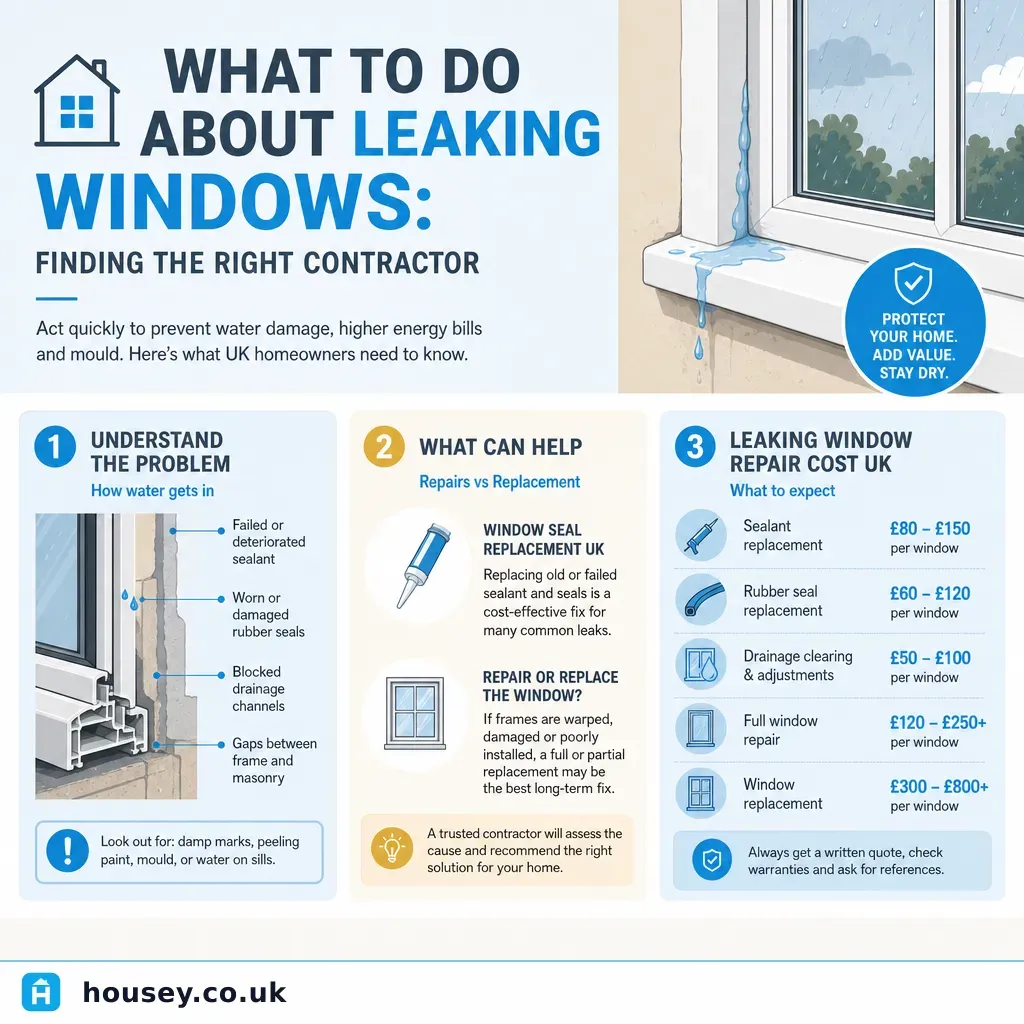
What To Do About Leaking Windows: Finding The Right Contractor
Leaking windows in UK homes are usually caused by failed seals, cracked frames, or damaged flashing.
 Improvement & Build
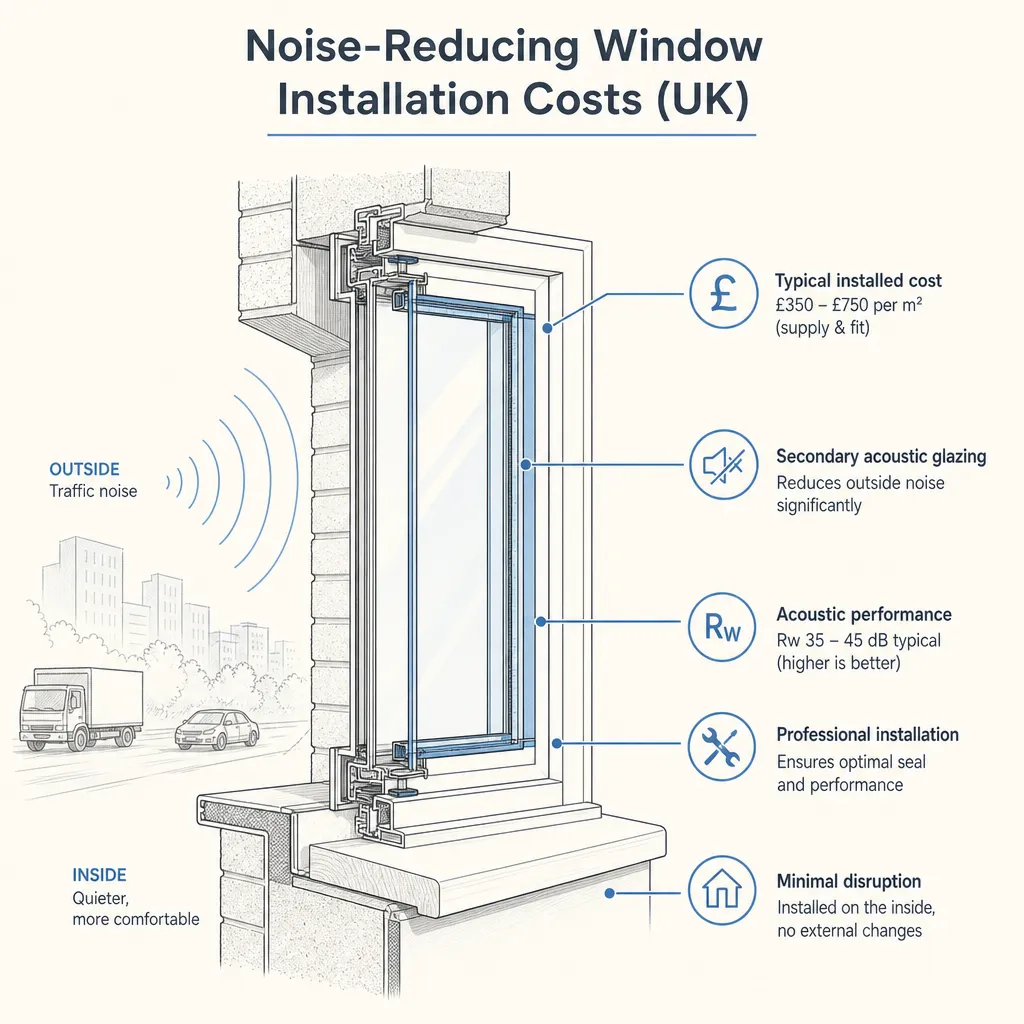
Noise-Reducing Window Installation Costs
Noise-reducing window installation in the UK typically costs £400–£1,500 per window depending on glazing specification, frame material, and property type.
 Improvement & Build
Window Replacement Planning: What to Discuss With Your Installer
Most window replacements in England fall under permitted development rights and do not require planning permission, but they must comply with Building Regulations Part L and Part K.
 Improvement & Build
Window and Door Installation: Options and Considerations
Replacing windows and external doors in the UK requires compliance with Building Regulations Part L (thermal performance) and Part K (safety glazing).