Replacing Double Glazing Seals: Gasket and Spacer Bar Renewal
By Housey · Last reviewed 4th of May 2026
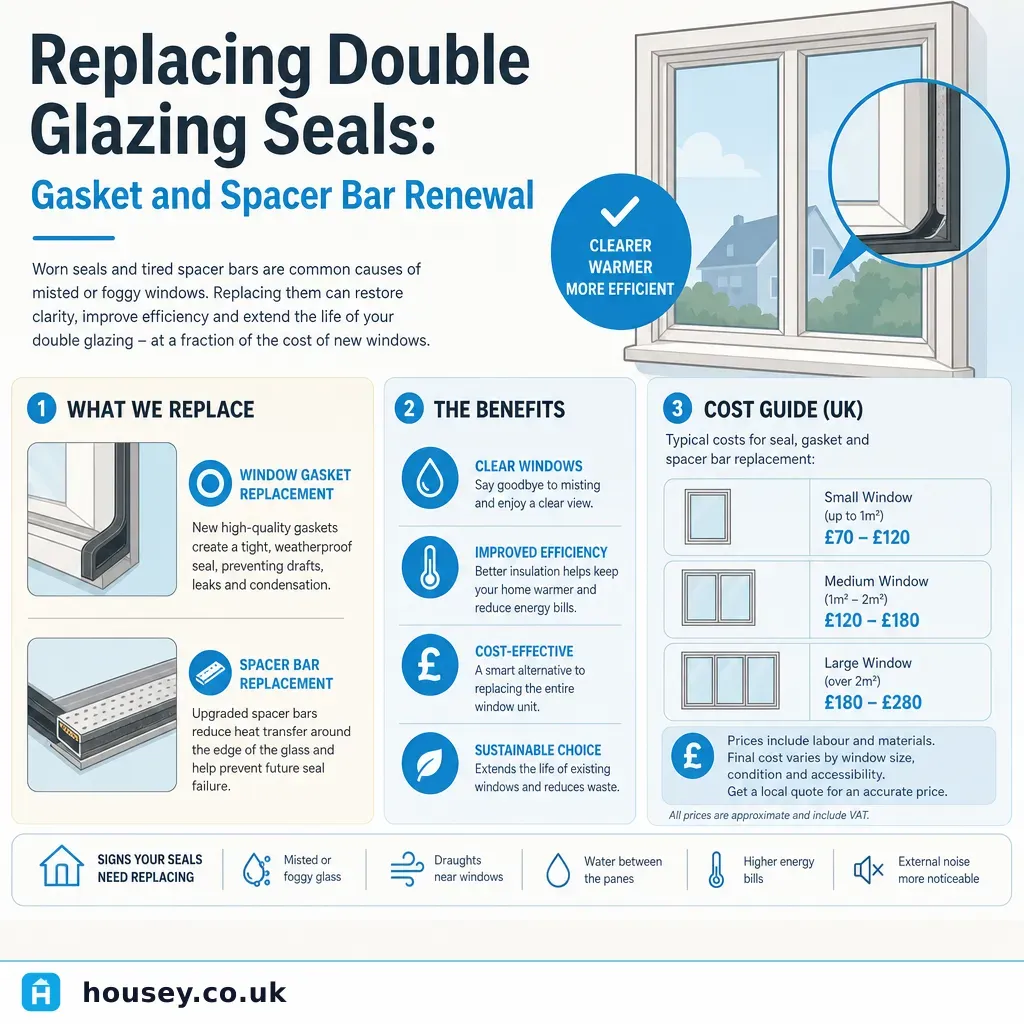
Replacing Double Glazing Seals: Gasket and Spacer Bar Renewal
Double glazing seal failure is one of the most common window complaints in UK homes, and it tends to surface at inconvenient moments — when condensation appears between the panes, draughts become noticeable, or heating bills edge upward. Whether you live in a 1980s estate house or a newer development, understanding which seal has failed and what renewal actually involves can save you from paying for more work than you need — or less.
Key points
- Double glazing has two distinct seal types: the external rubber gasket (the perimeter seal around the glass in the frame) and the internal spacer bar seal (which maintains the inert gas cavity between panes).
- A failed spacer bar seal — shown by misting or condensation trapped between the panes — almost always means the sealed unit itself must be replaced, not patched in situ.
- Perimeter gaskets (the rubber strips around the frame edge) can sometimes be replaced without disturbing the sealed unit, depending on frame condition and profile availability.
- Indicative UK costs for sealed unit replacement range from approximately £75–£200 per pane for standard sizes; full frame replacement costs considerably more. (Indicative UK costs, last reviewed 2026-05-04; obtain quotes for your specific windows and frames.)
- FENSA-registered or CERTASS-registered installers can self-certify window replacement work under Building Regulations, avoiding a separate building control application.
What types of seal does a double-glazed unit have?
Double-glazed windows rely on two separate sealing systems working together.
The perimeter gasket is the rubber or EPDM strip that runs around the edge of the glass, holding the pane within the frame and excluding draughts and rain. It sits in the frame rebate and on the outer face where it contacts the glass surface. Gaskets deteriorate over time — UV exposure, temperature cycling, and physical abrasion cause them to harden, shrink, or crack, eventually allowing air and water infiltration.
The spacer bar seal is internal to the glazing unit itself. The spacer bar runs around the perimeter between the two panes of glass, contains desiccant to absorb residual moisture, and is bonded to both panes with primary and secondary sealants. When this seal fails, atmospheric moisture enters the cavity and condenses on the inner glass surfaces — producing the characteristic misted appearance that cannot be wiped away because it is inside the unit.
These are fundamentally different problems requiring different solutions.
Which seal has failed — and how to tell
Symptom | Likely cause | Repair approach |
|---|---|---|
Condensation between the panes, inside the unit | Spacer bar or unit seal failure | Replace the sealed unit |
Draughts felt around the frame edge | Perimeter gasket worn, shrunk, or cracked | Gasket replacement |
Water ingress at the frame-to-glass join | Perimeter gasket or glazing tape failure | Gasket or tape replacement |
Frame feels cold to touch but no visible misting | Poor or missing edge insulation | Assess gasket and overall frame condition |
Misting concentrated at the bottom corner of the unit | Early-stage unit seal failure with moisture pooling | Replace the sealed unit promptly |
Can double glazing seals be repaired without replacing the unit?
For perimeter gaskets, replacement is often straightforward. A window installer or specialist glazier removes the old rubber profile from the frame groove and fits a new matching gasket. The glass itself does not need to be removed in many cases, though this depends on the frame design and how the unit is retained within it.
For spacer bar seals, there is no effective field repair. Some companies offer mist elimination services — drilling small holes into the unit to insert desiccant tablets and apply a ventilation film. This addresses the visible symptom but does not restore the insulating gas cavity or the structural integrity of the seal. Industry bodies including RICS do not regard mist elimination as a lasting or technically sound repair. The correct solution is to replace the sealed unit.
If the frame is in good condition, only the glass unit needs replacing — a significantly cheaper option than full window replacement. A glazier or FENSA-registered installer can measure and order a replacement unit to fit the existing frame rebate.
Spacer bar types and their impact on replacement
Modern sealed units use one of two main spacer bar types, and the choice matters when ordering a replacement:
- Aluminium spacer bars — the traditional standard, highly conductive, and associated with cold bridging at the glass edge. Most pre-2010 windows in UK homes use this type.
- Warm-edge spacer bars (such as Swisspacer, Super Spacer, or Thermobar) — lower-conductivity materials that reduce edge heat loss and can improve the unit's overall U-value. These are required in new installations to comply with Building Regulations Part L.
When replacing a failed unit, specifying a warm-edge spacer bar and a low-emissivity (Low-E) glass coating improves the window's thermal performance. The additional cost over a standard aluminium-bar unit is usually modest and worth requesting when comparing quotes.
Homeowner checklist before calling an installer
Red flags to watch for
- Persistent condensation returning within 12 months of a unit replacement — this suggests poor installation quality or a substandard sealed unit.
- An installer who recommends drilling holes as the primary repair, without clearly explaining this is a symptomatic treatment rather than a lasting fix.
- No mention of FENSA or CERTASS registration when full frame or unit replacement is proposed — this matters for Building Regulations compliance and for providing evidence to buyers when the property is sold.
- Very low quote prices that omit VAT, unit disposal fees, or do not specify the spacer bar type — check carefully what is included.
- Timber frames with soft, discoloured, or damp areas around the glass rebate — this indicates rot that may need addressing before or alongside the glazing work.
When to get professional help
If you are seeing multiple misted units across your property, or if the frames show signs of rot, distortion, or drainage blockages, a professional assessment covering all windows may be more cost-effective than replacing units one at a time.
Contact a professional if:
- You have more than three or four failed units — the cumulative cost of individual unit replacements may approach that of full window replacement, making a like-for-like assessment worthwhile.
- The frames are timber and show soft or discoloured wood around the glass rebate.
- Draughts persist after gasket replacement, suggesting the frame itself has warped or moved.
- The property is leasehold — check whether the lease assigns window maintenance responsibility to you or to the freeholder before instructing any work.
How Housey can help
If you need sealed unit replacement, gasket renewal, or a full window condition assessment, Housey can connect you with qualified window and door installers who can inspect your windows and provide clear, itemised quotes for the appropriate repair.
Frequently asked questions
How long do double glazing seals typically last in the UK?
Perimeter gaskets generally last 10–20 years depending on material quality and UV exposure. Internal spacer bar seals typically last 15–25 years, though cheaper sealed units may fail sooner. The UK climate, with regular temperature cycling between cold winters and warmer summers, accelerates deterioration in both seal types across most property ages.
Does replacing a sealed unit require building regulations approval?
Like-for-like replacement of a sealed unit within an existing frame is generally not notifiable under Building Regulations. However, replacing the whole window — frame and glass — means Part L applies. Work must be carried out by a FENSA- or CERTASS-registered installer who can self-certify, or separately notified to your local building control authority.
Will replacing a failed sealed unit improve my energy bills?
Yes, particularly if you specify a warm-edge spacer bar and a low-emissivity coating on the replacement unit. A failed unit with a broken spacer bar seal loses most of its inert gas fill, so thermal performance drops significantly. Replacing it restores the insulating cavity and can noticeably reduce heat loss through that window.
Can I replace a double glazing gasket myself?
Perimeter gasket replacement is within reach of a careful DIYer on simple uPVC frames, as the rubber strip can sometimes be pressed into the frame groove without specialist tools. Sealed unit replacement is best left to a registered glazier — incorrect handling risks breaking the glass, damaging the frame, or leaving the new unit poorly seated and prone to early failure.
Sources and further reading
- Building Regulations Approved Document L: Conservation of Fuel and Power — GOV.UK
- FENSA: What is FENSA? — FENSA
- Double glazing — Energy Saving Trust
- Glass and Glazing Federation: Consumer guidance — Glass and Glazing Federation
Useful next reads
 Improvement & Build
Restoring Window Seals: When Repair Is Possible and When Replacement Is Needed
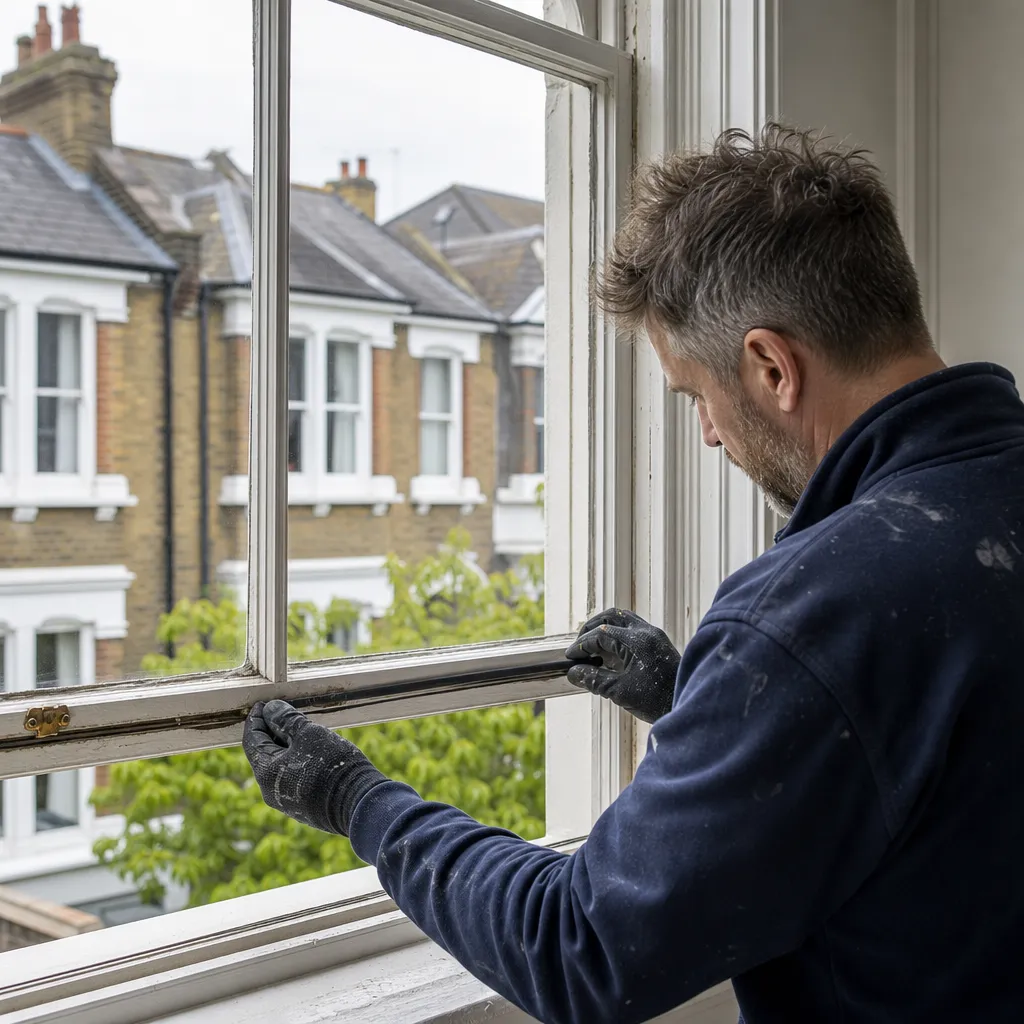
Window seal failure takes two main forms: the hermetic seal of the insulated glass unit (IGU), which causes misting between panes and cannot be fixed without replacing the glass, and the perimeter draught seal, which can usually be replaced without disturbing the glazing.
 Improvement & Build
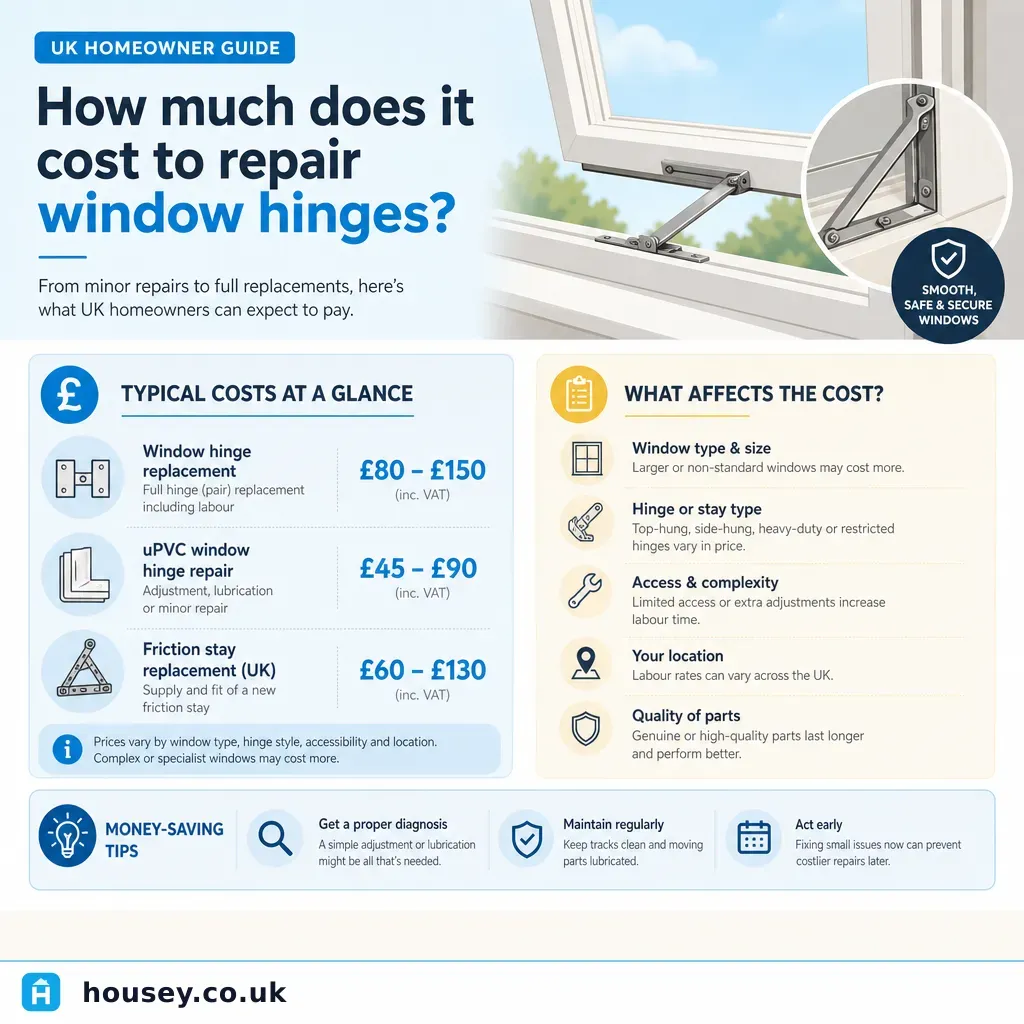
How much does it cost to repair window hinges?
Window hinge repair in the UK typically costs £60–£150 per window for a uPVC friction stay replacement, including parts and labour.
 Improvement & Build
Leaded Window Repair and Restoration Costs
Leaded window repair in the UK typically costs £150–£600 for minor re-soldering or resealing, rising to £800–£2,500+ for full panel removal and restoration.
 Improvement & Build
Repairing Failed Window Seals and Condensation Issues
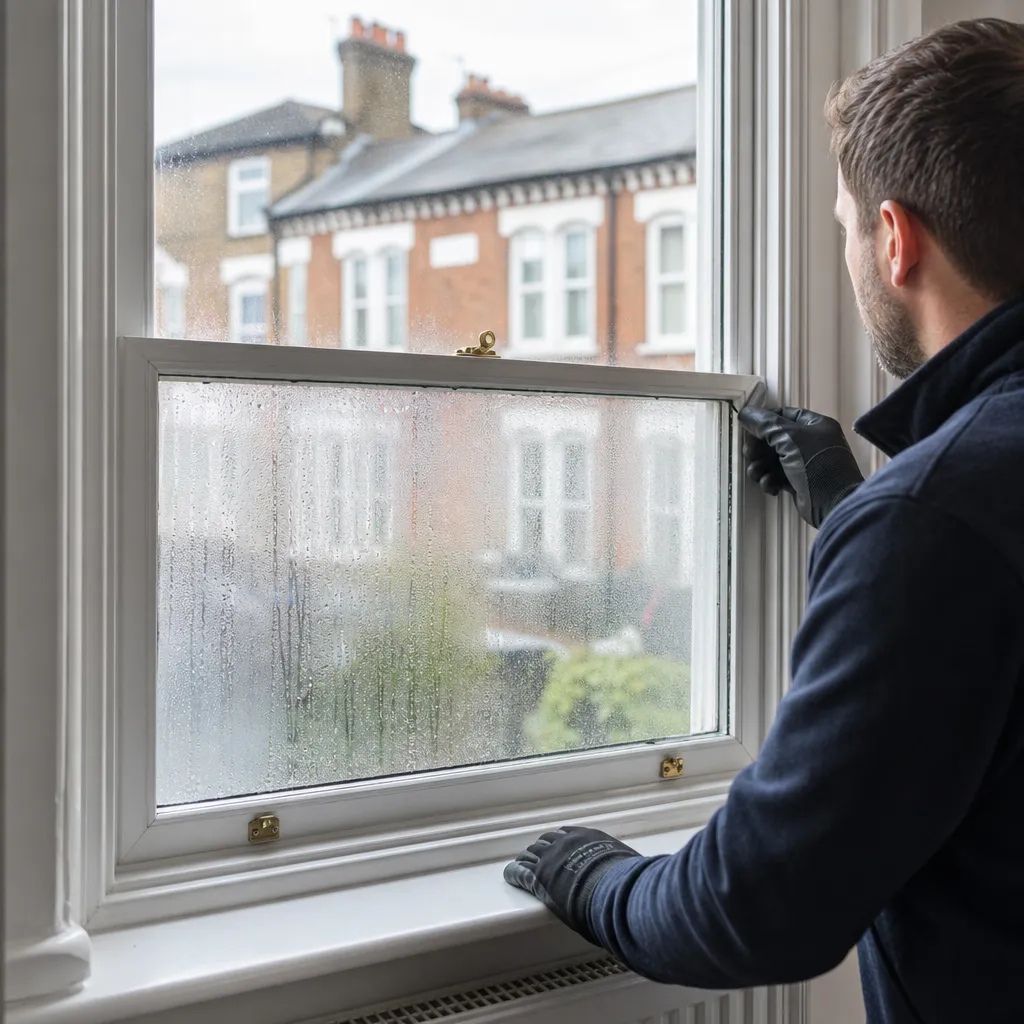
Condensation between double-glazed panes means the hermetic seal on the insulated glass unit has failed.
 Improvement & Build
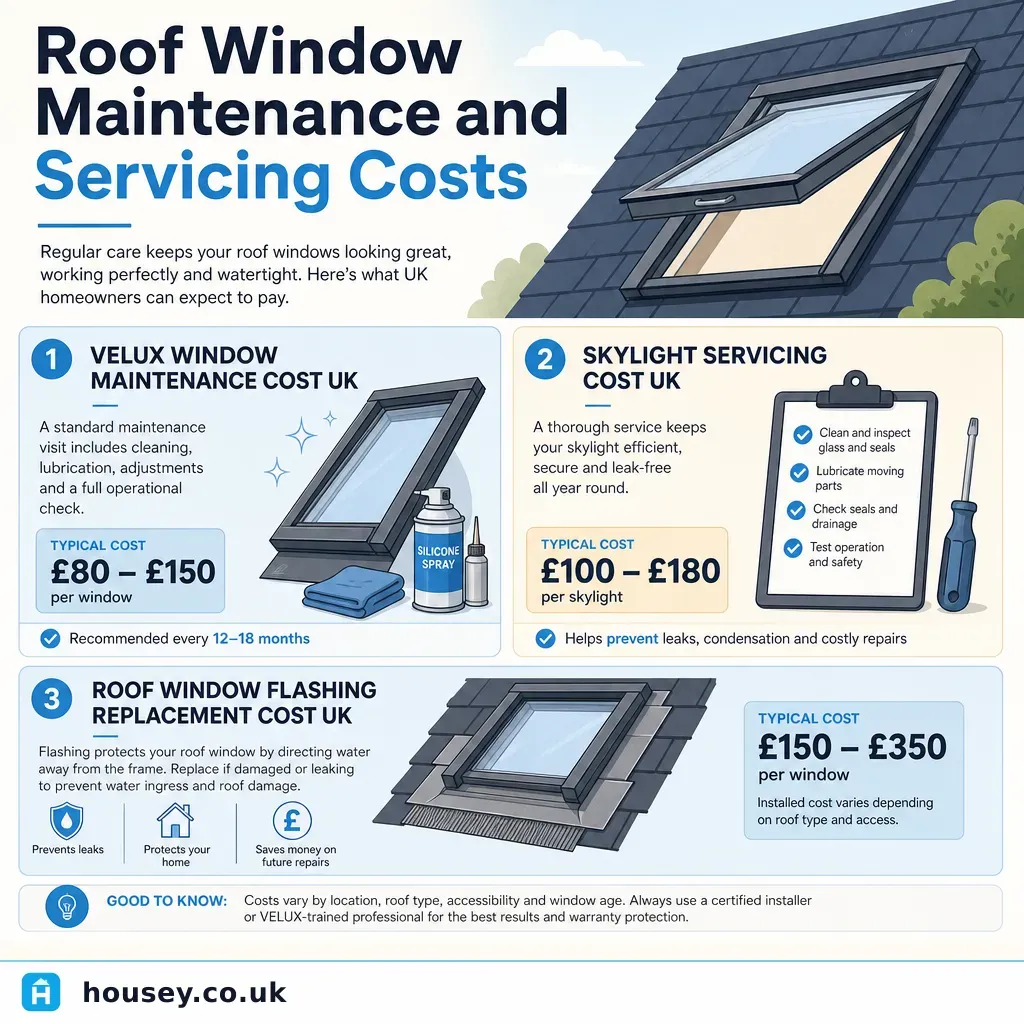
Roof Window Maintenance and Servicing Costs
Roof window servicing in the UK typically costs £80–£200 per window for a professional visit covering seals, flashings, and the opening mechanism.