How much does it cost to repair window hinges?
By Housey · Last reviewed 11th of May 2026
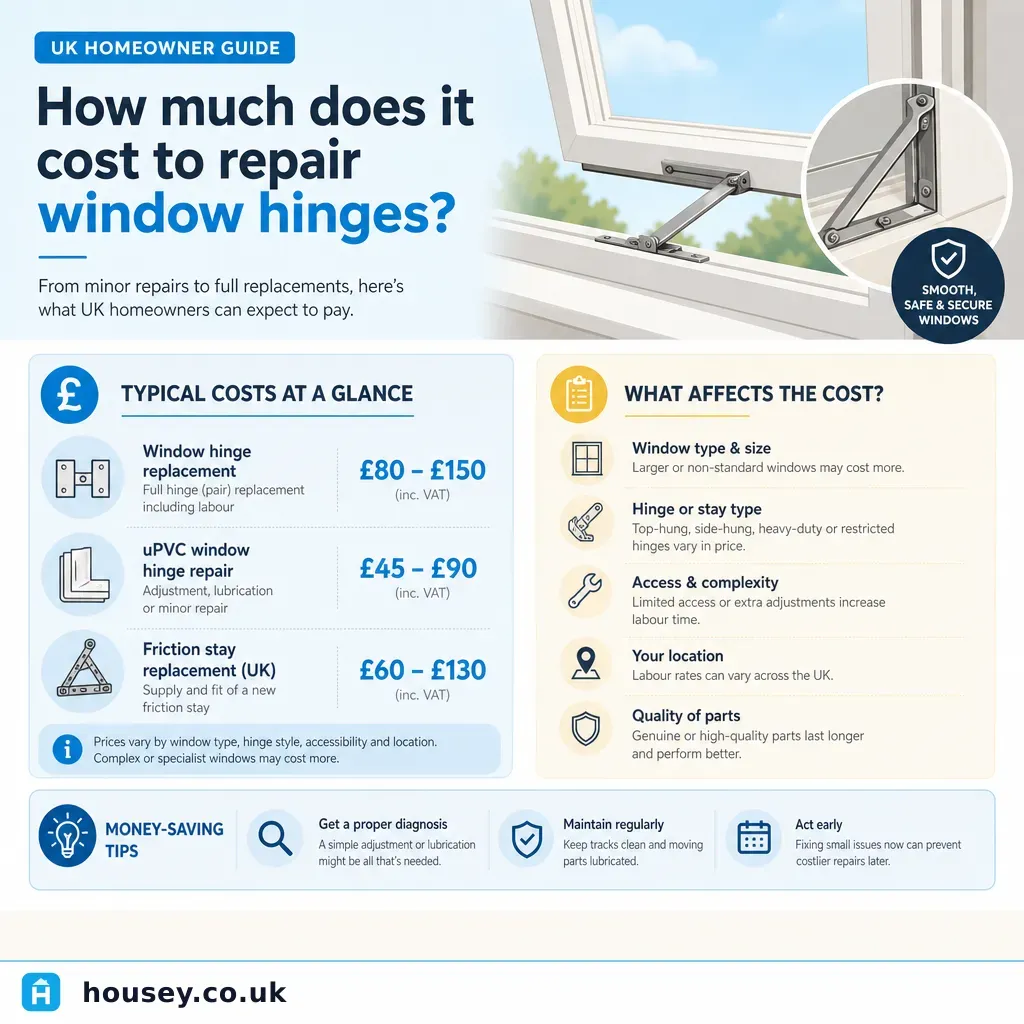
How much does it cost to repair window hinges?
Window hinge problems tend to show up gradually — a casement that needs a firm shove, a friction stay that resists opening, or a sash that drops out of true. Most UK homes built since the 1980s rely on uPVC or aluminium casement windows fitted with friction stays, while older properties often have timber frames with traditional butt hinges or peg-stays. Whether you are dealing with a single stiff hinge or a window that no longer closes flush against the frame, understanding the repair cost helps you decide whether to call a professional or source parts yourself.
Key points
- Friction stay hinges — the most common type on UK uPVC casement windows — typically cost £8–£30 per hinge for the part alone (Indicative UK costs, last reviewed 2026-05-11).
- Labour for a window repair specialist or joiner usually runs at £40–£80 per hour; most single-window hinge jobs take 30–90 minutes.
- Egress (escape-route) hinges on bedroom windows must allow a minimum 450 mm clear opening under current building guidance — replacing an egress hinge with a standard non-egress type on a bedroom window may not meet this requirement.
- uPVC hinges are not interchangeable between brands; you will usually need the exact replacement type (such as Mila, Roto, or Maco) to match the existing receiver channel.
- Adjustable friction stays can sometimes be re-tensioned without replacement using a screwdriver — check whether the tension screw is simply loose before ordering new parts.
What affects the cost of window hinge repair?
Several factors move the final price:
Type of window and hinge
Casement windows use friction stays or egress hinges; timber sash windows use spiral balances or sash pulleys rather than traditional hinges. The rarer the hinge type, the more likely you will pay a premium for parts or wait on a specialist order.
Access and height
Ground-floor windows are straightforward. Upper-floor windows may require a ladder or scaffold board, adding time and potentially equipment hire to the total cost.
Number of hinges
Most casement windows have two hinges (top and bottom stay). If both need replacement, parts and labour roughly double, though many tradespeople offer a reduced rate for the second hinge on the same visit.
Frame condition
Rotten timber or cracked uPVC around the hinge receiver can turn a simple hinge replacement into a more involved repair. Get a frame inspection before committing to parts only.
Parts sourcing
Off-the-shelf friction stays from a builders' merchant are cheaper than same-day courier orders for obsolete brands. Supplying parts yourself can reduce the total cost if you identify the correct replacement.
Window hinge types and typical repair costs
The table below gives indicative costs for common UK residential window hinge repairs. Prices include parts and labour unless noted. Indicative UK costs, last reviewed 2026-05-11 — actual quotes will vary by region, supplier, and access difficulty.
Hinge type | Common window | Parts cost (per hinge) | Labour estimate | Total indicative range |
|---|---|---|---|---|
uPVC friction stay | Casement (uPVC) | £8–£30 | £40–£80/hr | £60–£150 per window |
Egress (escape) hinge | Casement (uPVC/aluminium) | £20–£55 | £40–£80/hr | £80–£180 per window |
Butt hinge (timber) | Timber casement | £3–£15 | £40–£70/hr | £50–£120 per window |
Peg stay (timber) | Timber casement | £10–£25 | £40–£70/hr | £60–£130 per window |
Spiral balance | Timber sash | £15–£45 | £50–£90/hr | £90–£200 per window |
Always obtain at least two quotes before committing to work.
DIY or professional repair?
A simple friction stay replacement on a ground-floor uPVC window is a realistic DIY task if you can source the matching part and are comfortable using a drill. The general process is: open the window fully, locate the hinge screws, support the casement with a second pair of hands, remove the old stay, fit the new stay into the existing receiver channel, and test the tension by adjusting the friction screw.
Consider calling a professional when:
- The window is above ground floor or requires working at height beyond 2 m.
- The frame is damaged or cracked around the hinge receiver.
- The window is on a designated fire escape route or must meet egress requirements.
- You cannot identify the correct replacement part.
- The window has not closed properly for some time and the frame may have shifted.
Red flags that need urgent attention
- Window no longer closes flush: could indicate frame movement or a completely failed hinge allowing the casement to sag out of alignment.
- Hinge screws spinning without gripping: the thread has stripped — a sign of frame damage that goes beyond a straightforward hinge swap.
- Rust visible on the hinge body: accelerating corrosion can cause sudden failure, particularly on older timber-framed windows in exposed locations.
- A bedroom window that does not open wide enough: this may be an egress compliance issue worth checking before re-letting or selling the property.
- A window that drops when opened: the hinge or spiral balance has failed structurally — do not force it further open.
What to ask before accepting a quote
- Which hinge type and brand will you use as a replacement?
- Is the quoted price for one hinge or both?
- Does the price include sourcing the parts, or will I need to supply them?
- Will you inspect the frame condition before replacing the hinge?
- Is VAT included in the total price?
- If frame damage is found when you open up the window, how will this affect the quote?
When to get professional help
For any window above ground-floor level, involve a professional — working at height beyond 2 m carries a meaningful injury risk and is not appropriate for most householders. If your window is in a room designated as a fire escape route (typically a main bedroom), only a professional familiar with current Approved Document B guidance should confirm that a replacement hinge meets the required clear-opening dimensions. If the frame itself is rotten or cracked, a joiner or window specialist should assess whether repair is viable before any parts are ordered.
How Housey can help
Housey connects you with vetted window and door installers who can assess your window hinge, source the correct replacement part, and complete the repair safely. Describe your window type and location using our service request form and receive quotes from local specialists.
Frequently asked questions
How long does a window hinge repair typically take?
Most single-window friction stay replacements take 30–60 minutes once a professional is on site. Timber windows with seized or corroded hardware may take longer, particularly if screws need drilling out. Allow 1–2 hours as a practical planning estimate for a first job.
Can I replace just one hinge on a uPVC window?
Yes, if you can identify the matching replacement. However, if one friction stay has failed through age or corrosion, the other is likely to follow soon. Many tradespeople recommend replacing both at the same visit to avoid a second call-out charge.
Will home insurance cover window hinge repair?
Routine maintenance and wear-and-tear repairs are almost always excluded from buildings and contents policies. Cover may apply if the hinge was damaged by an insured event such as storm damage or accidental impact. Check your policy schedule or call your insurer before assuming cover applies.
Do I need building regulations approval to replace window hinges?
Replacing like-for-like hinges on an existing window does not require building regulations approval. However, if you are changing the way a window opens — for example, adding an egress hinge to a previously non-opening window — it is worth checking with your local building control body whether this affects fire escape provision for the room.
Sources and further reading
- Building Regulations — Approved Document B (Fire safety) — GOV.UK
- Working at height — Health and Safety Executive
- Double glazing repairs — Which?
- Draught-proofing your home — Energy Saving Trust
Useful next reads
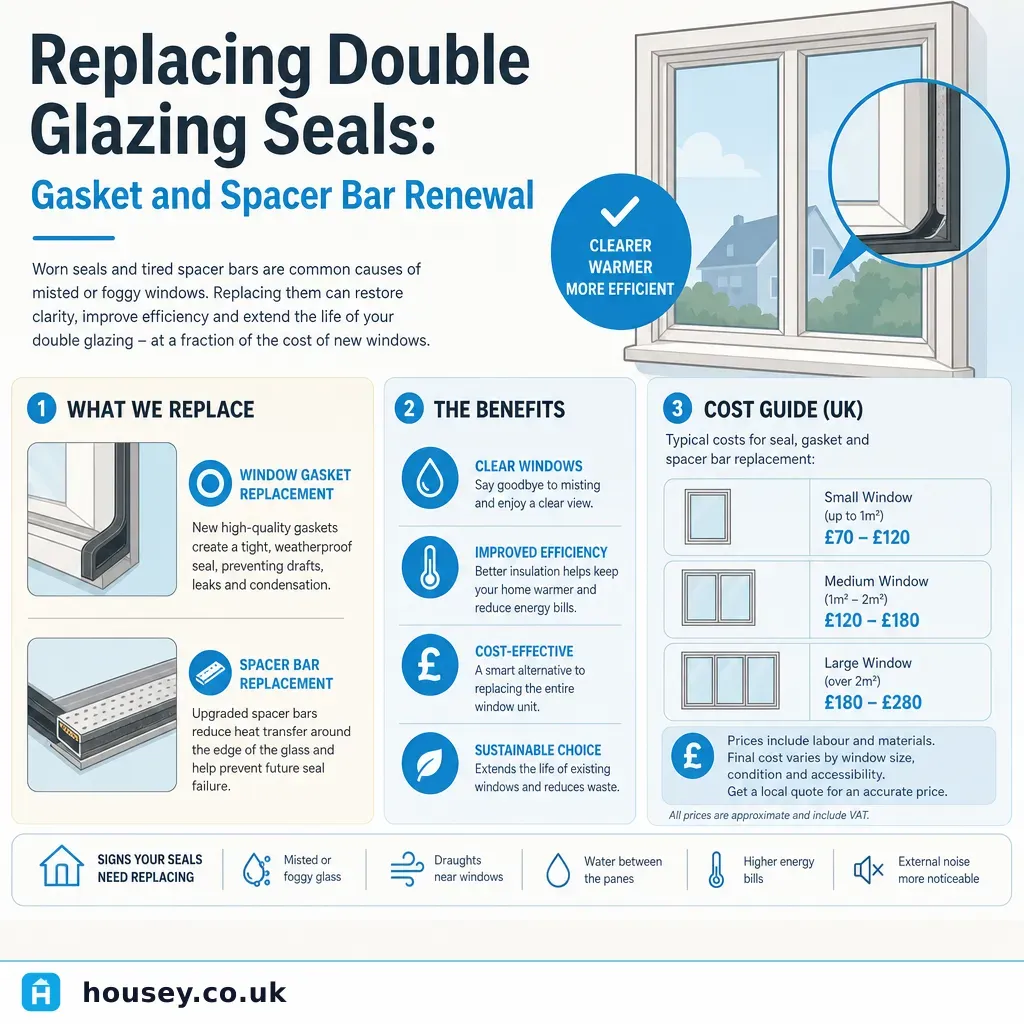 Improvement & Build
Replacing Double Glazing Seals: Gasket and Spacer Bar Renewal
Double glazing seals fail in two distinct ways: worn perimeter gaskets (which may be replaceable in situ) or failed internal spacer bar seals (which require the entire sealed unit to be replaced).
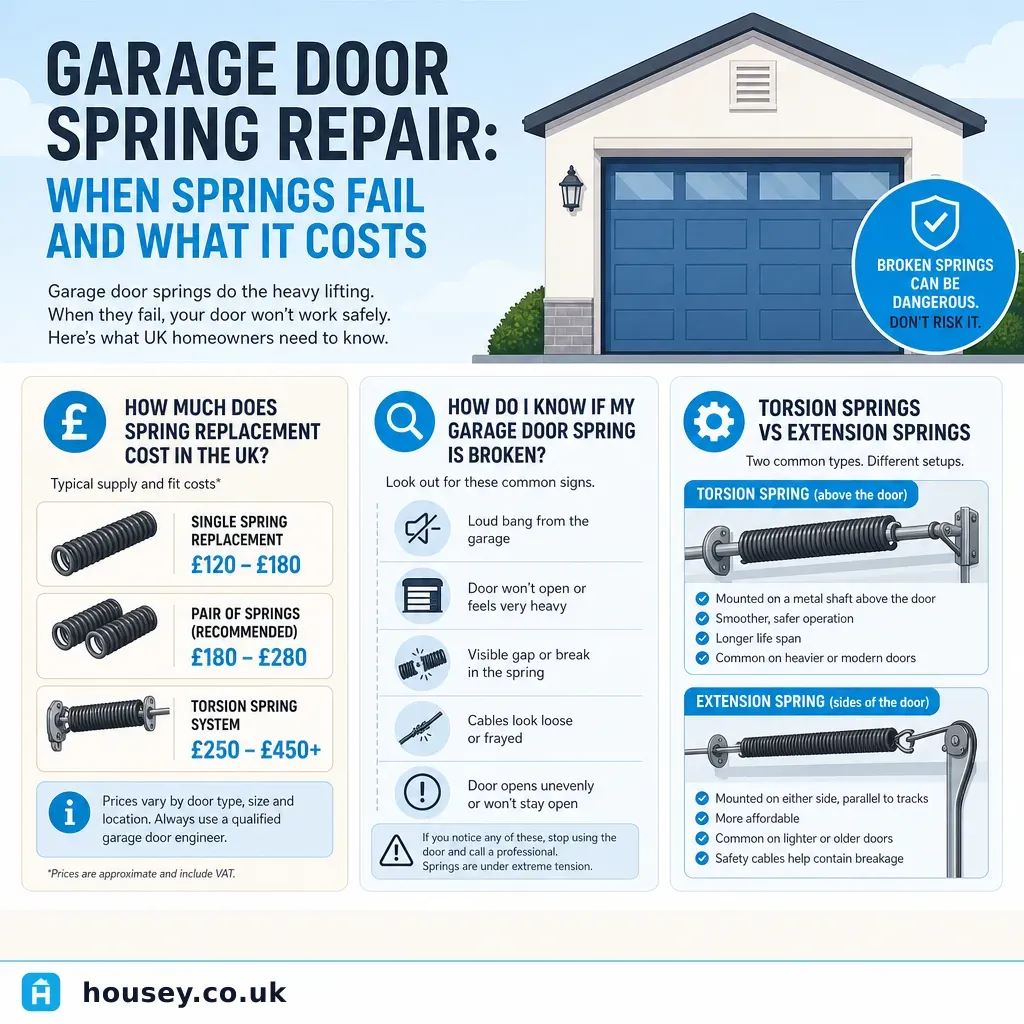 Improvement & Build
Garage Door Spring Repair: When Springs Fail and What It Costs
A broken garage door spring usually makes the door heavy, lopsided, or completely inoperable.
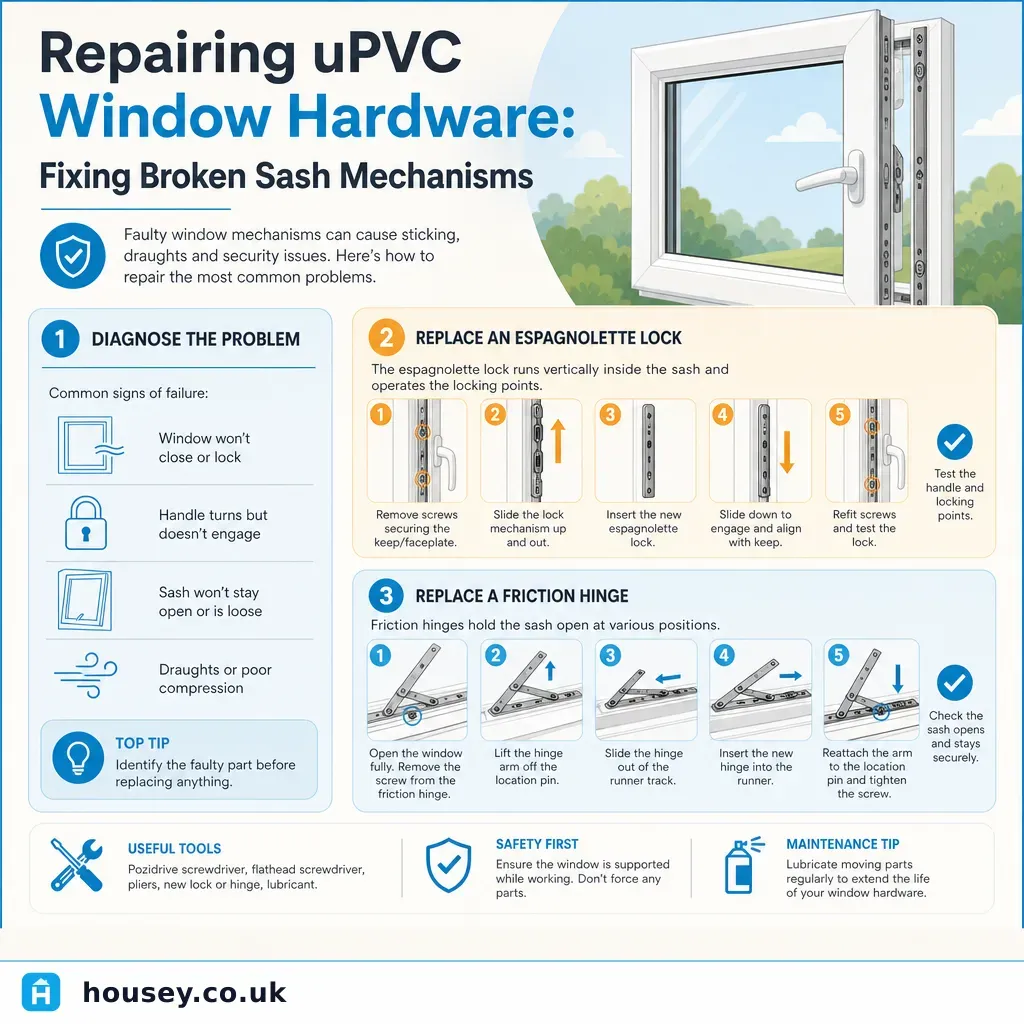 Improvement & Build
Repairing uPVC Window Hardware: Fixing Broken Sash Mechanisms
Most uPVC window sash mechanisms — handles, espagnolette locks, and friction hinges — can be replaced as individual components without replacing the full window frame.
 Improvement & Build
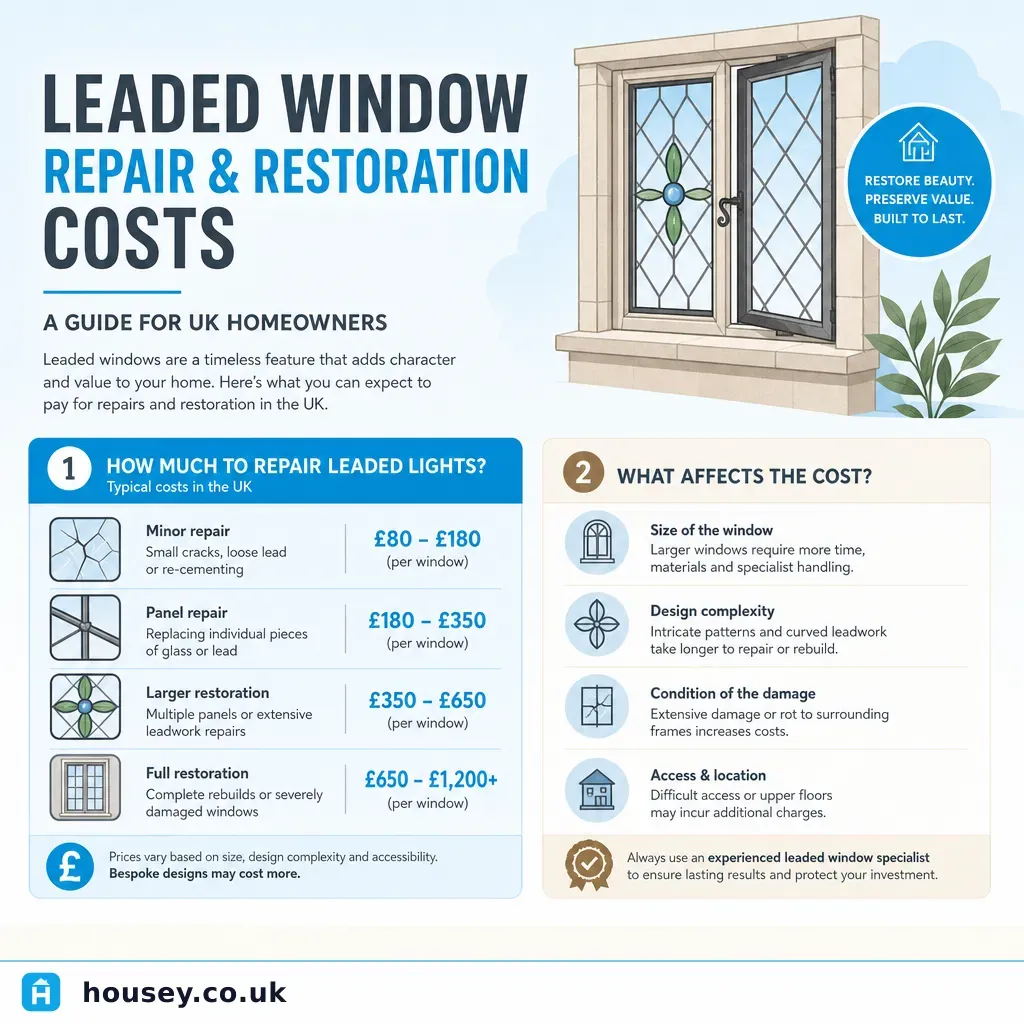
Leaded Window Repair and Restoration Costs
Leaded window repair in the UK typically costs £150–£600 for minor re-soldering or resealing, rising to £800–£2,500+ for full panel removal and restoration.
 Improvement & Build
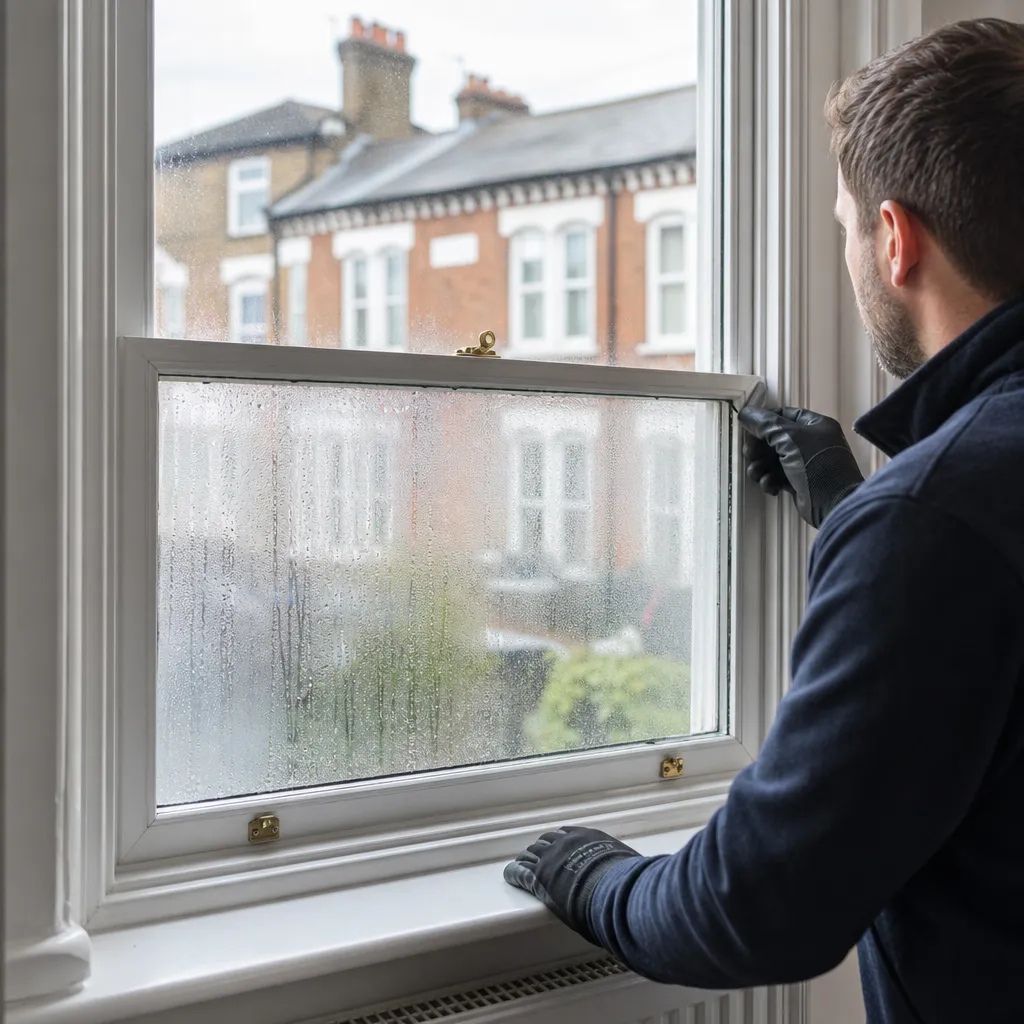
Repairing Failed Window Seals and Condensation Issues
Condensation between double-glazed panes means the hermetic seal on the insulated glass unit has failed.