Guide to thatched roofs in period properties
By Housey · Last reviewed 7th of May 2026
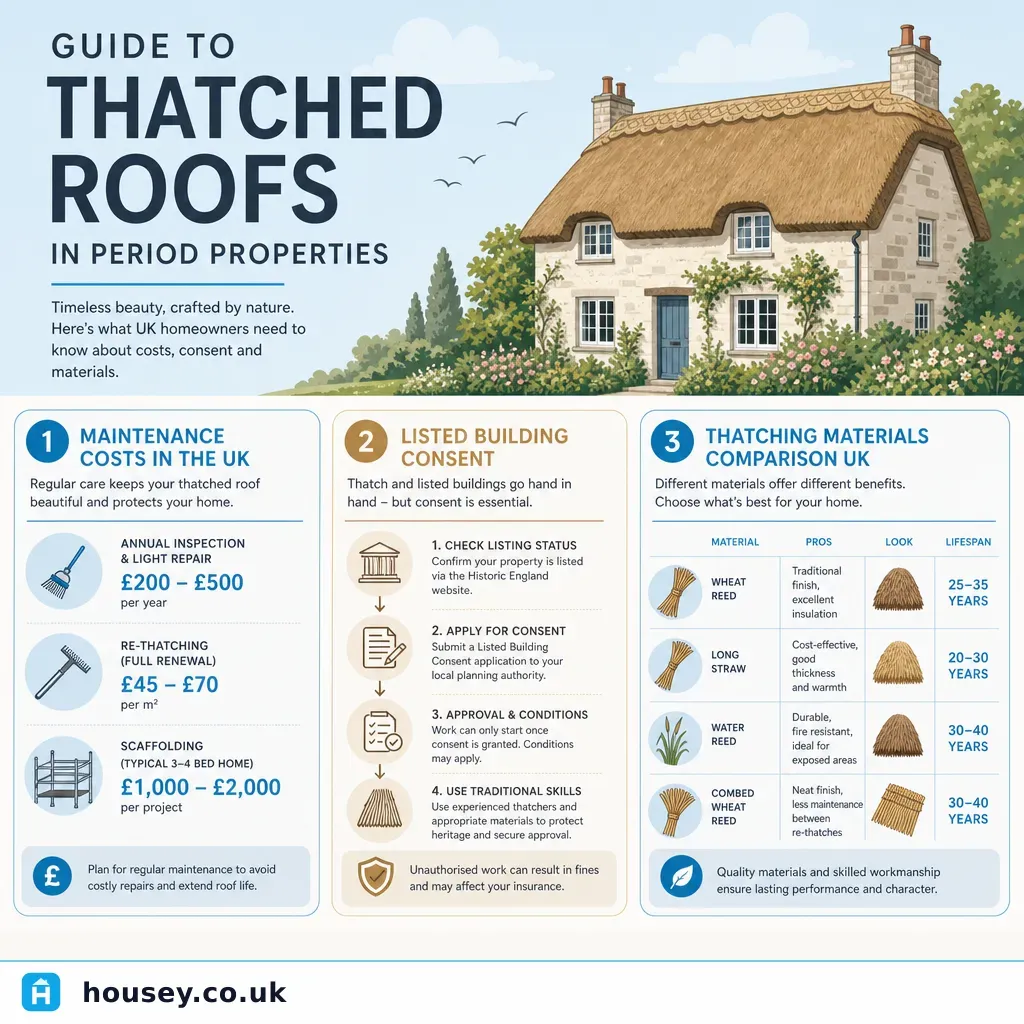
Guide to thatched roofs in period properties
Thatched roofs are among the most distinctive features of historic English vernacular architecture, found on properties ranging from 16th-century longhouses to Georgian farmhouses and Arts and Crafts cottages. For buyers, owners, and anyone planning works on a thatched property, the overlap of planning consent, fire risk, specialist insurance, and heritage obligations means that even apparently routine maintenance decisions can carry significant legal and financial consequences if handled incorrectly.
Key points
- Most thatched properties are listed buildings, meaning any material change — including like-for-like rethatch — usually requires Listed Building Consent (LBC) from the local planning authority (LPA).
- Carrying out works affecting a listed building without LBC where it is required is a criminal offence under section 7 of the Planning (Listed Buildings and Conservation Areas) Act 1990.
- The three principal thatching materials used in England — water reed, long straw, and combed wheat reed — differ in lifespan and regional tradition; the LPA may specify which is acceptable for a given listed building.
- Chimney-related fires are the leading cause of thatch fires; specialist insurance typically requires annual chimney sweeping, a HETAS-registered liner installation, spark arrestors, and interlinked smoke alarms as conditions of cover.
- A specialist thatch inspection, separate from a general RICS building survey, is necessary to assess the depth, fixings, and remaining lifespan of the thatching material.
Planning permission and listed building consent for thatched properties
Most thatched cottages in England are listed (Grade I, Grade II*, or Grade II), and many also sit within conservation areas. This creates a dual layer of planning control that affects almost every aspect of roof maintenance and renewal.
Listed Building Consent (LBC) is required for any works that would affect the character or fabric of a listed building. For thatched roofs, this typically includes:
- Replacing the thatch, even on a like-for-like basis
- Changing the thatching material (e.g., long straw to water reed)
- Installing a fire-retardant board beneath the thatch
- Adding or modifying roof penetrations — chimney liners, flue outlets, ventilation points
- Fitting a new ridge or altering the roof profile in any way
LBC is separate from planning permission and is obtained from your LPA. Permitted Development rights do not apply to listed buildings, so even works that would be routine maintenance on an unlisted property may require formal consent.
Conservation area controls may additionally restrict the appearance of works visible from the street, even for unlisted properties within the area boundary.
Always consult your LPA's heritage or conservation officer before instructing a thatcher or beginning any roof works. Failure to obtain LBC where required is a criminal offence with no time limit on prosecution.
Thatching materials: what councils, lenders, and insurers care about
The choice of thatching material affects longevity, fire performance, insurance costs, and whether the LPA will grant consent. For listed buildings, the choice is not always yours to make.
Material | Typical lifespan | Regions where traditional | Key considerations |
|---|---|---|---|
Water reed (Norfolk reed) | 25–40 years | East Anglia, many regions | Longer lifespan; LPA may object if not historically used in the area |
Long straw | 15–25 years | East Midlands, East Anglia, South | Traditional in many counties; shorter lifespan but historically significant |
Combed wheat reed | 20–35 years | South-West England (Devon especially) | Resembles water reed in appearance; well-accepted in its region |
Synthetic thatch | Variable | Rarely accepted for listed buildings | Usually not approved by LPAs for listed buildings; insurer treatment varies |
For listed properties, the LPA may specify which material must be used, based on the building's documented history and the region's vernacular tradition. Consult a heritage and conservation consultant or the LPA conservation officer before committing to a material or accepting a thatcher's recommendation.
Fire risk and compliance requirements
Thatch is combustible, and chimney-related fires are the most serious hazard. Specialist insurers and county fire services typically expect the following precautions to be in place:
- Chimney maintenance: Annual sweeping by a qualified chimney sweep; a suitable flue liner installed to current standards by a HETAS-registered installer
- Fire board: A fire-retardant board (such as 15mm Fermacell or equivalent) fitted between the chimney stack and the thatch
- Spark arrestor: Fitted to all chimney pots serving solid fuel or wood-burning appliances
- Smoke detectors: Interlinked mains-wired alarms in the roof space and main living areas
- Separation from naked flames: No barbecues or fire pits positioned directly adjacent to the thatch
Many insurers require photographic evidence of chimney condition at renewal. Some policies mandate an annual chimney inspection by a HETAS-registered professional as a condition of cover.
Important for listed buildings: Installing a fire-retardant board beneath the thatch — while strongly recommended by insurers and county fire services — may itself require Listed Building Consent, as it changes the construction of the roof. Always discuss this with your LPA heritage officer before installation, and obtain consent if required before the board is fitted.
What to expect from a survey of a thatched property
Standard RICS Home Surveys do not typically include a specialist thatch assessment. For a thatched period property, you should arrange:
- A RICS Level 2 or Level 3 building survey from a surveyor with experience of historic buildings — this covers the overall structure, including roof timbers, walls, damp, and drainage.
- A specialist thatch inspection from a qualified Master Thatcher (a member of the National Society of Master Thatchers) — this assesses the depth and condition of existing coatings, the state of the fixings, and the likely remaining lifespan of the material.
- Heritage consultant advice if LBC will be required — to advise on what the LPA is likely to accept before works are designed or tendered.
A measured building survey may also be needed if significant alterations are planned, providing the dimensional record required by architects, heritage consultants, and planning authorities.
Do not rely on a general surveyor to assess thatch depth or condition unless they have specific and demonstrable experience with historic thatched buildings.
Red flags when buying a thatched property
Seek professional advice before proceeding if you encounter any of the following:
- Thin or compacted thatch: Visible sagging, hollow sounds when the surface is pressed, or a ridge that appears sunken or misshapen may indicate the thatch is at or beyond end of life.
- Dark staining or persistent green growth: Black algae or green growth on the thatch surface can indicate trapped moisture, pointing to a ventilation problem or an improperly fitted under-layer.
- Chimney deterioration: Spalling mortar, cracked pots, or missing lead flashings adjacent to the stack are serious fire risk indicators requiring immediate assessment.
- No evidence of LBC for previous works: If a prior owner changed the thatching material or added a ridge without consent, the property may carry an outstanding planning enforcement issue that will need to be resolved — potentially at significant cost.
- Difficulty obtaining insurance: If specialist insurers decline cover or heavily load the premium, investigate the property's previous claims history and underlying construction details before proceeding.
- Timber decay in the roof structure: Thatched roofs rely on the integrity of the underlying roof timbers; any evidence of wood-boring beetle or fungal decay needs structural assessment by a qualified surveyor or structural engineer.
What to ask before hiring a thatcher or heritage consultant
Before instructing any professional for thatched roof works:
- Are you a member of the National Society of Master Thatchers or another recognised thatching body?
- Have you worked on listed thatched buildings in this county, and are you familiar with this LPA's preferences for materials and construction methods?
- Will you advise on which material the LPA is likely to require — and has that preference been confirmed with the conservation officer?
- Will you manage the Listed Building Consent application, or will I need a heritage consultant separately for that?
- What fire-retardant measures do you recommend, and are these included in your written quote?
- What is your estimated cost, broken down by labour and materials?
- What is the likely lifespan of the proposed work, and what maintenance will be required during that period?
- Will you provide a written specification and a completion certificate on finishing the works?
Important limitations
This article provides general information about thatched roofs, listed building requirements, and heritage considerations in England. Planning and listed building consent requirements vary by LPA, listing grade, and individual property history. Rules in Wales, Scotland, and Northern Ireland differ from those in England. Nothing in this article constitutes planning advice, legal advice, or a structural or fire risk assessment. Fire risk guidance reflects general industry practice and does not replace a professional fire risk assessment. Insurance requirements vary significantly by policy and insurer. Always obtain professional advice before carrying out any works on a listed or heritage property.
What to ask a qualified professional
Before commissioning works or making a planning application:
- LPA conservation or heritage officer: Does this specific work require Listed Building Consent? What material and method is the authority likely to support for this property?
- Heritage consultant: What is the building's construction history, and does the proposed work respect its architectural and historic significance?
- Master Thatcher: What is the current condition and depth of the existing thatch, and what is your recommended specification and material?
- Buildings insurer: What fire precautions are required as a condition of my policy, and will the proposed works affect my premium or cover?
- RICS surveyor (Level 3): Is there evidence of structural movement, damp, or timber decay in the roof structure that needs addressing alongside the rethatching?
When to get professional help
Seek professional advice immediately if:
- You discover any fire damage, smoke staining, or evidence of a chimney-related incident in the roof space
- The thatch shows signs of advanced deterioration, including depth significantly below the minimum the thatcher recommends for your material type
- You are buying the property and have not yet had an independent specialist thatch inspection
- The LPA has contacted you regarding suspected unauthorised works on the property
- Your insurer has declined to renew, imposed new conditions, or raised your premium without clear explanation
- There is visible cracking in the chimney stack or evidence of water penetration around the stack base
How Housey can help
For thatched and period properties, specialist professional advice is essential at every stage — from pre-purchase inspection through to works on site. Housey can help you find heritage and conservation consultants who understand listed building requirements and LPA processes across England. If you need a detailed dimensional record of the building before planning works or making an offer, a measured building survey provides the accurate record that architects, heritage consultants, and contractors require.
Frequently asked questions
Do I always need Listed Building Consent to rethatch?
In most cases, yes, if the property is listed. Even like-for-like rethatch work usually requires Listed Building Consent because it affects the fabric of a protected structure. Some local planning authorities may accept that purely routine maintenance does not require consent, but you should confirm with your LPA before instructing a thatcher to start any work.
How much does rethatching cost in the UK?
Costs vary by property size, material, region, and extent of works. Indicative UK costs (last reviewed 2026-05-07): a full rethatch on a medium-sized cottage can range from approximately £15,000 to £35,000 or more; ridge-only replacement may cost £2,000–£6,000. Always obtain at least three written quotes from members of the National Society of Master Thatchers. Figures are indicative and quotes vary.
Can I get standard home insurance for a thatched property?
Standard home insurance policies usually exclude or significantly restrict cover for thatched properties. You will need a specialist thatched property insurer. Premiums are typically higher, and insurers often require specific fire precautions — including annual chimney sweeping, spark arrestors, and interlinked smoke detectors — as a condition of cover.
What is the difference between a thatch survey and a building survey?
A building survey (such as a RICS Level 3) covers the overall structure — walls, floors, roof timbers, drainage, and damp. A specialist thatch inspection assesses the thatching material itself: its depth, condition, fixings, and remaining lifespan. For a thatched period property, you usually need both, commissioned from specialists with relevant experience.
Does changing from long straw to water reed always require Listed Building Consent?
Yes, for listed buildings. Changing thatching material is considered an alteration affecting the character of the listed building and requires Listed Building Consent. The local planning authority may also refuse consent if the original material has historical or regional significance, or if water reed is not traditional in that locality.
Sources and further reading
- Planning (Listed Buildings and Conservation Areas) Act 1990 — legislation.gov.uk
- Historic England — Thatched Roofs — Historic England
- GOV.UK — Listed buildings and other protected buildings — GOV.UK
- HETAS — Find a Registered Installer — HETAS
- National Society of Master Thatchers — National Society of Master Thatchers
Useful next reads
 Planning & Pre-Build
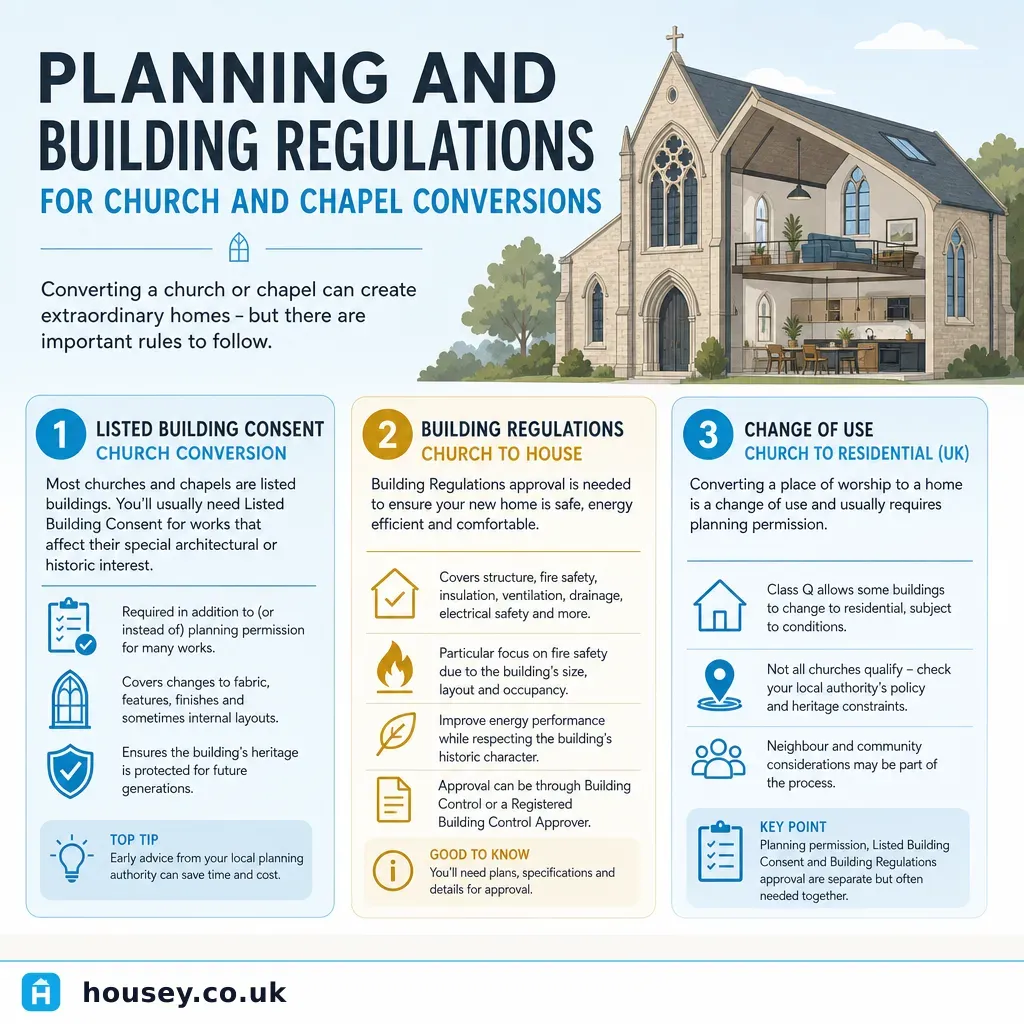
Planning and Building Regulations for Church and Chapel Conversions
Converting a church or chapel to residential use requires planning permission for change of use from Class F1 to Class C3, and listed building consent if the building is listed.
 Planning & Pre-Build
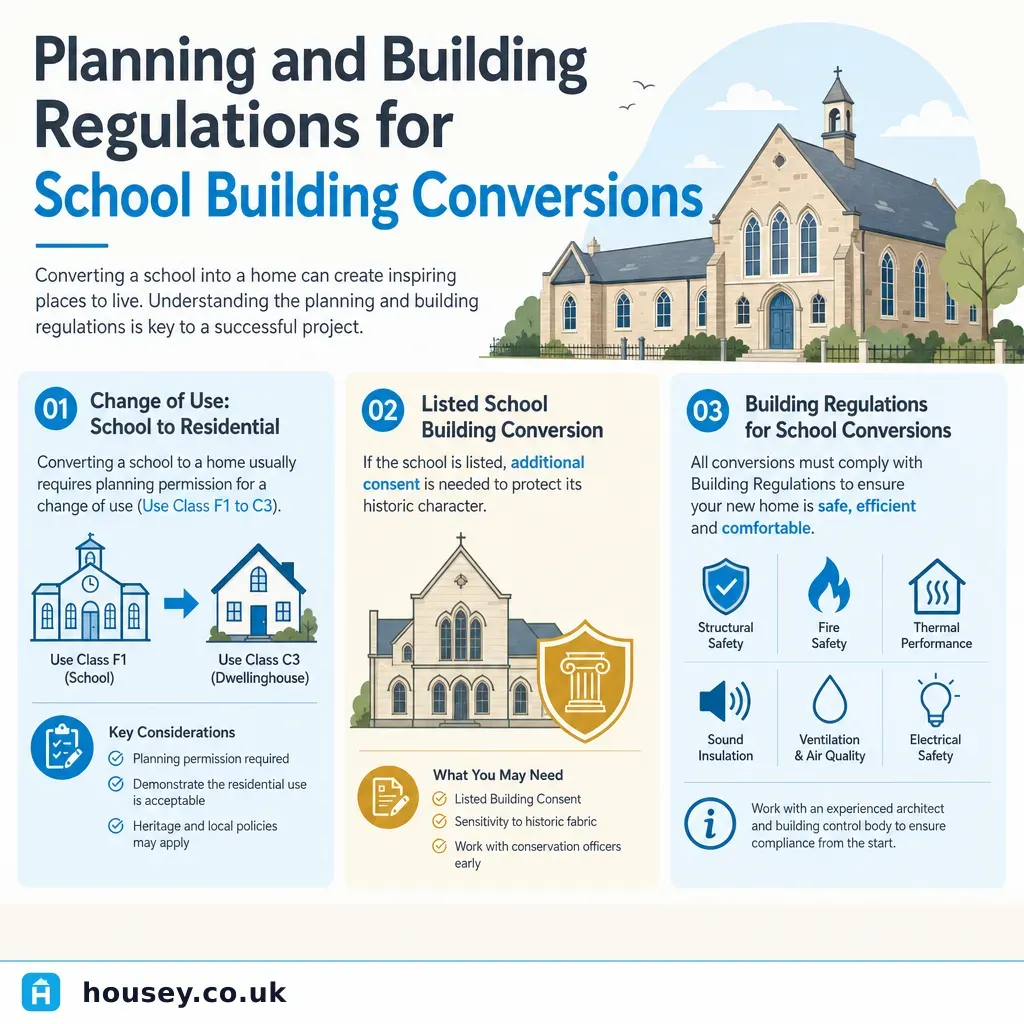
Planning and Building Regulations for School Building Conversions
Converting a school to residential use in England requires full planning permission — there is no permitted development right for this change of use.
 Planning & Pre-Build
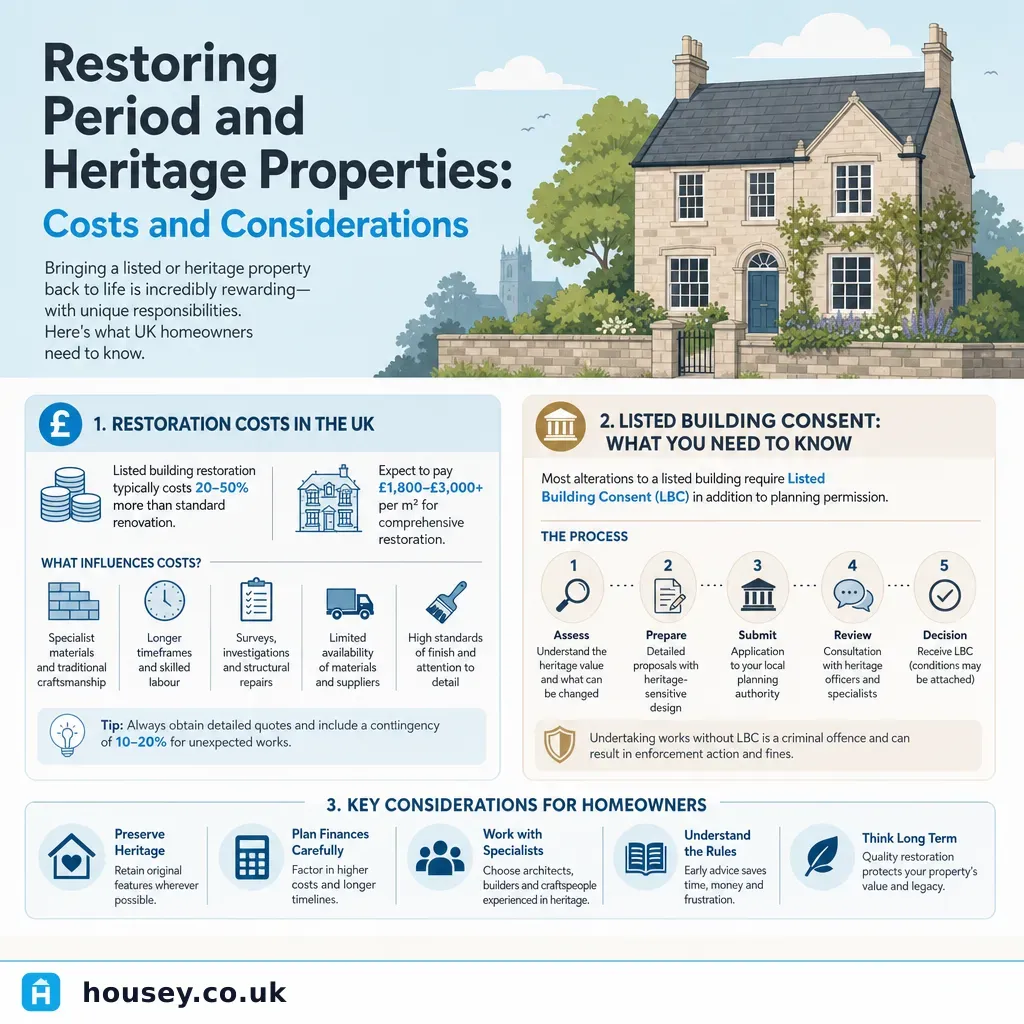
Restoring Period and Heritage Properties: Costs and Considerations
Restoring a period or heritage property requires listed building consent for most alterations, use of traditional materials such as lime mortar, and specialist contractors.
 Planning & Pre-Build
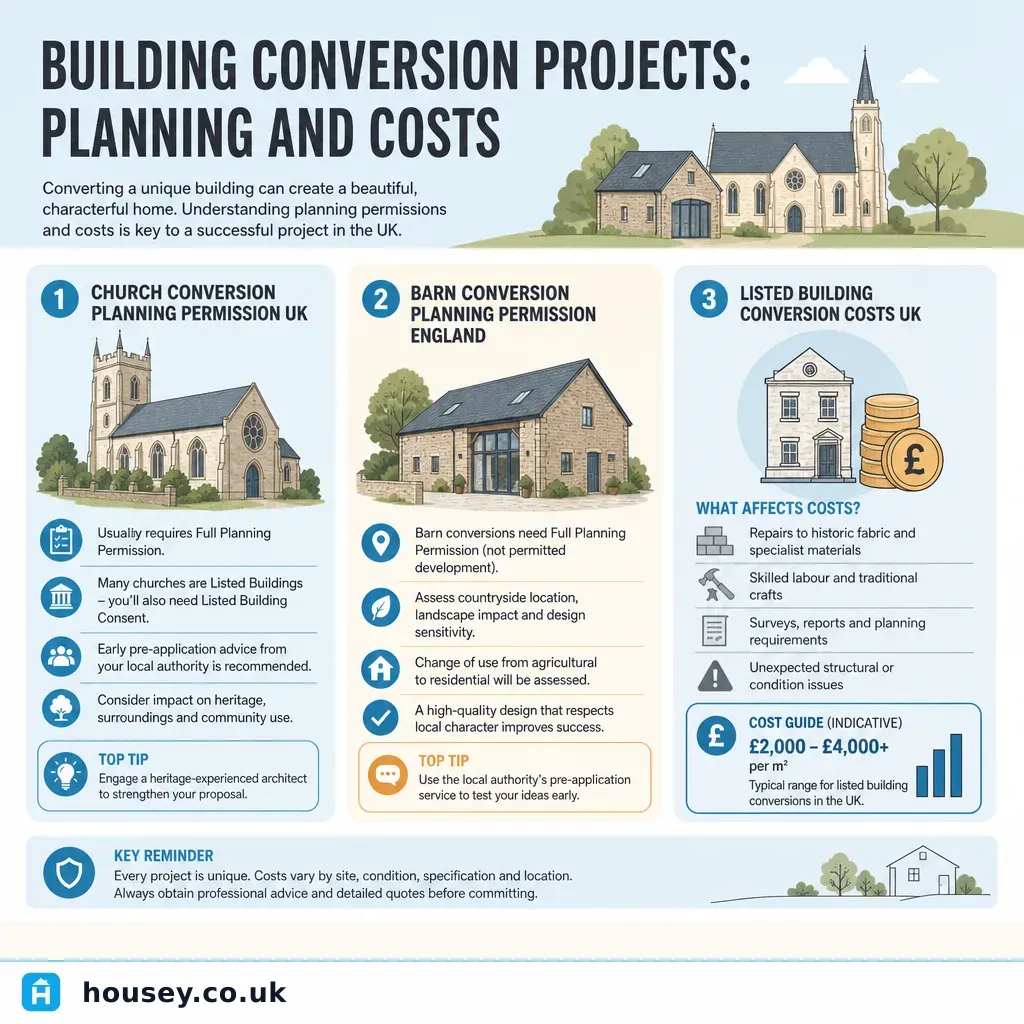
Building Conversion Projects: Planning and Costs
Converting a non-residential building in the UK — such as a barn, church, or commercial property — typically requires full planning permission and often Listed Building Consent.
 Planning & Pre-Build
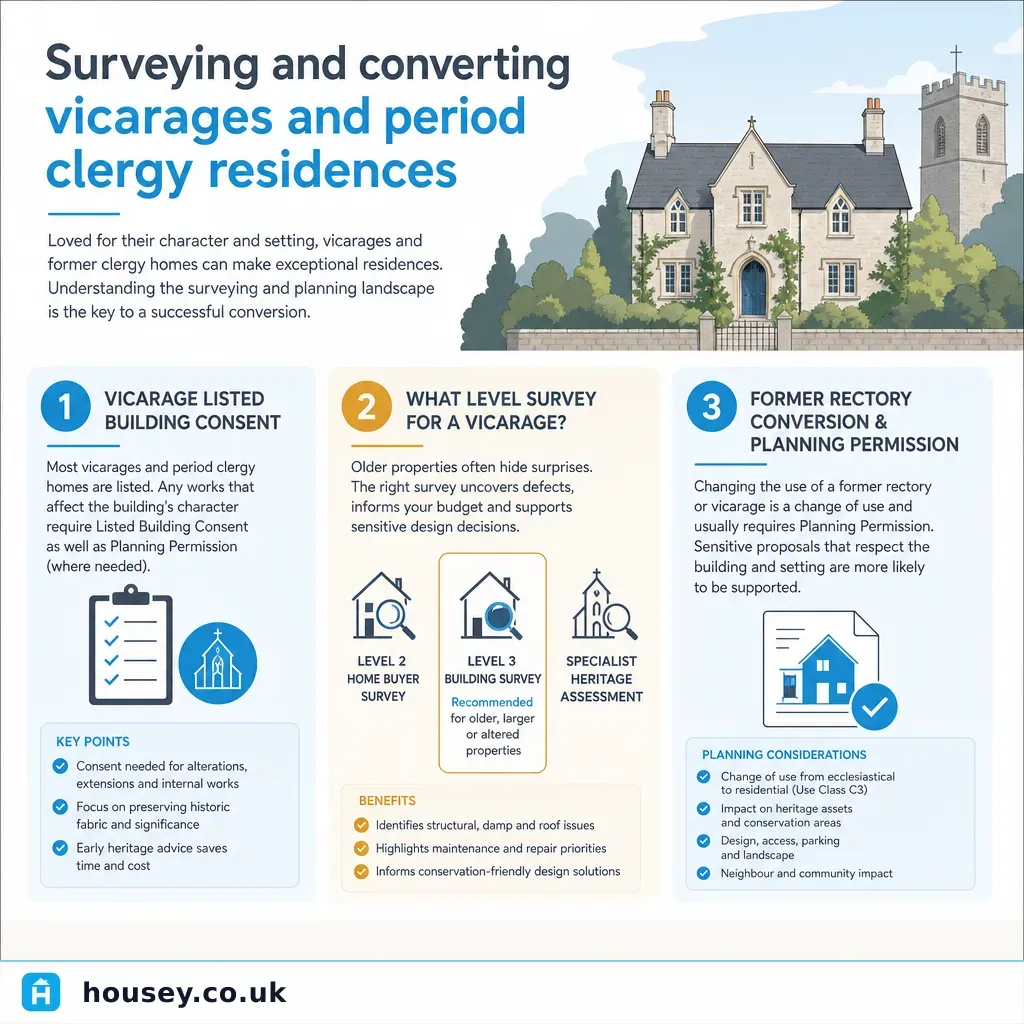
Surveying and converting vicarages and period clergy residences
Former vicarages are often listed buildings subject to full planning and Listed Building Consent rules once sold privately.