Kitchen Refurbishment and Installation Costs
By Housey · Last reviewed 7th of May 2026
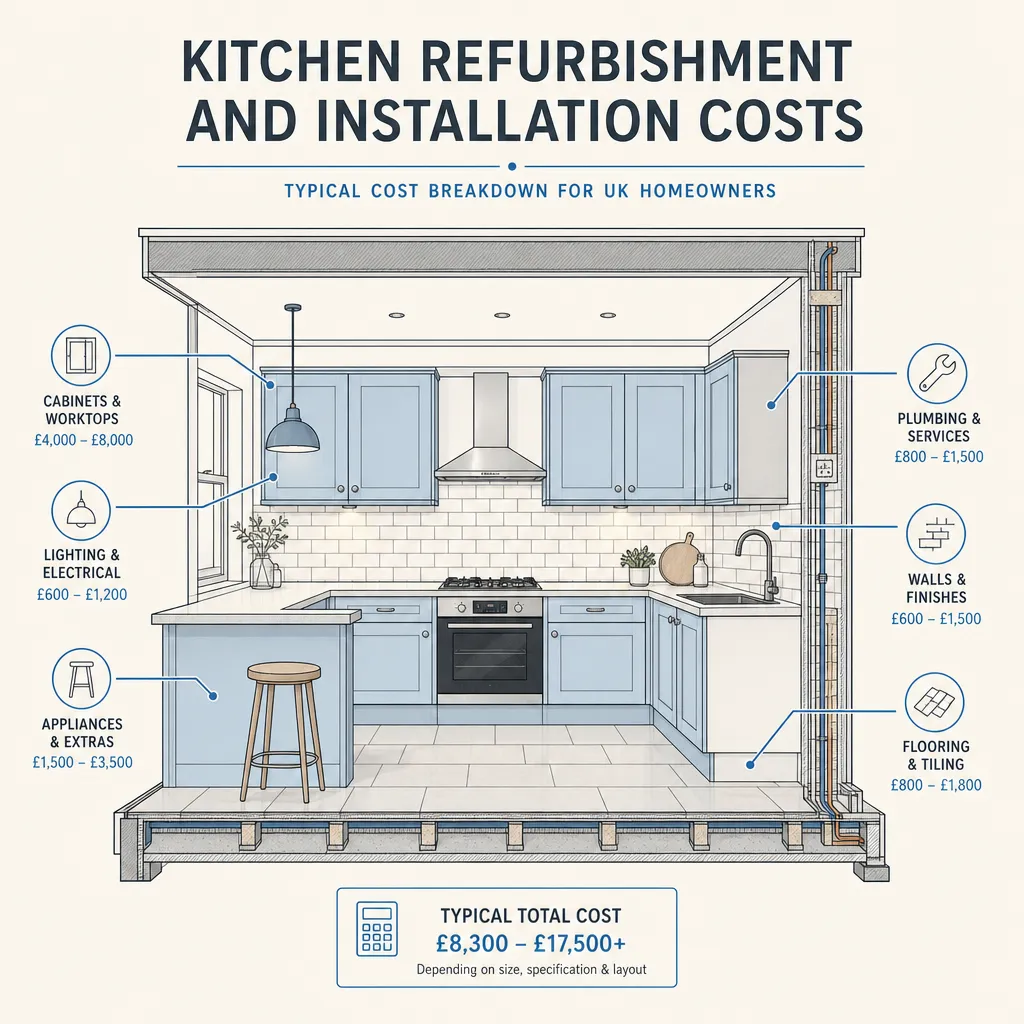
Kitchen Refurbishment and Installation Costs
A kitchen refurbishment is one of the most common home improvement projects in the UK, whether prompted by buying a new property, an ageing existing kitchen, or a change in how a household uses the space. Costs vary considerably depending on scope, unit quality, and who carries out the installation — making early cost planning essential before committing to any design or supplier.
Key points
- A mid-range kitchen supply and installation project in the UK typically costs £8,000–£20,000; budget schemes start from around £3,000–£5,000, while high-end bespoke kitchens routinely exceed £30,000–£40,000; indicative UK costs, last reviewed 2026-05-07.
- Any new or relocated electrical circuits in a kitchen must comply with Part P of the Building Regulations and be certified by a registered electrician (NICEIC, NAPIT, or an equivalent approved scheme member).
- Gas hob or cooker connections must be carried out by a Gas Safe registered engineer — this is a legal requirement, not an optional precaution.
- VAT at 20% applies to most kitchen supply and installation work; always confirm whether quotes are inclusive or exclusive of VAT before comparing them.
- Moving a kitchen to a different room or opening it into an adjacent space by removing a wall may require building regulations approval even where no planning permission is needed.
What does a kitchen refurbishment cost in the UK?
Kitchen costs in the UK break down into two broad areas: supply (units, worktops, appliances, taps, sinks, and accessories) and labour (fitting, plumbing, electrical work, tiling, plastering, and project management). Many quotes bundle these together; others price supply and fit separately, so comparing like for like matters before you decide.
Budget tier | What it typically includes | Approximate total cost |
|---|---|---|
Budget refresh | Flatpack units (e.g., IKEA, B&Q), laminate worktops, basic appliances, standard fitting | £3,000–£8,000 |
Mid-range refurbishment | Rigid units from a kitchen retailer, solid or composite worktops, integrated appliances, plumbing and electrical | £8,000–£20,000 |
Premium installation | Semi-bespoke or bespoke cabinetry, stone worktops, high-end appliances, designer taps and lighting | £20,000–£40,000 |
Full bespoke | Hand-painted in-frame cabinetry, fully custom layout, premium appliances, full project management | £40,000+ |
Indicative UK costs, last reviewed 2026-05-07. London and the south-east typically attract premiums of 15–30% over national averages. Obtain at least three written quotes before committing to any supplier or fitter.
What drives kitchen installation costs?
Unit quality and source. Flatpack units from volume retailers are significantly cheaper than rigid units from specialist kitchen retailers, and both differ substantially from bespoke joinery. The difference is not only aesthetic: rigid units are generally more durable and easier to install accurately in an existing space.
Worktop material. Laminate worktops are the most affordable option, typically £100–£300 for a full kitchen run. Solid wood, composite quartz, and granite options range from £500 to several thousand pounds once templating and cutting are factored in.
Appliances. Appliance costs range from a few hundred pounds for a budget freestanding range to £3,000 or more for a single integrated oven from a premium brand. A full integrated suite — fridge-freezer, dishwasher, oven, microwave, hob, and extractor — can add £2,000–£8,000 to the project total.
Plumbing and electrical scope. Keeping the sink in its existing location and using existing electrical positions keeps costs down considerably. Moving the sink requires new pipework; adding circuits for an island hob or extra sockets requires a qualified electrician and a Part P certificate.
Kitchen size and layout. A galley kitchen in a flat has far fewer units to supply and fit than a large open-plan kitchen-diner requiring an island and an extensive run of wall and base units. Linear meterage is a reasonable proxy for comparing like-for-like quotes from different fitters.
Removal and disposal. Stripping out an existing kitchen typically adds one to two days of labour plus skip hire or disposal costs. Some installers include this in their quote; others charge separately — always check before comparing prices.
Structural changes. Removing a wall to open a kitchen-diner requires building regulations approval and usually a structural engineer's design for a steel beam. This can add £2,000–£8,000 or more to the project depending on span and structural load.
Homeowner checklist: before you get kitchen quotes
Using this checklist before approaching fitters or kitchen retailers will save time and improve the accuracy of any quotes you receive:
What to ask before accepting a kitchen quote
- Is this quote for supply and fit, supply only, or fit only — and what is explicitly excluded from the scope?
- Who will carry out the electrical work, and are they registered with NICEIC, NAPIT, or an equivalent Part P approved scheme?
- Who will carry out any gas connections, and are they Gas Safe registered?
- Does the quote include removal and disposal of the existing kitchen?
- What is the lead time from order to installation start, and how many working days will the installation take?
- What warranty applies to the units, worktops, and appliances, and who handles warranty claims?
- What happens if tiles, flooring, or plasterwork behind existing units are damaged during strip-out?
- Is VAT included in the quoted price?
Red flags when choosing a kitchen fitter
- No mention of Part P registration or Gas Safe registration despite electrical or gas work being clearly in scope.
- A cash-only quote with no written specification or contract.
- A quote that appears very low but does not itemise removal, plastering, tiling, or electrical work — costs that will typically reappear as extras during the project.
- Pressure to commit immediately, or a discount presented as expiring the same day.
- No confirmed start date or written programme — "we will fit you in" with no contractual timeline.
When to get professional help
A like-for-like kitchen replacement in the same position with no structural changes is a relatively low-risk project. However, involve additional qualified professionals when:
- Walls are being removed or structural openings changed — a structural engineer's input is needed before any demolition takes place.
- New electrical circuits are being added — a registered electrician must carry out and certify this work under Part P of the Building Regulations.
- Gas supply is being moved or new gas appliances connected — Gas Safe registration is a legal requirement.
- Damp, rot, or mould is found behind or beneath existing units during strip-out — this warrants investigation and remediation before new units are installed.
How Housey can help
Whether you are planning a kitchen refit within an existing footprint or combining a kitchen renovation with a larger home improvement project, Housey can connect you with relevant specialists. For projects involving structural changes or extensions to the kitchen space, extension builders can advise on feasibility and cost early in the planning stage. For full design-led projects where you want a single point of responsibility from concept to completion, design-and-build firms offer integrated design, supply, and installation services.
Frequently asked questions
Is planning permission needed for a kitchen refurbishment?
In most cases, no. Replacing or upgrading a kitchen within its existing room does not require planning permission. If the work involves extending the building, converting another room, or altering a listed building, different rules apply. Listed buildings require listed building consent for any works that could affect their character. If in doubt, check with your local planning authority before work begins.
Do I need a qualified electrician or gas engineer for a kitchen refit?
Yes, for any regulated work. Adding or altering electrical circuits requires Part P Building Regulations compliance and must be carried out by a registered electrician (NICEIC, NAPIT, or equivalent) or notified through a local authority building control application. Gas connections — including hob installations — must be carried out by a Gas Safe registered engineer. Arranging unregistered work is illegal and creates a safety and insurance liability.
How long does a typical kitchen installation take?
A like-for-like kitchen replacement in an existing space typically takes three to seven working days for a standard family kitchen, assuming units are in stock and no structural or major plumbing changes are needed. Kitchens involving wall removal, new drainage runs, or bespoke units with longer lead times may take several weeks from order to project completion.
What is the difference between a kitchen fitter and a design-and-build company?
A kitchen fitter supplies labour to install units you have purchased separately, or fits a package from a specific retailer. A design-and-build company provides an end-to-end service: room measurement, CAD design, unit supply, installation, and usually associated trades including plumbing, electrical, and tiling. Design-and-build firms typically cost more but offer a single point of contact and responsibility, simplifying project management on larger or more complex refurbishments.
Sources and further reading
- Approved Document P: Electrical safety in dwellings — GOV.UK
- Gas Safe Register: Find a registered gas engineer — Gas Safe Register
- VAT on construction and building works — HMRC / GOV.UK
- NICEIC: Find a registered electrician — NICEIC
- Getting work done on your home — Citizens Advice
Useful next reads
 Improvement & Build
Small kitchen renovation: budgeting for costs and planning your project
A small kitchen renovation in the UK typically costs £5,000–£15,000 for a full refresh including new units, worktops, tiling, and appliances, though costs vary widely by specification, region, and whether structural changes or rewiring are involved.
 Improvement & Build
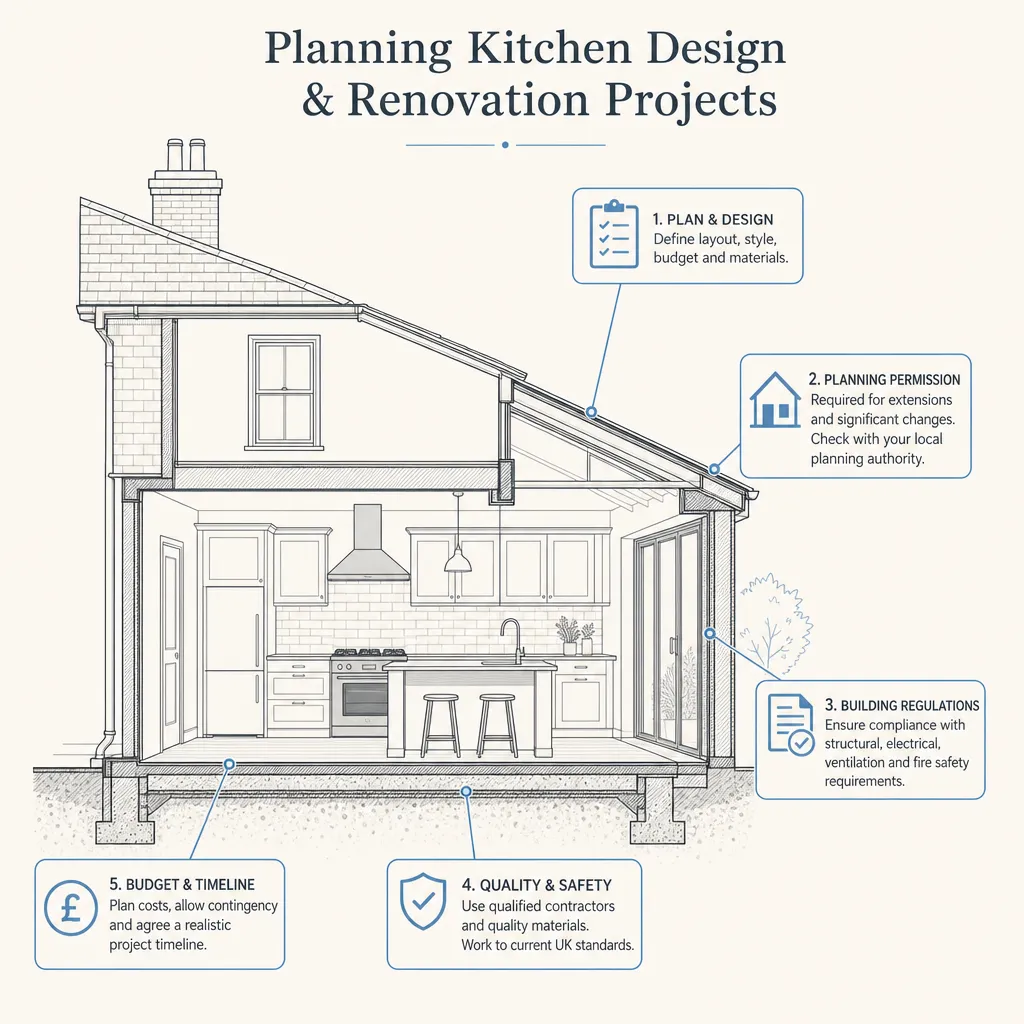
Planning kitchen design and renovation projects
Planning a kitchen renovation in the UK typically involves choosing a layout, setting a budget, deciding which contractors you need, and understanding which regulations apply.
 Improvement & Build
Window Replacement Cost Calculator and Pricing Guide
Replacing a standard uPVC double-glazed casement window in the UK typically costs £400–£800 supply and fit.
 Improvement & Build
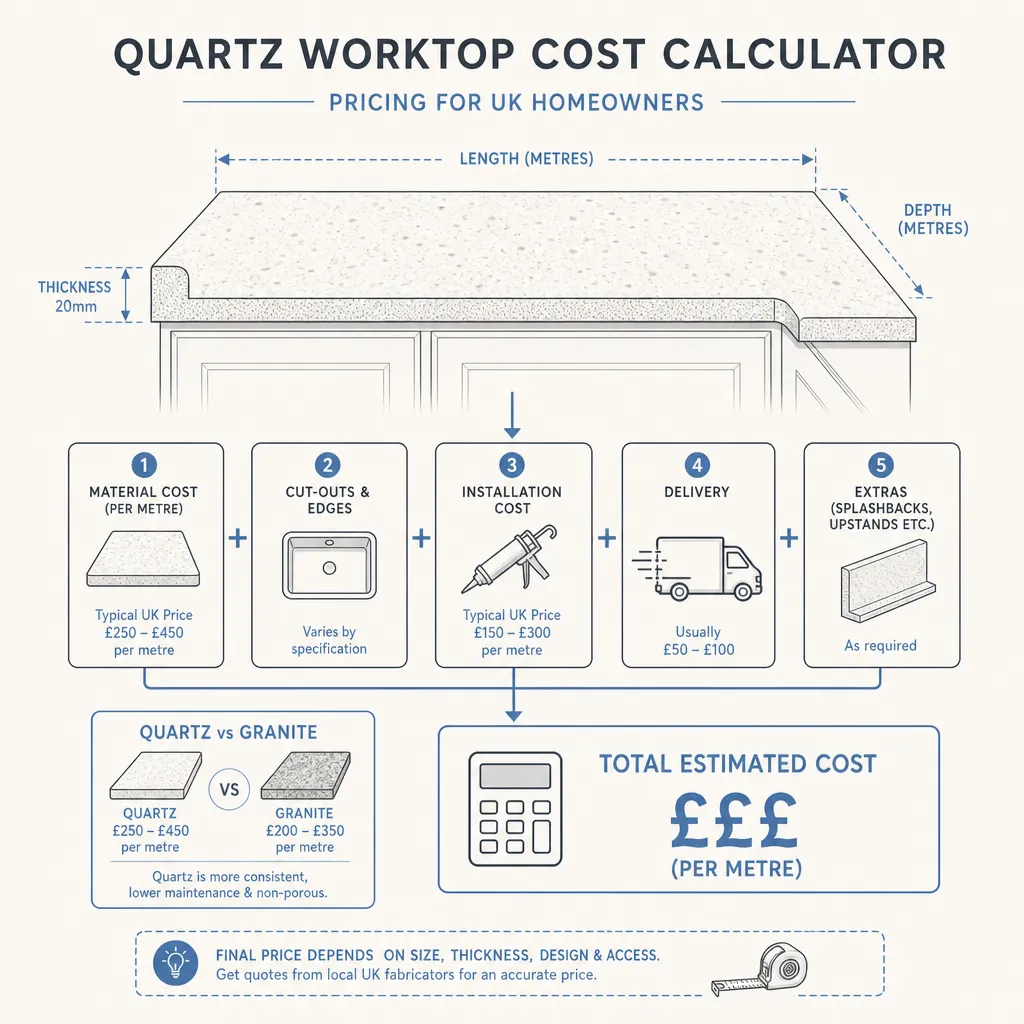
Quartz Worktop Cost Calculator and Pricing
Quartz worktops in the UK typically cost £250–£600 per linear metre for supply and professional installation, putting a standard 4–5 metre kitchen at £1,000–£3,000.
 Improvement & Build
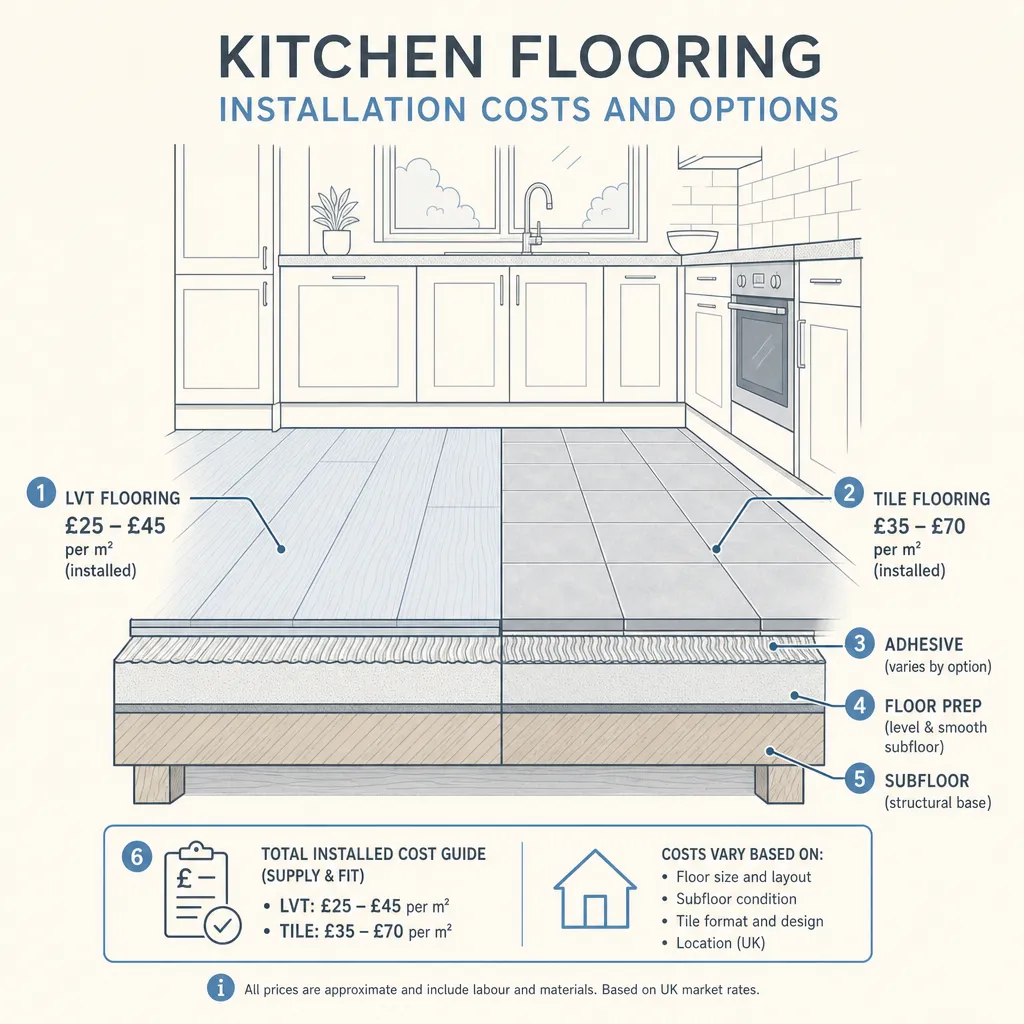
Kitchen Flooring Installation Costs and Options
Kitchen flooring in the UK typically costs £15–£100+ per m² installed, depending on material and subfloor condition.