Renovation Investment Strategy: Assessing Properties Before You Buy
By Housey · Last reviewed 17th of May 2026
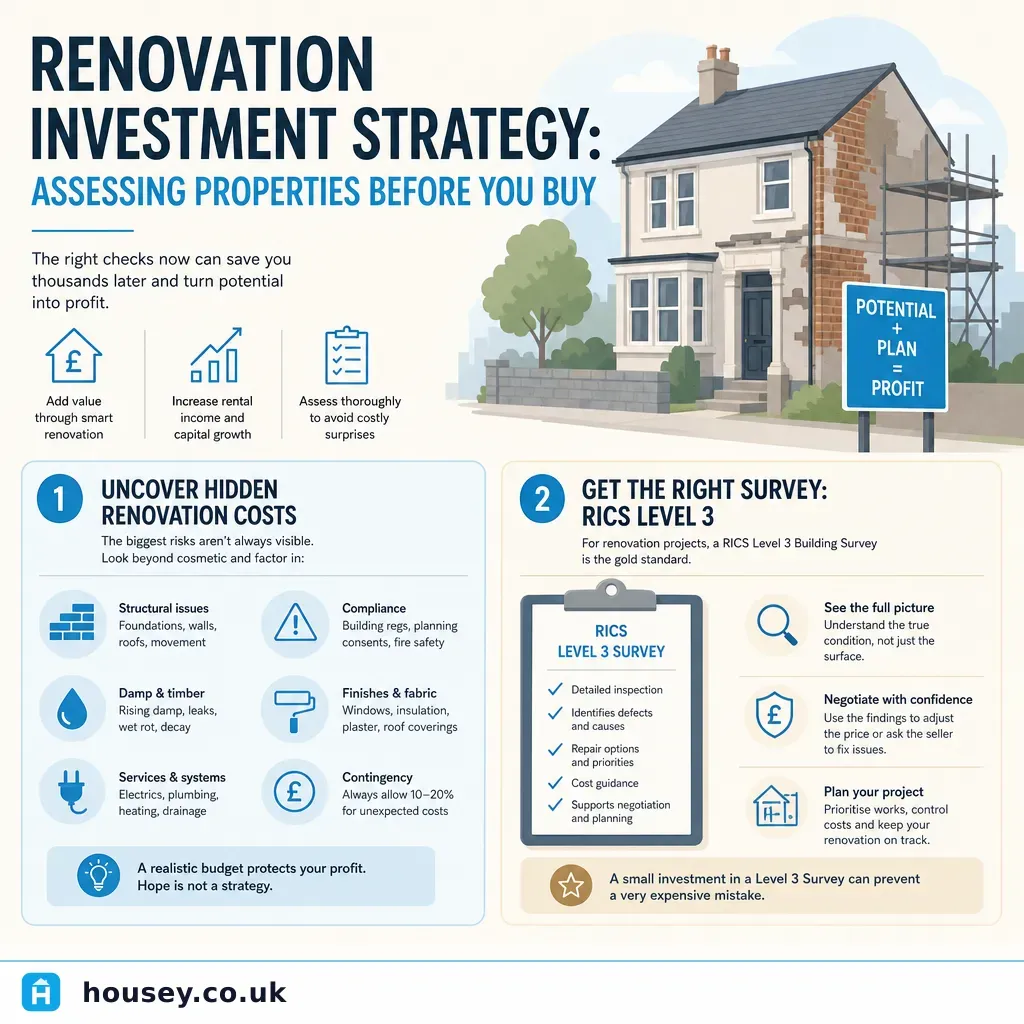
Renovation Investment Strategy: Assessing Properties Before You Buy
Purchasing a UK property specifically to renovate — whether as a primary residence, buy-to-let, or development project — demands a more rigorous due diligence process than a standard home purchase. Renovation costs, hidden defects, planning constraints, and building regulations can each erode projected returns significantly, and some problems only become visible once walls are opened or floors are lifted. Getting the assessment right before exchange is where renovation projects are won or lost.
Key points
- A RICS Level 3 Building Survey is the appropriate survey for most renovation-target properties — it identifies defects and may include indicative remedial cost guidance.
- Hidden costs in older UK properties commonly include damp-proof course failures, asbestos-containing materials (ACMs) in pre-1999 buildings, lead pipework, and deteriorated roof timbers.
- Permitted development rights for extensions and loft conversions are subject to conditions including height, eaves height, and cumulative floor area — check with your local planning authority before exchange.
- Building Regulations approval (a separate process from planning permission) is required for most structural work, extensions, rewiring, and plumbing alterations.
- For renovation properties requiring energy-efficiency improvement, Part L of the Building Regulations and PAS 2035 retrofit standards may impose requirements on the scope of works.
Why renovation properties need a different assessment approach
A standard home purchase typically uses a RICS Level 2 Home Survey — suitable for a post-war property in reasonable condition. A renovation investment property is precisely the type Level 2 surveys are not designed for: older, potentially altered, distressed, and carrying hidden defects that directly affect the cost plan.
The gap between a Level 2 and a Level 3 Building Survey matters here because it is also the gap between a condition rating and actionable repair cost guidance. For renovation planning, you need to know not just that a defect exists, but roughly what it will cost to resolve and whether specialist investigations — structural engineer, damp specialist, asbestos surveyor — are warranted before you commit.
Comparing property types by renovation risk and opportunity
Property type | Typical renovation scope | Common hidden risks | Permitted development available? | Likely survey choice |
|---|---|---|---|---|
Victorian terrace (pre-1919) | Full rewire, plumbing, insulation, damp treatment | ACMs, lead pipes, solid-wall heat loss, subsidence risk | Usually yes, but check for Article 4 directions | RICS Level 3 |
1930s semi-detached | Kitchen and bathroom, rewire, roof works, possible extension | Japanese knotweed, cavity wall tie failure | Usually yes for single-storey rear extension | RICS Level 3 |
Post-war bungalow | Loft conversion potential, insulation, windows | Asbestos roof or ceiling tiles, concrete floor damp | Usually yes for loft, check height restrictions | RICS Level 3 |
Purpose-built leasehold flat | Internal fit-out, bathroom, kitchen | Service charge obligations, freeholder consent for structural works | Usually no permitted development | RICS Level 2 or 3 depending on age |
Former commercial conversion | Full conversion, planning condition compliance | Industrial contamination, change-of-use obligations | Planning permission usually required | RICS Level 3 plus environmental survey |
Red flags that should affect your offer or decision
Before exchange, the following findings should prompt either a price renegotiation, specialist investigation, or withdrawal:
- Structural movement: stepped cracks in brickwork, bulging walls, or differential settlement. Ask a structural engineer to assess before committing.
- Active damp penetration: rising damp, penetrating damp, or condensation-driven mould that appears to have been recently obscured or painted over.
- Asbestos-containing materials: present in most UK residential buildings constructed before 1999. A Refurbishment and Demolition Survey is required before any intrusive work on affected materials — do not disturb suspected ACMs yourself.
- Japanese knotweed: found within 7 metres of the boundary — lenders may decline to advance, and specialist removal costs can be significant.
- Flat roofs over primary structure: many flat roofs in UK residential stock are approaching or beyond typical service life. Budget for full replacement rather than patching.
- Unauthorised works by previous owners: extensions or loft conversions without building regulations completion certificates. Retrospective indemnity insurance is available but does not eliminate enforcement risk.
- Title issues: restrictive covenants limiting use, absent rights of way, or road adoption not completed.
Building a realistic renovation cost plan before exchange
A cost plan prepared before exchange — even an indicative one — is more useful than discovering the budget gap after you are committed.
What to obtain before making an offer:
- A RICS Level 3 Building Survey with indicative repair costs where the surveyor is able to provide them
- A damp and timber survey where the Level 3 identifies moisture ingress, woodworm, or rot risk
- An asbestos management survey for any pre-1999 property where invasive works are planned
- A structural engineer's report if the survey identifies movement or unusual foundation conditions
- Informal quotes from two or three contractors to validate the surveyor's cost estimates
- Planning pre-application advice from the local authority if the renovation includes extensions beyond permitted development thresholds, listed building works, or change of use
What not to assume:
- That a property with planning permission for an extension also has building regulations approval — these are entirely separate processes.
- That a loft conversion by a previous owner meets current Building Regulations Part B (fire safety) — only a completion certificate from the local building control body or an approved inspector confirms this.
- That permitted development rights apply if the property is in a conservation area, an Area of Outstanding Natural Beauty (AONB), or subject to an Article 4 direction removing those rights.
- That renovation costs will stay within the surveyor's indicative range — budget a 15–20% contingency on projects where hidden defects are likely.
Setting your maximum purchase price
For investment buyers, the maximum purchase price is typically derived from:
- End value (Gross Development Value) — your realistic estimate of the completed property's market value
- Less total renovation costs — survey-informed cost plan plus 15–20% contingency
- Less transaction costs — stamp duty land tax (SDLT), legal fees, survey fees, and any bridging or development finance arrangement fees
- Less your required profit margin or target equity position
This calculation should be prepared before you view, not after you fall in love with a property. A written maximum offer figure grounded in professional assessments rather than optimism is the most effective risk-management tool available to a renovation investor.
When to get professional help
Instruct a RICS surveyor and solicitor before making any offer on a renovation-target property. Seek specific specialist advice when:
- Any crack, settlement, or movement is visible in external walls or at structural junctions
- The property was built or extended before 1999 and you plan invasive works
- The property is listed, in a conservation area, or subject to planning conditions from a prior use
- You are unsure whether previous alterations received building regulations completion certificates
- The Land Registry title contains restrictions, covenants, or easements you do not fully understand
How Housey can help
Housey connects renovation buyers with the right professionals at each assessment stage. Start with a structural survey from a RICS-registered surveyor to understand the property's true condition, or commission a specific defect survey if a particular issue needs diagnosis before you commit. For moisture and timber risks, a damp and timber survey provides specialist assessment. Once works are under way, a project manager can coordinate contractors, manage the programme, and protect your budget.
Frequently asked questions
Do I need a survey before buying a renovation property at auction?
Yes — and you need it before the auction, not after. Contracts exchange when the hammer falls. A RICS Level 3 Building Survey should be arranged as soon as the lot is identified and access confirmed through the auctioneer. Without a pre-auction survey, you are committing to a legally binding purchase with no knowledge of the property's condition or what remedial works will cost.
Can I claim renovation costs against tax on a buy-to-let property?
Tax treatment depends on whether costs are classified as revenue expenditure or capital expenditure — HMRC distinguishes between the two, and rules changed significantly in 2016 for buy-to-let financing costs. Always consult an accountant or tax adviser with residential property investment experience before finalising your renovation budget or structuring your ownership.
How much contingency should I allow on a renovation project?
For properties with visible defects or pre-1919 construction, a contingency of 15–20% on top of the estimated build cost is prudent. For heavily distressed or structurally compromised properties, experienced developers often allow up to 25–30%. Build the contingency into your budget from the outset — not as an afterthought once costs have already run over.
What is an Article 4 direction and does it affect my renovation plans?
An Article 4 direction is a local planning authority order removing specific permitted development rights in a defined area — commonly applied in conservation areas, HMO zones, and areas of recognised heritage character. Check with your local planning authority or search the Planning Portal before assuming permitted development applies to your intended works.
Sources and further reading
- Planning Portal: permitted development for householders — Planning Portal
- Building Regulations Approved Documents — GOV.UK
- RICS Home Survey Standard — RICS
- Asbestos in properties — Health and Safety Executive
- Income from property — HMRC
Useful next reads
 Improvement & Build
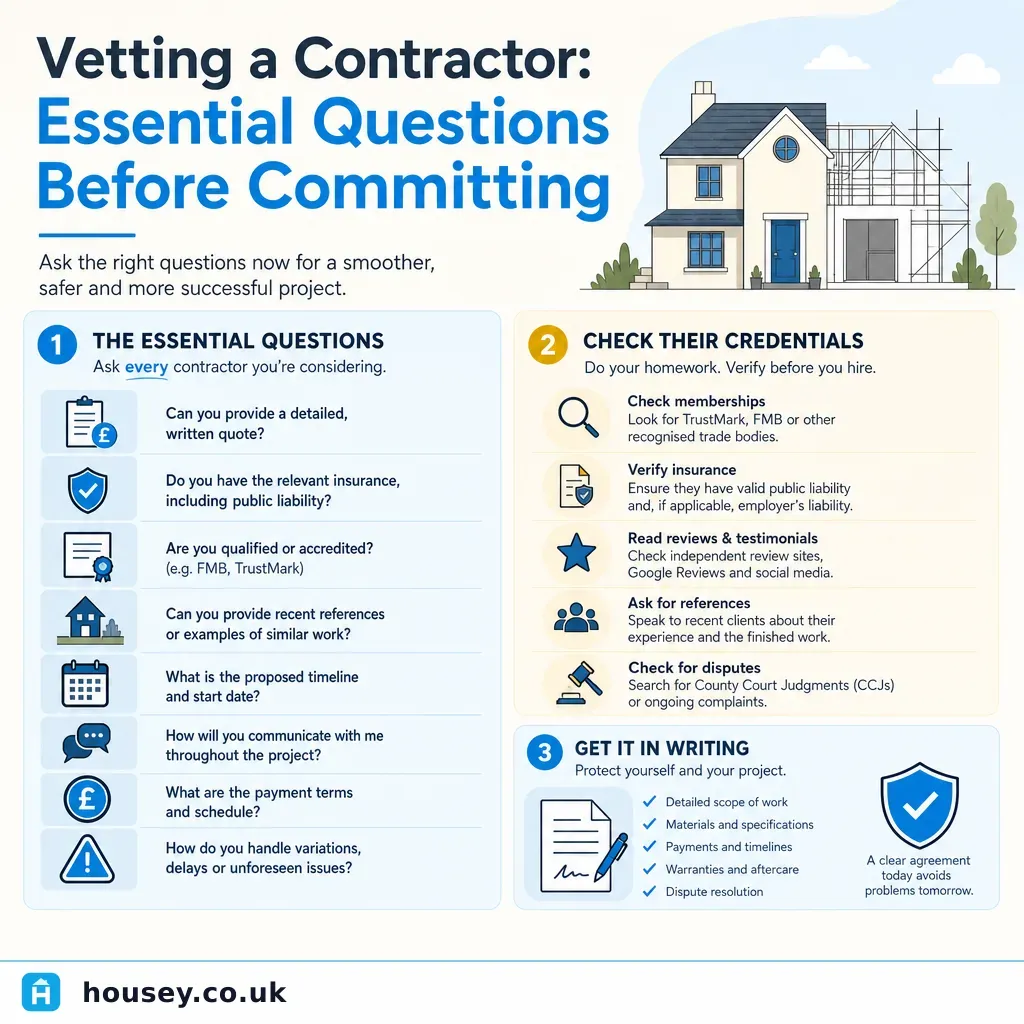
Vetting a Contractor: Essential Questions Before Committing
Vet a contractor by checking their full business name on Companies House, requesting current insurance certificates, verifying trade body membership directly with the association, and speaking to references from comparable recent jobs.
 Improvement & Build
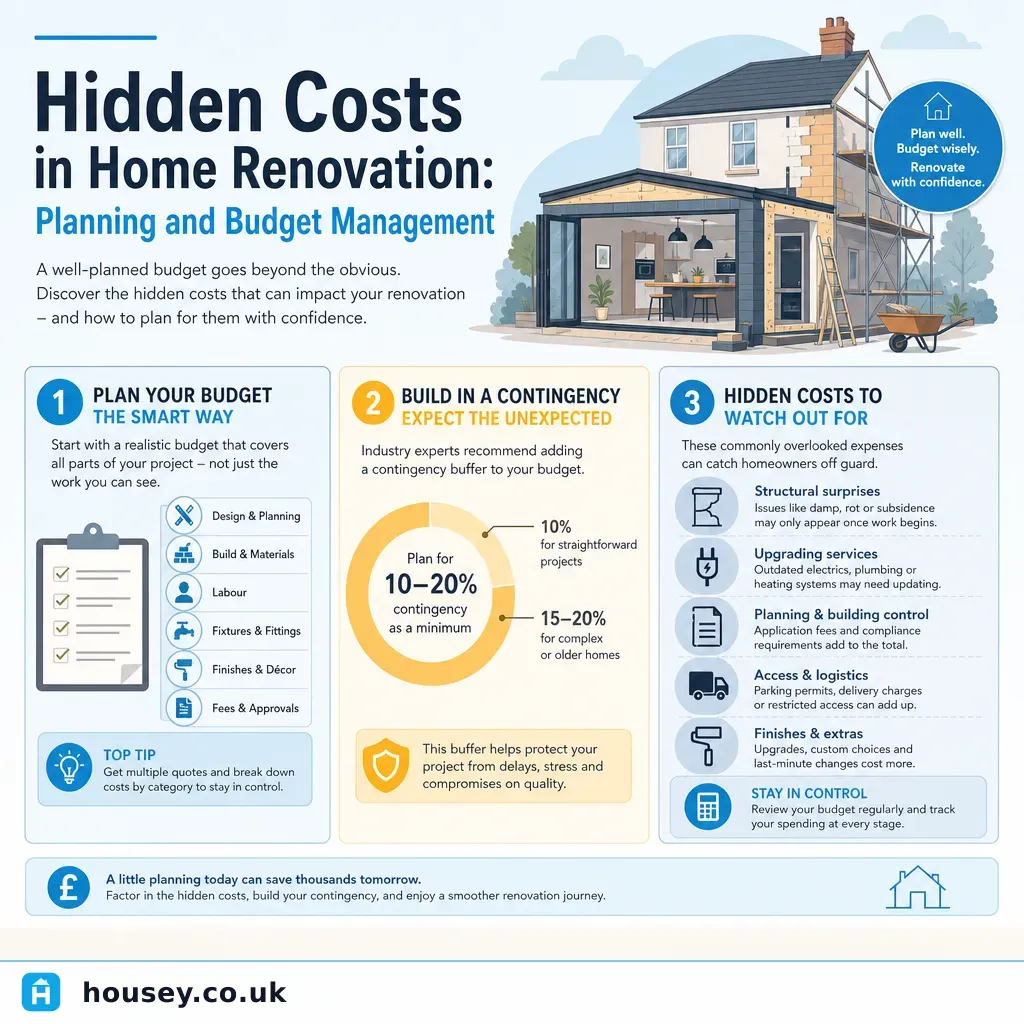
Hidden Costs in Home Renovation: Planning and Budget Management
Most UK renovation projects run 10–20% over the initial builder quote because professional fees, VAT, statutory fees, and party wall costs are routinely excluded from early estimates.
 Improvement & Build
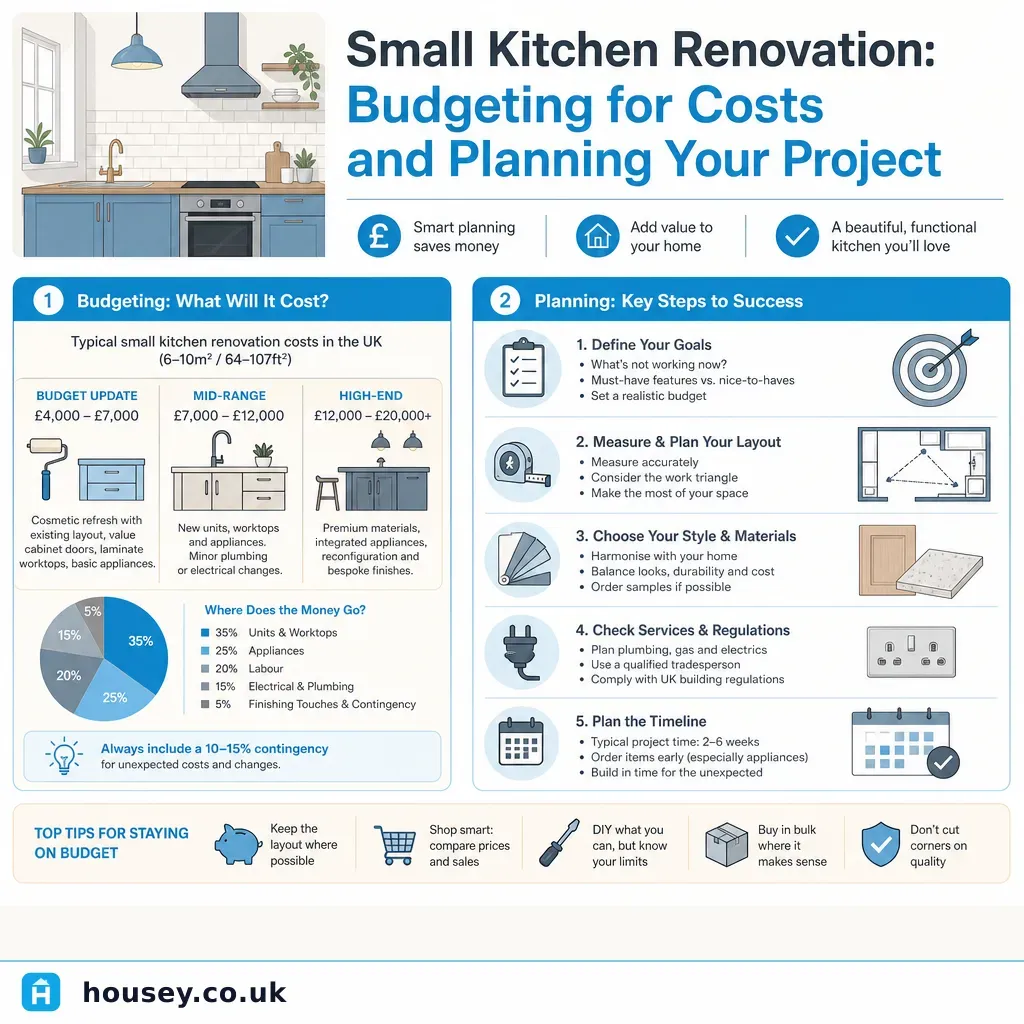
Small kitchen renovation: budgeting for costs and planning your project
A small kitchen renovation in the UK typically costs £5,000–£15,000 for a full refresh including new units, worktops, tiling, and appliances, though costs vary widely by specification, region, and whether structural changes or rewiring are involved.
 Improvement & Build
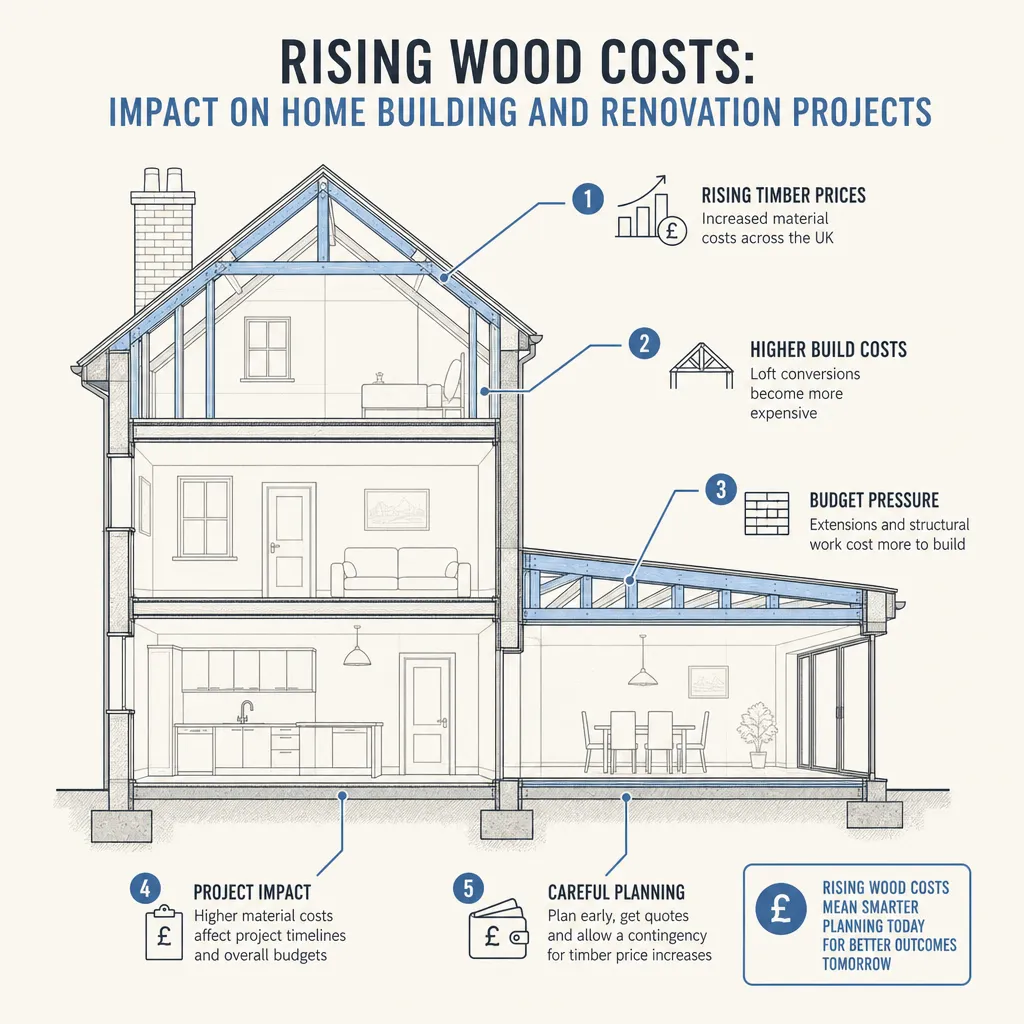
Rising Wood Costs: Impact on Home Building and Renovation Projects
Rising timber prices affect UK home renovation budgets most on timber-frame extensions, loft conversions, and self-builds, where structural wood can account for 15–25% of material costs.
 Improvement & Build
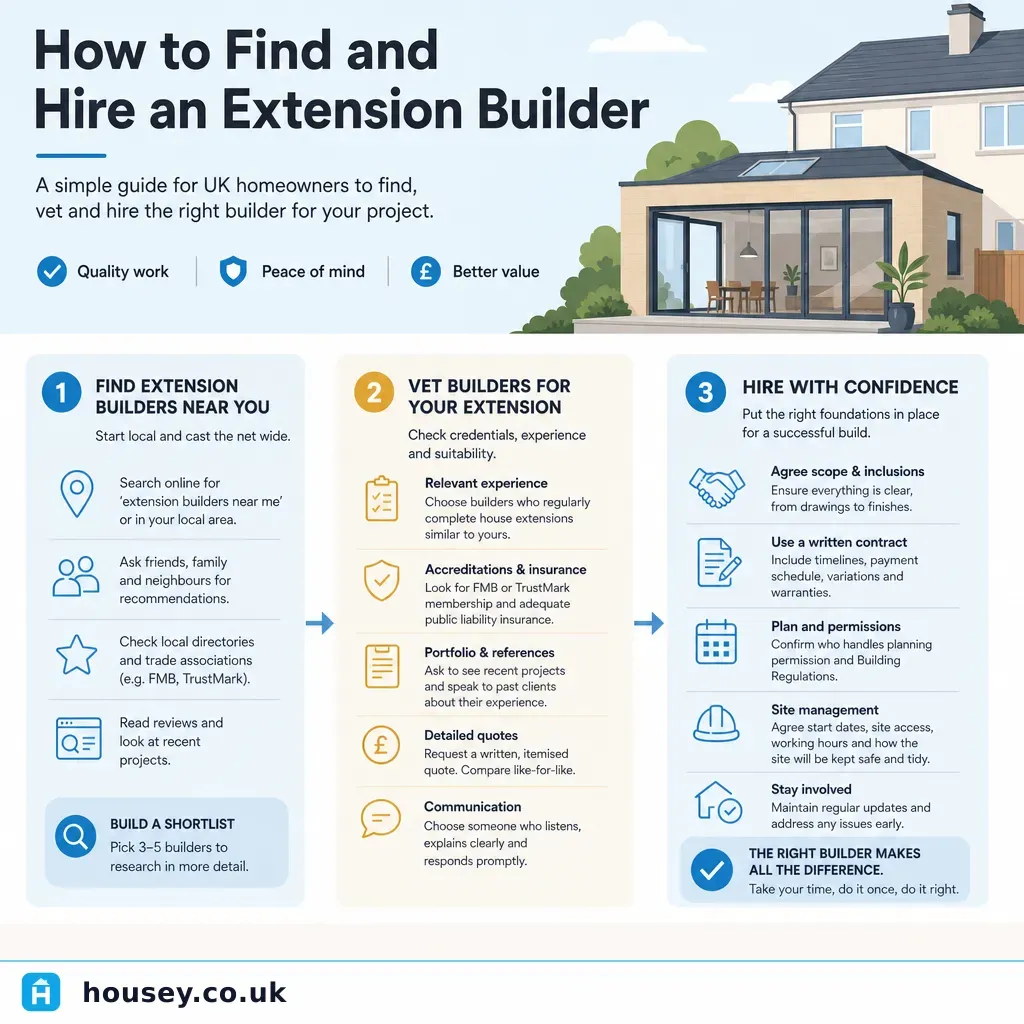
How to Find and Hire an Extension Builder
To hire a reliable extension builder, get at least three detailed written quotes from contractors with documented experience of similar projects.