Vinyl Flooring Repair and Replacement Costs
By Housey · Last reviewed 11th of May 2026
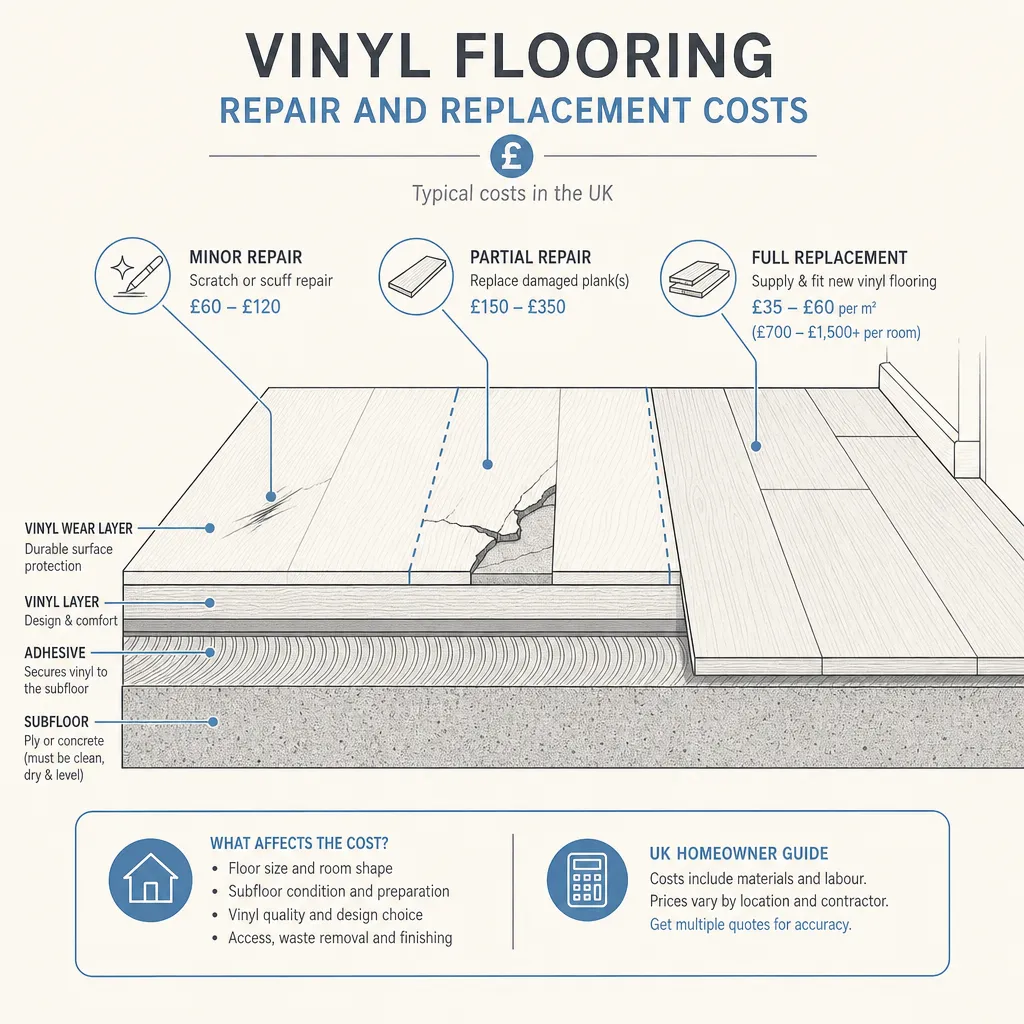
Vinyl Flooring Repair and Replacement Costs
Vinyl flooring has become one of the most popular hard-floor choices in UK homes, particularly with the rise of luxury vinyl tile (LVT) products that mimic stone and timber at a fraction of the cost. When damage occurs — from a dropped knife, a furniture leg, or years of heavy foot traffic — homeowners face a choice between a targeted repair and a full replacement, and the right answer depends heavily on how the floor was originally installed.
Key points
- Full vinyl flooring replacement typically costs £15–£35 per m² for LVT materials plus £10–£25 per m² in labour, giving a fully installed price of £25–£60 per m² (indicative UK costs, last reviewed 2026-05-11).
- Sheet vinyl is cheaper to buy (£5–£15 per m²) but harder to repair invisibly; LVT planks or tiles allow individual plank replacement if the colour is still available from the original supplier.
- Subfloor preparation — levelling, screeding, or replacing damaged boards — can add £10–£30 per m² and is the most common hidden cost in quotes.
- Click-lock LVT that has been glued down cannot be repaired plank-by-plank without removing a large section; always check the installation method before requesting a repair quote.
- Most vinyl floor repairs are not covered by standard home insurance unless damage was caused by a sudden insured event such as a burst pipe; check your policy schedule before making a claim.
What does vinyl flooring repair or replacement cost?
Costs vary depending on whether you need a localised repair or a full room re-floor.
Small repairs
Repair type | Typical UK cost | Notes |
|---|---|---|
Patch repair (single tile or plank) | £50–£150 | Colour match can be difficult on older floors |
Seam or edge lift repair | £40–£100 | Common in sheet vinyl; adhesive-based fix |
Burn or gouge repair | £80–£200 | May require section replacement rather than filling |
Subfloor dip or hollow repair | £100–£300+ | Depends on size and underlying cause |
Indicative UK costs, last reviewed 2026-05-11. Quotes vary significantly by region, material, and access.
Full replacement
A complete re-floor involves removing the old vinyl, preparing the subfloor, and installing new material.
Product type | Material cost per m² | Installed cost per m² | Typical 15 m² room |
|---|---|---|---|
Budget sheet vinyl | £5–£12 | £20–£35 | £300–£525 |
Mid-range LVT (click-lock) | £15–£25 | £30–£50 | £450–£750 |
Premium LVT (stone or timber look) | £25–£40 | £40–£65 | £600–£975 |
Rigid core or SPC vinyl | £20–£35 | £35–£60 | £525–£900 |
Indicative UK costs, last reviewed 2026-05-11. Costs are based on typical industry installer rates; quotes vary by region and subfloor condition.
What drives the cost of vinyl flooring?
Subfloor condition is the biggest variable. An uneven concrete slab may need self-levelling compound, typically costing £10–£20 per m² extra. Old floorboards may need securing or replacing before any new floor goes down.
Room size and shape matter because awkward alcoves, bay windows, and en suites require more cuts and generate more waste, increasing both material and labour costs. Tradespeople often quote a minimum call-out charge — typically £150–£300 — regardless of room size.
Removal of the old floor adds cost, usually £3–£8 per m² for a simple vinyl lift and dispose. Some tradespeople include this in their quote; others price it separately.
Underlay may be required for some click-lock LVT products, adding £2–£6 per m².
Location affects labour rates substantially. London and the South East typically run 20–40% above Midlands or Northern England rates.
LVT planks vs sheet vinyl: which is easier to repair?
One of the most important decisions for long-term maintainability is product format.
Feature | LVT planks or tiles | Sheet vinyl |
|---|---|---|
Individual plank repair | Possible if colour still available | Not practical — patch is visible |
Waterproofness | Full if joints are sealed | Full (seamless) |
Comfort underfoot | Good, especially with attached underlay | Slightly softer feel |
Typical longevity | 15–25 years (good quality) | 10–15 years |
Cost to replace one room | Higher | Lower |
Best suited to | Kitchens, hallways, living areas | Bathrooms, utility rooms |
When should you repair rather than replace?
Choose repair if:
- Damage is confined to one or two tiles or planks.
- The floor is less than five years old.
- Matching material is still available from the original supplier.
- The surrounding floor is in good condition.
Choose replacement if:
- The floor is more than 10–12 years old with widespread wear.
- The subfloor has developed movement, damp, or unevenness.
- You cannot source matching material for a repair.
- Sheet vinyl has multiple lifting seams or large bubbles.
Red flags when getting vinyl flooring quotes
- A quote with no mention of subfloor inspection or preparation — this is the most common cause of cost surprises after work starts.
- No clear split between materials and labour — ask for these separately so you can compare like for like.
- Very low per-m² prices that do not include removal, disposal, or underlay.
- No clarification of which adhesion method will be used (glue-down vs click-lock) — this affects future repairability.
- Pressure to decide before you can obtain a second quote.
Homeowner checklist before getting vinyl flooring quotes
When to get professional help
Most vinyl flooring installation is straightforward for an experienced fitter, but certain situations warrant professional assessment before work begins:
- If you suspect moisture in a concrete subfloor, a professional should carry out a relative humidity (RH) test before any impermeable covering is installed, as trapped moisture can cause adhesive failure and mould growth.
- If the subfloor shows significant movement, soft patches in timber floors, or signs of structural defect, a builder or structural engineer should inspect before a floor is laid.
- If you are laying vinyl above an unheated space such as a garage, thermal performance and vapour control should be considered with a qualified installer.
How Housey can help
Housey connects UK homeowners with vetted local flooring specialists who can assess your subfloor, recommend the right product, and provide itemised written quotes. Use Housey to compare tradespeople in your area without the pressure of cold calls or unvetted referrals.
Frequently asked questions
Can vinyl flooring be repaired without replacing the whole floor?
Yes, provided the damage is limited in area and you can source matching material. Click-lock LVT is the most repairable format — individual planks can be removed and swapped if the same product is still in production. Sheet vinyl is effectively impossible to repair invisibly and is usually better replaced in sections or fully.
How long does vinyl flooring last?
Quality LVT typically lasts 15–25 years with normal use. Budget sheet vinyl may show wear after 8–12 years, particularly in high-traffic areas such as hallways and kitchens. Manufacturer warranties of 10–25 years are common on mid- to high-end products.
Is vinyl flooring suitable for underfloor heating?
Many LVT products are compatible with both electric and water-fed underfloor heating systems, but you must check the manufacturer's thermal resistance specification. A maximum floor surface temperature of 27°C is a common limit. Always follow the manufacturer's guidance and, for water-fed systems, consult a qualified heating engineer.
Does vinyl flooring add value to a home?
A fresh, well-fitted vinyl floor generally improves a property's presentation, particularly in kitchens and bathrooms. It is unlikely to add measurable surveyor value in the same way a kitchen extension might, but poor or damaged flooring can create a negative impression at viewings.
Sources and further reading
- Contract Flooring Association (CFA) — trade body for UK flooring installers; guidance on installation standards and finding accredited installers
- VAT on construction and building services — GOV.UK guidance on VAT rules for installation work
- Flooring buying guide — Which? consumer comparison of flooring types and products
Useful next reads
 Improvement & Build
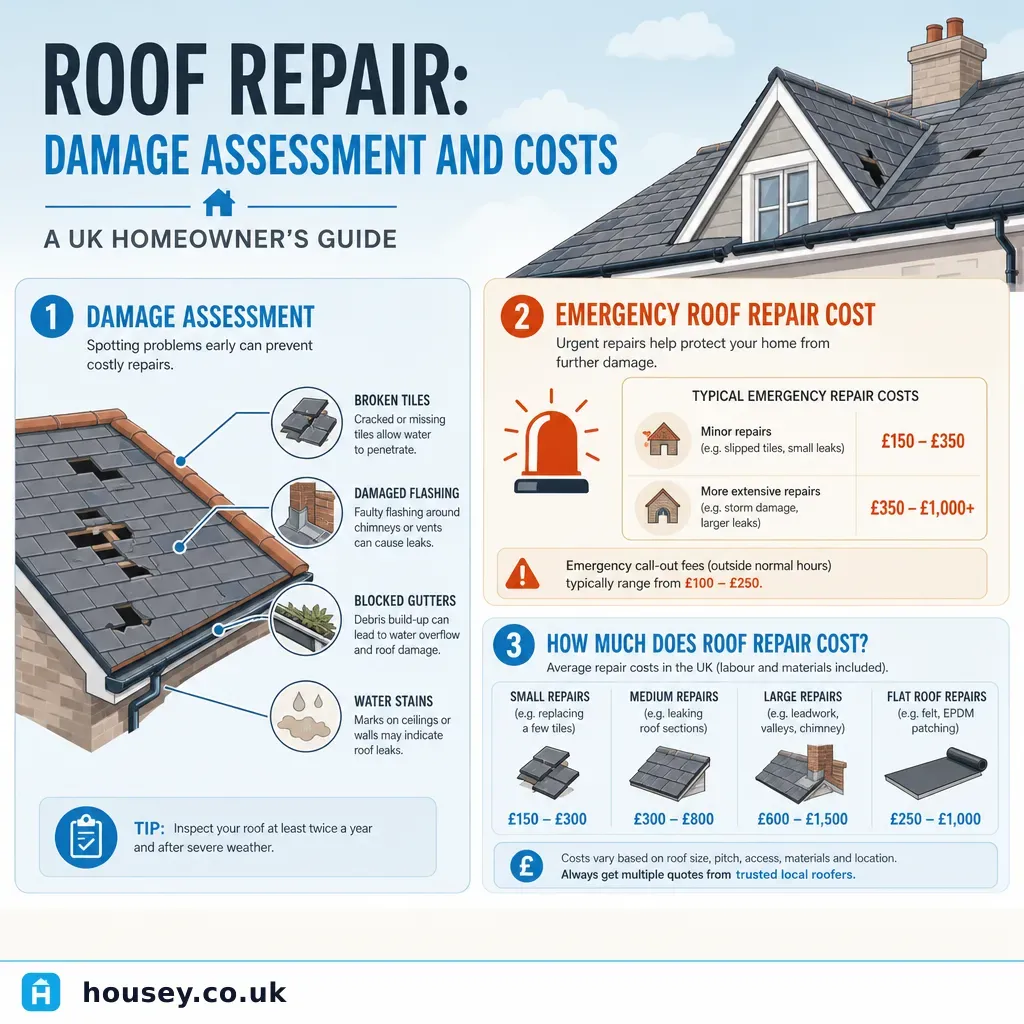
Roof Repair: Damage Assessment and Costs
Most roof repairs — replacing slipped tiles, re-bedding ridge tiles, or patching flashing — are straightforward maintenance jobs that do not require planning permission.
 Improvement & Build
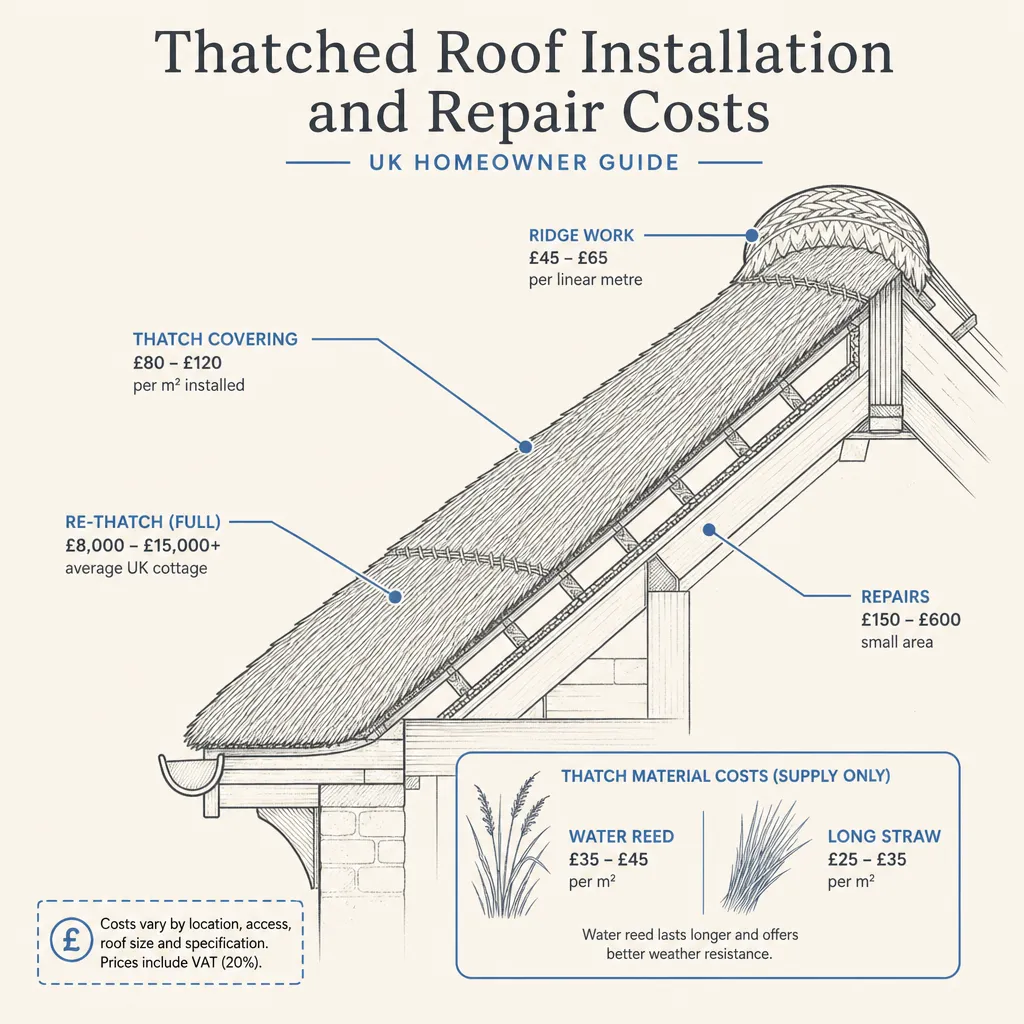
Thatched Roof Installation and Repair Costs
A full re-thatch on a typical UK cottage costs £15,000 to £30,000 or more, depending on material, size, and location.
 Improvement & Build
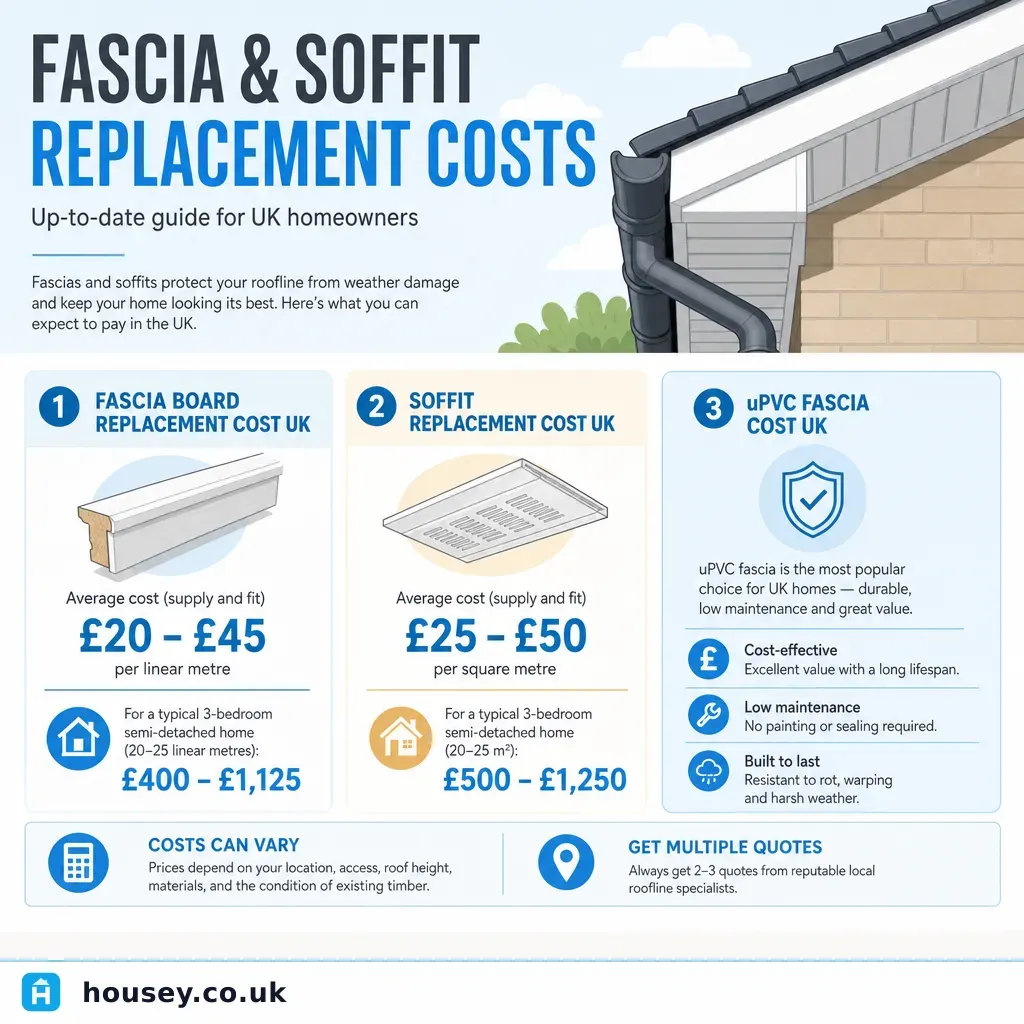
Fascia and Soffit Replacement Costs
Fascia and soffit replacement for a semi-detached house in the UK typically costs £1,800–£4,500 for uPVC boards and new guttering.
 Improvement & Build
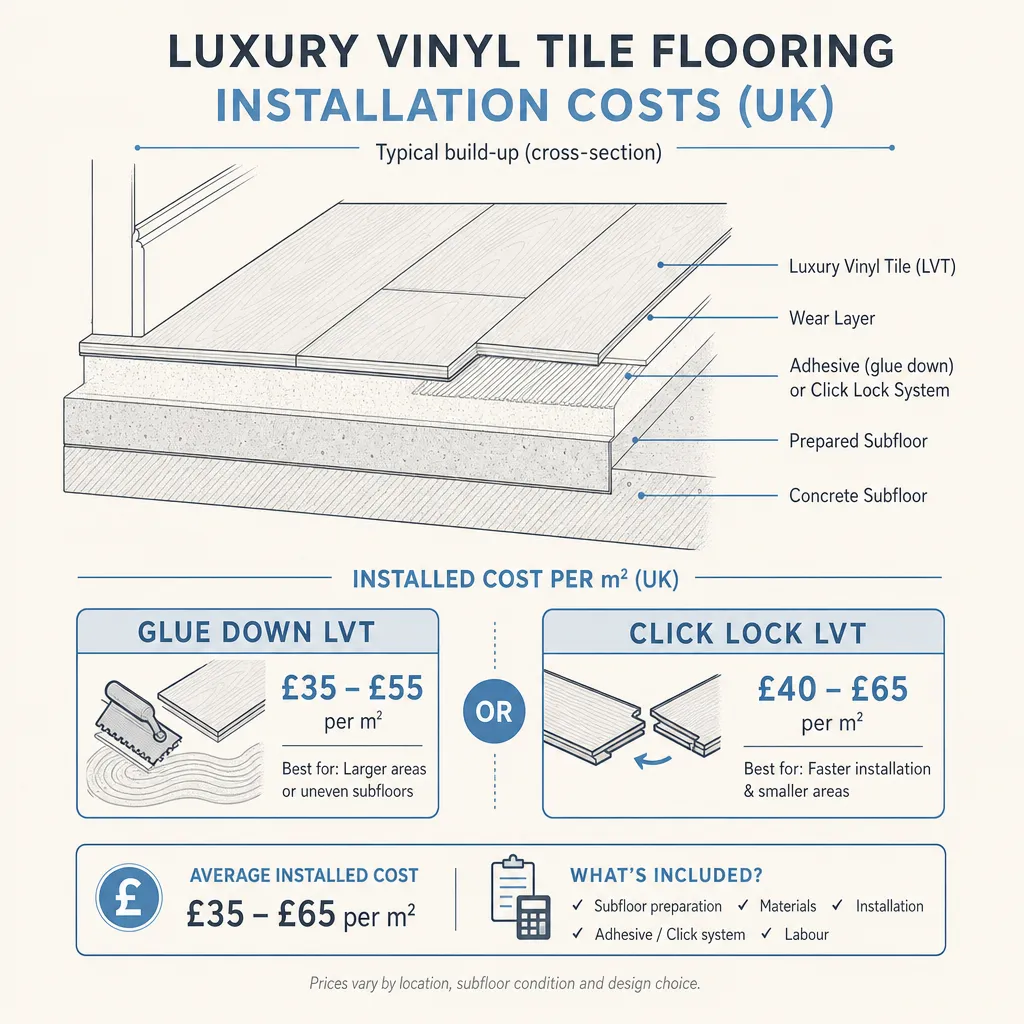
Luxury Vinyl Tile Flooring Installation Costs
Luxury vinyl tile (LVT) flooring typically costs £20–£60 per m² for materials and £10–£25 per m² for professional installation in the UK, giving a total supply-and-fit price of roughly £30–£85 per m².
 Improvement & Build
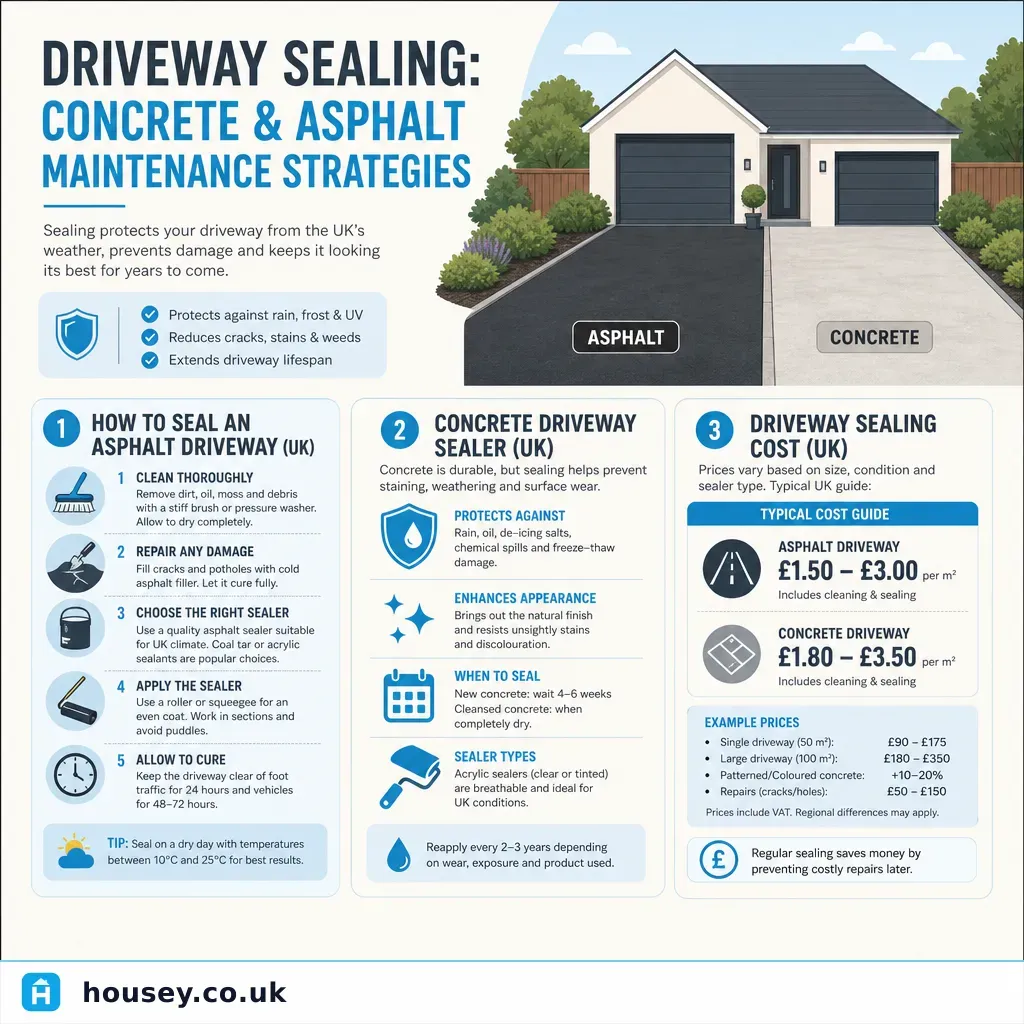
Driveway Sealing: Concrete and Asphalt Maintenance Strategies
Sealing an asphalt driveway every 3–5 years with a bitumen emulsion, or a concrete driveway with a penetrating silane or siloxane sealer, protects against frost damage, UV oxidation, and water ingress.