Skylight and Roof Light Repair Services
By Housey · Last reviewed 10th of May 2026
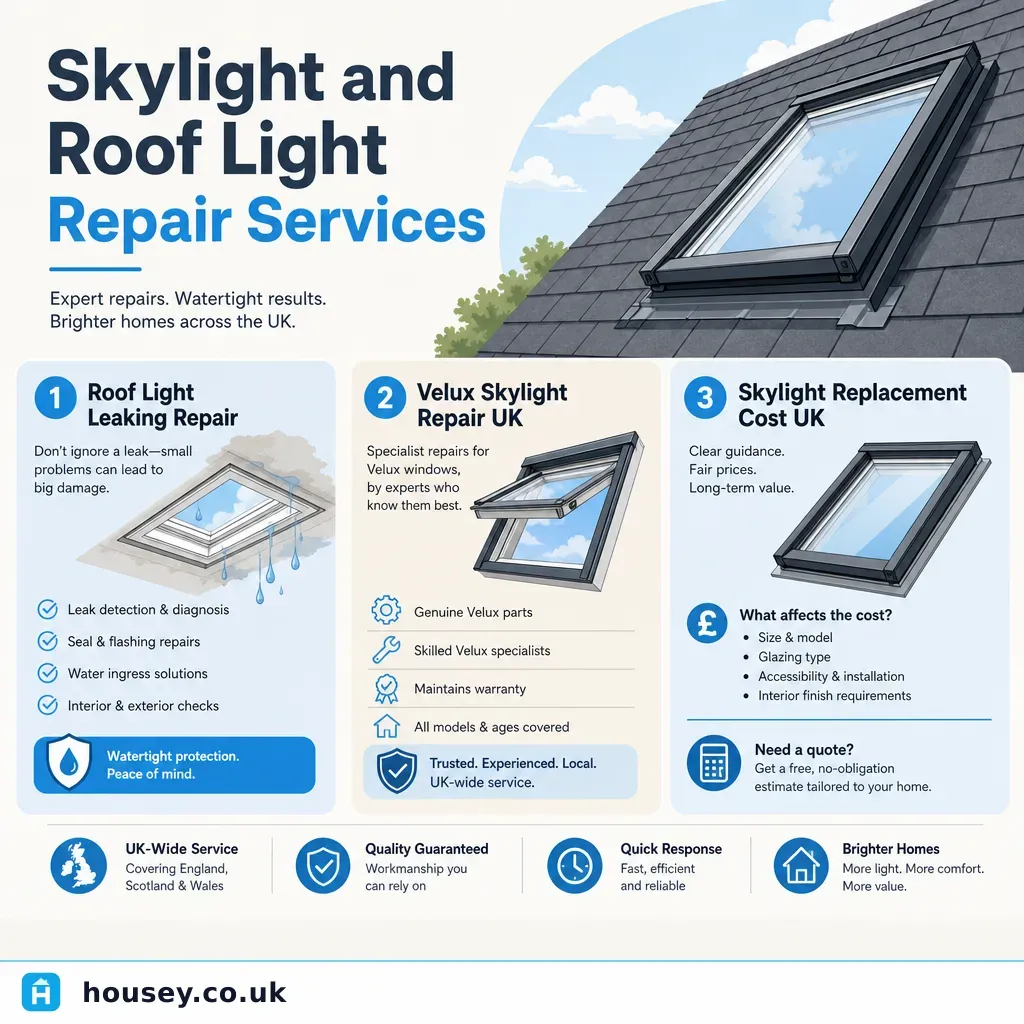
Skylight and Roof Light Repair Services
Skylights and roof lights bring natural daylight deep into a home, but when they leak, crack, or lose their seal, the consequences arrive quickly — stained ceilings, rotting timber, and damaged insulation. Whether your property has a pitched-roof Velux-style skylight, a flat-roof polycarbonate dome, or a bespoke glazed lantern, the repair approach differs significantly by construction type. Understanding what has failed, and why, is the first step to an effective and lasting fix.
Key points
- Flashing failure — where the skylight frame meets the surrounding roof covering — is the most common cause of active leaks, not the glazing itself.
- Rubber gasket seals on pitched-roof skylights typically last 10–20 years before perishing and admitting water.
- Condensation visible between glazing panes indicates a failed sealed unit; resealing the outside will not cure it.
- Replacement glazing units in England and Wales must comply with Building Regulations Part L thermal performance requirements, and the installer should be FENSA-registered or the work notified to building control.
- Flat-roof polycarbonate domes are prone to UV yellowing and micro-cracking after 15–20 years, which degrades both light transmission and weather resistance.
What type of skylight do you have?
Identifying your skylight type directs you to the right repair method and the right specialist.
Type | Common brands / materials | Typical failure modes | Who to call |
|---|---|---|---|
Pitched-roof centre-pivot (felt/tile roof) | Velux, Fakro, Keylite | Flashing corrosion, gasket failure, condensation in unit | Roofer or Velux-trained installer |
Flat-roof dome (single or twin-wall) | Polycarbonate or acrylic | UV yellowing, cracking, kerb seal failure | Flat-roof specialist |
Flat-roof triple-glazed unit | Various (aluminium frame) | Seal failure, thermal cracking, condensation | Flat-roof glazier or specialist roofer |
Glazed lantern or rooflight (extensions) | Bespoke aluminium/steel | Flashing, glazing bead seals, thermal bridging | Roofer plus glazier |
Conservation or heritage rooflight | Cast iron, timber | Frame rot, putty failure, cracked glass | Heritage joiner or specialist roofer |
The most common causes of skylight leaks
Most skylight leaks originate at one of three points:
1. Flashing failure. The lead, aluminium, or proprietary flashing collar that integrates the skylight into the roof covering is the most vulnerable point. Thermal expansion, poor original installation, and lead fatigue can all open gaps. This is often repairable without replacing the skylight itself.
2. Perished or compressed gaskets. On hinged and pivot skylights, a rubber gasket runs around the opening sash. When this hardens or compresses, water tracks in around the frame rather than through any hole in the glazing.
3. Failed sealed unit. Double- or triple-glazed units contain a desiccant-filled spacer bar. When the edge seal fails, moisture enters between the panes. Condensation visible between the glass is a reliable indicator. The unit must be replaced — typically by a glazier or skylight specialist.
Which skylight repairs can you do yourself?
Minor external maintenance — clearing debris from drainage channels, reapplying external silicone around a kerb, or repainting a timber frame — can usually be done by a competent homeowner working safely from a properly positioned ladder, provided the work is within arm's reach and the roof is not steeply pitched.
Do not attempt to re-flash, replace glazing units, re-bed dome uplights, or work at eaves height or above on a pitched roof without appropriate access equipment and fall-arrest precautions. Falls from roofs and ladders account for a significant proportion of fatal DIY accidents in the UK each year (HSE data). For any repair beyond basic cleaning, instruct a qualified roofer.
Decision tree: which repair route is right for you?
- Water is coming in around the frame, not through the glass → Likely flashing or gasket failure. Instruct a roofer to inspect and re-flash or re-gasket.
- Condensation is visible between the panes → Failed sealed unit. A glazier or skylight specialist can replace the unit without removing the frame.
- The dome or lens is yellowed, crazed, or cracked → UV or thermal damage. The dome itself needs replacing; a flat-roof specialist can supply and fit a matching unit.
- The frame is rotting or rusting → Frame replacement may be more cost-effective than repair. Get a survey opinion before committing.
- There is no active leak but the skylight is draughty or very cold → Likely gasket or bead failure; may also be a thermal bridging issue with the frame specification. A roofer or window specialist can advise.
- You are unsure what is failing → Book a roof survey before instructing repair work; identifying the root cause avoids repeated failed fixes.
Red flags: when to act urgently
- Active water ingress into a timber-framed structure — rot can take hold within weeks of sustained wetting.
- Damp patches on ceilings or walls near the skylight that are growing in size between dry spells.
- Visible sagging or staining of plasterboard below the rooflight — this suggests the structural timber or insulation layer has been wetted.
- Any cracking or movement of the skylight frame itself — this may indicate a structural lintel issue, not a glazing fault.
- Skylights in flat roofs with pooling water around the kerb — standing water accelerates seal breakdown and can find very small defects.
Indicative repair costs
These are indicative UK costs, last reviewed 2026-05-10. Actual costs depend on access, roof pitch, skylight size, and extent of damage. Always obtain at least three quotes.
Repair type | Indicative cost range |
|---|---|
Re-flash a single Velux-type skylight | £150–£400 |
Replace rubber gasket / re-seal frame | £100–£300 |
Replace failed double-glazed unit (supply and fit) | £200–£600 |
Replace polycarbonate dome (flat roof) | £250–£700 |
Replace a pitched-roof skylight (supply and fit) | £600–£2,500 |
Heritage rooflight repair (timber / cast iron) | £400–£1,500+ |
VAT is chargeable at 20% on all repair and replacement work unless the property qualifies for a reduced-rate scheme.
When to get professional help
Any active water ingress, structural concern, or work requiring access to a pitched roof above arm's reach should be handled by a qualified roofer or specialist. A professional should also be instructed when:
- The leak has persisted through more than one dry–wet cycle without an obvious external cause.
- You have already attempted a repair that has not held.
- The skylight is in a flat roof and you are unsure whether the waterproof membrane around the kerb is intact.
- A replacement unit will require building control notification because it changes the thermal or structural specification.
How Housey can help
Housey connects homeowners with vetted roofers experienced in skylight and roof light repair across the UK. If you are unsure whether the problem lies in the flashing, the glazing, or the roof structure, you can also book a roof survey to get an independent assessment before committing to repair costs.
Frequently asked questions
How long does a skylight repair typically take?
Most single-skylight repairs — re-flashing, gasket replacement, or sealed-unit swap — are completed in half a day to a full day on site. Heritage or bespoke rooflights may take longer if specialist parts need to be sourced, sized, or fabricated to match the existing frame.
Does skylight repair need building regulations approval?
Like-for-like gasket repairs and re-flashing do not usually require building control notification. Replacing a glazing unit with one of equivalent or better thermal performance generally does not either, but if you are upgrading the specification, the replacement must meet Part L minimum U-values and the installer should be FENSA-registered or notify building control.
Can I claim skylight repair on home insurance?
Sudden and accidental damage — for example, a branch falling through the glazing — is usually covered by buildings insurance. Gradual deterioration such as gasket perishing or UV dome degradation is typically excluded as a maintenance issue. Check your policy wording and document any damage with photographs before arranging repairs.
My Velux skylight is still within its warranty period. Who do I contact?
Velux offers a 10-year product warranty and a 10-year installation warranty (where the skylight was installed by a Velux-trained installer). Contact Velux directly with your product serial number before instructing an independent repairer, as third-party work may void your warranty claim.
Sources and further reading
- GOV.UK: Building Regulations Approved Documents — Approved Document L covers thermal performance requirements for windows and rooflights
- HSE: Falls from height — Safety data and guidance on working at height
- FENSA — Registered glazing installer scheme for England and Wales
- Velux: Warranty information — Manufacturer product and installation warranty terms
Useful next reads
 Improvement & Build
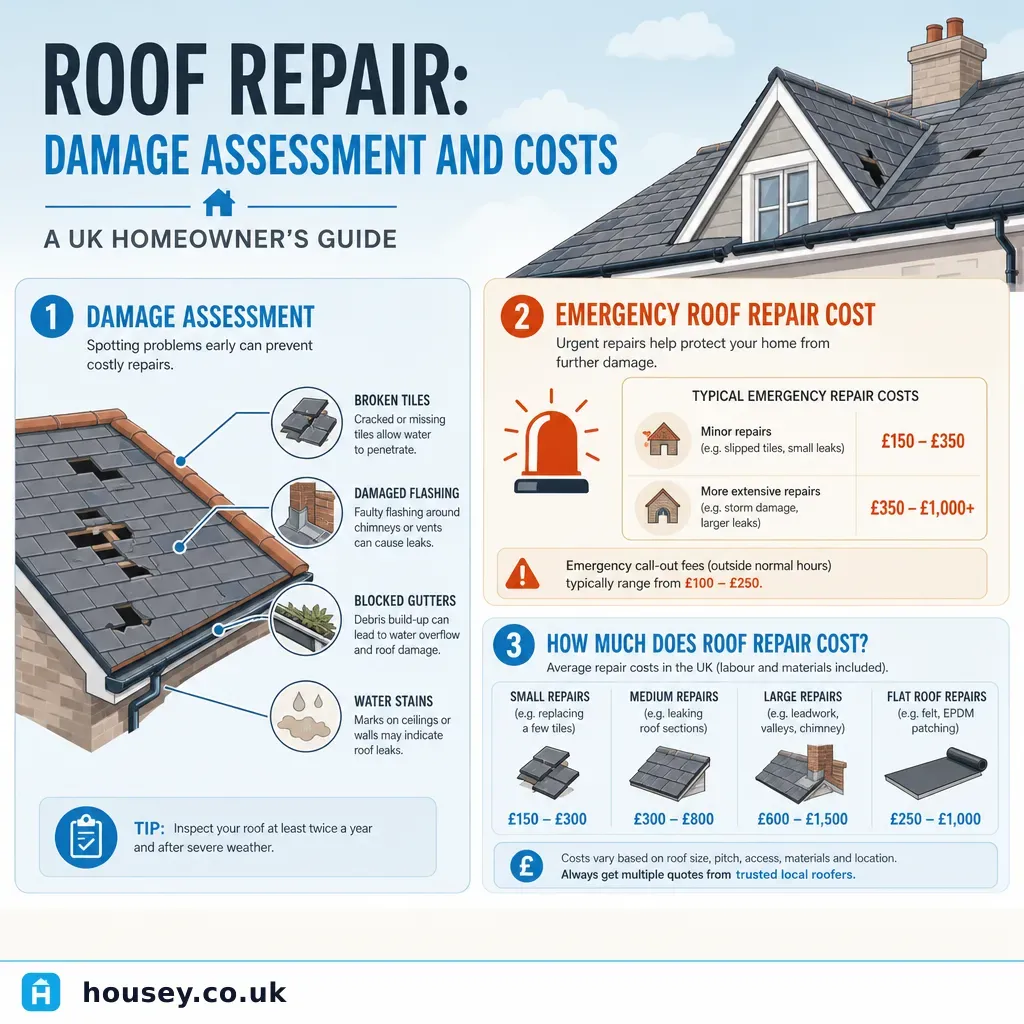
Roof Repair: Damage Assessment and Costs
Most roof repairs — replacing slipped tiles, re-bedding ridge tiles, or patching flashing — are straightforward maintenance jobs that do not require planning permission.
 Improvement & Build
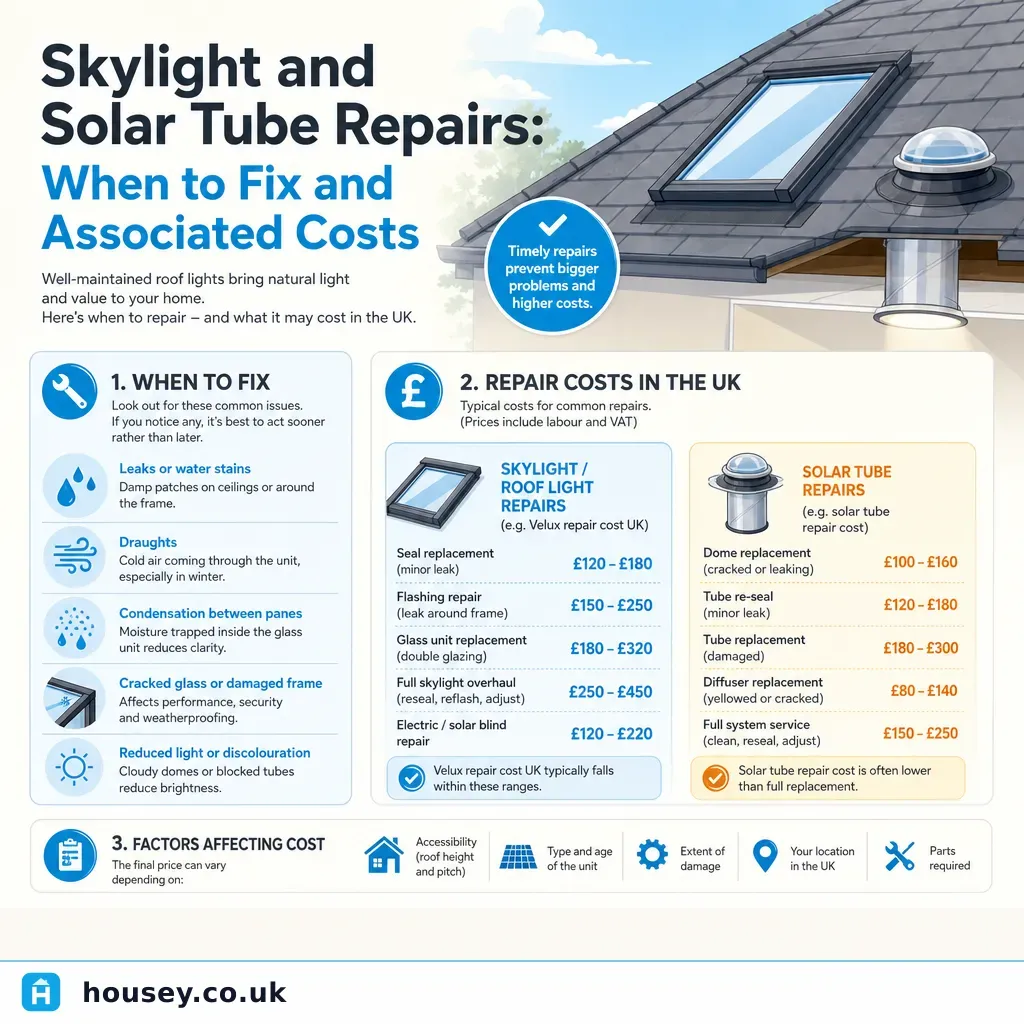
Skylight and solar tube repairs: when to fix and associated costs
Skylight repairs — resealing, reflashing, or replacing a misted glazing unit — typically cost £150–£400 for minor work and £800–£2,500+ for a full replacement in the UK.
 Improvement & Build
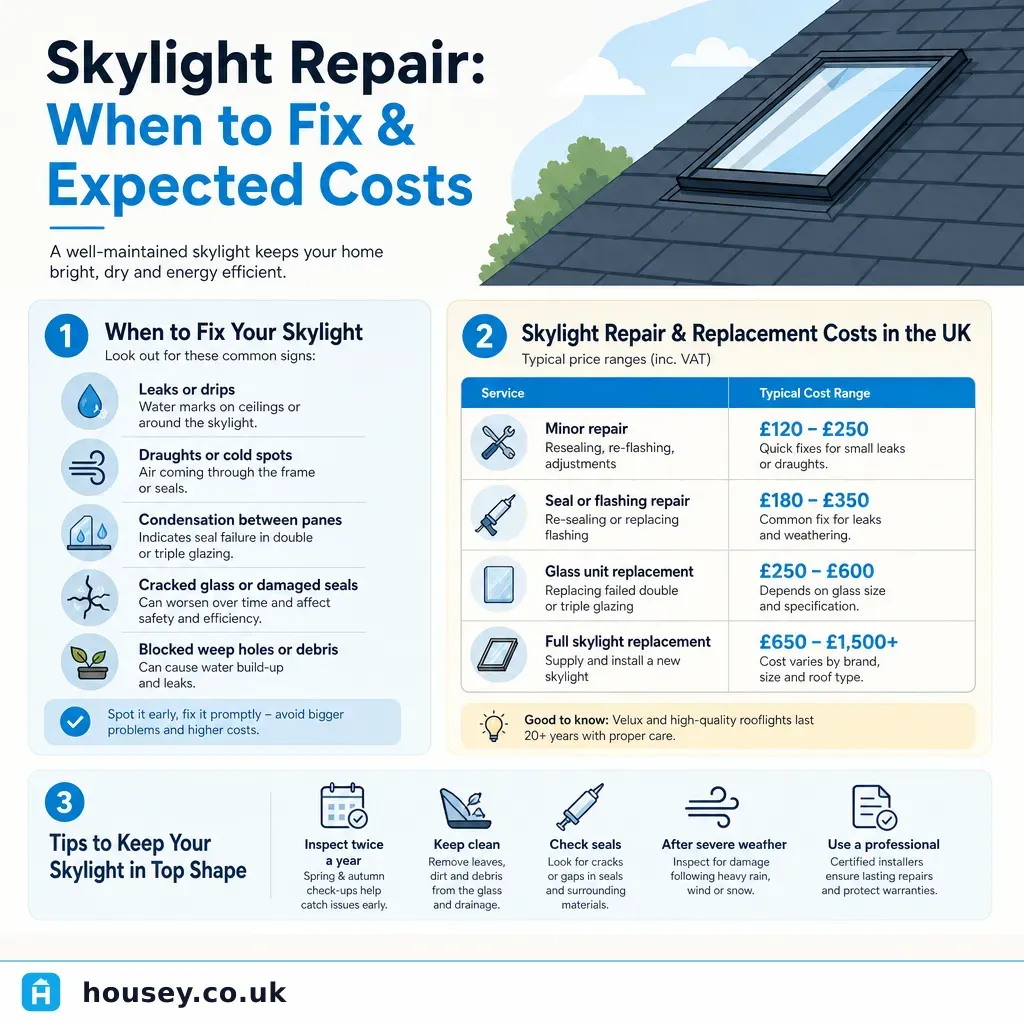
Skylight repair: when to fix and expected costs
Skylight repairs in the UK typically cost £150–£800 depending on the fault, while full replacement usually runs £500–£2,500.
 Improvement & Build
Concrete Sealing: Protecting and Maintaining Your Driveway
Sealing a concrete driveway protects against water ingress, freeze-thaw damage, oil stains, and surface wear.
 Improvement & Build
Repairing Failed Window Seals and Condensation Issues
Condensation between double-glazed panes means the hermetic seal on the insulated glass unit has failed.