Roofing Market Expansion Trends and Service Demand Outlook
By Housey · Last reviewed 30th of May 2026
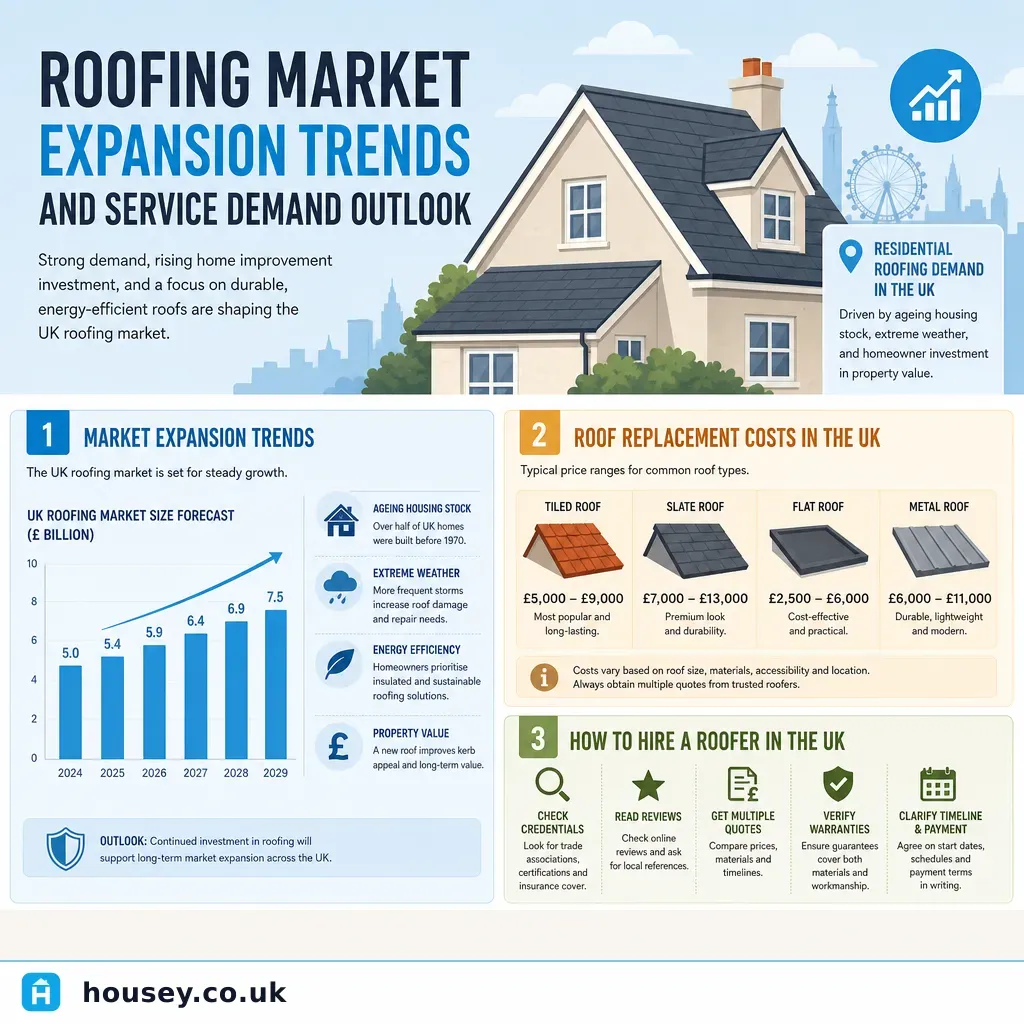
Roofing Market Expansion Trends and Service Demand Outlook
UK homeowners dealing with a failing roof or planning a roof upgrade are entering a market where demand for roofing contractors is strong and lead times in many regions are extending. Whether the trigger is storm damage, persistent leaks, deteriorating felt, an upcoming property sale requiring a sound roof, or a solar PV installation that requires pre-works, navigating this market effectively means understanding what is driving demand — and how to distinguish reliable contractors from poor-quality ones.
Key points
- Approximately 29 million homes make up the UK housing stock; a substantial proportion were built before 1970, meaning millions of roofs are at or approaching the end of their serviceable life.
- Building Regulations Approved Document L (Conservation of Fuel and Power), updated in 2021, sets minimum thermal performance standards for roof work where building regulations apply — including re-roofing of substantial areas of an existing home.
- The NFRC (National Federation of Roofing Contractors) is the UK's recognised roofing trade body; membership indicates adherence to professional standards and provides homeowners with a route to an independent dispute resolution service.
- For flat roofs, the guarantee period and material standard vary significantly between felt, EPDM rubber, fibreglass (GRP), and liquid coatings — understanding the differences before accepting a quote is essential to comparing like with like.
- VAT on roofing work is typically 20% at the standard rate; a 5% reduced rate may apply in certain circumstances for qualifying energy-saving materials — always confirm VAT treatment in writing with your contractor.
What is driving roofing demand across the UK
Ageing housing stock. The UK has one of the oldest housing stocks in Europe. Many clay tile, concrete tile, and natural slate roofs installed in the post-war period — and a large number of flat felt roofs from the 1960s to 1980s — are now requiring attention. This creates a structurally embedded repair and replacement market that does not depend on interest rate cycles or housebuilding programmes.
Energy efficiency requirements. Updated thermal performance standards under Approved Document L mean that significant re-roofing work — particularly where building regulations apply — must now meet minimum insulation values. This is increasing both the scope and complexity of roofing projects where compliance is required, and is driving demand for contractors with knowledge of insulation specification and roof ventilation requirements.
Storm and weather damage. Extreme weather events are a recurring driver of both emergency and planned roofing demand. Slipped slates, damaged flashings, failed ridge tiles, and blocked or broken guttering are among the most common consequences of storms. Homeowners should be particularly cautious of cold-call contractors who appear in the days after storms — always seek an independent assessment before agreeing to any work.
Solar and retrofit integration. The growth of rooftop solar photovoltaic (PV) installations under the Smart Export Guarantee (SEG) requires roofs to be in sound condition before panels are fitted. This is generating assessment and pre-works roofing demand alongside the broader solar installation market.
Repair or replacement: choosing the right option
Deciding between targeted repairs and full replacement is one of the most consequential choices in any roofing project. This comparison sets out the key considerations:
Factor | Targeted repair | Full roof replacement |
|---|---|---|
Best for | Isolated slipped or broken tiles, minor flashing failures, small areas of flat roof deterioration | Widespread tile failure, degraded roofing felt, structural felt breakdown, or a roof nearing end of material life |
Typical lifespan added | 5–15 years depending on underlying condition | 25–100 years depending on material chosen |
Building regulations | Generally not triggered for like-for-like repairs to less than 25% of roof area | May be triggered if more than 25% of roof area is replaced; Approved Document L thermal compliance required |
VAT | 20% standard rate unless qualifying energy-saving material applies | 20% standard rate unless qualifying energy-saving material applies |
Key risk if wrong choice | Ongoing leaks; accelerating structural damage if underlying felt or boarding is already deteriorating | Unnecessary cost and disruption if the underlying structure is genuinely sound |
Professional typically needed | Roofing contractor; structural engineer if rafters or roof structure are suspect | Roofing contractor; structural engineer and building control for larger or structurally complex roofs |
Red flags when hiring a roofer
The roofing sector has historically attracted rogue trader activity. Look out for these warning signs before committing to any work:
- Contractors cold-calling after storms and claiming to have spotted damage from the street — always obtain an independent survey before agreeing to any work.
- Verbal-only quotes with no written specification of materials, scope, or payment stages.
- Requests for large cash deposits before any work or scaffolding is in place — reputable contractors typically structure staged payments tied to completed work.
- No NFRC membership, no proof of public liability insurance (a minimum of £2 million is typical for residential roofing work), and no professional indemnity cover for more substantial projects.
- Proposals to overlay new materials on top of existing felt or tiles rather than stripping to bare rafters — this masks underlying problems and is unlikely to meet building regulations requirements.
- Quotes substantially below all others — often indicates inferior materials, inadequate scaffolding provision, or underinsurance.
What to ask before accepting a roofing quote
- What specific materials do you propose to use, and what are the manufacturer's guarantees for those products?
- Is the quote for a full strip to bare rafters and re-deck, or will new materials be laid over existing?
- Does this work trigger a building regulations application, and will you manage the compliance process?
- What scaffolding is included, and who is responsible for its erection and statutory compliance?
- What is your NFRC membership number, and can you provide evidence of current public liability insurance?
- What written guarantee will I receive on completion, covering both materials and workmanship?
- What are the payment stages, and what evidence of completed work will trigger each stage payment?
- Is VAT included in the quoted total?
When to get professional help
Most straightforward repair and re-roofing work can be managed directly with a qualified, NFRC-registered roofing contractor. However, seek additional professional input before proceeding if:
- You suspect rafter damage, sagging ridgelines, or structural movement — a structural engineer should assess the roof structure before re-roofing begins.
- The property is listed or in a conservation area — planning permission, and in the case of listed buildings likely Listed Building Consent, may be required before any materials are changed.
- The roof includes suspected asbestos cement sheeting — common in garages and extensions built before 1985. Do not disturb the material. Arrange a survey by a licensed asbestos contractor before any roofing work proceeds.
- Building regulations approval is required and your proposed contractor does not offer a competent person scheme route or building control support.
How Housey can help
Housey connects homeowners with vetted roofers across the UK. Whether you need an urgent repair assessment or are planning a full roof replacement, Housey's matching service identifies qualified local contractors suited to your roof type, property, and project scale.
Frequently asked questions
Do I need planning permission to replace my roof?
In most cases, replacing a roof with the same or similar materials does not require planning permission under permitted development rights for householders. However, if your property is listed, in a conservation area, or if you propose to change the roof shape or materials significantly, you must check with your local planning authority before starting work. The Planning Portal provides guidance on common roof projects.
How long should a new roof last?
Lifespan varies significantly by material. Natural slate typically lasts 80–100 years; clay tiles 60–100 years; concrete tiles 30–50 years; traditional felt flat roofs 15–25 years; modern EPDM rubber and GRP fibreglass flat roofs 25–50 years depending on installation quality. Always request a written guarantee from both the manufacturer and the installer, and check exactly what the guarantee covers.
When does roofing work require building regulations approval?
Building regulations approval is usually required when you replace more than 25% of a roof area in one project, or when you alter the roof structure. The replacement work must meet current thermal performance standards in Approved Document L. Your contractor should advise whether approval is needed — if they cannot, contact your local authority building control body directly.
What is the NFRC and why does it matter?
The National Federation of Roofing Contractors (NFRC) is the UK's largest roofing trade body. Members commit to a code of professional practice, carry adequate insurance, and provide customers with access to an independent dispute resolution service. Using an NFRC member reduces — though does not eliminate — the risks associated with hiring roofing contractors, and provides a recourse route if problems arise after completion.
Sources and further reading
- Approved Document L: Conservation of Fuel and Power — GOV.UK
- National Federation of Roofing Contractors — NFRC
- Permitted Development for Householders: Roofs — Planning Portal
- Asbestos: Licensing Requirements for Work with Asbestos — Health and Safety Executive (HSE)
- Smart Export Guarantee (SEG) — Ofgem
Useful next reads
 Improvement & Build
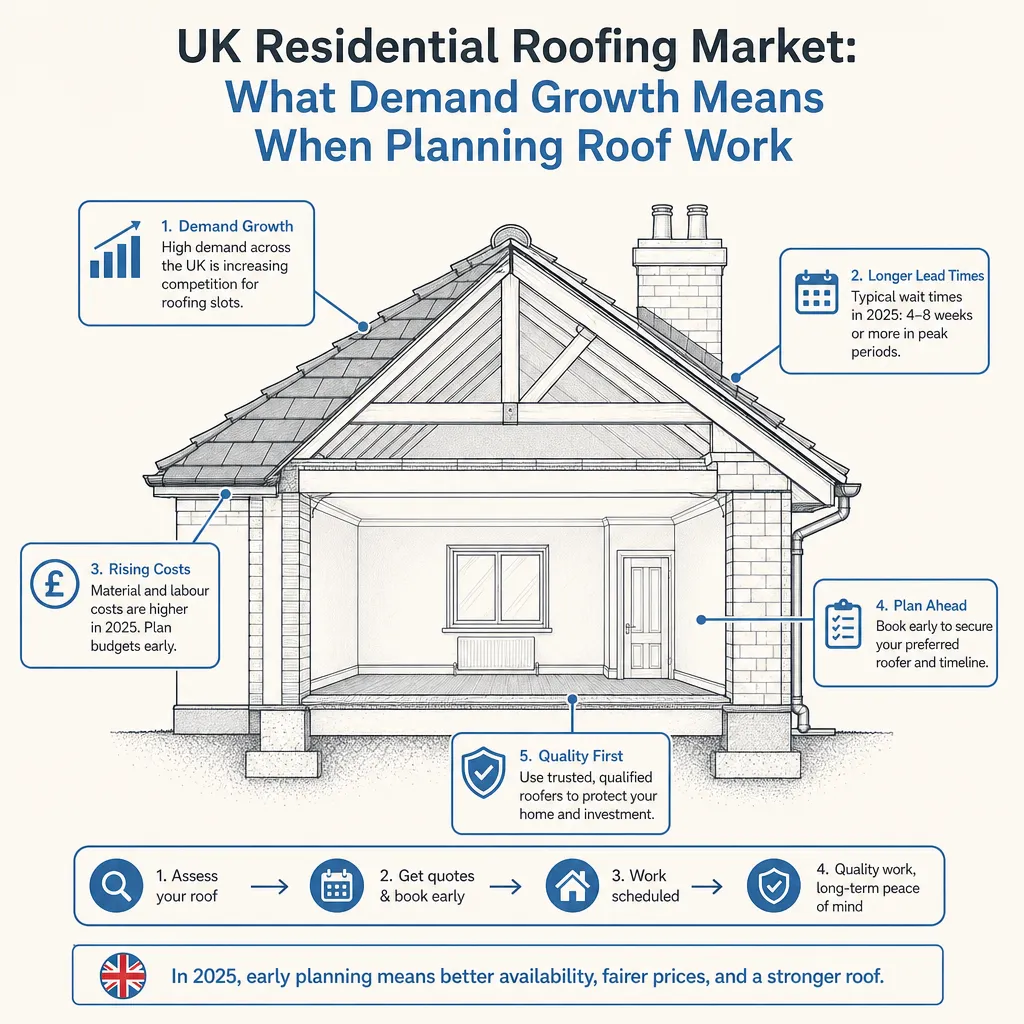
UK Residential Roofing Market: What Demand Growth Means When Planning Roof Work
Rising demand in the UK roofing market typically extends lead times from 4–8 weeks to 3–6 months and puts upward pressure on costs.
 Improvement & Build
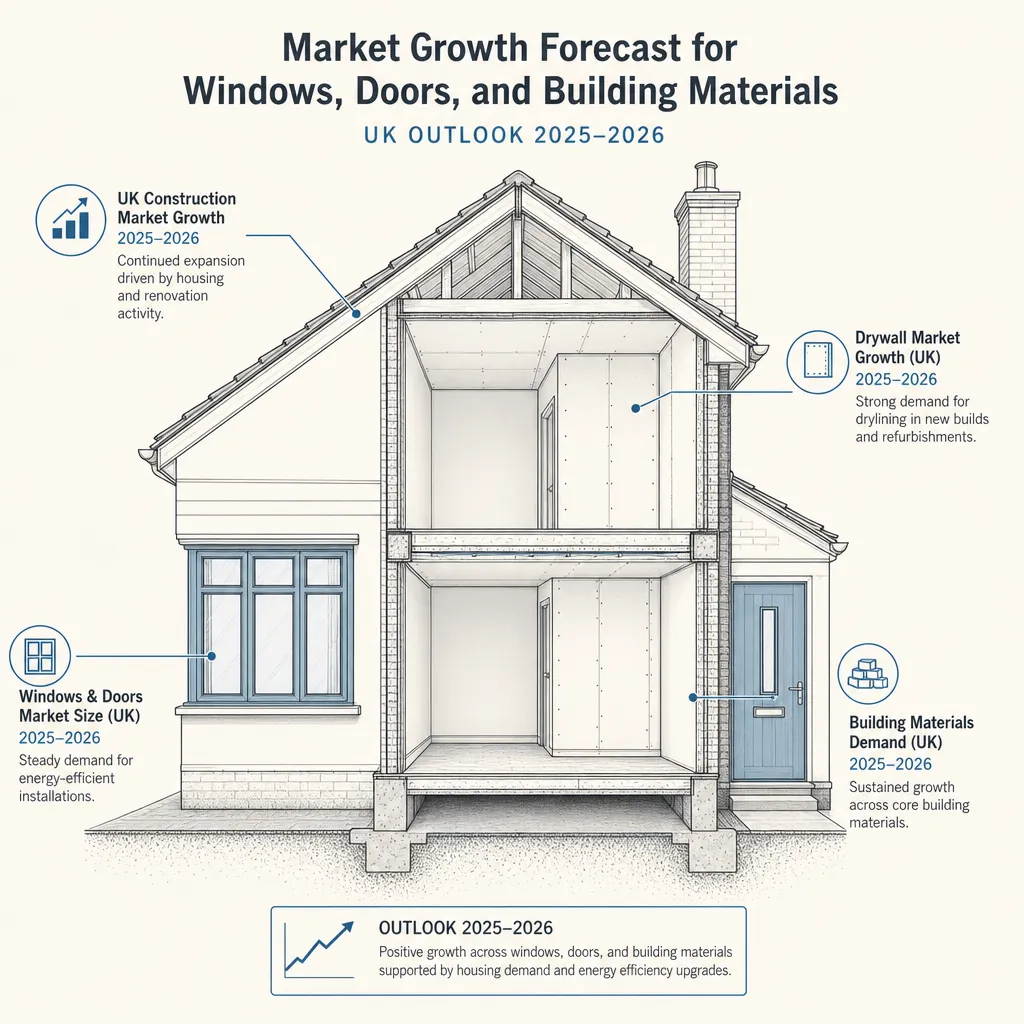
Market Growth Forecast for Windows, Doors, and Building Materials
Demand for UK windows, doors, and drywall is driven by a mix of replacement cycles, energy efficiency regulations, and housing activity.
 Improvement & Build
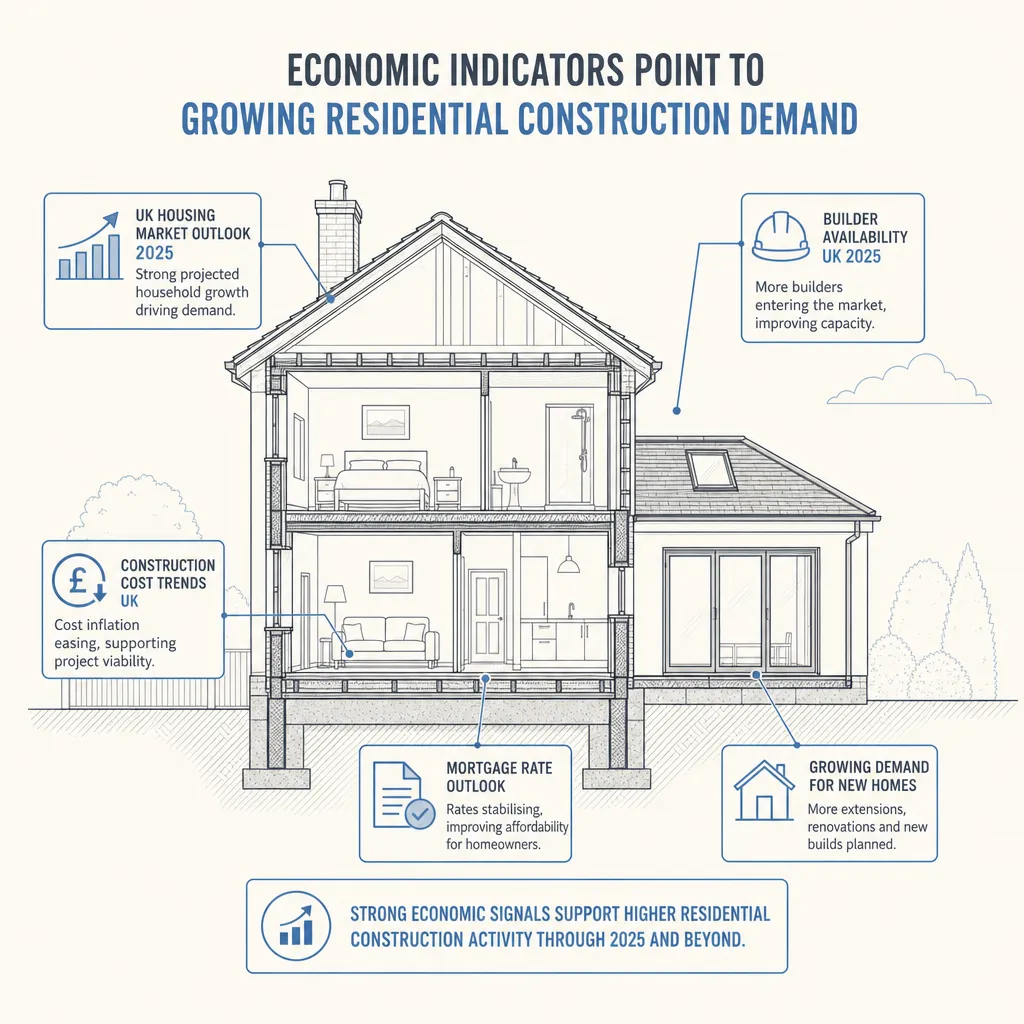
Economic Indicators Point to Growing Residential Construction Demand
Falling interest rates, the government's 1.
 Improvement & Build
Home Improvement Spending Growth and Service Provider Opportunities
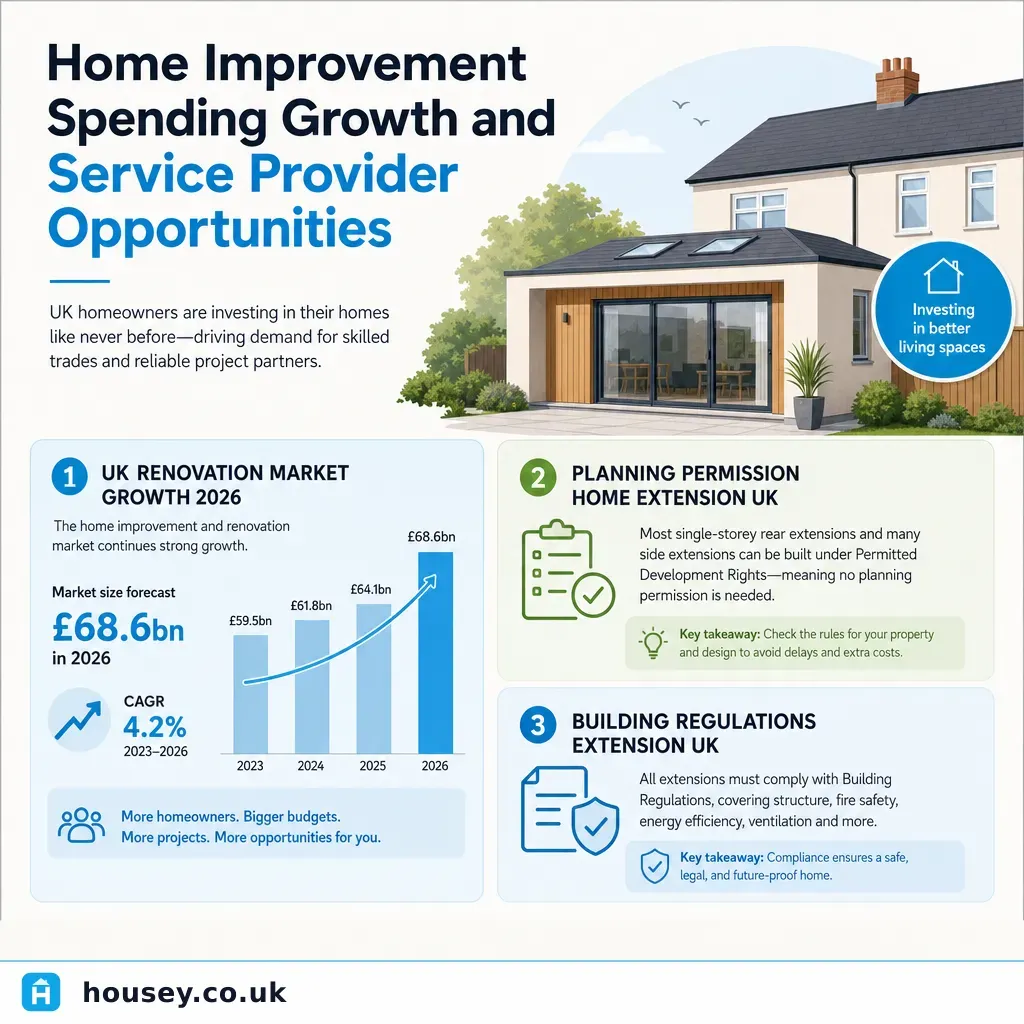
UK home improvement spending has remained elevated as subdued housing transactions push homeowners to invest in their existing properties.
 Improvement & Build
Finding Window Replacement Work: A Guide to Lead Generation
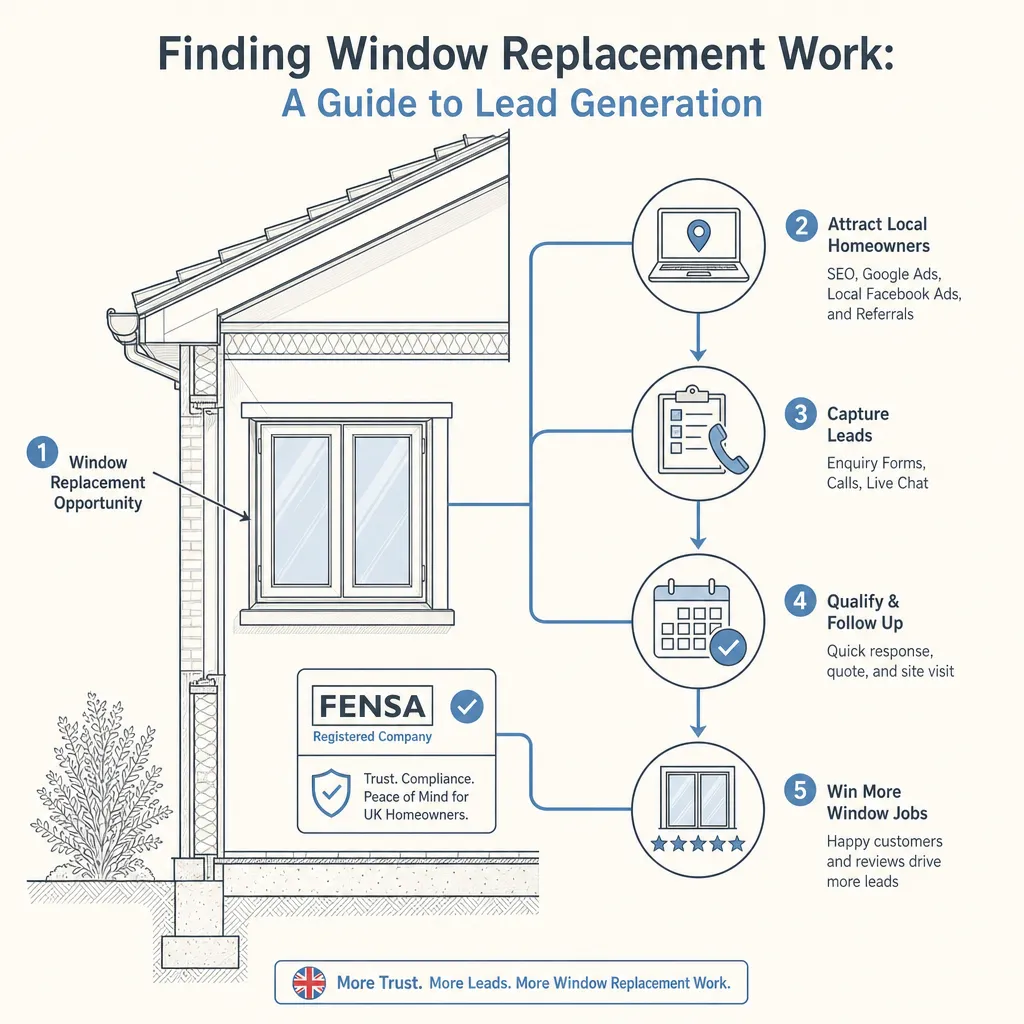
Window installation businesses in the UK find new work through a combination of pay-per-lead platforms, Google Business Profile, Checkatrade and Which?