Market Growth Forecast for Windows, Doors, and Building Materials
By Housey · Last reviewed 30th of May 2026
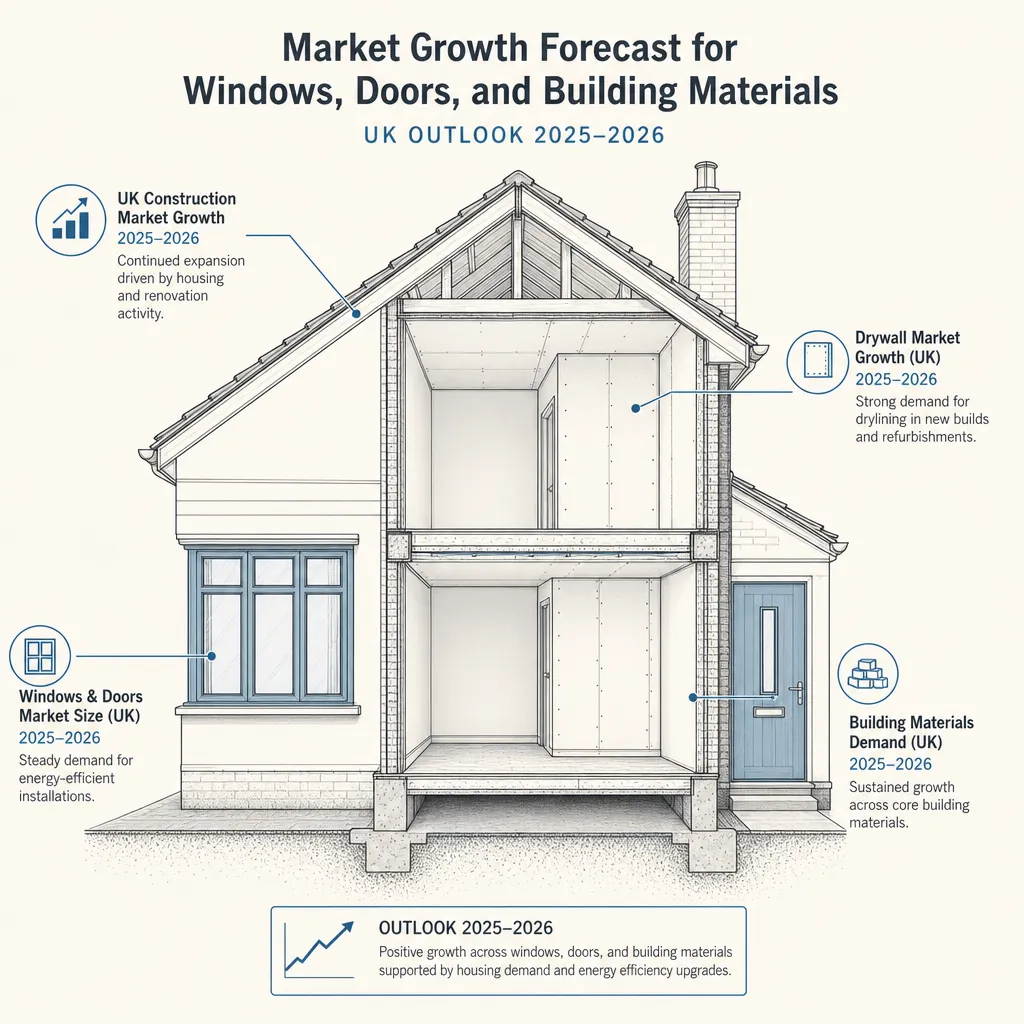
Market Growth Forecast for Windows, Doors, and Building Materials
Knowing what is happening in the materials market before you commission window replacements, a door upgrade, or an extension involving significant dry-lining work can help you make smarter decisions about timing, budgeting, and contractor selection. Demand for UK windows, doors, and drywall is not static — it responds to housing market cycles, regulatory changes, and energy efficiency targets that shape what homeowners and landlords are required or motivated to do to their properties.
Key points
- The Glass and Glazing Federation (GGF) tracks the UK fenestration market, which covers windows, doors, and glazed roof products in residential and commercial buildings.
- Part L of the Building Regulations (conservation of fuel and power) sets minimum thermal performance standards for replacement windows and doors in England, currently requiring a Window Energy Rating of Band C or equivalent U-values — full requirements are set out in Approved Document L.
- Window and door installations on existing dwellings must be registered with a FENSA-approved installer or notified to local building control; a FENSA certificate is typically required at property sale.
- British Gypsum (part of Saint-Gobain) is the UK's principal domestic plasterboard manufacturer; the 2021 Sherburn mine fire demonstrated the concentration risk in UK plasterboard supply and led to a significant shortage across the trade.
- Replacement window and door demand is partly driven by Minimum Energy Efficiency Standards (MEES) for rented properties and growing EPC upgrade interest from owner-occupiers ahead of potential future requirements.
What is driving UK demand for windows and doors?
UK demand for replacement windows and doors comes from several distinct sources that move somewhat independently of each other:
Replacement cycles on ageing stock: Much of the UK's housing stock was built before modern double-glazing became standard. Single-glazed properties and early uPVC installations from the 1980s and 1990s are now at or past typical product life (approximately 20–30 years for uPVC frames). This creates a rolling replacement demand that is independent of the new-build cycle and continues even when the broader housing market slows.
Regulatory pressure on rental properties: Minimum Energy Efficiency Standards (MEES) require most privately rented properties in England and Wales to have an EPC rating of at least E. Window performance affects EPC ratings, meaning landlords with single-glazed or poorly performing windows may need to upgrade to maintain compliance. GOV.UK guidance on MEES is available at the domestic private rented property: minimum energy efficiency standard page.
New housing completions: New-build residential units require factory-specified windows and doors. When housing completions rise, fenestration demand rises with them — though this tends to benefit manufacturers and specialist new-build glazing contractors rather than the residential replacement market.
Home improvement and aesthetic upgrade: Homeowners replacing functional but dated windows for appearance, noise reduction, or improved thermal performance — particularly common in Victorian and Edwardian terraces where timber sash windows are being upgraded or restored, and in 1930s semis where original steel-framed windows are being replaced.
Which window and door products are most in demand?
Product type | Key demand driver | Energy performance requirement | Common installer type |
|---|---|---|---|
uPVC double-glazed windows | Replacement cycle, affordability | Part L: WER Band C or U-value ≤1.4 W/m²K | FENSA-registered installer |
Timber sash windows (new or restored) | Period properties, conservation areas | Listed building and conservation area rules apply; Part L still relevant | Specialist joiner, FENSA-registered |
Aluminium casement windows | New build, extensions, contemporary refurbs | Part L compliant systems widely available | FENSA-registered or building control notification |
Composite or solid-core external doors | Security, thermal performance, aesthetics | Part L: U-value ≤1.4 W/m²K for replacement doors in existing dwellings | FENSA-registered or building control |
Bi-fold and sliding patio doors | Extensions, open-plan living upgrades | Part L: overall glazed area affects extension thermal compliance | FENSA-registered or building control |
The UK drywall and plasterboard market
Drywall (plasterboard or dry-lining) is a critical material for internal partitions, ceilings, and the lining of external walls in timber-frame construction. It is also widely used in residential repair, maintenance, and improvement — particularly in loft conversions, extension dry-lining, and insulated plasterboard systems.
Supply structure: British Gypsum produces plasterboard at UK facilities and is the principal domestic supplier. Knauf, a German manufacturer, also supplies the UK market. The concentration in this sector means supply disruptions can propagate quickly through the industry — as demonstrated clearly during 2021–22.
Demand drivers for plasterboard in residential improvement work:
- Loft conversions require substantial boarding for sloped ceiling and wall linings.
- Single-storey rear extensions use plasterboard for internal wall and ceiling finishes throughout.
- Insulated thermal laminate boards (PIR-backed plasterboard) see growing demand where internal wall insulation is the only practical retrofit option for solid-wall properties.
- Fire-rated plasterboard is required in fire-separation applications — for example, between an integral garage and a habitable room, a common requirement encountered in 1960s–1980s homes.
- Moisture-resistant boards are standard in bathrooms, utility rooms, and other wet areas across all types of residential project.
What rising material demand means for your project
When demand for windows, doors, or drywall is high, the practical effects for homeowners include longer lead times, less flexibility on bespoke or non-standard sizes, and potentially higher prices — though contractor pricing and supply chain pricing can move at different speeds.
Decision tree: timing and sequencing your materials
- For bespoke or non-standard windows: Order as early as possible — lead times for made-to-measure or non-standard profile windows can run 6–16 weeks. Confirm your installer's lead time before fixing your programme start date.
- For standard drywall and internal materials: Standard plasterboard is generally ex-stock at merchants, but fire-rated, moisture-resistant, and high-performance boards can be on allocation during high-demand periods — check availability early.
- For energy-efficient upgrades under a grant scheme: ECO4 eligibility checks, FENSA registration confirmation, and installer availability can all add weeks to your project timeline — factor this in at the planning stage.
- For conservation area or listed building properties: Standard FENSA-registered installers may not be appropriate if like-for-like matching or specialist materials are required. Engage specialist suppliers early, as lead times on heritage products are typically longer.
- If you are a landlord upgrading for MEES compliance: Allow time for an updated EPC assessment after work is complete — you will need the new rating before reletting.
Homeowner checklist: before ordering windows or doors
Before work is confirmed and materials are ordered:
When to get professional help
- If your property is listed or in a conservation area, consult a conservation architect or your local planning authority's heritage officer before specifying replacement windows — unauthorised works can require reinstatement at your cost.
- If you are unsure whether an extension's glazed area complies with Part L, your building control surveyor or a chartered energy assessor can advise before work begins.
- If you are a landlord uncertain about MEES obligations or how window upgrades affect your EPC rating, Citizens Advice or a specialist property solicitor can clarify your compliance position.
- If a large plasterboard or dry-lining order is needed for a major project and supply is uncertain, a quantity surveyor or project manager can advise on procurement strategy and risk mitigation.
How Housey can help
Whether you are replacing windows across your home or planning an extension that requires new doors, dry-lining, and glazed elements, Housey connects you with vetted window and door installers and extension builders who understand current lead times and material availability in your area. For roofing work alongside glazing upgrades, roofers on the Housey platform can be compared alongside other trades.
Frequently asked questions
Do I need planning permission to replace windows in my home?
For most homes, replacing windows like-for-like is permitted development and does not require planning permission. However, if your property is in a conservation area, you will need planning permission to replace windows on the principal elevation. Listed buildings always require listed building consent for window changes. Check with your local planning authority if you are uncertain about your property's status.
What is FENSA and why does it matter when replacing windows?
FENSA (Fenestration Self-Assessment Scheme) is a government-authorised scheme allowing registered installers to self-certify that replacement windows and doors meet Building Regulations without separate local building control notification. A FENSA certificate of compliance is typically required when selling your property. If your installer is not FENSA-registered, they must notify your local building control department before work begins.
How long do uPVC windows typically last?
Quality uPVC window frames generally last 20–30 years before the material begins to degrade noticeably through warping, discolouration, or seal failure. The sealed double-glazed units inside the frame may fail earlier — typically 15–25 years — evidenced by condensation between the panes. Resealing or replacing failed units is often possible without replacing the whole frame, at lower cost.
Sources and further reading
- Glass and Glazing Federation (GGF) — GGF
- FENSA: find a registered installer — FENSA
- Approved Document L: conservation of fuel and power — GOV.UK
- Domestic private rented property: minimum energy efficiency standard — GOV.UK
- British Gypsum product and technical information — British Gypsum (Saint-Gobain)
- CITB Construction Skills Network — CITB
Useful next reads
 Improvement & Build
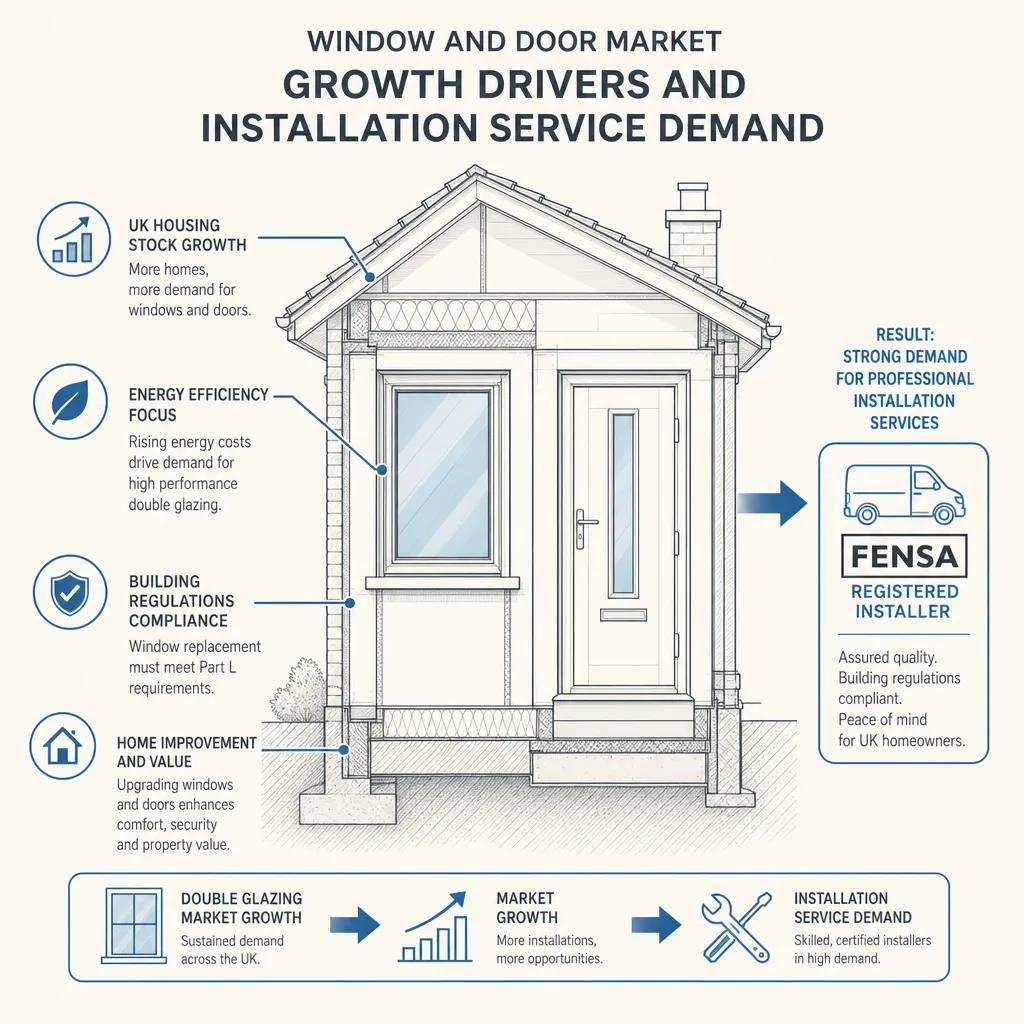
Window and Door Market Growth Drivers and Installation Service Demand
Demand for window and door installation across the UK is being driven by energy efficiency requirements under Building Regulations Part L, EPC tightening for rental properties, and the large number of pre-1980s homes with ageing frames.
 Improvement & Build
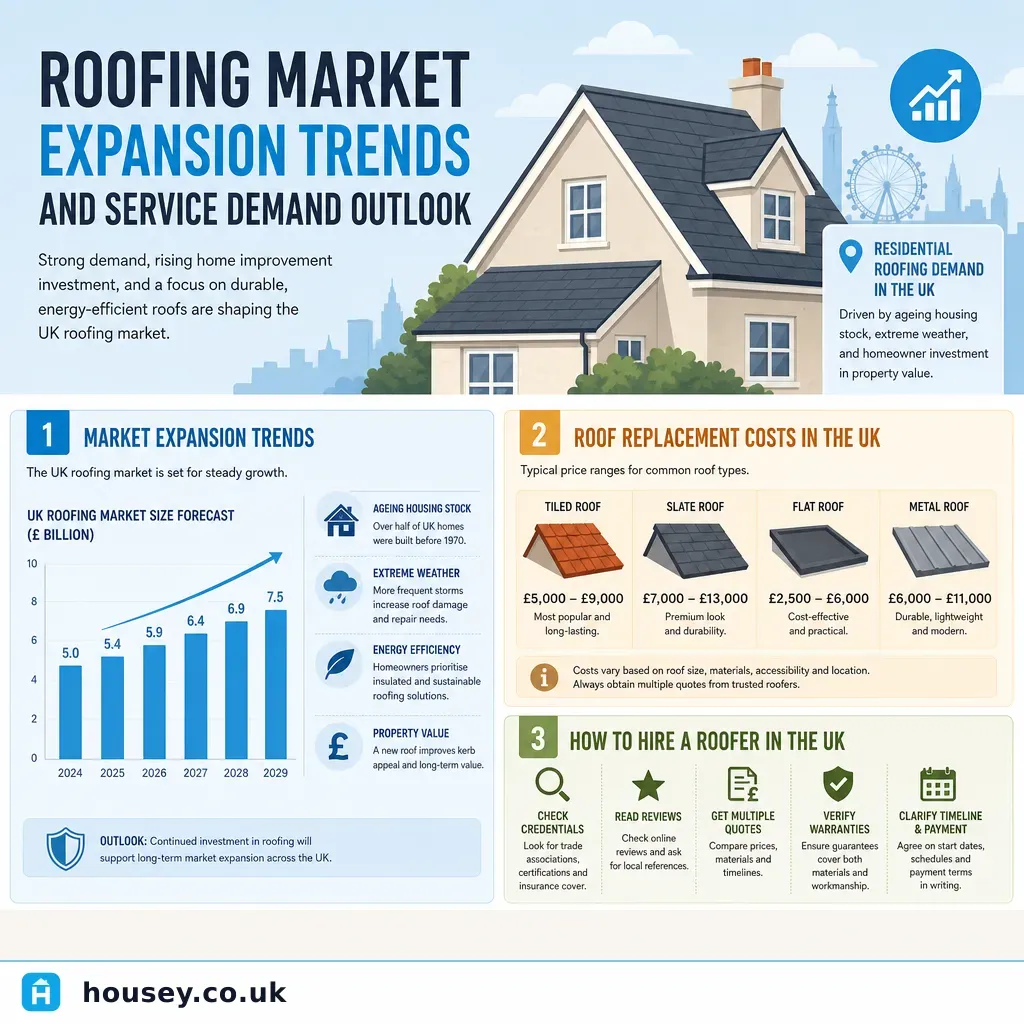
Roofing Market Expansion Trends and Service Demand Outlook
UK roofing demand remains strong and growing, driven by an ageing housing stock, energy efficiency requirements under Approved Document L, and increasing storm-related damage.
 Improvement & Build
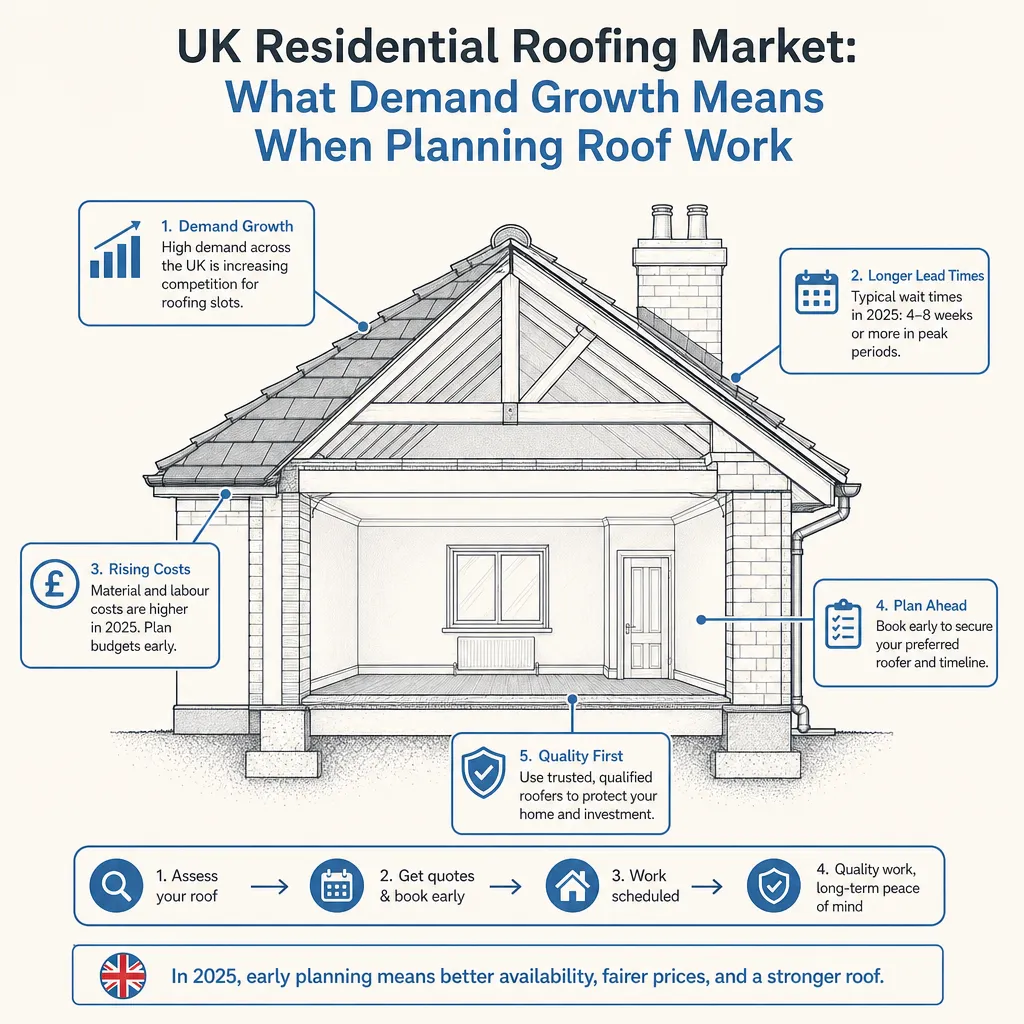
UK Residential Roofing Market: What Demand Growth Means When Planning Roof Work
Rising demand in the UK roofing market typically extends lead times from 4–8 weeks to 3–6 months and puts upward pressure on costs.
 Improvement & Build
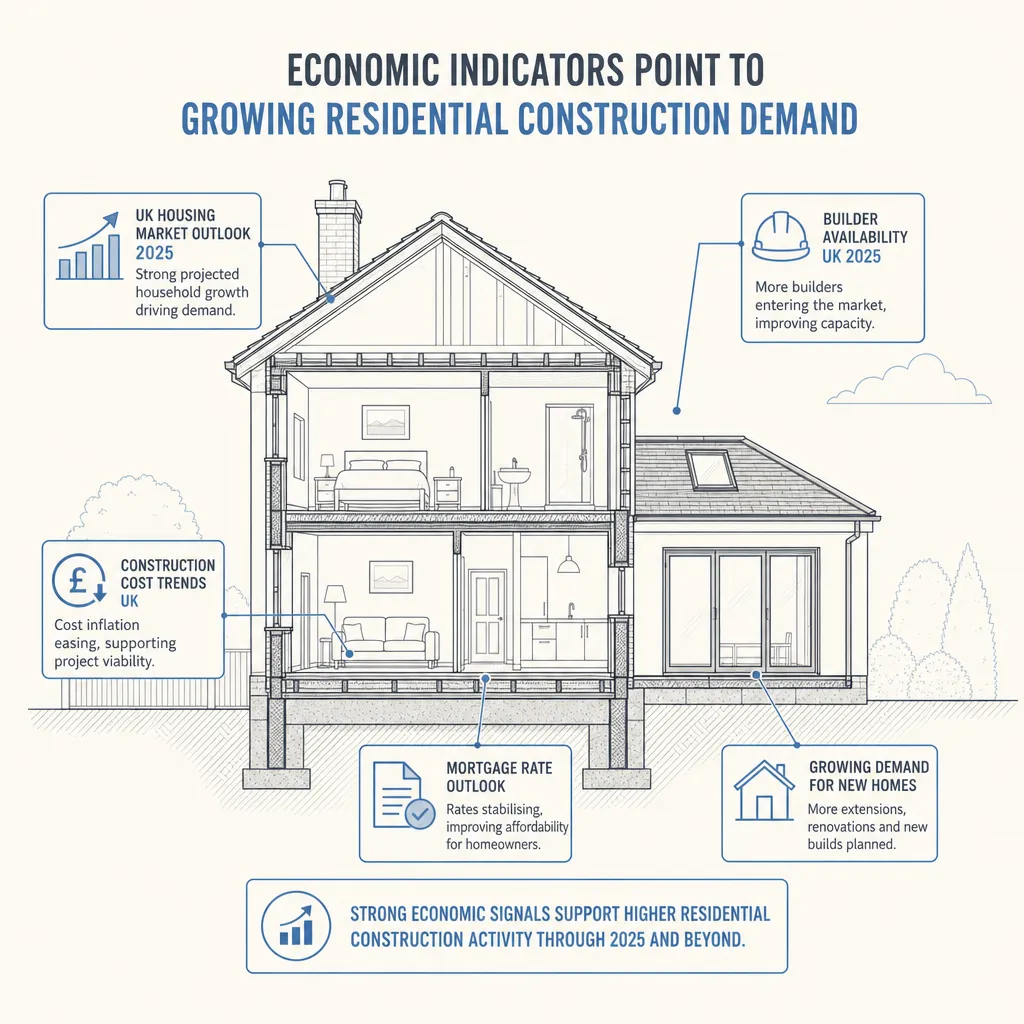
Economic Indicators Point to Growing Residential Construction Demand
Falling interest rates, the government's 1.
 Improvement & Build
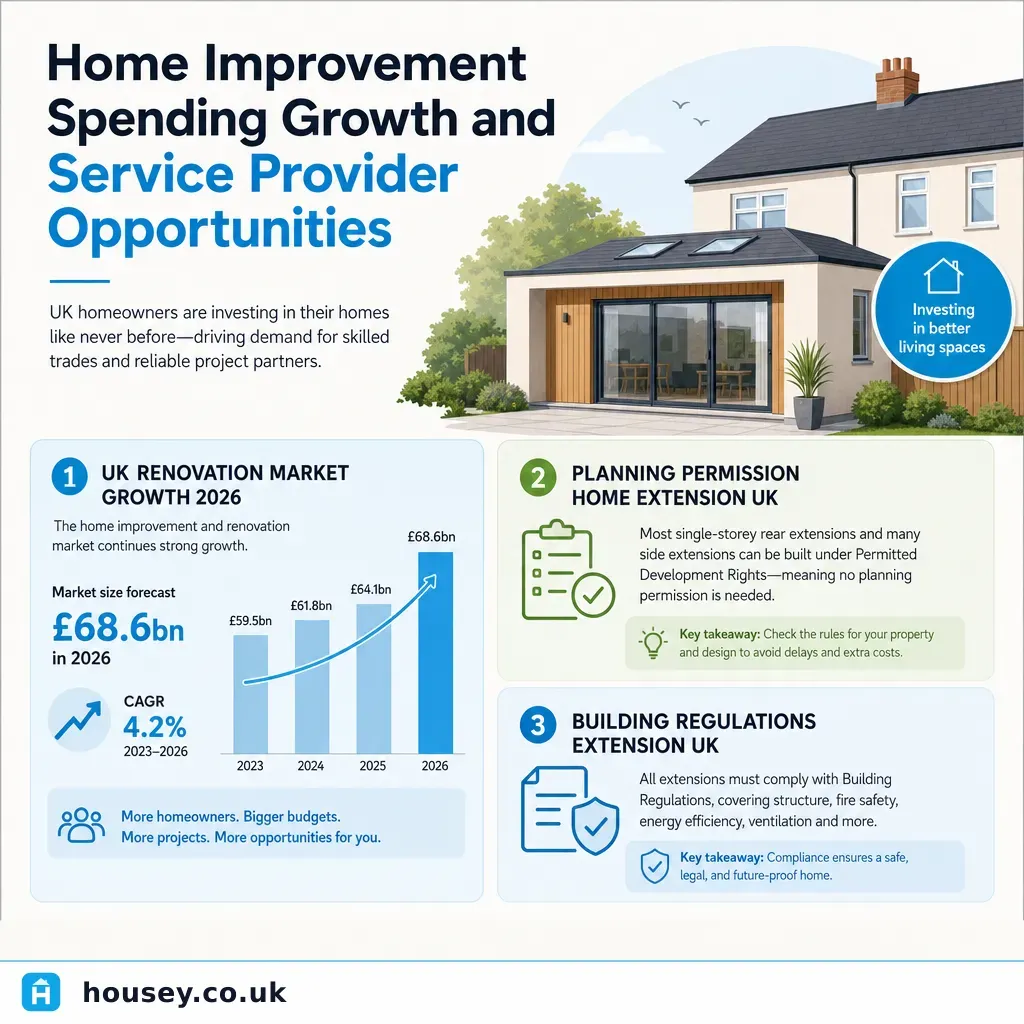
Home Improvement Spending Growth and Service Provider Opportunities
UK home improvement spending has remained elevated as subdued housing transactions push homeowners to invest in their existing properties.