Home Improvement Spending Growth and Service Provider Opportunities
By Housey · Last reviewed 30th of May 2026
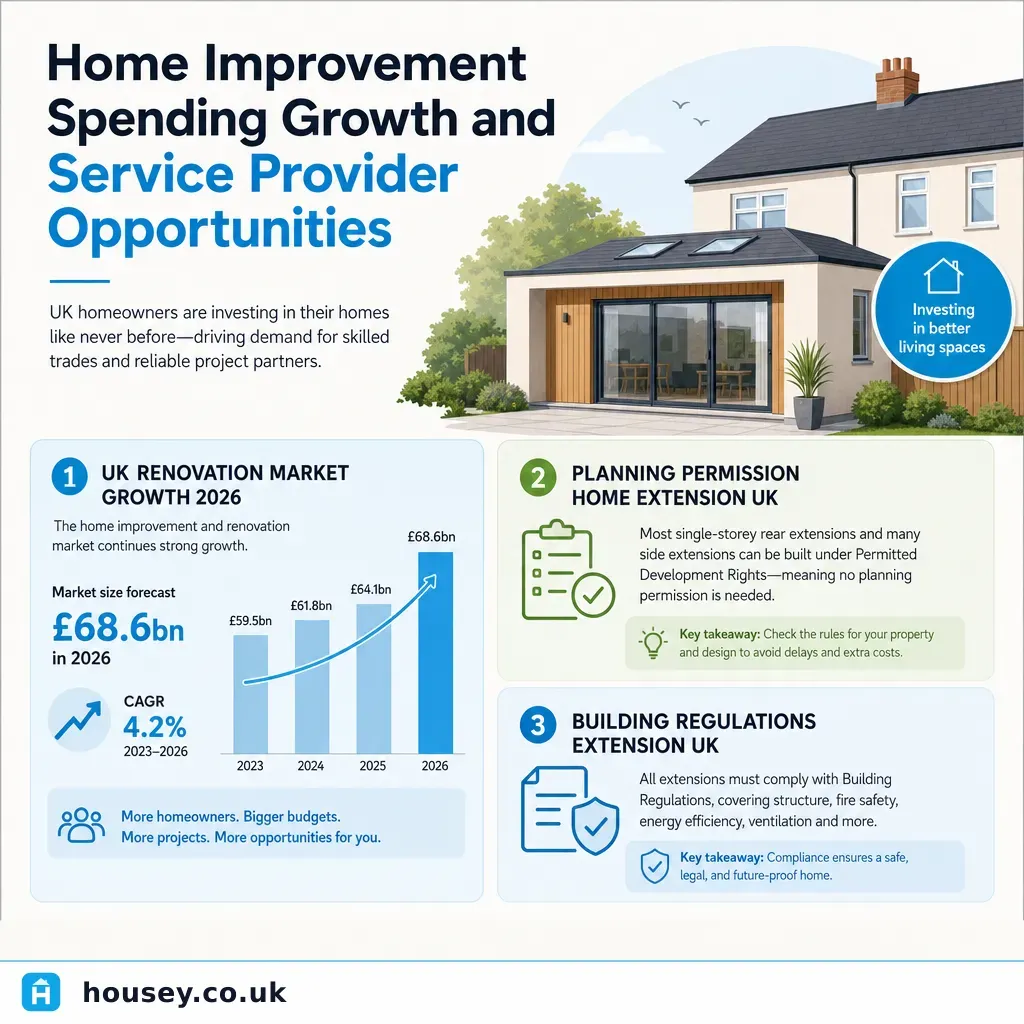
Home Improvement Spending Growth and Service Provider Opportunities
UK homeowners collectively invest billions of pounds each year in renovations, extensions, repairs, and upgrades — and spending has remained elevated in recent years despite economic headwinds. Whether you are planning your first major project or trying to understand how market conditions affect contractor availability and pricing, the context behind current demand helps you time your investment wisely and find the right professionals before waiting lists extend further.
Key points
- UK households spent approximately £34 billion on home improvements in 2023, according to the HomeOwners Alliance, with demand projected to remain elevated through 2026 as housing transaction volumes stay subdued.
- Planning application fees for householder applications in England increased to £258 in December 2023, and building control fees vary by local authority or approved inspector — typically £400–£1,200 for a standard extension.
- Window and door replacements must comply with Building Regulations Part L (thermal performance) and Part Q (security), and must be installed by a FENSA- or CERTASS-registered installer, or notified through building control.
- Permitted development rights allow most homeowners to add a single-storey rear extension of up to 3 metres depth (4 metres for detached houses) without a full planning application, though prior approval notification may still apply for larger extensions under the neighbour consultation scheme.
- The 5% reduced VAT rate applies to certain energy-saving materials installed in residential properties — including insulation, solar panels, and heat pumps — potentially reducing project costs compared to works subject to the standard 20% rate.
What is driving UK home improvement spending in 2026?
Several structural and cyclical forces have sustained high levels of home improvement activity.
Subdued housing transactions: When homeowners cannot afford to move — or choose not to in a period of higher mortgage rates — they tend to invest in improving their existing home instead. HMRC residential property transaction statistics have shown suppressed activity since 2022, which consistently correlates with increased renovation and extension spending.
Ageing housing stock: Around 38% of English homes were built before 1945, according to the English Housing Survey. Older properties require ongoing investment in roofing, windows, heating systems, and structural elements — and often return the strongest uplift in value from targeted improvement.
Energy cost awareness: Elevated energy bills since 2021 have accelerated investment in insulation, windows, heating systems, and solar PV. Many energy efficiency projects are now partly funded through government grants, reducing out-of-pocket costs and making combined improvement programmes more attractive.
Equity and borrowing: With house prices remaining high relative to incomes, many owner-occupiers have sufficient equity to fund substantial improvements through remortgaging or further advances — even in a period of higher interest rates.
Worked UK property scenario: the "improve rather than move" decision
Consider a family in a 1970s semi-detached home in the East Midlands who cannot afford to upsize in the current market. They decide to invest in a rear extension and a package of energy improvements, coordinating multiple trades over twelve months.
- Rear single-storey extension (3m depth under permitted development): requires a designer for drawings, a structural engineer for beam calculations, a building regulations application, and a main contractor or design-and-build firm to coordinate trades on site.
- Replacement windows and doors: existing double glazing from the 1990s falls well below current Part L thermal standards. FENSA-registered window and door installers can supply compliant products and self-certify the installation, avoiding a separate building control application.
- Flat roof over the existing kitchen extension: leaking and at end of life. A specialist roofer experienced in warm-deck flat roof construction handles this, with building control sign-off required if the roof structure is altered.
- Loft conversion (planned for a subsequent phase): will require a planning application (permitted development allowance used by the extension) plus full building regulations covering Part A (structure), Part B (fire safety), and Part L (energy efficiency).
This sequence illustrates how a single programme of improvements involves multiple specialist trades, regulatory notifications, and planning considerations — and how early professional coordination avoids expensive rework.
The trades in highest demand: a practical comparison
Trade / Service | Typical project trigger | Usual regulatory requirement | Average booking lead time (2025–2026) | Things to check |
|---|---|---|---|---|
Extension builders | Additional living space; loft conversion not viable | Building regulations; planning if exceeds PD limits | 8–16 weeks from quote acceptance | CHAS or Constructionline accreditation; public liability insurance |
Design-and-build firms | Complex or multi-stage projects needing design and coordination | Building regs and planning drawings | 4–10 weeks for initial design appointment | RIBA-chartered architect or CIAT-qualified designer |
Roofers | Roof age, active leak, flat-roof end of life | Building regs for structural changes | 4–12 weeks | NFRC membership; manufacturer or BBA product accreditation |
Window and door installers | Age, draught, EPC improvement, security upgrade | Part L and Part Q; FENSA or CERTASS required | 4–10 weeks | FENSA or CERTASS registration number; verify before contracting |
What homeowners should understand about cost drivers
Home improvement costs in the UK vary widely by region, project complexity, and contractor quality. Key drivers to understand before requesting quotes:
- Regional labour rates: London and the South East typically attract labour rates 15–30% higher than the Midlands or North of England for equivalent trades.
- Materials: Timber, steel, and insulation prices have stabilised since the supply-chain disruptions of 2021–2022 but remain elevated against pre-pandemic benchmarks.
- Planning and building control fees: Householder planning applications in England cost £258 (as of December 2023). Building control fees for a typical extension building notice or full plans application range from approximately £400 to £1,200 depending on the local authority and project scale.
- VAT treatment: Most building work on existing residential properties is subject to 20% VAT. The 5% reduced rate applies to certain energy-saving measures. Always confirm VAT treatment with your contractor before accepting a quote — misunderstanding this can affect your budget by thousands of pounds.
Indicative UK costs, last reviewed 2026-05-30. Always obtain multiple quotes and confirm VAT treatment.
Homeowner checklist: preparing for a major improvement project
When to get professional help
Most significant home improvement projects benefit from professional oversight at the design or specification stage, not just during construction. Consider appointing a professional before proceeding if:
- Your project involves structural changes — removing walls, adding floors, or underpinning foundations.
- You are unsure whether planning permission or prior approval is needed.
- The project involves multiple trades and you need a single point of coordination.
- You are working near boundaries, shared walls, or drainage serving neighbouring properties.
- You are making alterations to a listed building.
How Housey can help
Housey makes it straightforward to find and compare qualified professionals for home improvement projects of all scales. Whether you need extension builders for a full rear addition, a design-and-build firm to manage the process end-to-end, specialist roofers for flat or pitched roof work, or window and door installers to upgrade glazing to current thermal and security standards, Housey connects you with accredited local providers.
Frequently asked questions
Do I always need planning permission for a home extension?
Not always — many extensions fall within permitted development rights and do not require a planning application. However, permitted development has conditions on size, height, materials, and boundary proximity, and Article 4 directions can remove these rights in some areas. Prior approval under the neighbour consultation scheme may still apply for larger single-storey extensions. Always check via Planning Portal or with your local planning authority before starting work.
What is the difference between building regulations and planning permission?
Planning permission controls whether a development is acceptable in principle — its size, appearance, and impact on the surrounding area. Building regulations are separate technical standards ensuring works are structurally sound, thermally compliant, and safe. Most building works require building regulations approval even when planning permission is not needed — the two systems operate independently of each other.
How long does a typical rear extension take to complete?
A single-storey rear extension for a typical semi-detached or terraced house generally takes 8–14 weeks to build on site once work starts, depending on size and specification. Allow an additional 4–8 weeks for design, structural calculations, and building control submission before work begins, plus contractor lead time. Total duration from initial professional appointment to practical completion is commonly 5–9 months.
Is it worth improving my home before selling?
It depends on the project type and local market conditions. Energy efficiency improvements — insulation, new windows, or a heating system upgrade — can raise the EPC rating and appeal to cost-conscious buyers. Extensions and loft conversions can add measurable value in space-premium areas. Cosmetic works rarely recover their full cost at sale. A local estate agent's view on what buyers prioritise in your area is useful before committing to substantial pre-sale expenditure.
Sources and further reading
- English Housing Survey 2022 to 2023 — GOV.UK / MHCLG
- Planning Portal: householder extensions and permitted development — Planning Portal
- HMRC UK property transaction statistics — HMRC
- VAT on building and construction (VAT Notice 708) — GOV.UK / HMRC
- FENSA: competent person scheme for windows and doors — FENSA
- HomeOwners Alliance: home improvement guides — HomeOwners Alliance
Useful next reads
 Improvement & Build
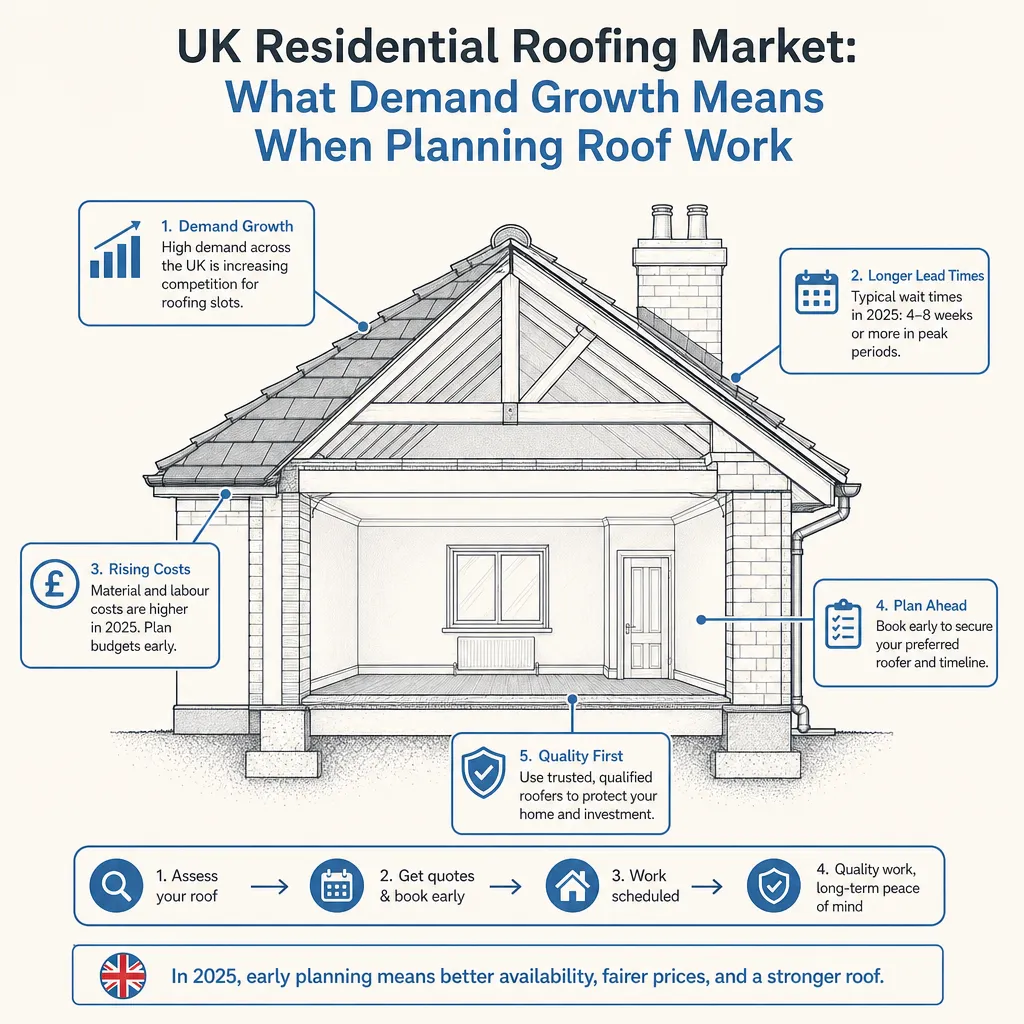
UK Residential Roofing Market: What Demand Growth Means When Planning Roof Work
Rising demand in the UK roofing market typically extends lead times from 4–8 weeks to 3–6 months and puts upward pressure on costs.
 Improvement & Build
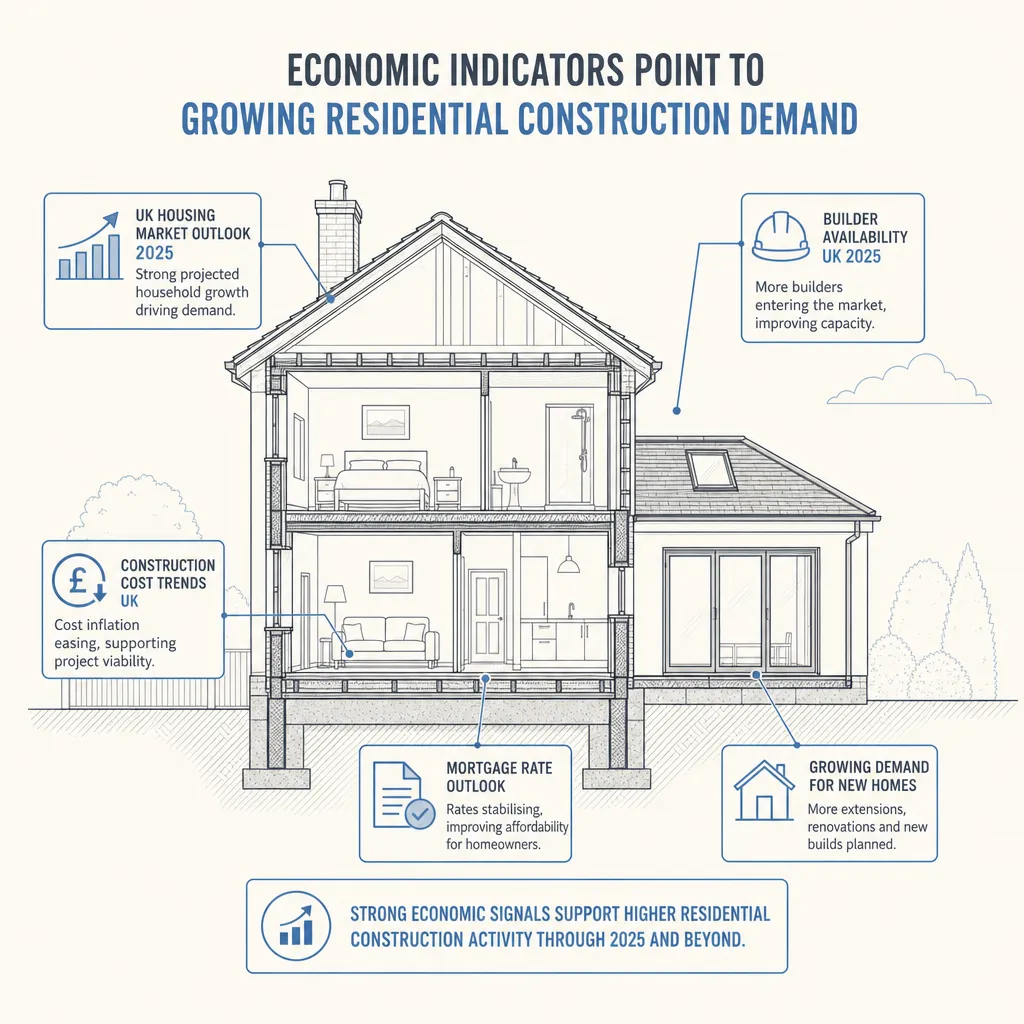
Economic Indicators Point to Growing Residential Construction Demand
Falling interest rates, the government's 1.
 Improvement & Build
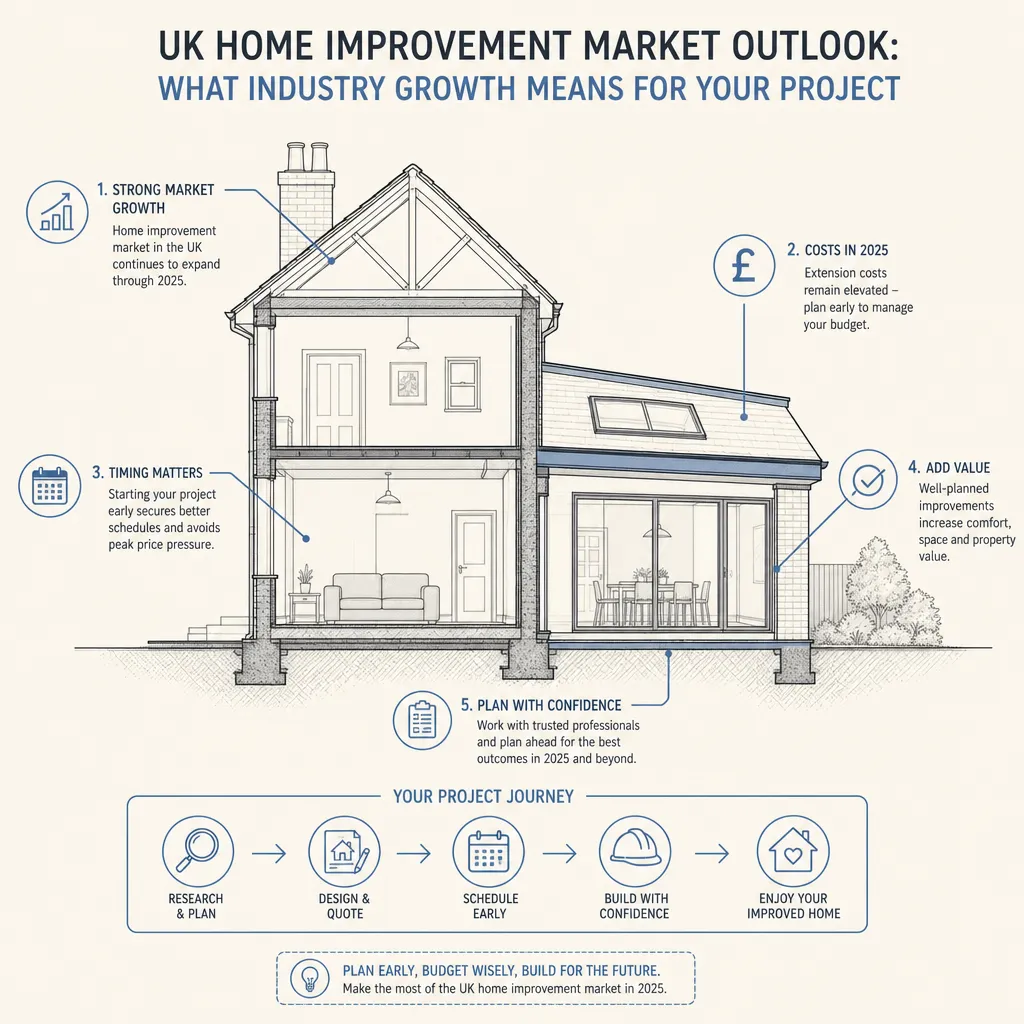
UK Home Improvement Market Outlook: What Industry Growth Means for Your Project
During periods of growth in the UK home improvement market, contractor lead times lengthen, material costs rise, and builders become more selective about which projects they tender for.
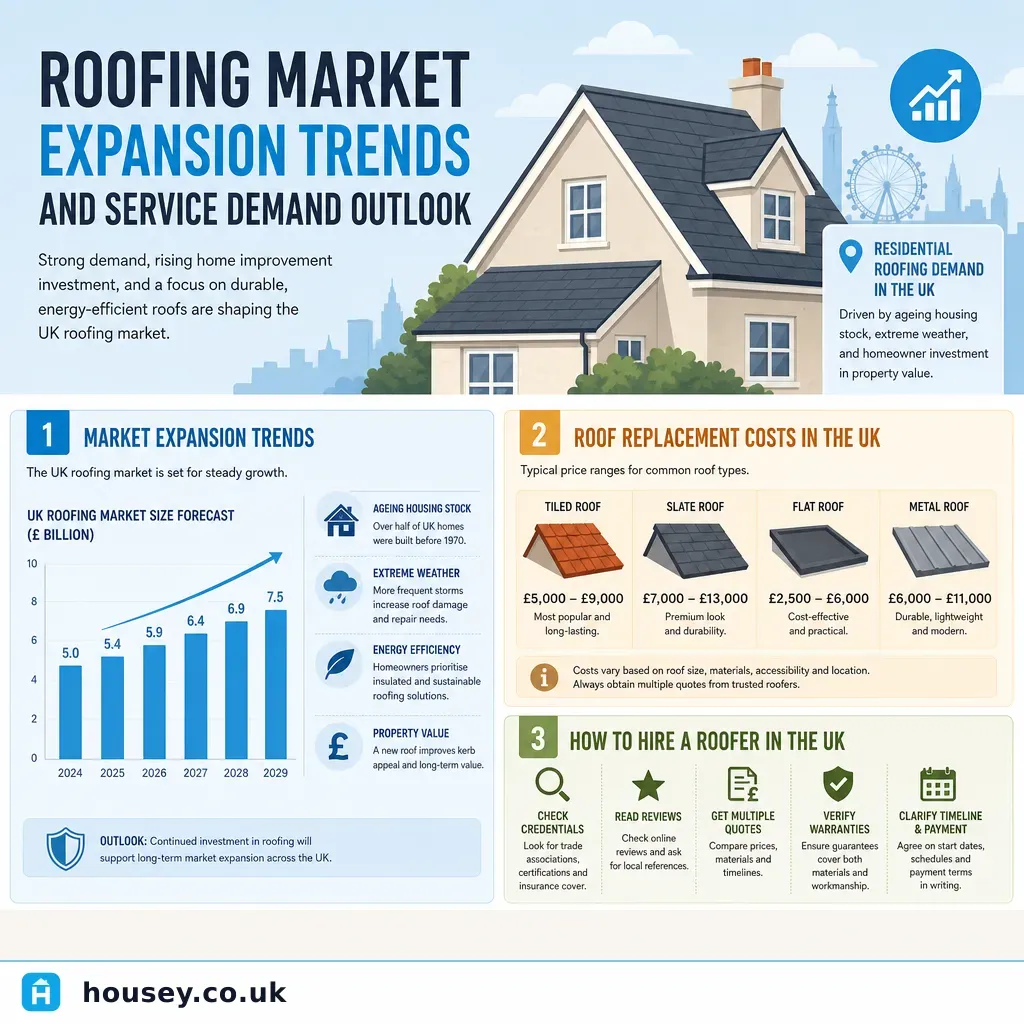 Improvement & Build
Roofing Market Expansion Trends and Service Demand Outlook
UK roofing demand remains strong and growing, driven by an ageing housing stock, energy efficiency requirements under Approved Document L, and increasing storm-related damage.
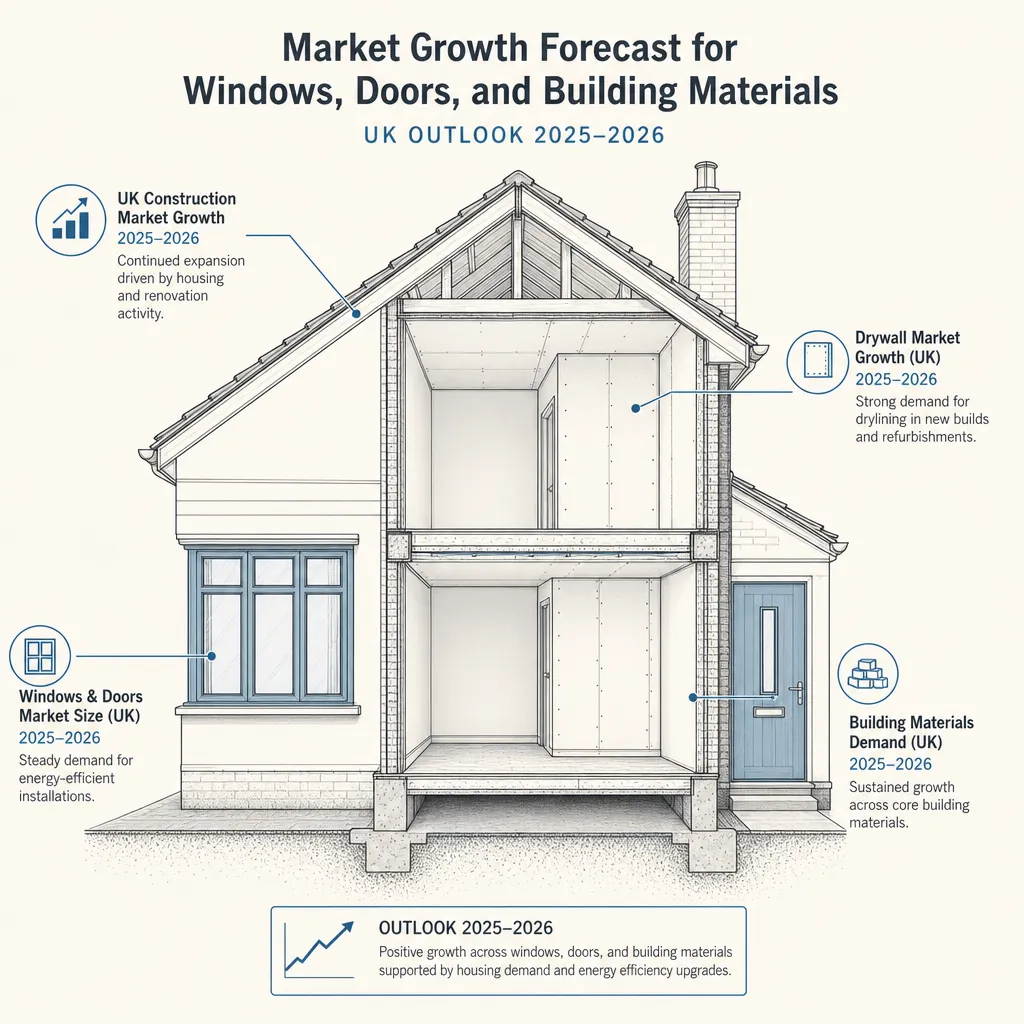 Improvement & Build
Market Growth Forecast for Windows, Doors, and Building Materials
Demand for UK windows, doors, and drywall is driven by a mix of replacement cycles, energy efficiency regulations, and housing activity.