UK Residential Roofing Market: What Demand Growth Means When Planning Roof Work
By Housey · Last reviewed 30th of May 2026
UK Residential Roofing Market: What Demand Growth Means When Planning Roof Work
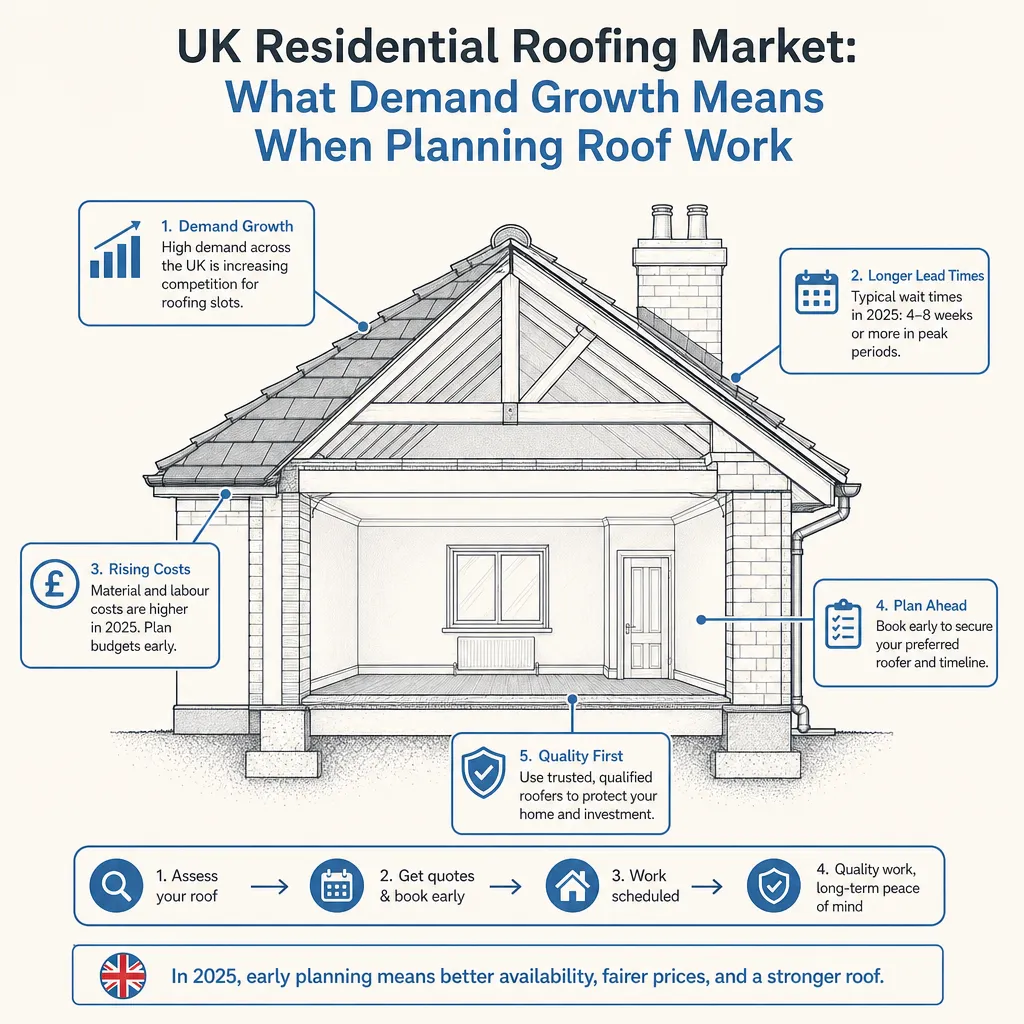
Roofing is one of the most time-sensitive maintenance decisions a homeowner faces: leaving a failing roof too long risks structural damage, damp penetration, and insurance complications. When demand for roofing work rises — driven by an ageing housing stock, post-storm repair backlogs, and increased retrofit activity — lead times lengthen and costs rise. Understanding the market context helps you plan and budget more effectively before approaching contractors.
Key points
- The Construction Products Association (CPA) tracks UK repair, maintenance and improvement (RMI) output, which includes roofing; RMI consistently accounts for roughly half of all UK construction output.
- A full re-roof on a standard 3-bed semi with a pitched, concrete or clay tiled roof typically costs £5,000–£15,000 depending on size, access, and materials (Indicative UK costs, last reviewed 2026-05-30).
- Scaffolding is required for most pitched roof work above 2m; this cost — commonly £800–£2,000 for a typical semi-detached — should be separately itemised in any written quote.
- Structural alterations to a roof (changing the pitch, removing a chimney breast, or altering the ridge line) require Building Regulations approval under Part A (Structure).
- During high-demand periods, roofing lead times commonly extend from a typical 4–8 weeks to 3–6 months in busier regions; emergency repair work is usually accommodated faster.
Why the UK roofing market is under demand pressure
The UK has approximately 28 million homes, the majority built before 1970. Pitched roofs using clay or concrete tiles have a typical tile lifespan of 50–100 years, but supporting timbers, flashings, valleys, ridges, and verge details typically require attention every 15–25 years. Flat roofs — common on extensions, garages, and some 1960s–1980s properties — have shorter replacement cycles of 15–25 years depending on the membrane system used.
Several factors have combined to increase demand in recent years:
- Ageing housing stock: a large proportion of UK homes are at or past typical maintenance intervals for key roofing components.
- Storm damage backlogs: severe weather events create peaks of repair demand that are absorbed unevenly across regional contractor markets.
- Energy retrofit activity: homeowners upgrading loft insulation under schemes such as ECO4 and the Great British Insulation Scheme (GBIS) sometimes discover pre-existing roof problems only when loft access is opened up.
- EPC-driven improvement: properties being brought up to EPC Band C ahead of proposed changes to Minimum Energy Efficiency Standards (MEES) for rented homes may include roof insulation and repairs as part of the programme.
What demand growth means for your project timeline
When roofing demand is high, the effects are felt directly by homeowners trying to plan and budget.
Market condition | Typical lead time | Cost pressure | Recommended approach |
|---|---|---|---|
Normal demand | 4–8 weeks | Stable | Get 3 written quotes; book 4–6 weeks ahead |
Elevated demand | 8–16 weeks | Moderate (5–10% uplift possible) | Book earlier; lock in a written, dated quote |
Post-storm surge | 2–6 months for non-emergency work | High in affected areas | Prioritise emergency patching; plan full works for a later window |
Very high demand | 6+ months for full re-roofs | Significant; some material shortages | Request a phased quote; ask about material sourcing timelines |
Worked UK property scenario: 1930s semi-detached
A homeowner with a 1930s semi-detached in the East Midlands notices several cracked and slipped tiles, a damp patch appearing on the bedroom ceiling after heavy rain, and deteriorating lead flashing around the chimney stack. They contact three local roofers in early spring, during a period of elevated post-winter demand.
Roofer A quotes £8,200 for a full re-roof — new concrete tiles, replace all battens and felt, repoint the ridge — with scaffolding included; available to start in 10 weeks.
Roofer B quotes £6,800 for a partial re-roof — replace damaged tile sections, repoint the ridge, replace lead flashing — available in 6 weeks, and advises a full re-roof within 3–5 years.
Roofer C quotes £9,100 for a full re-roof using reclaimed clay tiles to match the original specification; available in 14 weeks due to material sourcing lead times.
When the homeowner asks each roofer to confirm whether scaffolding, skip hire, and VAT are included, only Roofer A confirms all three. After adjusting for VAT and scaffolding hire, Roofer B's effective cost is comparable to Roofer A. Roofer C's reclaimed clay tile specification would be required if the property were in a conservation area.
Indicative UK costs, last reviewed 2026-05-30. Costs vary significantly by region, property size, and material specification.
Homeowner checklist: planning roofing work in a high-demand market
Red flags when getting roofing quotes
Watch for these warning signs when approaching roofing contractors:
- A contractor who quotes verbally only, with no written specification or schedule of works.
- No mention of scaffolding in a quote for pitched roof work — it is required where work cannot be carried out safely without it.
- A price substantially below other quotes without a clear explanation of what has been excluded or downgraded in specification.
- Pressure to pay a large deposit (above 25%) immediately, particularly where no deposit protection is offered.
- No evidence of current public liability insurance — always request a copy of the certificate before signing.
- An offer to start a full re-roof "immediately" during a period when other contractors are booking 8–12 weeks ahead — this warrants further investigation into capacity and qualifications.
When to get professional help
Emergency repairs following storm damage or sudden leaks need a roofer promptly; temporary patching is acceptable while a full survey is arranged. For planned works where the extent of deterioration is unclear — particularly on older properties — a RICS-accredited building surveyor can provide an independent condition report before you commit to a specification. If you suspect the roof structure is compromised (visible sagging, deflecting rafters, or stepped cracking in masonry below the eaves), a structural engineer should inspect before roofing contractors begin work.
How Housey can help
Housey connects you with vetted local roofers across the UK. Submit a quote request, compare credentials and prices from verified contractors, and book with confidence knowing all service providers are checked for relevant accreditations and insurance.
Frequently asked questions
Does roofing repair or replacement need planning permission?
Most like-for-like roofing repairs and replacements are permitted development and do not require planning permission. Exceptions include listed buildings, properties in conservation areas where matching materials may be required, and any alterations that change the shape or height of the roof. Check with your local planning authority if unsure, or apply for a Lawful Development Certificate for certainty.
How do I know if my roof needs a full replacement or just repairs?
Signs that suggest full replacement may be needed include widespread slipped or broken tiles across multiple sections, visible sagging in the roof plane, failure of the roofing felt beneath the tiles, and a roof that has been patched multiple times already. A roofing inspection survey — typically £150–£300 (Indicative UK costs, last reviewed 2026-05-30) — gives an independent assessment before committing to major expenditure.
What accreditations should I look for in a roofer?
Look for National Federation of Roofing Contractors (NFRC) membership, Competent Roofer scheme registration (a Competent Person Scheme allowing self-certification of certain roofing works), and TrustMark accreditation. Always verify current public liability insurance — request a copy of the certificate before signing any contract or paying a deposit.
How does a high-demand market affect roofing material costs?
During periods of high construction activity, key roofing materials — concrete and clay tiles, lead, roofing felt, and battens — can see price increases tracked by the BCIS (Building Cost Information Service). Locking in a written, dated quote provides some protection in a rising market; check the quote's validity period (typically 30–90 days) before accepting.
Sources and further reading
- Construction Products Association – UK Construction Forecasts — RMI output data and construction market projections
- National Federation of Roofing Contractors (NFRC) — contractor accreditation and find-a-contractor tool
- GOV.UK: Great British Insulation Scheme — retrofit insulation support including loft insulation funding
- BCIS Building Cost Information Service — material cost indices and tender price movement data
- GOV.UK: Planning permission — permitted development rules for roofing repairs and alterations
Useful next reads
 Improvement & Build
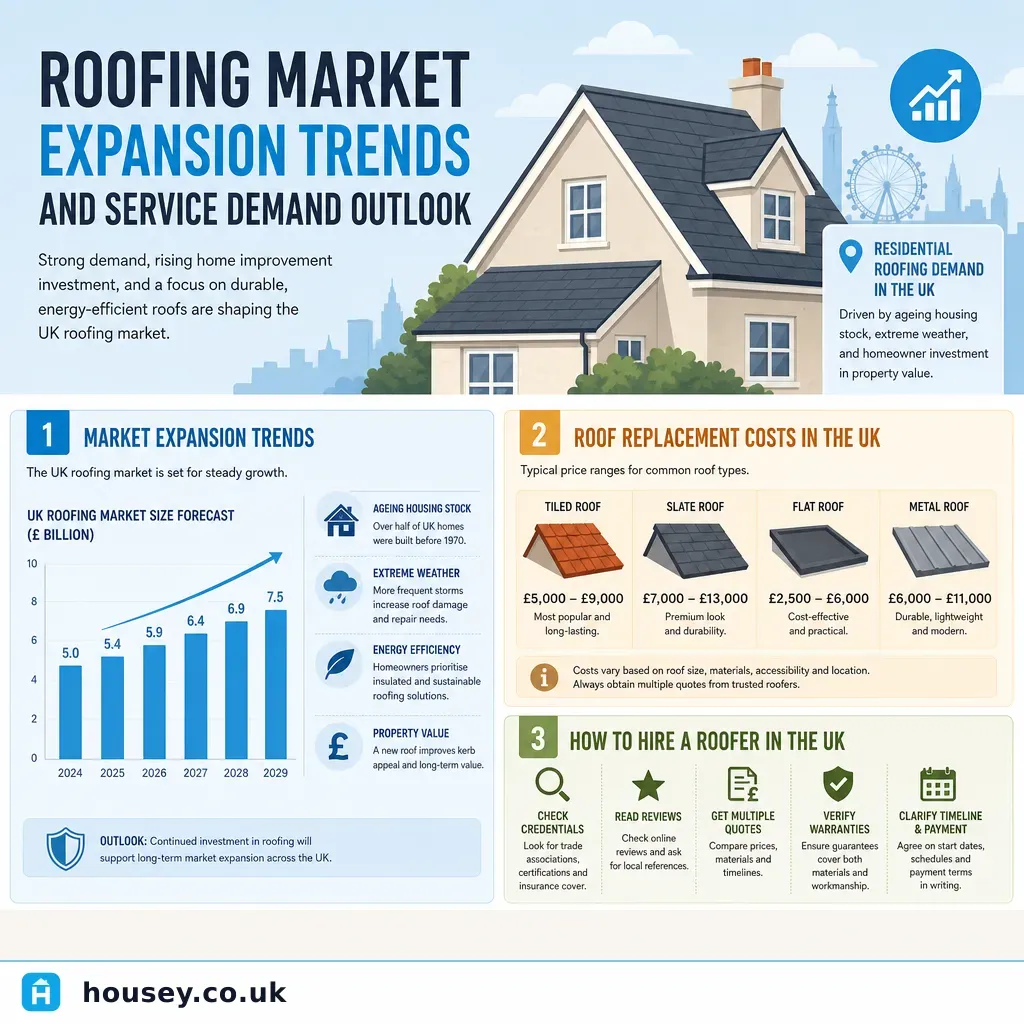
Roofing Market Expansion Trends and Service Demand Outlook
UK roofing demand remains strong and growing, driven by an ageing housing stock, energy efficiency requirements under Approved Document L, and increasing storm-related damage.
 Improvement & Build
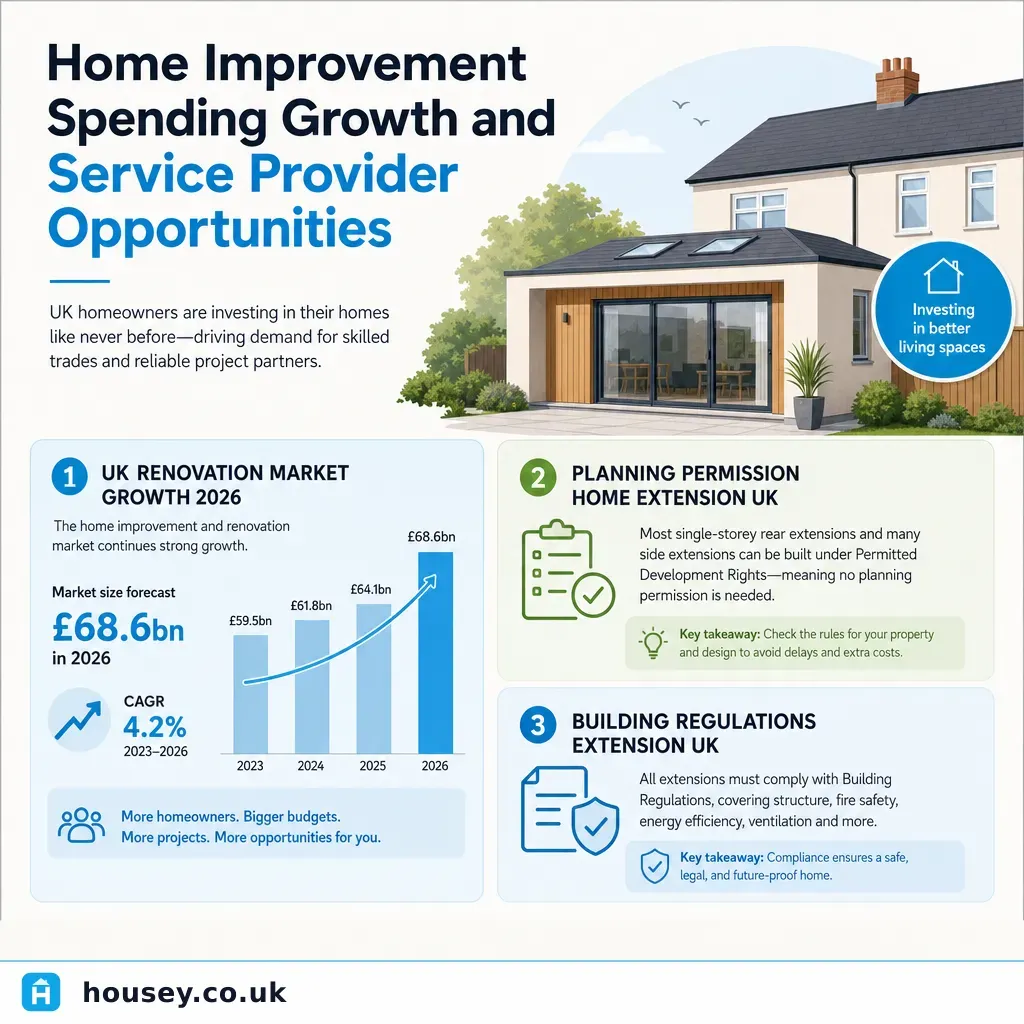
Home Improvement Spending Growth and Service Provider Opportunities
UK home improvement spending has remained elevated as subdued housing transactions push homeowners to invest in their existing properties.
 Improvement & Build
Understanding Roofing Service Demand Across the UK Market
UK roofing demand peaks in late summer and following storm events, often stretching contractor availability by several weeks.
 Improvement & Build
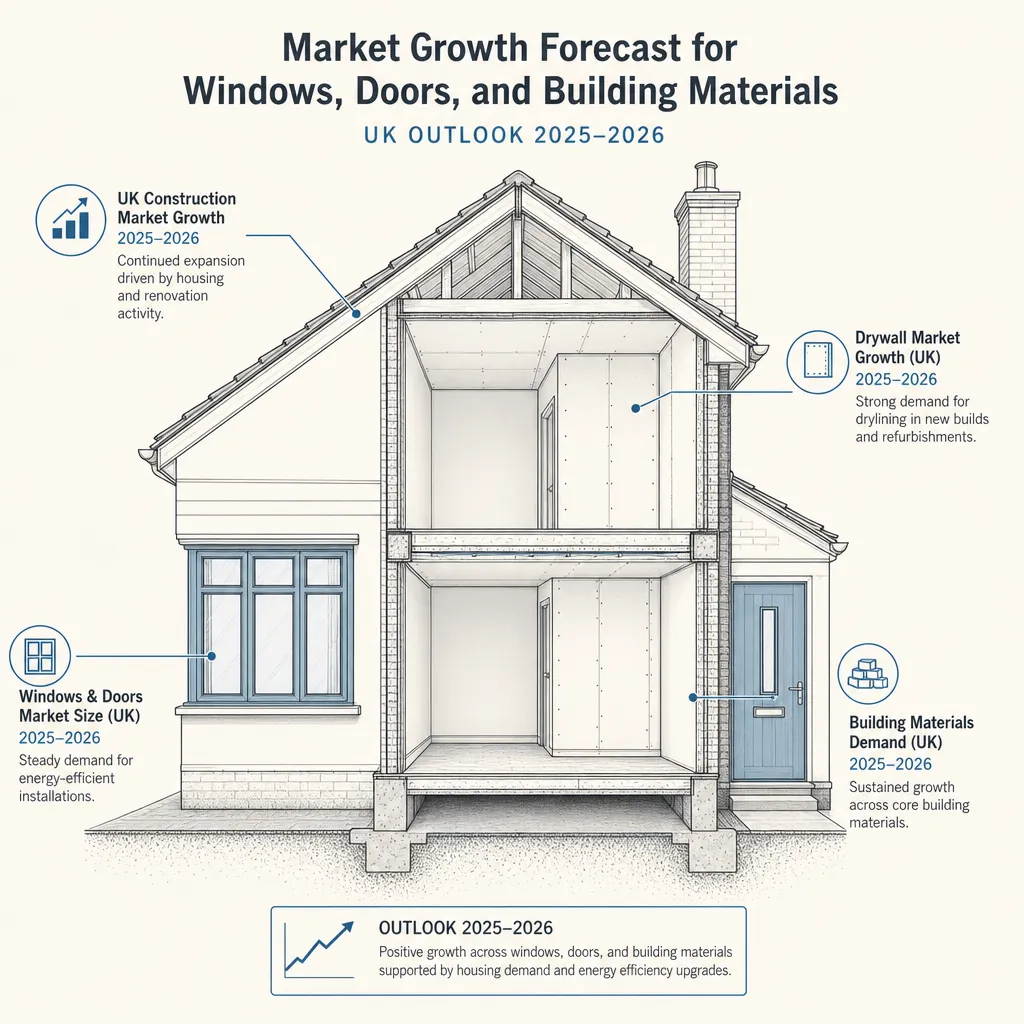
Market Growth Forecast for Windows, Doors, and Building Materials
Demand for UK windows, doors, and drywall is driven by a mix of replacement cycles, energy efficiency regulations, and housing activity.
 Improvement & Build
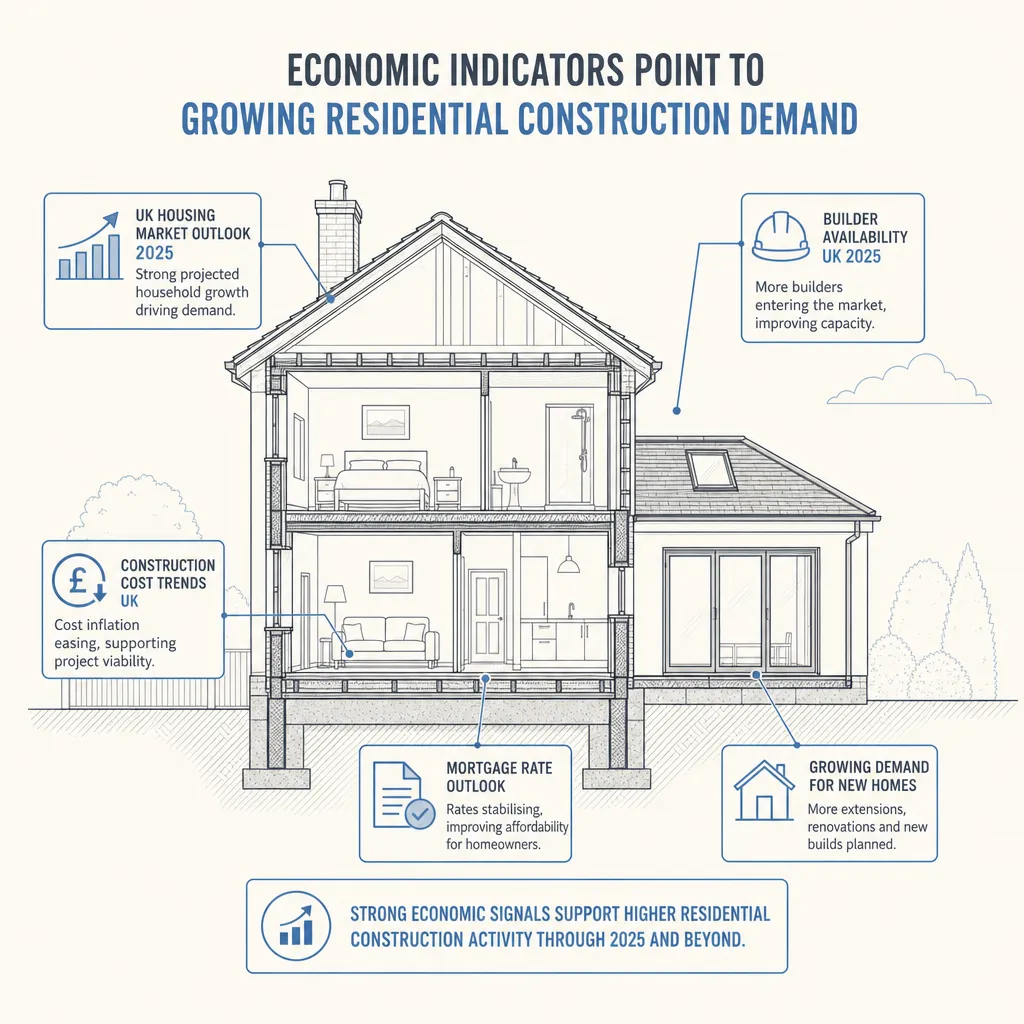
Economic Indicators Point to Growing Residential Construction Demand
Falling interest rates, the government's 1.