School Catchment Areas: Choosing the Right Location When Moving
By Housey · Last reviewed 8th of May 2026
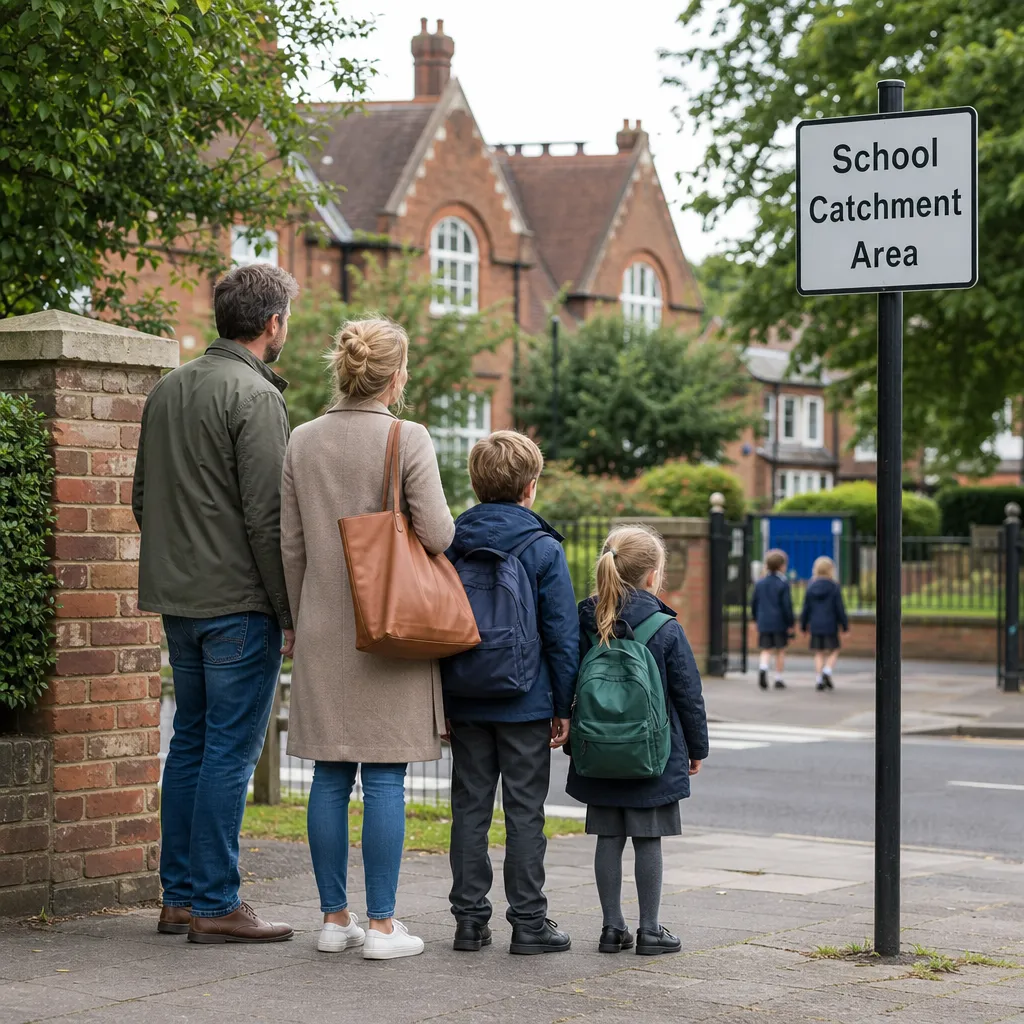
School Catchment Areas: Choosing the Right Location When Moving
School catchment areas are one of the most significant — and often most misunderstood — factors in choosing where to live when you have, or plan to have, school-age children. The question typically arises during the property search phase, before an offer is made, and the stakes are high: buying in the wrong street can mean missing a preferred school by metres. England's school admissions system is decentralised, with each Local Authority (LA) setting its own criteria, so what holds true in one borough may work differently two miles away.
Key points
- School catchment areas in England are not fixed legal boundaries — each Local Authority determines its own admissions criteria under the School Admissions Code 2021.
- National offer days fall on 1 March (secondary) and 16 April (primary) each year; applications open the preceding September and October.
- Ofsted inspection ratings (Outstanding, Good, Requires Improvement, Inadequate) are published at reports.ofsted.gov.uk; annual last-distance data is published separately by each LA.
- Last distance offered — the furthest distance from which children were admitted in the most recent round — is the most reliable indicator of effective catchment range and can vary by hundreds of metres year to year.
- If you move house after submitting a school application, you must inform your LA; your new address will be used for distance calculations, which may help or harm your position.
How school catchment areas actually work in England
State school admissions in England are governed by the School Admissions Code 2021 (Department for Education). Every oversubscribed state school must apply published oversubscription criteria in a set order. Typical criteria, listed in priority order, include:
- Looked-after and previously looked-after children (legally required to be first)
- Siblings of current pupils
- Distance from home to school (straight-line or walking route, depending on LA policy)
- Sometimes: faith criteria, feeder schools, or drawn catchment zones
Not all schools use a drawn catchment zone. Many rely purely on proximity. "Catchment area" in everyday speech usually means the distance within which children were offered places in the most recent admissions round — this is not a guarantee for future rounds.
Scotland, Wales, and Northern Ireland operate separate systems. In Scotland, each pupil has a designated school linked to their home address via the council's published catchment boundary, though placing requests to out-of-catchment schools are possible. In Wales, LAs set similar distance-based criteria. Always check the relevant devolved guidance if you are moving outside England.
Finding reliable catchment data before you buy
The most useful data sources, in order of reliability:
Source | What it shows | Limitation |
|---|---|---|
LA admissions statistics (annual) | Last-distance-offered per school, previous year | Historical — can change year to year |
School's own admissions policy | Priority criteria, any catchment zone map | Does not guarantee future outcomes |
Ofsted reports (reports.ofsted.gov.uk) | Inspection grade and report date | Does not show catchment distance data |
Get Information About Schools (GIAS) | School type, capacity, EHC plan data | No catchment boundary information |
Rightmove / Zoopla school overlays | Approximate catchment indication | Third-party estimate; treat as a guide only |
Direct contact with the LA admissions team | Current year position, likely effective catchment | Most accurate; worth a call before you offer |
The single most useful number is the last distance offered figure from the previous year's admissions round, published in your LA's annual admissions data. If that figure is 400m and your prospective property is 600m away, treat admission as uncertain — not guaranteed.
Decision tree: should this school drive your property choice?
- Choose the area primarily for the school if: the school is substantially oversubscribed, your child is starting within 12 months, and you have confirmed the property falls within last year's distance threshold — ideally verified directly with the LA.
- Weight other factors equally if: the school uses a larger catchment zone with plenty of spare capacity, or your child is two or more years from starting, giving the admissions picture time to change.
- Consider a wider search area if: the school you prefer uses sibling and faith criteria heavily and you have no existing connection — proximity alone may not be sufficient.
- Contact the LA directly if: the school runs a formal catchment boundary (common in Scotland; used by some English LAs) rather than a pure-distance tie-break — boundary maps can change.
- Seek independent advice if: you are considering a selective (grammar) school, which has different admissions tests and criteria unrelated to home address.
Red flags when assessing catchment claims
Estate agents and property listings sometimes mention school proximity or catchment in marketing copy. Treat these claims with caution.
Red flags that a catchment claim may not hold:
- The listing says "within catchment" without citing the school's admissions policy or an LA source.
- The agent references a catchment boundary that does not appear on the LA's published maps.
- The school's Ofsted rating has recently changed — Outstanding to Good, for example — which can shift demand and compress the effective catchment radius.
- The property is new-build or in a rapidly developing area — additional housing can reduce the effective distance threshold over several admissions cycles.
- The claim relates to a secondary school and your child is still in primary — secondary admissions are particularly competitive and effective catchments in popular LAs can shrink over time.
If a school is central to your move, verify the claim yourself using the LA's published data, not the listing.
What to ask the Local Authority before exchanging contracts
Before committing to a purchase, contact the LA admissions team with these questions:
- What were the last-distance-offered figures for this school in the most recent admissions round?
- Does this school use a formal catchment zone boundary, or a pure-distance tie-break?
- Is the school likely to expand, close, or change its admissions criteria in the coming years?
- If we move to a specific address, would we be within any formal catchment area?
- What is the process for an in-year transfer application if we complete after the national offer day?
LAs are not obliged to give binding pre-purchase guarantees, but admissions officers are usually helpful and the information they share is far more reliable than third-party tools.
How catchment interacts with your purchase timeline
School admissions timelines interact with conveyancing in ways that can catch families off guard:
- Completing before the application deadline (September–October): If you can exchange and complete before the admissions window opens, you can apply using your new address, maximising the catchment benefit.
- Completing after the offer day (post-March or post-April): You will need to apply as an in-year admission to any remaining places — these are allocated differently and often with less choice.
- Using a future address on your application: LAs allow this in some cases, but require proof (exchange of contracts or a tenancy agreement) by a specified date. Rules vary by LA — check well in advance.
- Renting temporarily before buying: Some families rent within a preferred catchment to secure a school place, then buy nearby. This is entirely legitimate; however, LAs may investigate if the rental address appears temporary and the family retains another property.
A conveyancer can help you manage completion timing to align with the admissions window. If school admission is a priority, discuss target exchange and completion dates with your solicitor early in the process.
When to get professional help
Most catchment research is something you can do yourself using publicly available data. However, consider specialist advice if:
- You are making a significant financial stretch specifically to purchase within a catchment area and want to understand the risk involved.
- Your child has an Education, Health and Care (EHC) plan — SEND admissions operate differently and specialist advice may be appropriate.
- You are considering a selective school in another borough or county, where admissions can involve legal challenge.
- You are buying in Scotland and want to submit a placing request to an out-of-zone school — the process differs materially from England's system.
How Housey can help
If school catchment is influencing which area you are targeting, having the right professionals in place early matters. Housey can connect you with a conveyancer who understands the importance of completion timing for admissions purposes — explore conveyancing services to request quotes. If you are also selling your current home, professional property photography and floorplans can help your listing move quickly and give you more control over your own timeline.
Frequently asked questions
Can an estate agent guarantee I am in a school's catchment area?
No. Estate agents are not admissions authorities and have no binding authority to confirm catchment eligibility. The only reliable confirmation comes from your Local Authority admissions team, using your specific address and the school's published oversubscription criteria. Always verify independently before making a decision based on a catchment claim in a property listing.
What happens if I move house after applying for a school place?
You must inform your LA. Your new address will be used for distance calculations from that point. If you move closer to the school this may improve your position; if further away, you may drop below the last-distance threshold. LAs take a dim view of applications using temporary addresses to gain an unfair advantage and can withdraw offers where fraud is established.
Do catchment areas change year to year?
Yes. The effective catchment — the distance within which children were offered places — can shift every year depending on applicant numbers, sibling allocations, and new housing developments. A school that offered places to children 800m away last year might only reach 600m this year if demand increases. Published admissions data from your LA is the most reliable way to track changes.
Is a school's Ofsted rating linked to its catchment area?
Indirectly, yes. Schools rated Outstanding or Good by Ofsted tend to attract higher demand, which compresses their effective catchment radius. A school whose rating has recently dropped may see a wider effective catchment in subsequent years as applications fall. Check the date of the most recent inspection at reports.ofsted.gov.uk — inspections can be several years apart.
Do the same catchment rules apply in Scotland, Wales, and Northern Ireland?
No. Scotland uses designated catchment boundaries linked to your home address, with a placing request process for out-of-zone choices. Wales broadly follows English-style criteria set by each LA. Northern Ireland has a different system, including grammar schools with academic selection. If moving to a devolved nation, check the relevant national government guidance rather than England's School Admissions Code.
Sources and further reading
- School Admissions Code 2021 — Department for Education
- Apply for a primary school place — GOV.UK
- Get Information About Schools (GIAS) — Department for Education
- Ofsted school inspection reports — Ofsted
- School admission appeals: guidance for parents — Department for Education
Useful next reads
 Buying & Moving
Managing Delays with Removal Companies: Rights and Resolution
If a removal company is late, your rights depend on your contract and whether the company is BAR-registered.
 Buying & Moving
Understanding Leasehold Property: Rights and Responsibilities
Leasehold means you own a time-limited interest in a property while the freeholder owns the land and building.
 Buying & Moving
The Complete Property Buying Guide: From Search to Purchase
Buying a property in England and Wales typically takes 3–6 months from accepted offer to completion.
 Buying & Moving
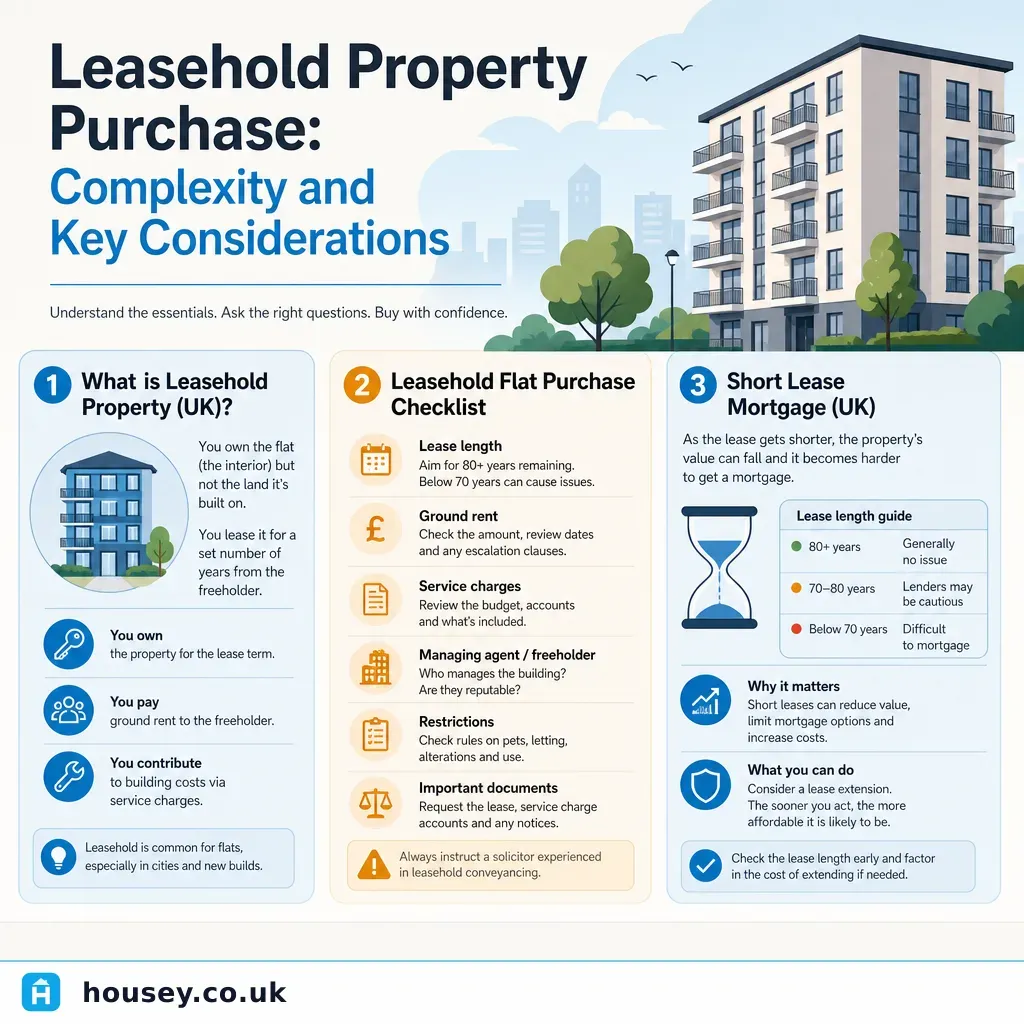
Leasehold Property Purchase: Complexity and Key Considerations
Buying a leasehold property means purchasing the right to occupy for a fixed term rather than owning the land outright.
 Buying & Moving
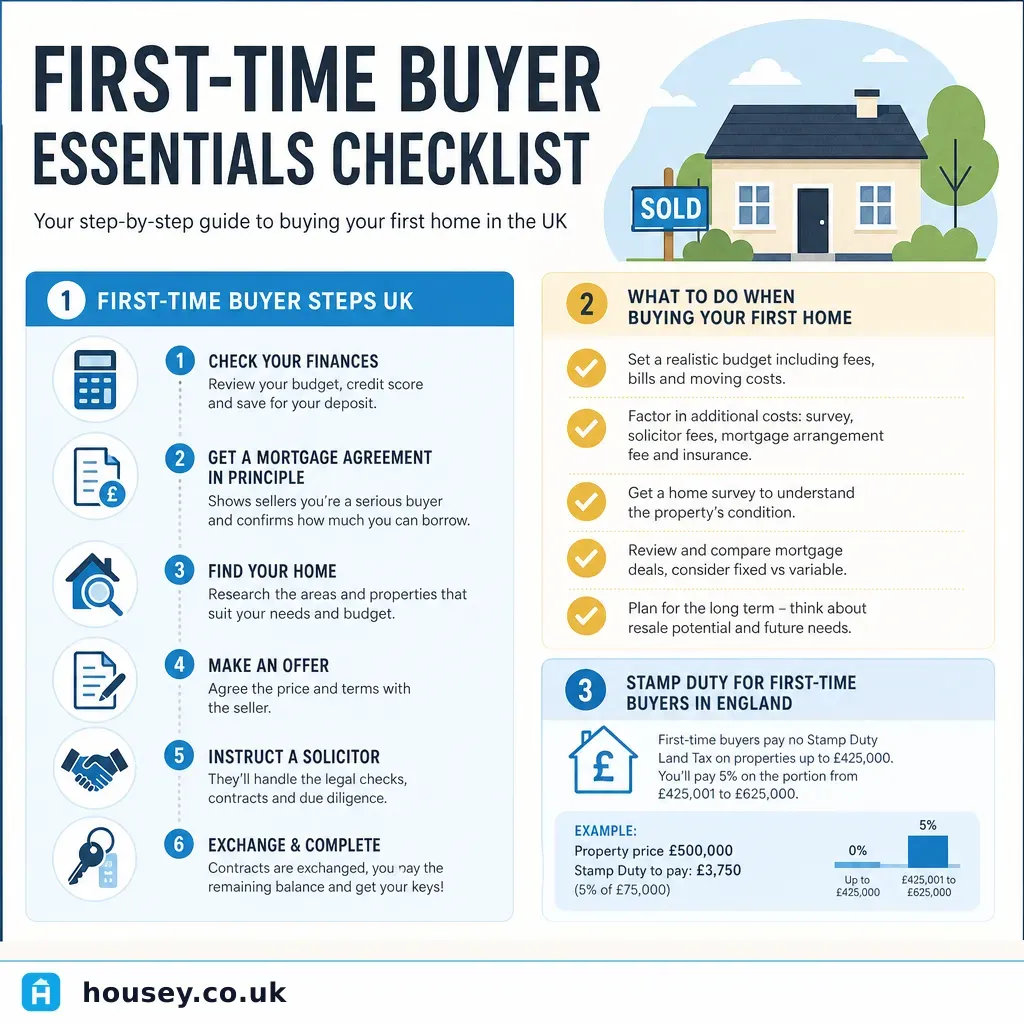
First-Time Buyer Essentials Checklist
Buying your first home involves obtaining a mortgage in principle, making an offer, instructing a solicitor, arranging a survey, and exchanging contracts before completion.