Selecting a Conveyancing Solicitor in Scotland: A Buyer's Guide
By Housey · Last reviewed 25th of May 2026
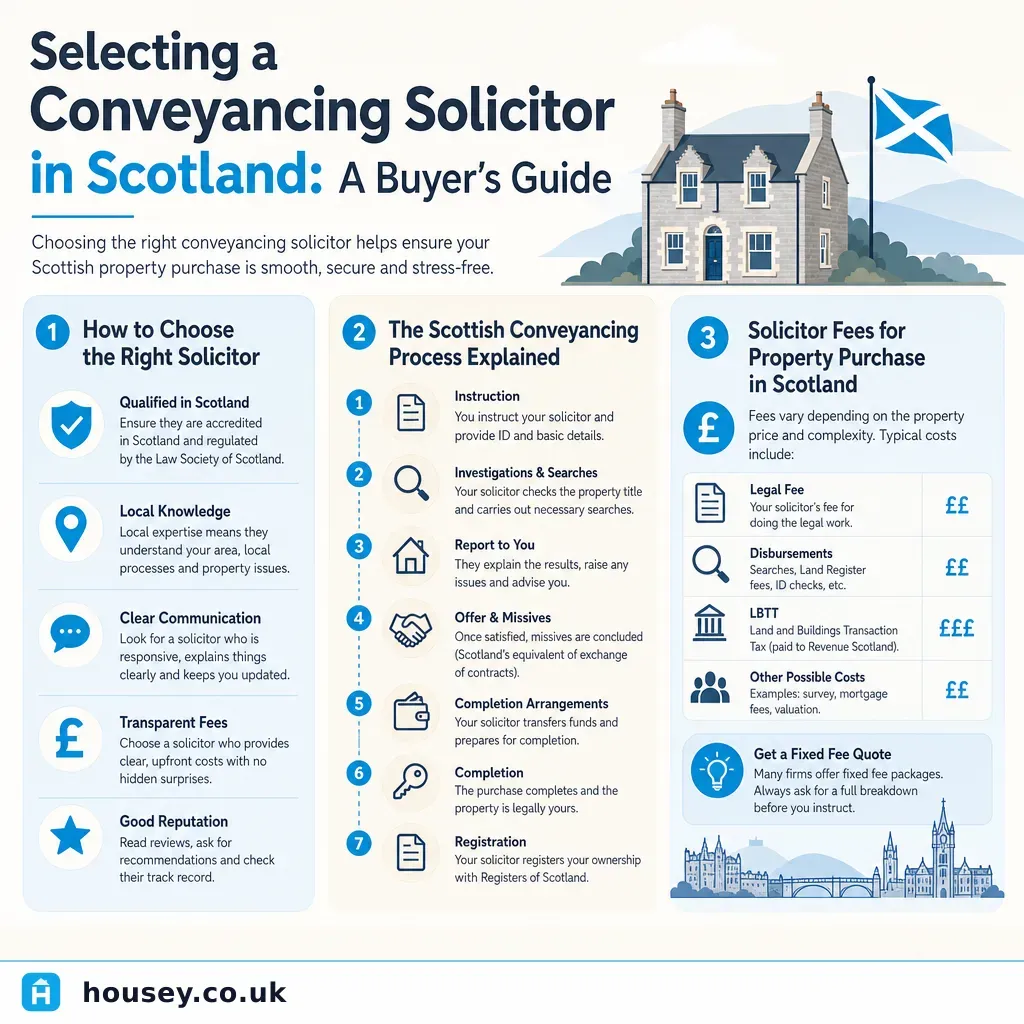
Selecting a Conveyancing Solicitor in Scotland: A Buyer's Guide
Buying property in Scotland follows a legally distinct process from England and Wales, and your choice of solicitor shapes the experience from the earliest stage. In Scotland, solicitors submit formal offers on your behalf and handle the negotiations that lead to a legally binding agreement — functions that estate agents or buyers perform informally in other parts of the UK. This means choosing a qualified Scottish solicitor before you begin viewing properties is standard practice, not a late-stage formality.
Key points
- Only a solicitor admitted to practise in Scotland can submit a formal written offer on a Scottish property on your behalf — instructing a solicitor before starting your property search is standard practice north of the border.
- All Scottish solicitors must be registered with the Law Society of Scotland, which maintains a public Find a Solicitor register; verify registration before instructing anyone.
- The transaction becomes legally binding at conclusion of missives — a formal written exchange between solicitors — not at a separate exchange of contracts as in England and Wales.
- Most residential properties marketed in Scotland since December 2008 must be accompanied by a Home Report comprising a single survey, an energy report, and a property questionnaire, under the Housing (Scotland) Act 2006.
- Closing dates — a sealed-bid system used when multiple parties express interest — can be called with as little as 24 hours' notice, which requires your solicitor to be ready to act quickly.
How Scottish conveyancing differs from England and Wales
Understanding the structural differences helps you choose a solicitor properly equipped for the Scottish system.
Feature | Scotland | England and Wales |
|---|---|---|
Legal framework | Scots law; Land Registration (Scotland) Act 2012 | English and Welsh common law |
Who submits formal offers | Your solicitor, in writing | Your estate agent, informally |
Point of legal commitment | Conclusion of missives | Exchange of contracts |
Pre-sale survey obligation | Home Report required at marketing stage (most properties) | No mandatory pre-sale survey |
Land register | Registers of Scotland | HM Land Registry |
Transaction tax | Land and Buildings Transaction Tax (LBTT) | Stamp Duty Land Tax (SDLT) |
Standard security | Scottish standard security | Legal charge (mortgage) |
What to look for in a Scottish conveyancing solicitor
Registration with the Law Society of Scotland
Your solicitor must hold a current practising certificate from the Law Society of Scotland. Use the Law Society of Scotland's Find a Solicitor tool to verify registration before you instruct anyone. Do not instruct a firm qualified only in England and Wales to act on a Scottish property transaction — they do not have the right to practise Scottish property law.
Experience in Scottish residential conveyancing
Scottish property law has specific requirements around land registration, servitudes (rights over neighbouring land), title conditions, and the Matrimonial Homes (Family Protection) (Scotland) Act 1981. Ask the firm how many Scottish residential transactions they complete each year and whether they are familiar with the specific area where you are buying — rural properties, tenement flats, and island properties each present different title complexities.
Capacity to respond to closing dates
In competitive Scottish markets — Edinburgh, Glasgow, Aberdeen, and popular commuter towns — closing dates can be set with as little as 24 hours' notice. Ask the firm explicitly whether they can prepare and submit a formal written offer at very short notice during normal working hours. A firm that cannot commit to this will put you at a disadvantage in fast-moving markets.
Fixed-fee vs hourly billing
Many Scottish solicitors offer fixed-fee residential conveyancing packages. When comparing quotes, confirm whether the fee covers:
- Title examination and raising property enquiries
- LBTT return submission to Revenue Scotland
- Land Register application and Registers of Scotland dues
- Dealing with mortgage lender requirements, including lender panel work
- Search fees (local authority, water and drainage, coal mining where applicable)
Lender panel membership
Many mortgage lenders require a solicitor from their approved panel to act on their behalf in the transaction. If your chosen solicitor is not on your lender's panel, the lender may appoint a separate solicitor — at additional cost to you. Confirm panel membership for your specific lender before instructing a firm.
Worked example: buying a tenement flat in Edinburgh
Sarah is relocating from London to Edinburgh and buys a two-bedroom tenement flat for £285,000. She instructs a solicitor before registering with estate agents. Her solicitor reviews the Home Report — which includes a survey valuing the property at £280,000 and a condition rating flagging minor roof maintenance — and advises on the shared ownership of the common stair and roof under the tenement title. A closing date is called with 36 hours' notice; Sarah's solicitor prepares and submits a formal offer of £289,000 the following morning. Missives are concluded within 12 days. Her solicitor files the LBTT return with Revenue Scotland and completes the land registration. Sarah completes eight weeks after the closing date.
This scenario illustrates why having a solicitor ready before the property is found — rather than scrambling to instruct one after a closing date is announced — is essential in Scotland.
Understanding the Home Report
Most properties marketed in Scotland must be accompanied by a Home Report comprising three elements:
- Single survey: a RICS-standard condition report and market valuation carried out by a chartered surveyor, commissioned by the seller
- Energy report: an Energy Performance Certificate (EPC) produced by an accredited domestic energy assessor
- Property questionnaire: completed by the seller, covering council tax band, property history, parking, alterations, and known issues
As a buyer, you have a legal right to request a copy of the Home Report. Your solicitor will review it as part of due diligence. However, because the survey within the Home Report was commissioned by the seller, you may wish to commission your own independent RICS Level 2 or Level 3 survey if the property is older, shows condition concerns, or is of non-standard construction.
What to ask before instructing a Scottish solicitor
- Are you registered with the Law Society of Scotland, and can I verify your current practising certificate?
- Do you have capacity to respond to a closing date called with less than 24 hours' notice?
- Is your fee quote fixed, and does it include LBTT return submission, Land Register application, and all search fees?
- Are you on the approved panel for my mortgage lender?
- How do you handle title issues specific to this area — for example, shared maintenance obligations in a tenement, rural servitudes, or croft restrictions?
- What is your process after receiving the Home Report — will you advise me on any concerns before I make an offer?
- What is your typical timeline from accepted offer to concluded missives?
Important limitations
This article describes general principles of Scottish residential conveyancing and how to select a qualified solicitor. Property law in Scotland is distinct from — and not interchangeable with — the law in England, Wales, or Northern Ireland. Specific property types (croft land, listed buildings, properties with agricultural tie conditions) carry additional legal requirements beyond what is described here. LBTT rates and thresholds are set by the Scottish Parliament and can change — always verify current rates with Revenue Scotland before proceeding. Instructing a solicitor registered with the Law Society of Scotland is essential for every Scottish residential purchase.
What to ask a qualified professional
Once you have shortlisted firms:
- Can you provide a formal written quotation with all disbursements and VAT itemised separately?
- What is your process if the Home Report or title investigation raises concerns after an offer has been submitted?
- How will you communicate with me at each stage of the missives process?
- If I need to withdraw before missives are concluded, what fees would be payable?
- Do you offer a client portal or online case-tracking system?
When to get professional help
A qualified Scottish solicitor is not optional in a Scottish property transaction — it is a legal necessity. Take particular care to instruct a solicitor promptly if:
- You are relocating from England or Wales and are unfamiliar with the Scottish legal system
- You are buying a tenement flat with shared maintenance obligations under a common title deed
- The Home Report flags significant condition concerns or title complications
- You are buying in a rural area where the title may include servitudes, rights of way disputes, or agricultural restrictions
- You are using a shared equity scheme such as Help to Buy (Scotland)
How Housey can help
Housey can connect you with solicitors experienced in Scottish conveyancing and with RICS-accredited surveyors if you want an independent assessment to supplement or replace the Scottish Home Report. Compare quotes and read verified reviews before making your choice.
Frequently asked questions
Do I need a Scottish solicitor if I am based in England?
Yes. A solicitor must be qualified to practise Scottish property law — regulated by the Law Society of Scotland — to act on a Scottish residential transaction. A firm qualified only in England and Wales does not have that right. Many Scottish solicitors work with clients across the UK and handle correspondence digitally, so being based in England is not a practical barrier to instructing a Scottish firm.
What is a closing date in Scottish property buying?
A closing date is a deadline set by the seller's solicitor by which all interested buyers must submit formal written offers through their own solicitors. The seller may accept any offer or decline all of them — the highest bid is not automatically accepted. Closing dates are common in competitive Scottish markets and underline why having a solicitor already instructed before you identify a property is important.
How much does a conveyancing solicitor cost in Scotland?
For a straightforward residential purchase, combined legal fees (excluding LBTT and registration dues) typically range from £1,000 to £2,000 + VAT, though this varies by firm, location, and transaction complexity. Disbursements — including Registers of Scotland registration dues, LBTT, and search fees — are charged separately and should be itemised in your quote. Always request a full written quotation before instructing. Indicative UK costs, last reviewed 2026-05-25.
Is the Home Report survey enough, or should I commission my own?
The Home Report single survey provides a RICS condition rating and valuation and is a useful starting point, but it was commissioned by the seller. If the property is pre-1919, shows defects, has had alterations, or is of non-standard construction, commissioning your own RICS Level 2 or Level 3 survey before concluding missives gives you an independent second opinion that protects your interests rather than the seller's.
Sources and further reading
- Find a Solicitor — Law Society of Scotland
- Home Report — Scottish Government
- Land and Buildings Transaction Tax — Revenue Scotland
- Registers of Scotland — Registers of Scotland
- Buying a home in Scotland — Citizens Advice Scotland
Useful next reads
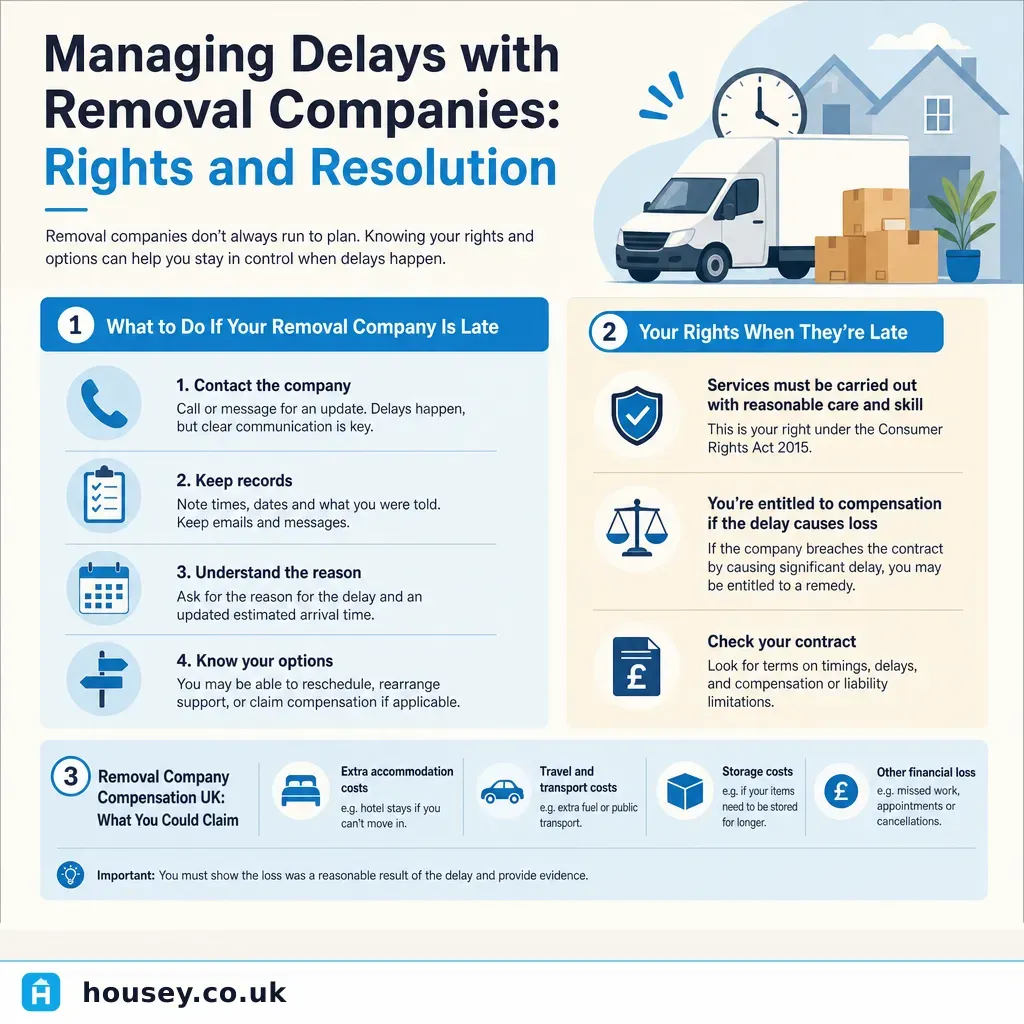 Buying & Moving
Managing Delays with Removal Companies: Rights and Resolution
If a removal company is late, your rights depend on your contract and whether the company is BAR-registered.
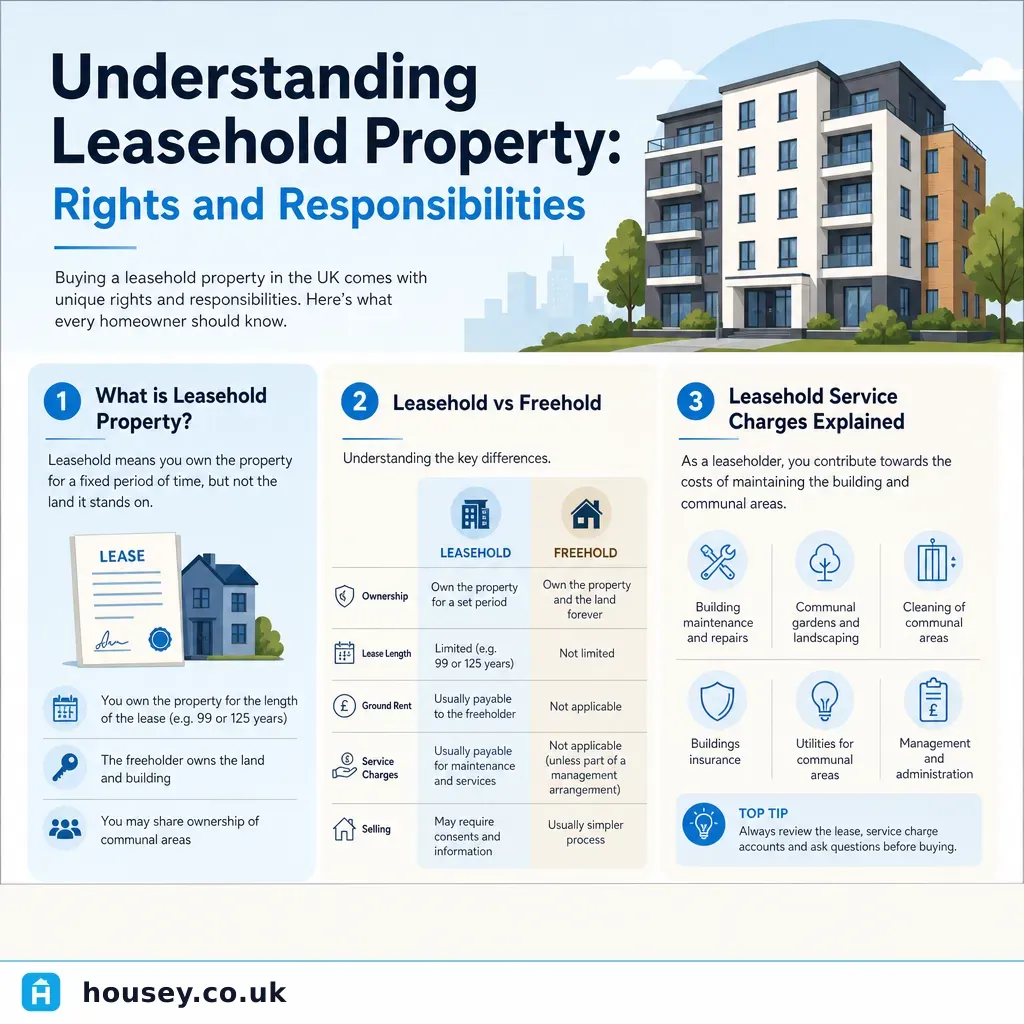 Buying & Moving
Understanding Leasehold Property: Rights and Responsibilities
Leasehold means you own a time-limited interest in a property while the freeholder owns the land and building.
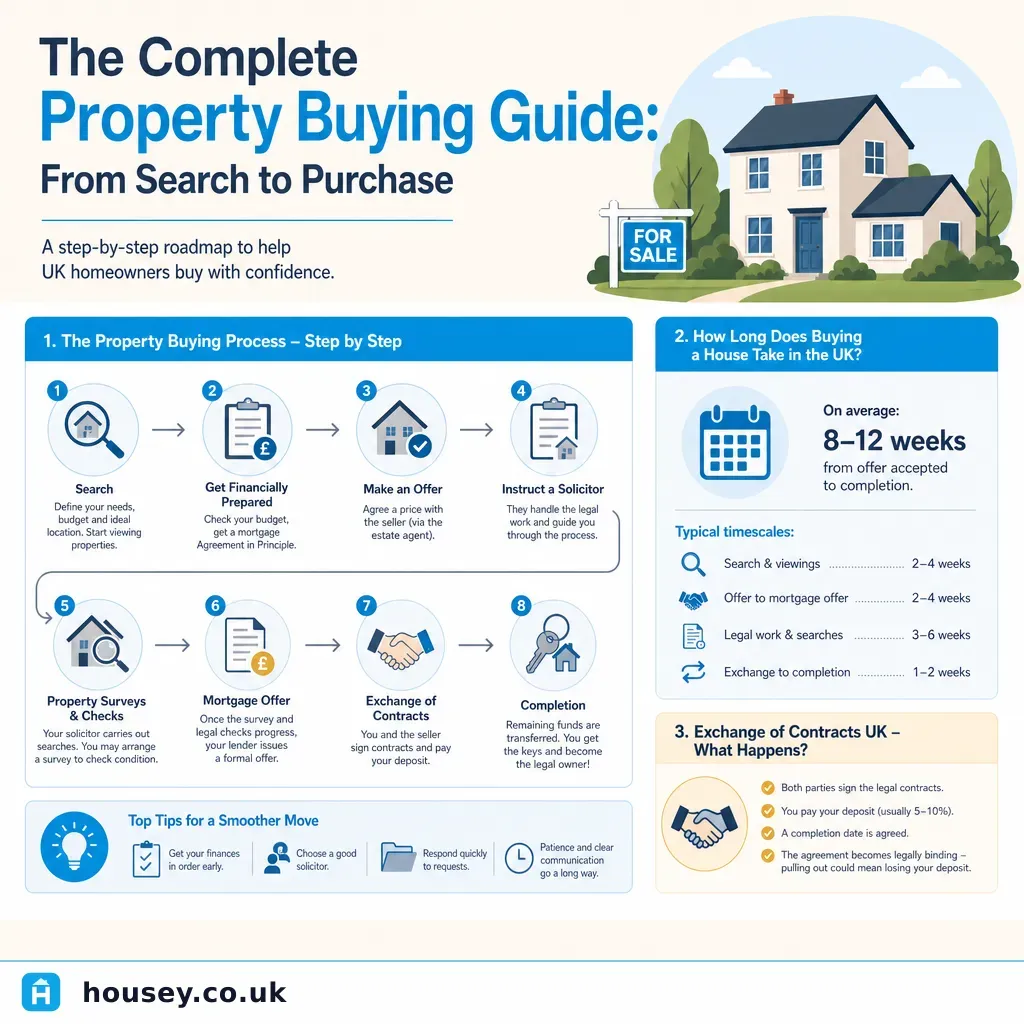 Buying & Moving
The Complete Property Buying Guide: From Search to Purchase
Buying a property in England and Wales typically takes 3–6 months from accepted offer to completion.
 Buying & Moving
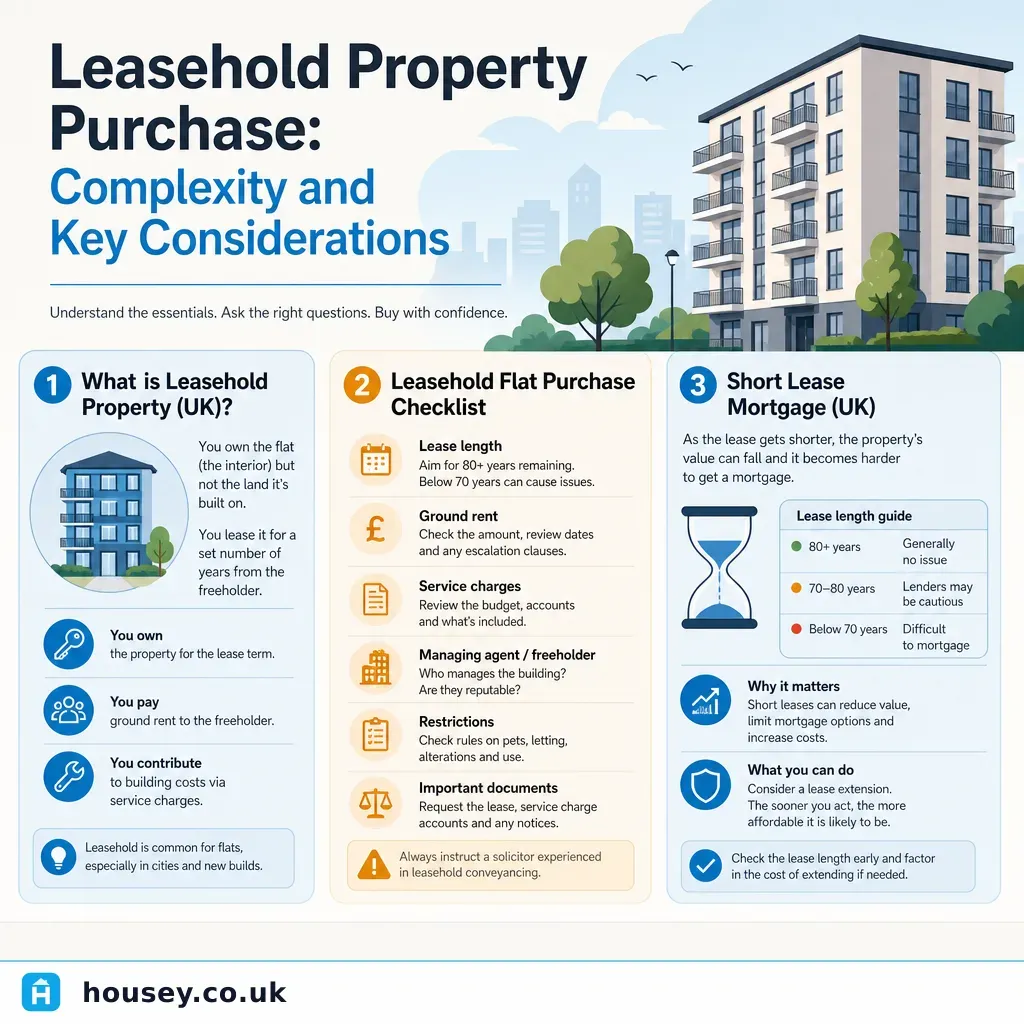
Leasehold Property Purchase: Complexity and Key Considerations
Buying a leasehold property means purchasing the right to occupy for a fixed term rather than owning the land outright.
 Buying & Moving
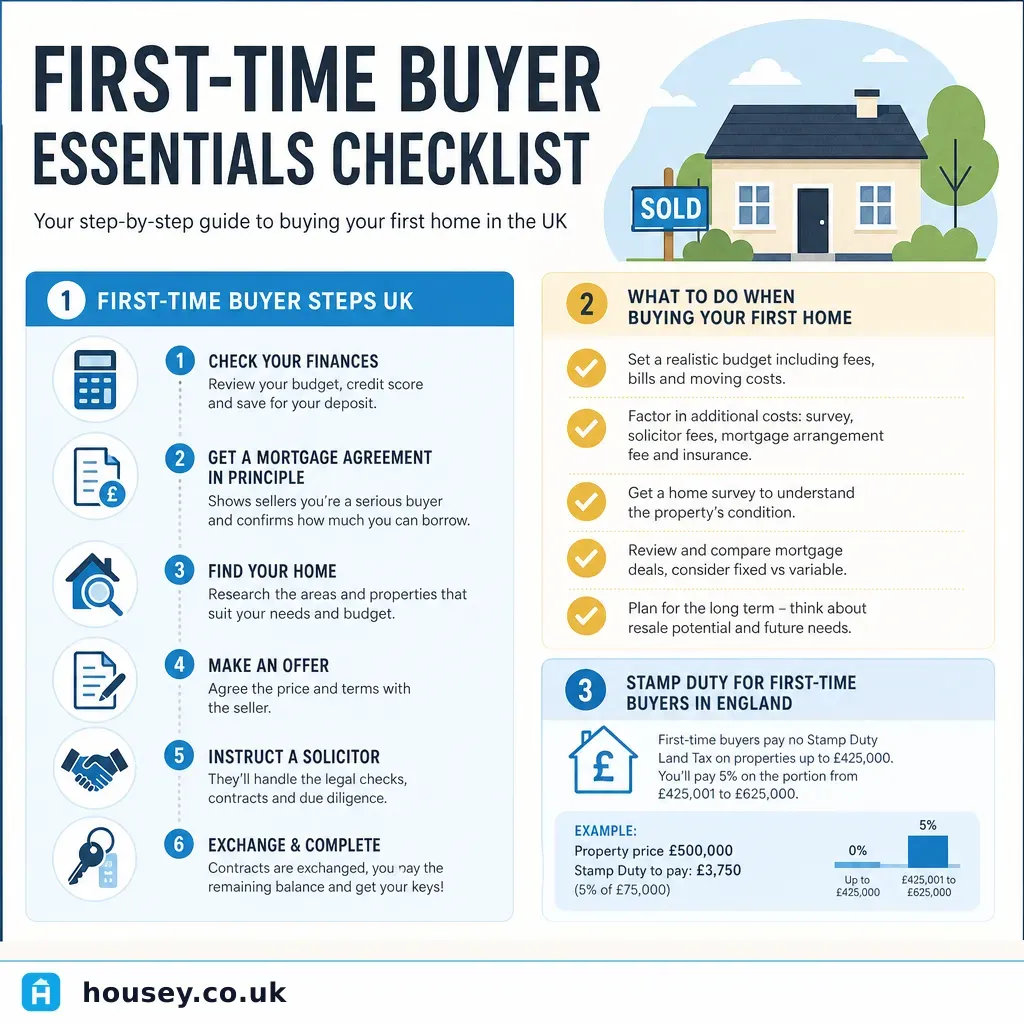
First-Time Buyer Essentials Checklist
Buying your first home involves obtaining a mortgage in principle, making an offer, instructing a solicitor, arranging a survey, and exchanging contracts before completion.