Selecting a Design-and-Build Firm for New House Construction
By Housey · Last reviewed 1st of June 2026
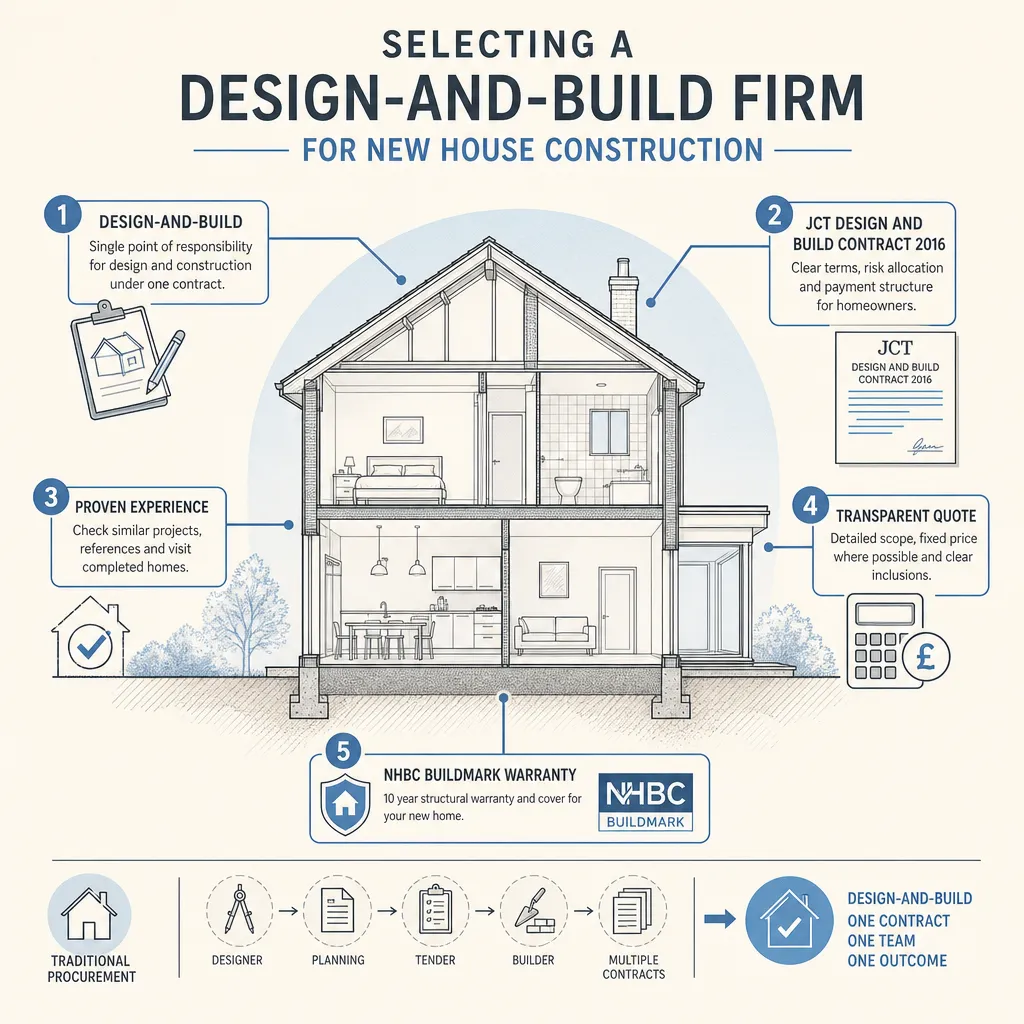
Selecting a Design-and-Build Firm for New House Construction
Commissioning a new home is one of the most complex construction projects a private individual can undertake in the UK, and the procurement route you choose shapes your cost exposure, design control, and day-to-day involvement throughout. Design-and-build (D&B) has become an increasingly popular route for self-build and custom-build projects, but firm quality varies considerably and the contract you sign defines your legal protections. Understanding how to evaluate and select a D&B firm before committing to a tender is essential for avoiding costly disputes, delayed completions, or substandard work.
Key points
- A JCT Design and Build Contract 2016 (DB 2016) is the industry-standard form for D&B projects in the UK; bespoke or unsigned contracts offer significantly weaker protections for the homeowner as employer.
- All new dwellings must comply with Building Regulations Parts A (structure), B (fire safety), L (energy efficiency), and F (ventilation) at minimum; under a D&B arrangement, the contractor owns design compliance responsibility.
- NHBC Buildmark or an equivalent 10-year structural warranty is a lender requirement for mortgaged new builds and is strongly advisable even for self-financed projects.
- Planning permission is the homeowner's responsibility unless the contract specifically novates the planning obligation to the contractor in writing.
- The Considerate Constructors Scheme (CCS) is a voluntary but independently audited programme; CCS registration is a meaningful signal of professional conduct on site and in the surrounding community.
Design-and-build versus traditional procurement
In traditional procurement, you appoint an architect to produce a full design and specifications, then separately invite a main contractor to tender. In design-and-build, a single firm handles both, simplifying your management role but transferring design responsibility — and design risk — to the contractor. This structure may not always align with your quality ambitions or budget control preferences.
Feature | Design-and-Build | Traditional Procurement |
|---|---|---|
Single point of responsibility | Yes — one firm owns design and build | No — architect and contractor are separate |
Cost certainty at contract | Higher — lump sum agreed early | Lower — final cost emerges through construction |
Client control over design detail | Lower — contractor controls specification | Higher — you own and approve the design |
Programme speed to site | Often faster | Typically slower (full design precedes tender) |
Risk if defects arise | Contractor owns both design and workmanship | Split between architect and main contractor |
Typical professionals needed | D&B contractor plus employer's agent | Architect, QS, and main contractor |
Best suited for | Budget-led projects, standard house types | Design-led, bespoke, or complex homes |
Design-and-build suits homeowners who prioritise cost certainty and a simpler management structure. Traditional procurement suits those with strong design intentions, unconventional sites, or properties with complex planning histories.
How to evaluate design-and-build firms
Check professional memberships and accreditations
Look for membership of at least one of the following:
- RIBA (Royal Institute of British Architects) — relevant if the firm employs in-house architects for the design stage
- CIOB (Chartered Institute of Building) — for construction management quality and professional accountability
- FMB (Federation of Master Builders) — common among smaller residential builders
- CCS (Considerate Constructors Scheme) — voluntary; members are audited by independent monitors
Verify memberships directly with the relevant professional body before signing anything. A firm claiming CIOB membership should appear on the CIOB's online member directory.
Require a structural warranty
Most mortgage lenders will not release funds on a new dwelling without a 10-year structural warranty in place. Common providers in the UK include NHBC Buildmark, Premier Guarantee, LABC Structural Warranty, and Build-Zone. Ask which warranty provider the firm uses, confirm whether the premium is included in their quoted price, and review the policy documents before signing a contract. If you are self-financing, a structural warranty remains strongly advisable — it protects the property's resale value and provides independent professional oversight during construction.
Review completed projects and references
A reputable D&B firm should be able to provide completed project addresses (you can verify planning history via the local planning authority's public register), at least two client references you can contact directly, and photographs of finished interiors and external envelope. If possible, visit a completed project before making any commitment. Pay particular attention to the quality of roof junctions, drainage details, and window and door abutments — areas where corners are commonly cut and subsequent remediation is expensive.
The tendering process: a homeowner checklist
Before issuing a tender, prepare the following documents:
Issue an identical information pack to a minimum of three firms so that tenders are genuinely comparable. Do not share one firm's pricing with competitors during the tender process.
What to ask before accepting a tender
- What is specifically included and excluded from the contract sum?
- Who will carry out the structural design, and do they hold Chartered Structural Engineer status (MIStructE or CEng registered with the Institution of Civil Engineers)?
- Which building control route will you use — local authority building control or a Registered Building Control Approver?
- What structural warranty will you provide, and who is the warranty provider?
- What is the proposed programme and the contractual date for practical completion?
- How are variations priced, and what is the written process for approving changes?
- Is VAT included in the quoted price, and on what basis is zero-rating applied?
- What retention percentage will you hold, and for how long after practical completion?
- Which JCT contract form will you use, and will you accept the standard unamended edition?
A worked UK new-build scenario
A homeowner in the East Midlands holds planning permission for a 180 m² four-bedroom house on a 0.2-hectare plot. They issue a D&B tender to four local firms. Three respond with structured proposals using JCT DB 2016 contracts; one submits a bespoke, unsigned document. The homeowner appoints a RICS-qualified employer's agent to compare the tenders. The agent identifies that the lowest-price submission excludes external landscaping, the drainage connection to the public sewer, and a structural warranty. Once these items are separately costed, that tender becomes the most expensive overall. The homeowner proceeds with the second-lowest tender, which includes a clear scope, an NHBC Buildmark warranty, and a CCS-registered contractor.
This outcome illustrates why like-for-like comparison and independent professional review are essential at tender stage.
When to get professional help
Consider appointing an employer's agent or independent project manager before issuing a tender. This is especially important if:
- The site has abnormal conditions such as contamination, a steep slope, a high water table, or proximity to protected trees
- You have not previously managed a construction project of this scale
- The contract sum exceeds £250,000
- The planning consent carries multiple pre-commencement conditions requiring specialist input
- You are relying on a mortgage product with stage-release payments that require professional sign-off at each stage
An employer's agent reviews tenders on your behalf, administers the contract during construction, and represents your interests at every stage — functions the D&B contractor cannot fulfil.
How Housey can help
Housey connects homeowners with vetted design-and-build firms and independent project managers who can administer a D&B contract on your behalf. If you need independent compliance oversight throughout construction, you can also compare building control consultants through the platform.
Frequently asked questions
Do I need a separate architect if I use a design-and-build firm?
Not necessarily. A design-and-build firm provides design services in-house, but you may choose to appoint an independent architect to prepare an employer's requirements document or review the contractor's proposals. This gives you independent oversight of design quality and reduces the risk of the contractor specifying only the minimum standard permitted under Building Regulations.
What is an employer's requirements document in a design-and-build contract?
An employer's requirements document sets out your minimum quality standards, specification levels, and programme requirements before the contractor develops their detailed proposals. It is the primary mechanism for controlling quality in a design-and-build contract. Without a well-drafted document, the contractor controls all specification decisions and may build to the minimum standard compliant with Building Regulations.
Is VAT charged on a new-build house in the UK?
New residential dwellings are generally zero-rated for VAT under HMRC rules, meaning the contractor typically charges 0% VAT on qualifying construction services. However, this depends on the specific scope, the history of the site, and the VAT status of the project. Always confirm the VAT treatment with an accountant before signing a construction contract.
How long does a new house build typically take in the UK?
A new-build house typically takes 12–24 months from planning consent to practical completion, depending on size, site conditions, and the contractor's programme. The pre-construction phase — including site investigations, reserved matters, and building control submissions — can add a further 3–6 months before groundworks begin on site.
Sources and further reading
- JCT Design and Build Contract 2016 — JCT Ltd
- NHBC Buildmark warranty — NHBC
- Building regulations approval — GOV.UK
- Considerate Constructors Scheme — Considerate Constructors Scheme
- Self-build and custom housebuilding guidance — GOV.UK
Useful next reads
 Improvement & Build
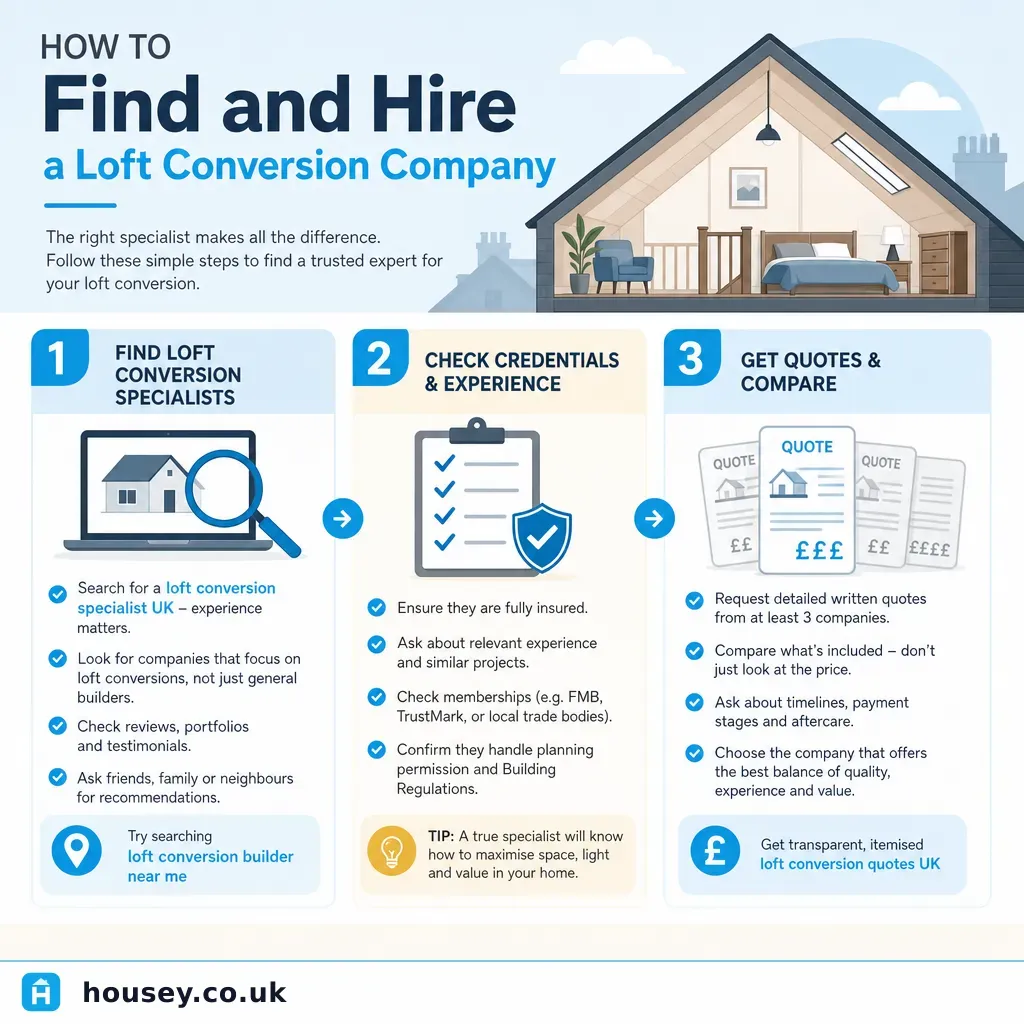
How to Find and Hire a Loft Conversion Company
To hire a loft conversion company, get at least three quotes from TrustMark-registered or FMB-member firms.
 Improvement & Build
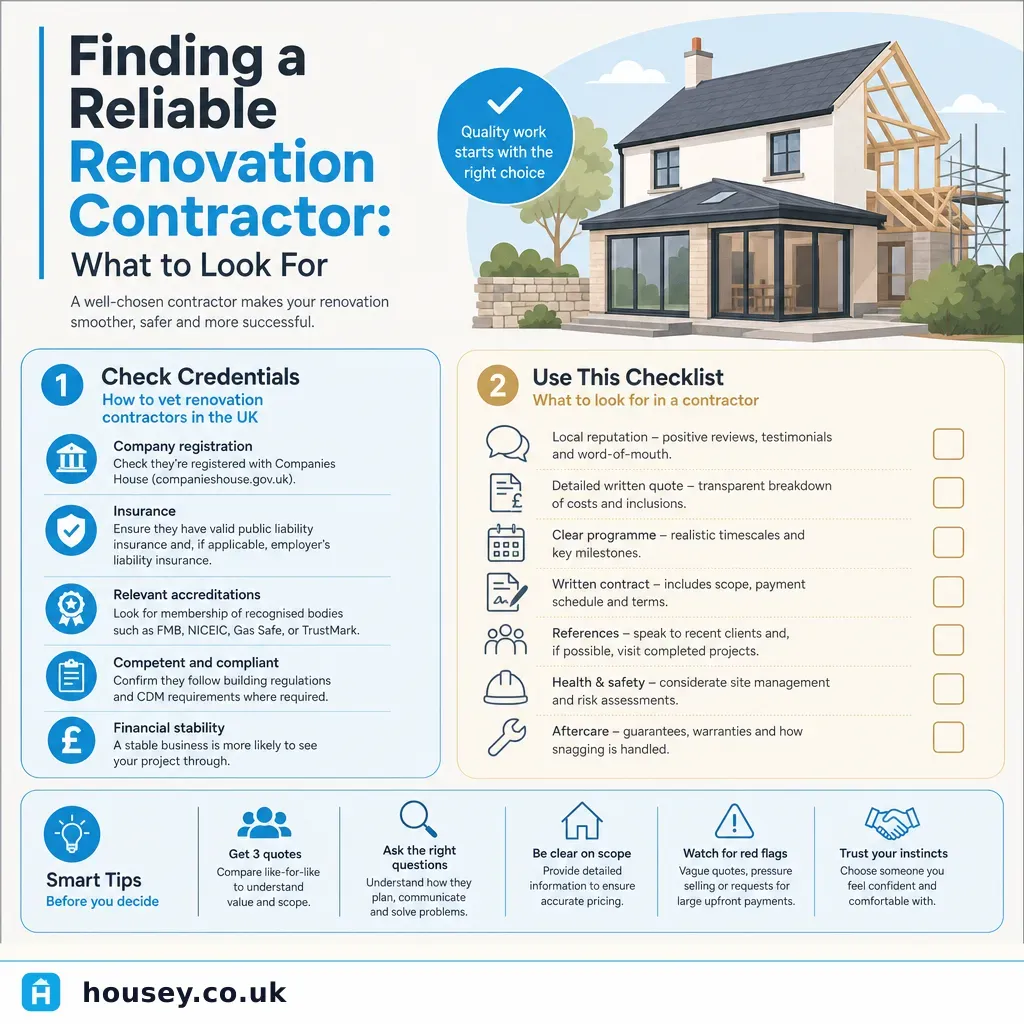
Finding a Reliable Renovation Contractor: What to Look For
To find a reliable renovation contractor, verify FMB or TrustMark membership directly on the scheme website, obtain at least three itemised written quotes, and check public liability insurance documentation.
 Improvement & Build
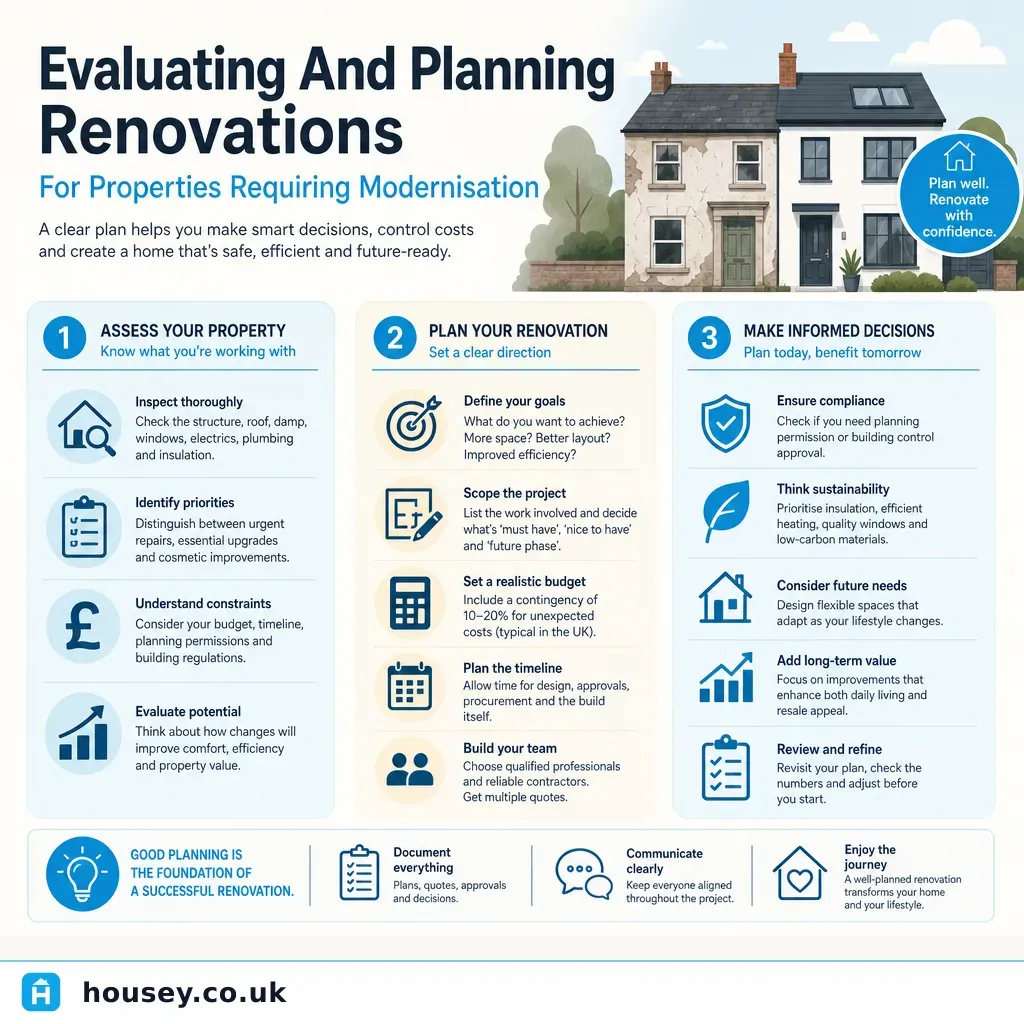
Evaluating And Planning Renovations For Properties Requiring Modernisation
Start by commissioning a condition survey — RICS Level 3 for pre-1919 properties — to identify structural defects, damp, and services issues before finalising a budget.
 Improvement & Build
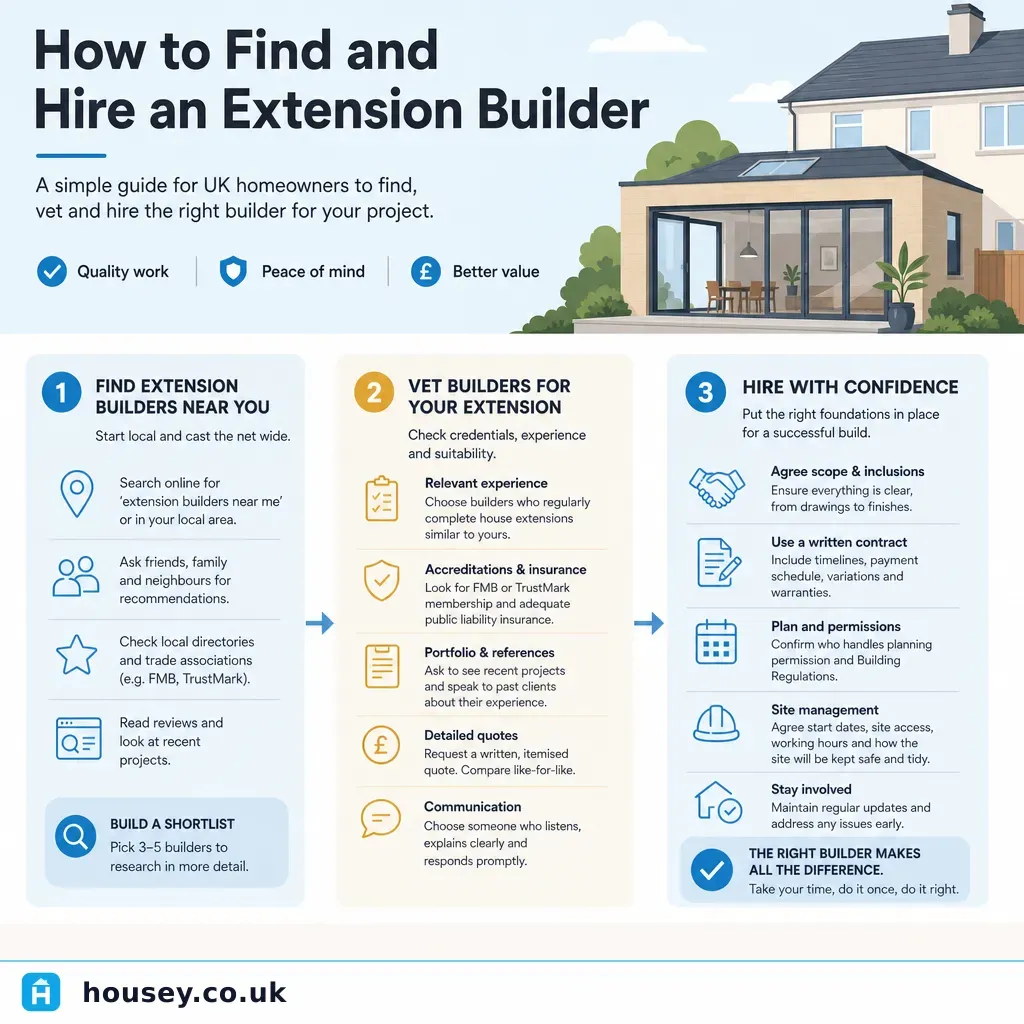
How to Find and Hire an Extension Builder
To hire a reliable extension builder, get at least three detailed written quotes from contractors with documented experience of similar projects.
 Improvement & Build
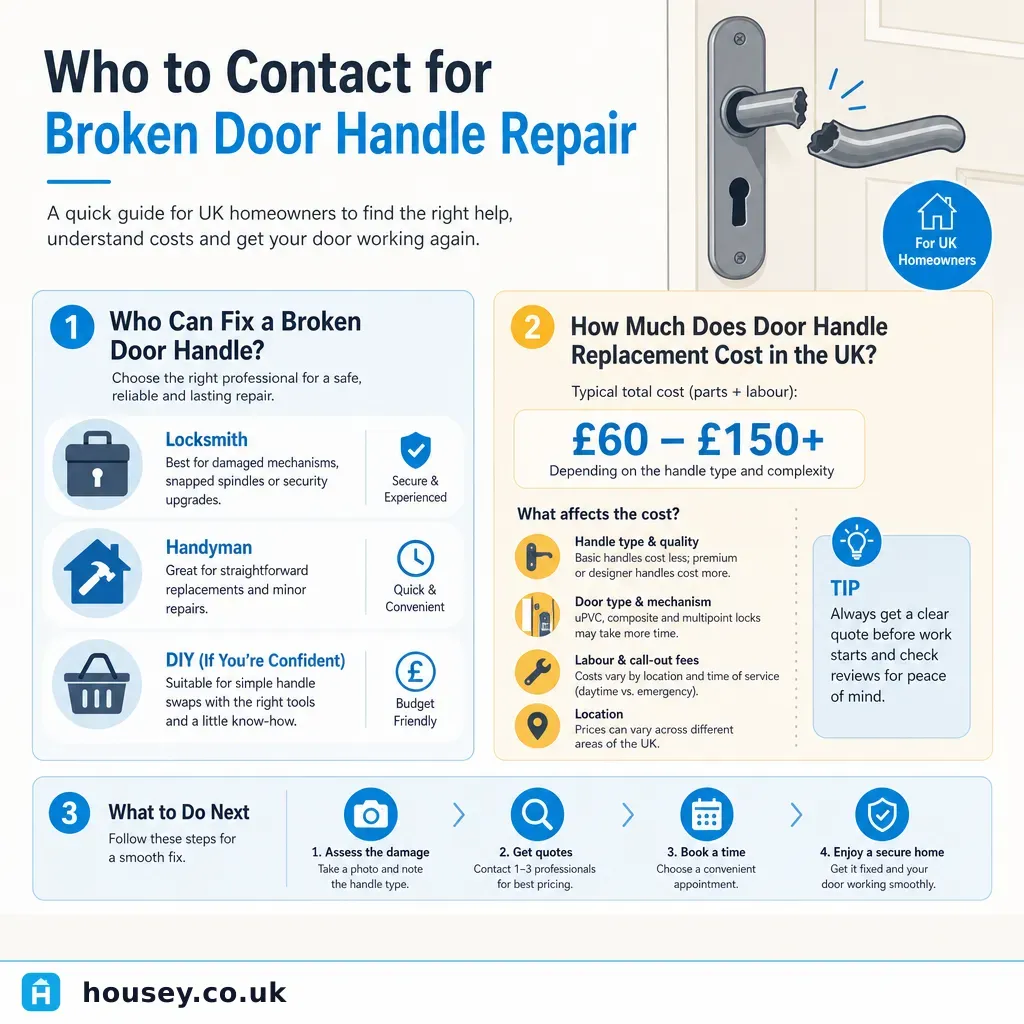
Who to Contact for Broken Door Handle Repair
For a broken door handle, a general handyperson can handle most internal timber door repairs, while a joiner or locksmith is better suited to external doors, particularly if the lock mechanism is affected.